
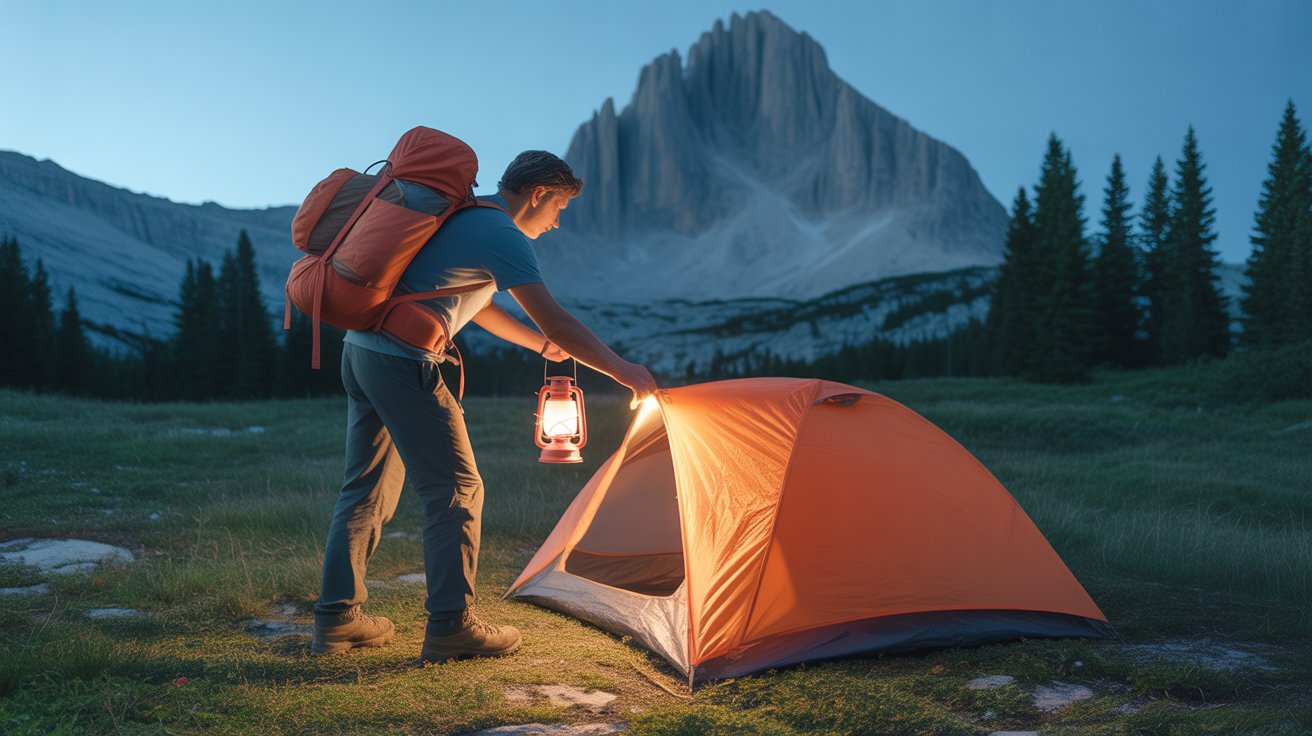
You have spent months planning your first multi-day backpacking trip, but now you are staring at camping lanterns online and wondering which one will not turn your pack into a brick. After a long day on the trail, you want ambient light that lets you cook, read, or just unwind at camp without holding a headlamp in your teeth or burning through your phone battery. The best camping lantern for backpacking needs to balance three critical factors: weight that will not wreck your back, runtime that lasts through evening hours without constant recharging, and enough light output to create a functional campsite space.
This guide cuts through the marketing fluff to recommend lanterns actually designed for weight-conscious backpackers. Every option here weighs less than a standard water bottle, runs long enough for full evenings at camp, and offers practical features like adjustable brightness and versatile hanging options. Whether you are planning weekend trips or longer expeditions, you will find a lantern that fits your pack and your backcountry routine.
What to Look For
Weight and Packability Matter More Than You Think
When you are carrying everything on your back for days, every ounce counts differently than it does on day hikes. The best camping lantern for backpacking should weigh between 2 to 6 ounces maximum. Anything heavier starts competing with essential gear like extra food or a warmer layer. Look for collapsible or compact designs that pack down small enough to fit in side pockets or stuff sacks without taking up prime real estate in your main pack compartment. Consider how the lantern shape affects packing: cylindrical designs nestle into corners better than boxy ones, and models with removable handles or carabiners let you clip them outside your pack during the day if needed.
Runtime Requirements for Multi-Day Trips
You need a lantern that runs long enough to cover your typical evening routine without forcing you to ration light or waste precious power bank capacity on recharging. Calculate your actual usage: most backpackers need light from around sunset through dinner prep, eating, camp chores, and maybe an hour of reading or cards before bed. That typically adds up to 3 to 5 hours per night. For a three-day trip, you want a minimum of 15 to 20 hours total runtime at your preferred brightness level. Many lanterns advertise 100+ hour runtimes, but that spec usually refers to the dimmest setting, which barely illuminates your immediate area. Check the runtime at medium brightness, which provides enough light for practical camp tasks without blinding you or your tentmates. Rechargeable models with USB charging integrate well with solar panels or power banks you are already carrying, while battery-powered options require you to pack spare batteries, adding weight and creating waste.
Brightness Levels and Dimming Control
The best camping lantern for backpacking offers multiple brightness settings so you can match light output to the specific task and conserve battery when full power is not necessary. Look for a minimum output around 50 to 100 lumens for ambient lighting that covers your tent or cook area without harsh glare, and a maximum of 200 to 300 lumens for tasks requiring more visibility like detailed map reading or first aid situations. Stepless dimming gives you infinite control, but models with 3 to 5 preset modes work fine for most backpackers. Avoid lanterns with only high and low settings, as the gap between them usually forces you to choose between too dim and too bright. Some models include red or colored light modes that help with visibility at night and reduce harsh glare when you need to see without disturbing the natural darkness around camp.
Hanging and Mounting Options
You need versatile mounting options because backpacking campsites rarely offer ideal lantern placement like established campgrounds do. Built-in hooks let you hang the lantern from tent ceiling loops, tree branches, or trekking pole shelters. Carabiner attachment points add flexibility for clipping to external pack loops during setup or hanging from ridge lines. Magnetic bases work well for attaching to metal cookware or bear canisters, though this feature adds weight and is less useful in purely wilderness settings. Some lanterns include adjustable straps or bungee cords that wrap around irregular surfaces like tent poles or picnic table legs. Consider whether the lantern provides stable upright standing as well, since flat surfaces like rock ledges or packed ground are often your most practical lighting locations. Avoid models that only hang, as you will inevitably camp in situations where overhead attachment is not possible or practical.
Durability for Trail Conditions
Backpacking lanterns face harsher treatment than car camping gear because they bounce around in packs, get stuffed into tight spaces, and operate in variable weather without the protection of a vehicle nearby. Look for water resistance rated at least IPX4, which means the lantern can handle rain and accidental splashes from cook pots or stream crossings. Higher ratings like IPX5 or IPX6 offer better protection but are not strictly necessary unless you are paddling or expecting sustained downpours. Drop resistance matters because lanterns inevitably fall when hung from flimsy tent loops or slippery tree branches. Models with rubberized exteriors or reinforced corners survive impacts better than bare plastic housings. Check whether the battery compartment seals properly, as moisture intrusion kills electronics faster than physical damage. Avoid lanterns with exposed USB ports unless they include protective covers, and verify that any solar panels sit flush or recessed to prevent scratching during pack stuffing.
Power Source Trade-Offs
Backpackers face a fundamental choice between built-in rechargeable batteries, replaceable batteries, or solar charging capability, and each option involves real trade-offs. Rechargeable USB lanterns integrate cleanly with the power bank you likely already carry, but they add one more device competing for limited charging capacity alongside your phone, GPS watch, and headlamp. If you are out for more than two or three nights without resupply, you need either a large power bank or a portable solar panel, both of which add pack weight. Replaceable battery lanterns eliminate charging concerns but require you to carry spare batteries, creating extra weight and disposal issues. Solar lanterns sound ideal for extended trips, but real-world solar charging is slow and weather-dependent. A cloudy day means little to no charge, and you need direct sunlight exposure during midday hours when the lantern is often packed away. Hybrid models offering both solar and USB charging provide the most flexibility but cost more and weigh slightly more than single-source options.
Our Top Picks
1. BLACK DIAMOND Moji Lantern
Best for backpackers who prioritize reliable performance and pack versatility over rock-bottom weight

The BLACK DIAMOND Moji delivers 200 lumens of adjustable light in a compact package that weighs just enough to notice but not enough to regret bringing. The dimming feature gives you precise control over brightness, letting you dial in exactly the amount of light you need for cooking versus the softer glow appropriate for tent reading before sleep. This control directly translates to extended battery life, as you are not forced to choose between painfully dim or battery-draining bright like many cheaper lanterns. The hang loop design creates a stable platform whether you are hanging from tent ceiling loops, trekking poles, or tree branches, and it stays out of the way when you stuff the lantern into your pack.
The housing feels solid enough to survive drops onto rock or packed dirt without cracking, and the controls respond consistently even when operated with cold or gloved hands. Battery life depends heavily on your brightness setting, but moderate output runs long enough for typical evening camp routines across multiple nights before requiring fresh batteries. The lantern requires three AAA batteries, which you need to purchase separately and pack as spares for longer trips. While this model has fewer customer reviews compared to other options at this price point, the 4.7-star rating and Black Diamond’s established reputation in outdoor equipment provide reasonable confidence in the quality and durability you can expect from regular backpacking use.
See current pricing for the BLACK DIAMOND Moji Lantern on Amazon.
Pros
- Dimmable output lets you precisely control brightness and extend battery life
- Hang loop design provides stable attachment to various anchor points
- Compact form factor packs efficiently without wasted space
- Solid construction handles typical trail abuse without damage
Cons
- Requires separate battery purchase and packing spare AAAs for extended trips
- Limited customer feedback compared to other options at this price point
2. Streamlight 44941 Siege AA 200-Lumen Lantern
Best for backpackers who need bomber durability and reliable performance on extended wilderness trips

The Streamlight Siege prioritizes ruggedness and versatility over ultralight weight savings, which makes it the best camping lantern for backpacking in challenging conditions where gear failure is not an option. The 200-lumen output through white LEDs provides sufficient brightness for camp tasks, while additional lighting modes help with visibility in different conditions without harsh glare that makes it difficult to see beyond your immediate circle of light. This matters when you are moving around rocky campsites after dark or need to locate gear without waking tentmates.
Streamlight builds this lantern to withstand serious weather exposure, providing peace of mind during stream crossings, unexpected downpours, or when the lantern rolls off a rock into a creek during dinner prep. The integrated hang hook provides mounting options, and the lantern stands stable on uneven surfaces thanks to a wide footprint. The unit runs on three AA batteries, which are more common than AAAs in group settings where you might borrow from someone else, and it delivers better runtime per battery compared to smaller cell sizes. Build quality reflects professional-grade tool standards rather than consumer camping gear, with rubberized grip surfaces and controls that work reliably after years of use. With over 1,600 verified customer reviews maintaining a 4.7-star rating, this lantern has proven its reliability across diverse backpacking conditions and user experiences.
Read verified buyer reviews for the Streamlight 44941 Siege AA 200-Lumen Lantern on Amazon.
Pros
- Serious weather resistance handles exposure beyond typical rain protection
- Multiple lighting modes provide versatility for different camp situations
- Proven durability with extensive user feedback supporting reliability claims
- AA battery compatibility makes sharing or borrowing batteries easier in groups
Cons
- Heavier than minimalist ultralight options at comparable brightness
- Higher price point than basic lanterns with similar lumen output
View Streamlight 44941 Siege AA 200-Lumen Lantern on Amazon →
3. LuminAID Solar Camping Lantern
Best for backpackers on extended trips who want a lightweight packable option without heavy battery weight

The LuminAID lantern solves the weight and packing problem for multi-day backpackers through clever compact design rather than brute force battery capacity. The lantern packs down small, taking up minimal space in your pack and weighing very little compared to traditional hard-shell lanterns. The cube shape creates stable standing on flat surfaces and diffuses light evenly in all directions rather than projecting a harsh beam, which eliminates the harsh shadows and bright spots that make traditional lanterns uncomfortable for extended use in enclosed tents.
The design creates genuinely pleasant ambient lighting that feels more like a household lamp than a camping flashlight. Light diffuses through the material evenly, creating comfortable illumination without the glare that causes eye fatigue during extended camp evenings. Multiple brightness settings let you adjust output for different tasks, and the lowest setting provides enough light for reading while sipping minimal battery power for multiple evenings. The lantern construction proves tougher than it initially appears, surviving normal backpacking abuse including compression under other gear in your pack. With nearly 8,000 customer reviews and a 4.6-star rating, this lantern has demonstrated consistent performance across thousands of real backpacking trips and diverse user conditions.
Check current stock for the LuminAID Solar Camping Lantern on Amazon.
Pros
- Packs down small when compressed, saving significant pack space and weight
- Even light diffusion creates comfortable ambient lighting without harsh spots
- Lightweight design reduces pack burden on multi-day trips
- Extensive customer feedback demonstrates reliable performance across conditions
Cons
- Flexible construction is less rigid than hard-shell lanterns over long-term use
- Compact size limits maximum light output compared to larger models
4. Goal Zero Lighthouse Micro Flash Lantern
Best for minimalist backpackers who want a compact option with versatile lighting capabilities

The Goal Zero Lighthouse Micro Flash combines multiple lighting functions in a palm-sized unit that weighs minimal ounces, making it highly packable for backpackers who count every gram. The compact design collapses down to pocket size for efficient packing, then expands to provide 360-degree ambient light that illuminates your immediate camp area. The built-in loop clips easily to tent ceiling attachment points or pack straps, and the flat base provides stable standing on any reasonably level surface.
Brightness adjusts across multiple levels, letting you conserve battery by running at lower output during casual tent time or ramping up to full power when you need to illuminate your cooking area or read detailed maps. The unit charges from standard USB sources, making it compatible with power banks, solar panels, or wall adapters during town resupply stops. Build quality reflects Goal Zero’s reputation for reliable outdoor electronics rather than disposable camping accessories. The housing withstands normal trail abuse without cracking, and the mechanism operates smoothly even after months of regular use. The compact size does limit maximum light output compared to larger lanterns, so this works best for solo backpackers or couples sharing a small tent rather than illuminating group camping areas. With over 3,000 reviews maintaining a 4.7-star rating, this lantern has proven its reliability across diverse backpacking applications.
Compare the Goal Zero Lighthouse Micro Flash Lantern specs and pricing on Amazon.
Pros
- Ultra-compact collapsed size and minimal weight suit ultralight packing strategies
- Multiple lighting modes provide flexibility for different camp needs
- USB charging compatibility integrates with existing power systems
- Proven reliability with extensive positive user feedback
Cons
- Lower maximum brightness compared to larger lanterns limits group use
- Small size makes it easier to misplace at cluttered campsites
How These Compare
Choosing the best camping lantern for backpacking depends on your specific trip length, charging capacity, and weight priorities rather than a single universally superior option. The BLACK DIAMOND Moji provides the most versatile middle ground for backpackers who want reliable performance without committing to a specific power strategy. Its dimmable output delivers practical utility across various camping situations, though you must pack spare AAA batteries for trips longer than a few nights. This makes it a solid choice for weekend warriors and shoulder-season backpackers who appreciate precise brightness control, though the limited review count means fewer real-world experiences to draw from compared to more established models.
The Streamlight Siege targets backpackers who venture into challenging conditions where gear durability directly impacts safety and comfort. Its serious weather resistance and bomb-proof construction justify the weight penalty for anyone planning extended wilderness trips, paddling approaches, or alpine environments where weather changes rapidly and gear takes serious abuse. The multiple lighting modes add genuine utility rather than marketing gimmicks, making this the smartest choice for solo backpackers or those traveling in remote areas far from quick rescue access. The extensive verified customer feedback provides confidence that this lantern performs consistently across diverse conditions.
The LuminAID Lantern addresses the extended trip packing problem through compact lightweight design rather than battery weight, which makes it ideal for thru-hikers and anyone spending a week or more between resupply points. The small pack size when compressed saves significant space compared to hard-shell lanterns, though you trade some rigidity for that packability advantage. The massive customer review count demonstrates this lantern has been tested across virtually every backpacking scenario, providing strong confidence in its real-world performance across diverse conditions and user applications.
The Goal Zero Lighthouse Micro Flash delivers the most packable solution for ultralight backpackers who prioritize weight savings above all else. Its versatile lighting functionality eliminates redundant gear, and USB charging integrates seamlessly with minimalist power setups. The compact size and lower maximum brightness make it better suited for solo backpackers or couples sharing small tents rather than group camping situations requiring more light coverage. Choose this if you are already committed to an ultralight philosophy and willing to accept slightly less light output in exchange for significant weight and space savings in your pack.
Frequently Asked Questions
How long do camping lanterns last on a single charge or battery set?
Runtime varies dramatically based on brightness setting, battery capacity, and LED efficiency, so manufacturer claims require careful interpretation. Most backpacking lanterns advertise 50 to 150 hours of runtime, but that maximum figure almost always refers to the lowest brightness setting, which typically provides just enough light to navigate inside a tent without tripping over gear. At medium brightness levels appropriate for cooking, eating, and general camp tasks, expect more realistic runtimes between 8 to 25 hours depending on the specific model and battery size. For practical trip planning, calculate your actual nightly usage by estimating how many hours you need light from sunset through bedtime, typically 3 to 5 hours per evening. A three-day weekend trip requires roughly 9 to 15 hours total runtime, while a week-long expedition needs 21 to 35 hours minimum. Rechargeable lanterns let you top up the battery from a power bank between uses, effectively extending your total available light if you are carrying sufficient charging capacity. Battery-powered models require you to pack enough spare batteries to cover your entire trip, as running out of light mid-trip forces you to rely on your headlamp for all evening tasks, which is considerably less comfortable for extended periods.
What is the ideal brightness level for a backpacking lantern?
The best camping lantern for backpacking offers adjustable brightness rather than a single fixed output, because your lighting needs vary significantly throughout an evening at camp. For ambient tent lighting and casual activities like conversation or organizing gear, 50 to 100 lumens provides comfortable illumination without harsh glare that causes eye fatigue or prevents you from seeing anything beyond your immediate light circle. This lower output also dramatically extends battery life, letting you run the lantern for multiple hours without draining power reserves. For focused tasks like cooking detailed meals, reading maps, or performing first aid, you want the option to increase output to 150 to 250 lumens, which provides enough light to see clearly without fumbling or guessing. Maximum brightness above 300 lumens is rarely necessary for backpacking unless you are illuminating a large group camping area or dealing with specific situations like emergency repairs in darkness. Brighter output drains batteries exponentially faster, so the ability to dim down to lower settings becomes more important than the maximum lumens when judging practical usefulness. Look for lanterns offering at least three distinct brightness levels or, better yet, stepless dimming that lets you fine-tune output to match exact needs and conserve power when possible.
Can I use a camping lantern inside my tent safely?
LED camping lanterns designed for backpacking are specifically engineered for safe tent use because they generate minimal heat compared to traditional fuel lanterns or incandescent bulbs. Modern LED technology converts electricity directly into light with very little energy wasted as heat, so you can touch the lantern housing even after hours of continuous operation without burning your hand or melting tent fabric. This makes them fundamentally different from propane or white gas lanterns, which generate extreme heat and consume oxygen, creating serious fire and asphyxiation hazards in enclosed spaces. However, safe operation still requires basic precautions. Keep the lantern away from sleeping bag insulation and synthetic tent fabrics, not because the LEDs will melt them but because the lantern can get knocked over and pressed against fabric for extended periods. Hang the lantern from tent ceiling loops rather than placing it on the floor where it might get kicked or buried under gear. Avoid covering the lantern with clothing or other materials even though it does not get hot, because blocked ventilation can cause the battery to overheat in rare cases. Most importantly, never bring fuel-burning lanterns inside your tent regardless of ventilation, as the carbon monoxide risk is simply not worth the light output.
How do I choose between rechargeable and battery-powered lanterns for backpacking?
The choice between rechargeable and battery-powered lanterns depends primarily on your trip length and existing charging setup rather than one option being universally better. Rechargeable USB lanterns make the most sense if you already carry a power bank for your phone and GPS, as you can charge the lantern from the same power source during the day or when you have excess capacity. This eliminates the need to pack spare batteries and reduces waste from disposable batteries. However, rechargeable options require you to manage charging priorities, and on trips longer than three or four days, you need either a large power bank or a portable solar panel to keep everything charged. Battery-powered lanterns using replaceable AA or AAA batteries offer simpler power management because you just pack enough batteries for your entire trip duration, with no charging required. Calculate how many battery sets you need by checking the manufacturer runtime specs at medium brightness and matching that to your nightly usage hours. The downside is added weight from spare batteries and the environmental impact of disposables. For weekend trips, either option works fine. For week-long expeditions, rechargeable models paired with solar charging capability eliminate battery weight entirely, though this requires investment in a separate solar panel and adds complexity to your power management routine.
The Bottom Line
The best camping lantern for backpacking balances three critical factors that directly impact your trail experience: weight that does not strain your back over long miles, runtime sufficient for full evenings without constant recharging, and brightness control that adapts to different camp tasks while conserving battery. The BLACK DIAMOND Moji delivers a reliable middle ground for backpackers who want consistent performance across varied conditions, with dimmable output providing practical utility worth the modest weight, though the limited customer reviews mean less real-world feedback compared to more established options. Choose the Streamlight Siege if you are planning extended wilderness trips where gear durability matters more than saving a few ounces, as the extensive verified customer feedback demonstrates consistent performance across challenging conditions. The LuminAID Lantern makes the most sense for weight-conscious backpackers who need compact packability, with nearly 8,000 customer reviews providing confidence in its performance across diverse trip types. Ultralight backpackers counting every gram should consider the Goal Zero Lighthouse Micro Flash, which provides versatile lighting in a package that saves significant weight and space compared to larger models.
Your specific choice depends on trip length and charging capacity more than any single product feature. Weekend backpackers can succeed with any of these options, as even modest battery capacity covers two or three evenings at typical usage levels. Week-long trips require either substantial power bank capacity to keep rechargeable models running or careful calculation of battery quantities for replaceable battery models. Consider your existing gear ecosystem as well: backpackers already carrying power banks for phones and GPS devices benefit from USB rechargeable lanterns that integrate into that charging routine, while those preferring battery-powered simplicity avoid adding another device to the nightly charging rotation. Whatever lantern you choose, test it thoroughly on a weekend shakedown trip before committing to longer expeditions, paying particular attention to how brightness settings affect actual runtime and whether the mounting options work with your specific tent and shelter setup.
Disclosure: As an Amazon Associate, we earn from qualifying purchases. This does not affect our editorial recommendations.