
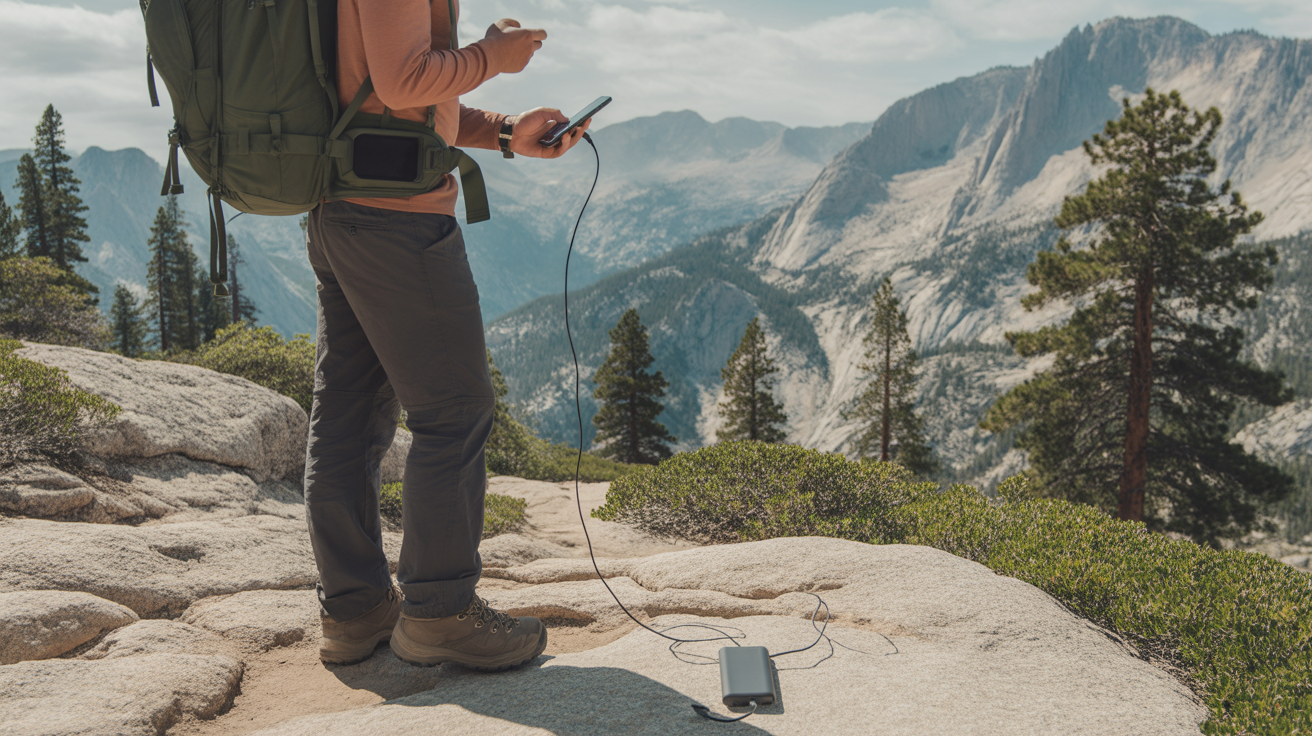
When you are planning a multi-day hiking trip, keeping your phone, GPS, or headlamp charged can mean the difference between staying on course and getting seriously lost. The best portable power bank for hiking needs to justify its weight in your pack – and that calculation is never straightforward. You need enough capacity to recharge your devices multiple times without carrying what feels like a brick strapped to your back.
This guide compares tested portable power banks for backpackers who count ounces but cannot afford dead batteries. We break down capacity versus weight tradeoffs clearly, explain what mAh numbers actually mean for your real-world charging needs, and help you choose the right battery bank for your trip length and device lineup.
What to Look For
Understanding Capacity: What mAh Actually Means
Milliamp hours, or mAh, measure how much energy a power bank stores. A 10,000mAh battery bank can theoretically deliver 10,000 milliamps for one hour. In practical terms, that translates to roughly 2-3 full charges for most modern smartphones, which typically have batteries between 3,000-4,000mAh. However, you lose about 20-30% of rated capacity to heat and voltage conversion during charging, so a 10,000mAh power bank delivers closer to 7,000-8,000mAh of usable power.
For multi-day trips, calculate your total device battery capacity and multiply by the number of recharges you need. A weekend backpacker with a 4,000mAh phone who wants three full charges needs at least 12,000mAh of rated capacity. A week-long thru-hiker powering a phone, GPS watch, and headlamp might need 20,000-25,000mAh or more. The key is matching capacity to trip length without over-packing.
The Weight Trade-off: What You Carry Matters
Every ounce in your pack multiplies over miles of trail. The best portable power bank for hiking balances capacity against physical weight, measured in what backpackers call watt-hours per pound. A 10,000mAh power bank typically weighs 6-8 ounces, while a 20,000mAh model weighs 12-14 ounces. That difference might seem small until you are climbing elevation with 25 pounds on your back.
Compare power banks using energy density: divide mAh capacity by weight in ounces. Higher numbers mean more charging power per ounce carried. Budget power banks often use cheaper, heavier battery cells. Premium models use lithium polymer cells that pack more energy into less weight. For backpackers, spending extra for a lightweight design often makes sense. That said, durability matters too – the lightest power bank is useless if it breaks on day two.
Charging Speed: How Fast Matters on Trail
Charging speed, measured in watts, determines how quickly you can top off devices during breaks. A 20W power bank can fully charge most phones in 90-120 minutes. A 45W model cuts that to 60-90 minutes. Faster charging means less time sitting at camp waiting for your phone to hit 100%, which matters when you want to pack up at dawn or need emergency power during weather.
Look for power banks with Power Delivery, or PD, which negotiates optimal charging speed with your device. Many modern power banks also support pass-through charging, letting you charge the power bank and your devices simultaneously when you reach a trailhead or shelter with outlets. For multi-day trips, fast recharge speed for the power bank itself matters as much as fast output – you need to refill that battery bank quickly when opportunities arise.
Port Configuration: Charging Multiple Devices
Most backpackers carry at least two devices: a phone and either a GPS watch, headlamp, or camera. A power bank with two USB-C ports lets you charge both simultaneously, which saves time during short breaks. Built-in cables eliminate the need to pack separate charging cords, which reduces pack weight and prevents the frustration of tangled cables at the bottom of your bag.
Some power banks include retractable cables that fold into the body, keeping everything compact. Others have detachable cables that can be replaced if damaged. USB-C ports work with most modern devices, but check your specific gear – older headlamps and watches may need USB-A ports. If you are charging a mix of old and new devices, look for power banks with both port types.
Durability and Weather Resistance
Trail conditions are harder on gear than daily use. Power banks bounce around in packs, get dropped on rocks, and face temperature swings from cold mountain mornings to hot afternoon sun. Look for ruggedized housings with reinforced corners and impact-resistant shells. Some models include waterproof ratings, typically IPX4 or higher, which protects against splashes and rain. Full waterproofing is rare in power banks due to port exposure, so always store yours inside a dry bag during heavy weather.
Temperature affects battery performance. Lithium batteries lose capacity in cold weather and can fail to charge below freezing. Keep your power bank inside your jacket or sleeping bag overnight in cold conditions. Extreme heat also degrades batteries over time, so avoid leaving power banks in direct sun for extended periods. Quality power banks include thermal protection circuits that prevent overheating during charging.
Flight-Safe Capacity Limits
If your hiking trip involves air travel, TSA and international aviation regulations limit power bank capacity to 100 watt-hours (Wh) in carry-on luggage. To convert mAh to Wh, multiply mAh by voltage (usually 3.7V for lithium batteries) and divide by 1,000. A 27,000mAh power bank equals approximately 100Wh, which is the maximum allowed without airline approval. Power banks between 100-160Wh require airline approval and must be carried on, never checked. Anything over 160Wh is prohibited on passenger flights.
Most hiking power banks fall well under the 100Wh limit. A 20,000mAh model typically rates around 74Wh, and a 10,000mAh model is about 37Wh. Check the product specifications or printed label for watt-hour ratings before flying. If the rating is not listed, calculate it manually to avoid issues at airport security.
Our Top Picks
1. Anker Nano Portable Charger, 45W 10000mAh
Best for backpackers who want premium charging speed without adding bulk to their pack

The Anker Nano hits the sweet spot between capacity and portability with 10,000mAh packed into a compact form factor. The built-in retractable cable is the standout feature for backpackers – you can charge your phone during breaks without fishing through your pack for a separate cord. That cable retracts cleanly when not in use, which prevents tangled messes at the bottom of your pack.
At 45W maximum output, this power bank charges modern smartphones remarkably fast. You can top off an iPhone from 20% to 80% in about 45 minutes, which is fast enough to juice up during lunch breaks without waiting around. The compact design slips easily into hip belt pockets or the top compartment of most backpacks. The lightweight construction carries comfortably without adding noticeable pack strain on all-day hikes.
The 10,000mAh capacity provides approximately 2-3 full phone charges depending on your device. For weekend trips or short 2-3 day backpacking loops, that is typically enough to keep a phone and small GPS device running. Longer trips require either a higher capacity model or careful power management. The retractable cable only works with USB-C devices, so older gear with micro-USB or Lightning connections requires an adapter.
Build quality feels solid with a durable plastic housing that has survived drops on rocky trail surfaces in user reports. The unit includes overcharge protection and temperature monitoring, which prevents battery damage during hot weather charging. One limitation: the built-in cable cannot be replaced if damaged, though Anker builds these cables with reinforced stress points that hold up well to repeated use. For backpackers prioritizing convenience and charging speed over maximum capacity, this delivers excellent value.
See current pricing for the Anker Nano Portable Charger on Amazon.
Pros
- Built-in retractable cable eliminates need to carry separate charging cords
- 45W fast charging tops off phones quickly during trail breaks
- Compact size fits easily in hip belt pockets or pack top compartments
- Lightweight construction reduces pack burden
Cons
- 10,000mAh only provides 2-3 phone charges, limiting use on longer trips
- Built-in cable only works with USB-C devices
- Premium price compared to basic 10,000mAh power banks
2. INIU 45W Fast Charging Portable Charger 10000mAh
Best for budget-conscious backpackers who need reliable charging without premium features

The INIU 10,000mAh power bank delivers solid performance at roughly half the price of premium competitors. With over 79,000 customer reviews and a 4.5-star average, this model has proven itself across thousands of real-world hiking trips. The 45W fast charging matches more expensive options, providing quick device top-offs during trail breaks. The detachable cable design lets you replace damaged cords instead of replacing the entire unit, which extends the useful life for long-distance hikers.
At 10,000mAh capacity, you get approximately 2-3 full smartphone charges – adequate for weekend backpacking trips or 2-3 day loops. The compact profile is 40% smaller than older 10,000mAh designs according to product specifications, which helps it fit into tight pack spaces. The detachable USB-C cable plugs into the power bank and your device, then stores separately when not in use.
Flight-safe certification means this power bank easily clears TSA requirements for carry-on luggage, which matters for destination hiking trips. The housing uses standard plastic construction without premium materials, but user reports indicate it holds up reasonably well to pack bouncing and occasional drops. Three output ports let you charge multiple devices simultaneously, useful when sharing camp with hiking partners who need power.
The main tradeoff here is feature set. You lose the convenient retractable cable of premium models and the ruggedized construction of high-end options. The detachable cable can get lost in your pack if not secured properly. For backpackers on tight budgets who prioritize function over convenience, this delivers reliable charging at an accessible price point. The extensive review history provides confidence in long-term reliability.
Read verified buyer reviews for the INIU 45W Fast Charging Portable Charger on Amazon.
Pros
- Budget-friendly price under $25 delivers solid value
- 45W fast charging matches premium competitors
- Detachable cable can be replaced if damaged
- Flight-safe certified for air travel
- 79,000+ customer reviews provide reliability confidence
Cons
- Detachable cable can get lost in pack if not secured
- Standard plastic housing lacks premium durability features
- 10,000mAh only sufficient for short 2-3 day trips
View INIU 45W Fast Charging Portable Charger 10000mAh on Amazon →
3. Anker Zolo Power Bank 20,000mAh
Best for week-long trips where you need extended capacity without excessive pack weight

The Anker Zolo doubles the capacity of 10,000mAh models while keeping weight reasonable for extended backpacking trips. At 20,000mAh, this power bank provides approximately 5-6 full smartphone charges, which covers most week-long trails with moderate device use. The dual built-in USB-C cables eliminate the need to pack separate charging cords, and having two cables means you can charge two devices simultaneously without carrying extra accessories.
The 45W maximum fast charging speed handles modern smartphones efficiently. Both built-in cables retract into the body when not in use, keeping everything organized in your pack. The additional USB-C port and USB-A port expand charging options to four total devices – useful for backpackers carrying phones, GPS watches, headlamps, and cameras. The construction feels substantial enough for multi-day backcountry use without adding prohibitive heft to your loadout.
ClimatePartner certification indicates environmental considerations in manufacturing, which appeals to hikers who care about minimizing their overall footprint. The housing feels more substantial than budget models with reinforced corners that should survive pack compression and trail impacts. User reviews mention reliable performance across multiple charging cycles without significant capacity degradation.
The main consideration is balancing capacity against the physical burden in your pack. For weekend trips, this higher capacity is unnecessary – stick with smaller options. For five days or longer, the ability to fully recharge your phone five times makes the extra heft worthwhile. The built-in cables only work with USB-C devices, so older gear needs adapters or uses the additional ports with separate cables. For serious backpackers tackling week-long sections or thru-hiking segments, this delivers the extended capacity needed without jumping to excessively heavy 25,000mAh+ models.
Check current stock for the Anker Zolo Power Bank on Amazon.
Pros
- 20,000mAh capacity provides 5-6 full phone charges for week-long trips
- Dual built-in retractable cables eliminate need for separate charging cords
- Four total charging ports handle multiple devices simultaneously
- 45W fast charging speed matches smaller premium models
- ClimatePartner certified manufacturing
Cons
- Higher capacity adds noticeable weight for weekend trips
- Built-in cables only work with USB-C devices
- Higher price point than budget alternatives
4. BLAVOR Solar Power Bank 10,000mAh
Best for backpackers who want solar charging backup for extended trips with good weather

The BLAVOR solar power bank includes an integrated solar panel for emergency recharging when you are miles from outlets. The 10,000mAh capacity provides 2-3 full smartphone charges, which covers weekend trips or serves as backup power on longer excursions. The solar panel is more realistically an emergency feature than a primary charging method – expect extremely slow charging that might take 2-3 days of full sun exposure to fully recharge the battery bank itself.
The 20W fast charging output handles phones and small devices efficiently when the power bank has stored charge. Wireless charging capability works with compatible devices, though this feature drains the battery bank faster than wired charging and is less practical for backpacking where efficiency matters. The dual flashlights built into the housing serve as backup lighting for camp tasks, eliminating the need to drain your headlamp batteries for quick tasks.
The ruggedized housing with reinforced corners appears designed for outdoor use. User reviews from over 46,000 customers provide extensive real-world feedback, with many noting the solar panel charges slowly but works in true emergency situations. The wireless charging pad sits on the front face of the unit, which means it takes up pack space during wireless charging. Most backpackers will use the wired charging ports and treat the solar panel as emergency backup only.
The form factor is comparable to non-solar 10,000mAh models. The solar panel and flashlights add minimal bulk but increase the physical footprint slightly. For backpackers who want peace of mind knowing they can generate some emergency power from sunlight, this delivers that capability. For hikers who meticulously calculate power needs and pack accordingly, a standard power bank without solar makes more sense. The solar feature shines for unplanned trip extensions or situations where you need every possible charging option.
Compare the BLAVOR Solar Power Bank specs and pricing on Amazon.
Pros
- Integrated solar panel provides emergency charging backup
- 20W fast charging when battery bank has stored power
- Dual flashlights serve as backup camp lighting
- 46,000+ customer reviews provide extensive real-world data
- Global Recycled Standard certified materials
Cons
- Solar charging extremely slow, takes days for full recharge
- Wireless charging less efficient than wired for backpacking
- Slightly bulkier than non-solar 10,000mAh models
- 10,000mAh only sufficient for 2-3 day trips without solar use
How These Compare
Choosing the best portable power bank for hiking comes down to trip length, device count, and how much weight you are willing to carry. The Anker Nano delivers the best convenience-to-weight ratio for weekend backpackers with its retractable built-in cable and 45W fast charging. At $45.98, you pay a premium for that convenience, but eliminating separate charging cables and getting top-tier charging speed justifies the cost for many hikers. The 10,000mAh capacity handles 2-3 phone charges, which is adequate for Friday-through-Sunday trips with moderate phone use.
The INIU 10,000mAh model makes sense for budget-conscious hikers who do not need premium features. At $23.99, you get the same 10,000mAh capacity and 45W charging speed as the Anker Nano, but with a detachable cable instead of retractable. The massive 79,000+ review count provides confidence in reliability. You sacrifice the convenience of built-in cable management, but you gain the ability to replace damaged cables without replacing the entire unit.
For trips longer than four days, the Anker Zolo 20,000mAh becomes necessary. Five to six full phone charges cover week-long sections or thru-hiking resupply intervals. The dual built-in retractable cables and four total charging ports make this a complete charging solution for backpackers carrying multiple devices. At $37.99, it costs more and carries heavier, but you cannot complete a week-long trip with only 10,000mAh unless you severely ration device use.
The BLAVOR solar model occupies a unique niche for hikers who want emergency solar backup. The solar panel charges painfully slowly – expect 2-3 days of full sun to recharge the battery bank – but it provides true emergency capability if you extend your trip unexpectedly or need to generate any power possible. At $25.48, it costs only slightly more than non-solar budget options. The integrated flashlights add utility for camp use. For most planned trips, the solar feature is unnecessary, but for remote or extended wilderness travel where you want every backup option, it delivers peace of mind.
Capacity versus weight breaks down clearly: 10,000mAh models weigh 6-9 ounces and handle 2-3 day trips. 20,000mAh models weigh 12-14 ounces and handle week-long trips. Calculate your total device battery capacity, multiply by desired charge cycles, and add 30% for efficiency losses. A backpacker with a 4,000mAh phone who wants four full charges needs at least 21,000mAh of rated capacity, pushing them to the 20,000-25,000mAh category. Match your power bank to your specific trip duration rather than buying maximum capacity for every outing.
Frequently Asked Questions
How many times can a 10,000mAh power bank charge my phone?
A 10,000mAh power bank provides approximately 2-3 full charges for most modern smartphones, which typically have 3,000-4,000mAh batteries. The exact number depends on your specific phone model and current battery health. You lose roughly 20-30% of rated capacity to heat and voltage conversion during the charging process, so a 10,000mAh power bank delivers closer to 7,000-8,000mAh of usable power to your devices. An iPhone 15 with a 3,877mAh battery gets about 2 full charges from a 10,000mAh power bank. A Samsung Galaxy S24 with a 4,000mAh battery gets approximately 2 full charges as well. Larger phones with 5,000mAh batteries might only get 1.5 full charges. Calculate your charging needs by checking your phone battery capacity in settings, then divide the power bank rated capacity by 1.3 to account for efficiency losses, then divide by your phone battery size to estimate charge cycles.
Can I take a power bank on a plane for hiking trips?
Yes, you can take power banks on planes, but only in carry-on luggage and only up to 100 watt-hours without special approval. Most hiking power banks fall well under this limit. To determine watt-hours, multiply the mAh rating by the voltage (typically 3.7V) and divide by 1,000. A 20,000mAh power bank equals approximately 74 watt-hours, which is well within TSA limits. A 27,000mAh model hits the 100Wh maximum allowed without airline approval. Power banks between 100-160Wh require specific airline approval and must be declared at check-in. Anything over 160Wh is prohibited on passenger flights. Power banks must never go in checked luggage due to fire risk. Keep your power bank in your carry-on bag or personal item. Airport security may ask you to remove it during screening. Most hiking power banks between 10,000-25,000mAh easily meet flight requirements.
How long does it take to recharge a power bank itself?
A 10,000mAh power bank takes approximately 3-4 hours to fully recharge from empty when connected to a standard wall charger. A 20,000mAh model requires 6-8 hours for a complete recharge. Actual recharge time depends on the input charging speed and the charger wattage. Power banks with higher input ratings like 30W or 45W recharge faster when paired with appropriate high-wattage chargers. Using a basic 5W phone charger extends recharge times significantly. For backpacking trips, this matters when you reach a trailhead, shelter, or town with limited outlet access time. If you only have 2-3 hours at a shelter before hiking out, a power bank with fast input charging can regain 60-80% capacity in that window. Check the product specifications for input wattage – higher numbers mean faster recharge capability. Plan your town stops or shelter stays with enough time to fully recharge your power bank for the next trail section.
Do power banks work in cold weather?
Lithium batteries in power banks lose capacity and charging efficiency in cold temperatures. Below 32°F, battery performance drops noticeably. Below 20°F, many power banks may refuse to charge or discharge entirely to protect the battery cells. Cold weather does not permanently damage quality power banks, but it temporarily reduces available capacity. A power bank that provides three phone charges at 60°F might only deliver two charges at 20°F. To maximize performance in cold conditions, keep your power bank inside your jacket or sleeping bag when not actively using it. Body heat maintains the battery at functional temperatures. When charging devices, keep both the power bank and device inside your jacket if possible. Avoid leaving power banks exposed to freezing temperatures for extended periods. If your power bank gets very cold and stops working, warm it gradually to room temperature – do not use external heat sources like campfires or stoves, which can damage battery cells. Winter backpackers often carry power banks in interior jacket pockets rather than in external pack pockets.
The Bottom Line
The best portable power bank for hiking depends entirely on your trip length and device lineup. For weekend warriors tackling 2-3 day trips, the Anker Nano 10,000mAh delivers excellent convenience with its built-in retractable cable and fast charging speed. You pay a premium at $45.98, but eliminating separate cables and getting reliable performance justifies the cost. Budget-conscious hikers get nearly identical capability from the INIU 10,000mAh at $23.99, trading built-in convenience for a detachable cable system.
Week-long backpackers need to step up to the Anker Zolo 20,000mAh to avoid running out of power mid-trip. Five to six phone charges cover typical week-long sections with moderate device use. For hikers venturing into very remote areas or planning extended trips with uncertain resupply, the BLAVOR solar model adds emergency charging capability. The solar panel charges slowly, but it provides genuine backup power generation when you have no other options.
Calculate your specific needs before buying. Add up the battery capacity of every device you carry, multiply by the number of times you want to recharge each device, and add 30% for efficiency losses. That total determines your minimum power bank capacity. Then evaluate capacity versus trip duration – carrying a 20,000mAh power bank on a two-day trip wastes pack space and energy. Match your power bank size to your actual requirements, and you will stay connected without carrying unnecessary weight.
Disclosure: As an Amazon Associate, we earn from qualifying purchases. This does not affect our editorial recommendations.