

You have been running on pavement for months now, and the trails are calling. But suddenly you need to carry water, energy gels, your phone, and maybe a light layer – and your regular shorts pockets are not going to cut it. The best running vest for trail running solves this problem by distributing weight across your torso, keeping everything accessible without the bounce and swing of a handheld or waist pack.
If you are new to trail running vests, the options can feel overwhelming. Soft flasks versus bladders, different chest strap systems, capacity measurements that range from 1.5 liters to 15 liters – it all matters, but it does not have to be complicated. This guide walks you through exactly what to look for and reviews five proven vests that work for different body types and running styles.
What to Look For
Soft Flask Systems Versus Bladder Systems
The debate between soft flasks and bladders is the first decision you will face. Soft flasks sit in front chest pockets and collapse as you drink, which eliminates sloshing and keeps weight balanced where you can see it. You can refill them quickly at aid stations without removing your vest, and cleaning them is straightforward – just rinse and air dry. Most trail runners prefer flasks because they allow you to monitor your hydration at a glance and adjust the fit as the flasks empty.
Bladders sit in a rear compartment with a drinking tube that routes over your shoulder. They hold more water in a single reservoir and keep the weight on your back, which some runners find more comfortable for longer efforts. The trade-off is that you cannot see how much water remains without stopping, refilling requires removing the bladder entirely, and cleaning demands more attention to prevent mold in the tube. If you plan to run self-supported ultras or full-day mountain routes, a bladder system gives you more capacity without adding front pockets. For most trail runners doing 10 to 20 mile runs, flasks provide better convenience.
Chest Strap Fit and Bounce Control
A vest that bounces is a vest you will not wear. Proper chest strap fit depends on two elements: strap tension and pocket positioning. The straps should hold the vest snug against your ribcage without restricting your breathing when you inhale deeply. If you can slide two fingers under the strap comfortably while standing still, that is about right. When you start running, the vest should move with your torso as one unit, not ride up or shift side to side.
Pocket positioning matters more than most people realize. Front pockets should sit high enough that flasks rest near your collarbones, not down near your stomach. When flasks sit too low, they swing with each stride and pull the vest down. Most quality vests use adjustable sternum straps that let you fine-tune the height and angle. Test the adjustment by filling the flasks, putting on the vest, and running in place – you should feel almost no movement. If you have a larger chest, look for vests with wider strap spacing and additional adjustment points. If you have a smaller frame, some vests offer women-specific models with narrower strap placement that prevents gaping.
Capacity for Water, Fuel, and Essentials
Capacity gets measured in liters, but what that actually means for your gear is less obvious. A 1.5 liter vest typically holds two 500ml flasks plus a small rear pocket for a phone, keys, and a couple of gels. That works for runs under two hours in moderate temperatures. A 6 liter vest adds enough rear storage for a windbreaker, extra food, a first aid kit, and possibly a headlamp – enough for half-day mountain runs or unsupported training runs where you need self-sufficiency.
Do not overestimate what you need. Beginners often buy too much vest and then run with empty pockets that still add weight and bulk. Start with your typical run duration and add 30 minutes as a buffer. For every hour of running, plan for roughly 500ml to 750ml of water depending on heat and your sweat rate. Then add pocket space for one gel or snack per 45 minutes of running. A phone, keys, and ID are non-negotiable. Everything else is optional until you know you need it.
Pocket Accessibility and Organization
You will reach for water, gels, and your phone dozens of times during a trail run, so pocket design directly affects your experience. Front chest pockets should have elastic tops that hold flasks securely but release them with one hand. Side pockets at hip level are ideal for gels and trash – you want to access them without breaking stride. Zippered pockets work well for valuables like keys and your phone, but avoid vests where every pocket requires a zipper. You will not want to stop and fiddle with zippers when you are deep in a rhythm on a climb.
Some vests include stretchy rear pockets designed for layers. These work well for a lightweight windbreaker or rain shell that you can stuff in without careful folding. Bungee cords on the back let you lash trekking poles or a lightweight jacket to the outside of the vest when you warm up mid-run. Think through your typical gear list and match it to the vest layout before buying.
Material, Breathability, and Durability
Most trail running vests use lightweight mesh or perforated synthetic fabrics that prioritize breathability over durability. This is intentional – you need air circulation against your skin more than you need a vest that lasts ten years. The best vests use a combination of stretchy mesh on the main body panels and more structured fabric on the pockets and straps. This keeps the vest conforming to your torso while preventing pockets from sagging when loaded.
Seams and stitching tell you about build quality. Look for reinforced stitching at stress points like strap attachment points and pocket openings. Bartack stitching – the small rectangular stitch pattern – indicates reinforcement. Lightweight does not mean flimsy, but it does mean you should not expect a vest to survive bushwhacking through blackberry brambles unchanged. For most trail runners sticking to established trails, modern vest materials balance weight and longevity well enough to provide several seasons of regular use.
Our Top Picks
1. Osprey Duro 6L Men’s Running Hydration Vest with Hydraulics Soft Flasks
Best for trail runners who want premium fit and durability for half-day mountain runs
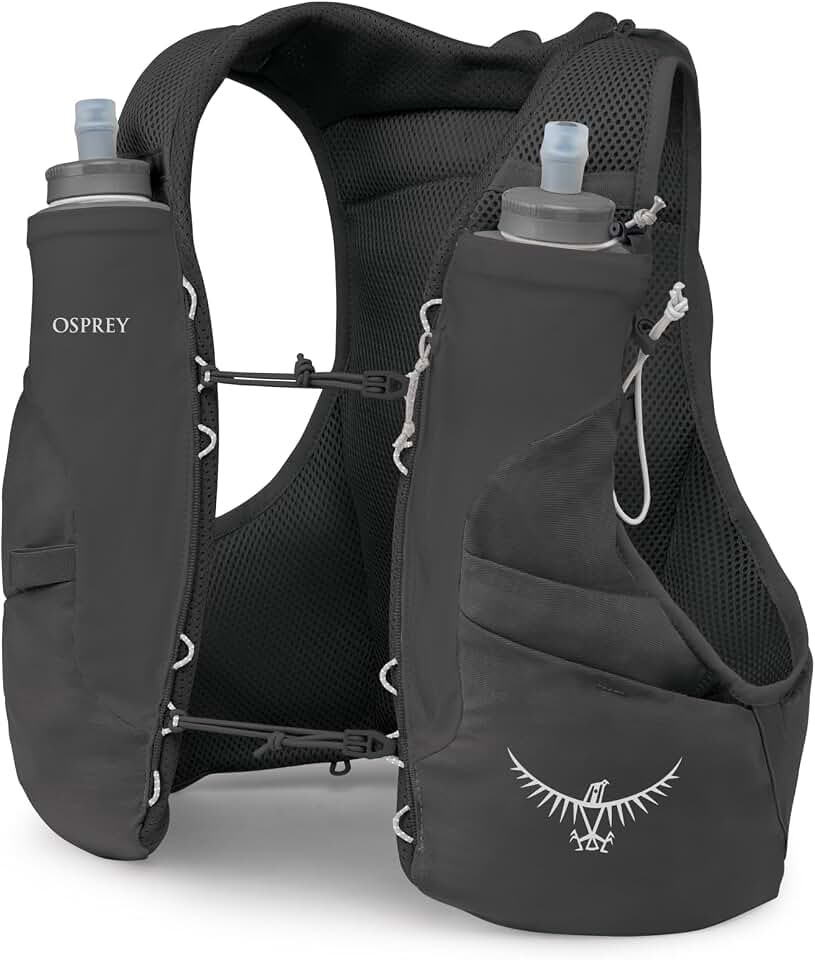
The Osprey Duro 6L represents what happens when a backpack company applies decades of fit engineering to a running vest. The hydraulics soft flask system includes two 500ml flasks that collapse smoothly as you drink, eliminating the sloshing that plagues cheaper bottles. The flasks slot into front chest pockets with just enough tension to hold them secure on descents without requiring force to remove mid-run.
What sets this vest apart is the adjustment system. Multiple strap points let you dial in exactly where the vest sits on your torso, and the straps prevent the common issue of the vest riding up when rear pockets are loaded. The harness design uses a combination of mesh and elastic panels that move with your breathing rather than against it. After the first mile, you stop noticing the vest entirely – it becomes part of your torso rather than something strapped to it.
The 6 liter capacity splits between front and rear storage intelligently. Front pockets hold the flasks, your phone, and a handful of gels. The rear compartment swallows a windbreaker or lightweight rain shell without stuffing, and an external bungee lets you lash a jacket or poles when you warm up. Two zippered hip pockets keep keys and trash separate. Organization is thoughtful enough that you develop a system quickly.
Build quality is excellent – reinforced stitching at every stress point and materials that feel like they will last several seasons of regular trail abuse. The higher price reflects this durability and the refined fit system. Note that this vest has limited customer feedback so far with only 28 reviews, though the 4.8 star rating from early adopters is encouraging. If you run trails multiple times per week and plan to keep a vest for years, the investment makes sense based on Osprey’s established reputation for quality outdoor gear. For occasional trail runners or those still figuring out if they like vests, starting with a more proven option might provide more confidence.
Pros
- Multiple adjustment points provide exceptional fit customization
- Hydraulics soft flasks collapse smoothly without sloshing
- Harness design moves naturally with breathing
- Rear compartment holds layers without compression
- Premium materials from established outdoor gear brand
Cons
- Premium price point
- Limited customer feedback with only 28 reviews so far
- May be more vest than needed for shorter trail runs
View Osprey Duro 6L Men’s Running Hydration Vest with Hydraulics Soft Flasks on Amazon →
2. Nathan TrailMix 7L Running Vest with 2L Bladder
Best for runners who prefer bladder systems and need more water capacity for longer efforts

The Nathan TrailMix 7L takes a different approach by centering the design around a 2 liter hydration bladder rather than front flasks. This matters for runners tackling longer distances or hot conditions where 1 liter of front-loaded water is not enough. The bladder sits in a dedicated rear sleeve with a drinking tube that routes over either shoulder, keeping water accessible without stopping.
Front storage remains useful despite the rear bladder focus. Stretch mesh pockets hold gels, a phone, and small items you need to grab on the move. The fabric is breathable enough to prevent the swampy chest feeling that happens with less ventilated vests. Nathan uses a women-specific and unisex sizing system that accommodates different torso shapes better than one-size designs. The sternum strap adjusts for height and tension, though it offers fewer adjustment points than more expensive vests.
The 7 liter total capacity means the rear compartment swallows more gear than front-focused designs. You can pack a full rain jacket, extra food for all-day runs, and a basic first aid kit without playing Tetris. This makes the vest suitable for self-supported training runs where aid stations are not available. The trade-off is slightly more weight on your back, which some runners find less comfortable than balanced front flask systems.
Build quality is solid for the price point. The materials hold up to regular trail use without falling apart based on extensive customer feedback. The bladder uses a wide opening that simplifies filling and cleaning, which matters because bladder maintenance is more involved than rinsing flasks. At this price, you get proven functionality from an established running brand with over 500 customer reviews confirming reliable performance. For runners who know they want a bladder system and need capacity for longer efforts, the Nathan delivers dependable performance.
Pros
- 2 liter bladder provides more water capacity than flask systems
- Drinking tube keeps water accessible on long runs
- 7 liter capacity handles gear for self-supported long runs
- Wide bladder opening simplifies refilling and cleaning
- Proven design with over 500 customer reviews
Cons
- Rear weight distribution less comfortable for some runners
- Fewer adjustment points than premium vests
- Bladder maintenance requires more attention than flasks
View Nathan TrailMix 7L Running Vest with 2L Bladder on Amazon →
3. Zelvot Running Vest with 500ml Soft Flask
Best for budget-conscious runners trying their first trail running vest

The Zelvot running vest costs a fraction of premium options but delivers the core functionality new trail runners need to figure out if they like running with a vest. The included 500ml soft flask fits in a front chest pocket with elastic retention that works well enough for moderate-paced trail running. You will not get the refined collapse action of expensive flasks, but the bottle holds water and fits in the pocket – which is the baseline requirement.
Adjustable chest straps let you tighten the vest against your torso to minimize bounce. The range of adjustment accommodates different body types, though the strap placement is not as refined as vests designed with specific male or female geometry. Reflective elements across the front and back improve visibility for early morning or evening runs, which is a practical addition that some higher-priced vests skip.
Pocket count is generous – six total pockets including front chest storage, side pockets for gels, and a rear zippered compartment for a phone and keys. The rear pocket is small enough that a full rain jacket will not fit, but a lightweight windbreaker or extra layer stuffs in acceptably. The materials use recycled content, which is unusual consideration at this price point.
The limitation is durability. The materials are thinner than premium vests, and the stitching is adequate rather than bombproof. This vest will not last five years of heavy trail abuse, but it does not need to at this price. For someone running trails once or twice a week while deciding if they want to invest in a nicer vest, the Zelvot provides a low-risk entry point. The substantial review count with over 1,200 customer ratings suggests it holds up well enough for recreational use at a price that makes trying a vest low-stakes.
Pros
- Budget-friendly entry price for first-time vest buyers
- Adjustable chest straps accommodate different body types
- Reflective elements improve visibility in low light
- Six pockets provide storage flexibility
- Over 1,200 customer reviews confirm reliable performance for recreational use
Cons
- Thinner materials less durable than premium options
- Soft flask quality adequate but not refined
- Rear compartment too small for full rain jacket
4. CamelBak Dart Run Vest
Best for minimalist runners who want a lightweight vest for shorter trail runs under two hours

The CamelBak Dart Run Vest strips away everything except what you need for focused trail runs where you are back at the car in 90 minutes or less. This is a minimalist design that prioritizes low weight and reduced bulk over maximum storage. The vest uses a streamlined profile that disappears under your arms and does not extend far down your back, which reduces the fabric-against-skin surface area that causes overheating.
Flask pockets sit high on the chest where they belong, keeping weight close to your center of gravity. CamelBak does not include flasks with the vest, which allows you to choose your preferred bottle style or use flasks you already own. This flexibility matters because flask preferences are personal – some runners want firm bottles, others prefer collapsible, and the Dart accommodates both. The elastic pocket tops hold bottles securely without requiring specific CamelBak models.
Storage is deliberately limited. Front pockets handle flasks and a few gels. A small rear pocket holds a phone, keys, and maybe one additional layer if it is thin. This is not a vest for all-day efforts or self-supported long runs. It is for runners who know exactly what they need, pack light, and want the vest to feel like almost nothing. If you find yourself removing vests mid-run because they feel like too much, the Dart addresses that complaint directly.
The price sits in the middle range between budget and premium, reflecting CamelBak’s reputation for hydration systems without commanding Osprey money. Build quality is reliable – CamelBak has been making hydration gear for decades and the construction reflects that experience. This vest currently has limited customer feedback with only 26 reviews, though the 4.5 star rating is promising. For experienced trail runners who have tried bulkier vests and want something that fades into the background, the Dart delivers that experience based on CamelBak’s track record, though newer trail runners might prefer options with more established customer feedback.
Pros
- Minimalist design reduces bulk and weight
- High chest pocket placement optimizes weight distribution
- Compatible with various flask styles you may already own
- Streamlined profile prevents overheating
- Mid-range price from established hydration brand
Cons
- Limited storage unsuitable for runs over two hours
- Does not include flasks with purchase
- Limited customer feedback with only 26 reviews so far
5. INOXTO Running Hydration Vest with 1.5L Water Bladder
Best for trail running beginners who want to test a bladder system at minimal cost
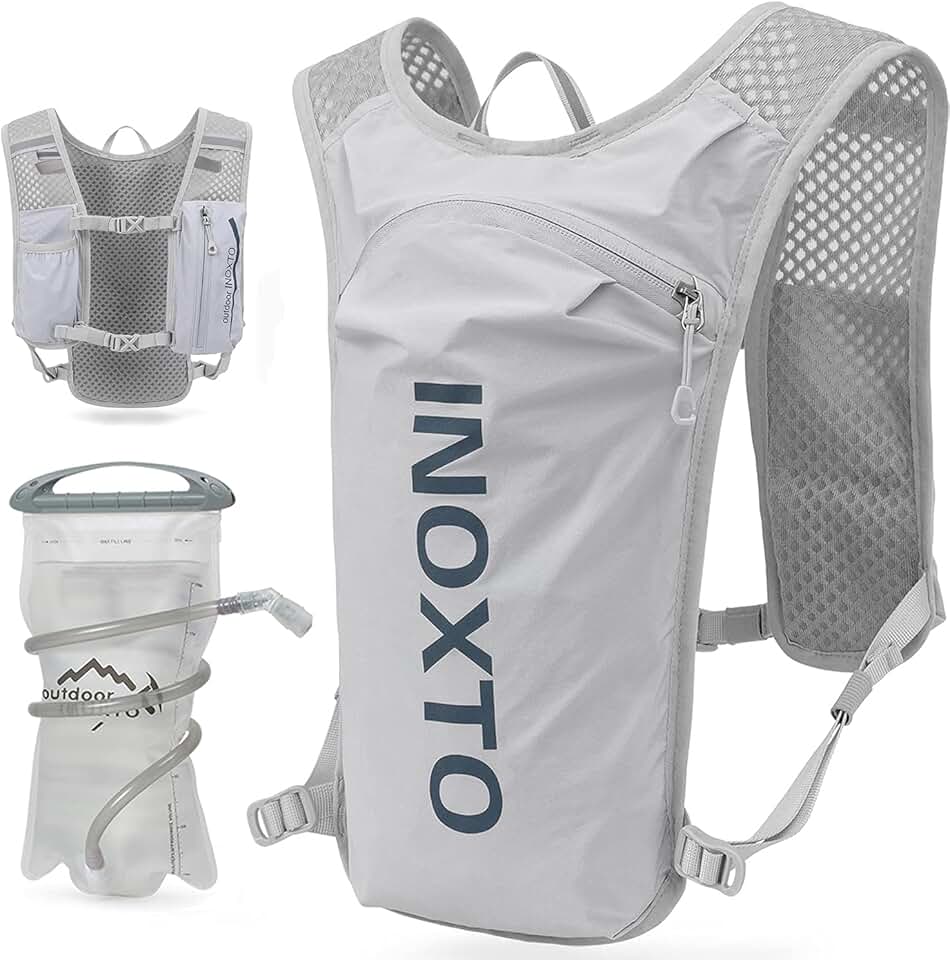
The INOXTO vest represents the absolute entry point for trail running hydration, including a 1.5 liter bladder at a price that barely exceeds a decent handheld water bottle. This is not a vest you will use for years, but it is a vest that lets you discover whether you like running with a bladder on your back without risking significant money. The bladder sits in a rear sleeve with a drinking tube that routes over your shoulder using a magnetic clip.
The construction is designed to keep water cooler in hot conditions, which matters on exposed trails in summer. Front mesh pockets provide storage for gels, a phone, and small items. The mesh is breathable but basic – adequate ventilation without the engineered airflow of premium materials. Adjustment straps let you tighten the vest, though the range is more limited than vests with multiple adjustment points.
The substantial review count is the strongest selling point. Over 2,300 customers have tested this vest and rated it 4.4 stars, which suggests it delivers on its basic promise despite the budget price. Reviews consistently mention good value for casual trail running rather than refined performance. The materials will show wear faster than expensive vests, and the stitching is not reinforced at stress points. This is a vest for someone running trails occasionally or testing whether they want to invest in better gear.
At this price, the INOXTO competes with not buying a vest at all. If you are curious about trail running but unsure if you will stick with it, spending under $25 to try a complete hydration system makes sense. The bladder is basic but functional, and replacing it later if you decide to upgrade to a better vest is no loss. For recreational runners who need hydration on longer trail walks or easy runs without performance demands, the INOXTO works adequately.
Pros
- Entry-level price makes trying a bladder system low-risk
- Design keeps water cooler than expected at this price
- Over 2,300 customer reviews provide substantial feedback
- Includes complete bladder system ready to use
- Adequate for casual trail running or hiking
Cons
- Basic materials and construction limit durability
- Limited adjustment range may not fit all body types well
- Bladder quality sufficient but not comparable to premium brands
View INOXTO Running Hydration Vest with 1.5L Water Bladder on Amazon →
How These Compare
Choosing the best running vest for trail running depends on your typical run distance, whether you prefer flasks or bladders, and how much you want to spend. The Osprey Duro 6L offers refined fit and durability, making it worth considering if you run trails multiple times per week and want a vest that will last several seasons. The adjustment system and harness provide fit precision that matters on technical terrain where movement control prevents distraction. Note that with only 28 customer reviews so far, this vest has less proven track record than other options, though Osprey’s reputation for quality outdoor gear and the 4.8 star rating suggest strong performance. The $140 price reflects premium materials and construction from an established brand.
The Nathan TrailMix 7L serves runners who need more water capacity and prefer bladder systems. The 2 liter bladder holds twice the water of flask vests, which matters for hot conditions or longer self-supported efforts where refilling opportunities are limited. The 7 liter total capacity accommodates extra layers and food for all-day mountain runs. At $64, it provides proven performance from an established running brand with over 500 customer reviews confirming dependable functionality.
Budget considerations make the Zelvot and INOXTO vests worth examining if you are new to trail running or unsure how often you will use a vest. The Zelvot at $30 delivers soft flask functionality with adjustable fit and reasonable durability for recreational use. The INOXTO at $24 includes a complete bladder system at a price that barely exceeds a good water bottle. Neither will last as long as premium vests, but they let you test trail running with proper hydration before investing in expensive gear. The substantial review counts for both – over 1,200 for Zelvot and over 2,300 for INOXTO – suggest they perform adequately for casual trail runners.
The CamelBak Dart sits between budget and premium as a minimalist option for runners who want to carry less. If you find most vests feel like too much or you primarily run shorter trails under two hours, the streamlined design reduces bulk without sacrificing core functionality. The $82 price reflects quality construction from a hydration specialist, though with only 26 reviews so far, it has less customer feedback than other options. CamelBak’s decades-long reputation for hydration gear provides some confidence despite limited reviews on this specific model.
Body type and fit preferences matter as much as features. The Osprey and Nathan offer the most adjustment range for different torsos. The Zelvot provides adequate adjustment for most body types at a budget price. The CamelBak minimalist design works best for runners who already know their preferred fit. If you have a larger chest or broader shoulders, prioritize vests with multiple adjustment points and wider strap spacing. Smaller frames benefit from vests that offer tighter minimum adjustments to prevent gaping. Testing fit before committing to longer runs prevents the frustration of dealing with bounce or chafing miles from the trailhead.
Frequently Asked Questions
Should I choose soft flasks or a hydration bladder for trail running?
Soft flasks work better for most trail runners because they collapse as you drink, eliminating sloshing and bounce. You can see how much water remains at a glance and refill them quickly without removing your vest. Flasks sit in front chest pockets where weight stays balanced and accessible. Cleaning is straightforward – rinse and air dry.
Bladders make sense for longer efforts where you need more than 1 liter of water. A 2 liter bladder holds twice what typical flask systems carry, which matters in hot conditions or on self-supported runs where water sources are sparse. The trade-off is that you cannot see remaining water without stopping, refilling requires removing the bladder entirely, and cleaning demands more attention to prevent mold in the drinking tube. If your typical trail run lasts under two hours, flasks provide better convenience. For half-day mountain efforts or hot desert trails, a bladder system gives you the capacity you need.
How do I prevent my running vest from bouncing on trails?
Bounce happens when your vest fits too loose or pockets sit too low on your torso. Start by adjusting the sternum straps so the vest feels snug against your ribcage without restricting breathing. You should be able to slide two fingers under the strap comfortably while standing still. When you run, the vest should move with your torso as one unit rather than shifting up and down.
Pocket positioning matters more than tension alone. Flask pockets should sit high on your chest near your collarbones, not down near your stomach. When flasks sit low, they swing with each stride and pull the vest down your torso. Load your vest with water and run in place to test the fit – you should feel almost no independent movement. Some vests use multiple adjustment straps that let you control both upper and lower vest position separately. If your vest has this feature, tighten the lower strap to prevent the vest from riding up when rear pockets are loaded. For runners with larger chests, look for vests with wider strap spacing that prevents the vest from pulling inward across the chest.
What capacity running vest do I need for trail running?
Capacity depends on your typical run duration and how self-sufficient you need to be. A 1.5 to 3 liter vest holds two 500ml flasks plus a small rear pocket for your phone, keys, and a few gels. This works for runs under two hours in moderate temperatures where you are never far from your car or an aid station. Plan for roughly 500ml to 750ml of water per hour depending on heat and your sweat rate.
A 6 to 8 liter vest adds rear storage for a windbreaker, extra food, and basic safety items like a headlamp or first aid kit. This capacity suits half-day mountain runs or training efforts where you want to carry a buffer of gear without returning to the trailhead. For runs over four hours or conditions where weather might change, the extra space provides peace of mind. Do not overestimate what you need when starting out. Beginners often buy too much vest and then run with empty pockets that add weight without benefit. Match capacity to your actual gear list rather than hypothetical worst-case scenarios.
Do running vests fit differently for women versus men?
Yes, chest and torso shape differences mean women-specific vests often fit better for female runners. Women-specific designs use narrower strap spacing to prevent chest pockets from gaping outward, and strap attachment points sit higher to accommodate shorter torso lengths. The result is a vest that conforms to your body rather than hanging loose or pulling across the chest.
Many brands offer unisex vests with extensive adjustment range that works for multiple body types. If you have an average build for your gender, these vests often fit adequately with proper strap adjustment. Runners at the extremes – very small frames, very broad shoulders, larger chests – benefit more from gender-specific designs. When possible, test the vest loaded with water and gear before committing to longer runs. Fit issues that feel minor standing still often become significant problems after an hour on technical terrain.
How do I clean a running vest and hydration system?
Soft flasks need rinsing after each use and thorough cleaning weekly if you use anything besides water. Rinse with warm water immediately after your run, then wash with mild soap and a bottle brush once a week. Flip the flask inside out and hang it to air dry completely – trapped moisture encourages mold growth. Never put flasks in the dishwasher unless the manufacturer specifically approves it. Heat can degrade the plastic and affect flask flexibility.
Bladders require more attention because the drinking tube and bite valve hide moisture where mold thrives. After each run, disconnect the tube and flush everything with warm water. Weekly cleaning means filling the bladder with warm soapy water, shaking it thoroughly, then using a cleaning kit with brushes designed for bladder tubes. Some runners add a drop of bleach to the rinse water monthly as additional insurance against mold. Always hang the bladder with the opening positioned down so water drains out, and store it in a freezer if you will not use it for weeks. The vest itself can go in a washing machine on gentle cycle, but skip the dryer – hang it to air dry instead.
The Bottom Line
The best running vest for trail running balances your typical distance, preferred hydration system, and budget without overloading you with features you will not use. If you run trails multiple times per week and want gear that lasts, the Osprey Duro 6L provides fit refinement and durability that justify the premium price, though with only 28 reviews so far you are relying more on Osprey’s brand reputation than extensive customer feedback. The adjustment system and soft flask setup deliver bounce-free performance on technical terrain where distraction matters.
For runners who need more water capacity or prefer bladder systems, the Nathan TrailMix 7L offers a 2 liter reservoir and generous storage at a mid-range price. The design suits self-supported long runs where refilling opportunities are limited and you need space for layers and extra food. With over 500 customer reviews, this vest has proven track record for dependable performance.
Beginners testing trail running without major investment should examine the Zelvot or INOXTO vests. Both deliver functional hydration systems under $30, letting you discover whether you like running with a vest before spending premium money. The substantial review counts for both – over 1,200 for Zelvot and over 2,300 for INOXTO – suggest they perform adequately for recreational trail running, though durability will not match expensive options.
The CamelBak Dart serves experienced runners who want minimal bulk for shorter efforts. If you know you need less gear and find typical vests feel like too much, the streamlined design addresses that complaint directly. With only 26 reviews, this vest has limited customer feedback, though CamelBak’s established reputation for hydration gear provides confidence.
Match vest capacity to your actual gear list rather than hypothetical scenarios. For runs under two hours, 1.5 to 3 liters handles hydration and essentials. Half-day mountain efforts benefit from 6 to 8 liter capacity that accommodates layers and safety items. Proper adjustment prevents bounce – tighten straps so the vest moves with your torso and keep flask pockets high on your chest. Take time to test loaded fit before committing to long trail runs, because issues that feel minor standing still often become significant miles from the trailhead.
Disclosure: As an Amazon Associate, we earn from qualifying purchases. This does not affect our editorial recommendations.