
If you are planning your first few hikes with your dog, the excitement of hitting the trails together can quickly turn to anxiety when you think about ticks. Those tiny parasites lurk in the exact places you and your dog want to explore — wooded trails, grassy meadows, and brushy paths. You might be wondering which tick prevention actually works when your dog is running through the underbrush, getting wet in streams, or rolling in who-knows-what on the trail. The good news is that effective tick protection exists, and you do not need to be a veterinary expert to choose the right option for your hiking companion. This guide breaks down the most practical tick prevention methods for dogs who hike, comparing collars, topical treatments, and what actually matters when you are just starting out. We will also cover what to do after each hike to catch any ticks that slipped through, because even the best prevention works better with a solid post-trail routine.
What to Look For
Understanding Different Types of Tick Prevention
Tick prevention for hiking dogs falls into two main categories: collars and topical treatments (also called spot-on treatments). Each works differently, and understanding these differences matters when you are choosing what to trust on the trail.
Tick collars release active ingredients continuously over several months. Most collars work by spreading chemicals through the oils in your dog’s coat, creating a barrier that repels or kills ticks on contact. The biggest advantage for hikers is convenience — you put the collar on once and forget about it for months. However, collars can be less effective if your dog swims frequently or gets thoroughly soaked, as water can reduce their potency even when labeled waterproof.
Topical treatments are liquids applied to one spot on your dog’s back, usually between the shoulder blades. These spread through the skin’s oil layer and typically last one month. They start working quickly and tend to be effective even if your dog swims, making them popular for active trail dogs. The downside is remembering to reapply monthly and keeping your dog dry for 24-48 hours after application.
Duration of Protection and Hiking Frequency
How often you hike determines which prevention method fits your routine. If you hike every weekend or several times per week, long-lasting options like 7-8 month collars make practical sense. You are not juggling monthly applications or daily supplements, and the cost per month often works out lower than shorter-duration products.
For occasional hikers who hit the trails once or twice a month, topical treatments offer flexibility. You can apply them a day before your planned hike and know you have fresh, full-strength protection. This matters because topical effectiveness peaks in the first two weeks after application.
Water Resistance and Trail Conditions
If your hiking involves stream crossings, lake swims, or trails that stay wet, water resistance becomes critical. Many products claim to be waterproof, but what that actually means varies.
True waterproof collars maintain effectiveness even with complete submersion, though most manufacturers recommend waiting a few days after putting on a new collar before swimming. Water-resistant collars work fine in rain or brief water exposure but may lose effectiveness with frequent swimming.
Topical treatments labeled waterproof typically resist washing off after the initial 24-48 hour absorption period. This makes them reliable for dogs who like to wade through streams or play in puddles during hikes. However, daily swimming can still reduce their duration — a 30-day treatment might only last 3-4 weeks with constant water exposure.
If your dog is a serious swimmer or you hike in consistently wet environments, look for products specifically tested for water immersion, not just water resistance.
Dog Size and Adjustability
Tick prevention products are almost always sized by weight, and using the wrong size reduces effectiveness or risks your dog’s safety. For collars, you need both the right weight category and proper fit. A collar should fit snugly enough that you can slip two fingers underneath, but not so loose that your dog can pull it over their head.
Most adjustable collars have excess length that you trim off after fitting. Do not skip this step — that dangling excess can catch on branches during hikes, creating a safety hazard. Some hikers remove traditional collars during hikes to prevent snagging; if you do this, a topical treatment makes more sense than a collar-based prevention.
For topical treatments, dosing by exact weight matters. A 50-pound dog needs a different dose than a 60-pound dog, even though both might be considered large. When your dog falls between size categories, always round up to the next weight class.
Natural vs. Chemical Active Ingredients
The debate between natural and chemical tick prevention sparks strong opinions, but for hiking dogs, effectiveness matters most. Chemical-based products containing ingredients like deltamethrin or permethrin are extensively tested and proven to repel or kill ticks on contact. They work consistently across different tick species and geographic regions.
Natural products using essential oils like cedarwood, peppermint, or lemongrass appeal to owners wanting chemical-free options. However, effectiveness varies significantly based on formulation, and most lack the extensive field testing of chemical products. If you choose natural prevention, pay close attention to customer reviews mentioning hiking or outdoor use specifically, not just general flea and tick claims.
A practical middle ground is using chemical prevention as your primary defense during active tick season (spring through fall in most regions) and natural products during lower-risk winter months.
Multi-Pack Value and Long-Term Cost
Tick prevention is an ongoing expense, and the upfront cost often differs dramatically from the per-month cost. An expensive collar that lasts 8 months costs less per month than buying topical treatments every 30 days. Multi-packs of collars reduce the per-collar cost significantly but require storage space and commitment to that product.
For beginners, starting with a single collar or a small pack of topical treatments makes sense while you figure out what works for your dog and your hiking patterns. Once you know a product is effective and your dog tolerates it well, multi-packs offer better value.
Consider your hiking season too. If you only hike during warm months, a 4-month supply of topical treatment might cover your entire hiking season, while an 8-month collar might outlast your need.
Our Top 5 Picks
1. Seresto Flea & Tick Collar For Dogs Over 18 lbs
Best for frequent hikers wanting reliable, long-lasting protection without monthly reapplication
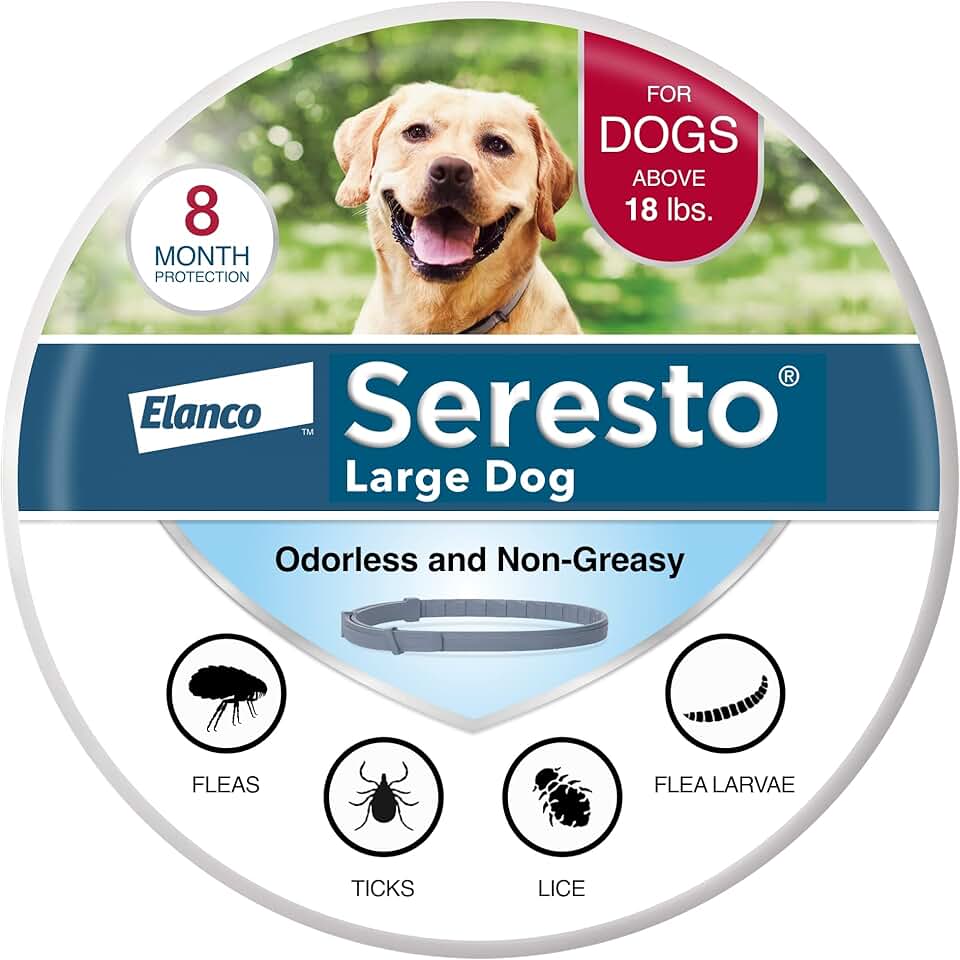
The Seresto collar has become a standard among hiking dog owners for good reason — it provides 8 months of continuous protection, which covers most hiking seasons without needing to remember monthly applications. This matters when you are juggling trail planning, gear prep, and everything else that goes into getting outdoors regularly. The collar is designed for dogs over 18 pounds, making it suitable for most medium to large hiking breeds.
What sets this collar apart for trail use is its water-resistant design. While the manufacturer recommends avoiding frequent swimming in the first few days after putting it on, once it has settled, the collar maintains effectiveness even when your dog gets wet on the trail. This is not theoretical — with over 113,000 reviews, countless hikers report their dogs swimming, playing in streams, and getting caught in rain without losing protection.
The collar works by slowly releasing active ingredients that spread through your dog’s coat, repelling and killing ticks on contact. This means ticks are less likely to attach in the first place, which is exactly what you want on the trail where you might not notice a tick until you are back home. The adjustable design fits a range of neck sizes, and you trim off the excess length to prevent snagging on branches — an important safety consideration when hiking.
One limitation to be aware of: some dogs experience localized irritation where the collar sits, usually within the first week. This typically resolves as your dog adjusts, but it is worth checking the contact area during your first few hikes. The collar also has a distinct plastic smell when first opened, though this fades within a day or two. Some users report the collar becoming less effective in the final month or two, so consider replacing it slightly before the full 8-month period if you are hiking in heavy tick areas.
The price point is higher upfront than monthly treatments, but breaks down to roughly $6 per month of protection. For weekend warriors planning to hike regularly throughout spring, summer, and fall, this cost-per-month calculation makes sense compared to buying topical treatments every 4 weeks.
See current pricing for the Seresto Flea & Tick Collar on Amazon.
Pros
- 8 months of continuous protection covers entire hiking season
- Water-resistant design maintains effectiveness after stream crossings and rain
- Over 113,000 customer reviews provide extensive real-world feedback
- Adjustable sizing fits most medium to large dogs
- No monthly reapplication to remember or schedule
Cons
- Higher upfront cost may be challenging for first-time buyers
- Some dogs experience temporary skin irritation in first week
- Effectiveness may decline in final 1-2 months of 8-month period
View Seresto Flea & Tick Collar For Dogs Over 18 lbs on Amazon →
2. K9 Advantix II XL Dog Vet-Recommended Flea, Tick & Mosquito Treatment
Best topical treatment for extra large hiking dogs needing waterproof monthly protection

K9 Advantix II is a topical treatment that many veterinarians recommend for active outdoor dogs, and this 4-month supply provides consistent protection without the commitment of a long-term collar. The treatment comes in pre-measured tubes that you apply to your dog’s skin between the shoulder blades once per month. This XL formulation is designed for dogs over 55 pounds, covering larger breeds popular for hiking like Labs, German Shepherds, and Golden Retrievers.
What makes this topical treatment practical for hikers is the fast action — it starts working within 12 hours of application. If you have a weekend hike planned, you can apply it Friday evening and hit the trail Saturday morning with full protection. The treatment also repels mosquitoes and biting flies in addition to ticks, which adds value when hiking in areas with multiple biting insects.
The 4-month supply requires you to track applications and remember to reapply monthly. Some hikers set phone reminders or mark their calendar after each trail day. You also need to keep your dog from swimming or getting wet for 24 hours after each application, which requires planning around your hiking schedule. The application spot can look greasy or wet for a few hours, and some dogs try to rub it off if they can reach it, though applying between the shoulder blades usually prevents this.
The price for 4 months of protection works out to about $11.50 per month, comparable to the per-month cost of long-term collars but with the flexibility to stop or start based on your hiking season. For dogs who swim frequently or those who have not responded well to collars, this topical approach offers reliable protection backed by thousands of reviews from outdoor dog owners.
Read verified buyer reviews for the K9 Advantix II XL Dog Treatment on Amazon.
Pros
- Waterproof after 24 hours allows swimming and stream crossings
- Fast 12-hour activation time works with weekend hiking plans
- Also repels mosquitoes and biting flies common on trails
- 4-month supply provides flexibility to pause between hiking seasons
- Over 48,000 reviews confirm effectiveness for outdoor dogs
Cons
- Requires monthly reapplication and tracking
- Must keep dog dry for 24 hours after each application
- Application spot appears greasy until fully absorbed
3. PetArmor Plus Flea and Tick Prevention for Dogs, Large Dog Treatment, 6 Doses
Best budget-friendly topical treatment for large dogs hiking occasionally or seasonally

PetArmor Plus offers a more affordable entry point into topical tick prevention, with 6 doses covering a full 6-month hiking season for about half the cost of premium brands. This makes it particularly appealing if you are new to hiking with your dog and want effective protection without a major financial commitment while you are figuring out your outdoor routine. The treatment is sized for dogs 45-88 pounds, covering many popular hiking breeds.
The waterproof formula works similarly to higher-priced topicals — you apply it once monthly to your dog’s skin between the shoulder blades, wait 24 hours for absorption, then your dog can get wet without losing effectiveness. The active ingredients spread through the oil layer of the skin and coat, creating a barrier that kills ticks on contact before they can attach and transmit diseases. Many reviewers specifically mention using this product for dogs who hike, camp, and spend extended time in wooded areas with positive results.
What you are getting for the lower price is the same mechanism of action as premium brands, just with a different formulation. The main practical difference most users notice is that this formula can take slightly longer to spread fully through the coat — some dogs show better coverage by day 3-4 rather than day 1-2. For hiking purposes, this means applying it a few days before your planned trail time rather than the night before.
The 6-dose supply requires you to remember monthly applications, and consistency matters for effectiveness. Some hikers find it helpful to apply a new dose on the same calendar day each month — for example, the first of every month during hiking season. The product ships as individual tubes, making it easy to toss one in your hiking pack if you are heading out for a multi-day trip and need to apply a fresh dose on the trail.
With over 60,000 reviews, this is one of the most-reviewed tick prevention products available, and the feedback includes extensive real-world testing by outdoor dog owners. The trade-off for the budget-friendly price is slightly slower activation and occasionally uneven coverage, but for seasonal hikers or those testing tick prevention for the first time, this provides solid protection at an accessible price point of roughly $5.30 per month.
Check current stock for the PetArmor Plus Flea and Tick Prevention on Amazon.
Pros
- Budget-friendly price makes tick prevention accessible for beginners
- 6-month supply covers full warm-weather hiking season
- Waterproof formula works for stream crossings and rain
- Over 60,000 reviews provide extensive customer feedback
- Individual tubes are convenient for multi-day hiking trips
Cons
- Takes 3-4 days for full coverage, requiring advance planning
- Slightly slower activation compared to premium topical treatments
- Requires consistent monthly reapplication for continuous protection
View PetArmor Plus Flea and Tick Prevention for Dogs on Amazon →
4. Hartz UltraGuard Pro Reflective Flea & Tick Collar for Dogs
Best entry-level collar for budget-conscious hikers wanting basic trail protection
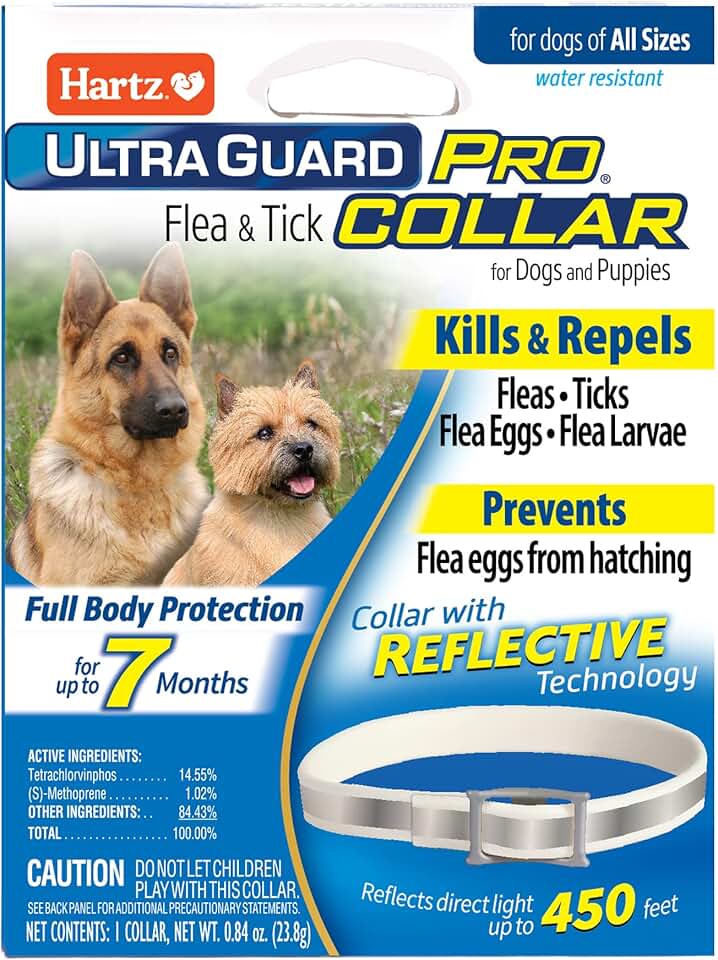
The Hartz UltraGuard Pro collar sits at the budget end of tick prevention collars but still provides 7 months of protection, making it a practical choice if you are hesitant to invest heavily before knowing how much you will actually hike. At under $8, this represents one of the lowest-cost options for season-long protection. The reflective design also adds a safety feature for early morning or dusk hikes when visibility matters.
This collar works by gradually releasing active ingredients that spread through your dog’s coat over the 7-month period. The adjustable design fits dogs of various sizes, and you cut off the excess length after fitting. The water-resistant design holds up to rain and light water exposure, though it is not designed for dogs who swim frequently. If your hiking involves occasional stream crossings but not full swimming, this level of water resistance typically suffices.
The reflective strip is a thoughtful addition for hikers who start early to beat the heat or find themselves on the trail later than planned. It is easier to spot your dog in low light conditions, which matters on trails where your dog might range ahead or explore off to the side. This is not a critical feature, but it is a nice bonus at this price point.
What you trade for the budget price is somewhat lower effectiveness compared to premium collars, particularly in heavy tick areas. Many reviewers report good results for moderate tick exposure, but if you are hiking in regions with very dense tick populations, you might find this collar works better as part of a layered approach rather than your only line of defense. Some users also note the collar has a stronger chemical smell than higher-priced options, though this typically fades after a few days of wear.
The 7-month protection period is well-suited for spring through fall hiking in most climates. For beginners testing whether they enjoy hiking enough to make it a regular activity, this collar provides adequate protection without the commitment of a $50+ collar. If you discover you love hiking and your dog encounters heavy tick pressure, you can always upgrade to a more robust option for next season. With nearly 14,000 reviews, there is solid feedback from outdoor dog owners using this for casual to moderate hiking.
Compare the Hartz UltraGuard Pro Reflective Collar specs and pricing on Amazon.
Pros
- Very budget-friendly at under $8 per collar
- 7-month protection covers typical hiking season
- Reflective strip improves dog visibility in low light
- Water-resistant design handles rain and light water exposure
- Adjustable sizing fits various dog sizes
Cons
- Lower effectiveness in areas with heavy tick populations
- Not suitable for dogs who swim frequently
- Stronger chemical odor compared to premium collars
View Hartz UltraGuard Pro Reflective Flea & Tick Collar for Dogs on Amazon →
5. K9 Advantix II Large Dog Vet-Recommended Treatment, 1-Month Supply
Best single-month option for trying topical prevention or occasional hiking trips
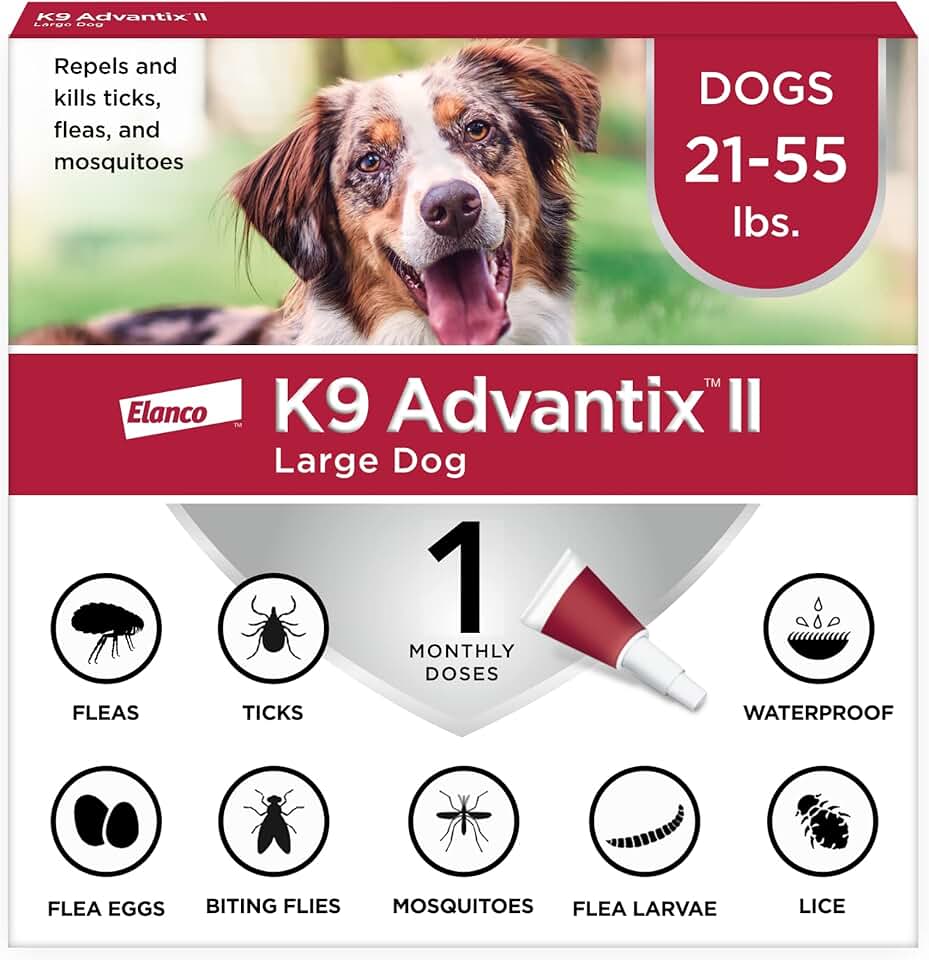
This single-dose package of K9 Advantix II offers the same formula as the multi-month supply but in a try-before-committing format. For hikers planning just one or two trips this season, or those wanting to test whether their dog tolerates topical treatments before buying bulk, this single-month supply makes practical sense. The treatment is sized for dogs 21-55 pounds, covering many medium-sized hiking breeds.
The application process is straightforward — you apply the entire tube to your dog’s skin between the shoulder blades, and protection begins working within 12 hours. This quick activation is particularly useful if you are planning a last-minute weekend hike and realize you have not yet started tick prevention. Apply it Friday evening, and you are ready for a Saturday morning trailhead start.
The waterproof formula is the same as the multi-month packs, meaning after the initial 24-hour dry period, your dog can swim, wade through streams, or get caught in downpours without compromising protection. The treatment spreads through the oil glands in your dog’s skin, creating full-body coverage that also repels mosquitoes and biting flies. For a single hiking trip in an area with multiple biting insects, this broader protection adds value beyond just tick defense.
The obvious limitation is cost — buying single doses costs more per application than multi-packs, working out to nearly $20 per month versus around $11.50 when buying 4-month supplies. However, if you only need protection for one or two specific hiking trips, paying slightly more per dose makes sense compared to buying a 6-month supply you will not use. This is also ideal for testing whether your dog has any skin sensitivity to topical treatments before investing in larger quantities.
The 44,000+ reviews provide extensive feedback from outdoor dog owners, including specific mentions of hiking, camping, and backcountry use. This level of real-world testing by people doing exactly what you are planning — taking their dogs into tick habitat — offers reassurance that the product performs in the conditions you will actually encounter. For occasional hikers or those new to tick prevention, starting with a single dose lets you test effectiveness and your dog’s tolerance before committing to a full season’s supply.
See if the K9 Advantix II Large Dog Treatment is right for your first hike on Amazon.
Pros
- Single-month supply allows testing before bulk commitment
- Fast 12-hour activation works for last-minute hiking plans
- Waterproof formula effective after 24-hour absorption period
- Also repels mosquitoes and biting flies on trails
- Over 44,000 reviews from outdoor dog owners
Cons
- Higher per-month cost compared to multi-dose packages
- Requires keeping dog dry for first 24 hours after application
- Need to purchase multiple times for season-long protection
View K9 Advantix II Large Dog Vet-Recommended Treatment on Amazon →
How These Compare
Choosing between these tick prevention options depends primarily on your hiking frequency and budget. The Seresto collar and K9 Advantix II 4-month supply both cost around $46 but serve different needs — the collar offers 8 months of continuous, hands-off protection ideal for frequent hikers, while the Advantix topical provides 4 months of waterproof protection you can start and stop based on your season. For hikers planning to be on trails every weekend or multiple times weekly, the Seresto collar eliminates monthly reapplication tasks and works out to the lowest per-month cost.
Budget-conscious hikers have solid options in the PetArmor Plus 6-dose pack and Hartz collar. The PetArmor topical gives you 6 months of protection at roughly half the cost of premium brands, requiring only that you remember monthly applications. The Hartz collar at under $8 provides 7 months of basic protection and works well for moderate tick exposure, though it is less effective in heavy tick areas.
For occasional hikers or those just starting out, the single-month K9 Advantix II supply lets you test topical prevention without committing to a full season’s supply. This makes sense if you are taking one or two hiking trips and want effective protection without investing in months of unused product. The waterproof feature across most of these products means your choice can be based more on convenience and cost than worrying about water exposure on the trail.
Frequently Asked Questions
How soon before hiking should I apply tick prevention to my dog?
The timing depends on which type of prevention you choose. Topical treatments like K9 Advantix II or PetArmor Plus need 24 hours to fully absorb before your dog can get wet, and they reach peak effectiveness within 12 hours after application. For a Saturday hike, applying the treatment Friday evening works well. However, some budget topicals take 3-4 days to spread completely through the coat, so check your specific product’s instructions. Tick collars need even more advance planning — manufacturers typically recommend waiting 2-3 days after putting on a new collar before allowing your dog to swim, though the collar starts providing protection immediately. If you already have a collar that has been on your dog for a week or more, no additional preparation is needed before hiking. For the most reliable protection, apply prevention at least 2-3 days before your planned hike, which also gives you time to monitor for any skin reactions before you are on the trail.
Can my dog swim with tick prevention on while hiking?
Most modern tick prevention products are labeled as water-resistant or waterproof, but what this means in practice varies. Topical treatments like K9 Advantix II and PetArmor Plus become waterproof after the initial 24-hour absorption period, meaning your dog can swim in lakes, wade through streams, or get soaked in rain without washing off the protection. The active ingredients bind to the oil layer in your dog’s skin rather than sitting on top of the fur, so they resist water. However, daily swimming or very frequent water exposure can still reduce the duration — a 30-day treatment might only last 3-4 weeks with constant swimming. Tick collars vary more in their water resistance. Premium collars like Seresto maintain effectiveness even with swimming, though manufacturers recommend waiting a few days after first putting on a new collar before water exposure. Budget collars are typically water-resistant rather than waterproof, meaning they handle rain and brief stream crossings but may lose effectiveness with frequent swimming. If your hiking routes regularly include lake swimming or extended water play, prioritize products specifically labeled as waterproof rather than just water-resistant.
How do I check my dog for ticks after a hike?
Post-hike tick checks are important even with prevention, since no product is 100% effective. Start your check while still at the trailhead if possible — ticks often crawl on the fur for several hours before attaching, so you might catch them before they bite. Use your fingers to feel through your dog’s coat, paying special attention to warm, hidden areas where ticks prefer to attach: around the ears and ear flaps, under the collar, between the toes, in the armpits, and around the groin and tail base. Part the fur in sections and look at the skin directly, since ticks are small and easily missed. For dogs with thick or dark coats, a bright flashlight helps. If your dog has short fur, you can also roll a lint roller over their coat to pick up crawling ticks that have not attached yet — this is surprisingly effective. When you find an attached tick, remove it with fine-tipped tweezers by grasping as close to the skin as possible and pulling straight out with steady pressure. Avoid squeezing the tick’s body, which can push bacteria into your dog. Clean the bite area with rubbing alcohol after removal. For the first few hours after a hike, keep checking periodically, as ticks that were crawling during your initial check might attach later.
Is natural tick prevention effective enough for hiking?
Natural tick prevention products using essential oils like cedarwood, peppermint, or lemongrass appeal to many dog owners wanting to avoid synthetic chemicals, but the products reviewed in this guide focus on chemical-based options because effectiveness is critical for hiking dogs. Natural collars and sprays work by masking your dog’s scent or creating a smell that ticks find unappealing, but this approach is generally less reliable than products that actively kill or repel ticks on contact. If you choose natural prevention for ethical or health reasons, consider it as part of a layered approach rather than your only defense. Combine a natural collar with thorough post-hike tick checks, and potentially a chemical treatment during peak tick season. For your first hiking experiences in tick-prone areas, chemical prevention provides more reliable protection while you are learning the terrain and tick patterns in your region. You can always transition to natural options once you understand the level of tick exposure your hiking areas present.
What tick prevention works best for dogs who hike in multiple states?
Different regions have different tick species, and some products work better against certain types than others. If your hiking takes you across state lines or to various geographic areas, look for broad-spectrum prevention that is effective against multiple tick species. Products like K9 Advantix II and Seresto collars are formulated to work against the most common North American tick species including deer ticks (which carry Lyme disease), American dog ticks, brown dog ticks, and lone star ticks. When hiking in a new region, research which tick species are prevalent there — for example, the Gulf Coast tick is common in southern states but rare in the northeast, while the western black-legged tick is specific to Pacific coastal areas. The CDC website maintains current maps of tick distribution by state. For multi-state hiking, monthly topical treatments offer flexibility to switch products if you discover your current prevention is less effective in a new region, whereas an 8-month collar represents a longer commitment. Some hikers who travel extensively for hiking keep both a collar for baseline protection and a topical treatment they can add for high-risk areas. Also pay attention to elevation — ticks are generally more numerous in lower elevations and less common above 5,000-6,000 feet, so your prevention needs might differ between lowland and mountain hiking in the same state.
The Bottom Line
For your first hiking seasons with your dog, tick prevention does not need to be complicated — it just needs to work reliably and fit your actual hiking patterns. If you plan to hike most weekends throughout warm weather, the Seresto collar provides the most convenient season-long protection without monthly tasks to remember. The upfront cost pays off in simplicity and per-month value. For occasional hikers taking one or two trips per month, topical treatments like K9 Advantix II offer flexibility to start and stop protection based on your schedule, and the waterproof formula works well for stream crossings and unpredictable weather. Budget-conscious hikers just starting out should consider the PetArmor Plus 6-dose pack for affordable season coverage or the Hartz collar for basic protection while you figure out how often you will actually get on trails. Whichever product you choose, combine it with thorough post-hike tick checks — run your hands over your dog’s entire body while still at the trailhead, paying special attention to ears, armpits, and other warm spots where ticks like to attach. Prevention works best when paired with consistent checking, creating two layers of defense that catch what the other might miss. Your hiking adventures with your dog should be about enjoying trails together, not worrying about what might be crawling in the underbrush. Solid tick prevention gives you one less thing to stress about as a beginner hiker.
Disclosure: As an Amazon Associate, we earn from qualifying purchases. This does not affect our editorial recommendations.