
You are standing at the trailhead, looking at your water bottles, doing the math: two liters might not be enough for this hike. You have seen other hikers refill from streams, but you are not sure if you need a filter, a purifier, or something else entirely. The gear shop had dozens of options, and every online review seemed written for ultralight backpackers who know what a micron rating means.
Here is the truth: you do not need to understand filtration science to choose a reliable water filter. You need something that works when you squeeze it, drink through it, or let gravity do the work-something thousands of other beginners have already tested successfully. This guide focuses on five straightforward, well-reviewed filters that let you drink from streams and lakes without worry, without a manual, and without spending hours researching technical specifications.
What to Look For
Filter vs Purifier: What You Actually Need
The terms get thrown around interchangeably, but there is a real difference. A filter removes bacteria and parasites-the things that make you sick from natural water sources like mountain streams and lakes in North America. A purifier also removes viruses, which matter more if you are traveling internationally or filtering water that might be contaminated by human or agricultural waste. For most weekend hiking on established trails in the US, a filter handles what you will encounter. If you are hiking near farms, popular campsites, or areas with heavy human traffic, a purifier adds extra protection. The filters in this guide clearly state what they remove-no guessing required.
Straw vs Squeeze vs Gravity: Choosing Your Style
Straw filters are the simplest: you drink directly from a water source or through a bottle. They are light and foolproof but require you to get down at water level-awkward at some streams. Squeeze filters attach to a bottle or bag you fill with water, then you squeeze to push water through the filter into your mouth or another container. They are more versatile and let you filter water to take with you. Gravity filters use a reservoir bag you hang from a tree-gravity pulls water through the filter into a clean bag below. They are ideal if you are filtering for multiple people or want to set up camp and filter several liters at once without effort. Most beginners start with squeeze filters because they balance simplicity with flexibility.
Capacity and Lifespan
Every filter has a lifespan measured in gallons or liters-how much water it can filter before the filter element clogs or wears out. Basic straw filters might handle 1,000 liters, while more robust squeeze systems can filter 100,000 gallons. For someone hiking a few times a month, even a 1,000-liter filter lasts years. Pay more attention to whether the filter is cleanable or if you need to buy replacements. Some filters can be backflushed with clean water to extend their life-you push water backward through the filter to clear out debris. Others are sealed units you replace entirely. Replaceable filters are not a dealbreaker, but know the replacement cost before buying.
Flow Rate and Effort
Flow rate tells you how fast water comes through the filter, usually measured in liters per minute. A faster flow rate means less time spent squeezing or waiting. Straw filters are naturally slower because you are sucking water through-expect some effort. Squeeze filters vary widely: some let you fill a bottle in 30 seconds with light pressure, others require firm squeezing and feel like a workout after a few bottles. Gravity filters are the most effortless but slowest overall-you wait several minutes for a full reservoir to filter, but you are not doing any work. If you are hiking solo and just need a quick drink at a stream, flow rate matters less. If you are filtering multiple liters at camp after a long day, faster is better.
Size and Weight
Portable water filters range from pocket-sized straws weighing 2 ounces to full pump systems over a pound. For day hikes, lighter is usually better-you are not carrying much else, so even a few extra ounces feel noticeable by mile five. Straw filters are the lightest, often under 2 ounces. Squeeze systems with collapsible bottles weigh 3-6 ounces. Gravity systems and pump filters are heavier, typically 10-16 ounces, but they filter larger volumes more comfortably. Think about your pack: if you are already carrying extra layers, snacks, and a first aid kit, a 2-ounce straw filter might be the smarter choice than a 12-ounce gravity system you will resent carrying.
Ease of Use in Real Conditions
Gear that works perfectly in your kitchen can frustrate you on the trail. Some filters require two hands, a firm surface, or multiple steps-fine at a picnic table, awkward when you are balancing on rocks at a creek. Look for filters that work with one hand if possible, or that do not require you to crouch at an uncomfortable angle. Collapsible bottles and bags are convenient but can be tricky to fill in shallow water-you might need to scoop rather than submerge. Bottles with wide mouths fill faster. Gravity systems need something sturdy to hang from, which is not always available. Read reviews from people who used the filter on actual trails, not just in their backyard. They will mention the details that matter: whether the mouthpiece leaks, if the squeeze bag develops holes, if the filter clogs after one muddy stream.
Our Top Picks
1. LifeStraw Personal Water Filter for Hiking, Camping, Travel, and Emergency Preparedness
Best for beginners who want the simplest, most affordable option for occasional day hikes

This is the filter most beginners buy first, and for good reason: it does one thing extremely well without any complexity. You drink directly through the straw from a water source-stream, lake, or puddle-and the hollow fiber membrane inside removes bacteria and parasites. There are no bottles to fill, no squeezing, no setup. You kneel at the water, put the straw in, and drink. It weighs just over 2 ounces and fits in any pocket or clips to your pack with the included lanyard.
The LifeStraw filters up to 1,000 gallons, which translates to years of weekend hiking for most people. It does not require batteries, replacement cartridges during its lifespan, or any maintenance beyond a quick rinse after use. The rating of 4.8 stars across more than 124,000 reviews reflects its reliability-people use it on trails worldwide and it works. The flow rate is slower than squeeze filters because you are creating suction with your mouth, so expect to work a bit harder for each sip, especially if the water is cold or the filter is new.
The biggest limitation is that you cannot store filtered water. You filter only what you drink in the moment, so if you want water for later or need to share with a hiking partner, this is not ideal. You also have to position yourself directly over the water source, which can be awkward at steep or rocky streams. Some hikers carry a wide-mouth bottle to scoop water into, then drink through the LifeStraw from the bottle-this works but adds a step. It also does not remove viruses, so stick to natural water sources away from agricultural or heavy human activity.
Pros
- Extremely simple to use with no learning curve
- Lightweight at 2 ounces and compact enough for any pack
- Exceptional value at under $16 with 1,000-gallon capacity
- Proven reliability with over 124,000 customer reviews
- No replacement filters or maintenance required during lifespan
Cons
- Cannot store filtered water for later use
- Slower flow rate requires more suction effort than squeeze filters
- Must position yourself directly at water source to drink
2. Sawyer Squeeze Water Filtration System
Best for hikers who want versatility to filter on the go and fill bottles for later

The Sawyer Squeeze is the filter experienced hikers consistently recommend to beginners because it handles nearly every situation you will encounter. It includes two collapsible pouches-you fill a pouch with water from any source, screw the filter onto the pouch opening, then squeeze to push water through the filter. You can drink directly from the filter, squeeze into your water bottle, or attach it inline with a hydration pack. This flexibility matters more than you realize until you are three miles from the trailhead and want water to take with you, not just a quick drink.
The filter removes bacteria, protozoa, and microplastics down to 0.1 microns and has a lifetime capacity of 100,000 gallons-essentially unlimited for recreational hikers. Sawyer backs this with a lifetime warranty, which is rare in this category. The included cleaning plunger lets you backflush the filter with clean water when flow slows, restoring performance in seconds. This cleanability is why the Sawyer Squeeze maintains consistent flow over years of use while other filters clog permanently.
The pouches are the weak point-the thin material develops small holes or leaks after repeated use. Many hikers replace them with sturdier bottles or bladders, which is easy since the filter threads fit standard bottles. The filter itself is durable and well-tested, but the pouches feel fragile when you are squeezing firmly to get water flowing. Flow rate is good but not instant-expect to spend 30-45 seconds filling a liter bottle. Some beginners find the squeezing motion tiring if they are filtering multiple liters at camp, but for normal day hike use, it is manageable.
Pros
- Versatile system works for drinking, filling bottles, or inline hydration
- 100,000-gallon capacity with lifetime warranty covers years of use
- Backflushable design maintains flow rate and extends filter life
- Solid reputation with over 10,000 reviews at 4.7 stars
- Removes bacteria, protozoa, and microplastics effectively
Cons
- Included collapsible pouches can develop leaks with heavy use
- Squeezing motion can be tiring when filtering multiple liters
- Pouches feel fragile compared to hard-sided bottle options
3. Katadyn BeFree 1.0L Ultralight Collapsible Water Filter Bottle for Hiking, Camping, Backpacking
Best for hikers who want fast flow and a bottle that collapses to save pack space

The Katadyn BeFree combines a filter with a soft-sided flask that collapses flat when empty, saving significant space in your pack compared to hard bottles. The wide-mouth opening makes filling easy even in shallow streams-you can scoop or submerge without fighting a narrow bottle neck. Once filled, you simply squeeze the flask and drink through the filter cap. The flow rate is noticeably faster than most competitors, allowing you to drink without the extended sucking or squeezing effort other filters require.
The hollow fiber filter removes bacteria, cysts, and sediment down to 0.1 microns and has a 1,000-liter capacity. When flow slows, you shake or swish water inside the flask to clean the filter membrane-no backflushing syringe needed. This simplicity appeals to beginners who want effective maintenance without extra tools. The BeFree works with other Hydrapak bottles and reservoirs if you want to expand your setup later, and it fits most hydration pack hose connectors for inline filtering.
The flask material is durable but not indestructible. Some users report developing holes after months of use, especially if the bottle freezes or gets compressed sharply in a pack. The filter cap occasionally leaks if not screwed on perfectly tight-worth checking before tossing it in your pack. The 1-liter size is right for solo hikers but might feel small if you are covering long stretches between water sources. Katadyn makes a 0.6-liter version for ultralight setups and a 3-liter for group use or camp filtering.
Pros
- Fast flow rate requires minimal squeezing effort
- Wide-mouth opening fills easily in shallow water
- Collapsible design saves pack space when empty
- Simple shake-to-clean maintenance needs no extra tools
- Compatible with other Hydrapak bottles and hydration systems
Cons
- Flask can develop leaks after extended use or freezing
- Filter cap may leak if not tightened completely
- 1-liter capacity feels small on longer hikes between water sources
View Katadyn BeFree 1.0L Ultralight Collapsible Water Filter Bottle for Hiking on Amazon →
4. GRAYL GeoPress 24 oz Water Purifier Bottle – Filter for Hiking, Camping, Survival, Travel
Best for hikers who need virus protection or plan to filter questionable water sources
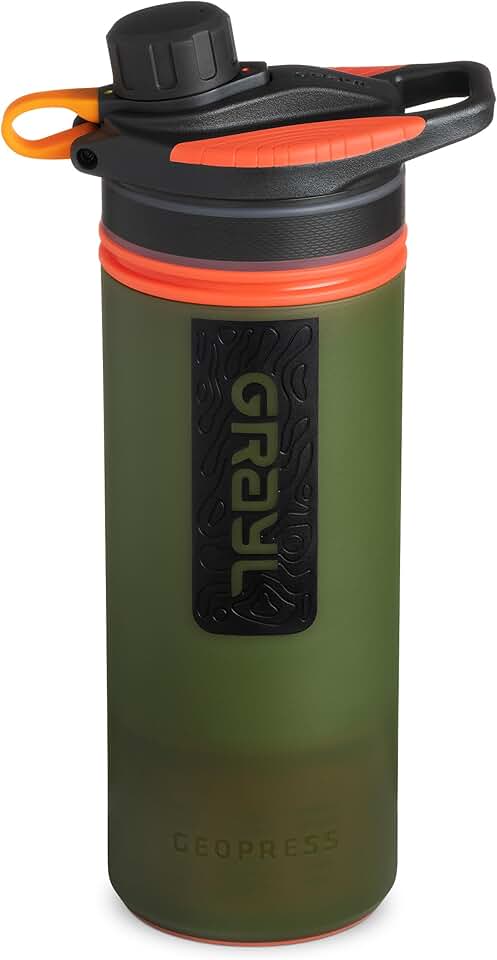
The GeoPress is a purifier, not just a filter, which means it removes viruses in addition to bacteria and protozoa. This matters if you are hiking near livestock, popular campsites with heavy human traffic, or traveling internationally where water quality is uncertain. You fill the outer bottle with water from any source, insert the inner press unit, and push down-in 8 seconds you have 24 ounces of purified water. The speed and simplicity make it feel almost too easy, but the technology works: electroadsorption and activated carbon capture pathogens down to viruses while also improving taste by removing chemicals and heavy metals.
The hard-sided bottle is more durable than collapsible options and does not require squeezing or sucking-you press once and drink normally from the built-in spout. This is easier on your hands and feels more natural than working a squeeze filter after a long hike. The cartridge lasts 65 gallons (250 presses) before needing replacement, which is less than filter-only systems but still covers dozens of hikes. Replacement cartridges cost around $30, so factor that into long-term cost.
The GeoPress is heavier at 16 ounces empty and bulkier than collapsible systems-it takes up bottle cage space that does not compress. The 24-ounce capacity is generous for drinking but means you are carrying more weight when full compared to smaller filters. At nearly $80, it is the most expensive option here, but you are paying for purification capability and build quality. If your hiking stays on well-traveled trails with natural water sources away from contamination, a filter-only system saves money. If you want maximum protection or plan to travel beyond established trails, the GeoPress delivers peace of mind.
Pros
- Purifies water by removing viruses, bacteria, and protozoa
- 8-second press operation is faster than any other system
- Hard-sided bottle is durable and requires no squeezing
- Improves water taste by filtering chemicals and heavy metals
- Works reliably with questionable water sources
Cons
- Heavier at 16 ounces empty and does not compress
- Replacement cartridges needed every 65 gallons add ongoing cost
- Higher initial price at nearly $80
View GRAYL GeoPress 24 oz Water Purifier Bottle – Filter for Hiking on Amazon →
5. Sawyer Products Mini Water Filtration System
Best compact backup filter or ultralight option for experienced beginners

The Sawyer Mini is the smaller sibling of the Squeeze, offering the same filtration technology in a more compact package. It weighs just 2 ounces and fits in a pocket, making it ideal as a backup filter or for minimalist hikers who count every ounce. The filter removes bacteria and protozoa down to 0.1 microns and has a 100,000-gallon capacity, matching the full-size Squeeze. It works the same way: attach it to the included pouch, a standard water bottle, or inline with a hydration system, then squeeze to filter.
The smaller size means slower flow rate-noticeably slower than the full-size Squeeze. Filling a liter bottle takes patience and firm squeezing, which gets old if you are filtering multiple liters at camp. For quick refills on the trail or emergency backup, the slower flow is manageable. The Mini is backflushable with the included cleaning plunger, so you can maintain flow rate over time. With more than 41,000 reviews at 4.8 stars, it has earned widespread trust among hikers who use it on serious treks and depend on it completely.
The included pouches are the same thin material as the full-size Squeeze and develop leaks with heavy use. Many hikers attach the Mini to a disposable water bottle or use it as a backup to a primary filter system. At under $30, it is affordable enough to keep one in your pack permanently and replace the pouches as needed. If you are choosing between the Mini and the full-size Squeeze as your primary filter, most hikers prefer the Squeeze for the faster flow rate. The Mini excels as a lightweight secondary option or for shorter hikes where you will only filter a liter or two.
Pros
- Extremely compact and lightweight at 2 ounces
- Same 100,000-gallon capacity and filtration as full-size Squeeze
- Versatile attachment options for bottles or hydration systems
- Extensive testing by over 41,000 reviewers confirms reliability
- Backflushable to maintain performance
Cons
- Slower flow rate requires more squeezing effort and time
- Included pouches develop leaks with regular use
- Small size makes filtering multiple liters tedious
View Sawyer Products Mini Water Filtration System on Amazon →
How These Compare
Choosing between these five filters comes down to how you hike and what feels manageable. If you are doing short day hikes a few times a year and want the simplest, cheapest option, the LifeStraw Personal gets you on the trail without overthinking. You will sacrifice the ability to carry filtered water, but for $15 and zero complexity, it removes the biggest barrier to trying trail water sources.
The Sawyer Squeeze is the most versatile choice for beginners who plan to hike regularly. Yes, the pouches can be frustrating, but the ability to filter into bottles, drink directly, or use inline with hydration packs means you will not outgrow it as your hiking evolves. The 100,000-gallon capacity and lifetime warranty make it a one-time purchase for most recreational hikers.
If you value speed and convenience over absolute lowest price, the Katadyn BeFree eliminates the squeezing fatigue of other systems. The faster flow and collapsible design make it feel less like a chore to stay hydrated. Just inspect the flask regularly for wear and replace it before it fails mid-hike.
The GRAYL GeoPress is the only purifier here, which matters if you are hiking in areas with questionable water or near human activity. It is heavier and pricier, but that 8-second press operation after a long day feels nearly effortless compared to squeezing or sucking through other filters. If your hiking includes international travel or you want maximum protection, the extra cost pays off.
The Sawyer Mini works best as a backup or for ultralight enthusiasts who have experience with slower flow rates. If you are buying your first filter, get the full-size Squeeze instead-the small price difference buys significantly better usability. Save the Mini for when you want a spare in your emergency kit or you are comfortable with its limitations on longer hikes.
Frequently Asked Questions
What is the best portable water filter for hiking?
The Sawyer Squeeze offers the best balance of versatility, capacity, and proven reliability for most beginner hikers. It lets you filter water into bottles for later, drink directly when needed, or connect inline with hydration packs. The 100,000-gallon capacity with lifetime warranty means you will not replace it, and the backflush cleaning system maintains flow rate over years of use. More than 10,000 reviews at 4.7 stars confirm it works reliably across different conditions. If you want something simpler and cheaper for occasional use, the LifeStraw Personal at $15 is hard to beat-just know you cannot store filtered water. For maximum protection including viruses, the GRAYL GeoPress purifies in 8 seconds but costs more and weighs more.
How do you filter water during a hike?
The method depends on your filter type. With straw filters like the LifeStraw, you place the straw directly into a water source-stream, lake, or puddle-and drink through it. The filter removes bacteria and parasites as you sip. With squeeze filters like the Sawyer, you fill a collapsible pouch or bottle with untreated water, attach the filter to the opening, then squeeze to push water through the filter into your mouth or a clean bottle. Gravity filters use a reservoir bag you hang from a tree branch-you fill the dirty bag, hang it above a clean collection bag, and gravity pulls water through the filter over several minutes. For all methods, try to collect water from flowing sources when possible and avoid water with visible sediment or debris. Clear water filters faster and keeps your filter cleaner longer.
Do backpacking water filters work?
Yes, portable water filters effectively remove bacteria and parasites that cause illness from natural water sources. Filters use hollow fiber membranes or ceramic elements with microscopic pores-typically 0.1 to 0.2 microns-small enough to trap organisms like Giardia, Cryptosporidium, E. coli, and Salmonella. Tens of thousands of hikers use these filters successfully on trails worldwide. The key is understanding what they remove and what they do not. Most portable filters do not remove viruses, which are smaller than bacteria. In North America on established trails away from human contamination, viruses are rarely a concern. Near farms, popular campsites, or in developing countries, you need a purifier or chemical treatment in addition to filtration. Filters also do not remove dissolved chemicals or heavy metals, though some include carbon elements that improve taste. For typical hiking use-filtering water from mountain streams and natural lakes-a quality filter provides safe drinking water.
How long do portable water filters last?
Filter lifespan varies significantly by model. Basic straw filters like the LifeStraw last around 1,000 liters, which is approximately 4,000 refills of a standard water bottle. For someone hiking once or twice a month, that is several years of use. More robust systems like the Sawyer Squeeze and Mini claim 100,000 gallons-essentially unlimited for recreational use. Purifier systems like the GRAYL GeoPress use replaceable cartridges lasting about 65 gallons or 250 presses before needing replacement. The key factor is maintenance: backflushable filters that you can clean extend their lifespan by preventing permanent clogging. Filters that cannot be cleaned eventually slow down as sediment accumulates. Store filters dry between uses and protect them from freezing, which can damage the internal membranes. Most filters die from physical damage or loss before reaching their rated capacity.
The Bottom Line
The best portable water filter for your first hikes is the one you will actually use, which usually means the one that feels simple enough to trust. If you are doing short day hikes and want to dip your toes into filtering trail water, start with the LifeStraw Personal. At $15, it removes the financial barrier while you figure out if you like filtering your own water. Once you are comfortable with the concept, upgrade to the Sawyer Squeeze for more flexibility-it grows with you as your hiking extends to longer distances or overnight trips.
For hikers who know they will be on the trail regularly and want to skip the starter phase, the Sawyer Squeeze or Katadyn BeFree are both solid first purchases. Choose the Squeeze if you value long-term durability and do not mind replacing pouches occasionally. Choose the BeFree if faster flow rate and less effort matter more than absolute lowest cost. If you are planning international travel or hiking near areas with water quality concerns, the GRAYL GeoPress gives you purification capability that filters alone cannot match.
Whatever filter you choose, test it at home before your first trail use. Fill it with tap water, practice the squeezing or drinking motion, and make sure you understand how it works. This five-minute test prevents confusion at a stream when you are thirsty and tired. Carry the filter somewhere accessible in your pack-a hip belt pocket or outer mesh pocket-so you can grab it quickly when you reach water. Most importantly, drink when you find water sources rather than rationing bottles for miles. Having a filter means you can stay hydrated throughout your hike instead of managing scarcity, which makes every hike more enjoyable.
Disclosure: As an Amazon Associate, we earn from qualifying purchases. This does not affect our editorial recommendations.