
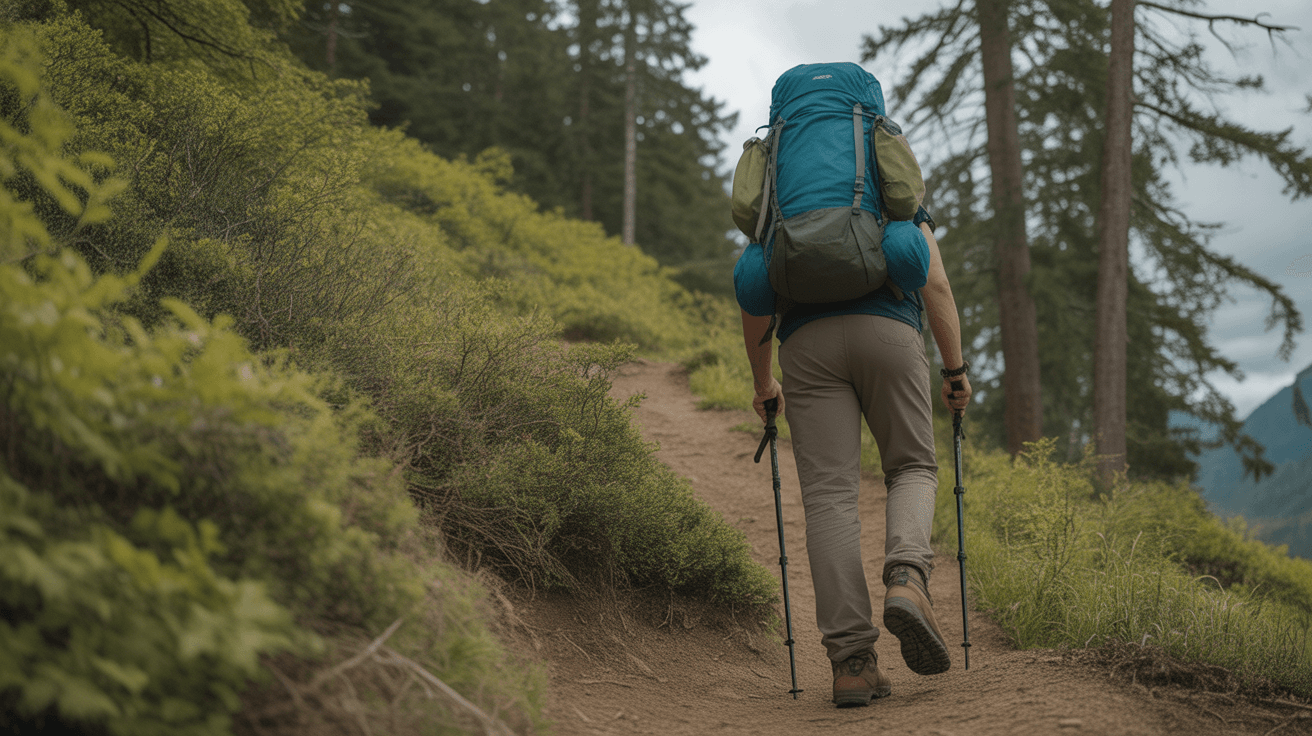
If you are wondering whether hiking counts as a real workout or just a nice walk in the woods, you are not alone. Many people new to hiking question whether stepping onto a trail will actually give them the physical benefits they are hoping for – and the answer is a resounding yes. Hiking works more muscle groups than you might expect, from your legs and glutes to your core and even your upper body when you are wearing a backpack.
This guide breaks down exactly what muscles hiking engages, how different types of terrain challenge your body in different ways, and why even a modest trail hike can leave you feeling the burn the next day. Whether you are trying to get in shape, stay active, or just curious about what your body is doing out there on the trail, understanding the muscular demands of hiking can help you prepare better and appreciate just how much work your body is actually doing.
What to Look For
Your Legs Do Most of the Heavy Lifting
When you are hiking, your lower body muscles are the primary workhorses. The quadriceps – the large muscles on the front of your thighs – are responsible for extending your knee with every step, especially when you are climbing uphill or stepping up onto rocks and roots. These muscles fire constantly throughout a hike, which is why your quads often feel fatigued or sore after a long day on the trail. Downhill hiking actually challenges your quads even more because they work to control your descent and prevent you from pitching forward with each step.
Your hamstrings, located on the back of your thighs, work in partnership with your quads. They help bend your knee and extend your hip as you push off with each stride. While they do not get as much attention as the quads, your hamstrings are essential for maintaining balance and power, particularly on uneven terrain where you need to adjust your gait constantly. Your calves – specifically the gastrocnemius and soleus muscles – power the push-off phase of each step and help you rise up onto your toes when navigating steep climbs or uneven rocks. You will definitely feel your calves working on any hike with significant elevation gain.
Glutes Power You Uphill
Your gluteal muscles, commonly called the glutes, are some of the largest and strongest muscles in your body. They include the gluteus maximus, medius, and minimus, and they are absolutely critical for hiking. The gluteus maximus is the primary muscle responsible for hip extension – the motion that propels you forward and upward with each step. When you are hiking uphill, your glutes are working overtime to lift your body weight against gravity.
The gluteus medius and minimus, located on the sides of your hips, stabilize your pelvis and keep your body balanced as you walk on uneven ground. Without strong glutes, your hips would wobble with every step, making it much harder to maintain your balance on rocky or root-covered trails. This is why hikers often feel soreness in their glutes after a challenging hike, particularly one with sustained climbs. Strengthening your glutes before hitting the trail can make a noticeable difference in your hiking endurance and comfort.
Your Core Keeps You Stable
Your core muscles are not just about having visible abs – they are the foundation of almost every movement you make while hiking. The core includes your abdominal muscles, obliques, lower back muscles, and even the muscles around your pelvis. These muscles work together to stabilize your torso, maintain your posture, and transfer power between your upper and lower body. When you are hiking with a backpack, your core works even harder to keep your spine aligned and prevent you from leaning too far forward or backward.
Every time you step over a log, navigate a rocky section, or adjust your balance on uneven ground, your core muscles are firing to keep you upright. Hiking on trails with roots, rocks, and varied terrain requires constant micro-adjustments that engage your core far more than walking on flat pavement. A strong core can help you maintain good posture even when you are tired. If you have ever finished a hike and felt soreness in your lower back or sides, that is your core telling you it has been working hard.
Upper Body Gets Involved With a Pack and Poles
While hiking is primarily a lower-body workout, your upper body gets involved more than you might think. If you are carrying a backpack – even a light daypack – your shoulders, upper back, and trapezius muscles work to support the weight. Your deltoids (shoulder muscles) and latissimus dorsi (large back muscles) help stabilize the load, especially when you are moving over uneven terrain. The heavier your pack, the more your upper body has to work to maintain balance and posture.
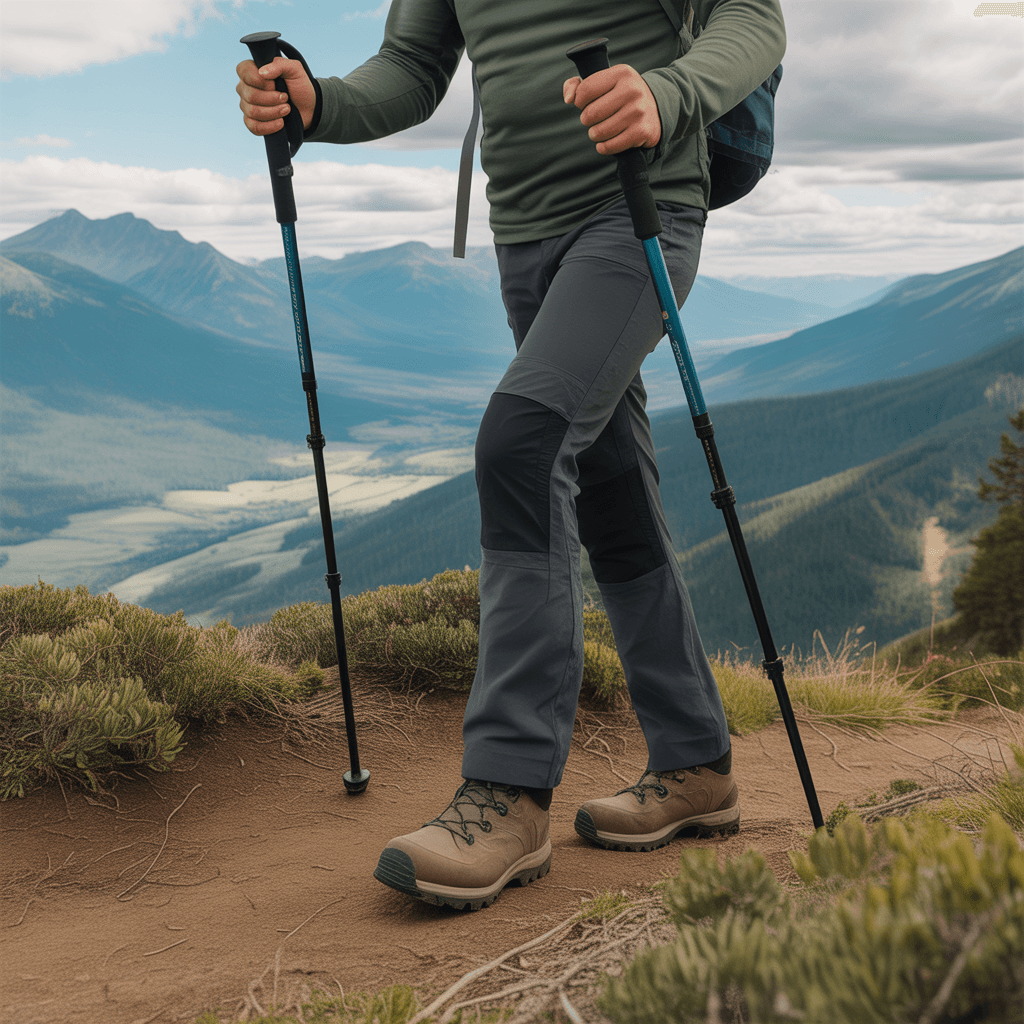
Using trekking poles adds an entirely new dimension to the workout. When you plant your poles with each step, your arms, shoulders, chest, and upper back all engage to help propel you forward and provide stability. Your triceps, biceps, and forearms work to grip the poles and push against the ground. On steep climbs, trekking poles can shift some of the workload from your legs to your upper body, making the ascent feel more manageable. If you are looking to turn hiking into more of a full-body workout, using poles is an excellent way to do it.
Hip Flexors and Stabilizers Work Behind the Scenes
Your hip flexors are a group of muscles located at the front of your hips that lift your thigh toward your torso with each step. They are particularly active during uphill hiking when you are repeatedly lifting your leg to climb. Tight or weak hip flexors can lead to discomfort or fatigue on longer hikes, so stretching and strengthening them can improve your hiking experience significantly.
There are also dozens of smaller stabilizer muscles throughout your legs, hips, and feet that work constantly to keep you balanced on uneven ground. These include muscles in your ankles, the small muscles along your shins (like the tibialis anterior), and the intrinsic muscles in your feet. Hiking on natural terrain forces these stabilizers to activate far more than walking on flat, predictable surfaces like sidewalks or treadmills. This is one reason why hiking feels more challenging and more rewarding than indoor exercise – your body is constantly adapting to the terrain.
How Terrain Changes the Workout
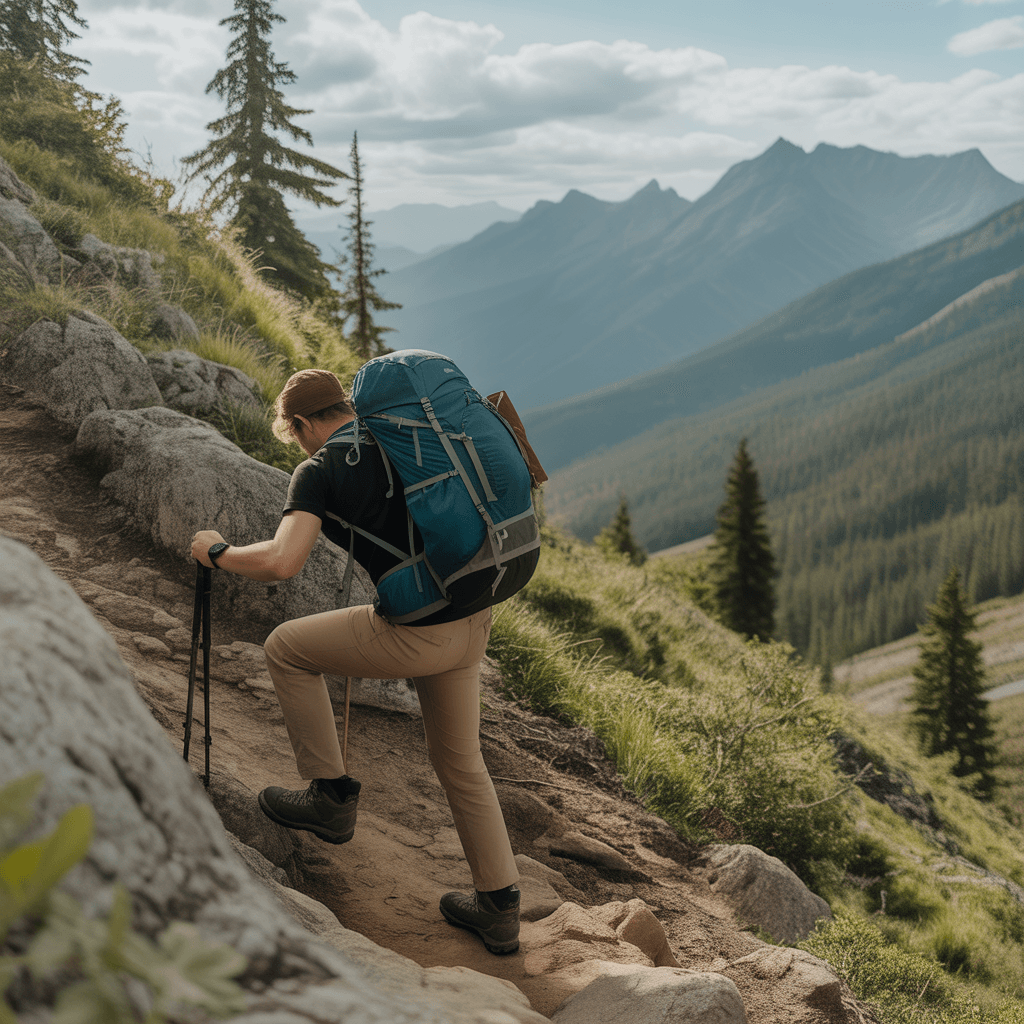
Not all hikes work your muscles in the same way. A flat, well-maintained trail will primarily engage your quads, hamstrings, and calves in a steady, rhythmic pattern. Uphill climbs shift more of the work to your glutes, quads, and hip flexors, while also demanding more from your cardiovascular system. Downhill sections put extra strain on your quads and calves as they work to control your descent and absorb impact with each step. Rocky or root-covered trails require more from your stabilizer muscles and core as you constantly adjust your balance. If you want to challenge different muscle groups, varying the type of terrain you hike on is one of the best ways to do it.
Frequently Asked Questions
Can you build muscle through hiking?
Yes, hiking can help build muscle, particularly in your lower body. When you hike regularly, especially on trails with elevation gain, your quads, glutes, hamstrings, and calves are repeatedly contracting under load, which is the basic principle of muscle strengthening. Hiking uphill with a weighted backpack increases the resistance even more, creating a stimulus for muscle growth. However, hiking is generally better for building muscular endurance rather than maximum muscle size. If your primary goal is to build large muscles, you would need to incorporate traditional strength training exercises like squats and lunges. But for developing lean, functional strength that helps you move better in everyday life, hiking is an excellent choice. The constant variation in terrain and the need to stabilize your body on uneven ground also strengthens smaller stabilizer muscles that gym exercises often miss.
Does hiking tone your stomach?
Hiking engages your core muscles throughout the entire activity, which can help strengthen and tone your abdominal area over time. Your core works constantly to stabilize your torso, maintain your balance on uneven terrain, and support the weight of a backpack. However, it is important to understand that hiking alone will not give you visible abs or a flat stomach. Visible muscle definition in your midsection depends on overall body composition. Hiking burns calories and contributes to overall fitness, and when combined with good nutrition, it can be part of an effective approach to building core strength. Think of hiking as one piece of the puzzle. It strengthens your core and burns calories, but it works best as part of a broader approach to fitness and health. The core strength you build from hiking has real functional benefits that many hikers notice in their everyday movements and activities, even if the aesthetic changes take time.
What is the 20 percent rule for backpacking?
The 20 percent rule is a guideline suggesting that your loaded backpack should not weigh more than 20 percent of your body weight for backpacking trips. For example, if you weigh 150 pounds, your pack should ideally stay under 30 pounds. This rule helps prevent excessive strain on your muscles, joints, and spine, making your hike safer and more comfortable. For day hikes, an even lighter target of around 10 percent of your body weight is often recommended. Carrying too much weight can lead to fatigue, poor posture, and increased risk of injury, particularly in your knees, hips, and lower back. It also shifts more work to your shoulders, upper back, and core muscles as they struggle to stabilize the load. If you are new to hiking, starting with a lighter pack and gradually building up your carrying capacity is a smart approach. Investing in lightweight gear and packing only essentials can help you stay within this guideline without sacrificing safety or comfort.
Is hiking 5 miles in 2 hours good?
Hiking 5 miles in 2 hours works out to an average pace of 2.5 miles per hour, which is a very reasonable and healthy pace for most beginner and intermediate hikers. Average hiking speeds typically range from 2 to 3 miles per hour on moderate terrain, so you would be right in the middle of that range. Your pace will naturally vary depending on factors like elevation gain, trail difficulty, and your fitness level. Steep uphill sections might slow you down to 1 mile per hour or less, while flat or downhill stretches might let you move closer to 3 or 4 miles per hour. There is no universal standard for what counts as a good pace. What matters most is that you are moving at a speed that feels sustainable, allows you to enjoy the scenery, and does not leave you gasping for breath. Hiking is not a race. Completing 5 miles in 2 hours means you are getting solid cardiovascular exercise and working your muscles effectively, which is exactly what hiking is meant to do. As you hike more often, you will naturally build endurance and may find your pace increasing on its own.
The Bottom Line
Hiking is a genuine full-body workout that engages far more muscles than most people realize. Your legs, glutes, and core do the majority of the work, but your upper body, stabilizers, and even smaller muscle groups throughout your feet and ankles all contribute to keeping you moving safely over uneven terrain. Whether you are tackling a steep climb that fires up your quads and glutes or navigating a rocky descent that challenges your balance and core stability, your body is constantly adapting and working.
If you are just starting out, do not worry about how fast you are moving or how far you can go. Every hike you complete is building strength, endurance, and confidence. Pairing your hikes with proper gear – like supportive hiking boots and trekking poles if you want extra stability – can make the experience more comfortable and help you go farther without unnecessary strain. Over time, you will notice that climbs feel easier, your legs feel stronger, and the trails that once felt challenging become your warm-up routes. That is your muscles adapting and growing stronger with every step.
Disclosure: As an Amazon Associate, we earn from qualifying purchases. This does not affect our editorial recommendations.