
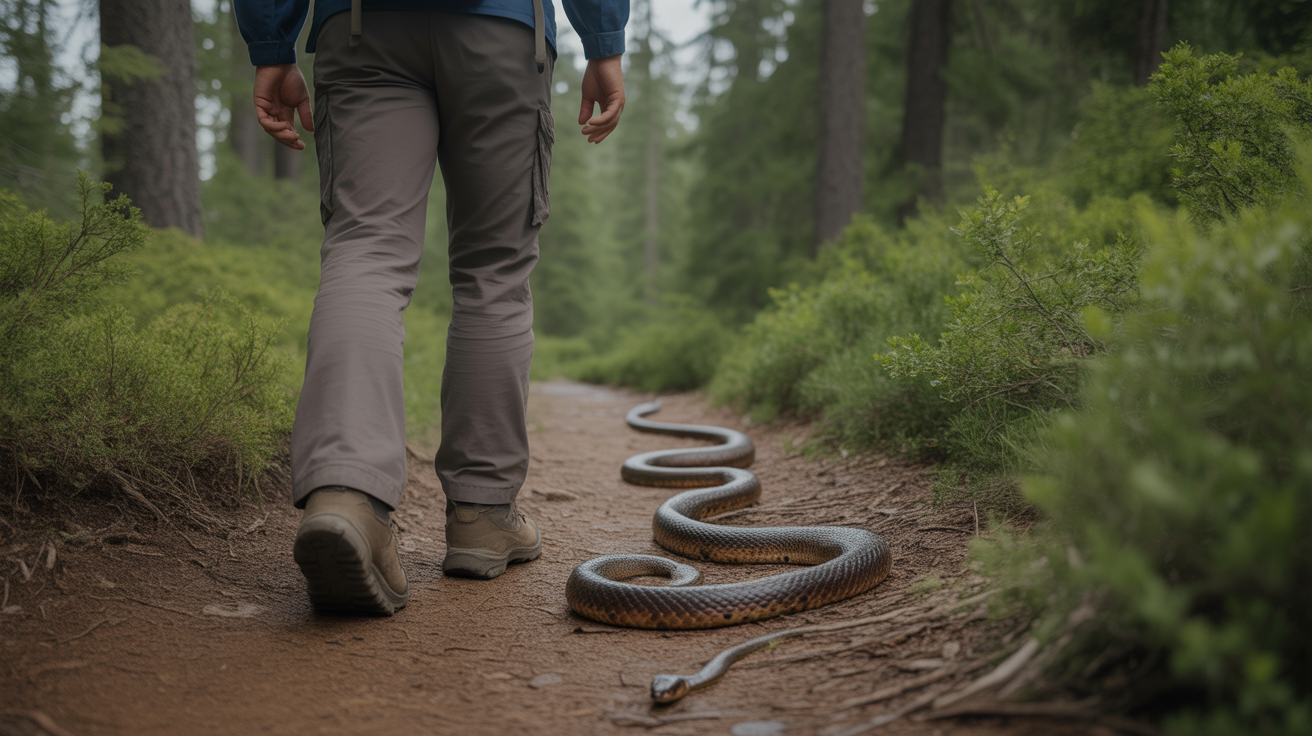
You are halfway through a beautiful hike when you spot it: a snake stretched across the trail ahead. Your heart races, your feet freeze, and suddenly that peaceful morning walk feels a lot less relaxing. Whether this just happened to you or you are worried it might, that moment of uncertainty is completely normal. Snakes on trails are more common than most hikers realize, and the good news is that most encounters end peacefully when you know what to do.
This guide will walk you through exactly what to do if you see a snake on a trail, how to tell if it is dangerous, and how to react calmly so both you and the snake stay safe. You will also learn how to reduce your chances of surprise encounters and what gear can help you hike with more confidence. By the end, you will have a practical plan that turns snake anxiety into simple awareness.
What to Look For
Stop Moving and Give the Snake Space
The single most important thing to do when you see a snake on a trail is to stop walking immediately. Do not take another step forward until you have assessed the situation. Most snake bites happen when people accidentally step on a snake or get too close without realizing it. Snakes do not chase humans, and they do not want conflict. They will almost always choose to leave if given the chance.
Once you stop, take a few steps backward to create distance. A good rule is to stay at least six feet away, though more distance is always better. Snakes can strike about half their body length, so a three-foot snake can reach roughly 18 inches. Six feet gives you a comfortable margin of safety. If you are hiking with others, quietly alert them without sudden movements or loud noises. Keep children and dogs close, and make sure everyone stays behind you until the snake moves on or you find an alternate route.
If you are wearing hiking boots, you already have some protection for your ankles and lower legs, which is where most bites occur. Boots will not make you immune to bites, but they do add a layer of defense if you accidentally get too close.
Identify Whether the Snake Is Venomous
Not all snakes are dangerous. In North America, the vast majority of snakes you will encounter on trails are nonvenomous and pose no threat to humans. Learning a few key identification features can help you assess the situation quickly and decide how cautious you need to be.
Venomous snakes in the United States generally fall into two groups: pit vipers and coral snakes. Pit vipers include rattlesnakes, copperheads, and cottonmouths (also called water moccasins). These snakes typically have triangular-shaped heads, vertical slit pupils, and a heat-sensing pit between the eye and nostril. Rattlesnakes are the easiest to identify because of the rattle on their tail, though young rattlesnakes may have just a small button that does not make noise yet. Copperheads have distinctive crossband patterns in copper, tan, and brown tones, and cottonmouths are usually found near water with a white mouth lining they display when threatened.
Coral snakes are small, brightly colored snakes with red, yellow, and black bands. The phrase “red touches yellow, kills a fellow; red touches black, safe for Jack” helps distinguish venomous coral snakes from harmless look-alikes like scarlet kingsnakes. However, coral snakes are shy and rarely encountered on trails.
If you cannot identify the snake or are not sure whether it is venomous, treat it as if it is. You do not need to become a snake expert to hike safely. You just need to respect all snakes equally and give them space. Nonvenomous snakes like garter snakes, rat snakes, and kingsnakes are beneficial to the ecosystem and will not hurt you, but they still deserve the same courteous distance.
Let the Snake Leave on Its Own
Once you have stopped and created distance, the best strategy is simply to wait. Snakes are usually more interested in leaving than staying. If the snake is aware of you, it will likely move off the trail into nearby brush or rocks within a minute or two. Snakes are cold-blooded and often use trails to sun themselves or move between habitats, but they do not linger when they sense a threat.
Stay still and quiet while you wait. Stomping, shouting, or throwing objects will not make the snake leave faster and may cause it to become defensive. If the snake is coiled or rattling, it is already feeling threatened, and your job is to reduce that tension by not advancing. Do not try to scare it away, and absolutely do not try to move it with a stick or your trekking poles. Even nonvenomous snakes can bite when harassed, and bites from any snake can cause painful wounds and potential infection.
If the snake does not move after several minutes, you have two options: wait longer or take an alternate route. Many trails have enough width to walk around a snake at a safe distance, especially if the snake is off to one side. If you choose to go around, give the snake at least six feet of clearance and watch where you step. Snakes sometimes have companions nearby, particularly during mating season in spring.
Walk Around Safely if the Snake Does Not Move
If waiting is not practical and the snake shows no signs of leaving, you may need to detour around it. This is completely safe as long as you maintain distance and stay aware of your surroundings. Look for a clear path that keeps you at least six feet from the snake. Walk slowly and deliberately, watching both the snake and the ground around you. Do not step over logs or into tall grass without looking first.
If the trail is narrow and bordered by steep drop-offs or thick vegetation, it may be better to turn back and choose a different trail for the day. There is no shame in changing plans. Experienced hikers make this decision regularly, and it is always the right call when safety is uncertain. If you are hiking with a dog, keep them on a short leash and do not let them approach the snake. Dogs are naturally curious and account for a significant percentage of snakebite incidents on trails.
When you walk around, keep your eyes on the snake until you are well past it. Snakes do not chase, but you want to make sure it has not shifted position or moved closer to your path. Once you are 15 to 20 feet beyond the snake, you can resume your normal pace and continue enjoying your hike.
Prevent Snake Encounters in the First Place
While you cannot eliminate all risk of seeing a snake on a trail, you can significantly reduce your chances of surprise encounters with a few simple habits. Snakes are most active during warm weather, particularly in the morning and evening when they come out to thermoregulate. In very hot climates, they may be more active at dawn and dusk and hide during midday heat. Hiking during midday in hot weather reduces your chances of crossing paths with a snake.
Stay on designated trails and avoid walking through tall grass, brush, or rocky areas where snakes like to hide. When you need to step over a log or rock, look on the other side first or step onto the obstacle and then down, rather than blindly stepping over. Make noise as you hike. Talking with a friend, using trekking poles that tap the ground, or simply walking with a steady rhythm gives snakes time to sense your approach and move away before you arrive. Most snake encounters happen because the snake did not know you were coming.
Wear appropriate clothing for snake country. Long hiking pants and boots that cover your ankles provide more protection than shorts and low-cut shoes. Gaiters, which cover the gap between your boots and pants, add another layer of defense and are popular in areas with high snake populations. If you are hiking in known rattlesnake territory, some hikers also carry a small first aid kit with instructions for snakebite response, though the best response is always to get professional medical help immediately.
Know What to Do if You or Someone Else Gets Bitten
Snakebites on trails are rare, but it is important to know how to respond. If you or someone in your group is bitten, stay as calm as possible. Panic increases heart rate, which can spread venom more quickly. Move away from the snake to prevent a second bite, then sit down and keep the bitten area still and lower than the heart if possible. Remove any jewelry or tight clothing near the bite site, as swelling will occur.
Call 911 or get to the nearest hospital immediately. Do not wait to see if symptoms develop. Even if the bite is from a nonvenomous snake, medical evaluation is necessary to prevent infection and assess the wound. If you can do so safely, take a photo of the snake from a distance for identification purposes, but do not waste time or put yourself at risk trying to capture or kill it. Medical staff can treat snakebites even without knowing the exact species.
Do not apply ice, tourniquets, or attempt to suck out venom. These old folk remedies do not work and can cause additional harm. Do not cut the bite site or give the person alcohol or caffeine. Keep the person hydrated with water, keep them calm, and get them to professional medical care as quickly as possible. Most people who receive prompt treatment recover fully from venomous snakebites.
Frequently Asked Questions
Should you stand still if you see a snake while hiking?
Yes, standing still is the correct first response when you see a snake on a trail. Stopping immediately prevents you from getting closer to the snake and gives both you and the snake time to assess the situation. After you stop, take a few slow steps backward to create distance. Do not make sudden movements or loud noises. Most snakes will move off the trail on their own within a minute or two if you remain still and quiet. Standing still also helps you avoid accidentally stepping on the snake or startling it into a defensive posture. Once the snake leaves or you have determined a safe route around it, you can continue hiking. The key is to stay calm, stay aware, and give the snake plenty of space.
What to do if you see a copperhead on a trail?
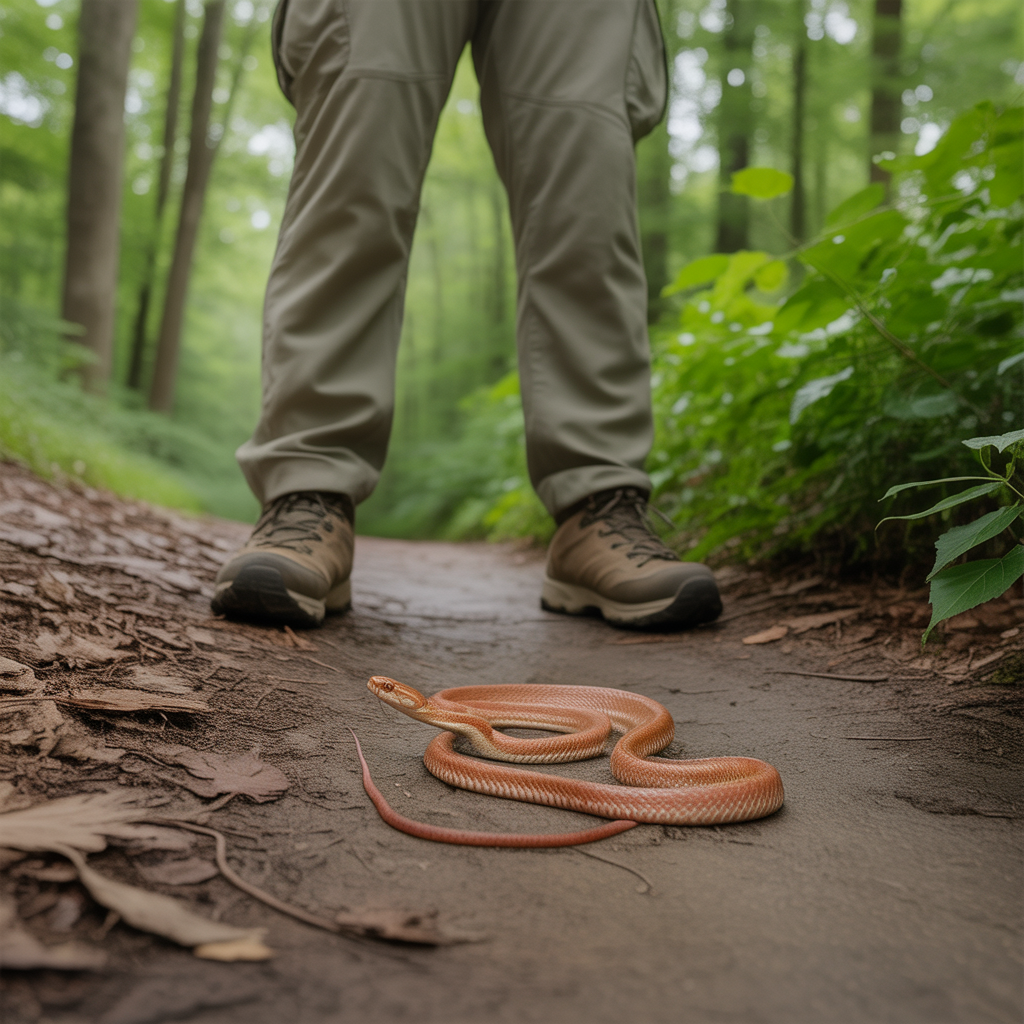
If you see a copperhead on a trail, stop walking immediately and back away slowly to create at least six feet of distance. Copperheads are venomous pit vipers, but they are generally not aggressive and will leave if given the chance. Do not attempt to touch, move, or kill the snake. Stay calm and wait for the copperhead to move off the trail on its own, which usually happens within a few minutes. If the snake does not leave, carefully walk around it while maintaining at least six feet of clearance, watching both the snake and the ground around you. Copperheads have excellent camouflage with distinctive crossband patterns in copper, tan, and brown colors that resemble an hourglass or Hershey kiss shape, so look carefully before stepping into leaf litter or near rocks. If you are hiking with a dog, keep them on a short leash and do not let them approach the snake. If anyone is bitten, seek medical attention immediately.
How do you know if a snake is aggressive?
Snakes are not naturally aggressive toward humans and will not chase or attack you without cause. What may look like aggression is usually a defensive response when a snake feels threatened or cornered. Signs that a snake is feeling defensive include coiling its body, flattening its head, hissing, rattling (if it is a rattlesnake), or striking toward you. A cottonmouth may open its mouth to display the white interior. These behaviors mean the snake wants you to back away, not that it wants to fight. If you see these signs, you are too close. Stop moving, do not advance, and slowly back away to give the snake more space. Once the snake no longer feels threatened, it will usually relax and move away. True aggression in snakes is extremely rare and almost always occurs only when someone is handling or harassing the animal.
What time of day are snakes most active?
Snake activity patterns depend on temperature and season. In moderate climates during spring and fall, snakes are most active during the day when they can bask in the sun to regulate their body temperature. In hot summer weather, snakes become more active during early morning, late afternoon, and evening to avoid extreme midday heat. In very hot desert environments, some snakes become primarily nocturnal during summer months. Snakes are cold-blooded and need external heat sources, so they are generally inactive during cold weather and hibernate in winter in northern climates. If you want to minimize snake encounters, hike during midday in hot weather when snakes are seeking shade, or hike during cooler months when snake activity is lower. However, snakes can be encountered at any time, so always stay alert and watch where you step regardless of the time of day.
The Bottom Line
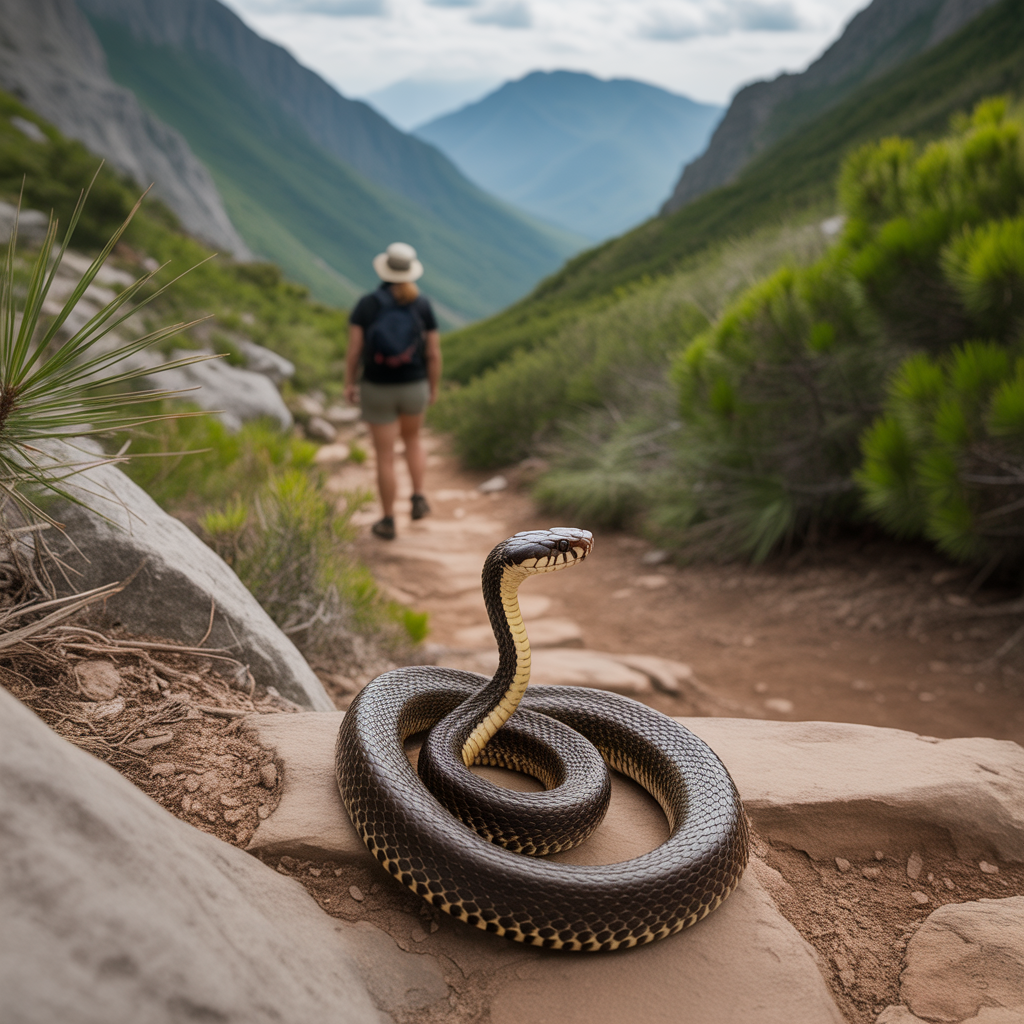
Seeing a snake on a trail does not have to end your hike or keep you off trails in the future. The simple formula is to stop, create distance, and let the snake leave on its own. Most encounters last just a minute or two, and the snake is as eager to avoid you as you are to avoid it. Whether the snake is venomous or harmless, the same respectful approach keeps everyone safe. With a little awareness and the right response, you can share the trail peacefully.
If you are new to hiking in areas with snakes, start with well-traveled trails during midday hours when snake activity is lower. Bring a friend, make noise as you walk, and wear boots and long pants for added confidence. The more you hike, the more comfortable you will become with the idea that snakes are simply part of the landscape. They were there long before the trail was built, and encountering them is a normal part of outdoor recreation. Your job is just to stay alert, respect their space, and continue on your way once the path is clear.
Disclosure: As an Amazon Associate, we earn from qualifying purchases. This does not affect our editorial recommendations.