
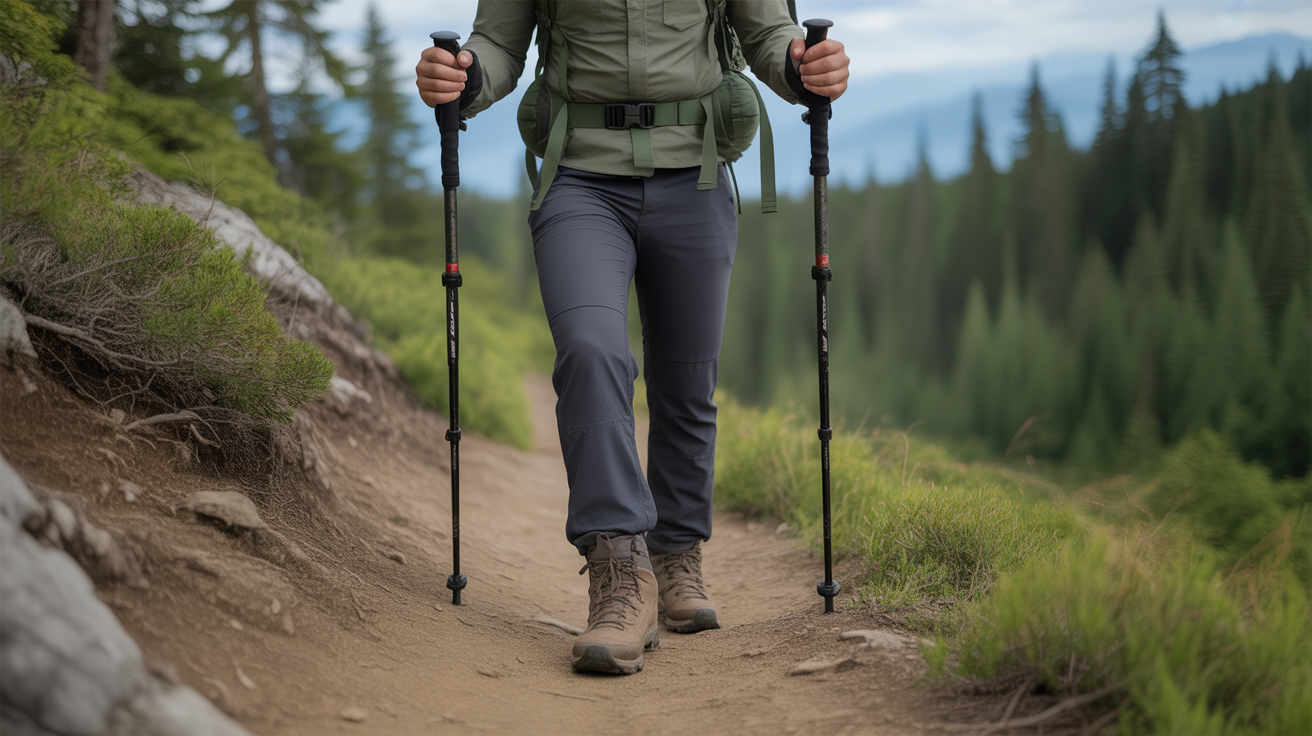
If your hands turn into sweat faucets the moment you start hiking, you already know the frustration of trekking poles that slip and slide with every step. That constant readjusting eats up energy, creates hot spots that turn into blisters, and makes steep descents feel sketchy when you need stability most. The problem is not your hands – the problem is finding a grip solution that actually works when moisture is involved.
The good news: you do not need to just tolerate slippery poles or give up on using them altogether. The right grip enhancer can transform your experience, giving you secure contact even when your palms are drenched. This guide breaks down the best options specifically for hikers dealing with sweaty hands, so you can choose a solution that matches how and where you hike.
What to Look For
Liquid vs Spray vs Paste Formulas
Grip enhancers come in three main formats, and each behaves differently with moisture. Liquid lotions absorb into your skin and create a dry surface layer – they work by eliminating moisture rather than adding tackiness. You apply them before your hike, let them dry for 30 seconds, and they typically last 1-2 hours before you need to reapply. These work best for moderate sweating and longer hikes where you want a low-maintenance solution.
Spray formulas deliver a fine mist that dries almost instantly. They are convenient for quick applications mid-hike and do not require you to get your fingers sticky applying them. However, sprays tend to have the shortest duration – expect to reapply every 45-60 minutes on hot days or during intense climbs. They are ideal for day hikes where you can easily access your pack.
Paste or cream formulas create a tackier barrier on your skin and pole grip. These are the heavy-duty options for people who sweat heavily or hike in humid conditions. They last longer than liquids or sprays but feel stickier to apply and may leave residue on your poles. Most are beeswax-based and designed for activities like pole dancing or aerial fitness, but they translate well to trekking poles when you need maximum grip security.
Application Method and Reapplication Frequency
Consider how often you are willing to stop and reapply during your hike. If you are tackling a long descent where stopping frequently is not practical, you need a longer-lasting formula. Liquid lotions typically provide the best balance – one application at the trailhead and maybe one mid-hike break. Sprays require more frequent attention but are faster to apply, so the trade-off works if you are already stopping regularly for water or photos.
Think about application mess as well. Some formulas require you to rub product into both hands, which means you cannot apply them while holding your poles. Others let you spray directly onto the pole grip without getting your hands involved. If you hike solo and need to keep one pole planted for balance on uneven terrain, a spray or roll-on format makes more sense than a lotion you need two free hands to apply.
Residue and Pole Grip Compatibility
Not all grip enhancers play nicely with all pole grip materials. Cork grips can absorb oils and waxes from paste formulas, which changes their texture over time. Foam grips may break down with repeated exposure to alcohol-based sprays. Rubber grips are the most tolerant, but even they can become sticky or degraded with certain products.
If you have cork grips, stick with dry-formula liquids that do not leave oily residue. For foam grips, test any new product on a small area first to make sure it does not cause deterioration. Rubber grips handle most formulas well, but you will want to wipe them down after each hike to prevent buildup that attracts dirt.
Also consider what residue means for your pack and other gear. Sticky paste formulas can transfer to anything you touch – your water bottle, pack straps, phone screen. Dry liquids eliminate this problem entirely. If you are particular about keeping gear clean or you share equipment with hiking partners, choose a formula that dries completely clear.
Duration for Your Typical Hike Length
Match the product duration to your actual hiking style. A two-hour morning hike has different needs than an eight-hour mountain traverse. Longer-lasting formulas cost more per ounce but require fewer applications, which means less weight in your pack and fewer interruptions to your rhythm.
For hikes under three hours, even a shorter-duration spray will get you through with one or two applications. For half-day or full-day hikes, prioritize products that last 2-3 hours per application. If you are backpacking and need multiple days of use, calculate how much product volume you will actually need – a small bottle may not be enough, and reapplying every hour for a week adds up.
Skin Sensitivity and Ingredient Concerns
Grip enhancers sit on your skin for hours at a time, often in hot conditions when your pores are open. If you have sensitive skin or react to fragrances, alcohol, or synthetic ingredients, read the ingredient list carefully. Some products use only natural ingredients like beeswax and rosin. Others contain isopropyl alcohol, silica, or proprietary chemical compounds.
Natural formulas tend to be gentler but may not perform as strongly in extreme sweat conditions. Chemical formulas often deliver better grip but can cause dryness or irritation with repeated use. If you have a history of contact dermatitis or eczema, test any new product on a small patch of skin before applying it to both hands for a full hike.
Also consider how the product interacts with sunscreen. Some grip enhancers break down or become slippery when mixed with oily sunscreens. If you apply sunscreen to your hands and forearms, wait at least 10 minutes before applying a grip enhancer, and choose a formula that explicitly states compatibility with sunscreen.
Weight and Pack Space
A 4-ounce bottle of grip spray adds measurable weight to your pack, especially if you are trying to keep your base weight down. Compare the product size to how many applications you actually get. Some concentrated liquids deliver 20-30 applications from a 2-ounce bottle. Others require more generous amounts and run out faster.
If you hike with a minimalist approach or do not want to dedicate pack space to a single-purpose item, look for multi-use products. Some grip enhancers double as anti-chafing solutions for feet or work as general anti-slip treatments for other gear. That versatility justifies the weight and space better than a product you will only use on your hands.
Our Top Picks
1. 2Toms GripShield, Non-Sticky Grip Enhancer
Best for hikers who need long-lasting grip without sticky residue on gear

GripShield has built a solid reputation among hikers who deal with sweaty hands, and the 3,284 customer reviews back up its performance claims. This is a liquid formula that dries on your skin to create a moisture-absorbing barrier rather than adding tackiness. You apply a small amount to your palms, rub it in, wait about 30 seconds for it to dry, and you are ready to hit the trail with dry hands that maintain contact with your pole grips.
What makes GripShield particularly useful for trekking poles is that it does not leave sticky residue on your grips. Cork, foam, and rubber pole handles all stay clean, which matters if you care about gear longevity or you share poles with hiking partners. The formula is non-sticky, so you can touch your phone, grab a snack, or adjust your pack straps without transferring goop to everything you handle.
The duration is solid for day hiking – most users report 1.5 to 2 hours of effectiveness per application in moderate conditions. On hot, humid days or during steep climbs where your hands sweat more heavily, expect to reapply closer to the 60-90 minute mark. The bottle is compact enough to toss in your pack or a hip belt pocket for easy mid-hike access. One limitation to be aware of: GripShield works by drying out moisture, so if you already have very dry skin or hike in arid climates, it can feel a bit drying with repeated use. The price point is reasonable for a product that will last dozens of hikes, and the non-greasy formula means you are not constantly wiping your hands on your pants or worrying about what you touch after applying it. See current pricing for the 2Toms GripShield on Amazon.
Pros
- Non-sticky formula keeps pole grips and other gear clean
- Works on all pole grip materials without causing degradation
- Compact bottle fits easily in pack pockets
- Over 3,200 customer reviews confirm reliable performance
- Reasonable price for dozens of applications
Cons
- Can feel drying on skin with frequent use
- Requires reapplication every 1-2 hours in heavy sweat conditions
- Takes 30 seconds to dry before you can start hiking
2. Dry Hands The Ultimate Gripping Solution All-Sport Topical Lotion
Best for heavy sweaters who need maximum moisture control on long descents

Dry Hands has been around long enough to earn a devoted following, and the 4.7-star rating from over 3,000 reviews reflects that loyalty. This is the go-to choice for people whose hands sweat so much that lighter formulas just cannot keep up. It is a liquid lotion that you apply to clean, dry hands before your hike, and it creates a barrier that actively repels moisture for extended periods.
The formula excels during long descents where you are gripping poles tightly for extended periods. Where other products might start to fail after an hour of continuous use, Dry Hands often holds strong for 2-3 hours even in challenging conditions. That makes it particularly valuable for steep downhill sections where losing pole grip can affect your safety and confidence. A little goes a long way – you only need a few drops per application, so even a two-ounce bottle provides many uses.
The main trade-off is that Dry Hands does not work as quickly as spray formulas. You need to apply it to completely dry hands and give it time to absorb before you start hiking. If you stop mid-hike to reapply and your hands are already sweaty, you will need to wipe them down first for the product to work effectively. It also costs a bit more than some alternatives, though the durability and customer satisfaction ratings suggest it is worth the investment if you struggle with severe hand sweating. The high concentration means you use less product per application than with competing formulas, which helps offset the higher upfront cost over time. Read verified buyer reviews for the Dry Hands All-Sport Topical Lotion on Amazon.
Pros
- Longest-lasting performance for heavy sweaters
- High 4.7-star rating from over 3,000 users
- Small amount needed per application stretches value
- Concentrated formula lasts through many hikes
- Strong barrier withstands challenging sweat conditions
Cons
- Requires completely dry hands for application to work
- Takes longer to apply than instant-dry sprays
- Higher price point than some competing products
View Dry Hands The Ultimate Gripping Solution All-Sport Topical Lotion on Amazon →
3. Cramer Firm Grip Anti-Slip Grip Enhancer Spray
Best for quick mid-hike reapplication without stopping to rub in product

Cramer Firm Grip comes as a 4-ounce spray, which changes the application game entirely compared to liquids you rub in. You spray it directly onto your hands or even onto your pole grips, it dries almost instantly, and you are back to hiking within seconds. For people who want minimal interruption to their hiking rhythm or who need to reapply frequently, the spray format eliminates the hassle of stopping, setting down your poles, and working product into your skin.
The formula is designed specifically as an anti-slip solution for sweaty hands across multiple sports, and trekking poles benefit from that same technology. The 2,512 customer reviews and 4.5-star rating show it has broad appeal beyond just one activity. The spray delivers consistent coverage without the mess of getting product on your fingers first, which means you can apply it even while holding a pole with one hand if needed.
Duration is where sprays typically give up some ground to lotions, and Cramer Firm Grip follows that pattern. Expect 45-90 minutes of effectiveness depending on conditions and how much you are sweating. That makes it better suited for day hikes where you can access your pack easily, rather than long backpacking trips where reapplication frequency becomes a bigger concern. The instant-dry feature means you lose almost no time when you do need to reapply, which matters on hikes where you want to maintain a steady pace.
The 4-ounce size is larger and heavier than liquid bottles that accomplish the same number of applications, so you are carrying more weight for the convenience of the spray mechanism. For hikers who prioritize speed and ease of use over minimizing pack weight, that trade-off makes sense. Check current stock for the Cramer Firm Grip Anti-Slip Spray on Amazon.
Pros
- Instant-dry spray format requires minimal stopping time
- Can be applied to hands or directly to pole grips
- Works across multiple sports and activities
- Over 2,500 customer reviews confirm reliability
- No need to touch product with fingers during application
Cons
- Shorter duration than liquid formulas in heavy sweat conditions
- 4-ounce bottle adds more weight than smaller concentrated options
- Spray mechanism can malfunction or clog over time
View Cramer Firm Grip Anti-Slip Grip Enhancer Spray on Amazon →
4. Leki Gummipuffer Power Nordic Walking Replacement Grips
Best for hikers who prefer textured rubber grips that handle moisture consistently

The Leki Gummipuffer represents a different approach – using rubber grips that provide more texture and surface variation than standard smooth grips. The 4.6-star rating from 2,570 reviews shows these grips have earned customer confidence. The textured rubber surface creates more contact points with your palm, which helps maintain grip security even when moisture is present.
Rubber grips handle sweat differently than cork or foam. Rather than absorbing moisture, rubber repels it, which means the grip surface stays consistent whether your hands are dry or wet. For hikers who prefer that predictable feel, textured rubber delivers reliable performance without requiring grip enhancers or frequent maintenance. The material is also easier to clean than cork – a quick wipe-down removes salt residue and dirt that would otherwise build up over time.
The texture pattern on these grips creates small channels where moisture can escape rather than pooling between your palm and the grip surface. This helps reduce the slippery feeling that smooth grips develop when wet. The rubber compound remains flexible in cold weather and does not become brittle or stiff like some foam materials can.
Rubber does transmit vibration more directly than cushioned foam grips, which means some hikers find them less comfortable on rough, rocky terrain during extended downhills. The firmer surface also generates more friction heat during long descents where you are maintaining constant grip pressure. For day hikes and moderate terrain, these concerns are minimal, but for technical descents lasting several hours, you may prefer the cushioning of foam grips combined with a grip enhancer product. Compare the Leki Gummipuffer specs and pricing on Amazon.
Pros
- Textured rubber provides consistent grip wet or dry
- High 4.6-star rating from over 2,500 customers
- Easier to clean than cork or foam materials
- Rubber remains flexible across temperature ranges
- Textured channels help moisture escape contact surface
Cons
- Transmits more vibration than cushioned foam grips
- Firmer surface may generate friction heat on long descents
- Less comfortable than foam for extended technical terrain
- Does not provide cushioning for impact absorption
View Leki Gummipuffer Power Nordic Walking Replacement Grips on Amazon →
How These Compare
If you are trying to decide between these options, start by honestly assessing how much your hands actually sweat. For moderate sweating – hands get damp but not dripping – the 2Toms GripShield offers the best balance of performance, convenience, and clean application. It lasts long enough for most day hikes without being sticky, and it does not damage your pole grips over time.
For heavy sweaters who feel like their hands are constantly wet, Dry Hands delivers stronger and longer-lasting moisture control. It costs more and takes a bit more attention during application, but the 2-3 hour duration and high customer ratings make it worth considering if lighter formulas have failed you in the past. The concentrated formula means a small bottle goes further than you might expect.
Cramer Firm Grip makes the most sense if convenience is your top priority and you do not mind more frequent reapplication. The spray format is genuinely faster and easier, especially on hikes where you are already stopping regularly. It is also useful if you want the flexibility to apply product directly to your pole grips rather than only to your hands, which can extend the duration between applications.
The Leki rubber grips work best for hikers who want a grip surface that naturally handles moisture without adding products to their routine. The textured rubber maintains consistent performance whether conditions are dry or sweaty, though it sacrifices some cushioning comfort compared to foam grips paired with a grip enhancer.
Consider your typical hike duration as well. For short morning hikes under three hours, any of these products will get you through with minimal fuss. For longer full-day hikes or backpacking trips, the Dry Hands or GripShield formulas provide better value because they require fewer reapplications. The Cramer spray works but will have you stopping more often, which disrupts your rhythm on big days.
Frequently Asked Questions
How do I stop my hands from sweating when using trekking poles?
You cannot completely stop your hands from sweating during physical activity – sweating is your body’s natural cooling mechanism and increases during exertion. However, you can manage the moisture with grip enhancers that create a dry barrier on your skin or absorb sweat as it forms. Liquid formulas like GripShield or Dry Hands work by eliminating surface moisture, while spray formulas provide a quick-drying layer that repels sweat.
Another approach is choosing pole grips made from materials that handle moisture better. Cork grips naturally absorb some moisture and maintain better contact than smooth rubber when wet. You can also improve airflow by loosening your grip slightly during flat sections or taking short breaks to air out your hands during long climbs. Some hikers find that wearing thin liner gloves helps wick moisture away from their palms, though this trades direct grip contact for moisture management.
What is the best material for trekking pole grips?
Cork is the most popular grip material for trekking poles because it absorbs moisture and provides good grip even when damp. Cork also stays relatively cool in hot weather and does not get as cold as metal or hard plastic in winter conditions. However, cork can dry out and crack if not maintained, and it requires occasional cleaning to prevent buildup.
Foam grips are softer and provide more cushioning, which reduces hand fatigue on long hikes. They absorb moisture well but can become waterlogged in rain or heavy sweat, and they wear out faster than cork. Rubber grips are the most durable and easiest to clean, and they maintain grip when wet without absorbing moisture. The trade-off is that rubber can feel harder on your hands and may cause more friction and heat buildup during long descents. Your best choice depends on whether you prioritize comfort, durability, or moisture management for your specific hiking conditions.
Can I use chalk on trekking pole grips?
You can use climbing chalk or gym chalk on trekking pole grips, but it is not the ideal solution for hiking. Chalk works by absorbing moisture, which helps temporarily, but it also creates a dry, dusty residue that gets on everything you touch – your clothes, pack, water bottle, and face if you wipe sweat away. Chalk also wears off quickly with hand movement and sweat, so you would need to reapply frequently during a hike.
Chalk can also damage certain pole grip materials over time. It dries out cork grips and can make them brittle or cracked with repeated use. Foam grips can absorb chalk dust and become clogged, reducing their cushioning properties. Grip enhancers designed specifically for sweaty hands work better because they create a moisture barrier without the mess and without damaging your pole grips. If you already carry chalk for climbing and want to test it, use it sparingly and wipe your grips clean after each hike to minimize long-term damage.
How often should I replace my trekking pole grips?
Replace your trekking pole grips when you notice significant wear, cracking, or loss of grip performance – typically after 100-200 hours of use depending on terrain and conditions. Cork grips show their age by developing cracks, becoming smooth and shiny in high-contact areas, or crumbling when you squeeze them. Foam grips compress and lose their cushioning, and they may tear or develop holes where your hands grip most frequently.
If your grips start slipping even when your hands are dry, or if you notice increased blisters and hot spots during normal hikes, the grip material has likely degraded enough to need replacement. You can extend grip life by cleaning them regularly with mild soap and water, avoiding prolonged sun exposure when storing your poles, and rotating where you grip the poles if possible. Many manufacturers sell replacement grips separately, and swapping them out is usually straightforward with basic tools. Replacing worn grips improves your control and comfort immediately, which makes it worth doing before they fail completely on the trail.
The Bottom Line
Finding the right grip solution for sweaty hands comes down to matching the product to your specific sweat level and hiking style. If your hands get moderately damp and you want a clean, non-sticky option that works on any pole grip material, start with 2Toms GripShield. If you sweat heavily and need maximum duration for long descents, Dry Hands delivers stronger performance even though it costs a bit more. For hikers who value quick application above all else and do not mind more frequent reapplication, Cramer Firm Grip spray gets you back on the trail fastest.
If you prefer a grip surface that naturally handles moisture without adding products to your routine, the Leki textured rubber grips maintain consistent performance in both dry and sweaty conditions. Whichever direction you go, test your chosen product on a shorter, familiar hike before relying on it for a long or challenging trek. That gives you a chance to dial in application amount, timing, and reapplication frequency without consequences if something does not work as expected. Your hands will thank you when you can focus on the trail ahead instead of constantly readjusting your grip.
Disclosure: As an Amazon Associate, we earn from qualifying purchases. This does not affect our editorial recommendations.