

When you reach that exposed ridge or summit approach and the wind suddenly picks up, a lightweight windbreaker becomes your best friend. The temperature drop from wind chill can turn a comfortable hike into a miserable experience fast, and you need a layer that protects without weighing down your pack. But with dozens of options ranging from budget-friendly to premium, and terms like packable, waterproof, and breathable all thrown around, it can feel overwhelming to figure out what actually matters.
This guide walks you through the best hiking windbreaker jackets for different budgets and trail conditions. We focus on what really matters for hikers who need wind protection on exposed terrain – packability, weight, wind resistance, and durability – without the marketing hype. Whether you are hiking local trails or tackling mountain summits, you will find a jacket here that fits your needs.
What to Look For
Wind Resistance vs Waterproofing
A true windbreaker is designed primarily to block wind, not heavy rain. Most windbreakers offer some water resistance – they will shed light drizzle or mist for a while – but they are not substitutes for dedicated rain jackets. The tradeoff is worth it: windbreakers are lighter, more breathable, and pack smaller than waterproof jackets. For exposed ridges and summit approaches where wind chill is your main concern, a windbreaker does exactly what you need without the bulk of a full rain shell. If you expect sustained rain, you will want a waterproof jacket instead, but for wind protection on clear or partly cloudy days, a windbreaker is the better tool.
Packability and Weight
The best hiking windbreakers pack down small enough to stuff into your backpack or even a large pocket when you do not need them. Look for jackets that weigh under one pound and compress into their own pocket or a small stuff sack. This matters because you will likely carry your windbreaker for hours before you actually need it – on the approach hike, through forested sections, or on calm lower elevations. Once you hit that exposed section or the wind picks up, you want to pull it on quickly without digging through your entire pack. Packable windbreakers earn their keep by being there when you need them without making you think twice about bringing them along.
Hood Design
A hood is essential for wind protection on exposed terrain. Wind hitting your head and neck drains warmth fast, and a good hood blocks that heat loss while staying put when gusts hit. Look for adjustable hoods that you can cinch down to fit snugly without blocking your peripheral vision. Some windbreakers have stowable hoods that tuck into the collar when you do not need them, which is nice for variable conditions. Avoid hoods that are too large or floppy – they will catch wind like a sail and pull backward, defeating the purpose entirely.
Breathability
Windbreakers need to block wind while letting moisture vapor escape from inside. When you are hiking uphill, your body generates heat and sweat. If your jacket traps all that moisture, you will end up wet from the inside even if it is not raining. Look for windbreakers with venting features like underarm zippers or mesh-lined pockets, and fabrics that balance wind resistance with breathability. The challenge is finding that sweet spot – enough wind protection to matter, but not so much that you overheat on moderate climbs. Many hikers solve this by leaving the front zipper partially open on climbs and zipping up fully only when they stop or hit maximum wind exposure.
Durability and Fabric
Lightweight windbreakers use thin fabrics to save weight, which means they are not as durable as heavier jackets. This is an acceptable tradeoff for most hikers, but you need realistic expectations. Brushing against rough rock, scrambling with a backpack on, or catching a branch can snag or tear lightweight fabrics. Look for reinforced areas on shoulders and elbows if you expect rough trail conditions, and be mindful of how you pack and unpack the jacket. With reasonable care, a quality windbreaker will last for years of regular hiking. Just do not expect it to handle the same abuse as a heavy-duty shell.
Fit and Layering
Your windbreaker should fit loosely enough to layer over a base layer or light midlayer, but not so large that it catches excess wind or feels baggy. Most hikers wear windbreakers over a t-shirt or long-sleeve base layer in cool conditions, or over a fleece or light puffy jacket when temperatures drop further. Check the sizing notes carefully – some windbreakers run small and work best as outer shells only, while others fit generously for layering. Sleeve length matters too: sleeves that are too short expose your wrists to cold air, while overly long sleeves bunch up and get in the way.
Our Top Picks
1. Columbia Watertight II Jacket
Best overall for hikers who want reliable wind and rain protection with trusted brand quality
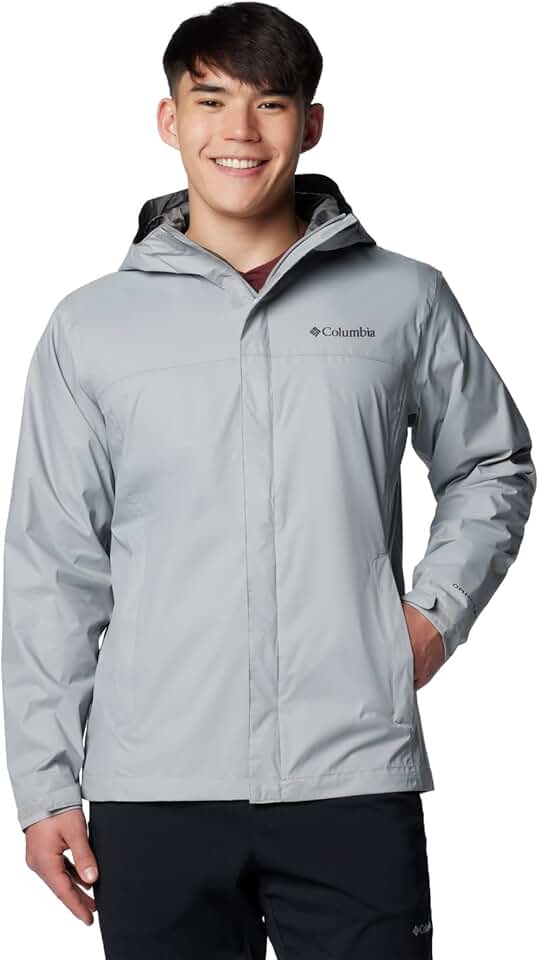
The Columbia Watertight II strikes the balance between wind protection and light rain resistance that most hikers actually need on the trail. This jacket handles exposed ridges and summit approaches confidently, blocking wind chill without the weight or bulk of a full waterproof shell. With over 2,400 reviews and a 4.7-star rating, it has proven itself across thousands of real hiking conditions.
The adjustable hood stays secure in gusts without blocking your vision, which matters when you are navigating rocky terrain or trying to spot trail markers. The front zipper operates smoothly even with cold fingers, and the zipper storm flap prevents wind from sneaking through – a detail that makes a real difference on exposed sections. The jacket packs down reasonably well, though it is not the most compressible option here. You can stuff it into the top of a daypack or lash it to the outside without much trouble.
Columbia’s reputation for durability shows in the construction. The fabric feels substantial enough to handle regular trail use without babying it, and the seams are cleanly finished. This is a jacket you can expect to use for multiple seasons without worrying about premature wear. The fit runs true to size with enough room to layer a fleece underneath for colder conditions, though it is not so baggy that it catches excess wind when worn over just a base layer.
At $67.49, this sits in the middle of the price range but delivers performance that justifies the cost. It is not the lightest option, and if you are counting every ounce for ultralight backpacking, you might want something more minimal. But for most day hikers and weekend backpackers who want one reliable jacket for variable mountain conditions, the Watertight II is hard to beat.
See current pricing for the Columbia Watertight II Jacket on Amazon.
Pros
- Excellent customer feedback with 2,492 reviews and 4.7-star rating
- Adjustable hood that stays secure in wind without limiting vision
- Durable construction from a trusted outdoor brand
- Good balance of wind protection and breathability for active hiking
Cons
- Not as packable as ultralight options
- Heavier than minimal windbreakers designed purely for wind protection
2. OTU Lightweight Waterproof Hooded Rain Jacket
Best value for hikers who want solid wind protection without spending premium prices
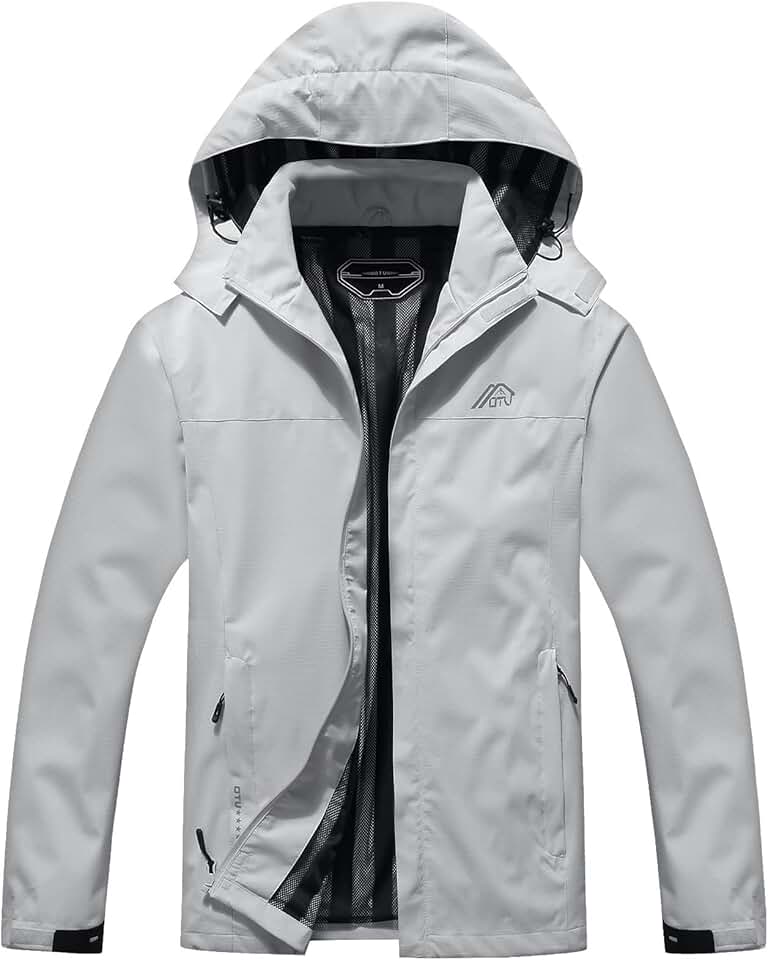
With over 15,000 reviews, the OTU jacket is one of the most purchased windbreakers among hikers, and that popularity reflects real-world value. At around $30, it delivers impressive wind protection for exposed trail sections without asking you to stretch your gear budget. The massive review count means this jacket has been tested across every conceivable trail condition, and the 4.5-star average shows it holds up to regular use.
The hood design is functional and adjustable, cinching down to block wind from your head and neck when you need it. The jacket includes front pockets with zippers, which is not universal at this price point – having a secure place for your phone or snacks matters when you are moving in windy conditions. The fabric blocks wind effectively and sheds light moisture, though this is not intended as a heavy rain jacket. For summit approaches and ridgeline hiking where wind chill is the primary concern, it performs exactly as needed.
The jacket compresses small enough to fit in a daypack without taking over all your space. It is not featherweight – you will notice it in your pack – but it is light enough that most hikers would not think twice about bringing it along. The fabric feels thin, which is typical for budget windbreakers, so you need to be mindful around sharp rocks or rough surfaces. Handle it with reasonable care and it will last through many hikes.
The fit runs slightly generous, which works well if you plan to layer over a midlayer in colder conditions. Some hikers report the sleeves running a bit long, but that is easy to manage and better than sleeves that are too short exposing your wrists to wind. For the price, this is hard to argue with – you get functional wind protection that works.
Read verified buyer reviews for the OTU Lightweight Waterproof Hooded Rain Jacket on Amazon.
Pros
- Exceptional value at $30.59 with strong performance
- Massive 15,065 reviews provide confidence in real-world reliability
- Packable design with self-stowing pocket
- Functional hood and zippered pockets at budget-friendly price
Cons
- Thin fabric requires careful handling around rough terrain
- Slightly generous fit may feel loose for some hikers
View OTU Lightweight Waterproof Hooded Rain Jacket on Amazon →
3. baleaf Rain Jacket Waterproof Windbreaker
Best for hikers who prioritize visibility and safety on exposed trails with reflective features

The baleaf windbreaker stands out with reflective details that make you visible in low-light conditions – a genuine safety feature if you are hiking early morning starts, late finishes, or in areas with vehicle traffic. With over 7,200 reviews and a 4.5-star rating, this jacket has earned trust among hikers who want both protection and visibility. The hood is adjustable and includes reflective trim that helps drivers or other trail users spot you from a distance.
Wind protection is solid across exposed sections, and the jacket handles light rain without soaking through immediately. The fabric breathes reasonably well during active hiking, though like most windbreakers, you will want to regulate temperature by adjusting the zipper on climbs. The design lets you compress the jacket into its own storage pocket, making it easy to stash when you do not need it. At just under one pound, it hits the sweet spot between substantial enough to be durable and light enough to carry without overthinking it.
The fit is true to size with enough room for layering, and the sleeve length works well for most people without being excessive. The front zipper includes a storm flap to block wind from sneaking through, and the pockets are positioned well for comfortable access while wearing a pack. The reflective zipper adds another visibility element that is genuinely useful for safety-conscious hikers.
At $55.99, this sits between budget and premium options, and the reflective features justify the middle-ground price if visibility matters to you. The jacket handles regular trail use well, though the lightweight fabric still requires reasonable care. For hikers who start before dawn, finish after dusk, or hike near roads, the reflective details provide real peace of mind without compromising on core wind protection.
Check current stock for the baleaf Rain Jacket Waterproof Windbreaker on Amazon.
Pros
- Reflective features enhance visibility for safety-conscious hikers
- Strong review base of 7,296 customers with 4.5-star rating
- Good balance of weight and durability for regular trail use
- Packable with self-storage pocket
Cons
- Mid-range price may not suit hikers on tight budgets
- Lightweight fabric still requires care around rough terrain
4. 33,000ft Packable Rain Jacket
Best for hikers who need reliable packability and quick access to wind protection
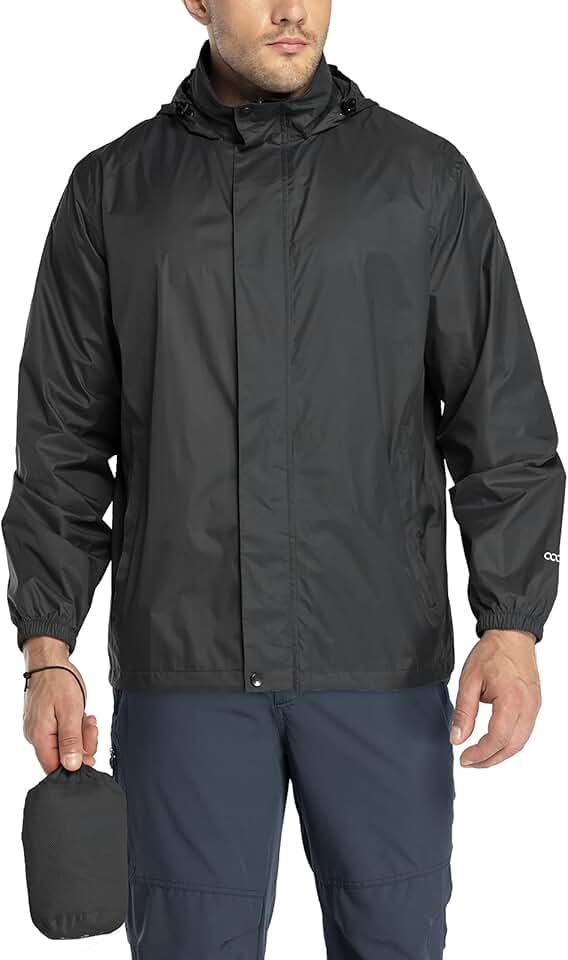
The 33,000ft jacket focuses on what matters most for day hikers and weekend backpackers: packability, wind protection, and straightforward functionality. With over 5,100 reviews backing its performance, this jacket has proven itself across thousands of trail days. The self-packing feature works smoothly – you can stuff the jacket into its own pocket in seconds when conditions change, and it compresses small enough to fit in a corner of your daypack without monopolizing space.
Wind resistance is dependable on exposed sections, and the hood adjusts to fit securely without excessive bulk or complicated adjustment systems. The jacket sheds light rain effectively for short periods, though it is not designed for sustained downpours. For typical summit approaches and ridgeline hiking where wind chill is the main challenge, it performs confidently. The fabric breathes well enough that you would not overheat immediately on moderate climbs, especially if you keep the front zipper partially open.
The fit runs true to size with enough room to layer a fleece or light puffy underneath when temperatures drop. The sleeves are cut to a practical length that covers your wrists without bunching excessively. Pocket placement works well – they are positioned high enough that your pack hip belt would not block access. At $36.99, this delivers solid value without cutting corners on the features that actually matter for hiking.
The fabric is lightweight but holds up to regular use if you treat it reasonably. This is not a jacket you would want to bushwhack through dense vegetation or scramble rough rock faces wearing, but for maintained trails and typical hiking conditions, it proves durable enough. The 400-plus sales in the past month indicate this is a currently popular choice among hikers making real purchasing decisions.
Compare the 33,000ft Packable Rain Jacket specs and pricing on Amazon.
Pros
- Strong packability with self-storage pocket for quick packing
- Over 5,136 reviews provide extensive real-world validation
- True-to-size fit with good layering room
- Popular current choice with 400+ recent purchases
Cons
- Lightweight fabric requires reasonable care on rough trails
- Basic feature set without extras like reflective details
5. COOFANDY Packable Rain Jacket
Best budget option for hikers who want basic wind protection without premium pricing
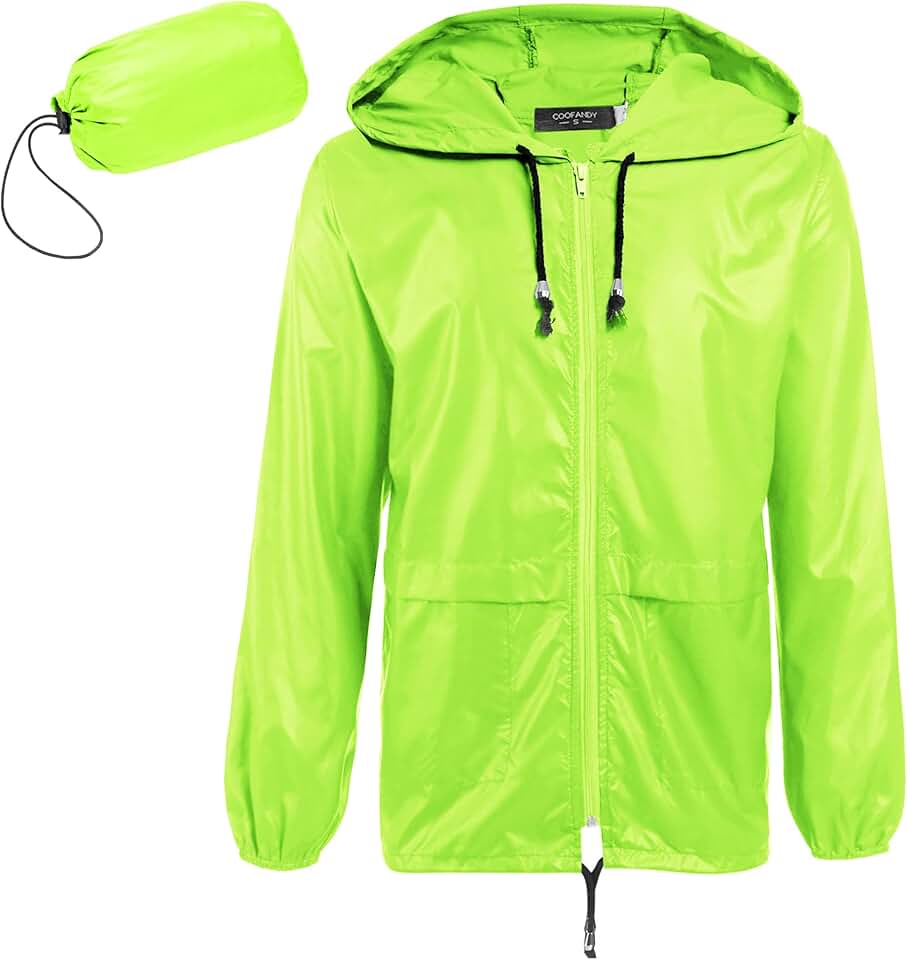
At just under $20, the COOFANDY jacket is the most affordable option here while still maintaining functional performance for exposed trail conditions. With over 6,000 reviews and a 4.4-star rating, it has found an audience among hikers who need wind protection without stretching their gear budget. The straightforward design focuses on essential features without unnecessary complexity.
The hood provides basic wind protection for your head and neck, and it adjusts to stay in place during gusts. Wind resistance is adequate for exposed ridges and summit approaches – you will feel the difference when you pull it on compared to hiking in just a base layer. The jacket packs into its own pocket for storage, though the compression is not as tight as more expensive options. You can still fit it in a daypack without much trouble.
The fabric is noticeably thin, which is expected at this price point. Handle it carefully around sharp rocks, branches, or rough surfaces to avoid snags or tears. The jacket sheds light moisture but is not designed for rain protection – think of it purely as a wind layer. Breathability is adequate for moderate hiking, though you will want to manage temperature by adjusting the zipper on sustained climbs.
The fit runs slightly generous, which works if you plan to layer over a midlayer. Some hikers report the sleeves running a bit long, but that is manageable and better than too-short sleeves. At $19.99, this is the entry point for functional wind protection. If you are just getting into hiking and want to test whether you actually need a windbreaker before investing in premium gear, this delivers basic functionality that works.
See if the COOFANDY Packable Rain Jacket is right for your first hike on Amazon.
Pros
- Extremely budget-friendly at $19.99
- Over 6,066 reviews validate basic functionality
- Straightforward design focused on essential features
- Packable design at entry-level price
Cons
- Very thin fabric requires extra care on trails
- Minimal features compared to higher-priced options
- Slightly generous fit may feel loose for some body types
How These Compare
Choosing between these windbreakers comes down to your priorities and budget. If you want the most reliable all-around option and do not mind spending a bit more, the Columbia Watertight II at $67.49 delivers proven performance with excellent customer feedback and trusted brand durability. It handles variable conditions confidently and will last through multiple seasons of regular hiking. For hikers on a tighter budget who still want solid performance, the OTU jacket at $30.59 offers exceptional value – the massive 15,000-plus review count shows it works for thousands of real hikers, and the feature set is surprisingly complete for the price.
If visibility and safety matter to you – perhaps you hike early mornings, late evenings, or on trails near roads – the baleaf windbreaker at $55.99 stands out with its reflective features while maintaining strong core performance. The 7,000-plus reviews back up its reliability, and the reflective details provide genuine peace of mind without compromising on wind protection. For hikers who prioritize packability and want something that compresses quickly and easily, the 33,000ft jacket at $36.99 excels in this area while delivering dependable wind resistance and a practical feature set.
The COOFANDY at $19.99 is the clear choice for absolute budget priority or for new hikers who want to try a windbreaker before committing to premium gear. It covers the basics functionally, but you will sacrifice some durability and features compared to higher-priced options. Think about your typical hiking conditions: if you regularly face exposed ridges and mountain summits, investing in the Columbia or baleaf models makes sense. If you hike mostly lower-elevation trails with occasional exposure, the OTU or 33,000ft jackets provide excellent middle-ground value. And if you are just starting out or hiking casually, the COOFANDY gets you functional wind protection without financial stress.
Frequently Asked Questions
Do I really need a windbreaker for hiking or can I just wear a rain jacket?
You can wear a rain jacket for wind protection, but windbreakers are specifically designed to be lighter, more breathable, and more packable than waterproof shells. Rain jackets prioritize keeping water out, which typically means heavier fabrics and less breathability. When you are hiking uphill in cool but dry conditions, a rain jacket often traps too much heat and moisture inside, leaving you sweaty and uncomfortable. Windbreakers block wind chill effectively while allowing moisture vapor to escape, which matters when you are actively moving.
For exposed ridges and summit approaches on clear or partly cloudy days, a windbreaker is the better tool because it does exactly what you need without the drawbacks of a full rain shell. If rain is in the forecast, bring your rain jacket instead. Many hikers keep both in their gear collection and choose based on the weather forecast – windbreaker for clear days with wind, rain jacket for wet conditions. If you can only afford one, a rain jacket is more versatile, but if you hike regularly in exposed areas, a dedicated windbreaker becomes a frequently used piece of gear.
How do I know what size windbreaker to buy for hiking?
Most windbreakers run true to size, but you need to think about layering when choosing your size. If you plan to wear your windbreaker only over a t-shirt or base layer, your normal size typically works well. If you want the option to layer over a fleece or light puffy jacket for colder conditions, consider sizing up one size to ensure comfortable fit with room for those extra layers underneath.
Check the product reviews for specific sizing notes – customers often mention whether a jacket runs small, large, or true to size. Pay attention to sleeve length comments, as this varies between brands. Sleeves that are too short expose your wrists to cold wind, while overly long sleeves bunch up and get in the way. Your windbreaker should fit loosely enough that you can move your arms freely and do not feel restricted when reaching overhead or twisting your torso, but not so baggy that excess fabric catches wind. Most manufacturers provide size charts with chest and length measurements – take your own measurements and compare them to the chart rather than guessing based on your usual clothing size.
Can I use a windbreaker in light rain or do I need a separate rain jacket?
Most hiking windbreakers offer some water resistance and will shed light drizzle or mist for a limited time, but they are not designed for sustained rain. The water-resistant treatment on windbreaker fabrics helps moisture bead up and roll off initially, but eventually water will soak through if rain continues or gets heavier. Think of a windbreaker as protection against brief showers, mist, or very light rain – situations where you might get damp but not soaked through.
For planned hikes in rainy conditions or when the forecast shows significant rain, you need a dedicated waterproof rain jacket with sealed seams and waterproof-rated fabric. Windbreakers excel at blocking wind while remaining breathable and lightweight, which means they sacrifice some waterproofing to achieve those benefits. Many hikers carry both in their packs for variable mountain weather – the windbreaker for exposed sections with wind, the rain jacket for precipitation. If you live in a consistently rainy climate or hike frequently in wet conditions, invest in a proper rain jacket first and add a windbreaker later if you find yourself needing dedicated wind protection on drier days.
How should I pack my windbreaker in my hiking backpack?
Most packable windbreakers stuff into their own pocket or come with a small stuff sack, which makes packing straightforward. Start by laying the jacket flat and smoothing out any wrinkles, then fold or stuff it into the designated pocket – stuffing is faster and actually better for the fabric than precise folding, which can create permanent creases over time. Once packed, stash the compressed jacket in the top of your backpack or in an easily accessible pocket so you can grab it quickly when wind picks up.
Avoid packing your windbreaker at the very bottom of your pack under all your other gear, because you will inevitably need it mid-hike and digging everything out is frustrating. The top lid pocket or top section of your main compartment works well. If your pack has external bungee cords or lash points, you can also secure the packed windbreaker on the outside, though this exposes it to potential snags from branches or rocks. When you take your windbreaker off after wearing it, do not just cram it into your pack while it is damp from sweat – give it a few minutes to air out if possible, or at least shake off excess moisture before packing. This helps prevent musty odors from developing during storage.
What is the difference between a windbreaker and a softshell jacket for hiking?
Windbreakers and softshell jackets both provide wind protection, but they serve different purposes and excel in different conditions. Windbreakers are designed to be as light and packable as possible while blocking wind effectively – they use thin, tightly woven fabrics that pack down small and weigh very little. Softshell jackets are heavier and bulkier but provide more warmth because they include a fleece or brushed lining inside. Softshells also stretch more for better mobility and tend to be more durable against abrasion.
For summit approaches and exposed ridges on clear days when you just need wind protection over your existing layers, a windbreaker is the better choice because it does not add much weight or bulk to your pack. For cooler conditions where you need wind protection plus some insulation, or for activities that involve a lot of movement and stretching, a softshell works better. Softshells are typically less packable – they are the kind of jacket you wear for most of the hike rather than pack and deploy only when needed. Many serious hikers own both and choose based on the season and expected conditions: windbreaker for summer and shoulder seasons, softshell for fall and winter hiking.
The Bottom Line
Finding the right windbreaker depends on matching the jacket to your typical hiking conditions and budget. If you regularly hike exposed ridges and mountain summits where wind chill is a consistent factor, investing in the Columbia Watertight II gives you reliable protection that will last through multiple seasons. The 2,400-plus reviews and 4.7-star rating show it performs consistently across real trail conditions, and the durability means you would not be replacing it after one season.
For hikers who want solid performance without premium pricing, the OTU jacket at around $30 delivers exceptional value – you get functional wind protection, packability, and the confidence of 15,000 real customer reviews backing it up. If you are new to hiking and unsure whether you will use a windbreaker often enough to justify spending more, start here. The COOFANDY at under $20 provides an even more budget-friendly entry point if cost is your primary concern, though you will sacrifice some durability and features.
Safety-conscious hikers who start before dawn or finish after dusk should seriously consider the baleaf windbreaker with its reflective features – being visible to others on the trail or to vehicles near trailheads matters, and the jacket still delivers strong core performance. And if you prioritize easy packability and quick access, the 33,000ft jacket excels in compression and convenience while maintaining dependable wind resistance.
No matter which jacket you choose, remember that a windbreaker is a tool for specific conditions: exposed terrain, summit approaches, ridgelines, and situations where wind chill is your main concern. It is not a substitute for a rain jacket in wet weather, and it is not an insulation layer for cold conditions. Used in the right situations over appropriate base and midlayers, a good windbreaker becomes one of those pieces of gear you reach for constantly and wonder how you ever hiked without.
Disclosure: As an Amazon Associate, we earn from qualifying purchases. This does not affect our editorial recommendations.