
You are three miles into what should have been a perfect day hike when you feel it – that telltale hot spot forming on your heel. By mile five, you are limping. By the time you reach the trailhead, you have a painful blister that makes walking uncomfortable. Every hiker faces blisters eventually, whether from new boots, long distances, wet conditions, or simple bad luck. The difference between a minor annoyance and a trip-ending injury often comes down to having the right supplies on hand.
A well-stocked hiking blister kit gives you options for both prevention and treatment on the trail. The best kits combine hydrocolloid bandages for formed blisters, anti-friction balms or tape for hot spots, and extras like alcohol wipes and scissors. This guide breaks down what to look for in a blister kit and reviews complete options that cover everything from single-day hikes to multi-day backpacking trips.
What to Look For
Hydrocolloid Bandages vs Traditional Bandages
Hydrocolloid bandages have become the standard for blister treatment on the trail, and for good reason. These gel-filled cushions create a moist healing environment while providing immediate padding between your blister and your boot. Unlike traditional adhesive bandages, hydrocolloid bandages stay in place for days even through sweaty hikes and stream crossings. They absorb blister fluid and form a protective seal that reduces pain instantly. Most hikers report they can keep hiking comfortably once a hydrocolloid bandage is applied, whereas traditional bandages tend to bunch, slip, or fall off entirely within an hour of walking.
When choosing a blister kit, look for one that includes multiple sizes of hydrocolloid bandages. Small circular patches work for toe blisters, while larger oval or rectangular shapes cover heels and the ball of your foot. The variety pack approach ensures you have the right size for whatever develops on the trail. Some products call these blister pads, blister cushions, or gel bandages, but the technology is the same – a hydrocolloid layer that manages moisture and cushions pressure points.
Prevention Tools: Balms, Tape, and Moleskin
The best defense against blisters is stopping them before they form. Most serious hikers carry prevention tools in addition to treatment supplies. Anti-blister balms are lubricating sticks you apply to friction-prone areas before putting on your socks. These create a slippery barrier that reduces the rubbing that causes blisters. Balms work especially well on known trouble spots like heels and pinky toes, and they are compact enough to reapply during rest breaks on long hikes.
Blister prevention tape and moleskin serve a similar purpose but use a different approach. These adhesive materials add a protective layer between your skin and your sock, distributing pressure and reducing friction. Tape tends to be thinner and less noticeable, while moleskin provides more cushioning. Both work best when applied to clean, dry skin before problems develop. Some hikers tape their feet preventively before every long hike, while others wait until they feel a hot spot forming. A complete blister kit includes both treatment and prevention options so you can address issues at any stage.
Kit Completeness and Organization
A true blister kit contains more than just bandages. Look for options that include alcohol wipes or antiseptic pads for cleaning blisters before treatment, small scissors or trauma shears for cutting tape and moleskin to size, and a carrying case that keeps everything organized in your pack. Some kits add extras like safety pins for draining large blisters (a technique that requires clean hands and proper aftercare) or nitrile gloves for hygienic treatment.
The carrying case matters more than it might seem. A zippered pouch or plastic case protects supplies from moisture, keeps small items from scattering throughout your backpack, and makes it easy to locate your kit quickly when you need it. Some hikers prefer transparent cases so they can see contents at a glance, while others prioritize compact dimensions that fit easily in a hip belt pocket or first aid kit. Consider where you will store your blister kit and choose packaging that fits that space.
Quantity and Trail Duration
Match your kit size to your typical hiking style. A day hiker who does mostly 5 to 10 mile loops needs fewer supplies than a thru-hiker covering 20 miles daily for weeks. For weekend trips and day hikes, a kit with 20 to 30 bandages in mixed sizes covers most situations, including treating multiple blisters or replacing bandages that get dirty. Backpackers on multi-day trips should carry 30 to 50 bandages minimum, plus extra prevention supplies since you cannot resupply on the trail.
Also consider how many people your kit needs to serve. Solo hikers can get by with smaller quantities, but if you regularly hike with a partner, family, or group, you effectively become the trail medic. Groups should carry enough supplies to treat several people simultaneously. Some hikers split blister supplies between group members to distribute weight, with each person carrying a portion of the bandages and one person carrying the bulk prevention supplies.
Weight vs Comprehensiveness Trade-offs
Backpackers face a constant tension between carrying comprehensive gear and minimizing pack weight. Blister kits sit right in this tension. A full kit with 60-plus pieces, multiple types of tape, various balms, and complete accessories can weigh a pound or more. For casual day hikers, this weight barely registers. For backpackers counting ounces on a five-day trip, it represents a meaningful burden.
The solution is customization. Start with a pre-made kit, then adjust contents based on your experience and risk factors. If you know your boots fit well and you rarely blister, you might reduce bandage quantities and skip the prevention tape. If you have a history of heel blisters on long descents, carry extra large heel bandages and preventive balm. Many experienced hikers build custom kits by buying individual components and repackaging them in lightweight ziplock bags or small dry bags. This approach maximizes efficiency but requires more upfront work and knowledge of what you actually need.
Special Considerations for Multi-Day Trips
Backpacking adds challenges that day hiking does not. Your feet spend more consecutive hours in boots, you cannot easily return home if problems develop, and conditions like multiple stream crossings or consecutive rainy days increase blister risk. Multi-day kits should include bandages with strong adhesive specifically, since even hydrocolloid bandages will eventually fail if constantly submerged. Carry extra prevention supplies for morning application before breaking camp, when you have time to properly tape or lubricate your feet.
Some backpackers also carry a backup pair of camp shoes or sandals to give their feet relief in the evenings. This is not part of a blister kit per se, but it dramatically reduces the cumulative friction that causes late-trip blisters. If you develop a blister on day two of a five-day trip, being able to completely remove your boots for several hours each evening makes a significant difference in comfort for the remaining days.
Our Top Picks
1. Compeed Advanced Blister Care Pads, Hydrocolloid Gel Cushions for Instant Pain Relief and Faster Healing, Mixed Sizes, 10 Count (2 Packs)
Best complete treatment solution with proven hydrocolloid technology
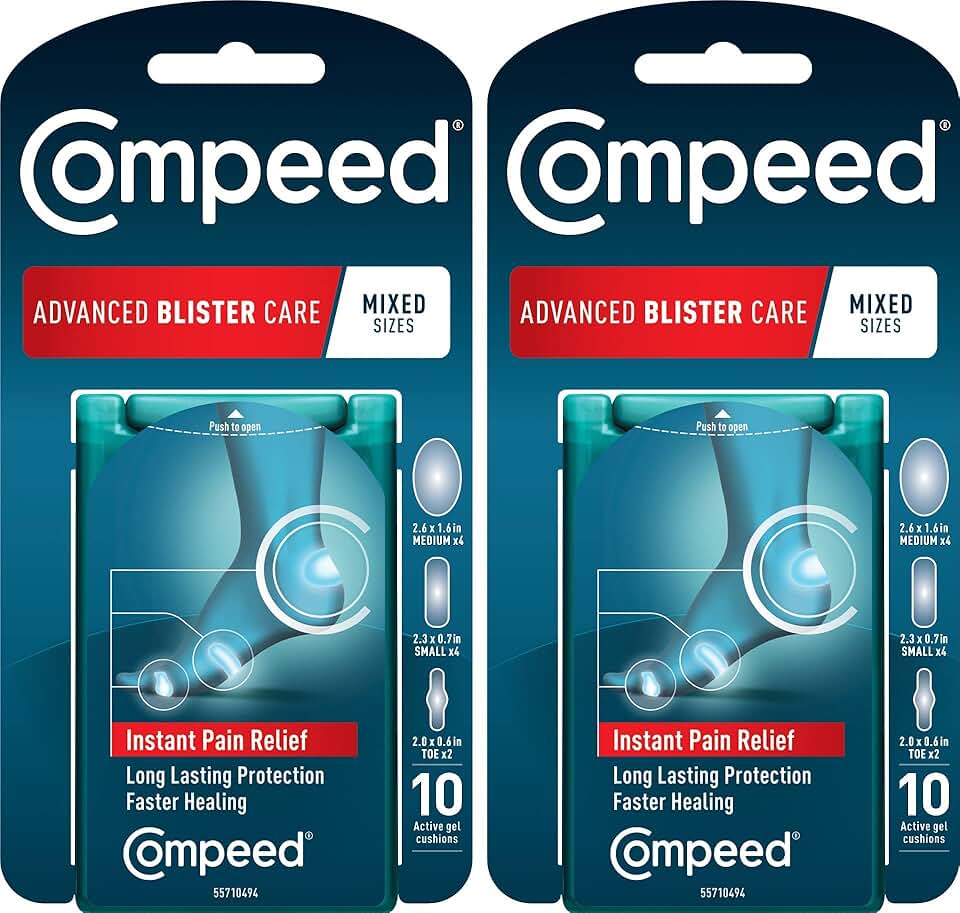
Compeed has earned its reputation as a trusted option for blister treatment on the trail, and this two-pack gives you 20 total bandages in mixed sizes for comprehensive coverage. The hydrocolloid gel technology creates a moist healing environment by absorbing blister fluid while maintaining moisture at the wound site, and hikers consistently report this design provides immediate pain relief. These bandages cushion the blister from further friction, and most users find they can continue hiking comfortably once applied.
The mixed-size variety in this kit addresses the reality that blisters form in different locations with different shapes. You get bandages sized for heels, toes, and the ball of your foot, which means you are not trying to make one size work for every situation. The bandages are thin and flexible enough to move naturally with your foot, yet they stay adhered for multiple days even through sweat and moderate moisture. With over 4,300 customer reviews averaging 4.7 stars, the feedback strongly supports the effectiveness of this product.
The two-pack format provides 20 bandages total, which is enough for several weekend trips or one longer backpacking expedition. At just over one dollar per bandage, these represent solid value given their reliability and the immediate pain relief they provide. The primary limitation is that this product focuses exclusively on treatment rather than prevention – it does not include any anti-friction balms or preventive tape – so you will need to supplement with those items if you want a truly complete kit. See current pricing for the Compeed Advanced Blister Care Pads on Amazon.
Pros
- Proven hydrocolloid technology with over 4,300 positive reviews
- Mixed sizes cover heels, toes, and ball of foot
- Thin and flexible design moves naturally with your foot
- Stays adhered for multiple days through sweat and moisture
- Two-pack provides 20 bandages for multiple trips
Cons
- Treatment-only product with no prevention supplies included
- Higher per-bandage cost compared to some alternatives
- No carrying case or organizational pouch provided
2. Promifun Blister Pads – 28 ct Water Resistant Hydrocolloid Bandages for Foot, Toe, Heel – Gel Blister Cushions for Prevention & Recovery, Variety Pack
Best value for hikers who want quantity and variety at an affordable price

This Promifun variety pack delivers 28 hydrocolloid bandages at just over 50 cents each, making it one of the most affordable options for building a complete blister kit without sacrificing quality. The 4.5-star rating across more than 1,000 reviews demonstrates solid performance, and this has become a popular choice among hikers and runners who need reliable blister treatment. The variety pack format includes multiple shapes and sizes designed for different foot locations, from small circular pads for toe blisters to larger ovals for heels.
At 28 bandages total, you have enough supply for a full week-long backpacking trip with several bandages to spare, or you can split this between multiple shorter trips throughout a season. The bandages use the same hydrocolloid technology as more expensive options, creating a cushioning gel layer that absorbs fluid and stays in place during activity. The trade-off here is comprehensiveness – like the Compeed product, this focuses entirely on treatment rather than providing a complete kit with prevention tools. You will need to add your own anti-blister balm, moleskin, or tape if you want preventive options.
The product also does not include a storage case, alcohol wipes, or scissors, so you are essentially buying a bulk supply of bandages rather than an organized kit. For the price, however, this represents excellent value. Many experienced hikers buy products like this and then customize their own kit by adding prevention supplies and organizing everything in a small ziplock bag or dry sack. Read verified buyer reviews for the Promifun Blister Pads on Amazon.
Pros
- Excellent value at approximately 50 cents per bandage
- Variety pack with multiple sizes for different blister locations
- 28 bandages provide enough supply for extended trips
- Over 1,000 reviews averaging 4.5 stars validate performance
- Compact packaging for easy organization
Cons
- No prevention supplies or accessories included
- No carrying case for organization
- Treatment-only product requires supplementing for complete coverage
View Promifun Blister Pads – 28 ct Water Resistant Hydrocolloid Bandages for Foot on Amazon →
3. Ultra Blister Kit (60+ Pc Set) | Comprehensive Foot Blister Prevention and Treatment Set | Professional Foot Care in Endurance Sport, Remote & Wilderness Locations
Best for serious backpackers and expedition hikers who need professional-grade comprehensive coverage

This 60-plus-piece kit represents the most comprehensive blister management system available, designed for endurance athletes, remote wilderness trips, and situations where you need professional-grade foot care far from medical facilities. Unlike the treatment-focused products above, this kit approaches blisters from every angle with both prevention and treatment supplies. The price point of $149 places this firmly in the professional category – this is not a casual day-hiking option, but rather a serious investment for people who spend weeks on the trail or lead group trips where they are responsible for others.
The product description specifically mentions remote and wilderness locations, indicating this kit is built for self-sufficiency when you cannot simply hike out if problems develop. With 60-plus pieces, you get extensive bandage supplies, multiple prevention options, and presumably the accessories needed for proper blister care like cleaning supplies and application tools. It is worth noting that customer feedback for this product is limited to 25 reviews with a 4.2-star rating, which is considerably less data than the other options reviewed here. This smaller sample size means there is less real-world validation available, though the reviews that do exist are generally positive.
The primary limitation here is obviously cost – at $149, this kit costs seven to ten times more than the alternatives. For most recreational hikers, even serious backpackers, this represents overkill. However, for certain use cases, the comprehensiveness justifies the price. Thru-hikers attempting the Pacific Crest Trail or Appalachian Trail, wilderness guides leading multi-week expeditions, or adventure racers competing in remote locations may find the peace of mind and professional-grade supplies worth the investment. Check current stock for the Ultra Blister Kit on Amazon.
Pros
- Most comprehensive kit with 60-plus pieces covering prevention and treatment
- Designed specifically for remote wilderness and endurance use
- Professional-grade foot care supplies for serious situations
- Addresses both prevention and treatment comprehensively
Cons
- Extremely high price point at $149 makes it cost-prohibitive for most hikers
- Limited customer feedback with only 25 reviews compared to thousands for other options
- Likely overkill for day hikers and weekend backpackers
- Limited availability with only nine units in stock
4. Body Glide Foot Glide Anti Blister Balm | blister prevention for heels, shoes, cleats, boots, socks, and sandals | Use on toes, heel, ankle, arch, sole and ball of foot | 0.8oz
Best prevention-focused product for hikers who want to stop blisters before they form

Body Glide Foot Glide takes a completely different approach from the hydrocolloid bandage products above by focusing exclusively on prevention rather than treatment. This anti-blister balm is a lubricating stick you apply directly to friction-prone areas before putting on your socks and boots. The slippery barrier it creates reduces the rubbing that causes hot spots and blisters in the first place. With over 14,000 customer reviews averaging 4.6 stars, this product has a massive amount of real-world validation from hikers, runners, and other athletes.
The compact 0.8-ounce size makes this easy to carry in any pack or even a pocket for mid-hike reapplication. The balm format means no messy liquids or creams – you simply glide the stick over your heels, toes, or any other trouble spots. Many experienced hikers develop a routine of applying this preventively before every long hike, particularly when breaking in new boots or tackling unusually long distances.
The obvious limitation is that this product does nothing for blisters that have already formed. If you develop a blister on the trail despite prevention efforts, you will need hydrocolloid bandages for treatment. This makes Body Glide an excellent supplement to a hydrocolloid-based kit rather than a standalone solution. The ideal approach for most hikers is carrying both – use the balm preventively on known trouble spots and pack hydrocolloid bandages as backup for blisters that form despite prevention. At just $8, the price is low enough that adding this to your kit alongside treatment bandages makes sense for anyone who hikes regularly. Compare the Body Glide Foot Glide Anti Blister Balm specs and pricing on Amazon.
Pros
- Massive real-world validation with over 14,000 reviews at 4.6 stars
- Prevention-focused approach stops blisters before they form
- Compact 0.8-ounce size is extremely packable
- Easy stick application with no mess or residue
- Very affordable at $8 for supplementing any treatment kit
Cons
- Prevention-only product provides no help for formed blisters
- Requires reapplication on long hikes or multi-day trips
- Must be supplemented with hydrocolloid bandages for complete coverage
View Body Glide Foot Glide Anti Blister Balm | blister prevention for heels on Amazon →
How These Compare
Choosing the right hiking blister kit depends on your specific needs, hiking style, and budget. If you want proven hydrocolloid technology with the strongest reputation and customer validation, Compeed delivers reliability that justifies the slightly higher per-bandage cost. The 20-bandage two-pack gives you enough supply for multiple trips, and the variety of sizes ensures you can properly treat blisters on any part of your foot. This is the best choice for hikers who prioritize quality and want a treatment solution they can trust completely.
For budget-conscious hikers or those who want to maximize quantity, the Promifun variety pack provides 28 bandages at about half the per-unit cost of Compeed while maintaining solid 4.5-star performance. You sacrifice some of the brand reputation, but you gain eight additional bandages and save several dollars. This is ideal for hikers building their first blister kit, anyone planning an extended backpacking trip where you need higher quantities, or people who want to keep a backup supply at home while carrying a smaller kit on day hikes.
The Ultra Blister Kit occupies a completely different category as a professional-grade comprehensive system. At $149, this is not for casual hikers, but for specific use cases like thru-hiking the Appalachian Trail, guiding multi-week wilderness expeditions, or adventure racing in remote locations, the comprehensiveness and professional supplies justify the cost. If you are responsible for treating blisters for a group, need supplies that will last months on the trail, or require the peace of mind that comes from having every possible tool available, this kit delivers what you need.
Body Glide Foot Glide serves a fundamentally different purpose as a prevention-focused balm rather than a treatment kit. The smartest approach is pairing this with any of the hydrocolloid bandage options above. Use the balm preventively on known trouble spots before every hike, then carry hydrocolloid bandages as backup for blisters that form despite prevention. At just $8 with over 14,000 positive reviews, adding Body Glide to your kit costs less than lunch at the trailhead and could save you from painful blisters that ruin your hike. Most experienced backpackers carry both prevention and treatment supplies, and this combination approach gives you the best chance of completing your hike comfortably.
Frequently Asked Questions
Should I pop a blister while hiking?
The decision to drain a blister on the trail depends on its size and your situation. Small blisters under a quarter-inch are often best left intact, as the fluid-filled bubble protects the damaged skin underneath while new skin forms. For these, simply cover with a hydrocolloid bandage and continue hiking. Large blisters that are taut and painful, however, often require draining to relieve pressure and allow comfortable walking. If you must drain a blister, proper technique is critical. Clean your hands thoroughly, sterilize a needle or safety pin with an alcohol wipe or by holding it in a flame, then make a small puncture at the blister edge to let fluid drain. Leave the roof skin intact as a protective covering, apply an antiseptic if available, and cover with a hydrocolloid bandage. Never attempt this with dirty hands or non-sterile tools, as infection risk increases significantly. Many experienced backpackers carry a few safety pins and alcohol wipes in their blister kit specifically for this purpose on multi-day trips where continuing with an undrained blister is not realistic.
Can I hike with a blister?
You can almost always continue hiking with a blister if you treat it properly. The key is addressing it immediately when you first feel a hot spot rather than waiting until a full blister forms. Hot spots – those tender, warm areas where friction is occurring – are the warning sign that a blister will develop if you do not take action. Stop immediately, remove your boot and sock, and either apply moleskin, tape, or a hydrocolloid bandage over the area to reduce friction. Once a blister has formed, covering it with a hydrocolloid bandage provides cushioning and dramatically reduces pain. Most hikers report they can continue their hike comfortably after applying a gel bandage, though you may need to adjust your pace or take more frequent breaks. The worst approach is ignoring a hot spot or blister and pushing through the pain, which can tear the blister open, cause infection, or force you to end your hike entirely. Treat early, treat properly, and in most cases you can complete your planned route without significant issues.
What is the best blister prevention for hiking?
Blister prevention starts long before you hit the trail. The single most important factor is properly fitted boots that have been adequately broken in. New boots require at least 20 to 30 miles of walking before a long hike, with gradual increases in distance and pack weight to let the leather or synthetic materials conform to your feet. Wear the same sock system you will use on the trail during break-in hikes. Moisture control is the second critical factor, as wet skin blisters more easily than dry skin. Moisture-wicking synthetic or wool socks pull sweat away from your feet, and some hikers use sock liner systems with a thin inner sock and thicker outer sock to reduce friction. On the trail, proactive prevention means applying anti-blister balm like Body Glide to known trouble spots before putting on your socks, or pre-taping areas where you typically develop hot spots. Keep your toenails trimmed short so they do not press against the front of your boot on descents. On long hikes, remove your boots during rest breaks to let your feet air out and dry. Finally, address hot spots immediately rather than hoping they will improve – that first twinge of discomfort is your feet telling you to take action before a blister forms.
How long do hydrocolloid bandages stay on?
Hydrocolloid bandages are designed to stay in place for several days under normal conditions, typically three to five days depending on the location and activity level. On hiking trails with significant sweat, moisture from stream crossings, or extended daily mileage, you can expect one to three days of adhesion. The bandage should stay on until it naturally begins to peel at the edges or until the white gel bubble it forms over the blister becomes very large and uncomfortable. Do not remove the bandage prematurely just to check the blister underneath, as this interrupts the healing process and wastes the bandage. When the bandage does start to lift, remove it gently in the direction of hair growth to minimize discomfort. You will likely see that new skin has formed underneath and the blister has flattened significantly. If you still have tender areas or the blister has not completely healed, apply a fresh bandage. On multi-day backpacking trips, plan on carrying enough bandages to replace each one at least once, possibly twice if you are hiking big miles or dealing with wet conditions. Bandages specifically designed for athletic use tend to last longer in hiking conditions than standard hydrocolloid bandages marketed for general wound care.
What should be in a hiking first aid kit for blisters?
A complete blister section of your hiking first aid kit should include both prevention and treatment supplies. For treatment, carry 10 to 30 hydrocolloid bandages depending on trip length, with a variety of sizes to address blisters on heels, toes, and the ball of your foot. Include alcohol wipes or antiseptic pads for cleaning blisters before applying bandages, particularly if you need to drain a large blister. Small trauma shears or scissors let you cut tape and moleskin to custom sizes. For prevention, pack a blister prevention balm stick and either moleskin or blister prevention tape that you can apply to hot spots before they become blisters. Some hikers also carry a few safety pins for draining large blisters in sterile conditions, though this is optional depending on your comfort level with field wound care. Organization matters as much as contents – keep everything in a clearly labeled ziplock bag or small stuff sack so you can locate supplies quickly when you feel a hot spot forming. On day hikes, a compact kit with 10 to 15 bandages, one balm stick, and a small roll of prevention tape covers most situations. On multi-day backpacking trips, double or triple your bandage quantities and consider carrying a backup supply of prevention balm for daily application.
The Bottom Line
Building an effective hiking blister kit is one of the simplest ways to ensure your next trail adventure does not end in painful, limping defeat. The key is understanding that blisters are a two-stage problem requiring two different types of supplies. Prevention tools like Body Glide anti-blister balm help you stop blisters before they form by reducing friction at known trouble spots. Treatment supplies like hydrocolloid bandages provide immediate pain relief and healing support when blisters do develop despite your best prevention efforts. The most successful hikers carry both and know when to use each.
For most recreational hikers tackling weekend trips and day hikes up to 15 miles, a moderate kit with 20 to 30 hydrocolloid bandages in mixed sizes plus a prevention balm covers your needs completely. The Compeed Advanced Blister Care Pads offer proven reliability with the strongest customer reviews, while the Promifun variety pack provides excellent value if you want to maximize quantity on a budget. Add an $8 Body Glide balm stick for prevention, and you have a complete system. For serious backpackers planning multi-day wilderness trips, thru-hikes, or expeditions in remote locations, the Ultra Blister Kit provides professional-grade comprehensiveness that justifies its higher cost.
The real secret to blister-free hiking, however, is not just carrying the right supplies but using them proactively. Most painful blisters could have been prevented if the hiker had stopped at the first sign of a hot spot and applied preventive tape or a protective bandage. Do not wait until you have a fluid-filled blister throbbing with every step. Train yourself to notice that first uncomfortable friction, immediately remove your boot, and address the issue before it worsens. This approach – combined with properly fitted boots, moisture-wicking socks, and a well-stocked blister kit in your pack – will keep you hiking comfortably through whatever distance and terrain you tackle.
Disclosure: As an Amazon Associate, we earn from qualifying purchases. This does not affect our editorial recommendations.