
If you are planning to bring your dog on the trail, you have probably wondered whether they could carry their own water, treats, and poop bags instead of cramming everything into your already-full pack. A dog backpack (also called a saddle bag) can let your canine companion share the load, but here is the thing: most new hikers have no idea how to measure their dog for a proper fit, what style works best, or whether their dog will even tolerate wearing one.
This guide walks you through everything you need to know about choosing your first dog hiking backpack, from understanding the difference between saddlebag-style packs and vest-style harnesses to measuring your dog’s girth correctly (yes, there is a specific spot to measure). You will find five thoroughly vetted options, honest talk about what each does well and where it falls short, and the reassurance that getting your dog trail-ready does not have to be complicated.
What to Look For
Saddlebag Style vs Vest Style: Which Design Works Better
Dog backpacks come in two main styles, and understanding the difference will save you from buying the wrong type. Saddlebag-style packs sit on top of your dog’s back with two pouches (one on each side), similar to how a horse carries gear. These typically offer more storage capacity and work well for dogs with strong backs and good endurance. Vest-style packs wrap around your dog’s chest and back like a harness with integrated storage pockets. They distribute weight more evenly across the torso, which some dogs find more comfortable, especially on longer hikes.
For your first dog pack, saddlebag styles are usually easier to load evenly and simpler to adjust. Vest styles offer better weight distribution but can be trickier to balance if you are new to packing for a dog. Neither style is universally better, but saddlebag packs tend to be more forgiving for beginners still learning how to load gear properly.
How to Measure Your Dog for a Proper Fit
This is the part that trips up most first-time buyers: dog backpacks are sized by girth, not weight. Girth means the measurement around the widest part of your dog’s rib cage, right behind the front legs. To measure correctly, use a soft tape measure and wrap it around your dog’s chest at this spot while they are standing naturally. Do not pull tight, just snug. Most manufacturers list their size ranges in inches, so compare your measurement to their sizing chart before ordering.
Fit matters more than you might think. A pack that is too loose will slide around and chafe, while one that is too tight restricts breathing and movement. Look for packs with multiple adjustment points (chest straps, belly straps, and sometimes neck straps) so you can fine-tune the fit. Many packs also list weight recommendations alongside girth measurements, which can serve as a helpful double-check, but girth should be your primary sizing metric.
Weight Capacity: How Much Should Your Dog Actually Carry
A common beginner mistake is overloading a dog pack because it has the space. The general rule: a healthy, fit dog should carry no more than 25% of their body weight, and most veterinarians recommend starting with 10-15% for dogs new to wearing packs. A 50-pound dog, for example, should carry no more than 12.5 pounds maximum, and probably closer to 5-7 pounds when just starting out.
What does that weight budget actually hold? Typically a collapsible water bowl, a small water bottle or bladder, waste bags, a few treats, and maybe a compact first-aid kit. That is genuinely useful stuff that lightens your own load without overburdening your dog. Start with just the empty pack on short walks, then gradually add weight as your dog builds strength and gets used to the sensation. Never load a pack and immediately head out for a five-mile hike.
Features That Actually Matter on the Trail
When you are comparing packs, focus on features that solve real hiking problems. Padded straps matter because they prevent chafing during long miles. Reflective trim is important if you ever hike at dawn, dusk, or through shaded forest sections. A sturdy handle on top of the pack lets you quickly grab and stabilize your dog on tricky terrain or help them over obstacles. Multiple pockets with secure closures mean you can organize gear and keep it from bouncing around.
Some packs include extras like built-in poop bag dispensers or attachment points for lights. These are nice but not essential for a first pack. What you absolutely need: adjustability (at least three points of adjustment), padding where the pack contacts your dog’s body, and pockets that close securely. Avoid packs with complicated buckle systems that will frustrate you on the trailhead when you are just trying to get started.
Will Your Dog Actually Wear It
This is the question every new dog hiker worries about, and it is valid. Some dogs take to packs immediately, while others need patient conditioning. Start indoors: let your dog sniff the pack, then put it on them empty for just a few minutes while offering treats and praise. Gradually increase the duration over several days, then add a short walk around the block. Only after your dog seems comfortable with the empty pack should you add any weight.
Watch for signs of discomfort: excessive scratching at the pack, reluctance to move, changes in gait, or sitting down repeatedly. These indicate fit issues or that your dog needs more conditioning time. Most dogs adjust within a week or two of gradual introduction. If your dog absolutely refuses after patient, positive conditioning, they might just not be a pack-wearing dog, and that is okay. Not every trail dog needs to carry gear.
Durability and Weather Resistance
Hiking puts gear through real tests: brush snags, dirt, stream crossings, and sun exposure. Look for packs made from ripstop nylon or similar durable fabrics that can handle contact with trail obstacles. Reinforced stitching at stress points (where straps attach to the main pack body) prevents failures after repeated use. Water resistance varies: some packs use water-resistant coatings that repel light rain, while others are just water-repellent enough to keep contents dry during a brief drizzle.
For your first pack, prioritize durability over maximum weather protection. You can always use a pack cover or dry bags for valuable items if you get caught in heavy rain. What you cannot easily fix is a pack that tears after three hikes or buckles that break on the trail. Check customer reviews specifically for comments about longevity and whether the pack holds up after months of regular use.
Our Top 5 Picks
1. ONETIGRIS Dog Backpack for Hiking Nylon Dog Harness Backpack with Side Pockets for Large Dog
Best for beginners who want proven performance without spending top dollar

This ONETIGRIS pack hits the sweet spot between affordability and capability that makes it perfect for someone buying their first dog hiking backpack. With nearly 3,000 reviews and a 4.6-star rating, it has been tested by enough real hikers to prove it holds up on actual trails. The saddlebag design keeps things straightforward: two side pockets for gear, adjustable straps for fit, and nylon construction that handles brush and trail debris without immediately showing wear.
The pack is sized for medium dogs with 17-23.5 inch neck girth and 25-31 inch chest girth, which covers popular hiking breeds like Border Collies, Australian Shepherds, and medium-sized mixed breeds. The side pockets are deep enough for a collapsible water bowl, waste bags, a small water bottle, and treats without everything bouncing around. The visible color works well for spotting your dog on wooded trails while remaining practical for outdoor use.
What makes this particularly beginner-friendly is the adjustment system. You do not need to be a gear expert to get a good fit. The straps are clearly labeled and easy to tighten or loosen, which matters when you are still learning what a proper fit looks and feels like on your dog. The pack sits securely without the complicated buckle arrangements that some premium packs use. The high review count and consistently positive feedback show this pack has been purchased and used successfully by thousands of dog owners.
The price point makes this an excellent test-the-waters option. At under $40, you are not making a huge financial commitment while you figure out if your dog will take to wearing a pack and whether you will actually use it regularly. If hiking with your dog becomes a regular activity, you can always upgrade later with better knowledge of what specific features you want. For now, this gives you quality construction, adequate storage, and reliable performance without overthinking your first purchase.
See current pricing for the ONETIGRIS Dog Backpack for Hiking on Amazon.
Pros
- Nearly 3,000 verified customer reviews confirm real-world reliability
- Straightforward saddlebag design that is easy to load and balance
- Multiple adjustment points accommodate different body types within size range
- Durable nylon construction handles trail contact without premature wear
- Budget-friendly price lets you test whether your dog will wear a pack
Cons
- Limited padding compared to premium packs—watch for chafing on long hikes
- Not all models include specialized features like hydration compartments
- Sizing runs slightly large according to some reviewers, so measure carefully
2. Ruffwear Front Range Day Pack Dog Backpack with Saddlebags
Best for hikers who want premium features and do not mind paying for proven quality
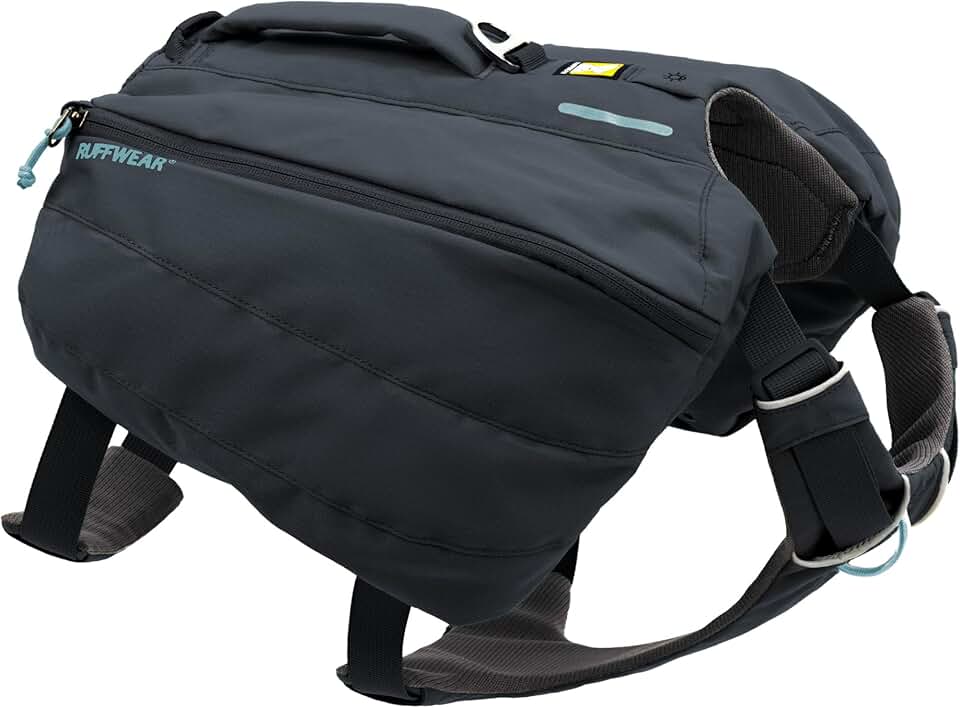
Ruffwear is the brand that serious dog hikers mention first, and this Front Range Day Pack shows why. The 4.7-star rating across 518 reviews comes from people who actually use this pack regularly, not just casual weekend users. This is the pack you see on Instagram trail photos and at trailheads in national parks because it simply works reliably.
The pack includes features that matter on real hikes: multiple adjustment points that let you dial in fit precisely, leash attachment options so you can connect your leash where it works best, a padded handle for quick control on steep or technical sections, and organized storage compartments in each saddlebag that keep small items separated instead of jumbled together. The reflective trim is not just decorative—it genuinely improves visibility in low-light conditions, which matters if you ever start or finish hikes near dawn or dusk.
What separates this from budget packs is the attention to comfort details. The straps are padded where they contact your dog’s body, reducing chafing risk on longer hikes. The saddlebags are designed with thoughtful weight distribution in mind, sitting in a position that minimizes strain on your dog’s back. Attachment points on top let you clip on a safety light for extra visibility. These are thoughtful touches from a company that focuses exclusively on dog gear.
The higher price reflects the build quality. This is not a pack that will fray after a season or show obvious wear after ten hikes. Ruffwear gear is known for lasting multiple years of regular use, which makes the upfront cost more reasonable when you factor in longevity. The Large/X-Large size shown here fits dogs with 32-42 inch girth, covering breeds like Labrador Retrievers, Golden Retrievers, and larger mixed breeds. If you know you will be hiking regularly with your dog and want to invest in quality once rather than replace cheap gear repeatedly, this is the pack that justifies its cost.
Read verified buyer reviews for the Ruffwear Front Range Day Pack on Amazon.
Pros
- Multiple adjustment points allow precise fit tuning for different body types
- Padded straps and handle reduce chafing and improve control on technical terrain
- Organized storage compartments in saddlebags keep small items accessible
- Ruffwear build quality means multi-year durability with regular use
- Leash attachment options offer flexibility for different hiking situations
Cons
- Significantly higher price than budget options—nearly double some alternatives
- 518 reviews are solid but fewer than some competitors for confidence comparison
- Premium features may be more than casual hikers need for occasional trail walks
View Ruffwear Front Range Day Pack Dog Backpack with Saddlebags on Amazon →
3. Kurgo Dog Saddlebag Backpack, Back Pack Dog Harness
Best for medium to large dogs whose owners want solid mid-range quality

Kurgo occupies the middle ground between budget packs and premium options, and this saddlebag does it well. With 1,777 reviews averaging 4.4 stars, you have plenty of real-world feedback showing this pack performs reliably for everyday hiking. It is designed for medium and large dogs, making it versatile across popular hiking breeds from Australian Cattle Dogs to German Shepherds.
The pack design incorporates both carrying capacity and structural support in one piece of gear. This is genuinely convenient when you are getting ready at the trailhead—you are not wrestling with multiple pieces of equipment. The reflective trim runs along multiple points on the pack, improving visibility from different angles. The lightweight construction means the pack itself does not add unnecessary bulk before you even load gear into it.
Kurgo is known for thoughtful design choices. The saddlebags have decent capacity without being so large that you are tempted to overload your dog. The straps adjust easily, and this model has been refined over several years based on customer feedback, so the current version incorporates improvements from earlier iterations. This is not a startup brand experimenting with their first product—it is an established company that makes primarily dog travel and outdoor gear.
The price point at $48 sits comfortably between cheap options that might fall apart and premium packs that cost nearly $100. For most beginner hikers, this represents sensible value: you get quality materials, proven design, and a brand that stands behind their products without paying for features you might not use. The main limitation is that it is designed specifically for medium and large dogs, so if you have a smaller breed or a giant breed, you will need to look elsewhere.
Check current stock for the Kurgo Dog Saddlebag Backpack on Amazon.
Pros
- 1,777 customer reviews provide substantial real-world performance feedback
- Integrated design eliminates need for layering multiple pieces of gear
- Reflective trim placed at multiple points for better low-light visibility
- Mid-range pricing offers good value between budget and premium options
- Lightweight construction reduces burden before you even add gear
Cons
- Sizing limited to medium and large dogs—not suitable for small or giant breeds
- Some reviewers note straps can loosen during active hiking and need retightening
- Limited availability with only 2 units in stock at time of review
4. Ruffwear Approach Pack Dog Backpack, Weight-Forward Saddlebags with Flopper Stoppers
Best for smaller dogs whose owners want Ruffwear quality at a reduced price

This is the other Ruffwear pack on this list, but it is here for a specific reason: it is an X-Small size on clearance at $59.99, marked down from $99.99. If you have a smaller hiking dog—think Corgi, Beagle, Sheltie, or similar breeds—this is your chance to get premium Ruffwear quality at nearly 40% off. The catch is limited stock (only 2 units available), but the value is significant if you need this size.
The Approach Pack includes Ruffwear’s signature attention to design detail: saddlebags positioned to optimize load distribution over your dog’s shoulders rather than farther back on the spine, stabilization features that keep the bags from swaying and bouncing as your dog moves, adjustable fit for precise tuning, and a padded handle for control when needed. The visible color works well for trail use—easy to spot without being impractical.
With 948 reviews at 4.6 stars, this pack has been thoroughly tested by real users. The feedback consistently mentions durability, comfortable fit, and how well the pack stays in place during active hiking. Ruffwear builds packs that last, so even though this is likely a discontinued color or previous season’s model, the quality remains the same as current offerings.
The optimized weight positioning is particularly important for smaller dogs. Because they have less body mass and shorter backs, poor weight distribution affects them more noticeably than it does larger dogs. The stabilization system genuinely helps—it prevents the saddlebags from swinging side to side, which can throw off balance and cause fatigue. If you have a small hiking dog and have been hesitant about pack quality at lower price points, this clearance price makes Ruffwear accessible.
Compare the Ruffwear Approach Pack specs and pricing on Amazon.
Pros
- Ruffwear premium quality at clearance pricing—40% off original price
- 948 reviews confirm reliable performance across different small dog breeds
- Optimized design and stabilization features work well for smaller frames
- Adjustable fit system allows precise customization on compact body types
- Padded handle provides control option on technical trail sections
Cons
- X-Small sizing only—not suitable for medium or large dogs
- Extremely limited stock with only 2 units available means act quickly
- Likely a discontinued color which is why it is on clearance
5. Mountainsmith K-9 Pack
Best for hikers who want quality construction under $40
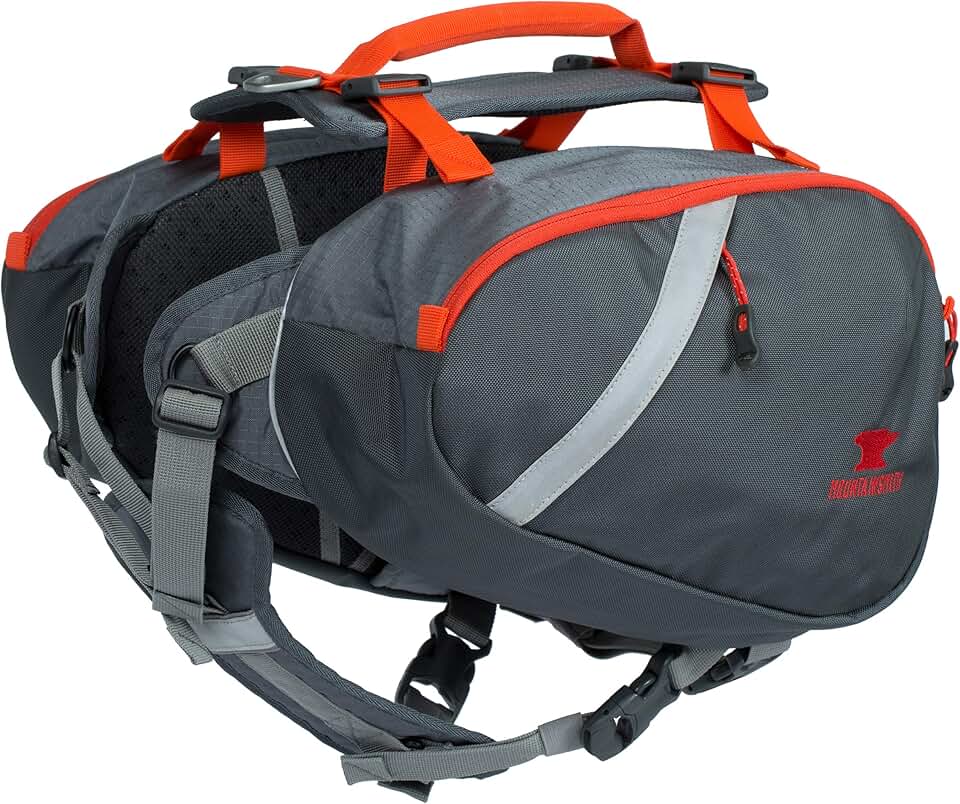
Mountainsmith brings decades of outdoor gear experience to this dog pack, and it shows in the construction quality. The 4.6-star rating across 716 reviews shows it holds up well compared to options costing significantly more. At $39.95, it competes price-wise with budget packs while delivering better construction and thoughtful features.
The adjustable chest and back harness system provides good fit flexibility, and the saddlebags have secure pockets that actually keep gear contained reliably during active hiking. Secure closures sound basic, but cheaper packs often use fastening systems that work loose during movement. The pockets on this pack stay shut. It is sized for medium and large dogs, though with only 19 units in stock, availability is becoming limited.
Mountainsmith builds gear for serious outdoor use, not just casual recreation. This pack reflects that heritage with reinforced stitching, durable fabrics, and attention to how weight distributes during actual movement. The main limitation is that being a smaller outdoor company, Mountainsmith does not have the same name recognition as Ruffwear or Kurgo, but the customer reviews demonstrate the quality is genuinely there.
What makes this pack particularly appealing is the balance of features and price. You get construction that rivals more expensive options without the premium brand markup. The secure pocket closures, adjustable fit system, and durable materials handle regular trail use without the compromises you typically find at this price point. For beginners who want something better than the cheapest options without paying premium prices, this pack deserves serious consideration.
See if the Mountainsmith K-9 Pack is right for your first hike on Amazon.
Pros
- 716 reviews at 4.6 stars show reliable real-world performance
- Secure pockets provide closures that stay shut during active hiking
- Mountainsmith outdoor heritage brings backpacking expertise to dog pack design
- Under $40 price point with quality that rivals more expensive options
- Reinforced stitching at stress points improves long-term durability
Cons
- Limited stock with only 19 units available may require quick decision
- Less name recognition than major dog gear brands despite quality construction
- Sizing limited to medium and large dogs—not suitable for small breeds
How These Compare
If you are hiking regularly and know your dog will wear a pack, the Ruffwear Front Range Day Pack at $79.99 is the long-term investment that will outlast cheaper alternatives. Its adjustable fit, padded construction, and Ruffwear durability justify the higher cost. For small dogs, the Ruffwear Approach Pack on clearance at $59.99 delivers the same quality at a reduced price, though limited stock means deciding quickly. The ONETIGRIS pack at $37.99 is the smart choice for beginners who want to test whether their dog will actually tolerate a pack before committing to premium pricing—nearly 3,000 reviews confirm it performs well enough to discover if this gear category works for you and your dog. The Kurgo pack at $48 splits the difference for medium to large dogs, offering solid mid-range quality in one integrated piece of gear. The Mountainsmith K-9 Pack at $39.95 appeals to hikers who want quality construction and outdoor-proven durability without paying premium prices. Your choice comes down to your dog’s size, your budget, how often you will actually hike, and whether you are willing to pay more upfront for maximum durability.
Frequently Asked Questions
How do I know if my dog is ready to wear a hiking backpack?
Your dog should be fully grown, in good health, and already comfortable on regular hikes before introducing a pack. Most veterinarians recommend waiting until dogs are at least 18 months old so their joints and spine are fully developed. Start by taking your dog on several hikes without a pack to build endurance and ensure they can handle the distances you plan to cover. If your dog struggles with a two-mile hike without gear, they are not ready to carry additional weight. Watch for signs of good conditioning: your dog maintains a steady pace, does not lag behind, recovers quickly during rest breaks, and shows enthusiasm at the trailhead. Once your dog consistently handles your typical hike distances comfortably, you can begin pack conditioning by letting them wear the empty pack indoors for short periods, then on brief walks, gradually building up duration before adding any weight. Never rush this process—patience during conditioning prevents injury and ensures your dog actually enjoys wearing the pack rather than tolerating it reluctantly.
What should I pack in my dog’s backpack for a day hike?
Focus on items your dog will actually use rather than trying to maximize weight capacity. Start with water—either a collapsible water bottle or a small hydration container. Include a collapsible bowl for water breaks along the trail. Add waste bags for poop pickup and disposal. Pack a small portion of your dog’s regular food or high-energy treats for snack breaks. Consider a compact dog first-aid kit with basics like tweezers for removing thorns or burrs, gauze for wrapping a cut paw, and any medications your dog takes regularly. If you will be out during bright sun, some hikers pack dog-safe sunscreen for breeds with light-colored noses or thin coats. Balance weight evenly between the two saddlebags—if one side is noticeably heavier, it will cause the pack to shift and potentially chafe. Start with less than you think your dog can carry and increase gradually over multiple hikes as they build strength. Remember that 10-15% of body weight is plenty for most dogs, which translates to just 5-7 pounds for a 50-pound dog—not actually that much once you account for water weight.
How do I measure my dog correctly for a backpack?
Proper measurement is critical for fit and comfort. Use a soft fabric tape measure, not a rigid one. Have your dog stand naturally on all four legs—do not let them sit or lie down. Locate the widest part of their rib cage, which is typically right behind their front legs where the chest is broadest. Wrap the tape measure around this point, keeping it level and parallel to the ground. The tape should be snug enough that it does not slide around but not so tight that it compresses your dog’s fur or skin. Record this measurement in inches. This is your dog’s girth, which is the primary sizing metric for most dog packs. Some manufacturers also ask for neck girth (measured around the base of the neck where a collar sits) or length (measured from the base of the neck to the base of the tail). Always compare your measurements to the specific manufacturer’s sizing chart rather than assuming small, medium, or large means the same across different brands. When measurements fall between sizes, most experts recommend sizing up rather than down—you can adjust straps to make a slightly large pack fit better, but you cannot add material to a pack that is too small. If possible, measure twice on different days to confirm consistency, especially if your dog has thick fur that can compress differently depending on how recently they were groomed.
Can I use a dog backpack instead of a regular harness for hiking?
Some dog backpacks are designed to function as both a pack and a harness, with built-in leash attachment points and structural support that makes a separate harness unnecessary. However, many saddlebag-style packs are designed to wear over a separate harness rather than replace it entirely. Check the product specifications and customer reviews to determine whether your chosen pack can function as a standalone harness. If it does include leash attachment points, verify they are reinforced and located properly—typically on the back between the shoulder blades where attachment does not pull the pack off-balance. For packs that require a separate harness underneath, this actually provides benefits: you can use your regular hiking harness that your dog is already comfortable wearing, and the pack distributes weight on top of that familiar foundation. The dual-layer approach can also provide better padding and prevent chafing. The downside is the extra step of putting on two pieces of gear instead of one, which can be frustrating at the trailhead when you are trying to start your hike. If simplicity matters to you, look for packs specifically designed with integrated harness features rather than models that layer over existing gear.
How do I prevent my dog’s backpack from chafing or causing sore spots?
Prevention starts with proper fit—a pack that moves around or pulls in the wrong places will cause rubbing no matter how well-padded it is. After putting the pack on your dog, you should be able to fit two fingers between any strap and your dog’s body. Check that the pack sits evenly on both sides and does not shift when your dog walks. Look for packs with padded straps and padding where the pack contacts your dog’s back, shoulders, and chest. Before your first real hike, do several short test walks and check your dog’s skin afterward for any red spots, missing fur, or signs of irritation. Common chafe points include behind the front legs where straps cross, along the spine where the pack sits, and around the chest where the girth strap tightens. If you notice rubbing starting, address it immediately—continuing to hike with poor fit will create open sores that take weeks to heal. You can wrap temporary padding around straps using athletic tape or add moleskin to contact points, but these are temporary fixes. The real solution is adjusting the fit or potentially sizing up. During breaks on longer hikes, remove the pack entirely for 10-15 minutes to let your dog’s skin breathe and recover from the pressure. Never hike with a pack that is causing visible discomfort—your dog cannot tell you it hurts, so you need to watch their behavior and check their skin regularly.
The Bottom Line
Choosing your first dog hiking backpack does not have to be overwhelming. If your dog is medium to large and you are testing whether they will tolerate a pack at all, start with the ONETIGRIS pack at $37.99—it has the review volume to prove it works, and the price makes it a low-risk trial. For small dogs, grab that clearance Ruffwear Approach Pack at $59.99 while stock lasts; you will get premium quality at nearly half price. If you are committed to regular hiking and want gear that lasts years, the Ruffwear Front Range Day Pack justifies its $79.99 cost through superior durability and thoughtful design features. The Kurgo pack serves well as the practical middle choice for medium and large dogs when you want better quality than budget options without paying premium prices. And if you want quality construction with outdoor-proven durability at under $40, the Mountainsmith K-9 Pack delivers reliable performance without the premium brand markup. Measure your dog’s girth carefully, start with an empty pack and short distances, load evenly on both sides, and watch for any signs of discomfort during your first few outings. Your dog carrying their own water and treats genuinely makes hiking more enjoyable for both of you—you lighten your load, and most dogs seem to enjoy having a job on the trail. Take the time to condition properly, and this gear investment will open up longer adventures together.
Disclosure: As an Amazon Associate, we earn from qualifying purchases. This does not affect our editorial recommendations.