
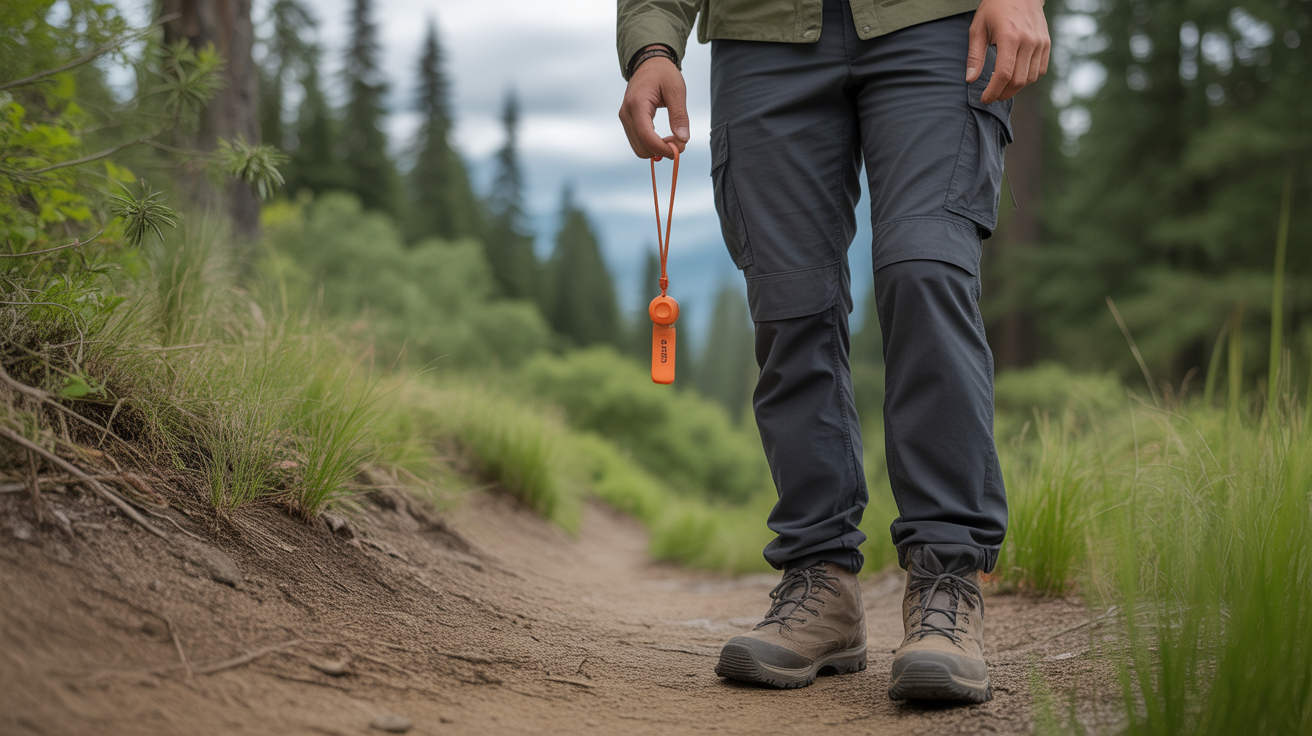
If you are planning your first few hikes, the idea of needing an emergency whistle might feel a bit unsettling. You are probably wondering: Do I really need one? What if I get lost? What if something goes wrong and my phone has no signal? These are normal concerns, and the truth is that an emergency whistle is one of the simplest, most reliable pieces of safety gear you can carry. Unlike your phone, it never runs out of battery, works in any weather, and can be heard from much farther away than your voice.
Choosing your first emergency whistle does not have to be complicated. You need something loud enough to be heard at a distance, lightweight enough that you will actually carry it, and durable enough to work when you need it most. In this guide, we will walk you through exactly what to look for and recommend five proven whistles that beginners trust for day hikes and weekend adventures. No confusing jargon, no overwhelming options – just straightforward advice to help you hike with more confidence.
What to Look For
Why Hikers Carry Emergency Whistles
An emergency whistle is a signaling device designed to call for help when you cannot use your voice or phone. On the trail, your voice carries only a few hundred feet, especially in windy or forested areas. A quality whistle can be heard up to a mile away, and it requires far less energy than shouting – critical if you are injured, exhausted, or trying to conserve strength. The universal distress signal is three short blasts repeated at intervals, which rescuers and other hikers recognize as a call for help. Even if you never need to use it, carrying a whistle adds a layer of security that costs almost nothing in weight or money.
Loudness Matters: Understanding Decibel Ratings
When you see a whistle labeled with a decibel rating like 120 dB or 125 dB, that number indicates how loud the whistle can be. For context, normal conversation is around 60 dB, a lawn mower is about 90 dB, and sounds above 110 dB are considered very loud. Most quality emergency whistles fall between 100 and 130 dB, which is more than adequate for trail use. You do not need the absolute loudest whistle on the market – a rating of 100 dB or higher will carry well through trees, across valleys, and over the sound of wind or water. What matters more is consistent performance in wet conditions and ease of use when you are cold, tired, or stressed.
Pealess Design: Why It Works Better in the Outdoors
Many emergency whistles are described as pealess, meaning they do not have a small ball inside that creates the sound. Traditional whistles with peas (the little ball inside) can freeze in cold weather, get clogged with dirt or moisture, or fail to work when wet. Pealess whistles use a different chamber design that produces sound through air movement alone, making them far more reliable in rain, snow, and freezing temperatures. For hiking, a pealess whistle is almost always the better choice because it works consistently regardless of conditions. If the product description does not mention a pea, it is likely pealess – but it is worth confirming before you buy.
Material and Durability for Trail Use
Emergency whistles are typically made from plastic, aluminum, brass, or titanium. Plastic whistles are affordable, lightweight, and rust-proof, making them a solid choice for beginners. Aluminum whistles are slightly more durable and still very light. Brass whistles are heavier but produce a distinct tone and resist corrosion well. Titanium whistles are the lightest and most durable option, though they cost more. For most beginner hikers, plastic or aluminum is more than sufficient. The key is that the whistle feels solid in your hand, does not crack easily, and is built to withstand being dropped, stepped on, or buried in your pack for months at a time.
Attachment Options: Lanyard or Keychain
A whistle is only useful if you can reach it quickly. Most emergency whistles come with a lanyard (a cord you wear around your neck) or a keychain loop that clips to your backpack strap, belt loop, or zipper pull. Some hikers prefer wearing the whistle around their neck so it is always within reach, while others clip it to the outside of their pack for easy access without feeling something around their neck all day. Consider how you will carry it before you buy. A breakaway clasp on a lanyard is a smart feature – it releases under pressure so the cord would not choke you if it gets caught on a branch. If the whistle comes with a basic cord, you can always upgrade to a reflective or breakaway lanyard separately.
Bonus Features: When Simple Is Better
Some emergency whistles include extra features like built-in compasses, thermometers, LED lights, or fire starters. These multi-tools can be handy, but they also add weight, complexity, and potential points of failure. For your first whistle, a simple, single-purpose design is often the smarter choice. A whistle that does one thing extremely well – making a loud, reliable sound – will serve you better than a gadget that tries to do five things and does none of them particularly well. That said, if you are drawn to a whistle with a compass or thermometer and it meets the core criteria (loud, pealess, durable), it is not a bad option. Just prioritize the whistle function first and treat the extras as bonuses, not essentials.
Our Top Picks
1. LuxoGear Emergency Whistles with Lanyard Safety Whistle Survival Shrill Loud Blast for Kayak Life Vest Jacket Boating Fishing Boat Camping Hiking Hunting Rescue Signaling Kids Lifeguard Plastic 2 Pack
Best for beginners who want a proven, affordable whistle with thousands of real-world reviews

The LuxoGear emergency whistle has earned its reputation as a reliable choice for hikers who want straightforward safety gear without overthinking it. With over 13,000 customer reviews and a 4.6-star rating, this whistle has been tested in real conditions by thousands of people, from weekend hikers to kayakers to parents sending kids to summer camp. It comes as a two-pack, which is genuinely useful – you can keep one in your hiking pack and one in your car emergency kit, or share one with a hiking partner. The bright color options make the whistle easy to spot if you drop it on the trail or dig through your pack in low light.
The whistle produces a loud, shrill blast that carries well across open terrain and through forest cover. While the product listing does not specify an exact decibel rating, customer feedback consistently mentions that the sound is loud enough to be heard from a significant distance. The pealess design means it works reliably in wet conditions, which is critical if you are hiking in rain or snow. The included lanyard is basic but functional, and you can easily replace it with a breakaway or reflective cord if you prefer. The plastic construction keeps the weight negligible – you will not notice it hanging from your pack.
What makes this whistle particularly beginner-friendly is its simplicity. There are no moving parts to break, no batteries to replace, and no complicated features to figure out. You blow into it, it makes noise, and that is exactly what you need in an emergency. The two-pack format also means you are less likely to leave home without one because you have a backup. At under eight dollars, this is an affordable way to add a critical safety tool to your gear without any learning curve or maintenance requirements.
Pros
- Over 13,000 customer reviews provide strong social proof
- Two-pack format gives you a backup or spare
- Pealess design works reliably in wet conditions
- Bright color options make it easy to locate
- Extremely affordable for the quality
Cons
- Basic lanyard may benefit from upgrade to breakaway style
- No exact decibel rating specified in product details
2. Noopel Emergency Whistles Lifeguard Safety Whistle with Lanyard and Keychain for Outdoor Camping Hiking Boating Backpacking Fishing Kayak Kids Rescue Signaling Loud Survival Whistle
Best for hikers who want both lanyard and keychain attachment options in one package

The Noopel emergency whistle distinguishes itself by including both a lanyard and a keychain loop, giving you flexibility in how you carry it. This is genuinely useful for beginners who are still figuring out their preferred gear setup – you can wear it around your neck on some hikes, clip it to your pack on others, or attach it to a keyring for quick access. The whistle itself is designed for high-volume sound output, and customer reviews consistently mention that it is loud enough to be heard across long distances, which is exactly what you need in an emergency situation.
With over 9,000 reviews and a 4.6-star rating, this whistle has been field-tested by a large number of users in real outdoor conditions. The plastic body is lightweight and durable enough to withstand being tossed into a pack, dropped on rocks, or left exposed to the elements. The bright color options (typically orange or other high-visibility shades) make the whistle easy to find if you set it down on the trail or need to locate it quickly in your gear.
What sets this whistle apart from similar options is the dual attachment system. The lanyard lets you wear it for immediate access, while the keychain loop gives you the option to clip it to a carabiner or zipper pull without having something around your neck all day. For new hikers who are not sure how they will prefer to carry safety gear, this versatility is helpful. The price point is nearly identical to other top picks, so you are not paying extra for the additional attachment option. It is a small detail, but one that adds practical value without any compromise on the core function of making a loud, reliable sound when you need it most.
Pros
- Includes both lanyard and keychain for flexible carrying options
- Over 9,000 customer reviews demonstrate reliability
- Pealess design works in wet and cold conditions
- High-visibility colors make it easy to locate
- Lightweight plastic construction
Cons
- No exact decibel rating listed in product specifications
3. Loudest Brass Whistle – The Original 2-Inch Premium Emergency Whistle 125db+ One Piece Outdoor Survival Whistle On Key-Chain or Hang Around Your Neck and Carry it Anywhere
Best for hikers who want a durable brass whistle with a clear decibel rating

This brass whistle stands out for its simple, solid construction and clear performance specification: 125 decibels or higher. That is loud enough to be heard well over a mile away in good conditions, and the brass material produces a sharp, penetrating tone that cuts through wind, water noise, and forest cover. Unlike plastic whistles, brass does not crack if dropped and resists wear from repeated use. The one-piece construction means there are no parts to come loose or break, and the pealess design ensures it works regardless of weather conditions.
With over 2,000 reviews and a 4.4-star rating, this whistle has proven itself reliable in real-world use. The compact 2-inch size makes it easy to carry on a keychain or lanyard without feeling bulky. The included attachment ring fits standard keychain loops or cord, so you can customize how you carry it based on your preference. The brass material is heavier than plastic – you will notice it if weight is a critical concern – but the durability and consistent sound quality are worth the small weight penalty for many hikers. The whistle is also Climate Pledge Friendly certified, which reflects responsible manufacturing practices.
What makes this whistle particularly appealing for beginners is the straightforward performance claim backed by the decibel rating. You know exactly how loud it is, and you are getting a material (brass) that has been used for whistles for decades because it works. There are no gimmicks, no extra features, and no complicated instructions. You blow, it produces 125+ decibels, and people hear you. At under six dollars, it is one of the most affordable options on this list while offering metal construction that will last for years. If you want a simple, durable whistle that you can clip to your pack and forget about until you need it, this is a strong choice.
Pros
- Clear 125+ decibel rating confirms loudness
- Brass construction is durable and long-lasting
- One-piece pealess design eliminates failure points
- Compact 2-inch size is easy to carry
- Climate Pledge Friendly certification
Cons
- Heavier than plastic alternatives
- Fewer customer reviews compared to top-ranked options
4. Emergency Survival Safety Whistle, Whistle for Kids with Lanyard, Compass, Thermometer, Ideal for Kayaking, Boating, Hiking, Camping, Climbing
Best for hikers who want a whistle with built-in compass and thermometer for multi-purpose trail use
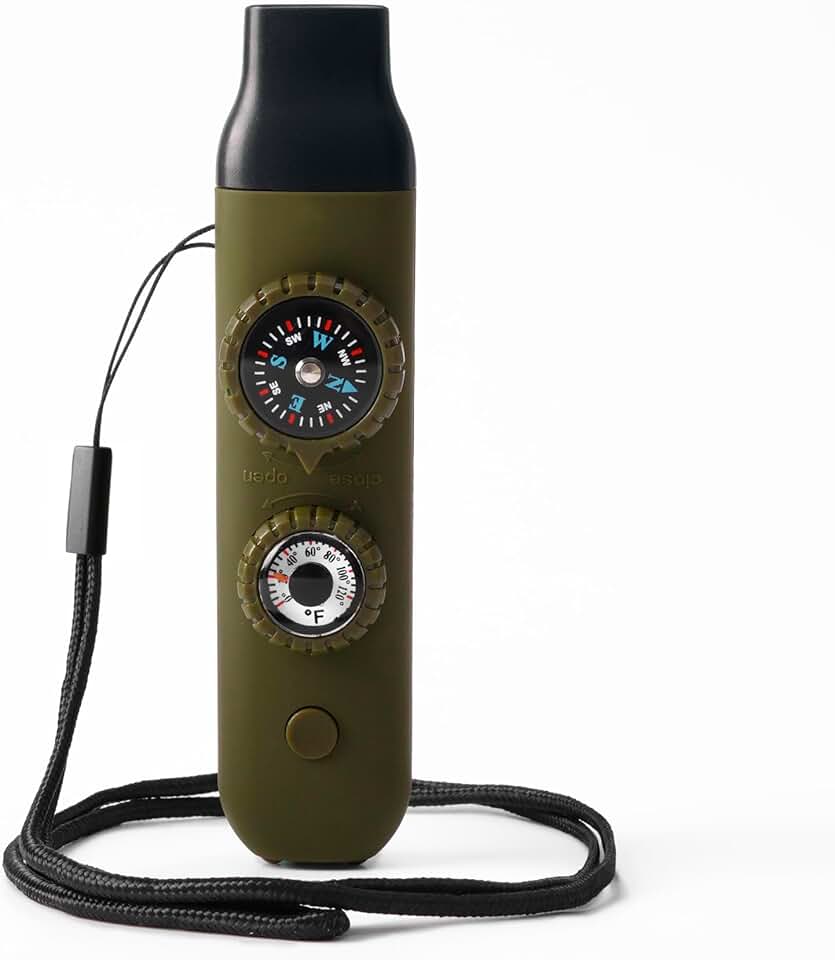
This multi-function whistle combines an emergency signaling device with a built-in compass and thermometer, making it a compact tool for hikers who like having navigation and weather information at a glance. The whistle itself produces a loud, clear sound suitable for emergency signaling. The compass is small but functional for basic directional reference, and the thermometer gives you a quick temperature reading without needing to pull out your phone. For beginners who are building their first trail kit and want a few tools in one package, this is a practical option.
This is a newer product with 241 customer reviews and a 4.6-star rating, so while it has less long-term track record than some alternatives, early user feedback is positive. The included lanyard makes it easy to wear around your neck or attach to your pack strap for quick access. The plastic construction keeps the weight low, and the bright color options make it visible if you drop it on the trail. Customers report that the whistle function is loud enough to be heard at a distance, which is the most important criterion for an emergency signaling device.
The main trade-off with this whistle is that the added features (compass and thermometer) make it slightly bulkier than a simple whistle, and the compass is basic – it will point north, but it is not a replacement for a dedicated navigation compass or GPS device. For hikers who want a simple, single-purpose whistle, the extras may feel unnecessary. However, if you like the idea of having a few tools in one small package and you do not mind the slightly higher price, this offers functional value. Just remember that the whistle is the critical feature, and the compass and thermometer are convenient bonuses, not primary navigation tools.
Pros
- Built-in compass and thermometer add utility
- Pealess design works in wet and cold conditions
- Included lanyard for easy carrying
- 4.6-star rating from verified customers
- Compact multi-tool design
Cons
- Newer product with fewer reviews than established options
- Compass is basic and not suitable for primary navigation
- Slightly bulkier than simple whistle designs
5. Emergency Whistle, 2PCS Premium Safety Survival Whistles with Lanyard Keychain, High Pitch Double Tubes for Outdoor Hiking Camping Hunting Fishing Boating
Best budget option for hikers who want a reliable two-pack whistle under five dollars
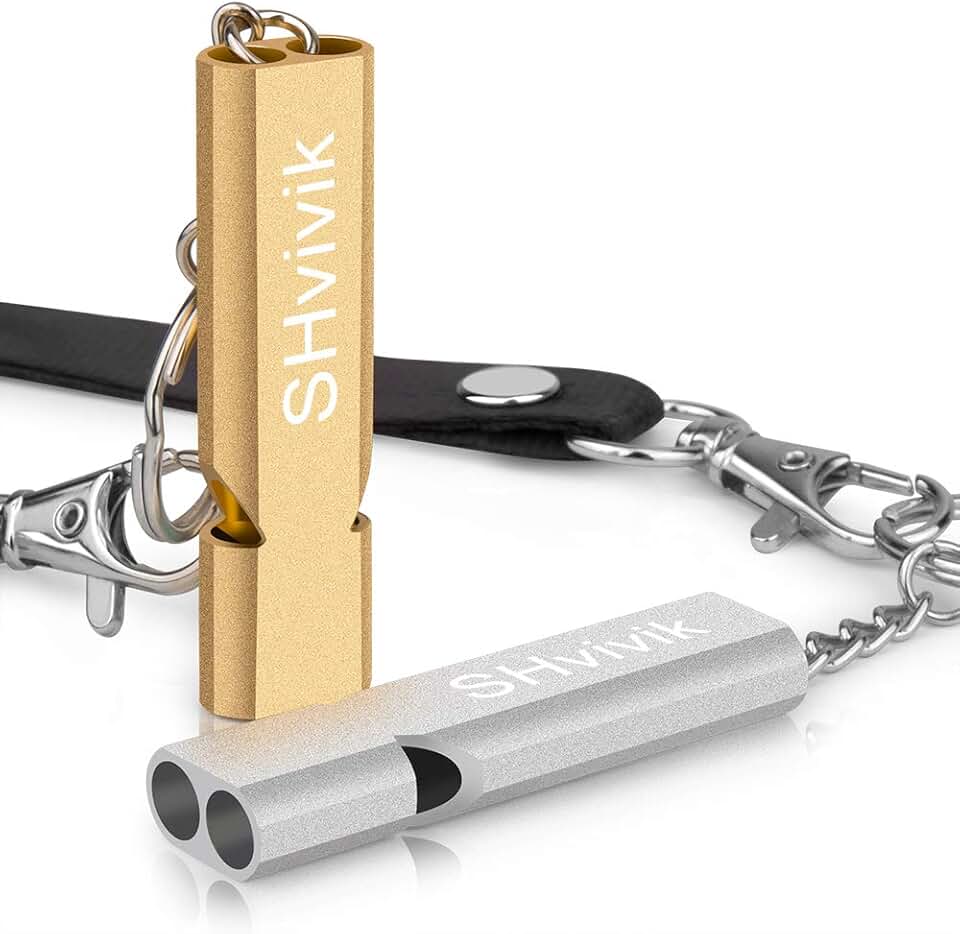
This double-tube emergency whistle is the most affordable option on this list, coming in under five dollars for a two-pack. The dual-tube design produces a high-pitched sound that carries well over distance. With nearly 4,000 customer reviews and a 4.6-star rating, this whistle has been tested by a large number of users across different outdoor activities, from hiking to boating to hunting. The included lanyard and keychain loop give you attachment options, and the lightweight plastic construction means you will barely notice it in your pack.
The two-pack format is particularly useful for beginners who are outfitting multiple people or want a backup whistle for their car, home emergency kit, or second backpack. The double-tube design is less common than single-chamber whistles, but customer feedback indicates that it produces a loud, attention-getting sound. The high-visibility color options make the whistle easy to spot, which is helpful if you set it down during a break or need to locate it quickly in your gear. The lanyard is basic but functional, and you can upgrade to a breakaway or reflective cord if desired.
At this price point, you are getting excellent value for a functional safety tool. The whistle does not include a decibel rating in the product specifications, but the customer reviews consistently mention that it is loud enough for emergency use. The plastic construction is durable enough for regular trail use, though it may not withstand as much abuse as metal alternatives. For budget-conscious hikers who want a reliable whistle without spending more than necessary, this is a smart choice. You are getting two whistles for less than most single whistles cost, and the performance is solid enough to trust your safety to it.
Pros
- Most affordable option at under five dollars for two whistles
- Nearly 4,000 customer reviews provide strong reliability data
- Double-tube design produces high-pitched sound
- Pealess construction works in all weather conditions
- Includes lanyard and keychain for carrying flexibility
Cons
- No exact decibel rating listed in specifications
- Basic lanyard may benefit from upgrade
How These Compare
Choosing between these five whistles comes down to what matters most to you as a beginner hiker: price, durability, attachment options, or extra features. If you want the most-tested option with the strongest customer track record, the LuxoGear whistle leads with over 13,000 reviews and a two-pack format that gives you a backup for less than eight dollars. It is the safest bet for someone buying their first emergency whistle because thousands of other hikers have already confirmed it works in real conditions. The Noopel whistle offers similar reliability with the added benefit of both lanyard and keychain attachments, which is helpful if you are still figuring out how you prefer to carry gear on the trail.
If you prioritize durability and want a whistle that will last for years, the brass whistle is worth the small weight penalty. Brass does not crack like plastic, and the 125+ decibel rating gives you a clear performance benchmark. It is slightly heavier than plastic options, but the one-piece construction and proven material make it a reliable long-term investment. For hikers who like multi-purpose tools, the whistle with compass and thermometer offers added utility in a compact package. Just remember that the whistle function is the critical feature, and the extras are bonuses that should not distract from the core purpose of emergency signaling.
For budget-conscious beginners, the double-tube whistle offers exceptional value at under five dollars for two units. You can keep one in your hiking pack and one in your car, or share with a hiking partner. The nearly 4,000 customer reviews confirm it performs well despite the low price. All five of these whistles meet the essential criteria: they are loud, pealess, lightweight, and backed by real customer feedback. Your choice should reflect your budget, how you plan to carry it, and whether you want a simple single-purpose tool or something with a few extra features.
Frequently Asked Questions
Do I really need an emergency whistle for hiking?
Yes, an emergency whistle is one of the simplest and most effective safety tools you can carry on a hike. If you get lost, injured, or separated from your group, a whistle allows you to signal for help without exhausting yourself by shouting. Your voice carries only a few hundred feet, especially in wooded or windy areas, but a quality whistle can be heard up to a mile away. Whistles work in any weather, never run out of battery, and weigh almost nothing. Even experienced hikers carry them as standard safety gear. The universal distress signal is three short blasts repeated at intervals, which rescuers and other trail users recognize immediately. For the small investment of a few dollars and negligible pack weight, a whistle provides peace of mind and a reliable way to call for help when cell service is unavailable.
What makes a whistle loud enough for emergency use?
A whistle is considered loud enough for emergency use if it produces at least 100 decibels, though many quality emergency whistles produce 120 to 130 decibels or more. For context, normal conversation is around 60 decibels, and sounds above 110 decibels are very loud. The key is not just volume but also the quality and pitch of the sound – a sharp, high-pitched tone carries better through trees and over terrain than a low, muffled sound. Pealess whistles (those without a small ball inside) are more reliable because they work consistently in wet, cold, or dirty conditions, whereas traditional whistles with peas can freeze or get clogged. When shopping for a whistle, look for customer reviews that mention the sound carrying well over distance, and prioritize pealess designs for outdoor use. Even without an exact decibel rating, a whistle backed by hundreds of positive reviews from hikers and outdoor users is likely loud enough for emergency signaling.
How should I carry an emergency whistle while hiking?
The best way to carry an emergency whistle is where you can reach it quickly without digging through your pack. Most hikers either wear the whistle on a lanyard around their neck or clip it to an easily accessible spot like a backpack shoulder strap, belt loop, or zipper pull. If you wear it on a lanyard, consider using one with a breakaway clasp that releases under pressure so the cord cannot choke you if it catches on a branch. Clipping the whistle to the outside of your pack keeps it within arm’s reach without having something around your neck all day. Some hikers prefer attaching it to a keychain on a carabiner for easy removal when they stop for breaks. The important thing is that the whistle is accessible in an emergency – not buried at the bottom of your pack where you would struggle to find it if you are injured or stressed. Choose bright colors so the whistle is easy to locate visually, and test your carrying method on a short hike to make sure it stays secure but reachable.
Can I use any whistle for hiking, or do I need a specific type?
You need a whistle specifically designed for outdoor and emergency use, not a referee whistle or novelty item. The key features to look for are pealess design (no ball inside that can freeze or clog), loud sound output (100+ decibels if rated), and durable construction that can withstand being dropped, wet, or exposed to temperature extremes. Plastic, aluminum, brass, and titanium are all suitable materials for hiking whistles. Avoid whistles with moving parts that can break, and skip novelty designs that prioritize appearance over function. Emergency whistles are designed to work reliably in the exact conditions where you might need them most – rain, snow, cold, dirt, and stress. A whistle marketed for outdoor survival, lifeguard use, or boating safety will meet these criteria. Most cost under ten dollars, so there is no reason to compromise on a whistle that might not work when you need it. Look for customer reviews from actual hikers and outdoor users to confirm the whistle performs well in real trail conditions.
What is the three-blast emergency signal with a whistle?
The universal distress signal with an emergency whistle is three short blasts in quick succession, followed by a pause, then repeated. This pattern – three blasts, pause, three blasts, pause – is recognized internationally as a call for help. It is distinct from other whistle signals like a single blast to get someone’s attention or two blasts to confirm you heard someone. If you are lost, injured, or in danger, repeat the three-blast pattern regularly so rescuers or other hikers can locate you by sound. The three-blast signal is easy to remember and execute even if you are stressed, cold, or injured. It is also energy-efficient compared to shouting, which is critical if you need to signal for an extended period. Before your first hike, practice the three-blast pattern a few times so it becomes automatic. Knowing this simple signal and having a reliable whistle to execute it with gives you a practical, proven way to communicate your need for help without relying on cell service or your voice.
The Bottom Line
Choosing your first emergency whistle does not have to be complicated, and the right choice depends on your priorities as a beginner hiker. If you want the most-tested option with a proven track record, the LuxoGear whistle with over 13,000 reviews is the safest bet – you are getting a two-pack for under eight dollars, which means you have a backup or can share with a hiking partner. For hikers who want flexibility in how they carry their gear, the Noopel whistle offers both lanyard and keychain options in one package. If durability matters most and you do not mind a few extra grams, the brass whistle is a long-lasting investment that will still work years from now. The whistle with compass and thermometer appeals to hikers who like multi-purpose tools, though the whistle function should remain your priority. And if you are on a tight budget or outfitting multiple people, the double-tube whistle offers excellent value at under five dollars for two units.
No matter which whistle you choose, the important thing is that you carry it on every hike and keep it accessible. Clip it to your pack strap, wear it on a lanyard, or attach it to a keychain – just make sure you can reach it without digging through your pack. Practice the three-blast distress signal before your first hike so it becomes second nature. An emergency whistle is one of the few pieces of gear you hope you never need to use, but having it with you adds a layer of security that lets you focus on enjoying the trail instead of worrying about what-if scenarios. For less than the cost of a coffee, you are adding a reliable, battery-free safety tool that works in any weather and weighs almost nothing. That is a trade-off every beginner hiker should make.
Disclosure: As an Amazon Associate, we earn from qualifying purchases. This does not affect our editorial recommendations.