
If you have truly wide feet, you already know the frustration. You order boots marked “wide” only to find they pinch your toes or squeeze your midfoot the moment you lace them up. Maybe you have spent years wearing boots a full size too large just to get enough width, dealing with blisters and instability because nothing fits right. You are not alone, and the problem is not your feet – it is that most “wide” boots top out at 2E width, which still leaves high-volume feet cramped and uncomfortable.
The good news: genuine extra-wide hiking boots in 4E and EEE widths do exist, and they are built specifically for feet like yours. These boots offer proper toe splay, accommodate high insteps, and provide stability without compression. This guide focuses exclusively on boots that deliver true extra-wide fit, with real customer feedback from hikers who have the same fit challenges you face. No more guessing whether “wide” really means wide enough.
What to Look For
Understanding Extra Wide Versus Standard Wide
Width sizing in hiking boots follows a letter system, and the difference between each step is significant. A standard D width is considered medium for men. E width is wide. 2E is extra wide – and this is where most mainstream hiking boot brands stop. But 4E (also written as EEEE) goes two full width increments beyond that, adding roughly half an inch across the ball of the foot compared to 2E. EEE (triple-E) sits between 2E and 4E. If regular wide boots feel tight, you likely need 4E or EEE.
Many boots labeled simply as “wide” do not specify whether they are E, 2E, or wider, which makes online shopping difficult. Look for product listings that explicitly state 4E, EEE, or “extra wide” with confirmation in customer reviews. Brands that specialize in extended widths – Propét, Dunham, Orthofeet, Dr. Comfort – typically offer true extra-wide construction, while mainstream hiking brands often max out at 2E even when they claim extra-wide fit.
High-Volume Feet Need More Than Just Width
Extra-wide boots are not just about the width measurement at the ball of your foot. High-volume feet (feet that need extra room in multiple dimensions, not just side-to-side width) also need more vertical space through the instep (the top section of your foot between your toes and ankle) and midfoot, a taller toe box (the front section of the boot that houses your toes) to prevent top-of-toe rubbing, and a heel cup (the rear section that wraps around your heel) that does not gap when the forefoot is properly sized. This is why some hikers with wide feet find that boots in their normal length but maximum available width still do not work – the boot is too shallow overall.
When evaluating extra-wide boots, pay attention to reviews that mention instep height and whether the tongue has enough padding and adjustability to accommodate a high arch without pressure points. Boots with padded, gusseted tongues (tongues that are stitched to the inside of the boot to keep out debris and improve fit) and multiple lacing options perform better for high-volume feet than those with thin tongues and limited lacing zones.
Break-In Period and Fit Expectations
Even when you find boots in the right width, expect a break-in period. Extra-wide boots often use stiffer construction to maintain structure across a wider platform, which means the upper materials need time to conform to your specific foot shape. Wear the boots around the house with the socks you will hike in – thick hiking socks will take up more room than everyday socks, which matters when fit is already snug.
During break-in, monitor for any pinch points that worsen rather than improve. A boot that causes sharp pain at the same spot after several wears is not going to magically get better. But general stiffness and mild pressure that decreases over time is normal. If you are between sizes in extra-wide boots, sizing up a half size and adding a thicker insole often works better than sizing down and hoping the boot stretches.
Sock Choice Matters More With Extra-Wide Boots
The wrong socks can undo the benefit of a properly wide boot. Avoid cotton socks, which bunch and create friction points inside a roomy boot. Merino wool or synthetic hiking socks with light to medium cushioning work best – they wick moisture, prevent bunching, and fill space without adding bulk that could make even an extra-wide boot feel tight.
Sock thickness affects fit more dramatically in wider boots because there is more surface area for the fabric to compress or shift. Some hikers with extra-wide feet prefer a thinner sock for summer hiking to maximize ventilation and a thicker sock for winter to add warmth without sizing up. Buy your boots and socks together if possible, and wear the exact sock you plan to hike in when trying boots on.
Terrain Considerations for Extra-Wide Boots
Extra-wide boots have a larger footprint (the surface area where the sole contacts the ground), which slightly changes how they perform on technical terrain. On narrow trails with exposed roots or rocky edges, you may catch the side of your boot more often than someone in a standard-width boot simply because there is more boot extending beyond your actual foot. This is not a safety issue, just something to be aware of as you develop your footing.
On the flip side, the wider platform provides excellent stability on loose gravel, mud, and uneven ground. You get more surface area in contact with the trail, which improves balance and reduces the risk of ankle rolls. For moderate trails – groomed paths, fire roads, gentle elevation gain – extra-wide boots perform identically to standard widths once you adjust to the feel.
Waterproofing and Breathability Trade-Offs
Most extra-wide hiking boots include waterproof membranes, but breathability can suffer in wider boots because there is more material wrapped around your foot and less air circulation. If you hike primarily in dry climates or during summer, consider whether you actually need waterproofing. Non-waterproof boots dry faster after stream crossings and keep your feet cooler on hot days.
If you do need waterproofing, look for boots with mesh panels or ventilation ports that help offset the breathability loss. Waterproof boots work best for wet climates, early spring hiking, or trails with unavoidable mud and puddles. For everything else, a non-waterproof boot with good drainage is often more comfortable for wide feet that tend to overheat.
Our Top Picks
1. Dunham Men’s Cloud Waterproof Boot
Best for high-volume feet that need true extra-wide fit with waterproof protection for wet trail conditions

The Dunham Cloud is built specifically for extra-wide feet, available in widths up to 6E, which makes it one of the few hiking boots that can accommodate genuinely high-volume feet. This boot is designed by a brand that specializes in extended sizing, so the extra width is not just a wider version of a standard boot – the entire structure is engineered for proper fit across a wider platform. Customer feedback consistently notes that these boots fit true to size in width, meaning if you order 4E, you get a legitimate 4E fit without the guesswork that comes with mainstream brands.
Reviewers report that in wet conditions, feet stay dry, though some note that in very hot weather, airflow is adequate but not exceptional. The boot has a padded collar and tongue that provide comfort around the ankle and instep, which matters for high-volume feet that often experience pressure points in those areas. The cushioning handles day hikes and moderate trails well, though this is not a boot designed for ultralight performance – it has some heft to it, which is expected in extra-wide construction.
The grip performs well on dirt trails, gravel, and light mud, though deep mud or wet rock can be slippery, as with most hiking boots in this category. The lacing system allows for good adjustability through the midfoot, so you can snug up the fit without over-tightening across the ball of your foot. Some customers mention stiffness initially that softens after several wears. A few reviewers with very high arches note that the factory insole is somewhat flat and benefits from replacement with a more supportive aftermarket option.
The main limitation is weight – these boots are heavier than many modern hiking boots, which some hikers notice on longer days. However, the trade-off is durability and structure that holds up across a wider footbed. For hikers who have struggled to find boots that do not pinch or cramp their feet, the Dunham Cloud delivers legitimate extra-wide fit that actually works.
See current pricing for the Dunham Men’s Cloud Waterproof Boot on Amazon.
Pros
- Available in widths up to 6E for genuinely extra-wide feet
- Waterproof construction keeps feet dry in wet trail conditions
- True-to-size width fit confirmed by customer feedback
- Padded collar and tongue reduce pressure points on high insteps
- Solid traction on dirt, gravel, and moderate terrain
Cons
- Heavier than many modern hiking boots
- Initial stiffness softens after several wears
- Factory insole may need replacement for higher arch support needs
2. Propét Men’s Cliff Walker
Best for budget-conscious hikers with extra-wide feet who need a comfortable boot for day hikes and moderate trails

The Propét Cliff Walker is a solid option for hikers who need extra-wide sizing without spending top dollar. Propét specializes in extended widths, and this boot delivers on that promise with legitimate extra-wide construction that reviewers consistently describe as roomy through the toe box and midfoot. The boot is available in multiple width options, including 4E, which provides enough space for high-volume feet that find standard wide boots too narrow.
The construction offers durability without excessive weight, though this is not a lightweight boot by any measure. The boot has a padded ankle collar and a cushioned insole that provide comfort for day hikes and shorter trail outings. Many customers note that the Cliff Walker works well for walks on groomed trails, fire roads, and moderate terrain, though it is not designed for technical scrambling or steep, rocky ascents. The grip handles dirt and gravel well on dry surfaces.
One of the strengths of this boot is the immediate comfort level – several reviewers mention minimal adjustment period required, which is a significant advantage for hikers who want to use their boots right away. The lacing system provides decent adjustability, though a few customers with very high insteps mention that the tongue could be more padded. The boot is not waterproof, which means it breathes better in warm weather but will not protect your feet in wet conditions. For hikers in dry climates or those who primarily hike in summer, this is not a drawback.
The main limitation is durability over time. Some long-term reviewers note that after a year of regular use, the materials begin to show wear, particularly around high-flex areas. This boot is best suited for weekend hikers or those who do not put heavy miles on their boots. For the price point and the genuine extra-wide fit, it offers good value for hikers who have struggled to find affordable boots that actually accommodate their foot width.
Read verified buyer reviews for the Propét Men’s Cliff Walker on Amazon.
Pros
- Genuine extra-wide fit in 4E that accommodates high-volume feet
- Ready to wear with minimal adjustment period
- Good value for hikers on a budget
- Adequate traction on dirt and gravel trails
- Non-waterproof construction improves breathability in warm weather
Cons
- Not waterproof, so unsuitable for wet trail conditions
- Durability decreases after extended use
- Tongue padding could be thicker for high-instep feet
3. Propét Men’s Ridge Walker
Best for hikers with extra-wide feet who want a lightweight, affordable boot for easy to moderate trails
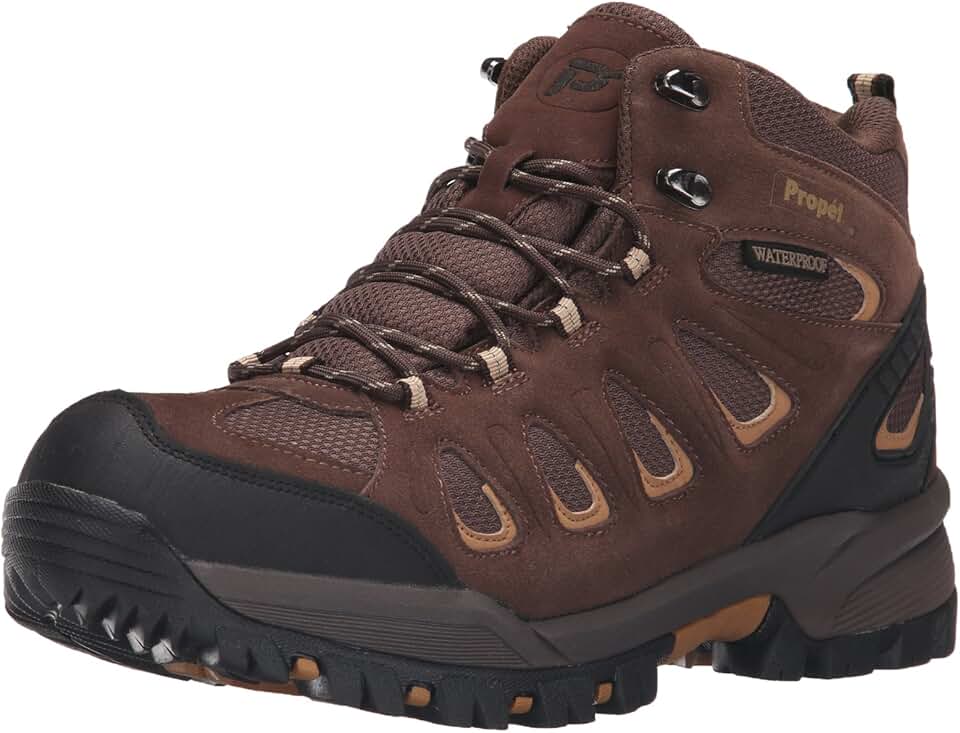
The Propét Ridge Walker offers extra-wide fit in a lighter package than many boots in this category, making it a good choice for hikers who want the width they need without the bulk of traditional hiking boots. This boot is available in extended widths including 4E, and customer reviews consistently confirm that it delivers true extra-wide fit through the toe box and forefoot. The boot has a lower profile than mid-height hiking boots, which some hikers with wide feet prefer because it eliminates potential pressure points around the ankle.
The design keeps weight down while maintaining structure, and the padded collar provides comfort without adding excessive bulk. The cushioning offers decent support for day hikes and moderate trails, though it is not designed for heavy backpacking or technical terrain. Many reviewers mention that the Ridge Walker is comfortable right out of the box, which is a significant advantage for hikers who want to use their boots immediately.
The grip provides adequate performance on dirt trails, gravel, and packed surfaces, though it does not excel in muddy or steep conditions. The boot is not waterproof, which improves breathability and makes it a better choice for dry climates or summer hiking. Some customers note that the boot runs slightly large in length, so sizing down a half size may be necessary, though width remains true to size.
The main limitation is support for challenging terrain – this boot is best suited for groomed trails and fire roads rather than rocky or uneven paths. Some reviewers with very high arches mention that the insole is relatively flat and benefits from replacement with a more supportive option. For hikers who need extra-wide fit and prioritize lightweight comfort over heavy-duty performance, the Ridge Walker delivers solid value at an accessible price point.
Check current stock for the Propét Men’s Ridge Walker on Amazon.
Pros
- True extra-wide fit in 4E that accommodates wide feet
- Lighter weight than many extra-wide hiking boots
- Comfortable immediately without adjustment period
- Good breathability due to non-waterproof construction
- Affordable price for hikers on a budget
Cons
- Not waterproof, unsuitable for wet conditions
- Limited support for technical or rocky terrain
- May run slightly large in length, consider sizing down
4. Orthofeet Men’s Hunter
Best for hikers with extra-wide feet and high arches who need orthotic-friendly construction and maximum comfort

The Orthofeet Hunter is designed specifically for hikers who need extra-wide fit combined with enhanced comfort features that accommodate foot conditions like high arches or sensitivity. This boot is available in extended widths and features a roomy toe box that allows natural toe splay, which is critical for preventing discomfort on longer hikes. The boot includes a removable insole with arch support, and the extra depth design accommodates custom orthotics without crowding, which sets it apart from many hiking boots that do not have enough interior volume for aftermarket insoles. Note that this boot has fewer customer reviews (373) compared to other options in this guide, so there is less long-term feedback available from the hiking community.
The construction provides structure without excessive stiffness, and the padded interior lining reduces friction points that can cause irritation for sensitive feet. The cushioning absorbs impact well on moderate trails, and several reviewers mention that it remains effective even after extended use. The lacing system allows for good adjustability through the midfoot, so you can customize the fit without over-tightening across the ball of your foot.
The grip handles dirt trails and gravel adequately, though some customers note that performance on wet surfaces could be better. The boot is not marketed as waterproof, and reviews confirm that it performs best in dry conditions or light moisture rather than heavy rain or stream crossings. Most wearers report that the boot feels comfortable from the first wear.
The main consideration is that this boot prioritizes comfort and accommodation over aggressive trail performance. It excels on groomed trails, fire roads, and moderate terrain, but it is not designed for technical scrambling or steep, rocky ascents. For hikers with wide feet who have struggled to find boots that work with their orthotics or who need extra cushioning and support, the Orthofeet Hunter delivers a fit and feel that is hard to match elsewhere.
Compare the Orthofeet Men’s Hunter specs and pricing on Amazon.
Pros
- Extra-wide fit with roomy toe box for natural toe splay
- Removable insole accommodates custom orthotics
- Enhanced cushioning for comfort on moderate trails
- Comfortable from first wear with minimal adjustment
- Extra depth design works well for high-volume feet
Cons
- Not waterproof, unsuitable for wet trail conditions
- Traction on wet surfaces could be improved
- Limited customer feedback (373 reviews) compared to other options
5. HI-TEC Men’s Altitude VI I Waterproof
Best for hikers with extra-wide feet who need waterproof protection and traditional hiking boot support at a mid-range price

The HI-TEC Altitude VI I is a traditional mid-height hiking boot that offers extra-wide sizing with waterproof protection, making it a versatile option for hikers who encounter varied trail conditions. This boot is available in extra-wide width, and customer reviews confirm that it provides genuine room through the toe box and midfoot without the cramped feeling that many wide-footed hikers experience in standard boots. With 859 reviews, this boot has moderate customer feedback, less than some longer-established models but enough to identify consistent performance patterns. Reviewers report that feet stay dry in wet conditions, and several note that the boot performs well in light rain and muddy trails.
The boot features a padded ankle collar and tongue that provide comfort and help prevent debris from entering the boot on dusty trails. The cushioning handles day hikes and moderate terrain well, though some reviewers mention that after several hours on rocky trails, additional cushioning would be welcome. The grip delivers solid performance on dirt, gravel, and moderate inclines, with adequate hold on wet surfaces.
Most reviewers report wearing the boots for several shorter walks before they feel fully comfortable, which is typical for mid-height boots with waterproof construction. The lacing system provides good adjustability, allowing you to customize the fit through the midfoot and ankle. Some customers with very high arches note that the insole is somewhat neutral and benefits from replacement with a more supportive option, though the boot has enough interior volume to accommodate aftermarket insoles.
The main limitation is that this boot is not designed for heavy-duty backpacking or extreme terrain – it performs best on groomed trails, fire roads, and moderate day hikes. Some reviewers mention that after extensive use, the waterproof protection begins to lose effectiveness, which is common in boots at this price point. For hikers who need extra-wide fit with waterproof protection and do not want to spend premium prices, the HI-TEC Altitude VI I delivers solid performance and comfort.
See if the HI-TEC Men’s Altitude VI I Waterproof is right for your first hike on Amazon.
Pros
- Extra-wide sizing with genuine room through toe box and midfoot
- Waterproof protection performs well in wet conditions
- Solid traction on dirt, gravel, and moderate terrain
- Mid-range price offers good value
- Padded collar and tongue provide comfort
Cons
- Requires several shorter walks before feeling fully comfortable
- Cushioning could be improved for rocky trails
- Waterproof effectiveness may decrease after extensive use
How These Compare
Choosing between these extra-wide hiking boots comes down to your specific needs and the conditions you will hike in most often. If you have genuinely high-volume feet and need the widest possible fit with waterproof protection, the Dunham Cloud is your best option. It is available in widths up to 6E, which is rare in hiking boots, and the construction is purpose-built for extra-wide feet rather than just a stretched version of a standard boot. The trade-off is weight – this is a heavier boot that feels substantial on your feet, but for hikers who have never found boots that truly fit, that weight is worth it.
For budget-conscious hikers who primarily stick to dry trails and do not need waterproofing, both Propét options offer excellent value. The Cliff Walker provides more ankle support with its mid-height design, while the Ridge Walker is lighter and more breathable with its lower profile. Both deliver genuine extra-wide fit at prices well below premium hiking boots, making them accessible for hikers who are just getting started or who do not put heavy miles on their boots. The Cliff Walker works better if you want a traditional hiking boot feel, while the Ridge Walker suits hikers who prefer a more casual, lightweight approach.
The Orthofeet Hunter stands out if you use custom orthotics or need enhanced comfort features due to foot sensitivity or arch issues. The extra depth design and removable insole make it easy to accommodate aftermarket insoles without sacrificing fit, which is a significant advantage for hikers whose foot needs go beyond just width. This boot prioritizes comfort over aggressive trail performance, so it is best for moderate terrain rather than technical scrambles.
The HI-TEC Altitude VI I offers the best balance of features for most hikers with extra-wide feet. You get waterproof protection, traditional mid-height support, and genuine extra-wide fit at a mid-range price. It handles varied conditions well – dirt trails, gravel, light mud, and wet weather – making it a versatile choice if you are not sure what terrain you will encounter most often. The boot performs well for day hikers who want reliable, all-around performance without spending premium prices or compromising on width.
Frequently Asked Questions
What is the difference between wide and extra-wide hiking boots?
Wide hiking boots typically refer to 2E width for men, which adds approximately a quarter inch across the ball of the foot compared to a standard D width. Extra-wide boots go beyond that to 4E or EEE width, adding another quarter to half inch of room. The difference is significant – many hikers with high-volume feet find that 2E wide boots still feel cramped, while 4E provides the space they actually need. Extra-wide boots also tend to have more vertical room through the instep and a taller toe box to accommodate the overall volume of a wider foot. When shopping, look for boots that explicitly state 4E, EEE, or list the specific width measurement rather than just “wide,” which can be ambiguous.
Do I need to size up in extra-wide hiking boots?
Not usually. If a boot is available in your correct length and true extra-wide width, sizing up is not necessary and can actually cause problems. Boots that are too long will allow your foot to slide forward on descents, leading to toe jamming and blisters. The exception is if a particular boot model runs small in length – some reviewers will mention this, and in those cases, going up a half size while staying in extra-wide width makes sense. The key is to match both dimensions correctly: your actual foot length and your actual foot width. Try boots on with the hiking socks you plan to wear, and make sure your toes have about a thumb width of space in front when standing, while the width feels comfortably roomy without any pinching.
Can I use regular insoles in extra-wide hiking boots?
You can, but you need to be careful about adding bulk that reduces the interior space you gained by buying extra-wide boots. Many extra-wide boots come with removable insoles that are designed for the wider footbed, and replacing them with a narrower aftermarket insole can create gaps or uneven support. If you need additional arch support or cushioning, look for insoles specifically made for wide or extra-wide feet, or consider insoles that are trimmable so you can customize the fit. Some boots, like the Orthofeet Hunter, are designed with extra depth to accommodate orthotics without compromising fit, which is ideal if you rely on custom insoles for foot health.
Will extra-wide hiking boots feel sloppy or unstable on trails?
Not if they fit your feet properly. Extra-wide boots are designed for high-volume feet, and when the width matches your actual foot shape, the boot should feel secure and stable. The key is proper lacing – you should be able to snug up the midfoot and ankle without over-tightening across the ball of your foot. A boot that is genuinely the right width for you will not slide or feel loose. However, if you buy extra-wide boots when you actually need standard wide, then yes, they will feel sloppy. The wider footbed does create a slightly larger platform, which can take a mile or two to adjust to if you are used to narrower boots, but this does not affect stability on moderate terrain.
Are extra-wide hiking boots only available in men sizes?
Extra-wide widths are more commonly available in men sizes, but some brands do offer women specific extra-wide options or use unisex sizing that works for all genders. Propét, Orthofeet, and Dunham all make women versions of their extra-wide boots, though the selection is smaller than for men. Women with very wide feet sometimes have success ordering men boots in a smaller size, typically 1.5 to 2 sizes down from their women size, though this can affect heel fit and overall proportions. If you are a woman looking for extra-wide boots, check whether the brand offers women specific models first, and read reviews from other women to see if the fit works.
The Bottom Line
Finding hiking boots that actually fit when you have extra-wide feet changes everything about your time on the trail. No more stopping every mile to adjust laces because your toes are going numb. No more choosing between boots that are too tight in width or too long in length. The boots in this guide offer genuine 4E and EEE widths from brands that understand high-volume feet, and they are backed by real customer feedback from hikers who share your fit challenges.
If you need maximum width and waterproof protection for varied conditions, the Dunham Cloud is the most accommodating option, available in widths up to 6E. For budget-conscious hikers who stick to dry trails, the Propét Cliff Walker and Ridge Walker both deliver extra-wide fit at accessible prices. If you use custom orthotics or need enhanced comfort features, the Orthofeet Hunter provides the depth and support you need. And for all-around versatility with waterproofing at a mid-range price, the HI-TEC Altitude VI I handles most trail conditions well.
Start with the terrain you hike most often and whether you need waterproofing, then match that to your budget. Whichever boot you choose, pay attention to fit – wear them around the house with your hiking socks for a few days before hitting the trail. Your feet will thank you for finally giving them the space they have always needed.
Disclosure: As an Amazon Associate, we earn from qualifying purchases. This does not affect our editorial recommendations.