
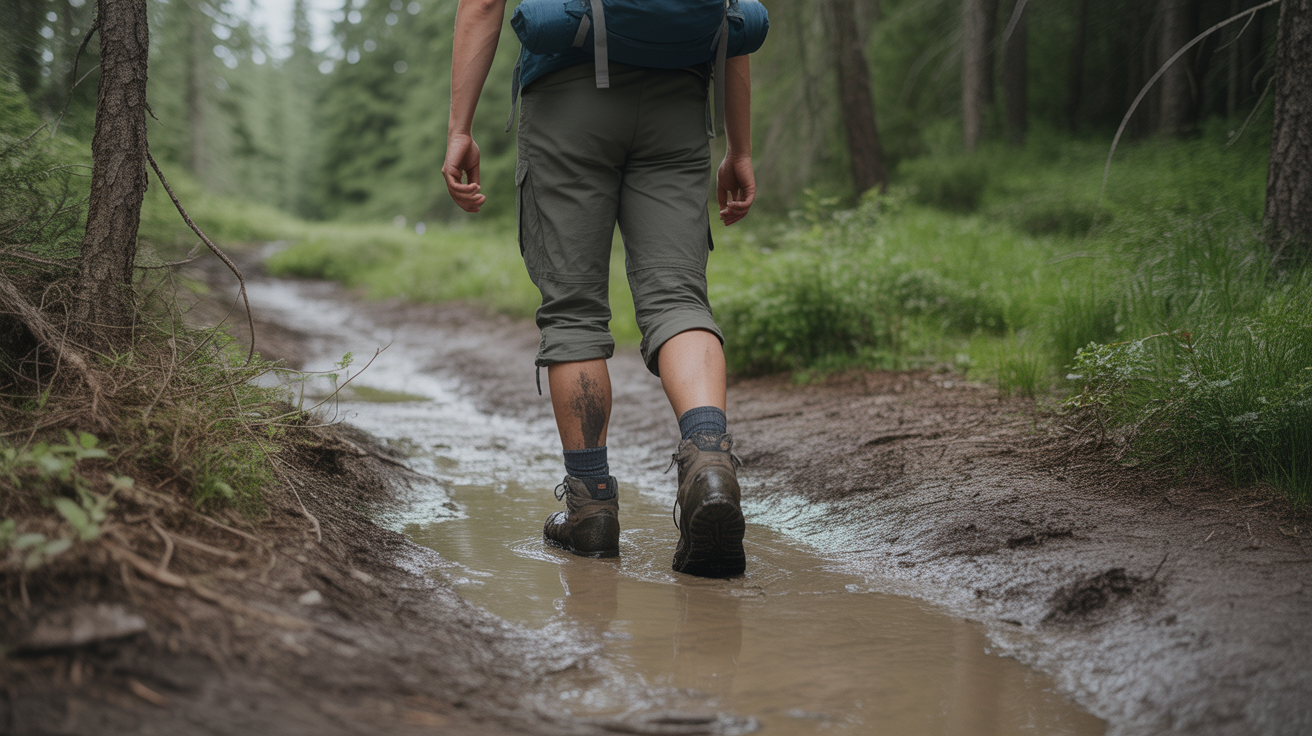
If you have ever finished a muddy trail hike only to find your shoes filled with grit, water, and debris, you know the frustration of unprotected footwear. Wet trails and muddy conditions turn even short hikes into messy experiences when dirt and moisture work their way into your shoes with every step.
Hiking gaiters designed for mud solve this problem by creating a barrier between your shoes and the trail. These low-profile gaiters wrap around your ankles and lower legs to seal the gap where debris enters most easily. In this guide, we review gaiters specifically tested for muddy conditions, covering everything from budget-friendly options to premium designs built for serious trail use.
What to Look For
Height and Coverage
Gaiters for mud come in two main heights: low gaiters (ankle height) and mid gaiters (mid-calf). Low gaiters work well for muddy trails where splashing and debris are your main concerns. They sit just above your shoe collar and weigh less than taller models, making them ideal for fast-moving hikers and trail runners. Mid gaiters extend several inches up your calf, providing more protection when you are walking through deeper mud or wet vegetation that brushes against your legs. For most muddy day hikes on maintained trails, low gaiters provide sufficient coverage without adding bulk. Choose mid-height options if you regularly hike through areas with standing water, thick mud, or overgrown trails where debris hits higher on your leg.
Material and Breathability
The fabric your gaiters are made from determines how well they handle moisture and how comfortable they feel during long hikes. Most mud-specific gaiters use synthetic materials that repel water while allowing some air circulation. Breathable fabrics prevent your feet from overheating inside the gaiters, which becomes important on longer hikes or warmer days. Some gaiters include mesh panels or ventilation zones that increase airflow without sacrificing protection. Look for materials described as water-resistant rather than fully waterproof if you plan to hike in mild to moderate mud. Water-resistant fabrics shed moisture while breathing better than waterproof membranes. Fully waterproof options work better for extreme wet conditions but may trap heat and moisture from your own perspiration.
Attachment System
How gaiters attach to your shoes and stay in place matters significantly on muddy trails. Most low-profile gaiters use a hook that clips to your shoelaces at the front and a strap that runs under your shoe at the instep or heel. The underfoot strap typically uses either elastic cord, adjustable webbing, or a rubber piece that hooks around your sole. Elastic systems are lighter and more flexible, but they wear out faster when exposed to mud and grit. Adjustable straps let you customize the fit but add a few seconds to your setup time. Some gaiters attach entirely with hook-and-loop closures around your ankle without any underfoot strap, which works if you primarily need to keep debris from entering at the shoe collar. Check that the attachment points are reinforced, as these areas receive the most stress when you are moving through sticky mud.
Fit and Adjustability
Gaiters must fit snugly enough to keep debris out but not so tight that they restrict circulation or feel uncomfortable after an hour on the trail. Most gaiters close with hook-and-loop straps, elastic bands, or a combination of both. Hook-and-loop closures allow more adjustment range and work well if you wear gaiters over different types of footwear throughout the season. Elastic closures slip on faster but offer less customization. Your gaiters should sit flat against your shoes and lower legs without gaps at the top or sides where mud can splash in. If you wear them over hiking boots, make sure the gaiter opening accommodates the boot collar without bunching. For trail runners or low-cut shoes, look for gaiters specifically designed for low-profile footwear, as these sit lower and wrap more securely around minimal ankle support.
Durability for Trail Conditions
Muddy trails expose gaiters to constant abrasion from rocks, roots, and grit mixed into the mud itself. Durability comes from reinforced stitching, abrasion-resistant fabric in high-wear zones, and quality attachment hardware. Check that seams are double-stitched or reinforced with bartacks at stress points. The area around the underfoot strap receives the most abuse and should use thicker material or additional reinforcement. Expect lightweight trail gaiters to show wear after a season of regular use on rocky, muddy trails. Heavier-duty options last longer but add weight and may feel less comfortable for all-day wear.
Our Top Picks
1. Frelaxy Ultralight Trail Gaiters for Hiking & Running
Best overall for muddy trails with minimal weight

The Frelaxy Ultralight Trail Gaiters deliver excellent mud protection without the bulk of traditional gaiters. These low-profile gaiters sit just above your shoe collar and use breathable fabric that sheds water and debris effectively on wet trails. The ultralight design means you barely notice them during long hikes, which matters when you are covering miles through muddy conditions.
The attachment system uses a hook-and-loop closure that wraps around your ankle with a front hook that clips to your laces to prevent the gaiter from sliding down when mud tries to pull it off your shoe. This design stays secure through mud and water without requiring constant adjustment during your hike.
Breathability stands out as a key advantage for muddy conditions. The fabric allows airflow while still keeping debris out, which prevents the sweaty, overheated feeling that happens with less breathable gaiters. This becomes noticeable on longer hikes or when temperatures rise above comfortable levels. The low height works well for day hiking on muddy trails where you need ankle protection but do not require coverage up your calf.
With a 4.3-star rating and growing user feedback, these gaiters represent solid budget-friendly performance. At this price point, you are getting reliable protection that handles maintained trails with mud and light debris effectively. These work best for hikers who want to try gaiters for the first time or need occasional mud protection without investing in premium options.
See current pricing for the Frelaxy Ultralight Trail Gaiters on Amazon.
Pros
- Ultralight design that does not add noticeable weight
- Breathable fabric prevents overheating on warm days
- Budget-friendly price for occasional muddy hikes
- Simple attachment system stays secure without adjustment
Cons
- Smaller review base than established alternatives
- Low height may not protect against deeper mud splash
View Frelaxy Ultralight Trail Gaiters for Hiking & Running on Amazon →
2. Kahtoola INSTAgaiter Low Gaiters
Best for frequent muddy trail use with premium durability

The Kahtoola INSTAgaiter Low represents the premium end of mud-focused gaiters with construction quality that justifies the higher price for regular trail users. These low gaiters protect against mud, rocky terrain, and trail debris with materials built to last multiple seasons of hard use. The Climate Pledge Friendly certification indicates attention to environmental impact in the manufacturing process.
The build quality addresses the main concern with budget gaiters: durability under repeated exposure to abrasive trail conditions. Users report that these gaiters maintain their protective seal and structural integrity even after extensive use on rocky, muddy trails. The attachment system keeps the gaiter positioned correctly even when mud tries to pull it down or debris catches on the fabric. This reliability matters when you are several miles into a hike and cannot stop to readjust gear constantly.
The low height design focuses protection right where mud enters most often: the gap between your shoe collar and lower leg. This targeted approach keeps weight down while delivering effective coverage for maintained trail conditions. The gaiters work equally well for hiking, trail running, and mountaineering in muddy environments, which makes them versatile if you participate in multiple outdoor activities.
With over 300 reviews and a 4.4-star rating, these gaiters have proven themselves with a substantial user base. The higher price reflects construction quality and durability rather than unnecessary features. These make sense if you hike muddy trails regularly and want gaiters that will last rather than buying budget options repeatedly.
Read verified buyer reviews for the Kahtoola INSTAgaiter Low on Amazon.
Pros
- Premium construction built for multiple seasons of use
- Over 300 customer reviews confirm real-world performance
- Versatile for hiking, trail running, and mountaineering
- Climate Pledge Friendly certification
Cons
- Higher price point than budget alternatives
- Low height limits protection in very deep mud
3. Kahtoola INSTAgaiter Mid Gaiters
Best mid-height option for deeper mud and wet vegetation

The Kahtoola INSTAgaiter Mid extends protection several inches up your calf, making it the right choice when muddy trails include deeper water, thick mud, or wet vegetation that brushes against your legs. This mid-height design provides more coverage than low gaiters without the bulk of full-height mountaineering gaiters. The Climate Pledge Friendly certification aligns with environmentally conscious gear choices.
The additional height matters most when you are walking through mud that splashes above ankle level or when trails take you through overgrown areas where wet plants constantly brush your lower legs. The mid-height gaiter creates a barrier that keeps this moisture and debris from soaking through your pants and reaching your skin. This protection extends your comfort range on trails that would otherwise leave you wet and uncomfortable within the first mile.
Like the low version, these gaiters are built for hiking, trail running, and mountaineering in challenging conditions. The construction quality handles rocky terrain along with mud, which means they protect against multiple trail hazards simultaneously. User feedback indicates these perform consistently for hikers who need more coverage than low gaiters provide.
The trade-off for increased coverage is slightly more weight and bulk compared to ankle-height options. You will notice these more during wear, though the difference is minimal if you are already carrying a pack and hiking gear. Choose these if your typical muddy trails include water crossings, deep mud sections, or thick undergrowth. Stick with low gaiters if your trails are mostly maintained paths with surface mud and light debris.
Check current stock for the Kahtoola INSTAgaiter Mid on Amazon.
Pros
- Mid-height coverage protects against deeper mud and wet vegetation
- Premium Kahtoola construction quality
- Climate Pledge Friendly certification
- Works across multiple outdoor activities
Cons
- Higher price than low-profile alternatives
- Slightly more bulk than ankle-height gaiters
4. Trail Gaiters Low Shoes Gators for Hiking Boots
Best mid-range balance of price and performance

These trail gaiters sit in the sweet spot between budget and premium options, offering breathable construction and reliable mud protection at a reasonable price point. The 4.3-star rating across 300 reviews demonstrates consistent satisfaction from a substantial user base, and the strong sales volume indicates these are popular with hikers who regularly face muddy conditions.
The breathable design addresses one of the main complaints about lower-quality gaiters: trapped heat and moisture that makes your feet uncomfortable during longer hikes. The low height keeps them lightweight while still covering the critical zone where mud and debris enter your shoes. The design accommodates various footwear styles, giving you flexibility whether you prefer trail runners, hiking shoes, or traditional hiking boots.
At this price point, you are getting solid performance without the premium construction of higher-end options. These gaiters handle regular trail use effectively, though they may show wear sooner than more expensive alternatives if you hike extremely rugged or abrasive terrain frequently. For most day hikers and weekend trail users, the durability matches the use case well.
The secure fit keeps the gaiters positioned correctly during hikes without requiring constant adjustment. This reliability matters when you are focused on the trail rather than your gear. These make particular sense if you are new to using gaiters for mud protection and want to try the concept without committing to premium pricing.
Compare the Trail Gaiters specs and pricing on Amazon.
Pros
- Mid-range price offers good value
- 300 reviews confirm consistent performance
- Breathable construction prevents overheating
- Accommodates various footwear styles
Cons
- May wear faster than premium options on very rugged terrain
- Specifications not fully detailed in listing
View Trail Gaiters Low Shoes Gators for Hiking Boots on Amazon →
How These Compare
Choosing between these mud-focused gaiters depends on matching the gaiter design to your typical trail conditions and hiking frequency. The Frelaxy Ultralight Trail Gaiters work best if you want minimal weight and bulk for maintained trails with surface mud and light debris. At $18.99, they deliver reliable protection without premium pricing, making them ideal for occasional muddy hikes or hikers building their gear collection on a budget. The ultralight design means you barely notice them during all-day wear, which matters when comfort affects your trail experience.
The Kahtoola INSTAgaiter Low at $43.95 makes sense for hikers who regularly face muddy conditions and want gaiters that will last multiple seasons. The premium construction handles constant abrasion better than budget alternatives, and the 321 reviews provide confidence in long-term durability. Choose these if you hike muddy trails often enough that replacing cheaper gaiters every season becomes more expensive than buying quality once.
Step up to the Kahtoola INSTAgaiter Mid for $53.95 when your muddy trails include deeper water, thick mud sections, or wet vegetation that reaches above ankle height. The mid-height design extends protection up your calf, keeping moisture and debris from soaking through your pants. This additional coverage matters most on overgrown trails or when hiking through areas with standing water. The extra $10 over the low version buys you coverage that expands where you can hike comfortably in wet conditions.
The Trail Gaiters at $25.99 balance performance and price for hikers who want better-than-budget quality without premium pricing. With 300 reviews backing up the 4.3-star rating, these provide reliable protection for regular trail use. They work particularly well if you are still determining how often you will hike muddy trails and want solid performance while testing whether gaiters become regular gear in your hiking kit.
Frequently Asked Questions
Do I need gaiters for muddy trails or can I just wear waterproof boots?
Waterproof boots protect your feet from moisture coming through the boot material, but they cannot seal the gap at the top where your leg meets the boot collar. This opening allows mud, water, and debris to splash or drop directly into your boots from above. Once mud enters your boot, waterproofing becomes irrelevant since the moisture is already inside with your foot.
Gaiters create a physical barrier over this vulnerable gap, preventing debris from entering in the first place. They work with any type of footwear, from trail runners to full hiking boots, by wrapping around the opening and sealing it against splashes and falling debris. Even with waterproof boots, gaiters keep the inside of your footwear clean and dry by stopping mud at the entry point rather than relying on the boot material alone. For maintained muddy trails, low gaiters provide sufficient coverage. Choose taller options if you regularly walk through deeper mud or wet vegetation.
How do you clean hiking gaiters after muddy trails?
Most hiking gaiters can be cleaned with basic hand washing after muddy hikes. Start by letting the mud dry completely, which makes it easier to brush off the bulk of dried dirt before washing. Use a soft brush to remove dried mud from the fabric and attachment points, paying particular attention to the underfoot strap and closure mechanisms where grit accumulates.
Wash gaiters by hand in cool water with mild soap, gently scrubbing any remaining dirt or stains. Avoid hot water and harsh detergents, which can damage water-resistant coatings on the fabric. Rinse thoroughly to remove all soap residue, then air dry the gaiters away from direct heat sources. Do not put gaiters in the dryer, as high heat can damage elastic components and water-resistant treatments. Check the manufacturer care instructions on your specific gaiters, as some materials have particular cleaning requirements. Regular cleaning after muddy hikes extends gaiter life by preventing grit from wearing down fabric and attachment points.
What is the difference between low and mid-height gaiters for mud?
Low gaiters extend just above your ankle and shoe collar, typically covering 3 to 5 inches from your shoe. They focus protection on the area where mud most commonly enters: the gap between your footwear and lower leg. Low gaiters weigh less and feel less restrictive, making them popular for day hiking and trail running on maintained muddy trails. They provide sufficient coverage when mud primarily splashes at ankle level or when debris falls from above into your shoes.
Mid-height gaiters extend several inches up your calf, typically reaching 8 to 12 inches from your shoe. This additional coverage protects against deeper mud, wet vegetation that brushes your lower legs, and water crossings where splashing reaches above ankle height. Mid gaiters work better for overgrown trails where wet plants constantly contact your legs or when hiking through areas with standing water and thick mud. The trade-off is slightly more weight and bulk during wear. Choose low gaiters for most maintained trail conditions with surface mud, and step up to mid-height when your typical trails include deeper water or thick vegetation.
Can you wear gaiters with trail running shoes?
Yes, gaiters work well with trail running shoes and are specifically designed for low-profile footwear without high ankle collars. Trail running shoes benefit from gaiters even more than boots since their low-cut design creates a larger opening where debris can enter. Low gaiters designed for running and hiking wrap snugly around trail runners and use attachment systems that accommodate minimal ankle support.
Look for gaiters that specifically mention compatibility with low-cut shoes or trail runners. These models sit lower on your ankle and use attachment methods suited to flexible footwear. The front hook should clip to your laces without interfering with the tongue, and the underfoot strap should accommodate the shoe sole without slipping. Many ultralight and breathable gaiters work particularly well with trail runners since both prioritize minimal weight and maximum ventilation. Avoid tall gaiters designed for mountaineering boots, as these will bunch awkwardly over low-cut trail runners and may interfere with ankle flexibility during running.
How tight should hiking gaiters fit?
Hiking gaiters should fit snugly enough to prevent debris from entering but not so tight that they restrict blood flow or feel uncomfortable after an hour of wear. When properly fitted, the gaiter should sit flat against your shoe and lower leg without gaps at the top or sides where mud could splash through. You should be able to slide two fingers between the gaiter and your leg at the top closure, indicating enough room for circulation without excessive looseness.
The underfoot strap should hold the gaiter in position without cutting into your foot through the shoe sole. If the strap is too tight, you will feel pressure points on your instep or heel during hiking. Too loose, and the gaiter will slide down or rotate around your leg with movement. Most gaiters use adjustable closures that let you customize the fit around your specific leg shape and footwear. Start with a slightly looser fit than you think you need, then adjust tighter if you notice debris getting inside or the gaiter sliding during your hike.
The Bottom Line
Selecting the right hiking gaiters for mud depends on matching the gaiter design to your typical trail conditions and hiking frequency. For occasional muddy day hikes on maintained trails, the Frelaxy Ultralight Trail Gaiters at $18.99 provide reliable protection without the investment of premium options. Their breathable, lightweight design keeps debris out while remaining comfortable during all-day wear. These work particularly well for hikers building their gear collection or testing whether gaiters become regular equipment in their hiking kit.
Frequent muddy trail hikers should consider the Kahtoola INSTAgaiter Low at $43.95 for its superior durability and proven performance across 321 customer reviews. The premium construction handles constant trail abrasion better than budget alternatives, making these more economical over multiple seasons of regular use. If your muddy trails include deeper water, thick mud sections, or wet vegetation above ankle height, the Kahtoola INSTAgaiter Mid at $53.95 extends coverage up your calf where you need it most.
The Trail Gaiters at $25.99 balance performance and price effectively for hikers who want solid protection without premium pricing. With 300 reviews confirming consistent performance, these handle regular trail use well while leaving budget room for other gear priorities. Whichever option you choose, proper fit and regular cleaning after muddy hikes will extend their useful life and keep your feet comfortable on wet trails.
Disclosure: As an Amazon Associate, we earn from qualifying purchases. This does not affect our editorial recommendations.