
If you are standing in your kitchen right now looking at your random collection of water bottles and wondering if any of them are actually right for hiking, you are not alone. Most new hikers start with whatever bottle they already own, only to discover halfway up the trail that it leaks, does not fit in their pack pocket, or leaves their water uncomfortably warm on a hot day. The good news is that you do not need to overthink this.
A good hiking water bottle is simply one that keeps you hydrated without adding frustration to your hike. Whether you need insulation to keep water cold on long summer trails, a wide mouth for adding ice, or just something durable that fits your budget, this guide breaks down the best options for beginners. We will compare insulated versus non-insulated bottles, explain what features actually matter on the trail, and help you choose a bottle that works for the hiking you actually do.
What to Look For
Insulated vs Non-Insulated: Which Do You Really Need
If you are hiking in warm weather or spending more than a couple hours on the trail, insulation makes a noticeable difference. Insulated bottles use double-wall vacuum technology to keep water cold for up to 24 hours, which means you start your hike with cold water and end it the same way. Non-insulated bottles are lighter and less expensive, but your water will quickly reach air temperature. For most beginners doing day hikes, especially in summer, insulation is worth the small weight penalty. If you mostly hike in cooler weather or on short trails where you will refill frequently, a non-insulated bottle saves money and pack weight.
Wide Mouth vs Narrow Mouth Opening
Wide mouth bottles, typically with openings around 2.5 to 3 inches across, make it easy to add ice cubes, drop in water purification tablets, or clean the interior thoroughly. They also let you drink faster when you are really thirsty after a climb. The downside is that they can be harder to drink from while walking without spilling. Narrow mouth bottles offer more controlled sipping and are easier to drink from on the move, but you cannot fit ice cubes through the opening and cleaning requires a bottle brush. Most beginners find wide mouth bottles more versatile, especially if the bottle includes multiple lid options like both a straw lid and a spout lid.
Capacity: How Much Water Should You Carry
Most hiking water bottles come in 32-ounce sizes, which equals about one liter. This is a solid starting point for beginners because it balances hydration needs with manageable weight. Water weighs roughly two pounds per liter, so a full 32-ounce bottle adds about two pounds to your pack. For a two to three hour hike in moderate weather, one 32-ounce bottle is usually enough. For longer hikes or hot conditions, you will want to carry two bottles or plan water refills along the trail. Bigger is not always better because you are unlikely to carry a 64-ounce bottle if it feels too heavy, which defeats the purpose.
Will It Fit in Your Pack Side Pocket
This is one of those details that seems minor until you are on the trail struggling to reach your water. Most daypacks have stretchy mesh side pockets designed to hold water bottles, but not all bottles fit well. Standard 32-ounce insulated bottles measure about 10 to 11 inches tall and 3 to 3.5 inches in diameter. Before buying, check your pack side pocket depth and width. If your bottle is too tall, it will tip out when you bend over. If it is too wide, it will not fit at all. Some bottles come with paracord handles or carabiner clips, which let you attach them externally if they do not fit inside pockets.
Lids and Drinking Options That Actually Matter
The lid makes a bigger difference than you might expect. Straw lids let you drink without tilting the bottle much, which is convenient while walking but can be harder to clean and may leak if not sealed properly. Spout lids offer a middle ground with controlled flow and easier cleaning. Handle lids make carrying easier but add bulk. Many bottles now include two or three interchangeable lids, which sounds like overkill until you realize you want the straw lid for easy trail sipping and the spout lid for cleaner storage in your pack. Leakproof seals are non-negotiable since a wet backpack ruins your whole day.
Durability and What Beginners Should Expect
Stainless steel bottles are nearly indestructible and handle being dropped on rocks without cracking, though they can dent. Plastic bottles are lighter and less expensive but may develop taste or odor over time and are more prone to cracking if dropped. For beginners still figuring out their hiking frequency, a mid-priced stainless steel bottle offers the best balance of durability and cost. If you end up hiking regularly, it will last for years. If you discover hiking is not your thing, you have not invested a fortune. Look for bottles with protective silicone bases to prevent dents and scratches when you set them down on rocky surfaces.
Our Top 5 Picks
1. CIVAGO 32 oz Insulated Water Bottle With Straw
Best overall value for beginners wanting reliable insulation and multiple lid options
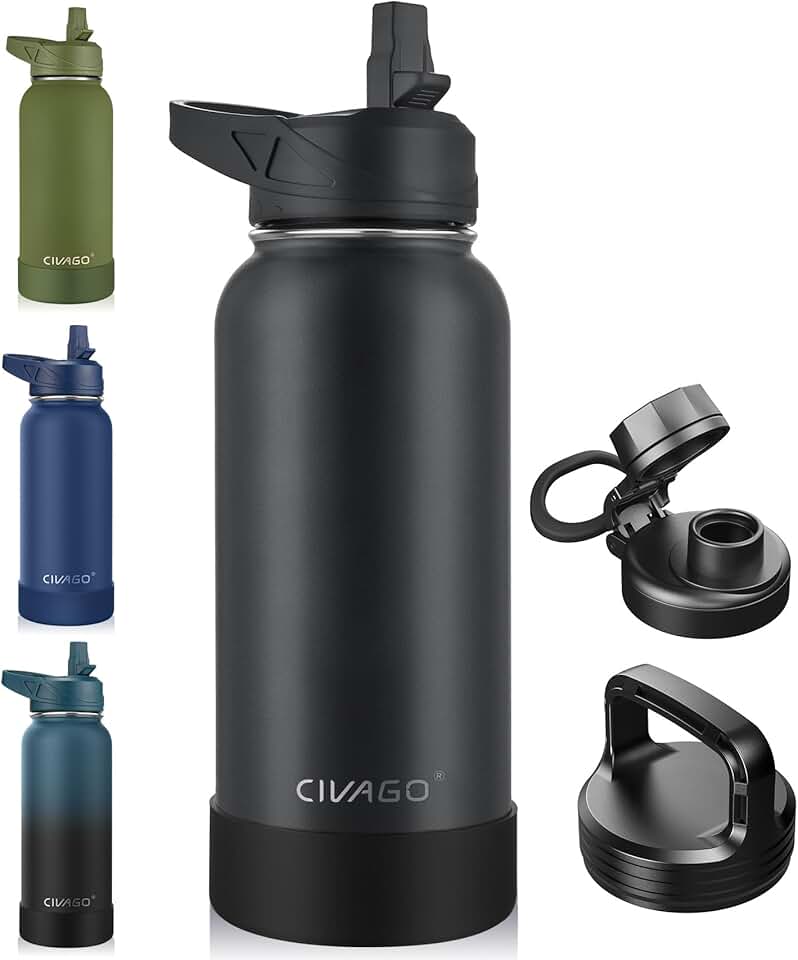
This is the bottle that makes the most sense for someone buying their first dedicated hiking water bottle. With over 11,000 customer reviews, it has been tested by enough people to prove its reliability, and the 4.6-star rating reflects consistent performance rather than flashy marketing. The 32-ounce capacity hits the sweet spot for half-day hikes without being too heavy, and the stainless steel construction means it will survive getting knocked around in your pack or dropped on rocks.
What sets this bottle apart is the three included lids: a straw lid for easy sipping while walking, a spout lid for controlled drinking, and a handle lid for carrying convenience. As a beginner, you do not yet know which style you will prefer on the trail, so having all three options lets you experiment without buying multiple bottles. The insulation keeps water cold, which matters more than you might think when you are hot and tired halfway through a hike. The wide mouth opening makes adding ice easy, and you can actually fit your hand inside for cleaning, which prevents the funky smell that develops in bottles you cannot reach into.
The black color hides scratches and dirt well, though it does show water spots if you care about that sort of thing. At just over $14, this bottle costs less than a single lunch out while delivering features that match bottles priced twice as high. The leak-proof design actually works, according to reviewers who have tested it upside down in their bags. For a beginner who wants one reliable bottle that covers all the basics without spending premium money, this is the straightforward choice that simply works. See current pricing for the CIVAGO 32 oz Insulated Water Bottle With Straw on Amazon.
Pros
- Three interchangeable lids let you test different drinking styles
- Over 11,000 reviews provide reliable performance data
- Wide mouth fits ice cubes and makes cleaning simple
- Affordable price under $15 with premium features
- Stainless steel construction handles trail abuse
Cons
- Black exterior shows water spots and fingerprints
- Slightly heavier than non-insulated options
- No carrying strap included with handle lid
View CIVAGO 32 oz Insulated Water Bottle With Straw on Amazon →
2. IRON FLASK Camping & Hiking Hydration Flask with Straw
Best for beginners who want proven reliability and fun color options

With over 55,000 reviews, this bottle has been field-tested by more hikers than almost any other option on the market, and the 4.7-star rating demonstrates consistency across thousands of real-world uses. Iron Flask has built a reputation in the outdoor community for bottles that simply do not fail, which matters when you are depending on hydration during a long hike. The insulated stainless steel construction keeps water cold, and the straw lid works well for convenient drinking without breaking your hiking stride.
The Cotton Candy color adds some personality to your gear, which helps if you are hiking with friends and need to quickly identify your bottle at rest stops. Beyond aesthetics, the color coating provides an extra grip layer that makes the bottle easier to hold with sweaty or gloved hands. The wide mouth opening measures large enough to fit standard ice cube trays, and the opening is broad enough that you can reach inside with a sponge for thorough cleaning between hikes.
At $12.99, it costs slightly less than our top pick while delivering comparable performance, though it only includes one lid rather than three. The straw lid works well for most hiking situations, making frequent sipping easy without having to stop and unscrew a cap. Reviewers consistently mention the durability, with bottles surviving drops, getting banged around in car trunks, and lasting through multiple hiking seasons without issues. The only real limitation is that if you later decide you want a spout lid or handle lid instead of the straw, you will need to purchase those separately. Read verified buyer reviews for the IRON FLASK Camping & Hiking Hydration Flask with Straw on Amazon.
Pros
- Over 55,000 reviews provide extensive real-world testing data
- Fun color options including Cotton Candy for easy identification
- Excellent insulation keeps water cold on long hikes
- Wide mouth fits ice and makes cleaning easy
- Lower price than many comparable insulated bottles
Cons
- Only includes one lid versus three on similarly priced bottles
- Straw lid requires more frequent cleaning than spout lids
- Slightly taller profile may not fit shorter pack pockets
View IRON FLASK Camping & Hiking Hydration Flask with Straw on Amazon →
3. Takeya Actives Insulated Stainless Steel Water Bottle with Spout Lid
Best premium option for beginners who want top-tier quality and the highest customer ratings

Takeya has earned a devoted following among outdoor enthusiasts for bottles that exceed expectations in both performance and longevity. The 4.8-star rating across nearly 30,000 reviews is exceptional and reflects genuinely superior quality rather than just good marketing. This bottle costs nearly double some of our other picks, but the difference shows in details like smoother lid threading, more consistent insulation performance, and construction quality that feels noticeably more solid in your hand.
The spout lid provides controlled flow without the complexity of a straw mechanism, which makes it simpler to clean and less prone to leaks. The spout design also prevents the accidental face-splash that sometimes happens with wide-mouth bottles when you tip them too enthusiastically after a tough climb. The Midnight color option is both practical for hiding scratches and aesthetically pleasing if you care about how your gear looks.
One standout feature is how well this bottle fits in car cup holders despite being 32 ounces, which matters if you are driving to trailheads and want your water accessible during the drive. The slightly narrower profile compared to some wider bottles also means it slides more easily into backpack side pockets without stretching the mesh. Reviewers consistently mention using these bottles for years without degradation, which justifies the higher upfront cost if you plan to hike regularly.
The main consideration is whether you need the premium quality as a beginner still figuring out your hiking habits. If you are confident you will hike frequently and want to buy once rather than upgrade later, Takeya delivers. If you are still testing whether hiking becomes a regular activity, one of our more affordable picks makes more sense initially. Check current stock for the Takeya Actives Insulated Stainless Steel Water Bottle with Spout Lid on Amazon.
Pros
- Exceptional 4.8-star rating across nearly 30,000 reviews
- Spout lid offers leak-free, controlled drinking
- Narrower profile fits car cup holders and pack pockets easily
- Premium construction quality visible in threading and finish
- Consistently outlasts cheaper bottles according to long-term users
Cons
- Higher price at nearly $26 may exceed beginner budgets
- Only includes spout lid, no straw or handle options
- Premium features may be overkill for occasional hikers
View Takeya Actives Insulated Stainless Steel Water Bottle with Spout Lid on Amazon →
4. Nalgene 32 oz Wide Mouth Water Bottle
Best lightweight non-insulated option for minimalist beginners and cooler weather hiking

Nalgene bottles have been the default choice for backpackers and hikers for decades, and this classic wide mouth design represents what made them famous. The key difference from our insulated picks is that this bottle weighs significantly less because it lacks the double-wall vacuum insulation. For beginners hiking in cooler weather, on shorter trails where water temperature does not matter much, or those who prioritize minimal pack weight, this lightweight approach makes sense.
The BPA-free construction is durable in a different way than metal bottles. It will not dent like stainless steel, but it can crack if dropped on rocks from height, so you trade one durability concern for another. The simple screw-on lid is nearly impossible to break and has fewer parts to lose compared to complex straw or spout lids. The bottle is also dishwasher safe, making cleaning effortless at home.
With over 25,000 reviews and a 4.8-star rating, this bottle has proven itself across countless hiking scenarios. Reviewers mention using the same Nalgene for years, even decades, which speaks to longevity. The graduated volume markings on the side help track water intake if you are trying to ensure adequate hydration. The wide mouth opening makes filling from streams easy if you are using a water filter, and the large opening dries quickly between uses, which prevents mold growth.
The main limitation is obvious: your water will be whatever temperature the air is within an hour. On hot summer hikes, that means warm water, which some people find unpleasant. The plastic can also absorb flavors over time if you put anything besides water in it. For beginners who are uncertain whether they need insulation and want to start with a proven, affordable, lightweight classic, Nalgene remains the standard. Compare the Nalgene 32 oz Wide Mouth Water Bottle specs and pricing on Amazon.
Pros
- Lightweight design reduces pack weight significantly
- Proven durability with 25,000-plus reviews over decades
- BPA-free plastic will not dent like metal bottles
- Dishwasher safe for easy cleaning
- Wide mouth works perfectly with water filters
Cons
- No insulation means water reaches air temperature quickly
- Plastic can crack if dropped on rocks
- May absorb flavors if used with beverages other than water
5. CamelBak Chute Mag Vacuum Insulated Stainless Steel Water Bottle
Best for beginners who want a trusted outdoor brand and magnetic lid convenience

CamelBak built their reputation on hydration systems for serious outdoor activities, and that expertise translates into this insulated bottle. The standout feature is the magnetic lid that snaps out of the way when you drink, preventing the annoying cap-in-your-face problem that happens with some bottles when you tip them back. The magnetic design also means the cap stays securely attached rather than flopping around, which matters when you are drinking while walking on uneven terrain.
The vacuum insulation keeps water cold effectively, and the stainless steel construction handles trail abuse without issues. The handle integrated into the cap makes carrying comfortable whether you are holding it directly or clipping it to your pack. At $29.99, this bottle sits at the higher end of beginner pricing, but CamelBak quality tends to justify the cost for people who end up hiking regularly.
With over 11,000 reviews maintaining a 4.7-star rating, the bottle has proven itself reliable across diverse conditions. Reviewers particularly appreciate the magnetic lid mechanism, which sounds gimmicky until you use it and realize how much more convenient it makes drinking on the move. The bottle also performs well in car cup holders despite its larger size, and the insulation works for hot beverages too if you hike in cold weather and want tea or coffee on the trail.
The main consideration is whether the magnetic lid feature matters enough to justify the higher price versus simpler designs. If you find regular screw caps annoying or if you frequently drink while moving, the magnetic system delivers real value. If you typically stop to drink and weight is your priority, simpler bottles offer more value. See if the CamelBak Chute Mag Vacuum Insulated Stainless Steel Water Bottle is right for your first hike on Amazon.
Pros
- Magnetic lid stays out of the way while drinking
- CamelBak reputation for quality outdoor hydration gear
- Effective insulation for both cold and hot beverages
- Integrated handle makes carrying and clipping easy
- Over 11,000 reviews confirm consistent performance
Cons
- Higher price at nearly $30 for beginner gear
- Magnetic mechanism adds complexity versus simple lids
- Slightly heavier than basic insulated bottles
View CamelBak Chute Mag Vacuum Insulated Stainless Steel Water Bottle on Amazon →
How These Compare
If you are choosing your first hiking water bottle, the CIVAGO 32 oz offers the best value with three lids and reliable insulation at $14.43. You get to experiment with straw, spout, and handle options without buying multiple bottles, which helps you discover what works for your hiking style. The IRON FLASK costs slightly less at $12.99 and has the highest review count at over 55,000, making it the most proven choice if you want maximum confidence in reliability, though it only includes the straw lid. For beginners willing to invest in premium quality, the Takeya Actives at $25.99 delivers noticeably superior construction and the highest rating at 4.8 stars, with a spout lid that provides leak-free drinking and a narrower profile that fits pack pockets easily. The Nalgene 32 oz at $16.96 represents the classic non-insulated option for weight-conscious beginners hiking in cooler weather or on shorter trails where insulation does not matter. Finally, the CamelBak Chute Mag at $29.99 offers the convenience of a magnetic lid that snaps out of your way while drinking, backed by CamelBak outdoor hydration expertise. Your choice depends on whether you prioritize versatility, proven reliability, premium quality, minimal weight, or innovative features for your first trail bottle.
Frequently Asked Questions
Do I really need an insulated water bottle for hiking or will a regular bottle work?
A regular non-insulated bottle works fine for short hikes in cool weather, but insulation makes a noticeable difference on longer trails or warm days. Insulated bottles keep water cold for up to 24 hours, which means you can start your hike at dawn with ice water and still have cold water at your afternoon turnaround point. On hot summer hikes, warm water is not just unpleasant, it also does not satisfy thirst as effectively, which can lead to drinking less than you should. If you hike primarily in moderate temperatures or on trails under two hours, a non-insulated bottle like the Nalgene saves weight and money. For most beginners doing varied hiking in different seasons, insulation proves worth the small extra cost and weight because you will appreciate cold water more often than you will notice the weight difference.
What size water bottle should a beginner hiker carry?
A 32-ounce bottle, which equals about one liter, is the sweet spot for most beginner day hikes. This size provides enough water for two to three hours of moderate hiking without making your pack uncomfortably heavy, since water weighs roughly two pounds per liter. For longer hikes or hot weather, carry two 32-ounce bottles or plan to refill along the trail using a portable water filter. Bigger bottles like 64-ounce sizes sound appealing but often stay home because they feel too heavy when full, which defeats the purpose. Start with 32 ounces and adjust based on your actual thirst and hiking duration. You can always carry extra capacity on longer hikes, but most beginners find that 32 ounces matches their actual needs for the typical half-day hike.
How do I know if a water bottle will fit in my backpack side pocket?
Measure your pack side pocket depth and width before buying a bottle, since not all bottles fit all packs. Most 32-ounce insulated bottles measure about 10 to 11 inches tall and 3 to 3.5 inches in diameter. Your pack pocket should be at least 11 inches deep to prevent the bottle from tipping out when you bend over, and at least 3.5 inches across to accommodate the bottle diameter. Mesh side pockets stretch somewhat, but bottles that are too wide will strain the mesh and may fall out on uneven terrain. If your bottle does not fit the side pocket, look for bottles with paracord handles or carabiner clips that let you attach them externally to pack straps or loops. Some hikers also use the main pack compartment for water, though this makes accessing your bottle less convenient during the hike.
Are straw lids or spout lids better for hiking?
Both lid styles work well for hiking, and the best choice depends on your drinking preferences. Straw lids let you sip water without tilting the bottle much, which is convenient while walking and reduces spilling on uneven terrain. However, straws require more thorough cleaning to prevent mold growth and can be harder to fully dry between hikes. Spout lids offer controlled flow and simpler cleaning with fewer parts to maintain, though you need to tilt the bottle more to drink, which can be awkward while moving. Many beginners prefer having both options, which is why bottles like the CIVAGO that include multiple interchangeable lids offer good value. You can use the straw lid for easy trail sipping and switch to the spout lid for activities where you want simpler maintenance. If you can only choose one, spout lids are generally more durable and easier to maintain for hiking beginners.
How often should I clean my hiking water bottle?
Clean your water bottle after every hike to prevent mold and bacteria growth, especially if you used anything besides plain water. If you only use water and the bottle dries completely between uses, you can extend this to every few hikes, but cleaning after each use is the safest approach. Use warm soapy water and a bottle brush to reach all interior surfaces, paying special attention to lid threads and any straw or spout mechanisms where residue accumulates. Let the bottle and all lid components air dry completely before storing to prevent mold, which thrives in dark, damp environments. Wide mouth bottles make cleaning easier since you can reach inside with a sponge or your hand. If you notice any odor or discoloration, soak the bottle overnight in a solution of baking soda and water, then scrub and rinse thoroughly. Regular cleaning extends bottle life and ensures your water always tastes fresh on the trail.
The Bottom Line
Choosing your first hiking water bottle does not need to be complicated. If you want reliable performance with maximum versatility, the CIVAGO 32 oz Insulated Water Bottle at $14.43 delivers three lid options and solid insulation at a beginner-friendly price that lets you experiment with different drinking styles. For hikers who want the most proven track record, the IRON FLASK at $12.99 has been tested by over 55,000 users with consistently high ratings. If you are confident hiking will become a regular activity and want to invest in premium quality now, the Takeya Actives at $25.99 offers exceptional construction and the highest customer ratings that justify the extra cost through years of reliable use.
For weight-conscious beginners hiking in cooler weather or those uncertain about needing insulation, the classic Nalgene 32 oz at $16.96 provides lightweight durability that has served hikers for decades. And if innovative features like magnetic lids appeal to you and you appreciate trusted outdoor brands, the CamelBak Chute Mag at $29.99 delivers convenience backed by hydration expertise. Your ideal bottle depends on your budget, hiking frequency, typical weather conditions, and whether you prioritize versatility, proven reliability, premium quality, minimal weight, or innovative convenience. Start with the bottle that matches where you are now in your hiking journey, stay hydrated on the trail, and adjust your gear as you discover what works for your personal hiking style.
Disclosure: As an Amazon Associate, we earn from qualifying purchases. This does not affect our editorial recommendations.