
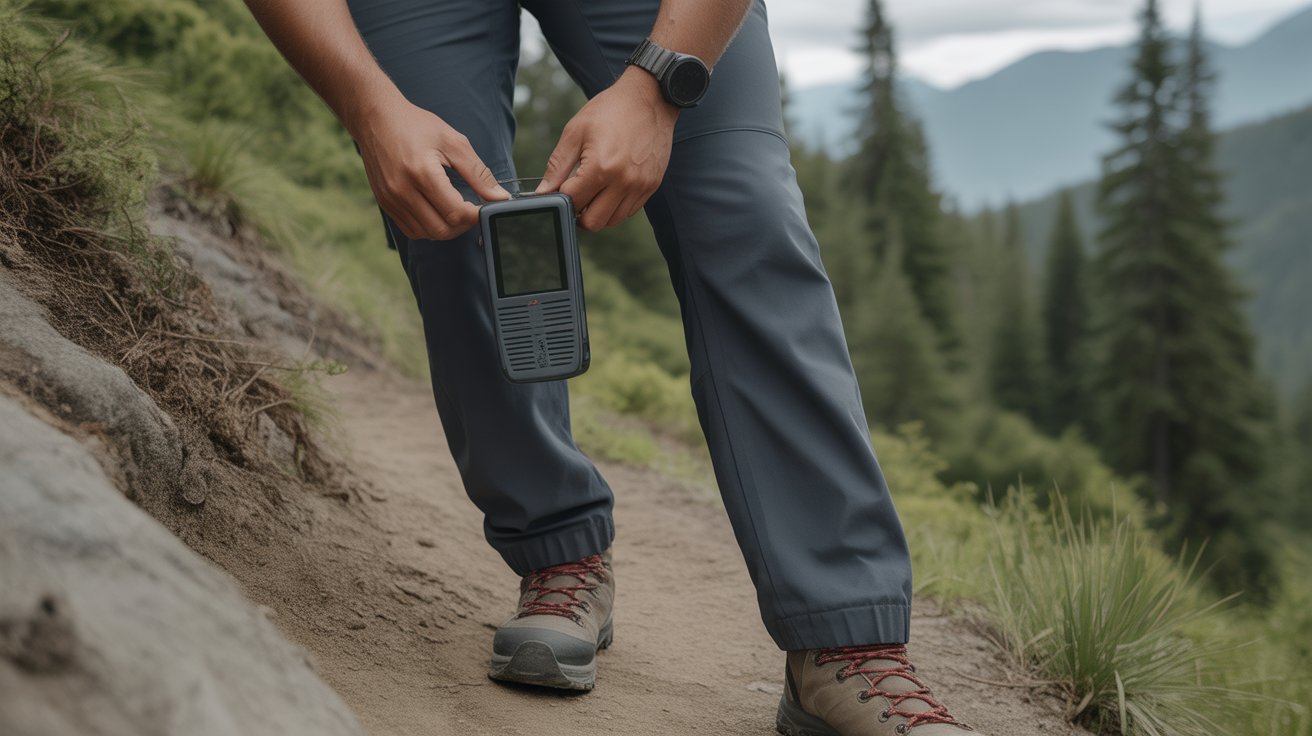
Cell service disappears fast once you leave the trailhead (the parking area where a hiking trail begins). One moment you have full bars, the next you are completely off the grid – and that is exactly when you need to tell someone you are running late, check the weather, or worse, call for help. You are not being paranoid wanting a backup communication method. You are being smart.
Choosing the best satellite communicator for hiking means understanding what you actually need beyond cell coverage: two-way messaging so people can reach you (not just you reaching out), reliable SOS capability that works when it matters, and a subscription plan that does not drain your wallet for features you will never use. This guide compares the real-world differences between Garmin inReach devices, SPOT communicators, and Zoleo so you can pick the right device for your hiking style and budget.
What to Look For
Two-Way Messaging vs One-Way Check-Ins
The biggest split in satellite communicators is whether they allow true two-way conversations or just one-way messages from you. Two-way devices (like Garmin inReach and Zoleo) let contacts reply to you and start conversations, which is critical if your plans change or someone at home needs to reach you with updated information. One-way devices let you send preset messages and SOS alerts but cannot receive replies beyond confirmation signals. For hikers who venture out solo or want real flexibility in the backcountry, two-way capability is worth the extra cost. If you only need to send “I am safe” check-ins and have SOS backup, one-way models work fine and cost less per month.
SOS Features and Emergency Response Networks
Every satellite communicator in this guide includes SOS functionality, but they handle emergencies differently. Most premium devices connect to 24/7 monitoring services that coordinate rescue with local authorities. When you trigger an SOS on a two-way device, you can send and receive messages with rescue coordinators to describe your situation, injuries, and exact needs. The key difference with one-way devices is you cannot describe your emergency beyond your GPS coordinates – rescuers arrive without detailed information about what happened or what help you need. For serious backcountry hiking where response time and clarity matter, two-way SOS communication provides measurably better outcomes.
Satellite Network Coverage and Reliability
Different satellite communicators use different satellite networks, which affects where they work and how reliably. The Iridium network (used by some devices) provides true global coverage including polar regions, with consistent performance whether you are hiking in the Pacific Northwest, the desert Southwest, or anywhere between. Other networks have gaps in coverage at higher latitudes and more limited satellite availability, leading to slower and less reliable messaging in some regions. Dense forest canopy, narrow canyons, and steep terrain can delay transmission on any network, so patience is required. When researching a specific device, check which satellite network it uses and whether that network covers the areas where you plan to hike.
Subscription Plans and Ongoing Costs
The device purchase price is only the beginning. Every satellite communicator requires an active monthly or annual subscription to function, and plan costs add up quickly. Entry-level plans typically include a limited number of messages and unlimited SOS – fine for occasional weekend hikers who mainly want emergency backup. Higher-tier plans offer unlimited messaging, tracking, and weather forecasts – better for frequent hikers or those who want regular contact with home. Annual prepaid plans typically save 10-20% compared to month-to-month billing. Before choosing a device, check current subscription pricing on the manufacturer website to calculate total first-year cost (device plus 12 months subscription) to see the real price difference. Some devices lock you into specific subscription terms, while others let you pause service during off-season months.
Battery Life and Charging in the Field
Satellite communicators sip power compared to smartphones, but battery life varies widely based on tracking interval and message frequency. All devices charge via USB, which is convenient if you carry a portable battery pack for your phone anyway. Turning off continuous tracking and only checking messages once or twice per day dramatically extends battery life – a smart move on multi-day trips. Avoid draining the battery completely before recharging, as lithium batteries perform best when topped off regularly.
Device Weight and Pack Integration
Compact satellite communicators typically weigh just a few ounces and fit easily in a hip belt pocket or clipped to your pack shoulder strap. Larger models with built-in GPS screens and mapping weigh more – still light but more noticeable. For day hikers and weekend backpackers, a few extra ounces do not matter much. For long-distance hikers counting every gram, the lightest models make sense. Consider how you will carry the device: clipped externally for quick access during emergencies, or tucked inside a pocket for protection from rain and impacts. Most communicators are rugged and water-resistant, but not fully waterproof – they survive rain and splashes but should not be submerged.
Pairing with Your Smartphone
Many satellite communicators pair with your smartphone via Bluetooth (a short-range wireless connection), letting you compose messages using your phone keyboard instead of typing on tiny device buttons. This is significantly easier and faster, especially for longer messages. The smartphone app also displays message history, contacts, and mapping features more clearly than a small device screen. Pairing works well within Bluetooth range (typically 30 feet), but the communicator itself sends and receives messages via satellite – your phone is just an interface. If your phone battery dies, you can still use the communicator independently using its built-in buttons and screen. Smartphone pairing is a convenience feature, not a requirement, but once you try it you will never want to go back to button-only typing.
Our Top Picks
1. Garmin inReach Mini 2, Lightweight and Compact Satellite Communicator
Best for hikers who want the lightest two-way communicator with proven reliability and excellent battery life

The Garmin inReach Mini 2 is the best satellite communicator for hiking if you prioritize compact size, proven reliability, and full two-way messaging capability. Weighing just a few ounces, this device disappears into your pack or clips to your shoulder strap without adding noticeable weight. The compact design means you will barely feel it during day hikes or multi-day backpacking trips.
This communicator pairs with your smartphone via Bluetooth using the free Garmin Explore app, which transforms message composition from a frustrating button-pressing exercise into quick and easy typing on your phone keyboard. You can send and receive unlimited text messages (on compatible subscription plans), share your GPS location with contacts, and trigger interactive SOS alerts that connect you with 24/7 emergency monitoring. The two-way SOS feature is critical – you can describe your exact emergency, communicate with rescue coordinators, and receive status updates during the response, something one-way devices simply cannot do.
The Mini 2 works as a standalone device if you prefer not to pair it with your phone or if your phone battery dies. Basic navigation support helps you mark waypoints and track your route, though the small screen is not designed for detailed map viewing. If you already use your phone or a dedicated GPS device for route finding, this is not a limitation. The device is built to survive rain and brief water exposure, making it reliable in typical backcountry weather conditions.
With over 2,100 verified customer reviews and a 4.6-star rating, the inReach Mini 2 has proven itself across thousands of backcountry trips. Hikers consistently praise its reliability in dense forest, canyon terrain, and open alpine environments. The main limitation is that messages do not send instantly like cell phone texts – satellite communication takes time depending on satellite position and terrain, which is normal for all satellite communicators. The small buttons can be fiddly with gloves on, which is why smartphone pairing is strongly recommended. Check current subscription plan options on the Garmin website, as monthly costs vary based on message volume and features you need.
Pros
- Extremely lightweight and compact, barely noticeable in your pack
- Two-way messaging with interactive SOS and emergency coordination
- Strong battery performance for multi-day trips without recharging
- Pairs with smartphone for easy message composition and route viewing
- Water-resistant and rugged for backcountry conditions
Cons
- No built-in map display, requires smartphone pairing or separate GPS device for navigation
- Message sending takes time depending on satellite position and terrain
- Small buttons difficult to use with gloves, smartphone pairing strongly recommended
2. ZOLEO Satellite Communicator
Best for hikers who want the lowest upfront cost with two-way messaging and seamless smartphone integration

The Zoleo Satellite Communicator delivers the best value among two-way satellite communicators for hiking, with a significantly lower purchase price than Garmin inReach models while offering the same core functionality: unlimited two-way text messaging, email capability, GPS location sharing, and interactive SOS emergency alerts. At $118.99, it costs roughly half the price of the inReach Mini 2, making it the most affordable entry point for hikers who want real two-way communication beyond cell coverage.
Zoleo is designed specifically to work with your smartphone rather than function as a standalone device. It has no screen or buttons for message composition – all communication happens through the Zoleo smartphone app via Bluetooth pairing. This design choice keeps the device simple, lightweight, and affordable, but it also means if your phone battery dies, you can still trigger SOS but cannot send custom text messages. For most day hikers and weekend backpackers who carry portable battery packs anyway, this limitation is not a deal-breaker. The device is roughly the size of a small smartphone and light enough to clip to your pack without noticing the weight.
The Zoleo app provides an intuitive interface for composing messages, viewing message history, and managing contacts. Setup takes just a few minutes, and the learning curve is minimal even for hikers who are not tech-savvy. The device is rugged and water-resistant, built to handle rain, dust, and impacts from being clipped to the outside of your pack. USB charging is standard, compatible with the same cables and battery packs you already carry for your phone.
With over 3,100 verified reviews and a 4.5-star rating, Zoleo has earned strong customer trust. Hikers appreciate the lower upfront cost, intuitive smartphone app, and reliable message delivery. The biggest trade-off is the required smartphone dependency – if you prefer a device that works independently without your phone, the inReach Mini 2 is a better choice despite the higher purchase price. Subscription plans are comparable to other satellite communicators, so check current pricing on the Zoleo website before committing.
Pros
- Lowest upfront cost among two-way satellite communicators at $118.99
- Seamless smartphone integration with intuitive app interface
- Two-way messaging, email, and interactive SOS with emergency coordination
- Lightweight and compact design easy to carry on any hike
- Strong customer reviews with over 3,100 verified buyers
Cons
- Requires smartphone pairing for all messaging, cannot compose messages independently
- If phone battery dies, you lose ability to send custom messages (SOS still works)
- No standalone screen or buttons for operation without smartphone
3. Garmin GPSMAP 66i GPS Handheld and Satellite Communicator
Best for hikers who want a full-featured GPS navigation device with built-in topographic maps and satellite communication in one unit

The Garmin GPSMAP 66i combines a premium GPS handheld with full inReach satellite communication, making it the best choice for hikers who want one device that handles both navigation and messaging without relying on smartphone pairing. The 3-inch color display shows preloaded topographic maps, waypoints, tracks, and incoming messages, eliminating the need to pull out your phone in the backcountry. This is particularly valuable in cold weather, rain, or situations where you want to preserve phone battery for emergencies.
As a GPS device, the GPSMAP 66i provides reliable positioning and turn-by-turn navigation on built-in maps. You can create routes, mark waypoints, and track your progress, all displayed on the glove-friendly button interface. The rugged construction survives serious backcountry abuse – rain, drops, dust, and temperature extremes that would damage a smartphone.
The inReach communication functionality matches the Mini 2: two-way messaging, interactive SOS, GPS location sharing, and compatibility with Garmin Explore app for trip planning and message management. The device charges via USB and can be topped off with a portable battery pack during multi-day trips. The larger battery capacity provides extended runtime compared to compact communicators.
The trade-off for this capability is weight and size. The GPSMAP 66i is noticeably heavier and bulkier than compact communicators like the inReach Mini 2. For day hikers and weekend backpackers, this extra weight is manageable. For long-distance hikers counting every ounce, it is significant. The higher purchase price ($379.99) also puts it out of reach for budget-conscious hikers who only need basic communication and already own a separate GPS device or use their phone for route finding.
With 750 verified reviews and a 4.6-star rating, the GPSMAP 66i has solid feedback, though less extensive real-world testing than the Mini 2 flagship model with over 2,000 reviews. The device appeals to serious backcountry hikers who value having one rugged, reliable device for both navigation and communication. If you already own a dedicated GPS and only need satellite messaging, the inReach Mini 2 makes more sense. If you want to consolidate devices and eliminate smartphone dependency, the GPSMAP 66i delivers excellent value despite the higher cost.
Pros
- Full-featured GPS with preloaded topographic maps and 3-inch color display
- Two-way inReach satellite messaging with interactive SOS capability
- Rugged construction with glove-friendly button interface
- Consolidates GPS navigation and satellite communication in one device
- Works completely independently without smartphone required
Cons
- Significantly heavier and bulkier compared to compact communicators
- Higher purchase price at $379.99 puts it out of budget range for many hikers
- Overkill for hikers who already own a GPS device and only need satellite messaging
View Garmin GPSMAP 66i GPS Handheld and Satellite Communicator on Amazon →
4. Garmin inReach Messenger Handheld Satellite Communicator
Best for hikers who want two-way messaging at a lower price point but do not need the Mini 2 compact size

The Garmin inReach Messenger sits between the inReach Mini 2 and the full GPSMAP 66i in both price and features, offering the same core two-way satellite messaging and SOS capability as the Mini 2 but in a slightly larger form factor with a different button layout. At $199.99, it costs $50 less than the Mini 2, making it the most affordable Garmin inReach option while still delivering full functionality.
This device includes all the essential inReach features: two-way text messaging, GPS location sharing, interactive SOS alerts through 24/7 emergency response, and compatibility with the Garmin Explore and Garmin Messenger smartphone apps. Like the Mini 2, it pairs with your smartphone via Bluetooth for easier message composition and route viewing, though it can also function independently using its built-in buttons and small display screen. The display shows basic message preview, battery status, and GPS coordinates, but not detailed maps.
The main trade-off is size. While the Messenger is noticeably larger than the ultra-compact Mini 2, it remains light enough for comfortable all-day carry. The device is water-resistant and built to Garmin rugged standards, surviving rain, dust, and typical backcountry handling. The larger button layout may actually be easier to use with gloves compared to the Mini 2 tiny buttons, though smartphone pairing remains the most convenient option for composing longer messages.
With 418 verified reviews and a 4.4-star rating, the inReach Messenger has less extensive real-world testing than the Mini 2 flagship model, which has over 2,000 reviews. This is a newer product in the Garmin lineup, so long-term reliability feedback is still developing. Hikers who choose this device typically prioritize the lower price over absolute minimal size. If saving $50 matters more to you than carrying the lightest possible communicator, the Messenger delivers the same core communication capability as the Mini 2. If you want the most compact and field-proven option regardless of cost, the Mini 2 remains the better choice.
Pros
- Lower cost at $199.99 compared to inReach Mini 2
- Two-way messaging and interactive SOS with emergency coordination
- Larger button layout may be easier to use with gloves than Mini 2
- Pairs with smartphone for easy message composition and route viewing
- Built to Garmin rugged standards with water-resistant construction
Cons
- Larger and heavier than the ultra-compact inReach Mini 2
- Limited customer feedback with fewer than 500 reviews compared to other options
- No built-in map display, requires smartphone or separate GPS for navigation
View Garmin inReach Messenger Handheld Satellite Communicator on Amazon →
How These Compare
Choosing the best satellite communicator for hiking comes down to what you value most: compact size, upfront cost, or built-in navigation capability. The Garmin inReach Mini 2 is the top pick for most hikers because it delivers the best balance of weight, reliability, and functionality. Its ultra-compact size makes it the lightest two-way communicator available, ideal for weight-conscious backpackers and day hikers who want emergency backup without bulk. Its proven reliability across more than 2,100 customer reviews makes it the safe choice if you can afford the $249.99 purchase price.
If upfront cost is your biggest concern, the Zoleo at $118.99 offers the same core two-way messaging and interactive SOS capability at nearly half the price. The trade-off is complete smartphone dependency – Zoleo cannot compose messages independently, so if your phone dies you are limited to SOS-only communication. For day hikers and weekend backpackers who carry portable battery packs and always have their phone accessible anyway, this limitation rarely matters in practice.
The Garmin inReach Messenger splits the difference at $199.99, offering Mini 2 functionality in a larger package. It makes sense for hikers who want to save $50 compared to the Mini 2 and do not mind a slightly larger device. Keep in mind this model has fewer customer reviews (418) compared to the extensively field-tested Mini 2, so long-term reliability feedback is still developing.
The Garmin GPSMAP 66i is in a different category entirely – a premium GPS navigation device with satellite communication built in. At $379.99 and noticeably heavier than compact communicators, it is overkill for most day hikers. But for serious backcountry travelers who want one rugged device for both navigation and messaging (eliminating smartphone dependency completely), it delivers excellent value. The built-in topographic maps and 3-inch color screen make this a true backcountry workhorse. Note that with 750 reviews, it has less extensive customer feedback than the Mini 2, though the 4.6-star rating indicates strong satisfaction among buyers.
Subscription costs apply to all devices and vary by plan tier. Check current pricing on manufacturer websites before purchasing, as monthly fees can range significantly based on message volume and features. Factor subscription costs into your decision – a device that costs $100 less upfront may have similar or higher subscription fees, equalizing the total cost over time. Choose based on your typical hiking frequency and how often you will actually use satellite messaging versus just wanting emergency SOS backup.
Frequently Asked Questions
Do satellite communicators work under tree cover?
Satellite communicators work under tree cover but with reduced reliability and slower message transmission compared to open sky conditions. All satellite devices require line-of-sight to overhead satellites to send and receive messages. Dense forest canopy blocks and scatters satellite signals, which means messages may take longer to send compared to clear sky. In thick conifer forests or narrow canyons with limited sky visibility, you may need to move to a clearing or ridgeline for reliable communication. For emergency SOS situations under tree cover, the device will keep trying to establish satellite contact and will eventually succeed, though it may take longer than immediate transmission. Most experienced backcountry hikers develop a habit of checking and sending messages during rest breaks in clearings or on ridgelines where sky visibility is better.
Can you use a satellite communicator without a subscription?
No, you cannot use a satellite communicator for messaging or SOS alerts without an active paid subscription. The physical device is only the hardware – all satellite communication services require ongoing access fees to the satellite network and emergency response coordination centers. Without a subscription, the device does not function. Garmin inReach, Zoleo, and other satellite communicators all require monthly or annual subscription plans. Some providers allow you to suspend service during months you will not be hiking, which saves money during off-season. The subscription pays for satellite network access time, message relay infrastructure, and 24/7 emergency monitoring by response coordination centers. When comparing device costs, always calculate total first-year expense (device purchase price plus 12 months of subscription) to understand the true investment. Check current subscription pricing on manufacturer websites, as plan costs and features change over time.
What is the difference between Garmin inReach and SPOT?
The primary difference between Garmin inReach and SPOT devices is two-way versus one-way communication capability. Garmin inReach devices allow full two-way text messaging – you can send messages and receive replies from contacts, have ongoing conversations, and communicate back and forth with emergency responders during SOS situations. SPOT devices are one-way communicators that let you send preset messages and SOS alerts but cannot receive replies beyond basic confirmation signals. This means if your plans change and someone at home needs to reach you with new information, SPOT cannot deliver that message to you. For serious backcountry hiking where communication flexibility and emergency response coordination matter, the two-way capability of inReach provides measurably better functionality despite typically costing more upfront. SPOT devices work well for hikers who only need to send periodic check-in messages and want SOS backup at a lower subscription cost.
How long does it take to send a message on a satellite communicator?
Message sending time on satellite communicators varies depending on satellite position, terrain, and sky visibility. Under ideal conditions with clear line-of-sight to overhead satellites, messages typically send within a minute or two. The device must first acquire a satellite signal, transmit your message to the satellite as it passes overhead, and receive confirmation that the message was successfully relayed. In challenging terrain such as narrow canyons, dense forest, or steep valleys with limited sky visibility, this process takes longer as the device waits for a satellite to pass into its visible portion of sky. Messages do not fail, they just queue and keep trying until transmission succeeds. For two-way communicators like Garmin inReach and Zoleo, incoming message delivery follows the same timing pattern. This delay is normal for all satellite communication and significantly slower than cellular texting. Plan accordingly and set expectations with your contacts that satellite messaging is not instant. For emergency SOS alerts, the device prioritizes transmission and keeps trying until it establishes contact with emergency response.
Do satellite communicators need GPS to work?
Yes, satellite communicators include built-in GPS (Global Positioning System, which determines your location using satellites) and use your location coordinates as part of every message transmission, but GPS positioning and satellite messaging are two separate systems. The GPS receiver determines your exact latitude and longitude coordinates by receiving signals from GPS satellites (a one-way receive-only system), while satellite messaging uses a completely different network to send and receive text messages via two-way communication satellites. Every message you send automatically includes your GPS coordinates so recipients can see exactly where you are on a map, which is critical for emergency situations where rescuers need to reach your location. The device must acquire GPS position before it can send messages, which typically takes under a minute after powering on with clear sky visibility. In deep canyons or under thick forest where GPS signal is weak, position acquisition takes longer but will eventually succeed. Some satellite communicators like the Garmin GPSMAP 66i include full navigation features with built-in topographic maps, while compact models like the inReach Mini 2 and Zoleo have GPS positioning but no map display – they know where you are and can share those coordinates, but they do not show you terrain maps for route finding.
The Bottom Line
The best satellite communicator for hiking depends on your typical trip length, budget, and whether you want a device that works independently or pairs with your smartphone. For most hikers, the Garmin inReach Mini 2 offers the best overall combination of compact size, proven reliability, and full two-way messaging capability. Its ultra-light weight makes it easy to carry on every hike without noticing the extra bulk. The extensive customer reviews (over 2,100 verified buyers) and field-proven performance justify the $249.99 investment if you plan to hike regularly beyond cell coverage.
Budget-conscious hikers should seriously consider the Zoleo at $118.99, which delivers the same core two-way messaging and interactive SOS for roughly half the upfront cost. The smartphone dependency is a trade-off, but for most weekend warriors who carry phones and portable batteries anyway, it is a minor limitation. If you want a Garmin inReach but need to save some money, the inReach Messenger at $199.99 offers similar functionality in a slightly larger package, though keep in mind it has less extensive customer feedback with only 418 reviews compared to the well-established Mini 2.
For serious backcountry travelers who want consolidated navigation and communication in one rugged device, the Garmin GPSMAP 66i eliminates the need to carry separate GPS and communicator units. The built-in topographic maps and 3-inch color screen make it ideal for multi-day trips where smartphone battery conservation matters and you need reliable route finding tools. The higher price and weight are worthwhile if you value having one device that does everything without smartphone dependency. With 750 reviews, it has solid customer feedback though less extensive than the Mini 2.
Whichever device you choose, remember that subscription costs are ongoing. Check current subscription pricing on manufacturer websites and factor 12 months of service into your budget to understand the true first-year investment. Monthly fees vary significantly based on message volume and plan features, so choosing the right subscription tier matters as much as choosing the right device.
Disclosure: As an Amazon Associate, we earn from qualifying purchases. This does not affect our editorial recommendations.