
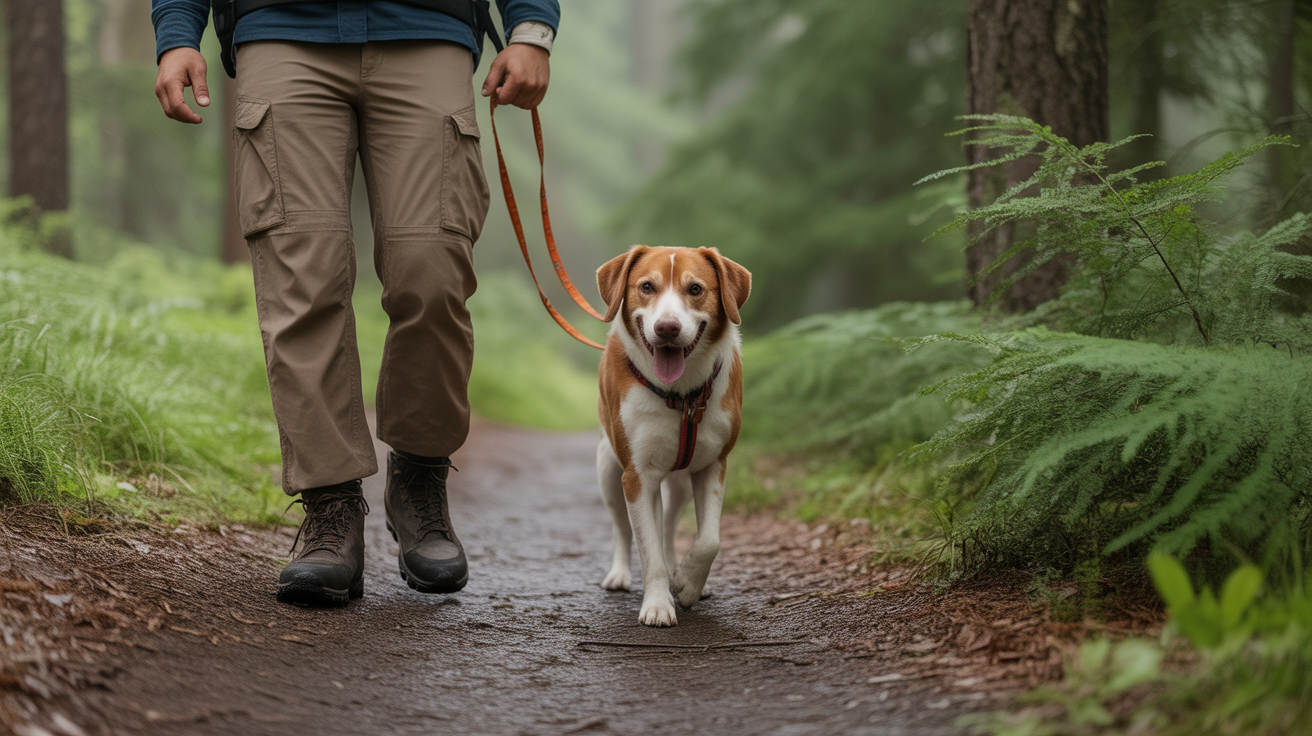
You have been dreaming about hitting the trails with your dog, but right now, walks around the block feel more like a tug-of-war competition. Your pup pulls toward every squirrel, lunges at passing dogs, or stops dead in their tracks to sniff every blade of grass. The idea of navigating narrow mountain paths or sharing trail space with other hikers feels overwhelming when your dog cannot even walk calmly on a sidewalk.
The good news is that leash training for hiking is absolutely achievable, even if your dog currently acts like a furry bulldozer on four legs. This guide will walk you through the specific techniques you need to transform chaotic walks into calm, enjoyable trail experiences. You will learn how to teach your dog to walk beside you, respond to your cues around distractions, and develop the trail manners that make hiking together safe and fun for everyone.
What to Look For
Start With the Right Equipment
Before you begin training, set yourself up for success with proper gear. A standard 6-foot leash gives you the control you need while allowing your dog enough freedom to explore slightly. Avoid retractable leashes entirely during training – they teach dogs to pull and make it nearly impossible to communicate clear boundaries. A comfortable harness distributes pressure across your dog’s chest rather than their neck, which prevents choking and gives you better control when your dog does pull. Look for a front-clip harness that redirects your dog toward you when they lunge forward, making it much easier to manage pulling behavior. If you are preparing for actual trail days, check out our guide to dog leashes for hiking and dog hiking harnesses to understand what features work best on the trail.
Master Loose Leash Walking at Home First
Do not attempt trail training until your dog can walk calmly in low-distraction environments. Start in your living room or backyard where your dog feels comfortable and distractions are minimal. Hold treats in your hand and let your dog know you have them. Take a few steps forward – when your dog walks beside you without pulling, immediately praise and reward. If the leash goes tight, stop walking completely. Stand still like a tree. Wait until your dog looks back at you or the leash loosens, then praise and continue forward. This teaches your dog that pulling gets them nowhere, but walking nicely keeps the walk moving. Practice this for just five minutes at a time, several times a day. Short, frequent sessions work far better than one long frustrating walk. Your dog will learn faster when training feels like a fun game rather than a boring lecture.
Introduce the Check-In Behavior
One of the most valuable skills for hiking is teaching your dog to check in with you regularly. This means your dog glances back at you every so often to see where you are and what you are doing, rather than charging ahead oblivious to your existence. Start teaching this at home by saying your dog’s name in a happy voice. The instant your dog looks at you, mark the behavior with a word like “yes” and give a treat. Repeat this throughout the day in different rooms and situations. Once your dog reliably looks at you when you say their name, start practicing during walks. Every time your dog voluntarily looks back at you while walking, praise enthusiastically and reward. You are building a habit where your dog naturally stays aware of your location and pace – exactly what you need on a trail where you might encounter other hikers, wildlife, or tricky terrain.
Practice With Increasing Distractions
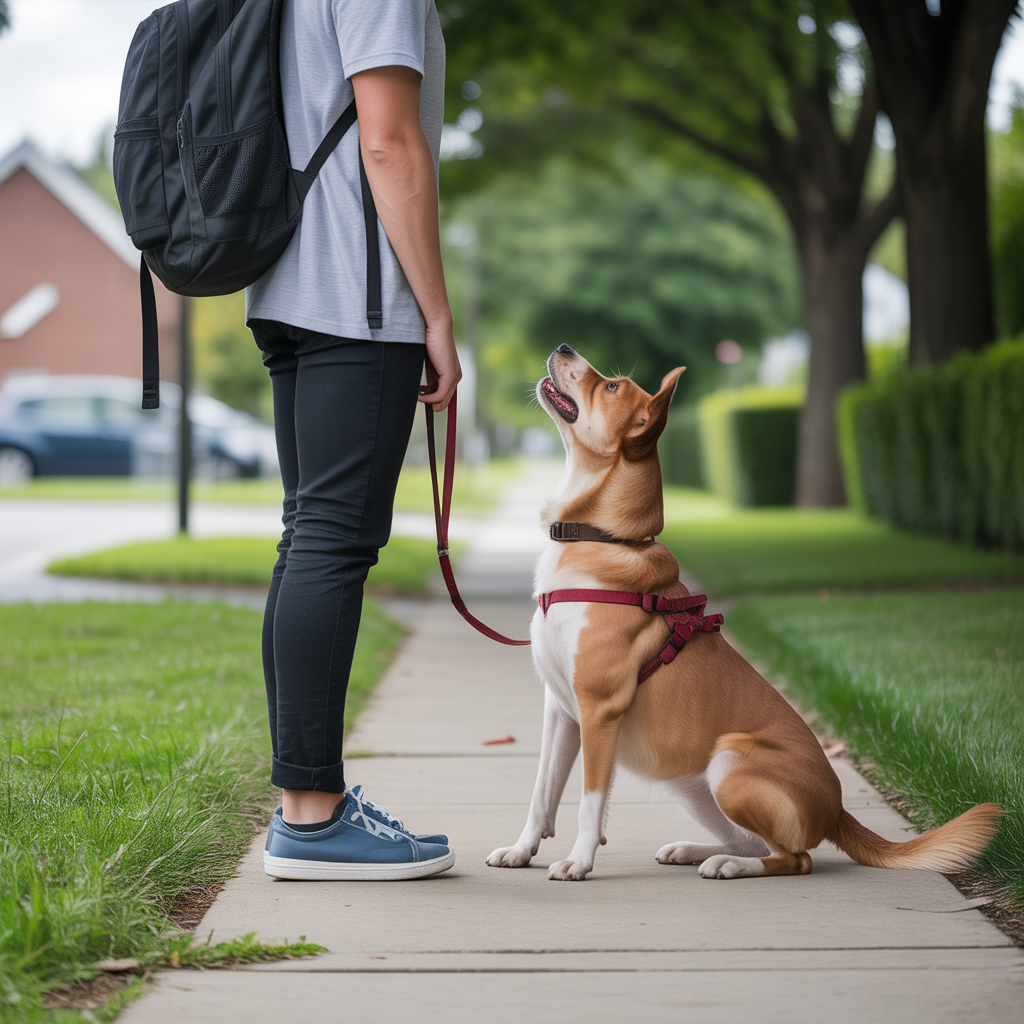
Once your dog walks nicely in your yard, gradually increase difficulty. Move to your quiet street, then to a sidewalk with occasional foot traffic, then to a busier area. Each new environment should be only slightly more challenging than the last. If your dog falls apart and cannot focus at all, you have jumped too far too fast – go back to the previous environment and practice longer there. When you encounter a distraction your dog notices – another dog, a jogger, a interesting smell – create distance first. Cross the street or step off the path to give your dog space to think. Ask for a simple behavior your dog knows well, like sit, then reward. You are teaching your dog that distractions are a cue to pay attention to you, not to lose their mind. Slowly decrease the distance from distractions as your dog improves. This process takes weeks, not days, so be patient with both yourself and your pup.
Add Trail-Specific Skills
Trails present challenges that sidewalks do not. You will need your dog to walk calmly on narrow paths where there is no room to pass, to move to the side when faster hikers approach from behind, and to stay calm when encountering other trail users. Practice these scenarios before your first real hike. Find a quiet park trail or greenway for initial practice. Work on the “side” cue by walking toward a tree or post, saying “side,” and guiding your dog to move next to you on the inside as you pass the obstacle. Reward heavily when your dog complies. Practice stopping frequently and having your dog sit or stand calmly beside you – this prepares them for trail encounters where you need to pause and let others pass. If your dog struggles with reactivity toward other dogs or people, consider training during off-peak hours when you are less likely to meet others. You might also want to review dog water bottles for hiking so you can reward your dog with water breaks during longer training sessions.
Build Duration and Distance Gradually
Your dog might walk perfectly for ten minutes but fall apart after twenty. Build endurance slowly. Start with short 15-20 minute training walks, then gradually extend to 30 minutes, 45 minutes, and eventually the length of your planned hikes. Pay attention to your dog’s signals – if they start pulling more, ignoring cues, or acting distracted, they may be tired or overstimulated. End training sessions on a positive note before your dog gets too tired to succeed. Remember that hiking involves not just walking but also navigating uneven terrain, which is more physically and mentally tiring for your dog than flat sidewalks. A dog who can walk calmly for an hour on pavement might only manage 30 minutes on a rocky trail at first. Build up trail-specific stamina with short, easy hikes before attempting longer or more challenging routes.
Address Common Training Challenges
If your dog pulls constantly, make sure you are not inadvertently rewarding the behavior. Many owners let their dogs pull all the way to the park, then expect the dog to walk nicely on the way home – but the dog has learned that pulling gets them to fun places. Be consistent: pulling never gets your dog where they want to go. If your dog lunges at other dogs or people, they may be overstimulated, fearful, or simply have poor social skills. Keep distance from triggers, reward calm behavior, and consider working with a professional trainer if reactivity is severe. For dogs who constantly sniff and refuse to move forward, decide on a sniff policy. Some trainers recommend letting dogs sniff freely for the first few minutes of a walk, then asking for focused walking time. Others use a release word like “okay” to signal when sniffing is allowed. Either approach works as long as you are consistent. The key is that your dog learns there is a time for exploring smells and a time for walking with purpose.
Frequently Asked Questions
How long does it take to leash train a dog for hiking?
The timeline varies dramatically depending on your dog’s age, temperament, and previous training. A young dog with no bad habits might learn basic loose leash walking in two to three weeks of consistent daily practice, but developing solid trail manners typically takes two to three months. Dogs with established pulling habits or leash reactivity often need four to six months of dedicated work before they are truly trail-ready. The key word here is consistent – training five to ten minutes twice a day will get you much further than one hour-long session per week. Your dog is learning a completely new way of walking and interacting with the world, which takes repetition and patience. Do not rush the process by attempting challenging trails before your dog is ready, as one overwhelming experience can undo weeks of progress. Some dogs will always need more management on trails than others, and that is okay. The goal is not perfection but rather a dog who is safe, manageable, and enjoying the experience alongside you.
Should I use a harness or collar for leash training my dog for hiking?
A harness is strongly recommended for both training and hiking, particularly a front-clip harness that attaches at your dog’s chest. When your dog pulls while wearing a front-clip harness, the design naturally turns them back toward you, which makes it much easier to redirect their attention and discourage pulling. Back-clip harnesses, where the leash attaches between the shoulder blades, can actually encourage pulling because they work like a sled dog harness – your dog’s natural opposition reflex kicks in and they lean into the pressure. Standard collars put all pressure on your dog’s neck and throat, which can cause injury if your dog pulls hard or suddenly lunges. Collars are fine for dogs who already walk calmly, but they make training much harder and less safe. For hiking specifically, a well-fitted harness also gives you a secure handle point if you need to help your dog over obstacles or keep them close on narrow trail sections. Make sure whatever harness you choose fits properly – you should be able to fit two fingers between the harness and your dog’s body, and it should not ride up into their armpits or shift around when your dog moves. A proper fit prevents chafing on long hikes. You can explore options in our guide to dog hiking harnesses when you are ready to invest in trail-specific gear.
What should I do if my dog pulls toward wildlife on the trail?
Wildlife encounters are one of the biggest challenges for hiking with dogs because prey drive and excitement can override even solid training. Prevention starts long before you see wildlife. Practice the “watch me” or “look” cue at home, rewarding your dog for making eye contact with you on command. This gives you a tool to redirect your dog’s attention before they fixate on a squirrel, deer, or bird. On the trail, stay alert and scan ahead for potential wildlife. The moment you spot something, get your dog’s attention before they notice it – use your watch me cue, ask for a sit, and reward heavily for focusing on you instead of the distraction. If your dog does lunge toward wildlife, do not yank the leash or yell, which only increases arousal and excitement. Instead, turn and walk quickly in the opposite direction, encouraging your dog to follow. Reward the instant your dog disengages and comes with you. For dogs with strong prey drive, keep the leash shorter in areas where wildlife is likely – dawn and dusk near water sources, meadows, and forest edges. You cannot train away instinct entirely, but you can teach your dog that checking in with you is always more rewarding than chasing. Some dogs will never be trustworthy off-leash around wildlife, and that is perfectly fine. A well-trained on-leash hiking dog is still a wonderful trail companion.
Can I train an older dog to walk on a leash for hiking?
Absolutely, though older dogs with years of pulling habits will take longer to retrain than young dogs learning for the first time. The same basic training principles apply regardless of age – reward the behaviors you want, remove rewards for behaviors you do not want, practice consistently, and build difficulty gradually. Older dogs actually have some advantages: they typically have longer attention spans than puppies, less random bursting energy, and more ability to focus during training sessions. However, you will need extra patience because you are not just teaching new skills but also breaking deeply ingrained habits. An older dog who has pulled on leash for five years has practiced that behavior thousands of times, which means you need thousands of repetitions of the correct behavior to override it. Be especially mindful of physical limitations with older dogs. Arthritis, reduced stamina, and other age-related issues mean your older dog might not be able to handle the same trail difficulty or distance as a younger dog. Start with very easy, short trails and watch for signs of fatigue or discomfort. Some older dogs take to hiking enthusiastically once they learn proper leash manners, while others prefer gentle nature walks to steep climbs. Let your individual dog guide you on what they are physically capable of enjoying.
The Bottom Line
Leash training your dog for hiking is one of the most rewarding investments you can make in your relationship with your pup. The process requires patience, consistency, and a willingness to break goals into small achievable steps, but the payoff is years of shared trail adventures. Start where your dog is right now, not where you wish they were, and celebrate small improvements along the way. If your dog walked calmly for thirty seconds today when yesterday they pulled for the entire walk, that is genuine progress worth acknowledging.
Remember that every dog learns at their own pace. Some dogs will be trail-ready in a month, while others need six months of work. Avoid comparing your dog to other people’s perfectly behaved trail dogs – you are seeing the end result of their training, not the messy middle part where they were exactly where you are now. If you are feeling stuck or overwhelmed, there is no shame in working with a professional dog trainer who specializes in positive reinforcement methods. Sometimes having an experienced eye watch your training sessions can identify small adjustments that make a huge difference. Before your first real trail adventure, make sure you have the essentials covered, including proper hydration for your pup with a quality dog water bottle. The trails are waiting for you and your dog, and with consistent training, you will both be ready to enjoy them together soon.
Disclosure: As an Amazon Associate, we earn from qualifying purchases. This does not affect our editorial recommendations.