
If you have wide feet, you already know the frustration of squeezing into boots that feel like they are crushing your toes before you even leave the parking lot. Regular hiking boots can turn what should be an enjoyable trail experience into hours of discomfort, blisters, and wondering why your feet hurt so much when everyone else seems fine.
The good news is that finding wide fitting hiking boots does not have to be a guessing game. Whether you are shopping for your first pair of hiking boots or replacing a pair that never quite fit right, this guide will walk you through exactly what to look for, which brands consistently offer true wide widths, and how to choose boots that will keep your feet comfortable from the trailhead to the summit.
What to Look For
Understanding Wide Width Sizing
Wide fitting hiking boots are not just regular boots with a little extra room. True wide width boots (often marked as 2E for men or D for women) are specifically constructed with a wider last (the foot-shaped form around which the boot is built). This means the entire boot structure accommodates a wider foot, not just the toe box. When shopping, look for boots explicitly labeled as wide width rather than boots described as having a “roomy fit” or “generous toe box,” which may not provide the support your feet need across the entire width of the boot. Some brands run naturally wider than others, but if you have genuinely wide feet, starting with boots designed as wide width will save you time and discomfort.
Material and Construction Considerations
The materials used in your hiking boots matter significantly when you have wide feet. Leather boots can stretch and mold to your foot shape over time, which can be beneficial, but they also require a break-in period that may initially feel uncomfortable. Synthetic materials and mesh panels often provide more immediate comfort and breathability but will not stretch much beyond their original shape. Look for boots with fewer seams along the sides of the foot, as seams can create pressure points on wider feet. Many boots include waterproof membranes as a common feature, but keep in mind that waterproofing adds a layer that can reduce breathability. If you hike primarily in dry conditions, a non-waterproof boot may actually be more comfortable for wide feet because it allows more airflow and flexibility.
Fit Testing Beyond Width Alone
Even when shopping specifically for wide fitting hiking boots, width is only one dimension of proper fit. Your heel should lock firmly in place without slipping when the boots are laced, even as your toes have room to spread. When trying on boots, wear the same thickness of hiking socks you plan to use on the trail, and test them later in the day when your feet are slightly swollen. Walk on an incline if possible and pay attention to whether your toes hit the front when going downhill. Your foot should not slide forward, and there should be about a thumb width of space between your longest toe and the front of the boot when standing. Remember that hiking boots should feel supportive but not tight right out of the box, though some stiffness is normal and will ease during the break-in period.
Ankle Support and Boot Height
Hiking boots come in low, mid, and high-cut styles, and the height you choose affects more than just ankle stability. For hikers with wide feet, mid-cut boots often provide the best balance because they offer ankle stability without the potential rubbing that high-cut boots can cause around the ankle bones and lower calf. Low-cut hiking shoes can work well for easy, maintained trails, but they provide less support for uneven terrain. If you are carrying a heavier pack or hiking on rocky trails, the extra stability of a mid or high-cut boot is designed to help on uneven ground. However, if the boot height causes pressure or rubbing around your ankles or lower leg, that discomfort will only worsen over miles of hiking, so prioritize overall comfort over the assumption that higher always means better.
Break-In Period Expectations
Even the best fitting wide hiking boots will need some break-in time before they feel truly comfortable on a full-day hike. Plan to wear your new boots around the house for a few days, then on short walks on pavement before committing to a long trail. This allows the materials to flex and mold to your specific foot shape while also revealing any pressure points before you are miles from the trailhead. Some synthetic boots require minimal break-in, while leather boots may need several weeks of gradual use. During this period, pay attention to any spots that rub or feel tight. Minor discomfort that improves after a few wears is normal, but pain or numbness is a sign the boots may not be the right fit. If you develop hot spots or blisters during break-in, address them immediately with different lacing techniques, thicker socks, or moleskin rather than hoping they will resolve themselves on the trail.
Lacing Techniques for Wide Feet
How you lace your wide fitting hiking boots can make a significant difference in comfort. Standard criss-cross lacing works for many people, but if you experience pressure on the top of your foot, try skipping the eyelets over the highest part of your instep to create a relief zone. For boots that feel slightly tight across the width, use a parallel or straight-bar lacing pattern that reduces pressure across the top of the foot. Make sure you are lacing firmly enough to lock your heel in place but not so tight that you restrict circulation or create pressure points. Many hikers make the mistake of lacing too loosely in wide boots, thinking extra room equals comfort, but this actually allows too much foot movement inside the boot and can lead to blisters and lost toenails on descents.
Our Top Picks
1. Timberland Men’s White Ledge Mid Waterproof Hiking Boots
Best for hikers with wide feet who want proven waterproof performance and durability
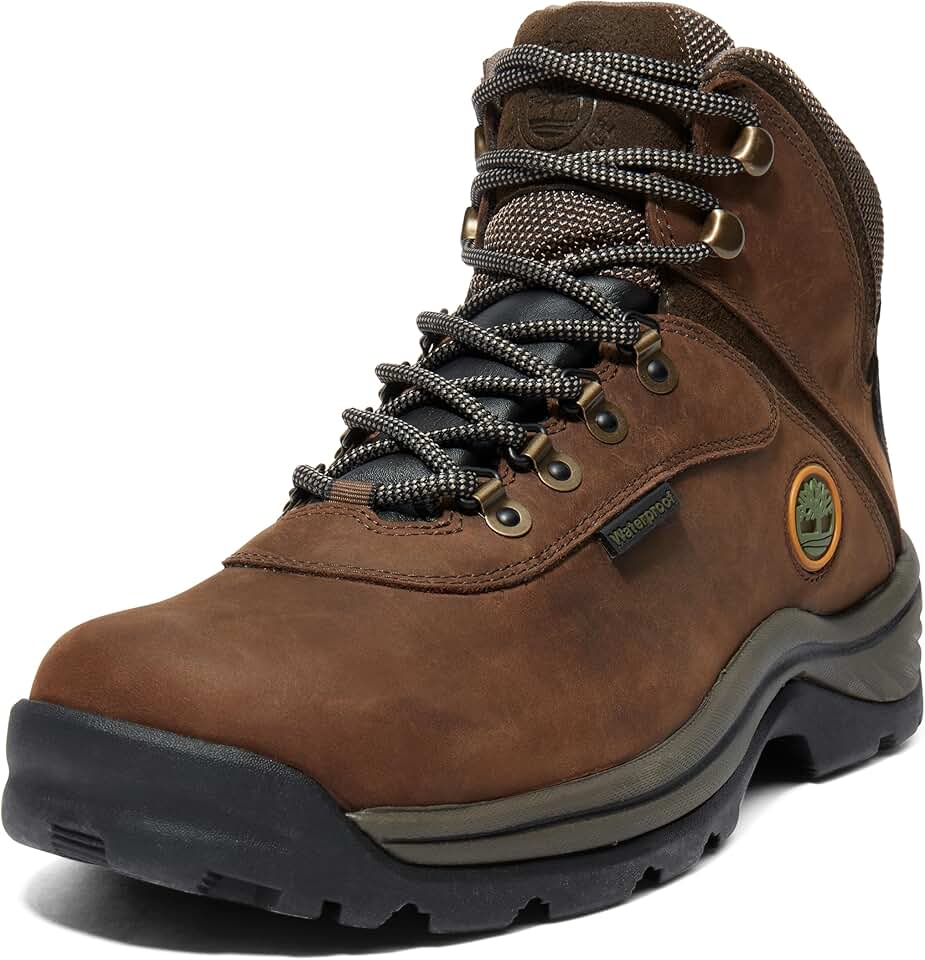
With over 67,000 customer reviews and a consistent 4.5-star rating, these Timberland boots have become a go-to choice for hikers with wide feet. The mid-height design provides ankle support without the bulk of a high-cut boot, making them versatile enough for both day hikes and light backpacking trips.
What makes these boots particularly suitable for wide feet is the construction approach used in this model, which reviewers with wide feet consistently mention accommodates the midfoot and toe box better than many competitors. The boots offer solid support underfoot without feeling restrictive across the width of your foot. The traction pattern works well on a variety of terrain, from packed dirt trails to rocky sections, giving you confidence on uneven ground.
These boots do require a break-in period, which is typical for this style of boot. Plan to wear them around your home and on shorter walks before committing to a full-day hike. At this price point, you are getting a boot that should last through multiple seasons of regular hiking if you maintain them properly. See current pricing for the Timberland Men’s White Ledge Mid Waterproof Hiking Boots on Amazon.
Pros
- Construction accommodates wider feet based on extensive user feedback
- Over 67,000 customer reviews provide extensive real-world feedback
- Mid-height design balances ankle support with flexibility
- Durable construction suitable for regular trail use
Cons
- Requires break-in period before feeling fully comfortable
- May feel warm in hot weather conditions
- Heavier than lightweight synthetic hiking boots
View Timberland Men’s White Ledge Mid Waterproof Hiking Boots on Amazon →
2. Merrell Women’s Moab 3 Mid Waterproof Hiking Boots
Best for women with wide feet who need reliable waterproof boots for varied terrain

The Merrell Moab series has built a reputation among hikers for fitting wider feet comfortably, and the Moab 3 continues that tradition. With a 4.6-star rating across over 3,300 reviews, these boots deliver consistent performance for women who have struggled to find boots that do not squeeze their feet.
These boots are designed specifically for women, with proportions tailored to address typical women’s sizing needs rather than simply being scaled-down men’s boots. The mid-height cut provides ankle stability on uneven trails without feeling restrictive around the ankle bones. The sole offers good traction on both dry and slightly wet surfaces, making these boots versatile for different trail conditions.
One of the biggest advantages of these boots for wide-footed hikers is that they feel comfortable relatively quickly. While you should still break them in gradually, many users report that they do not require the extensive break-in period of stiffer leather boots. The cushioning underfoot provides comfort for full-day hikes without feeling mushy or unstable. At just under $80, these boots represent solid value, especially considering the Moab series is known for durability. Read verified buyer reviews for the Merrell Women’s Moab 3 Mid Waterproof Hiking Boots on Amazon.
Pros
- Designed specifically for women’s proportions and sizing
- Featured waterproof protection for wet trail conditions
- Comfortable relatively quickly with minimal break-in needed
- Good traction on varied terrain types
Cons
- Can feel warm in hot weather conditions
- Once wet inside, takes time to dry completely
- Limited customer feedback compared to other options
View Merrell Women’s Moab 3 Mid Waterproof Hiking Boots on Amazon →
3. Columbia Men’s Newton Ridge Plus II Waterproof Hiking Shoe
Best for budget-conscious hikers with wide feet who want waterproof protection
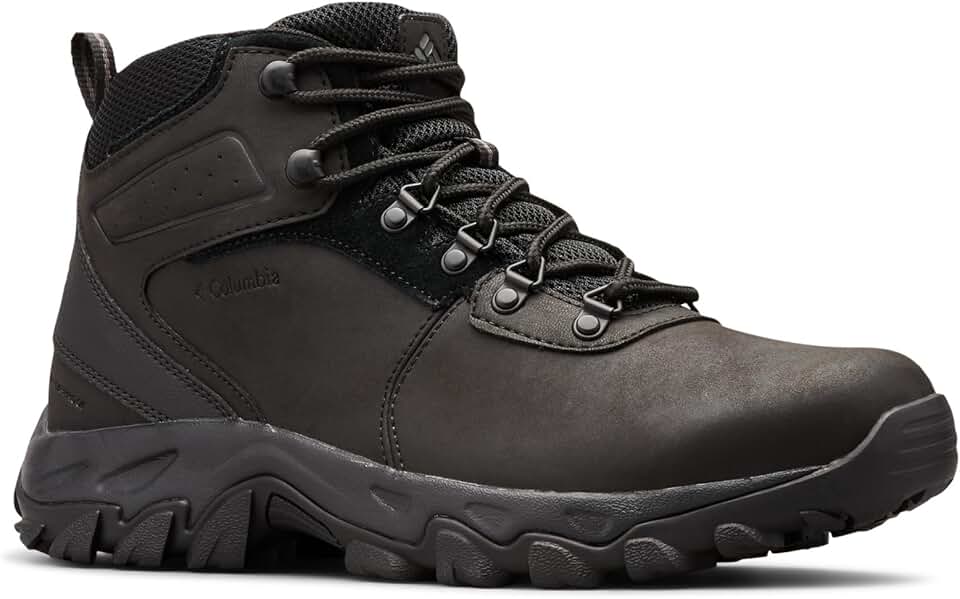
At under $70, these Columbia boots offer impressive value for hikers with wide feet who need waterproof protection without breaking the bank. The Newton Ridge Plus II has earned 4.5 stars across more than 4,500 reviews, showing consistent performance across a wide range of users and trail conditions. Columbia designed these boots with a construction that tends to accommodate wider feet better than many competitors in this price range.
The traction pattern on the sole grips well on dirt, gravel, and moderately rocky terrain, though they are not designed for technical scrambling or extremely rugged trails. These boots fit true to size for most wearers, and the construction allows for reasonable width through the toe box and midfoot.
They are marketed as hiking shoes rather than boots, which means they have a lower cut than mid-height boots. This makes them more flexible and easier to break in, but it also means less ankle support on uneven terrain. If you are hiking well-maintained trails with a light daypack, this lower cut works fine. For rockier trails or when carrying more weight, you might want a mid-height boot instead. The price point makes these boots an excellent entry point for newer hikers who want to see if they enjoy hiking before investing in more expensive footwear. Check current stock for the Columbia Men’s Newton Ridge Plus II Waterproof Hiking Shoe on Amazon.
Pros
- Affordable price point under $70
- Waterproof protection for wet conditions
- Over 4,500 reviews provide solid feedback on performance
- Lighter in feel than many traditional hiking boots
Cons
- Lower cut provides less ankle support than mid-height boots
- Not designed for technical or extremely rugged terrain
- May feel warm in hot weather conditions
View Columbia Men’s Newton Ridge Plus II Waterproof Hiking Shoe on Amazon →
4. Columbia Women’s Newton Ridge Plus Waterproof Hiking Boots
Best for women with wide feet seeking proven all-around performance

With nearly 20,000 customer reviews and a 4.6-star rating, these Columbia boots have proven themselves across thousands of trails and hiking conditions. The Newton Ridge Plus has become a popular choice among women hikers specifically because it accommodates wider feet without sacrificing support or waterproof protection. The boot’s construction provides enough room through the toe box and midfoot to prevent the pinching and pressure that narrower boots cause.
The sole pattern provides reliable traction on the varied terrain most day hikers encounter, from packed dirt trails to slightly rocky sections. The boot height hits right at the ankle, offering some support and protection without the bulk of a higher cut. The fit tends to run true to size, and users report feeling comfortable within a week or two of regular wear after initial break-in.
At just over $70, these boots represent excellent value, especially considering their durability and the extensive positive feedback from actual users. The main limitation is that they are designed for day hiking rather than multi-day backpacking with heavy loads, so if you are planning to carry significant weight, you might want a boot with more robust support. Compare the Columbia Women’s Newton Ridge Plus Waterproof Hiking Boots specs and pricing on Amazon.
Pros
- Nearly 20,000 customer reviews demonstrate proven reliability
- Waterproof protection for wet trail conditions
- Accommodates wider feet without compromising support
- Reasonable break-in period compared to stiffer boots
Cons
- Designed for day hiking rather than heavy backpacking
- May feel warm in hot weather conditions
- Lower ankle height than some hikers prefer
View Columbia Women’s Newton Ridge Plus Waterproof Hiking Boots on Amazon →
How These Compare
Choosing between these four wide fitting hiking boots comes down to your specific hiking style, budget, and the conditions you will encounter most often. If you are a man looking for proven durability and extensive user feedback, the Timberland White Ledge boots deliver reliable waterproof performance backed by over 67,000 reviews. They sit at the higher end of this group price-wise at $109.95, but that investment gets you a boot that should last multiple seasons. The mid-height design works well for most trail conditions.
For women hikers, the decision between the two Columbia Newton Ridge options and the Merrell Moab 3 depends partly on what matters most to you. The Merrell Moab 3 at $79.98 has the highest rating at 4.6 stars and offers a mid-height cut that provides more ankle support than the lower-cut Columbia boots. If you frequently hike on uneven terrain or carry a heavier pack, that extra ankle coverage can make a real difference in stability and confidence on the trail. However, if you primarily stick to well-maintained trails and want to save some money, the Columbia Newton Ridge Plus at $71.25 delivers excellent value with nearly 20,000 reviews confirming its reliability. The massive review count means you can be confident that what you are buying has been tested in real-world conditions by thousands of other hikers.
Budget-conscious male hikers should seriously consider the Columbia Newton Ridge Plus II at $67.35. While it has a lower cut than the other options, it still provides waterproof protection and solid performance for day hiking. The 4,500+ reviews show consistent satisfaction, and the price point makes it accessible if you are just getting into hiking or need to replace worn-out boots without spending over $100.
All four options offer waterproof construction, which keeps your feet dry but does reduce breathability compared to non-waterproof boots. If you hike primarily in dry conditions or hot weather, you might consider non-waterproof versions of these same boot models, which would provide better airflow. However, for most hikers in varied conditions, the waterproofing is worth the slight reduction in breathability. The key is to pair any of these boots with moisture-wicking hiking socks that help manage sweat even when the boot itself cannot breathe as freely as you might like.
Frequently Asked Questions
How do I know if I need wide width hiking boots?
You likely need wide width hiking boots if regular boots feel tight across the widest part of your foot (the ball), if your toes feel squeezed together even when the length seems right, or if you develop pain along the sides of your feet after wearing boots for more than an hour. Another clear sign is if you can see the sides of your feet bulging over the midsole (the layer between the outsole and the interior where your foot rests) or if you have to loosen the laces significantly to get comfortable width but then lose heel security. When trying on boots, your foot should sit naturally on the footbed (the interior platform where your foot rests inside the boot) without spilling over the edges. If you have to size up in length just to get enough width, you actually need a wide width boot in your true length size instead. Many people with wide feet have been wearing regular width boots their whole lives and assume some foot discomfort is just part of hiking, but properly fitted wide boots can make hiking significantly more comfortable. If you have ever been measured at a shoe store and told you have a wide or extra-wide foot, trust that assessment and start your hiking boot search with boots specifically made in wide widths.
What is the difference between wide hiking boots and boots with a roomy toe box?
Wide hiking boots are constructed on a wider last, meaning the entire boot structure is built to accommodate a wider foot from heel to toe. A boot with a “roomy toe box” might give your toes more space to spread out in the front, but it does not necessarily provide more width through the midfoot or ball of the foot, which is where people with wide feet typically need the most room. The difference matters because your foot needs support along its entire length. A boot that is only wider at the toe can actually create problems if your midfoot is still being squeezed, as your foot may slide forward into that roomy space, causing blisters and unstable footing. True wide width boots maintain proper proportions throughout the entire boot, distributing pressure evenly and providing support where your foot actually makes contact. When shopping, look for boots explicitly labeled as wide width or marked with sizing designations like 2E for men or D for women, rather than relying on marketing descriptions like “generous fit” or “accommodating toe box,” which may not provide the consistent width you need.
Do wide hiking boots require a longer break-in period?
Wide hiking boots do not inherently require a longer break-in period than regular width boots. The break-in time depends more on the materials and construction of the boot rather than its width. Leather boots, whether wide or regular width, typically need more break-in time than synthetic boots because the leather needs to mold and flex to your foot shape. Boots with stiffer soles and more substantial construction will also take longer to break in regardless of width. What is different about breaking in wide boots is that when they fit properly, the process should be more comfortable than breaking in regular boots that squeeze your feet. You should experience normal stiffness as the materials flex, but you should not have pain from width-related pressure. If your wide boots are causing pain across the width of your foot during break-in, they may actually not be wide enough for you, or they may be the wrong style for your foot shape. A proper break-in for any hiking boot involves wearing them around the house for several days, then on short walks, gradually increasing the distance before taking them on a full-day hike.
Can I wear regular hiking boots if I have wide feet?
You can physically wear regular hiking boots with wide feet, but you should not if you want to hike comfortably and avoid foot problems. Wearing boots that are too narrow compresses your foot unnaturally, which many hikers report leads to blisters, hot spots, and numbness. Some people with mildly wide feet can get away with regular width boots if they choose brands that run wider naturally, but if you have genuinely wide feet, this is not a workable solution. The common mistake many hikers make is sizing up in length to get more width, but this creates new problems. Your heel no longer locks in place properly, your foot slides forward on descents causing toe jamming and lost toenails, and you lose the precise fit that hiking boots need to provide proper support. Starting with boots designed for wide feet eliminates all of these issues and makes hiking significantly more enjoyable. If you have been hiking in regular width boots and experiencing foot pain, switching to properly fitted wide boots will likely transform your experience on the trail.
The Bottom Line
Finding wide fitting hiking boots that actually fit comes down to understanding that width is a specific measurement, not just a marketing description. The four boots recommended here have proven themselves across thousands of real users with wide feet, offering different price points and features to match various hiking styles. If you are a man willing to invest in proven durability, the Timberland White Ledge boots deliver reliable waterproof performance backed by over 67,000 reviews. Women hikers will find excellent options in both the Merrell Moab 3 for those who want a mid-height boot with strong ankle support, and the Columbia Newton Ridge Plus for those seeking proven all-around performance with nearly 20,000 reviews confirming its quality. Budget-conscious hikers of either gender will find that the Columbia options provide solid waterproof protection without requiring you to spend over $75.
Remember that even the best wide fitting hiking boots need proper break-in time before you take them on a challenging hike. Wear them around your house, on short neighborhood walks, and on easy trails before committing to a full-day adventure. Pay attention to how they feel not just when standing still, but when walking on inclines and declines, as this reveals whether the fit truly works for your feet. Pair your boots with quality moisture-wicking hiking socks that provide cushioning without adding bulk, and do not be afraid to experiment with different lacing techniques to customize the fit. Your feet carry you through every hike, and investing in boots that fit properly makes the difference between a painful struggle and an enjoyable day on the trail.
Disclosure: As an Amazon Associate, we earn from qualifying purchases. This does not affect our editorial recommendations.