

Finding a tick on your dog after a hike can feel stressful – you know you need to remove it quickly, but the last thing you want is to leave part of the tick behind or hurt your pup. If you are new to hiking with your dog, you might be wondering what tool actually works, what you should carry in your pack, and how to remove a tick safely when you are miles from home.
The good news is that effective tick removal does not require expensive gear or veterinary training. The best dog tick removal tool for hiking is compact enough to fit in your pocket, simple enough to use with one hand, and designed to remove the entire tick – head and body – in one smooth motion. This guide covers the top tools hikers trust, what to look for when choosing one, and how to make tick removal as quick and stress-free as possible for both you and your dog.
What to Look For
Tool Design and Removal Method
Tick removal tools come in three main styles: hook or spoon designs, twister tools, and precision tweezers. Hook-style tools slide under the tick and lift it out with a gentle pull. Twister tools rotate the tick counterclockwise to detach it without squeezing. Tweezers grip the tick as close to the skin as possible and pull straight up. Each method works, but the best choice depends on your comfort level and your dog’s temperament. Hook and twister tools are often easier to use on wiggly dogs because they do not require pinpoint precision. Tweezers work well for small ticks or ticks in hard-to-reach areas like between toes or inside ears. For hiking, choose a tool you can operate quickly without needing to restrain your dog for long periods.
Size and Portability
The best tick removal tool for hiking is one you will actually carry on every trail. Look for tools that are lightweight, compact, and easy to attach to a keychain, collar, or pack strap. Many tools include a built-in keychain hole or carabiner clip. Some come in zippered pouches or small carrying cases, which protect the tool and make it easier to find in your pack. Multi-tool kits often include several removal devices in different sizes, but they can be bulky. If you hike frequently in tick-heavy areas, consider carrying one ultra-portable tool on your dog’s collar and keeping a backup in your first aid kit.
Material and Durability
Most tick removal tools are made from stainless steel or hard plastic. Stainless steel tools are durable, easy to clean, and will not break under pressure. They can be boiled or wiped down with alcohol between uses. Plastic tools are lighter and less expensive, but they can crack or bend over time, especially if you carry them loose in a pack. For hiking, stainless steel is the better long-term choice if you hike often. Plastic tools work fine as backups or if you are just getting started and want to try a tool before investing in a more durable option.
Ease of Use and Learning Curve
Some tick removal tools require practice to use correctly. Twister tools, for example, need you to rotate the tick without pulling, which feels counterintuitive at first. Hook tools slide under the tick and lift, which is straightforward but requires a steady hand. Tweezers are familiar to most people, but grabbing a tick close to the skin without squeezing its body takes concentration. If you are new to tick removal, choose a tool with clear instructions or an included identification card that shows proper technique. Practice at home on a piece of fabric or a training tick before you need to use it on your dog in the field.
Multiple Tick Sizes
Ticks come in different sizes depending on the species and how long they have been attached. A tool that works for engorged ticks may not grip tiny nymph-stage ticks, and vice versa. Multi-size kits include tools in small, medium, and large sizes to handle all tick stages. If you hike in areas with multiple tick species – like deer ticks, dog ticks, and lone star ticks – a kit with size options gives you more flexibility. Single-size tools work well if you mostly encounter one type of tick or if you pair the tool with precision tweezers as a backup.
Additional Features
Some tick removal kits include extras like tick identification cards, magnifying glasses, flea combs, or storage cases. Identification cards help you recognize the tick species, which can be useful if your dog shows symptoms later. Magnifying glasses make it easier to see small ticks on dark-coated dogs. Flea combs let you check your dog for additional ticks after removal. These features add value, but they also add weight and bulk. For hiking, prioritize the removal tool itself. Extra features are nice to have at home but not essential on the trail.
Our Top Picks
1. Homesake Tick Remover Tool for Dogs, Cats & Humans, 3 Pack Tick Removal Kit + Identification Card & Keychain Hole
Best for hikers who want an affordable, proven tool to keep in every pack and car

This three-pack tick removal kit offers the best combination of value, portability, and proven performance for dog owners who hike regularly. Each tool features a simple hook-style design that slides under the tick and lifts it away from the skin. The keychain hole lets you attach the tool to your dog’s collar, your backpack, or your car keys so you always have one within reach. The included tick identification card helps you recognize common tick species, which can be useful if you need to monitor your dog for symptoms later.
With over 5,700 reviews and a 4.6-star rating, this tool has been tested by thousands of hikers and dog owners in real-world conditions. Reviewers consistently mention how easy it is to use, even on squirmy dogs, and how well it removes ticks without leaving the head behind. The lightweight plastic construction makes it easy to carry, though it is not as durable as stainless steel options. The three-pack format means you can keep one in your hiking pack, one in your car, and one at home without worrying about losing your only tool.
The hook design works best on medium to large ticks. For tiny nymph-stage ticks, you may need precision tweezers as a backup. The tool does not include a storage case, so you will need to attach it to something or keep it in a dedicated pocket to avoid losing it. The simplicity of the design means there is almost no learning curve – slide, lift, done. For hikers who want a reliable, no-fuss tool that works every time and costs less than a coffee, this is the most practical choice.
Pros
- Three-pack provides backups for car, pack, and home
- Keychain hole for easy attachment to collar or gear
- Over 5,700 reviews confirm consistent performance
- Tick identification card included
- Lightweight and compact for hiking
Cons
- Plastic construction less durable than stainless steel
- No storage case included
- Works best on medium to large ticks
2. ZenPet Tick Tornado Tick Remover Tool for Dogs, Cats, Horses, Humans (4 Pack)
Best for hikers who want a twister-style tool with multiple backups for frequent trail use

The ZenPet Tick Tornado uses a rotating removal method that detaches ticks by twisting counterclockwise rather than pulling straight up. This approach reduces the risk of leaving the tick head embedded in your dog’s skin and minimizes squeezing, which can release bacteria into the bite site. The four-pack gives you enough tools to keep in your hiking pack, car, home first aid kit, and even your dog’s travel bag.
With over 2,300 reviews and a 4.6-star rating, this tool has earned trust from hikers and outdoor enthusiasts who encounter ticks regularly. The rotating design takes a bit of practice to master, but once you get the hang of it, removal is fast and clean. The tool works on all tick sizes, from tiny nymphs to fully engorged adults. Each tool is small enough to fit on a keychain or in a pocket, making it ideal for long hikes where every ounce counts.
The main drawback is the learning curve. If you have never used a twister-style tool before, your first few attempts may feel awkward. The tool does not come with detailed instructions, so you may need to watch a quick video online to see the proper technique. Some reviewers mention that the tool can slip on very small ticks if you do not position it correctly. The four-pack format is excellent for families with multiple dogs or hikers who want backups everywhere, but it may be more than you need if you only hike occasionally.
Pros
- Four-pack provides tools for pack, car, and home
- Rotating method reduces risk of leaving tick head behind
- Works on all tick sizes from nymph to adult
- Over 2,300 reviews confirm reliability
- Compact and lightweight for hiking
Cons
- Rotating technique requires practice to master
- Can slip on very small ticks if not positioned correctly
- No detailed instructions included
View ZenPet Tick Tornado Tick Remover Tool for Dogs on Amazon →
3. Homesake Tick Remover Tool for Dogs, Cats & Humans, Stainless Steel Tick Removal Tool with Fine Tip Tweezers, Pouch & ID Card
Best for hikers who want durable stainless steel tools with precision tweezers for all tick sizes
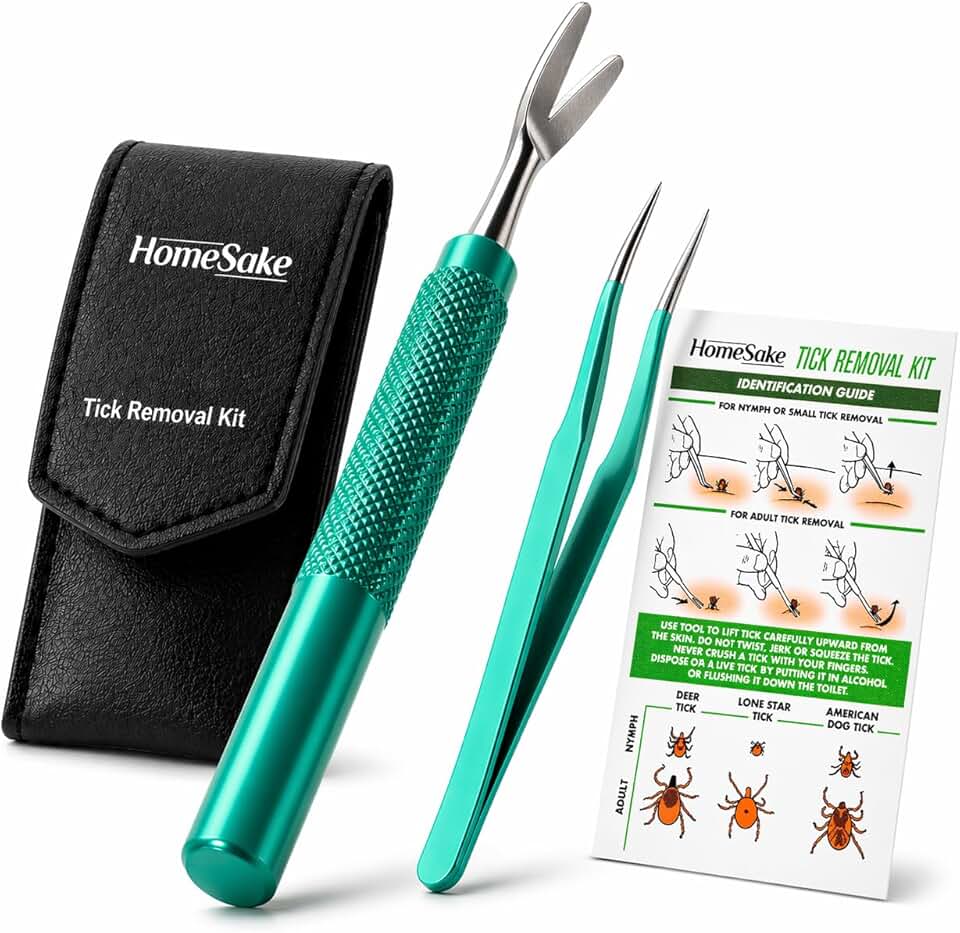
This stainless steel kit combines a hook-style tick remover with fine-tip tweezers, giving you two removal methods in one compact package. The stainless steel construction is more durable than plastic and can be cleaned with alcohol or boiling water between uses. The included pouch keeps both tools organized and protected in your pack, and the tick identification card helps you recognize common species after removal.
With over 400 reviews and a 4.7-star rating, this kit has built a reputation for reliability among hikers who need a tool that will last season after season. The hook-style remover works well for larger ticks, while the fine-tip tweezers handle tiny nymphs or ticks in hard-to-reach spots like between toes or inside ears. The two-tool approach gives you the right option for whatever size tick you encounter, whether it is a barely visible nymph or a fully engorged adult.
The stainless steel construction adds a bit of weight compared to plastic tools, but the difference is minimal – still light enough to carry on every hike. The pouch is a nice touch for organization, but it adds bulk if you prefer to clip tools directly to your gear. Some reviewers mention that the tweezers require a steady hand to grip very small ticks without squeezing, which can be challenging if your dog is moving. The kit provides flexibility for all tick removal scenarios, though it requires you to assess each situation and choose the appropriate tool.
Pros
- Stainless steel construction for long-term durability
- Fine-tip tweezers handle small ticks in hard-to-reach areas
- Pouch keeps tools organized in pack
- Tick identification card included
- Can be cleaned with alcohol or boiling water
Cons
- Slightly heavier than plastic tools
- Tweezers require steady hand for very small ticks
- Pouch adds bulk compared to keychain attachment
4. Tick Remover Tool for People & Pets, 3 Pack, Keychain Attachment, Made in USA
Best for hikers who want a lightweight, USA-made tool with proven trail reliability
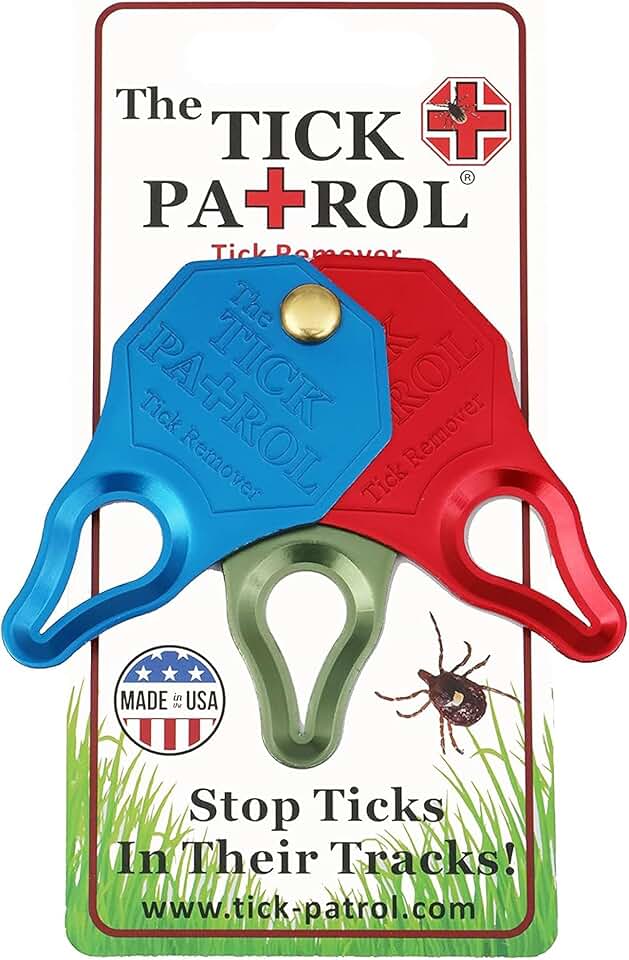
This three-pack tick removal tool features a simple, effective design that has been tested by over 2,200 hikers and outdoor enthusiasts. The keychain attachment makes it easy to clip to your dog’s collar, backpack strap, or car keys, so you always have a tool within reach when you need it. The lightweight construction adds almost no weight to your pack, making it ideal for long-distance hikes or ultralight enthusiasts who count every ounce.
The hook-style design slides under the tick and lifts it away from the skin without squeezing. The tool works on medium to large ticks and is easy to use even if you have never removed a tick before. With a 4.6-star rating and over 2,200 reviews, this tool has earned consistent praise for reliability and ease of use in real-world hiking conditions. The three-pack format gives you backups for your car, home, and hiking gear without spending more than the cost of a few energy bars.
The tool is made in the USA, which some hikers prefer for quality and sustainability reasons. The main limitation is that it works best on medium to large ticks – for tiny nymph-stage ticks, you may need precision tweezers as a backup. The plastic construction is durable enough for regular use but may crack if you sit on it or drop it on rocks repeatedly. The assorted colors make it easy to tell your tools apart if you have multiple in different locations, but you cannot choose specific colors when ordering.
Pros
- Over 2,200 reviews confirm trail reliability
- Keychain attachment for easy carrying
- Lightweight construction for ultralight packing
- Made in the USA
- Three-pack provides backups for car and home
Cons
- Works best on medium to large ticks
- Plastic construction may crack with rough handling
- Cannot choose specific colors in pack
How These Compare
Choosing the best dog tick removal tool for hiking depends on how often you hike, how many ticks you typically encounter, and whether you want a single tool or a complete kit. If you are just getting started with hiking and want an affordable, proven option, the Homesake 3-pack hook-style tool offers the best value. At under five dollars, it gives you three tools to keep in different locations, and the 5,700-plus reviews confirm it works consistently. The hook design is simple to use, even on your first try, and the keychain hole makes it easy to attach to your dog’s collar or your pack.
If you hike frequently in tick-heavy areas and want a tool that minimizes the risk of leaving the tick head behind, the ZenPet Tick Tornado offers a rotating removal method that many hikers prefer. The four-pack gives you plenty of backups, and the twister design works on all tick sizes. The main trade-off is the learning curve – you will need to practice the rotating technique before you can do it quickly on a wiggly dog. Once you master it, though, removal is fast and clean.
For hikers who want durable stainless steel construction and the flexibility to handle all tick sizes, the Homesake stainless steel kit with tweezers is worth the extra cost. The hook-style remover handles larger ticks, while the fine-tip tweezers work for tiny nymphs or ticks in hard-to-reach spots. The stainless steel construction lasts longer than plastic and can be thoroughly cleaned between uses. The included pouch keeps everything organized, though it adds a bit of bulk compared to keychain tools.
If you prefer USA-made gear and want a lightweight option for long hikes, the three-pack keychain tool offers proven reliability with over 2,200 reviews. It is one of the lightest options available, making it ideal for ultralight hikers who count ounces. The hook design is easy to use, and the keychain attachment keeps it accessible at all times. The main limitation is that it works best on medium to large ticks, so you may want to pair it with tweezers if you hike in areas with small tick species. All four tools are small enough to carry on every hike, and all have proven track records in real-world trail conditions.
Frequently Asked Questions
What is the safest way to remove a tick from my dog after hiking?
The safest way to remove a tick from your dog is to use a tick removal tool that lifts or twists the tick without squeezing its body. Squeezing can force bacteria into the bite site, increasing the risk of infection. Hook-style tools slide under the tick and lift it straight up, while twister tools rotate the tick counterclockwise to detach it. Both methods work well when done correctly. Avoid using your fingers, as this almost always squeezes the tick. Do not use petroleum jelly, heat, or alcohol to try to make the tick release – these methods do not work reliably and can cause the tick to regurgitate into the bite site. After removing the tick, clean the area with soap and water or a pet-safe antiseptic wipe. Save the tick in a sealed bag or container with the date and location in case your dog shows symptoms later. Monitor the bite site for redness, swelling, or signs of infection over the next few days.
How do I know if I removed the entire tick or if the head is still in my dog?
After removing a tick, examine it closely to confirm you have the entire body and head. A complete tick has a small head attached to the body, with mouthparts visible if you look closely. If you see only a round body with no head, the mouthparts may still be embedded in your dog’s skin. Check the bite site carefully – if you see a small dark speck, that may be the remaining head. In most cases, the dark speck is just skin discoloration or dried blood, not the tick head. If the tick head is left behind, it will usually work its way out on its own as the skin heals, similar to a splinter. Clean the area with soap and water and monitor it for signs of infection like redness, swelling, warmth, or pus. If the area becomes infected or your dog shows symptoms like lethargy, fever, loss of appetite, or limping within a few weeks, contact your veterinarian. To avoid leaving the head behind in the first place, use a proper tick removal tool and pull or twist steadily without jerking or crushing the tick.
Do I need different tick removal tools for different tick sizes?
Different tick sizes can be easier to remove with different tools, but you do not necessarily need a separate tool for each size. Hook-style and twister tools work on a range of tick sizes, from nymphs to fully engorged adults, as long as you position the tool correctly. Fine-tip tweezers are the most versatile option because they can grip ticks of any size, but they require a steady hand and good lighting to avoid squeezing the tick body. Multi-size tick removal kits include tools in small, medium, and large sizes, which can make removal easier if you frequently encounter ticks at different life stages. If you hike in areas with only one or two common tick species, a single all-purpose tool is usually sufficient. If you encounter tiny deer tick nymphs as well as larger dog ticks, having both a hook tool and precision tweezers gives you more flexibility. The most important factor is not the size of the tool, but how you use it – remove the tick as close to the skin as possible without squeezing, and pull or twist steadily until it releases.
Can I use the same tick removal tool for both my dog and myself?
Yes, most tick removal tools are designed to work on both dogs and humans. The tick removal process is the same regardless of the host – slide the tool under the tick as close to the skin as possible, then lift or twist to detach it without squeezing. Stainless steel tools can be cleaned thoroughly with alcohol or boiling water between uses, making them safe to share. If you use the tool on your dog first, clean it before using it on yourself to avoid transferring dirt, fur, or bacteria. Plastic tools can be wiped down with alcohol wipes, though they are harder to sterilize completely than metal tools. If you prefer not to share a tool between species, keep two separate tools in your kit – one for your dog and one for yourself. Many tick removal kits include multiple tools, so this is easy to do without extra cost. The removal technique is identical for dogs and humans, so practicing on one prepares you for the other.
How soon after a hike should I check my dog for ticks?
Check your dog for ticks as soon as you finish your hike, ideally before getting back in your vehicle. Ticks can crawl from your dog onto gear or other people if not removed promptly, so immediate checking reduces this risk. Run your hands over your dog’s entire body, paying close attention to areas where ticks commonly attach: around the ears, neck, armpits, groin, between toes, and under the collar. Ticks feel like small bumps under the fur, and they can be as small as a poppy seed or as large as a grape depending on how long they have been attached. If you find a tick, remove it right away using a tick removal tool. The longer a tick stays attached, the higher the risk of disease transmission, so quick removal matters. After your initial check, do a second more thorough check at home in good lighting, especially if you hiked through tall grass or brushy areas where ticks are common. Some ticks are tiny and easy to miss on the trail, so a follow-up check gives you a second chance to catch them before they attach fully.
The Bottom Line
The best dog tick removal tool for hiking is the one you will actually carry on every trail and know how to use confidently when you find a tick. For most hikers, the Homesake 3-pack hook-style tool offers the best combination of affordability, proven performance, and portability. At under five dollars for three tools, it lets you keep backups in your car, pack, and home without worrying about losing your only tool. If you hike frequently in tick-heavy areas and want a twister-style tool with multiple backups, the ZenPet Tick Tornado four-pack is a solid choice that works on all tick sizes once you master the rotating technique. For hikers who want durable stainless steel construction and the flexibility to handle tiny ticks with precision tweezers, the Homesake stainless steel kit provides long-term reliability in a compact package. If you prefer USA-made gear and ultralight packing, the three-pack keychain tool has over 2,200 reviews confirming its trail reliability and weighs almost nothing in your pack.
No matter which tool you choose, the most important step is to carry it on every hike and practice using it before you encounter your first tick. Check your dog thoroughly after every trail outing, remove ticks as soon as you find them, and monitor the bite site for signs of infection. With the right tool in your pack and a basic understanding of proper removal technique, tick removal becomes a quick, routine part of hiking with your dog rather than a stressful emergency.
Disclosure: As an Amazon Associate, we earn from qualifying purchases. This does not affect our editorial recommendations.