
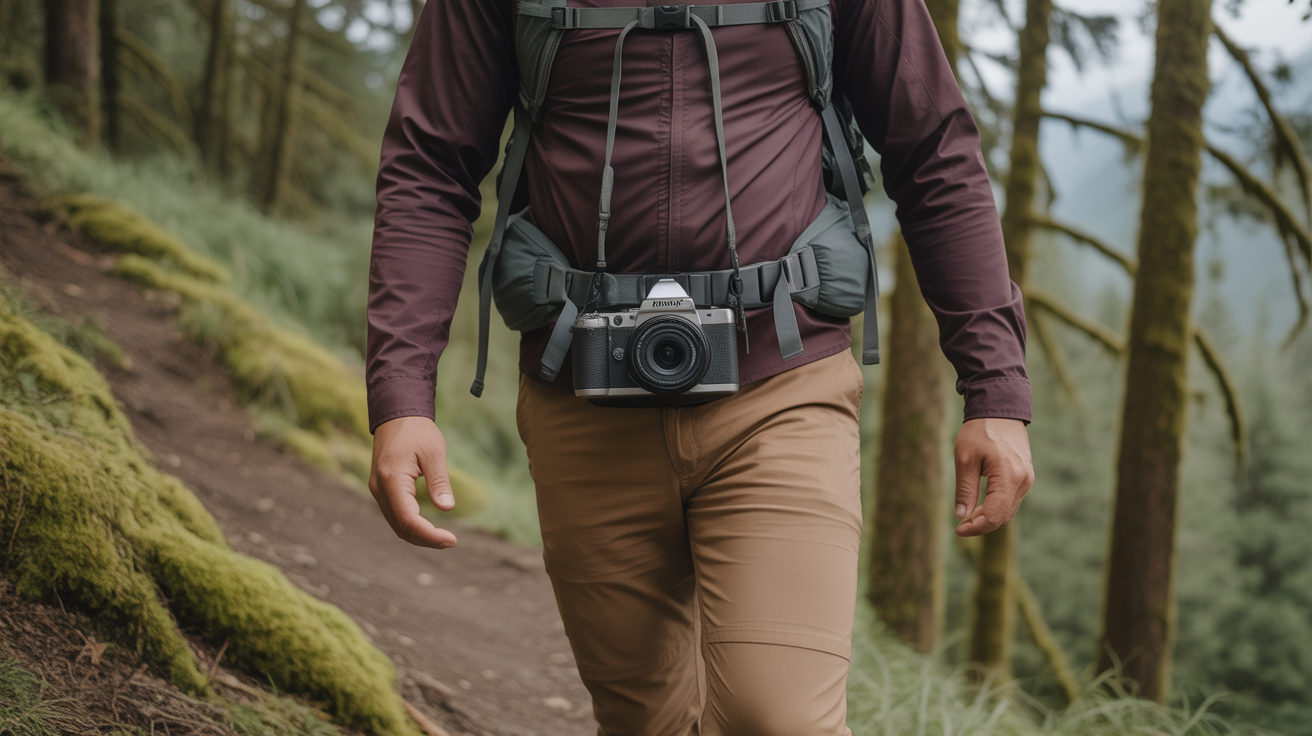
You have spent months scrolling through stunning trail photos on Instagram, and you are ready to capture your own hiking memories with something better than a phone camera. But hauling a traditional camera bag on the trail sounds exhausting – and fumbling through a pack to grab your camera means missing the shot. You need a system that keeps your camera accessible without forcing you to stop every time you want to take a photo.
The best hiking camera bag is not actually a bag at all for most day hikers – it is a strap-mounted clip or holster that attaches directly to your backpack shoulder strap and allows one-handed access while you walk. These systems keep your camera secure against your chest, protected from bumps and weather, and ready to shoot in seconds. This guide covers the top strap-mount options for action cameras and larger cameras like mirrorless models (a compact camera with interchangeable lenses but no mirror inside) and DSLRs (a larger camera with an optical viewfinder), what to look for in a quick-access system, and how to choose the right setup for your camera and hiking style.
What to Look For
Strap-Mount vs. Traditional Camera Bag
A traditional camera bag sits on your back or hip and requires you to stop, remove the bag, unzip compartments, and retrieve your camera before shooting. This works fine for planned photography sessions, but on the trail it means missing wildlife sightings, fleeting light conditions, and spontaneous moments. Strap-mounted clips attach to your backpack shoulder strap and position your camera against your chest where you can grab it with one hand without breaking stride. For day hikes where photography is part of the experience – not the sole purpose – strap mounts provide faster access, better weight distribution, and less fumbling. Traditional camera bags make more sense for overnight trips carrying multiple lenses, or for photographers who need weather-sealed storage for expensive gear during extended backcountry travel.
Action Camera Mounts vs. DSLR Clips
Action camera mounts use slide-in clips or rotating bases designed for GoPro-style cameras weighing under one pound. They attach with hook-and-loop straps or plastic clips that slide onto your pack strap, and most include 360-degree rotation for adjusting your shooting angle. These mounts work well for compact action cameras, 360 cameras, and point-and-shoot models under eight ounces. DSLR clips use metal construction and quick-release plates rated for cameras weighing five to twenty pounds or more. They attach with screws or locking mechanisms that clamp onto pack straps or hip belts, and most are compatible with Arca-Swiss (a universal dovetail mounting standard used across camera equipment brands) or Peak Design quick-release systems. If you are hiking with a mirrorless camera or entry-level DSLR, choose a clip rated for at least twice your camera weight to account for bumps and sudden movements on uneven terrain.
Quick-Release Systems and Compatibility
Quick-release plates let you detach your camera from the mount in one motion without unscrewing anything or adjusting straps. The three most common systems are Peak Design (proprietary dual-plate design), Arca-Swiss (universal dovetail standard used by most tripods), and brand-specific systems from GoPro, DJI, and Insta360. If you already own a tripod or gimbal, check which plate system it uses – matching your strap mount to your existing gear means you can swap the same camera between mounts without changing plates. Peak Design clips work only with Peak Design plates but offer the most secure locking mechanism and fastest one-handed release. Arca-Swiss mounts work with any Arca-Swiss plate from any manufacturer, making them the most versatile choice if you use multiple brands of camera support gear. Action camera mounts typically use brand-specific mounting fingers that only fit cameras from that manufacturer.
Weight Capacity and Load Rating
Manufacturers list maximum load capacity, but real-world hiking conditions require more margin than studio use. A camera bouncing against your chest while descending rocky terrain experiences more force than the same camera sitting on a desk. For mirrorless cameras and small DSLRs weighing two to four pounds with a lens attached, choose a clip rated for at least ten pounds. For full-frame DSLRs with telephoto lenses weighing five to eight pounds, look for clips rated to twenty pounds or more. Action cameras rarely exceed one pound, so most action camera mounts handle the weight easily – the more important consideration is vibration reduction and secure attachment to prevent your camera from rattling loose on rough trails. Some clips include rubberized contact points or foam padding to dampen vibration and protect your camera body from scratches.
One-Handed Access and Ergonomics
The entire point of a strap mount is accessing your camera quickly without stopping or removing your pack. Test whether you can release the camera, shoot, and re-attach it using only your dominant hand while wearing the pack. Clips mounted too high on the strap force you to reach across your body awkwardly. Clips mounted too low bounce against your stomach and interfere with your natural arm swing. Most strap clips position best about four inches below your collarbone on your non-dominant side – right-handed shooters mount on the left strap, left-handed shooters mount on the right. This lets you grab the camera with your dominant hand, shoot, and return it to the clip without twisting your torso. Action camera mounts with rotating bases let you adjust the angle for forward-facing POV shots or downward-facing shots of the trail ahead.
Weather Protection and Secure Attachment
Strap-mounted cameras sit exposed to rain, dust, and branches brushing against your chest. Some clips include built-in rain covers or fold-down lens shields, but most require you to add a separate rain cover or protective pouch when conditions turn wet. Look for clips with locking mechanisms that prevent accidental release – a simple friction fit or spring-loaded clip can pop open if you brush against a tree or lean over to tie your boot. Metal clips with screw-tightened clamps or dual-locking release buttons provide the most security for expensive cameras. Action camera mounts use hook-and-loop straps or sliding clips that grip the pack strap firmly but can shift position during long hikes if not tightened properly. Check the mount every hour on your first few hikes to confirm it stays put.
Our Top Picks
1. Peak Design Capture Camera Clip V3
Best for hikers with mirrorless cameras or DSLRs who need secure attachment and one-handed quick release

The Peak Design Capture V3 sets the standard for DSLR and mirrorless camera strap mounts with a dual-lock system that prevents accidental release and operates with one button press. The clip attaches to any strap or belt between 0.9 and 2 inches wide using a sliding plate and tightening screw – no permanent modification to your pack required. The included quick-release plate screws directly into your camera tripod mount (the threaded hole on the bottom of your camera) and locks into the clip with an audible click. A secondary safety lock prevents accidental release even if you bump the primary button, which matters when you are scrambling over boulders or pushing through dense brush.
The aluminum construction handles the weight of full-frame DSLRs with attached lenses without flexing or creaking, and the low-profile design sits close against your chest instead of sticking out awkwardly. The clip rotates your camera inward when not in use, protecting the lens from branches and reducing the profile. When you need to shoot, press the red button with your thumb, grab the camera with the same hand, and you are ready in under two seconds. Re-attaching requires lining up the plate and pushing until you hear the click – no fumbling with screws or adjusting straps.
The biggest limitation is the proprietary plate system. If you already own Arca-Swiss tripod plates, you will need to swap plates every time you move your camera between the Capture clip and your tripod. The clip also costs significantly more than generic Arca-Swiss alternatives, but the difference in build quality and security is immediately noticeable. The 10,000-plus reviews consistently praise the one-handed operation and secure lock mechanism. This clip works best on thicker pack straps – thin daypack straps can twist under the weight of heavier cameras, so test the fit before heading out on a long hike. See current pricing for the Peak Design Capture Camera Clip V3 on Amazon.
Pros
- High weight capacity handles any consumer camera and lens combination
- Dual-lock system prevents accidental release on rough trails
- One-handed operation takes under two seconds from clipped to shooting
- Low-profile aluminum design sits close against chest
Cons
- Proprietary plate system not compatible with Arca-Swiss standard
- Higher price point than generic alternatives
- Requires thicker pack straps for stability with heavy cameras
2. PGYTECH Beetle Camera Clip
Best for hikers who want Arca-Swiss compatibility at a lower price than the Peak Design

The PGYTECH Beetle bridges the gap between budget action camera mounts and premium DSLR clips with Arca-Swiss compatibility and solid aluminum construction at half the price of the Peak Design. The clip attaches to pack straps or belts using a sliding clamp mechanism with a red safety lock, and the included quick-release plate uses the standard Arca-Swiss dovetail that fits most tripods and gimbals without swapping plates. The plate screws into your camera tripod mount using a coin-slot screw that you can tighten with a quarter or the edge of a carabiner – no hex key needed on the trail.
The spring-loaded release button sits on the side of the clip where you can press it with your index finger while gripping your camera with the same hand. The plate slides out smoothly once released, and re-attaching requires pushing the plate into the dovetail until the spring-loaded lock clicks. The clip includes rubberized padding where it contacts your pack strap to prevent slipping and protect the strap material from wear. Reviews consistently mention that it holds mirrorless cameras and entry-level DSLRs securely through multi-hour hikes on rocky terrain.
The Arca-Swiss compatibility makes this clip more versatile than proprietary systems if you already own tripod plates or use multiple camera support systems. You can leave one plate on your camera and move between your tripod, gimbal, and hiking clip without carrying a screwdriver. The aluminum construction feels less overbuilt than the Peak Design but still handles typical hiking use without flexing. The main limitation is slightly less refined ergonomics – the release button requires more force to press, and the clip sits a bit farther from your body than slimmer designs. The clip works best with cameras weighing under six pounds total. Heavier setups with telephoto lenses can cause the mount to shift position on thinner pack straps during long descents. Read verified buyer reviews for the PGYTECH Beetle Camera Clip on Amazon.
Pros
- Arca-Swiss compatibility works with most tripods and gimbals
- Coin-slot screw for tool-free plate attachment
- Rubberized padding prevents strap slippage and wear
- Half the price of premium alternatives with similar functionality
- Spring-loaded lock provides secure attachment
Cons
- Release button requires more finger pressure than Peak Design
- Sits slightly farther from body than slimmer designs
- Best suited for cameras under six pounds with lens attached
3. STUNTMAN Pack Mount High-Stability
Best for hikers using action cameras who want stable POV footage without chest harness bulk

The STUNTMAN Pack Mount solves the biggest problem with backpack strap mounts for action cameras – vibration and unstable footage. Most basic strap clips let your camera bounce and rotate as you walk, resulting in unwatchable shaky video. The STUNTMAN uses a rigid aluminum arm that extends from a padded strap base to position your camera several inches forward and up from the attachment point. This geometry reduces bounce by anchoring the mount to a larger section of your pack strap instead of a single clip point, and the elevated position captures better POV angles without pointing at the ground.
The mount fits GoPro, DJI Osmo Action, Insta360, and other action cameras using standard mounting fingers. The aluminum arm includes a ball-head joint that lets you adjust camera angle in any direction and locks tight with a thumbscrew – no tools needed. The padded base strap wraps around your pack shoulder strap and secures with hook-and-loop, making it easy to reposition or remove without threading clips through webbing.
The stability improvement over basic clips is immediately noticeable in video footage – walking shots look smooth instead of jittery, and the elevated position captures more of the trail ahead instead of just your feet. The mount works best with action cameras weighing under eight ounces. Heavier cameras or phones in cases can cause the ball head to droop slowly during long hikes despite tightening the thumbscrew. The hook-and-loop strap stays secure on textured pack straps but can slip on smooth nylon straps if overtightened initially and then loosened. Check the position after the first mile and re-tighten if needed. The rigid arm sticks out farther from your body than flat clips, which can catch on branches in dense brush, but the tradeoff for stable footage is worth it for hikers who prioritize video quality. Check current stock for the STUNTMAN Pack Mount High-Stability on Amazon.
Pros
- Rigid arm design reduces camera bounce and vibration significantly
- Elevated position provides better POV angles for video
- Hook-and-loop attachment allows easy repositioning without threading clips
- Ball-head joint adjusts to any angle and locks with thumbscrew
Cons
- Extended arm can catch on branches in dense vegetation
- Ball head may droop with cameras over eight ounces on long hikes
- Hook-and-loop can slip on smooth pack straps if not properly tightened
4. TELESIN Anti-Slip Backpack Shoulder Strap Mount Clip
Best budget option for hikers who want basic action camera mounting without premium features

The TELESIN strap mount delivers reliable action camera attachment at less than half the cost of premium mounts, making it the practical choice for hikers who want basic functionality without advanced stability features. The mount uses a J-hook clip that slides onto your pack strap and secures with a screw-tightened clamp, plus a rotating mount base that lets you adjust camera angle 360 degrees. The clip includes rubberized grips on both sides to prevent slipping, and the plastic construction handles typical hiking use without cracking or flexing noticeably.
The mount fits GoPro Hero cameras, DJI Osmo Action models, Insta360 cameras, and most other action cameras using standard mounting fingers. The rotating base lets you point the camera forward for POV shots, downward for trail footage, or sideways for profile angles. The clip grips pack straps between 0.8 and 1.5 inches wide, covering most daypack shoulder straps. Over 4,000 reviews provide extensive real-world feedback across diverse hiking conditions.
The main tradeoff at this price point is less vibration dampening compared to rigid-arm designs like the STUNTMAN. Your footage will show more bounce and shake during fast walking or rough terrain, but for casual trail documentation and photo use, the movement is acceptable. The rotating base holds its position well during normal hiking but can shift if you lean over to adjust your boots or retrieve something from a side pocket. Check the angle periodically and re-tighten the screw if needed. The plastic construction feels less premium than aluminum alternatives but proves durable enough for weekend hiking use. Multiple hikers report using the same mount for over a year without failures. This mount works best for hikers who primarily shoot photos with occasional video clips, rather than continuous video recording where stabilization matters more. Compare the TELESIN Anti-Slip Backpack Shoulder Strap Mount Clip specs and pricing on Amazon.
Pros
- Budget-friendly price under fifteen dollars
- Rubberized grips prevent slipping on pack straps
- 360-degree rotation for multiple shooting angles
- Over 4,000 reviews provide extensive real-world feedback
Cons
- More camera bounce than rigid-arm designs during active hiking
- Rotating base can shift position when bending over or moving quickly
- Plastic construction feels less premium than aluminum alternatives
View TELESIN Anti-Slip Backpack Shoulder Strap Mount Clip on Amazon →
How These Compare
The best hiking camera bag for your situation depends on your camera weight, budget, and how seriously you take trail photography. If you are hiking with a mirrorless camera or DSLR and want the most secure attachment with reliable one-handed operation, the Peak Design Capture V3 justifies its premium price through superior build quality and a dual-lock system that eliminates any worry about your camera falling during scrambles or stream crossings. Over 10,000 reviews confirm it performs as advertised across diverse conditions. The main limitation is the proprietary plate system – if you already own Arca-Swiss tripod plates, you will swap plates frequently or invest in additional Peak Design plates for each camera body.
The PGYTECH Beetle offers the best middle ground for hikers who want DSLR-quality security with universal Arca-Swiss compatibility at half the price. The aluminum construction and spring-loaded lock handle mirrorless cameras and entry-level DSLRs reliably, and the ability to use the same plate across your tripod, gimbal, and hiking clip eliminates the plate-swapping hassle. This clip makes sense if you use multiple camera support systems regularly or shoot with different cameras that share the same plate standard. The slightly less refined ergonomics and release button that requires more finger pressure are minor tradeoffs for the versatility and cost savings.
For action camera users who prioritize video quality, the STUNTMAN Pack Mount delivers noticeably more stable footage than basic clips through its rigid arm design. The elevated position and ball-head adjustability provide better POV angles than flat mounts, and the hook-and-loop attachment makes repositioning quick when you switch between filming and hiking. This mount works best for hikers who shoot continuous video segments rather than just occasional clips, though the extended arm profile catches on branches more than flat designs in dense vegetation.
The TELESIN mount is the practical budget choice for hikers who use action cameras primarily for photos and occasional video clips without needing premium stabilization. The rubberized grips and rotating base handle basic mounting needs reliably at less than fifteen dollars, making it accessible for beginners testing whether they enjoy trail photography before investing in expensive gear. The increased camera bounce matters less for photo use, and the plastic construction proves durable enough for weekend hiking despite feeling less premium than aluminum alternatives. If you are uncertain whether you will use a camera mount regularly, starting with the TELESIN lets you test the concept before committing to pricier options.
Frequently Asked Questions
Can I use a regular camera bag instead of a strap mount for hiking?
You can absolutely use a traditional camera bag for hiking, but expect to stop and remove your pack every time you want to take a photo. Camera bags designed for studio or urban photography sit on your back or hang from your shoulder, requiring you to set down your hiking pack, access the camera bag, retrieve your camera, shoot, and reverse the process. This works fine for planned photography sessions at scenic overlooks, but it means missing spontaneous wildlife sightings, fleeting light conditions, and quick trail moments. Strap-mounted clips keep your camera against your chest where you can grab it with one hand in under two seconds without breaking stride. For day hikes where photography is part of the experience rather than the sole purpose, strap mounts provide significantly faster access and better integration with your existing hiking pack. Camera bags make more sense for overnight backpacking trips carrying multiple lenses and accessories that need weather-sealed storage, or for photographers who treat hiking as transportation between shooting locations rather than an activity in itself.
Will a camera clip damage my backpack straps?
Properly installed camera clips do not damage pack straps when used correctly, but improper attachment or overtightening can cause wear over time. Metal clips with screw-tightened clamps distribute pressure across a larger contact area than clips that pinch a small section of webbing, reducing the risk of strap deformation. Look for clips with rubberized padding or protective surfaces where they contact your pack strap – these prevent abrasion and distribute load more evenly. The biggest risk comes from overtightening the mounting hardware, which can compress foam padding inside padded straps or deform lightweight pack straps not designed to support camera weight. Test your clip on an older pack first if possible, and check for strap deformation after your first few hikes. If you notice creasing or permanent compression marks, the clip may be too tight or the strap too thin for your camera weight. Some clips use hook-and-loop attachment that avoids the pinching issue entirely but can slip on smooth pack straps if not properly secured. Remove the clip and inspect your pack strap every few months for signs of wear, especially where the clip makes contact.
How do I keep my camera safe from rain with a strap mount?
Strap-mounted cameras sit exposed to weather, so rain protection requires additional steps beyond what you need with a closed camera bag. The simplest solution is a dedicated rain cover designed for your camera model – these slip over the camera body and lens with a drawstring closure and include a clear panel over the LCD screen so you can still shoot in wet conditions. Many photographers keep the rain cover in their pack and deploy it when weather turns threatening rather than hiking with it on constantly. Some prefer waterproof camera pouches that attach to the strap clip using the quick-release plate, providing full protection until you need to shoot. Action cameras typically include waterproof housings or rated waterproof bodies that handle rain without additional protection, though you should still wipe the lens dry between shots to avoid water spots in your photos. For sudden downpours, tuck your camera inside your jacket until the worst passes, or stop and place it inside your pack if you will not be shooting. The key is checking weather forecasts before your hike and having a protection plan ready rather than scrambling to cover your camera after rain starts.
What is the difference between Peak Design and Arca-Swiss mounting systems?
Peak Design uses a proprietary dual-plate quick-release system that only works with Peak Design products, while Arca-Swiss is an open standard used by hundreds of manufacturers for tripods, gimbals, and camera support gear. Peak Design plates lock into Peak Design clips with a two-stage mechanism – a primary button release plus a secondary safety lock – providing the most secure attachment available but limiting compatibility to Peak Design hardware. Arca-Swiss uses a dovetail channel and locking screw standard that originated with Arca-Swiss tripod heads but is now adopted industry-wide, meaning any Arca-Swiss plate works with any Arca-Swiss mount regardless of brand. The practical difference for hikers is flexibility versus security. If you own a Peak Design clip and a non-Peak Design tripod, you will swap plates every time you move your camera between them, or buy duplicate plates for each camera body. If you own an Arca-Swiss clip and an Arca-Swiss tripod, one plate stays on your camera permanently and works across all your gear. Peak Design locks more securely and releases faster with one hand, while Arca-Swiss requires two hands to tighten the locking screw but works with your existing tripod plates. Choose Peak Design if you prioritize security and one-handed operation and do not mind the ecosystem lock-in. Choose Arca-Swiss if you already own tripod plates or use multiple brands of camera support equipment.
The Bottom Line
The best hiking camera bag for most day hikers is actually a strap-mounted clip that keeps your camera accessible without requiring frequent stops every time inspiration strikes. If you are hiking with a mirrorless camera or DSLR and budget allows, the Peak Design Capture V3 provides secure attachment and one-handed operation that justifies the premium price through superior build quality and a locking mechanism you will trust on exposed scrambles. For hikers who want universal compatibility with existing tripod plates and solid performance at half the cost, the PGYTECH Beetle delivers Arca-Swiss versatility without sacrificing aluminum construction or secure attachment. Action camera users who prioritize stable video footage should choose the STUNTMAN Pack Mount for its vibration-reducing rigid arm design, while budget-conscious hikers testing whether they will use a camera mount regularly can start with the reliable TELESIN clip at under fifteen dollars.
Before buying any mount, confirm your camera weight falls well below the rated capacity – real-world hiking conditions put more stress on mounting hardware than studio use. Test the mount on your pack at home before heading out, adjusting position until you can release and re-attach your camera with one hand without twisting awkwardly. Check the mount every hour on your first few hikes to confirm it stays tight, and have a rain protection plan ready before wet weather arrives. The right mounting system lets you capture trail moments as they happen without interrupting your hiking rhythm or missing the experience itself.
Disclosure: As an Amazon Associate, we earn from qualifying purchases. This does not affect our editorial recommendations.