
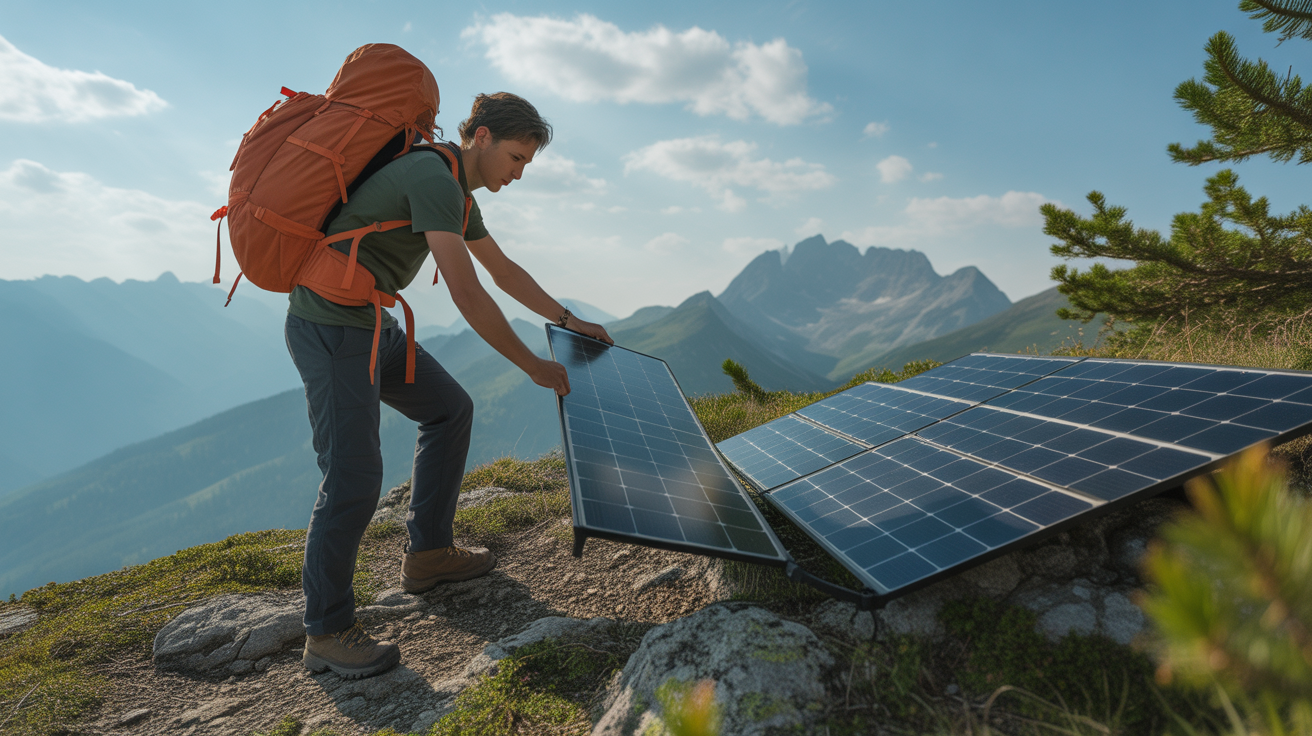
When you are planning a multi-day hike, keeping your phone and GPS watch charged becomes a genuine concern. You need navigation, you want to capture photos, and having a charged phone is a safety essential when you are miles from the nearest outlet. The best solar charger for hiking solves this problem by converting sunlight into usable power while you are on the trail.
But choosing the right solar panel means understanding tradeoffs. Larger panels charge faster but add weight and pack bulk. Smaller panels are lighter but take longer to fill your battery. This guide breaks down what you need to know about wattage, folded size, actual charge times, and which panels perform best for backpackers who need reliable power without carrying extra pounds.
What to Look For
Panel Wattage and What It Actually Means for Charge Speed
Wattage determines how quickly a solar panel can charge your devices in ideal sunlight. A 25W panel can fully charge most smartphones in 2-3 hours of direct sun, while a 40W panel cuts that time to 90 minutes or less. GPS watches with smaller batteries charge even faster. Higher wattage matters most when you have limited daylight hours or partly cloudy conditions. When comparing options, look for panels that specify their wattage output to understand real-world performance expectations. Panel efficiency varies between manufacturers, so testing in your own conditions helps verify whether advertised speeds match actual results on the trail.
Weight and Packed Size for Backpacking
Every ounce matters when you are carrying your shelter, food, water, and gear on your back for multiple days. Solar panels designed for hiking typically weigh between 0.8 and 2 pounds. Panels under 1.5 pounds work well for solo hikers who need to charge a phone and watch. Heavier 2+ pound panels make sense if you are charging multiple devices or traveling with a partner who shares the load. Folded dimensions determine how easily the panel fits in or straps to your pack. Most foldable panels collapse to roughly the size of a tablet or small notebook. Panels that fold into three or four sections pack tighter than two-panel designs. Check the folded dimensions against your pack capacity. Panels that attach to the outside of your pack with carabiners let you charge while you hike, though this works best on exposed ridges or open terrain where your pack faces the sun consistently.
USB Port Options and Device Compatibility
Modern solar panels include USB-A and USB-C ports to charge phones, watches, battery banks, and other devices. USB-A ports work with older cables and most devices, but USB-C delivers faster charging speeds if your phone or watch supports it. Dual-port panels let you charge two devices simultaneously, splitting the total wattage between both ports. If you carry a phone and a GPS watch, dual ports mean both charge during your lunch break instead of taking turns. Some panels include chipsets that detect your device type, though these features vary by manufacturer. Check that your panel supports fast charging protocols like Quick Charge or Power Delivery if your devices are compatible, as these protocols can significantly reduce charge time compared to standard 5V USB charging.
Durability and Weather Resistance
Solar panels take real abuse on the trail. They get strapped to packs, laid on rocks, exposed to dust, and occasionally caught in rain. Look for panels with reinforced fabric backing and durable stitching around the fold points to prevent tearing when you strap the panel to your pack or stuff it into a side pocket. Corner grommets or carabiner loops provide secure attachment points. Panels with built-in kickstands let you angle them toward the sun when you stop for breaks, maximizing charge efficiency without needing to prop them against rocks or lean them on your pack. Some manufacturers design panels with weather-resistant materials, though the level of protection varies. Check product specifications and user reviews to understand how each panel performs in wet or dusty conditions before committing to a purchase.
Charging Strategy for Multi-Day Trips
Solar charging works best when integrated into your daily routine rather than treated as an emergency backup. Deploy your panel during lunch breaks, water stops, and any time you rest in direct sunlight for 20 minutes or more. Even short charging sessions add up over a multi-day trip. Charge your devices from 20 percent to 80 percent rather than trying to reach 100 percent. The final 20 percent takes disproportionately longer and uses sunlight less efficiently. If you are carrying a power bank, charge the bank during the day while hiking, then use it to top off your phone and watch at camp after dark. This approach maximizes your panel use during prime sunlight hours. Position your panel perpendicular to the sun for maximum efficiency. A panel laid flat on the ground or angled wrong can lose 30-40 percent of its potential output. Take 30 seconds to adjust the angle every hour as the sun moves.
Real-World Performance Expectations
Manufacturer specs reflect ideal laboratory conditions with perfect sun angle and no cloud cover. Real trail conditions rarely match this. Expect your panel to deliver 60-75 percent of its rated wattage in typical sunny weather. Partly cloudy days drop output to 30-50 percent. Dense forest cover provides almost no charging capability because solar panels need direct sun, not filtered light through a tree canopy. Plan your charging sessions around exposed sections of trail or open campsites. Morning and late afternoon sun angles reduce efficiency compared to midday sun directly overhead. A 30W panel might function more like a 20W panel in early morning light. Understanding these limitations helps you set realistic expectations and plan charging sessions when conditions favor success rather than frustration.
Our Top Picks
1. BigBlue 28W Solar Panel Charger with Dual USB-C and USB-A
Best for hikers who need reliable power for multiple devices with proven performance

The BigBlue 28W panel delivers dependable charging power in a package that balances weight, size, and output for multi-day hiking trips. With both USB-C and USB-A ports, this panel charges your phone and GPS watch simultaneously during lunch breaks or rest stops without making you choose which device gets priority. The 28W output provides enough power to fully charge most smartphones in 2-3 hours of direct sunlight and tops off GPS watches in under an hour.
This panel folds into a compact size that fits easily into the main compartment of most daypacks or straps to the outside with the included carabiners. The portable design makes it practical to deploy quickly when you stop for water or a snack, maximizing your charging opportunities throughout the day. The fabric backing and reinforced stitching hold up to being stuffed into pack pockets and pulled out repeatedly, which matters when you are using it multiple times per day.
The dual-port design means you can charge your phone while simultaneously topping off a backup battery bank, effectively doubling your power storage capacity over the course of a trip. This flexibility becomes valuable on longer trips where every charging session counts toward keeping your navigation and communication devices functional.
With nearly 10,000 customer reviews averaging 4.4 stars, this panel has proven itself across thousands of real hiking trips in varied conditions. Users consistently report reliable performance in sunny weather and appreciate the balance between charging speed and pack weight. The panel works best when angled toward the sun rather than laid flat, which takes a few seconds of adjustment but significantly improves output. For hikers who want reliable power without excessive weight or bulk, this panel hits the practical middle ground that works for most multi-day trips.
Pros
- Dual USB ports charge two devices simultaneously during breaks
- 28W output provides fast charging in direct sunlight for phones and GPS watches
- Compact folded size fits in pack or attaches externally with carabiners
- Nearly 10,000 reviews confirm consistent real-world performance
- Fabric backing and reinforced stitching withstand repeated pack stuffing
Cons
- Charge speed drops significantly in cloudy conditions or morning and evening light
- Requires direct sun exposure and performs poorly in forest shade
- No built-in kickstand requires propping against rocks or pack for optimal angle
View BigBlue 28W Solar Panel Charger with Dual USB-C and USB-A on Amazon →
2. Anker Solix PS30 Solar Panel, 30W Foldable Portable Solar Charger
Best for hikers who prioritize fast charging speed and want Anker brand reliability

The Anker Solix PS30 combines 30W output with the established reliability Anker has built across their portable power product line. The slightly higher wattage compared to 25-28W panels translates to measurably faster charge times in direct sun, cutting 15-20 minutes off a full phone charge compared to lower-wattage options. This time savings adds up over multi-day trips when you are maximizing every charging opportunity during breaks.
The foldable design collapses to a manageable size that fits inside or straps to the exterior of most backpacking packs. The panel charges two devices at once through separate ports, allowing you to power your phone while keeping your GPS watch topped off. This dual-device capability eliminates the need to prioritize one device over another during limited sunlight hours. The construction quality reflects Anker’s focus on portable charging solutions.
The panel includes carabiner attachment points for external mounting and folds securely without extra bulk. While this panel has fewer customer reviews than some competitors with 419 ratings, it maintains a solid 4.3-star average. Anker’s reputation in the portable power market provides additional confidence for hikers considering this newer model. The slightly higher price compared to similar wattage panels reflects the brand premium.
For hikers who value brand reliability and want 30W charging capacity, this panel provides a dependable option, though those seeking extensive user feedback may prefer models with thousands of verified reviews. The combination of output and compact design works well for multi-day trips where you need consistent device charging without excessive pack weight.
Pros
- 30W output delivers faster charging than lower-wattage panels in direct sun
- Charges two devices simultaneously through separate ports
- Foldable design with carabiner points for external pack attachment
- Anker brand reputation in portable power products
- Compact folded dimensions fit most backpacking packs
Cons
- Higher price point compared to similar wattage panels
- Limited customer feedback with 419 reviews compared to more established models
- Performance drops in cloudy weather like all solar panels
3. FlexSolar 40W Foldable Solar Panel Charger with USB-C and USB-A
Best for hikers who need maximum charging power and do not mind carrying extra weight

The FlexSolar 40W panel delivers the highest wattage in this roundup, providing noticeably faster charging speeds when you need to power up devices quickly during limited breaks. The 40W output can fully charge most smartphones in 90 minutes of direct sun and tops off GPS watches in 30-45 minutes. This speed advantage becomes valuable when you have short rest stops or want to maximize charging efficiency during your lunch break before moving back into tree cover.
The foldable design breaks down into a manageable package, though at 40W this panel will be slightly larger and heavier than 25-30W options. That tradeoff delivers real benefits in charging performance. Dual USB ports let you charge two devices simultaneously, splitting the 40W output between both. Even with power divided, each device receives substantial charging current equivalent to a 20W panel. This means you can fully charge both your phone and watch during a single extended break rather than choosing one or charging sequentially.
Users report the panel performs well in varied sunny conditions and appreciate the faster charge times compared to lower-wattage options they have used previously. The panel includes reinforced corners and carabiner loops for secure pack attachment. With over 1,200 customer reviews averaging 4.3 stars, this panel has demonstrated reliable performance across diverse hiking conditions and user needs.
The FlexSolar 40W works well for hikers who prioritize charging speed and plan to stop in sunny locations where they can take full advantage of the panel output. If you carry camera equipment, use your phone extensively for photos, or simply want the confidence that comes from faster charging, the extra weight trades favorably for the performance gain.
Pros
- 40W output delivers fastest charging speeds in this comparison
- Dual USB ports charge two devices simultaneously with substantial power to each
- Foldable design packs down despite higher wattage
- Over 1,200 reviews confirm consistent performance and reliability
- Reinforced corners and carabiner loops for secure pack attachment
Cons
- Larger and heavier than lower-wattage panels due to increased surface area
- Higher wattage advantage lost in cloudy conditions or poor sun angles
- Extra power may be unnecessary for hikers charging only phone and watch
View FlexSolar 40W Foldable Solar Panel Charger with USB-C and USB-A on Amazon →
4. BigBlue Portable 35W Solar Panel Charger with Fast Charging USB-A and PD 25W USB-C
Best for hikers who want high output with Power Delivery fast charging capability

The BigBlue 35W panel delivers substantial charging power with advanced fast charging protocols that reduce charge time for compatible devices. The 35W output sits between standard 28-30W panels and larger 40W options, providing faster charging than entry-level panels while remaining more compact than maximum-wattage models. This middle ground works well for hikers who want strong performance without committing to the largest, heaviest panel option.
The USB-C port supports 25W Power Delivery fast charging, which substantially reduces charge time for compatible phones and devices compared to standard 5V USB charging. If your phone supports PD fast charging, this feature alone can cut your charging session from 2 hours to under 90 minutes. The USB-A port provides compatibility with older devices and cables you might already carry. The folding design collapses to a compact package that fits inside most pack main compartments or straps externally.
The panel has earned 1,478 customer reviews averaging 4.4 stars, indicating strong user satisfaction with real-world performance. Users specifically mention the favorable balance between output and portability, and appreciate the fast charging capability when their devices support it. The panel includes carabiner loops for external pack mounting and durable construction that withstands trail conditions.
At nearly 90 dollars, this panel represents a premium investment compared to lower-wattage options. The price reflects the combination of 35W output and Power Delivery fast charging technology. For hikers who own PD-compatible devices and want to minimize charging time on multi-day trips, the faster charging speeds justify the higher cost. Those with older devices that cannot utilize fast charging may find better value in standard panels.
Pros
- 35W output provides faster charging than standard 25-28W panels
- 25W Power Delivery fast charging through USB-C reduces charge time substantially for compatible devices
- Compact folded size fits inside pack main compartment
- 1,478 reviews averaging 4.4 stars confirm reliable performance
- Dual ports charge two devices simultaneously
Cons
- Higher price point at 90 dollars compared to similar wattage options
- Power Delivery fast charging benefit only applies to compatible devices
- Standard charging speeds for devices without PD support
View BigBlue Portable 35W Solar Panel Charger with Fast Charging USB-A and PD 25W USB-C on Amazon →
5. FlexSolar 25W Ultra-Portable Solar Panel Charger with Quick Charge
Best budget option for hikers who want basic reliable charging without premium features

The FlexSolar 25W panel delivers essential charging capability at a budget-friendly price point that makes solar power accessible for hikers who cannot justify spending 70-90 dollars on a panel. At 35 dollars, this panel costs roughly half what higher-wattage options command while still providing adequate power to charge a phone and GPS watch during multi-day trips. The 25W output charges most smartphones in 2.5-3 hours of direct sun, which works well when you plan regular breaks in exposed sunny locations.
The ultra-portable design emphasizes light weight and compact folded size, making this panel easy to carry without feeling like you are adding significant bulk to your pack. Both USB-A and USB-C ports provide compatibility with modern and older devices. The panel includes attachment points for securing to pack exteriors during use.
This panel works best for hikers on shorter 2-3 day trips who need to top off devices occasionally rather than rely on solar as their primary power source. The lower wattage means longer charging times, so you need to plan your day around sunny breaks and realistic expectations about how much power you can capture. The panel performs adequately in good conditions but struggles more than higher-wattage options when sun angles are poor or clouds interrupt charging sessions.
With only 62 customer reviews, this panel has significantly less user feedback than other options in this guide. While the 4.5-star average suggests satisfaction among early buyers, the limited review count means less data to confirm long-term durability and performance across varied conditions. For hikers willing to accept this uncertainty in exchange for the budget price, the panel provides functional charging capability. Those who prefer extensive verified feedback before purchasing should consider models with hundreds or thousands of reviews, even if they cost more.
Pros
- Budget-friendly 35 dollar price makes solar charging accessible
- Ultra-portable lightweight design minimizes pack weight and bulk
- Dual USB ports provide flexibility for different devices and cables
- 4.5 star average rating among existing users
- Compact folded size for easy pack storage
Cons
- Very limited customer feedback with only 62 reviews creates uncertainty about long-term reliability
- Lower 25W output means slower charging times than 30-40W panels
- Best suited for shorter trips rather than extended backcountry travel
View FlexSolar 25W Ultra-Portable Solar Panel Charger with Quick Charge on Amazon →
How These Compare
Choosing the best solar charger for hiking depends on how you balance charging speed, weight, and budget across your specific trip needs. If you prioritize proven performance with strong customer feedback, the BigBlue 28W panel delivers reliable power backed by nearly 10,000 reviews and hits the practical middle ground for most hikers. Its 28W output charges devices at a reasonable pace without excessive weight, and the dual ports let you handle phone and GPS watch simultaneously. This panel works well for typical 3-5 day trips where you plan regular sunny breaks.
For hikers who want maximum charging speed and do not mind carrying a bit more weight, the FlexSolar 40W panel cuts charging time by 30-40 percent compared to lower-wattage options. This speed advantage becomes valuable when you have limited break time or want to maximize charging efficiency during short sunny windows. However, the performance advantage disappears in cloudy conditions, and the extra panel size and weight only make sense if you regularly use the added power.
If fast charging technology matters to you and your devices support Power Delivery, the BigBlue 35W panel combines substantial output with 25W PD fast charging through its USB-C port. This feature dramatically reduces charge time for compatible phones, though the 90 dollar price represents a premium investment. The panel excels for hikers with newer devices who want to minimize time spent charging during breaks.
The Anker Solix PS30 fills the gap between budget and premium with solid 30W performance and Anker brand reliability at a mid-range price. This panel makes sense for hikers who want slightly faster charging than 28W options provide and value the reputation Anker has built in portable power products, though it has fewer customer reviews than some alternatives.
For budget-conscious hikers or those new to solar charging, the FlexSolar 25W panel delivers functional charging capability at 35 dollars, costing half what premium options command. However, the very limited 62-review count means less verification of long-term performance. The lower wattage means slower charging and less efficiency in poor conditions, but it works adequately for shorter trips and occasional device top-offs. If you are unsure whether solar charging fits your hiking style, this panel lets you experiment without significant financial commitment, though the limited user feedback requires accepting more uncertainty. Consider your typical trip length, how dependent you are on devices for navigation and safety, and whether weight or charging speed matters more for your specific hiking needs when making your final decision.
Frequently Asked Questions
How long does it take to charge a phone with a solar panel while hiking?
A 25-30W solar panel typically charges most smartphones from empty to full in 2-3 hours of direct sunlight, while 40W panels cut that time to 90 minutes or less. However, these times assume ideal conditions with the panel positioned perpendicular to strong midday sun. Real trail conditions often deliver 60-75 percent of rated performance due to sun angle, clouds, and positioning limitations. GPS watches charge much faster due to smaller batteries, usually reaching full charge in 30-60 minutes. The most effective strategy is charging from 20 percent to 80 percent battery rather than trying to reach 100 percent, since the final 20 percent takes disproportionately longer. Plan your charging sessions during lunch breaks, water stops, and any rest period in direct sun lasting 20 minutes or more. Multiple short charging sessions throughout the day accumulate into substantial power gain over a multi-day trip. Morning and late afternoon sun provides less charging efficiency than midday sun directly overhead, so prioritize charging during peak sunlight hours between 10 AM and 2 PM when possible.
What wattage solar panel do I need for backpacking?
Most backpackers find that 25-35W solar panels provide the best balance of charging speed, weight, and packed size for multi-day hiking trips. Panels in this range fully charge a smartphone in 2-3 hours and handle a phone plus GPS watch simultaneously during breaks. If you only need to top off one phone and one watch, a 25W panel suffices for trips up to 5 days. Hikers who carry multiple devices, use their phone extensively for photos, or want faster charging should consider 30-40W panels despite the added weight. Panels below 20W charge too slowly for practical backpacking use, often taking 4-5 hours to charge a single phone and struggling in anything but perfect conditions. Panels above 40W add significant weight and bulk without proportional benefit unless you are charging larger devices like tablets or multiple phones. Your specific wattage needs depend on how many devices you carry, how extensively you use them, and whether you have flexibility to stop for extended charging sessions in sunny locations throughout the day.
Do solar chargers work in cloudy weather?
Solar chargers do work in cloudy weather but at significantly reduced capacity, typically delivering only 30-50 percent of their rated output compared to direct sunlight. Thin overcast that still allows shadows reduces output less than thick cloud cover. Dense clouds, rain, and heavy overcast can drop output to 10-20 percent or make charging impractically slow. This performance drop means a 30W panel might function like a 10W panel in cloudy conditions, extending charge times from 2 hours to 6 hours or more. Solar panels need direct sunlight, not just ambient daylight, to generate meaningful power. Morning and evening when the sun sits low on the horizon also reduces efficiency even in clear weather because the sun angle forces light to travel through more atmosphere. Plan your solar charging strategy around sunny weather windows and exposed trail sections where you can capture direct sun. Use cloudy days as opportunities to conserve device battery rather than relying on solar charging. If your trip forecast shows consecutive cloudy days, consider carrying a backup battery bank charged before your trip rather than depending solely on solar panels for power.
Can you charge a power bank with a solar panel while hiking?
Yes, charging a power bank with a solar panel while hiking is an effective strategy that maximizes your power storage capacity for multi-day trips. Deploy your solar panel during hiking breaks and charge your power bank instead of your phone directly. Then use the fully charged power bank to top off your phone and GPS watch at camp after dark when solar charging is not possible. This approach captures solar energy during prime daylight hours and stores it for later use. Most power banks charge at similar rates to phones, taking 2-4 hours to reach full capacity depending on the bank size and solar panel wattage. A 10,000mAh power bank provides roughly 2-3 full phone charges once filled, effectively multiplying your available power. The combination of a solar panel and power bank gives you flexibility to charge devices whenever needed rather than only when the sun shines. Choose a power bank with pass-through charging capability so you can charge the bank via solar while simultaneously charging your phone from the bank, maximizing efficiency during extended sunny breaks. This dual-charging setup works particularly well on trips lasting 4 days or longer where device power management becomes critical.
The Bottom Line
The best solar charger for hiking depends on how you balance charging speed against pack weight and where your typical trips take you. For most hikers tackling 3-5 day trips with standard phone and GPS watch charging needs, the BigBlue 28W panel delivers reliable performance backed by nearly 10,000 customer reviews at a reasonable 67 dollar price point. Its dual ports and compact folded size make it practical for regular use without adding excessive weight. If you prioritize fast charging technology and own devices that support Power Delivery, the BigBlue 35W panel packs impressive power with 25W PD capability, though you pay 90 dollars for that optimization. Hikers who want maximum charging speed and plan trips with reliable sun exposure should consider the FlexSolar 40W panel, which cuts charging times substantially but adds weight and bulk that only make sense if you regularly use the extra power. Budget-conscious hikers can start with the FlexSolar 25W panel at 35 dollars to experiment with solar power without significant investment, though the very limited 62-review count means accepting more uncertainty about long-term reliability compared to panels with extensive verified feedback. Whichever panel you choose, plan your charging sessions around exposed sunny trail sections, deploy the panel during every break lasting 20 minutes or more, and angle it perpendicular to the sun for maximum efficiency. Solar charging works best as an integrated daily routine rather than an emergency backup, with multiple short charging sessions accumulating into substantial power over multi-day trips.
Disclosure: As an Amazon Associate, we earn from qualifying purchases. This does not affect our editorial recommendations.