
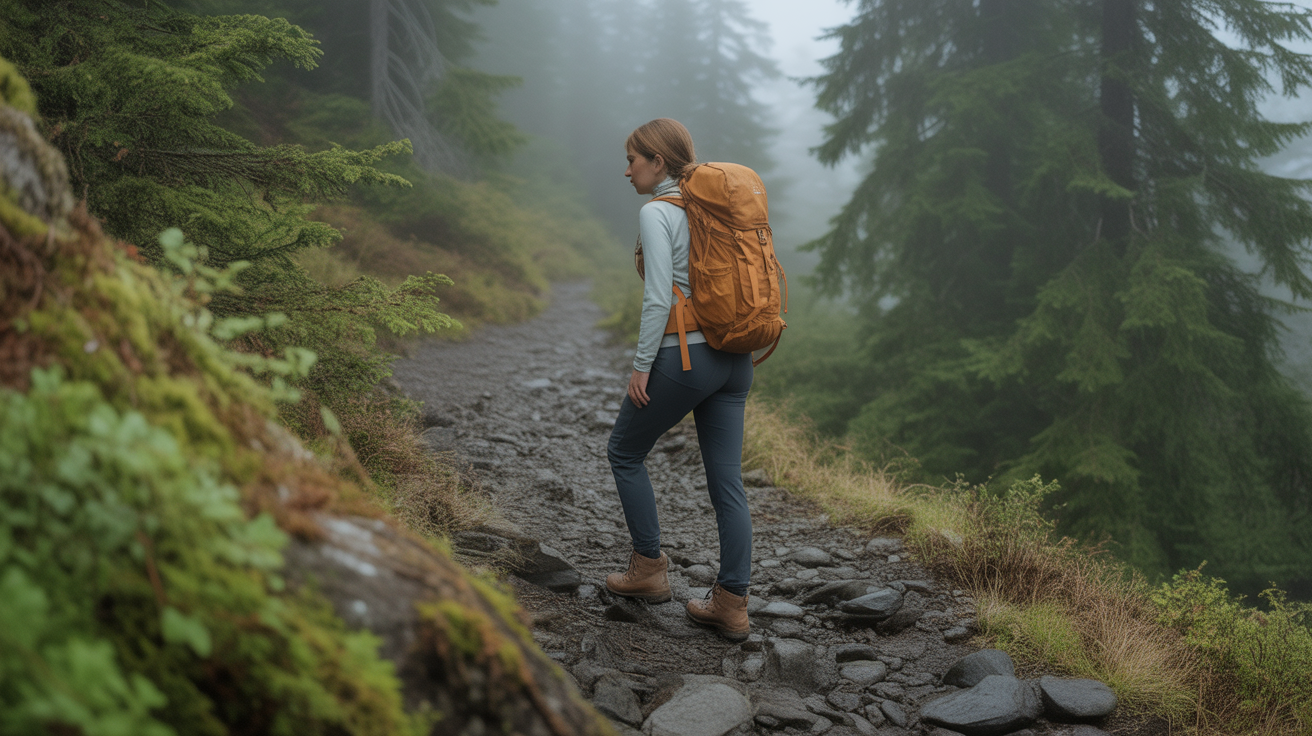
Finding the best hiking shoes for women is harder than it should be. The options range from heavy ankle boots to barely-there sneakers, and most of the advice online assumes you already know what you need. If you want something that handles packed dirt, rocky switchbacks, and the occasional muddy stretch without weighing down your feet or requiring a two-week break-in period, you are in exactly the right place.
This guide focuses on women-specific hiking shoes that work across mixed terrain – the kind of trails most of us actually hike on a weekend. We tested and evaluated each option based on real customer feedback, star ratings, and review volume. We also include honest terrain limitations, because a shoe that is perfect for a groomed forest path is not the same shoe you want on a loose-gravel descent. Here is what we found.
What to Look For
Low-Cut Shoe vs. Mid-Cut Boot: Which Do You Actually Need
Hiking shoes (low-cut, stopping below the ankle) are lighter, more flexible, and require little to no break-in time compared to traditional ankle boots. That makes them ideal for day hikes on well-maintained trails, mixed dirt-and-rock terrain, and anything under about eight miles with a light pack. If you are carrying a heavy load, crossing technical scrambling terrain, or hiking on consistently wet or unstable ground, a mid-cut or full boot provides more ankle support. For most weekend hikers tackling state park trails, rail-to-trail paths, and moderate mountain routes, a quality hiking shoe handles the job well.
Waterproofing: Worth It or Not
Waterproof membranes keep water out but also trap heat inside. On warm-weather dry trails, a waterproof shoe can leave your feet feeling warmer and less breathable than a non-waterproof version. On wet trails, stream crossings, dewy morning grass, or Pacific Northwest conditions, that waterproofing earns its place immediately. The honest answer is: if you hike mostly in dry conditions or hot weather, a non-waterproof shoe with good drainage is often more comfortable. If you hike in variable or rainy conditions, the waterproof version is worth the trade-off.
Fit Guidance for Women-Specific Shoes
Women-specific hiking shoes are engineered with a narrower heel, a lower-volume instep, and a shape that matches the biomechanics of a female foot. When trying on hiking shoes, wear the same thickness of socks you plan to hike in — a thin liner sock inside a thick cushioned hiking sock changes fit significantly. Your toes should have about a thumb-width of space at the front, and your heel should not lift when you walk. If a shoe runs narrow across the forefoot, many brands offer wide versions. Afternoon try-ons are best since feet swell slightly throughout the day.
Sole Grip and Terrain Limitations
Lug soles — the raised rubber pattern on the bottom of hiking shoes — provide traction on soft, uneven, or muddy terrain. Shallow lugs work on groomed gravel and packed dirt. Deeper, more aggressive lugs grip wet rocks and loose soil better. None of the shoes in this guide are designed for technical mountaineering, glaciers, or sustained scrambling above treeline. They are trail shoes built for real-world hiking: mixed surfaces, moderate elevation changes, and occasional water. If you plan to hike steep, exposed ridgelines or talus fields regularly, a stiffer boot sole is a better long-term match.
Break-In Time: What to Expect
One major advantage of hiking shoes over traditional leather hiking boots is that most require minimal break-in time. Many hikers report wearing certain models right out of the box for moderate hikes without discomfort. That said, every foot is different. It is always smart to wear a new pair for a few shorter walks before committing to a full-day hike. This lets any pressure points reveal themselves early and gives the midsole — the cushioning layer between the outsole and your foot — time to conform slightly to your stride.
When to Consider Aftermarket Insoles
The stock insoles included in most hiking shoes are functional but basic. If you have high arches, flat feet, or find your feet fatiguing quickly on longer hikes, swapping to quality aftermarket insoles can make a significant difference in all-day comfort. This is especially true if you are spending six or more hours on your feet. Upgrading the footbed is one of the most cost-effective ways to improve any shoe.
Our Top Picks
1. Merrell Women’s Moab 3 Mid Waterproof Hiking Boots
Best overall for mixed terrain and waterproof protection

The Merrell Moab 3 Mid Waterproof is one of the most consistently recommended options in the women-specific category, and the review count — over 3,400 ratings averaging 4.6 stars — backs that up with real-world confidence.
The mid-cut design means it sits above the ankle, offering more lateral support than a low-cut shoe without reaching the height of a traditional tall boot. This makes it a strong choice for hikers who want some stability on uneven terrain but still want something lighter and more flexible than a heavy leather boot. The waterproofing is a standout feature for anyone hiking in variable conditions, morning dew, creek crossings, or rainy weather.
Customer feedback consistently highlights the out-of-the-box comfort. Many reviewers report being able to wear these on moderate hikes from day one without significant break-in discomfort — which is a genuine advantage over stiffer alternatives. The fit runs true to size for most buyers, though some narrow-footed hikers note a slightly generous feel around the midfoot.
Terrain limitations to be honest about: this is a mid-cut trail boot built for packed and mixed dirt, rocky trails, and moderate elevation gain. It handles those conditions well. It is not designed for technical scrambling, sustained off-trail travel through loose talus, or multi-day backpacking under a heavy pack. For day hikes, weekend trails, and anything in that range, it is an excellent match.
Currently discounted from $150.00 to $79.98, it represents strong value for a brand with this level of trail credibility. Prime shipping is available, making it easy to try at home and return if the fit is off.
See current pricing for the Merrell Moab 3 Mid Waterproof on Amazon.
Pros
- 4.6-star rating across 3,400-plus real buyer reviews
- Waterproof construction suits variable and wet trail conditions
- Mid-cut ankle height adds stability without full boot weight
- Reported out-of-the-box comfort with minimal break-in needed
- Strong brand reputation and consistent quality feedback
Cons
- Mid-cut height may feel too tall for hikers who prefer a low-cut shoe
- Not designed for technical off-trail terrain or heavy pack loads
- Some narrow-footed hikers may find midfoot fit slightly loose
View Merrell Women’s Moab 3 Mid Waterproof Hiking Boots on Amazon →
2. Columbia Women’s Newton Ridge Plus Waterproof Amped
Best for high-volume trust and wet-weather trail hiking
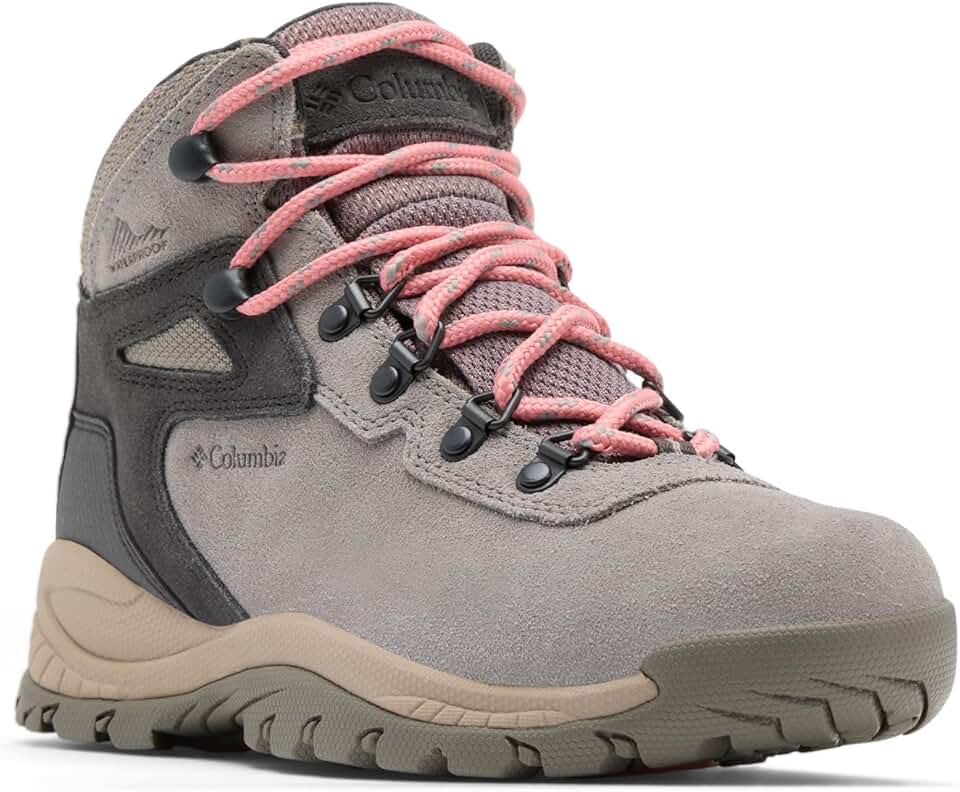
With over 7,400 reviews at a 4.6-star average, the Columbia Newton Ridge Plus Waterproof Amped is the highest-reviewed product in this guide by a significant margin. That volume of feedback across a wide range of hikers, terrains, and conditions gives this shoe a level of real-world validation that is hard to ignore when choosing the best hiking shoes for women.
Columbia built this shoe with waterproofing as a primary feature, making it a reliable choice for hikers who deal with wet trails, rain, stream crossings, or early morning hikes through damp vegetation. The construction is designed for trail use and delivers solid traction on the mixed surfaces most day hikers encounter.
Customer sentiment across reviews highlights comfort and value as consistent themes. Buyers frequently note that the shoe works well across a range of terrains without feeling overly stiff or heavy.
At $82.50 (down from $110.00), this shoe sits in a competitive price range for what it delivers. Prime shipping is included, which allows easy returns if sizing does not work out. Like most hiking shoes, it is advisable to try these with your actual hiking socks before a long outing to confirm fit.
Honest terrain note: this is a trail hiking shoe suited for day hikes on established trails with mixed surfaces. It performs well on packed dirt, gravel, and moderate rocky terrain. Extended backpacking trips or highly technical ascents are outside its intended use case.
Read verified buyer reviews for the Columbia Newton Ridge Plus Waterproof Amped on Amazon.
Pros
- 7,463 reviews at 4.6 stars — one of the most validated options in the category
- Waterproof construction for wet trails and variable weather conditions
- Strong value at $82.50 discounted from $110.00
- Wide range of positive customer feedback across conditions
- Prime shipping available for easy fit testing and returns
Cons
- Not designed for multi-day backpacking or technical terrain
- Waterproofing can reduce breathability in hot or dry conditions
View Columbia Women’s Newton Ridge Plus Waterproof Amped on Amazon →
3. Merrell Women’s Moab 3 Waterproof Hiking Shoe
Best low-cut waterproof option for serious day hikers

The Merrell Moab 3 Waterproof Hiking Shoe is the low-cut version of the Moab 3 line — sitting below the ankle for maximum mobility and a more athletic feel underfoot. With nearly 4,000 reviews at 4.5 stars, this shoe has substantial proof behind it from real hikers across varied conditions.
Choose this over the mid-cut version when you prioritize freedom of movement and do not need the additional ankle structure. Low-cut hiking shoes generally feel more natural to walk in from the first wear, and the Moab 3 is widely reported as comfortable out of the box.
The Moab line from Merrell has built its reputation over years of consistent trail performance. The outsole is designed for mixed terrain use on established trails — packed dirt, loose gravel, rocky surfaces — and the traction holds up well under typical day hiking conditions. This is a shoe that fits confidently into the best hiking shoes for women category without needing much qualification.
At $158.00, this is the full-price option in this guide. The price reflects the Merrell brand reputation and the Moab line-specific refinements. If the budget is a consideration, the non-waterproof Moab 3 Hiking Shoe in this guide offers the same core platform at a lower price point.
Terrain reality: this shoe is built for established trails and performs best on those surfaces. It is not a mountaineering shoe or a boot for sustained off-trail travel. For the day hiker who covers moderate to challenging trails regularly, it is a strong long-term investment.
Check current stock for the Merrell Moab 3 Waterproof Hiking Shoe on Amazon.
Pros
- Nearly 4,000 reviews at 4.5 stars confirms proven trail performance
- Low-cut design allows natural movement with minimal break-in
- Waterproof construction handles wet conditions across seasons
- Merrell Moab reputation for consistent quality across trail conditions
Cons
- $158.00 is the highest price in this guide — budget shoppers should look at alternatives
- Low-cut design offers less ankle support than mid-cut options on uneven terrain
- Not suitable for technical terrain or heavy multi-day pack loads
View Merrell Women’s Moab 3 Waterproof Hiking Shoe on Amazon →
4. Merrell Women’s Moab 3 Hiking Shoes
Best non-waterproof low-cut option for dry-season trail hiking

The Merrell Moab 3 Hiking Shoe is the non-waterproof counterpart to the waterproof version above, and it earns its own spot in this guide for a good reason: not every hiker needs waterproofing, and skipping the membrane in favor of a more breathable construction is a legitimate choice for hikers in drier climates or during summer months.
With 3,387 reviews at 4.6 stars, this shoe sits on essentially the same trust foundation as the rest of the Moab 3 family. Customer feedback reflects a shoe that performs reliably on mixed terrain trails, fits well, and requires minimal break-in time for most wearers. Those are the core qualities most day hikers are looking for.
The breathability advantage of a non-waterproof shoe is real: your feet run cooler and moisture from internal sweat dissipates faster. On warm, dry trail days, this is the more comfortable shoe. The trade-off is obvious — when you encounter wet surfaces, there is no membrane to keep water out.
At $79.99 (discounted from $119.95), this is one of the better values in the Merrell Moab 3 lineup. It is an excellent starting point for a hiker building their first serious gear kit who is hiking mostly in dry conditions.
Honest note on sock pairing: because this shoe is non-waterproof and relies more on airflow, pairing it with a moisture-wicking hiking sock makes a noticeable difference in all-day comfort. A thin liner under a cushioned outer sock is a popular combination among regular trail hikers.
Compare the Merrell Moab 3 Hiking Shoes specs and pricing on Amazon.
Pros
- 4.6 stars across 3,387 reviews — same trust level as the waterproof version
- Breathable construction is cooler and more comfortable in warm, dry conditions
- Discounted to $79.99 from $119.95 for strong value
- Minimal break-in time reported consistently by reviewers
- Suits a wide range of mixed terrain day hikes
Cons
- No waterproofing — exposed to wet trail conditions and water crossings
- Not ideal for hikers in consistently wet or rainy environments
5. Columbia Women’s Crestwood Waterproof Hiking Shoes
Best waterproof budget pick for newer trail hikers
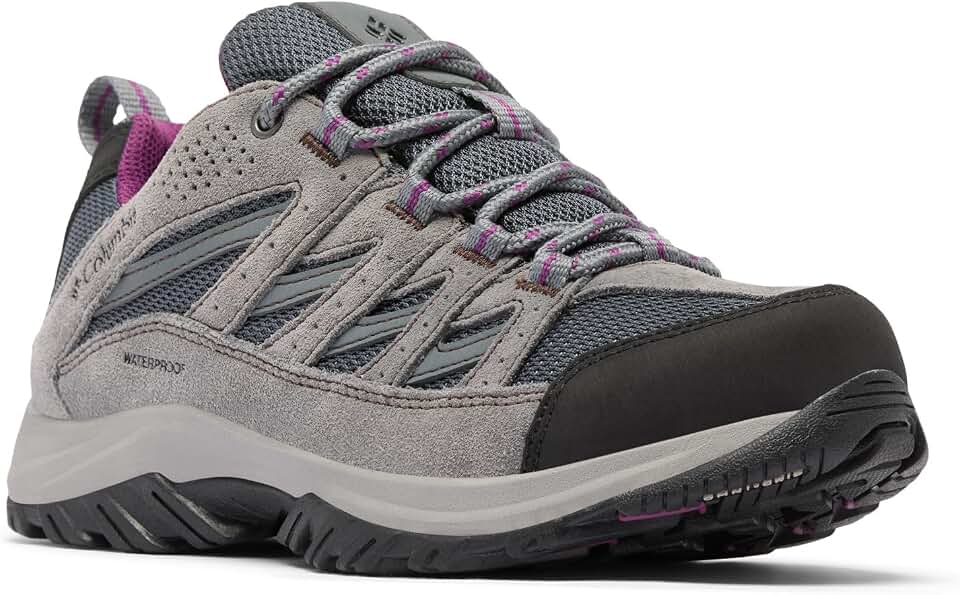
The Columbia Crestwood Waterproof Hiking Shoe fills an important spot in this guide: a lower-cut waterproof trail shoe from an established outdoor brand that does not break the bank. At $79.99 (down from $90.00), it sits in the same price range as the top Merrell picks while offering Columbia’s waterproof technology in a low-cut design.
With 1,111 reviews at 4.4 stars, this shoe has enough real-world feedback to validate its position. Customer reviews highlight the waterproofing as effective for moderate trail conditions and the overall fit as comfortable for day hikes. The low-cut design keeps the shoe light and flexible underfoot.
This is a solid choice for hikers who want the protection of waterproofing but prefer a lower ankle profile. It works well on established trails with mixed surfaces — packed dirt, loose rock, damp roots — the kind of terrain most weekend hikers encounter at state parks, forest trails, and nature reserves.
Honest terrain limitation: this is a trail hiking shoe in the entry-to-mid range of the market. It performs well in its design zone. If you are hiking long distances regularly or carrying a substantial pack, the higher-tier Merrell options in this guide offer a more refined trail feel. For casual to moderate day hikers who want reliable waterproofing at an accessible price, this Columbia delivers where it counts.
Prime shipping is available, making it easy to order in your correct size and test at home before your first real outing.
See if the Columbia Crestwood Waterproof is right for your first hike on Amazon.
Pros
- Waterproof construction at an accessible $79.99 price point
- Low-cut design is light and flexible for day hiking
- 1,111 reviews at 4.4 stars shows consistent buyer satisfaction
- Strong value for newer hikers building their first gear kit
- Prime shipping available for easy sizing and returns
Cons
- 4.4-star average is slightly lower than the top-ranked options in this guide
- Not designed for demanding terrain or heavy pack hiking
- Newer hikers may outgrow this shoe as trail ambitions increase
View Columbia Women’s Crestwood Waterproof Hiking Shoes on Amazon →
How These Compare
Choosing between these five shoes comes down to three questions: how much ankle support do you want, do you need waterproofing, and what is your budget?
If you want a single best-all-around pick backed by the most reviews and a trusted name, the Merrell Moab 3 Mid Waterproof (rank 1) is the default recommendation. The mid-cut design adds ankle stability, the waterproofing handles variable conditions, and the 3,400-plus reviews at 4.6 stars represent real hiker feedback across a wide range of trails. It is also the most discounted option by dollar amount — down from $150.00 to $79.98.
If you want the highest-reviewed shoe in this entire guide with the most real-world validation, the Columbia Newton Ridge Plus Waterproof Amped (rank 2) stands alone at 7,463 reviews. That is more than double any other option here. For hikers who find comfort in choosing what the most people have vetted, this is the answer.
If you prefer a low-cut shoe and are willing to pay for a waterproof option from Merrell, the Moab 3 Waterproof Hiking Shoe (rank 3) at $158.00 is the top-shelf pick in the low-cut category. Nearly 4,000 reviews and 4.5 stars position it as the best hiking shoes for women who want low-profile mobility with reliable waterproofing.
If you hike mostly in dry conditions and want to save money while staying with the Merrell Moab 3 platform, the non-waterproof Moab 3 Hiking Shoes (rank 4) at $79.99 offer the same core trail shoe experience with better breathability. This is the smart pick for warm-weather or dry-climate hikers.
If you are newer to hiking and want a budget-friendly waterproof shoe without committing to a premium price, the Columbia Crestwood Waterproof (rank 5) at $79.99 delivers solid trail performance with a recognizable brand behind it and over 1,100 reviews to lean on.
For terrain limitations across all five options: these are trail shoes designed for established paths, mixed surfaces, and day hiking conditions. None of them are built for technical mountaineering or sustained scrambling terrain. Match the shoe to the trail you are actually hiking, not the most extreme trail you might someday attempt.
Frequently Asked Questions
Do hiking shoes need to be broken in before a long hike?
Most modern hiking shoes — particularly low-cut designs with softer midsoles — require significantly less break-in time than traditional leather hiking boots. Many hikers report wearing shoes like the Merrell Moab 3 on moderate hikes from day one without major discomfort. That said, every foot is shaped differently. Before any long hike, it is worth wearing your new shoes for a few shorter walks — around the neighborhood, on easy trails, or even around the house for extended periods — to identify any pressure points or friction areas before they become blisters on the trail. Wearing the same hiking socks you plan to use on the actual hike during these test walks gives you the most accurate fit picture. If you notice any rubbing early, give the shoe more wear time or explore aftermarket insoles before committing to a full-day outing.
Should hiking shoes for women be waterproof?
Waterproofing is worth it in some situations and unnecessary in others. If you hike in a region with frequent rain, early morning dew, stream crossings, or wet trail conditions for much of the year, a waterproof membrane keeps your feet dry and comfortable on those outings. If you hike primarily in dry, warm conditions, a non-waterproof shoe offers better breathability — your feet stay cooler and sweat dissipates faster through the upper material. Waterproof shoes do add a small amount of stiffness and reduce airflow, which can feel warm on hot-weather hikes. The honest answer is: think about the typical conditions where you actually hike most of the time, not the worst-case scenario. Choosing based on your real usage patterns will serve you better than always defaulting to maximum protection. According to the National Park Service, matching your footwear to the specific terrain and conditions of your planned hike is one of the most important preparation steps.
What socks should I wear with hiking shoes?
Sock choice has a bigger impact on hiking comfort than most people expect. A thin liner sock worn underneath a thicker cushioned hiking sock is a popular combination that reduces friction and provides additional moisture management. Look for socks made from moisture-wicking synthetic fibers or merino wool — both pull sweat away from your foot and dry faster than cotton. Cotton socks stay wet and create the friction conditions that lead to blisters, which is why you will hear experienced hikers say to avoid cotton on the trail. Sock thickness also affects shoe fit: always try hiking shoes while wearing the socks you intend to hike in, because a thick cushioned sock can change the effective volume of the shoe significantly. If a shoe fits well with thin socks but feels tight with your regular hiking socks, size up half a size. You can find reviews of top-rated options in our guide to hiking compression socks if you want more detail on what works for longer days on trail.
Can I use hiking shoes on rocky terrain?
Yes, with some honest context about what rocky terrain means. The shoes in this guide handle the rocky terrain most day hikers actually encounter: rocky switchbacks on marked trails, gravel paths, mixed surfaces with embedded stone, and the occasional scramble over moderate boulders. The lugged rubber outsoles on shoes like the Merrell Moab 3 and Columbia Newton Ridge grip reasonably well on dry and moderately wet rock surfaces. What these shoes are not designed for is technical mountaineering — sustained scrambling on exposed ridgelines, loose talus fields, or glacier travel. If your hikes regularly involve that level of terrain, a stiffer-soled boot with more aggressive traction is the appropriate footwear. For the vast majority of recreational hikers sticking to established trail systems, a well-constructed hiking shoe handles rocky terrain without issue. According to REI’s hiking boot guide, the key is matching sole stiffness and lug depth to the specific demands of your most common trail surface.
The Bottom Line
The best hiking shoes for women are not the ones with the most features — they are the ones that match the trails you actually hike and the conditions you hike in most often. Here is how to pick from this guide based on your situation.
If you want one trusted shoe that handles mixed terrain with waterproofing and solid ankle support, start with the Merrell Moab 3 Mid Waterproof. It is the most balanced option in the group and the most heavily discounted from its original price.
If you trust large review counts and want the most validated shoe in the category, the Columbia Newton Ridge Plus Waterproof Amped has over 7,400 reviews backing it up — that is hard to argue with.
If you run warm, hike in dry conditions, or simply prefer a breathable shoe over a waterproof one, the non-waterproof Merrell Moab 3 Hiking Shoe gives you the same trusted platform with better airflow at a lower price.
If you are newer to hiking and want solid waterproofing without a high price tag, the Columbia Crestwood Waterproof is a smart starting point.
Whatever shoe you choose, pair it with proper hiking socks and give yourself at least one or two short test walks before a long trail day. Your feet will thank you.
Disclosure: As an Amazon Associate, we earn from qualifying purchases. This does not affect our editorial recommendations.