
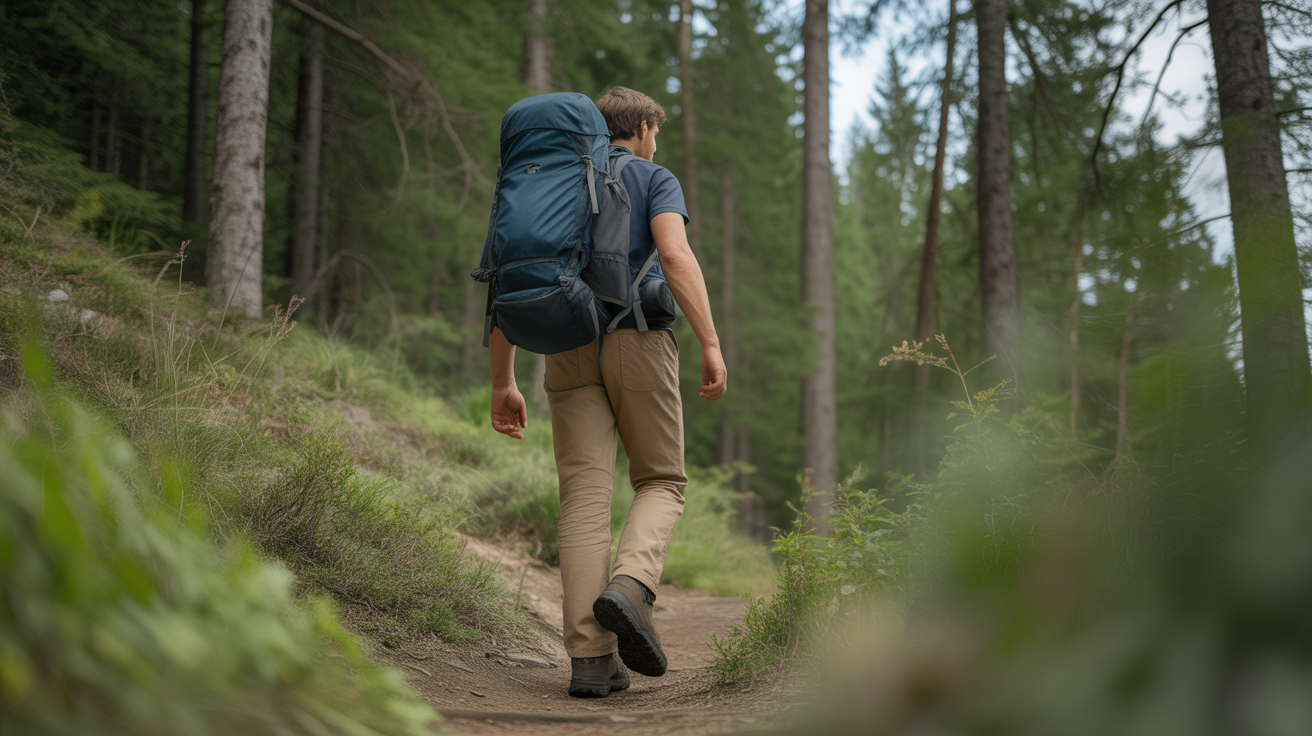
If you have spent hours browsing boot options only to find that standard sizing leaves your feet cramped and aching halfway through a hike, you are not alone. Wide feet deserve boots built for them – not boots that promise they will stretch or require insoles to make them bearable. The right fit is not negotiable on the trail, where blisters and pressure points can turn an enjoyable outing into a miserable march back to the trailhead (the parking area where a hiking trail begins).
This guide focuses on hiking boots designed or proven to accommodate wide feet without sacrificing stability, protection, or durability. You will find options across different price points and styles, all selected from products with substantial customer feedback that specifically address fit for wider feet. No guesswork, no compromises – just boots that work.
What to Look For
Understanding Width Sizing and What It Means
Most hiking boots come in standard D width for men and B width for women. If you have wide feet, you will want to look for boots marked as Wide (2E for men, D for women) or Extra Wide (4E for men, 2E for women). However, width designations are not universal across brands. Some manufacturers build their standard models with a more generous toe box and midfoot, making them suitable for wider feet even without a specific wide designation.
When evaluating boots, pay attention to customer reviews that mention fit. Look for feedback from other wide-footed hikers who describe whether the boot runs true to size, narrow, or accommodating. Review volume matters here – a boot with thousands of ratings gives you a clearer picture of how it fits across different foot shapes than a newer model with limited feedback.
Toe Box Room and Pressure Points
The toe box is where many wide-footed hikers experience problems first. You need enough room for your toes to spread naturally, especially on downhill sections when your foot slides forward slightly. A cramped toe box can cause discomfort that builds over miles and affect your toenails.
Look for boots described as having a roomy or spacious toe box. Some brands are known for generous cuts in this area – even in their standard width models. The trade-off is that an overly wide toe box can reduce precision on technical terrain, but for most day hikes and moderate trails, comfort wins. Test this at home by standing on an incline (like a staircase) in the laced boot. Your toes should not hit the front.
Material Flexibility and Break-In Period
Wide feet often experience more friction during the break-in period (the initial wearing phase when boots adapt to your foot shape) because standard-width boots apply pressure across a broader surface area as they mold to your foot. Boots with more flexible uppers or synthetic materials tend to break in faster than full leather models, which can be an advantage if you need a boot ready for the trail quickly.
That said, some hikers with wide feet prefer the eventual custom fit of a broken-in leather boot. The key is managing expectations. Plan for several short walks before committing to a long hike. Wear the socks you will actually use on the trail during this initial period. If you experience hot spots (areas where friction creates warmth and irritation before blisters form) or pressure points that do not improve after three or four wears, the boot is not the right shape for your foot – width designation aside.
Sock Pairing and Thickness Considerations
Sock thickness affects fit more than many hikers realize, and this is especially true for wide feet. A thick wool sock in a boot that is already snug will create pressure points. A thin liner sock in a boot with extra room will allow your foot to slide around, causing friction.
Most hiking boots are designed to be worn with a medium-weight hiking sock (not a thin running sock, not a heavy winter sock). When trying on boots, wear the socks you plan to hike in. If you prefer thicker cushioning, you may need to size up a half size even in a wide boot. If you run hot and prefer thinner socks, a standard size in a wide width may give you the room you need without excess volume.
Ankle Support and Wide Foot Compatibility
Ankle height is a separate consideration from width, but they intersect in important ways. Mid and high-cut boots provide more coverage around your ankle, which is valuable on uneven terrain and when carrying a loaded pack. However, the higher the boot, the more contact points it has with your foot and lower leg – which means more opportunities for pressure and rubbing if the fit is not right.
If you have wide feet and thick ankles or calves, pay attention to reviews mentioning the boot opening and whether it accommodates different leg shapes. Some boots with a perfect toe box and midfoot fit will gap awkwardly at the ankle or feel tight at the top of the cuff. This is not always a deal-breaker – you can adjust lacing tension – but it is worth noting before you commit.
Our Top Picks
1. Merrell Men’s Moab 3 Mid Waterproof Hiking Boots
Best overall for wide feet seeking proven comfort and durability

The Moab series has built a reputation over years as one of the most accommodating boots for wider feet, and the Moab 3 continues that legacy with refinements that make it even more comfortable out of the box. The toe box is notably spacious without feeling sloppy, and the midfoot does not constrict even after you snug down the laces for stability. Thousands of customer reviews specifically mention the generous width, with many hikers noting they do not need to order the official wide size to get a comfortable fit.
This is a mid-height boot, which gives you ankle coverage and protection from stream crossings and wet morning grass without the bulk of a full-height boot. Most hikers report comfort within a few short walks, making this a good choice if you want to start hiking soon rather than spending weeks breaking in stiff leather. The rating of 4.5 stars across nearly 5,000 reviews speaks to consistent quality and fit across a wide range of foot shapes.
The trade-off for this level of comfort is durability. Some long-term users report that the Moab 3 shows wear faster than burlier boots, particularly in the toe cap and along high-flex points. If you are hiking once or twice a month on moderate trails, this boot will serve you well for a couple of seasons. If you are logging serious miles in rough terrain weekly, you may find yourself replacing them sooner than you would with a more heavy-duty option. For most hikers with wide feet, the immediate comfort and reliable fit make this trade-off worthwhile.
See current pricing for the Merrell Men’s Moab 3 Mid Waterproof Hiking Boots on Amazon.
Pros
- Spacious toe box and wide-foot-friendly fit in standard sizing
- Minimal break-in period with comfort from the first wear
- Waterproof protection for wet conditions
- Nearly 5,000 customer reviews provide extensive fit feedback
Cons
- Durability concerns with heavy or frequent use
- Not as supportive as heavier leather boots for technical terrain
View Merrell Men’s Moab 3 Mid Waterproof Hiking Boots on Amazon →
2. KEEN Men’s Targhee 2 Mid Height Waterproof Hiking Boots
Best for hikers who need a roomy toe box and prefer a broken-in feel immediately

KEEN builds their boots with a distinctly wide toe box, and the Targhee 2 is one of the most accommodating options for hikers who have struggled with narrow or tapered boots in the past. The front of the boot allows your toes to splay naturally, which reduces pressure on long descents and prevents the discomfort that comes from cramped fits. The trade-off is less precision on technical terrain – your foot has more room to move inside the boot – but for day hikes and moderate trails, this extra space translates to all-day comfort.
The Targhee 2 has been around long enough to accumulate over 13,000 customer reviews, and the feedback is overwhelmingly consistent on fit. Wide-footed hikers regularly mention ordering their standard size and finding the fit perfect without needing the official wide version. The mid-height cuff provides ankle coverage without restricting movement, and the construction requires almost no time to adapt to your feet.
The 4.2-star rating reflects some variability in long-term performance. A number of users report that the Targhee 2 holds up well for a season or two of regular use, but others note construction issues with heavy wear. This is not a boot for serious backpackers carrying heavy loads over rough terrain day after day. It is a solid choice for weekend hikers who want comfort and a wide fit without dealing with a lengthy break-in process or spending beyond their budget.
Read verified buyer reviews for the KEEN Men’s Targhee 2 Mid Height Waterproof Hiking Boots on Amazon.
Pros
- Exceptionally roomy toe box that accommodates wide feet easily
- Over 13,000 reviews provide detailed fit and comfort feedback
- Waterproof protection for typical trail conditions
- Comfortable out of the box with minimal break-in
Cons
- Lower 4.2-star rating reflects some durability concerns
- Less precise fit on technical terrain due to roomier construction
View KEEN Men’s Targhee 2 Mid Height Waterproof Hiking Boots on Amazon →
3. Timberland Men’s White Ledge Mid Waterproof Hiking Boots
Best for wide-footed hikers who want durability and do not mind a break-in period
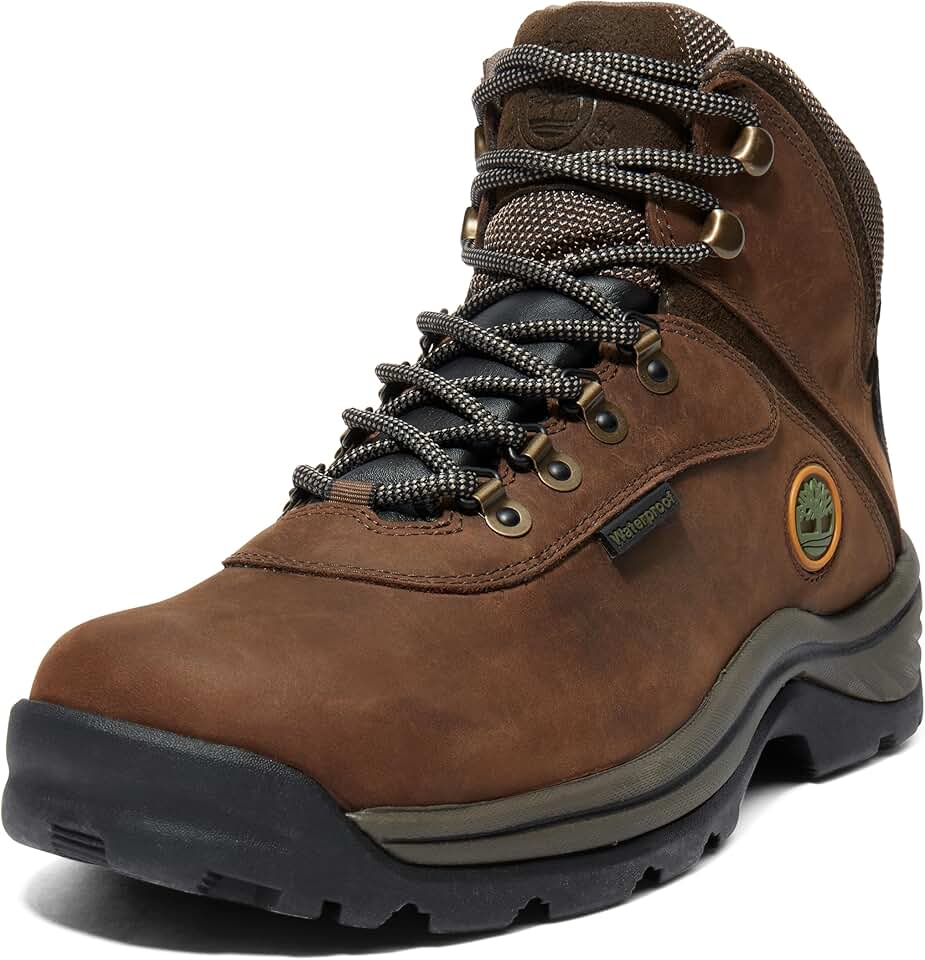
The White Ledge is one of the most reviewed hiking boots on the market, with over 67,000 customer ratings that make it easy to gauge how it performs across different foot shapes and hiking styles. For wide feet, the consensus is clear – this boot runs true to size with a comfortable width that does not pinch or constrict. Many reviewers specifically mention that they ordered their standard size and found the fit generous enough without needing a dedicated wide model.
This is a more traditional boot construction with a focus on durability. The materials are less forgiving than more flexible synthetic options, which means you will need to invest time in wearing them around your neighborhood before tackling full-day hikes. Plan for a few short walks and some easy trails first. Once adapted to your foot, the White Ledge provides solid coverage and stability, making it a good choice for hikers who want a boot that will last multiple seasons.
The trade-off for durability is weight and flexibility. This boot feels more substantial on your feet than lighter, more modern designs. If you are covering serious mileage or prefer a nimble, trail-runner-like feel, the White Ledge will feel clunky. But if you prioritize a boot that can take a beating and will not fall apart after a season of regular use, the White Ledge delivers. The extensive review base also means you can find detailed feedback on specific concerns – from blister-prone areas to how the boot holds up in snow and mud.
Check current stock for the Timberland Men’s White Ledge Mid Waterproof Hiking Boots on Amazon.
Pros
- Over 67,000 reviews provide exceptional fit and performance insights
- True to size width that accommodates wide feet in standard sizing
- Durable construction that holds up over multiple seasons
- Reliable waterproof protection and traction
Cons
- Requires a break-in period before full comfort
- Heavier and less flexible than lighter hiking boots
View Timberland Men’s White Ledge Mid Waterproof Hiking Boots on Amazon →
4. Skechers Men’s Relment-Pelmo Hiking Boots
Best budget option for casual hikers with wide feet

If you are looking for an affordable entry point into hiking boots and have wide feet, the Skechers Relment-Pelmo is worth considering. At under $85, it is one of the more budget-friendly options that still delivers a comfortable fit and adequate performance for casual day hikes and light trail use. The toe box is roomy, and many reviewers with wide feet mention that the boot does not feel restrictive even after hours of wear. The 21,000-plus reviews provide a solid sense of how the boot performs, and the 4.5-star rating indicates general satisfaction.
This is not a technical hiking boot. It is built more like a hybrid between a casual boot and a light hiker, which means it works well for easy trails, gravel paths, and situations where you want ankle coverage without the weight and stiffness of a full hiking boot. The design is adequate for light rain and damp conditions, but it is not intended for serious wet environments or extended periods in moisture. The outsole performs well on dirt and packed trails but may struggle on loose rock or steep grades.
The main limitation is durability. At this price point, you are not getting the same materials or construction as boots that cost $120 or more. Some users report that wear appears faster than expected, and the upper can develop issues after a season of regular use. If you hike once or twice a month on easy to moderate trails, the Relment-Pelmo will serve you well. If you are planning to log serious miles or tackle challenging terrain, you will want to invest in a more durable option.
Compare the Skechers Men’s Relment-Pelmo Hiking Boots specs and pricing on Amazon.
Pros
- Affordable price point under $85
- Roomy toe box that fits wide feet comfortably
- Over 21,000 reviews confirm consistent fit and performance
- Comfortable for casual day hikes and light trail use
Cons
- Not built for technical terrain or heavy use
- Durability concerns with frequent or rugged hiking
5. NORTIV 8 Men’s Ankle High Waterproof Hiking Boots
Best for wide-footed hikers on a tight budget who need waterproof protection
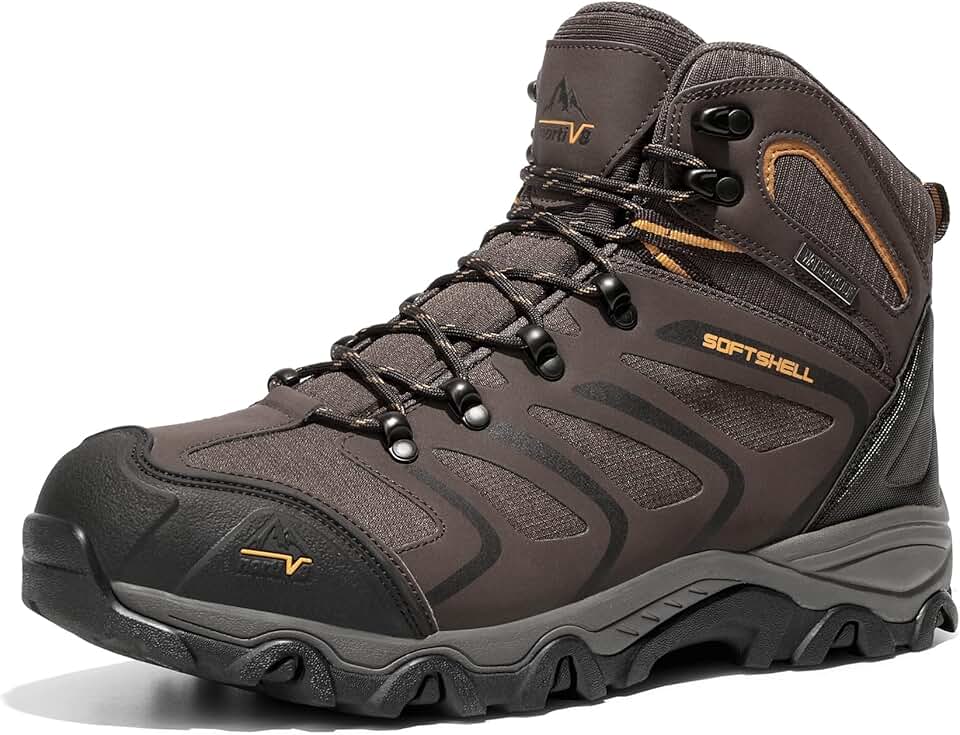
At just under $60, the NORTIV 8 is the most budget-friendly option on this list, and it delivers surprising value for hikers with wide feet who are just getting started or who hike infrequently. The boot is designed with a wider toe box and midfoot, and the 22,000-plus reviews include many mentions from wide-footed hikers who found the fit comfortable in their standard size. The ankle-high cut provides stability without the bulk of a mid or high boot, and the design accommodates wet grass, light rain, and shallow puddles.
This is a beginner-friendly boot in every sense. It is lightweight, easy to walk in, and requires almost no initial wearing-in period. For easy to moderate trails, neighborhood walks, and casual outdoor use, it performs well. The outsole handles dirt and gravel adequately, and many buyers mention comfort for a few hours of walking. The 4.4-star rating across a large review base suggests that most buyers are happy with what they get for the price.
The downside is that this boot is not built to last. At this price point, you are making a trade-off between immediate comfort and long-term performance. Some users report that wear appears quickly, the weather protection can diminish after a season, and the overall construction does not hold up to frequent or demanding use. If you are testing the waters with hiking and want to see if you enjoy it before investing in more expensive gear, the NORTIV 8 is a reasonable choice. If you already know you will be hiking regularly, spending more upfront on a more durable boot will save you money in the long run.
See if the NORTIV 8 Men’s Ankle High Waterproof Hiking Boots are right for your first hike on Amazon.
Pros
- Lowest price point at just under $60
- Over 22,000 reviews confirm fit for wide feet
- Waterproof protection for typical trail conditions
- Lightweight and comfortable with no break-in period
Cons
- Not built for long-term durability or heavy use
- Quality variability reflected in 4.4-star rating
View NORTIV 8 Men’s Ankle High Waterproof Hiking Boots on Amazon →
How These Compare
Choosing between these boots depends on your hiking frequency, budget, and how much durability you need. If you hike regularly and want a boot that will last multiple seasons without major compromises, the Merrell Moab 3 Mid is the best overall choice. It has the fit, comfort, and review base to back up its reputation, and while it is not the most rugged boot on the market, it strikes a balance that works for most hikers. The KEEN Targhee 2 is a close second, especially if you need an even roomier toe box – though the slightly lower rating reflects some durability trade-offs.
For hikers who prioritize durability over immediate comfort, the Timberland White Ledge is the standout. It requires time to adapt to your foot, but once molded, it holds up better than the other options under heavy use. The extensive review base also means you can research specific concerns before buying. If you are on a tight budget and hike casually, the Skechers Relment-Pelmo offers good value at $85, and the NORTIV 8 is a workable option if you need to stay under $60 – just know that you are trading long-term durability for upfront savings.
All five boots accommodate wide feet without requiring a dedicated wide size in most cases, but individual fit varies. If possible, order from a retailer with a good return policy and test the boots at home with the socks you plan to wear on the trail. Walk around your house, stand on an incline, and pay attention to any pressure points. A boot that feels tight in the store will not get better on mile five of a hike.
Frequently Asked Questions
Should I buy wide width hiking boots or regular width?
If you have consistently struggled with standard-width shoes feeling tight across the ball of your foot or pinching your toes, you will likely benefit from a boot marked as wide. However, some brands build their standard models with a more generous fit – particularly in the toe box – which can work well for wider feet without needing the official wide designation. The best approach is to check customer reviews for mentions of fit from other wide-footed hikers. If hundreds of reviewers say a boot runs wide or accommodates wider feet in standard sizing, that is a more reliable indicator than the manufacturer label alone. When in doubt, order both sizes if the retailer allows easy returns, and test them at home with your hiking socks.
How do I know if my hiking boots fit properly?
A properly fitting hiking boot should feel snug across the midfoot and heel without pinching, and you should have about a thumb width of space between your longest toe and the front of the boot when standing. Your toes should not hit the front when you walk downhill or stand on an incline. Lace the boots fully and walk around your house for at least 20 minutes – any pressure points or areas of discomfort that develop are signs the fit is wrong. Your heel should not lift significantly when you walk, and you should not feel any rubbing or constriction across the widest part of your foot. Remember that hiking boots are designed to be worn with medium-weight hiking socks, so always test fit with the socks you plan to wear on the trail.
Do hiking boots stretch over time?
Leather hiking boots will stretch and mold to your foot shape over time, especially across the width and in high-flex areas like the toe box. This is part of the break-in process, and it is why a leather boot that feels slightly snug at first can become very comfortable after a few wears. However, synthetic boots and boots with mostly fabric uppers do not stretch much. If a synthetic boot feels too tight in the store, it will likely stay too tight. Never buy a boot that is uncomfortably tight with the expectation that it will stretch enough to fit properly – you are setting yourself up for blisters and frustration. A slight snugness that eases after a few wears is normal, but significant tightness is a sign you need a different size or model.
Can I use insoles to make hiking boots fit better?
Insoles can improve comfort and support, but they are not a fix for a boot that is the wrong width. Adding an insole to a boot that is too narrow will make the fit even tighter, which creates more pressure points and increases blister risk. Insoles work best when the boot fits well to begin with, and you want to enhance arch support or cushioning. If you have wide feet, focus on finding a boot with the right width first, then consider an insole if you need additional support. Some hikers with flat feet or high arches benefit from custom or aftermarket insoles, but the base fit of the boot is always the priority.
How long should hiking boots last?
The lifespan of hiking boots depends on how often you hike, the terrain you cover, and the quality of the boot. A well-made boot used for casual day hikes once or twice a month can last three to five years. If you hike weekly or cover rough terrain with a loaded pack, you may need to replace your boots every one to two years. Signs that your boots are worn out include worn-down tread that no longer grips well, a sole that is separating from the upper, loss of waterproofing that cannot be restored with treatment, and uppers that are cracking or developing holes. Budget boots will typically wear out faster than higher-priced options because they use thinner materials and less durable construction.
The Bottom Line
Finding hiking boots for wide feet does not have to mean compromising on comfort or settling for boots that just barely fit. The options in this guide are all built or proven to accommodate wider feet, and each has a strong track record based on thousands of customer reviews. If you hike regularly and want a boot that balances comfort with durability, the Merrell Moab 3 Mid is the safest bet – it has the fit, features, and review volume to back up its reputation. For an even roomier toe box, the KEEN Targhee 2 delivers immediate comfort, though you may trade some longevity. If you prioritize durability and do not mind investing time to adapt the boot to your foot, the Timberland White Ledge will serve you well for years.
Budget-conscious hikers have solid options too. The Skechers Relment-Pelmo offers good value for casual hikers who do not need a boot built for serious mileage, and the NORTIV 8 is a workable starter boot if you are testing the waters with hiking and need to stay under $60. The key is matching the boot to your actual hiking habits – not what you hope to do someday, but what you will realistically use it for in the next year.
Before you buy, read through customer reviews from other wide-footed hikers, and if possible, order from a retailer that allows easy returns so you can test the fit at home. Wear your hiking socks, walk on an incline, and pay attention to any pressure points. A boot that feels tight in the first ten minutes will not magically get better on mile five. Take the time to find the right fit now, and your feet will thank you on every trail.
Disclosure: As an Amazon Associate, we earn from qualifying purchases. This does not affect our editorial recommendations.