
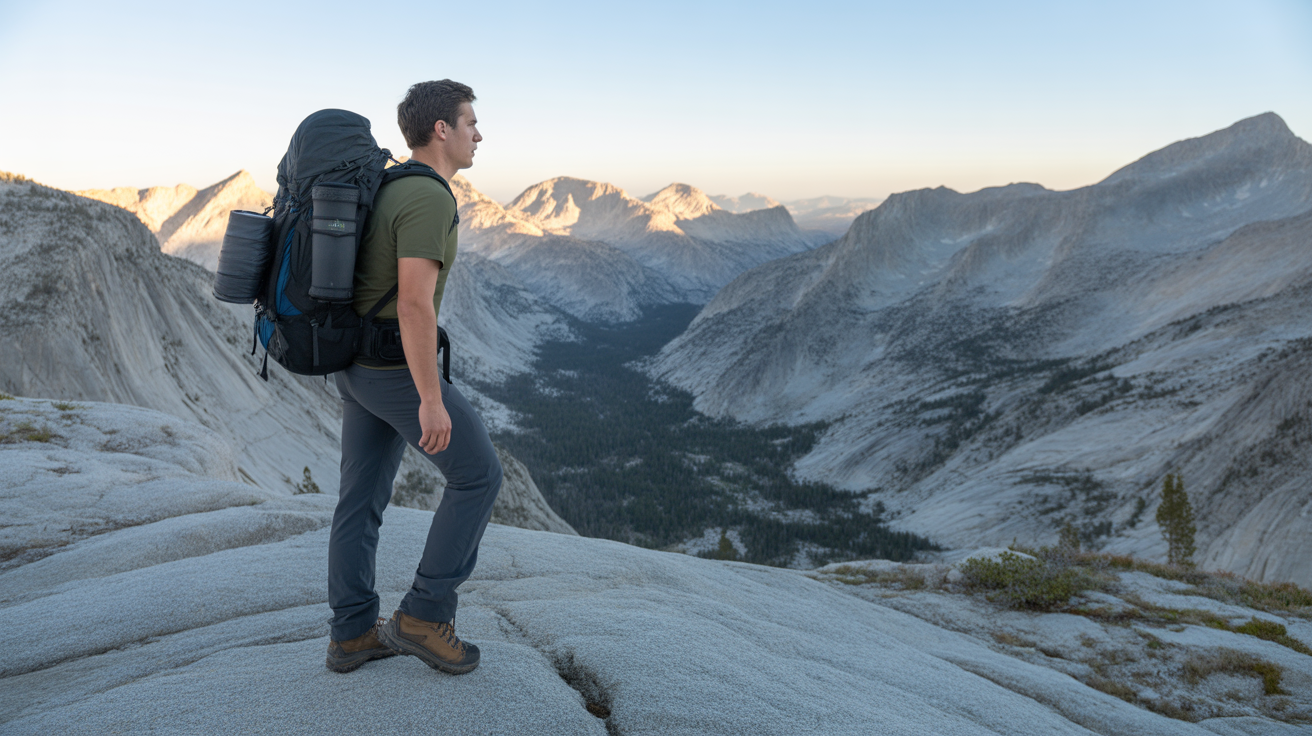
Finding the best ultralight backpack for backpacking is one of the most impactful decisions you can make when you are serious about reducing the total weight of your gear. Every ounce you shave from your pack is an ounce your legs do not carry over miles of trail — and when you are three days into a multi-day route, that difference becomes very real, very fast.
If you are new to ultralight backpacking, the terminology and gear culture can feel overwhelming at first. That is normal. This guide is written to walk you through what ultralight actually means in practical terms, explain the real durability tradeoffs of advanced fabrics like Dyneema (also called Cuben Fiber — a paper-thin, incredibly strong composite material used in high-end ultralight packs), and give you honest picks from real product data so you can choose with confidence rather than guesswork. You do not need to be an expert backpacker to benefit from a lighter pack — you just need to understand what you are trading and what you are gaining.
What to Look For
What Does Ultralight Actually Mean for a Backpacking Pack
The ultralight backpacking community generally defines an ultralight base weight — that is, the total weight of all your gear excluding consumables like food, water, and fuel — as under ten pounds. Your pack is the single heaviest item most backpackers carry, so choosing the best ultralight backpack for backpacking means prioritizing low pack weight without completely sacrificing structure and load management. A traditional backpacking pack might weigh four to six pounds empty. A well-designed ultralight pack targets one to two pounds, sometimes less. That difference of two to four pounds is felt acutely on long days, especially if you are new to backpacking and still building trail endurance.
Ultralight Materials Explained: Dyneema, UHMWPE, and Ripstop Nylon
The fabric your pack is made from is the biggest driver of both weight and cost. Dyneema Composite Fabric — sometimes labeled DCF or marketed under the older name Cuben Fiber — is the gold standard in ultralight materials. It is a laminate made by bonding ultra-high-molecular-weight polyethylene fibers (UHMWPE, which is an extremely strong type of plastic fiber) between thin film layers. The result is a fabric that is lighter than conventional nylon but has pull strength (called tensile strength) that rivals materials many times heavier. Some budget-friendly ultralight packs use UHMWPE woven fabrics rather than the laminate version, which offer similar strength at a slightly heavier weight. Standard ripstop nylon and polyester are heavier but more resistant to surface wear from rubbing and scraping, and they are significantly more affordable. Understanding what your pack shell is made from tells you a lot about how it will perform and where it might show wear first.
The Honest Durability Tradeoff You Need to Know
Ultralight fabrics are not indestructible, and if you are coming from a heavier traditional pack, this is important to understand up front. Dyneema laminates are highly resistant to tearing along the fiber lines, but they are more vulnerable to surface wear from abrasion — dragging your pack across granite or rough rock faces can cause the outer layer to peel or separate over time. They are also not as forgiving when punctured by sharp objects like trekking poles or sticks. Ripstop nylon packs will generally outlast a Dyneema pack under aggressive use conditions, but they cost you weight every mile. The honest answer is that ultralight gear rewards careful handling. If you are a through-hiker who leans packs against rocks and tosses them around camp, a slightly heavier but more durable fabric may actually serve you better long-term. According to REI’s backpack fitting guide, proper torso length and hip belt fit are also essential regardless of pack weight — a poorly fitted ultralight pack is still a painful one.
Capacity: How Many Liters Do You Actually Need
Pack capacity is measured in liters — think of it as the total internal volume available for your gear. For a two to four night backpacking trip with ultralight gear, most experienced backpackers find that 40 to 55 liters is the sweet spot. If you have dialed in a very light sleep system and cook kit, you might get away with 35 liters. For longer trips or trips requiring a bear canister for backpacking — a hard-sided container required in many wilderness areas — plan for at least 50 liters to accommodate the canister alongside your other gear. Going too small forces you to strap gear to the outside, which throws off your center of gravity and negates the performance benefits of an ultralight pack.
Torso Fit and Hip Belt: Do Not Sacrifice Comfort for Weight
Ultralight packs often strip back the suspension system (the internal structure that supports the load) to save weight. Some go frameless entirely, relying on your sleeping pad inserted into a back panel sleeve to provide shape and structure. Others use a minimal aluminum stay (a thin curved bar) or a thin framesheet (a flat piece of stiff plastic). The tradeoff is real: less structure means less load transfer to your hips, which means your shoulders carry more weight. For loads under 25 pounds, this is usually manageable. Above 30 pounds, you will likely want a pack with at least a functional hip belt and a minimal frame to shift load downward. Always match the pack to your actual carry weight, not just your aspirational base weight.
Hydration Compatibility and Pocket Organization
Most dedicated backpacking packs include a sleeve or internal pocket sized to hold a hydration reservoir — a flexible water bladder with a drinking tube that routes over your shoulder strap. This keeps water accessible without stopping to dig through your pack. If you prefer bottles over a bladder, look for deep side pockets sized to hold a standard water bottle without requiring you to remove the pack entirely. Organization features like a top lid pocket, hipbelt pockets, and a front mesh pocket add convenience but also add weight, so choose only the features you will genuinely use on trail.
Our Top Picks
1. Osprey Exos 58 Men’s Ultralight Backpacking Backpack Bluesign
Best overall ultralight backpack for multi-day backpacking trips

The Osprey Exos 58 is the most complete answer to the question of the best ultralight backpack for backpacking in this lineup. At 58 liters of capacity, it gives you enough room for three to five night trips without forcing you to play gear Tetris every morning at camp. The Bluesign certification on this pack means the materials were produced to high environmental and safety standards — a meaningful detail for backpackers who care about responsible manufacturing.
Osprey’s Exos line has a long reputation among serious backpackers for threading the needle between genuine weight reduction and a suspension system that actually functions under real load. The ExoForm hipbelt and harness on the 58 are designed to transfer weight to your hips without the bulk of a heavy-duty traditional suspension, which is exactly the engineering tradeoff you want in a pack targeting ultralight performance.
With 115 verified ratings averaging 4.6 stars, the community response is strong for a pack at this price and capacity. Reviewers consistently highlight the ventilated back panel — a mesh suspension design that creates an airspace between your back and the pack body, reducing sweat buildup on long days. The front mesh pocket is a standout feature for stashing a wet rain jacket or a layer you pulled off mid-climb without needing to open the main compartment.
The current price at $209.95 represents a meaningful discount from the $285.00 original price, making this an excellent moment to invest if this pack is on your radar. Stock is limited at seven units, so do not sit on the decision if it fits your criteria.
The honest limitation here is that this is a men’s specific fit, so women backpackers should look at the Eja line instead. The 58-liter capacity is also more volume than a true minimalist ultralight setup typically needs, but for backpackers who are cutting weight without going fully frameless or stoveless, it is an ideal match.
Pros
- 58-liter capacity handles three to five night trips comfortably
- Ventilated mesh back panel reduces heat and sweat buildup
- Bluesign certified materials for responsible manufacturing
- Strong 4.6-star average across 115 reviews
- Discounted significantly from original $285.00 price
Cons
- Men’s specific fit — not suitable for women backpackers
- 58 liters is more than minimalist ultralight setups typically require
- Limited stock — only 7 units available at time of writing
View Osprey Exos 58 Men’s Ultralight Backpacking Backpack Bluesign on Amazon →
2. Osprey Exos 48 Men’s Ultralight Backpacking Backpack Bluesign
Best ultralight backpack for backpacking trips of two to four nights with a leaner gear kit

The Osprey Exos 48 is the trimmer sibling of the Exos 58 and earns its place as the second-ranked pick for backpackers who have already done the work of dialing in a lighter gear kit. At 48 liters, this pack is better suited to a two to four night trip where your sleep system, shelter, and cook kit are genuinely lightweight — not just described as lightweight on the manufacturer website.
The 26 percent savings from the original $265.00 price down to $194.95 is a legitimate deal on a pack from one of the most trusted names in backpacking gear. The Bluesign certification carries over from the 58, meaning you are getting the same responsible materials standard at a lower price and lower capacity.
With 75 reviews at 4.6 stars, the Exos 48 mirrors the community sentiment of its larger counterpart. The suspension geometry is the same ExoForm design, which is one of the reasons the Exos line has been a go-to recommendation for backpackers looking for the best ultralight backpack for backpacking without going fully frameless. You get real load management without the weight penalty of a traditional backpacking suspension.
The primary limitation to flag here is the same as the 58: this is a men’s fit, and the 48-liter volume requires a reasonably lean gear kit to avoid packing discomfort. If you are still carrying a heavier shelter or sleeping bag, size up to the 58 or consider a different pack altogether.
Pros
- 48-liter capacity is ideal for a dialed-in two to four night kit
- 4.6-star average matches the larger Exos 58 in community rating
- Bluesign certified construction
- 26 percent discount from original retail price
- Same ExoForm suspension design as the Exos 58
Cons
- Men’s specific fit only
- Requires a genuinely light gear kit to use this volume comfortably
- Very limited stock — only 2 units available at time of writing
View Osprey Exos 48 Men’s Ultralight Backpacking Backpack Bluesign on Amazon →
3. Naturehike 65L Internal Frame Hiking Backpack, Ultralight Backpack for Adults
Best budget-accessible ultralight backpack for backpacking with high-volume capacity

The Naturehike 65L is the most accessible entry point in this roundup for backpackers who want genuinely large capacity without paying a premium brand price. At $99.99 — down from $119.99 — it sits at roughly half the price of the Osprey Exos options while delivering 65 liters of volume and an internal frame design. For backpackers who are still refining their gear kit and need room to carry a slightly heavier sleep system or extra layers, this is a practical and highly-rated option.
With 390 verified reviews at 4.6 stars, the Naturehike 65L has more community feedback than any other ultralight-marketed pack in this comparison. That depth of real-world data is meaningful. Backpackers are using this pack across a range of conditions and consistently returning positive results, which tells you something important about its durability relative to price.
The internal frame provides more load structure than frameless ultralight packs, which makes it a reasonable choice for backpackers carrying 25 to 40 pounds — perhaps not the base weight a seasoned ultralight hiker would target, but realistic for someone who is moving beyond a budget pack without yet having fully optimized every gear category.
The honest tradeoff is that at 65 liters and sub-$100 pricing, the materials are not in the same tier as Dyneema or the engineered fabrics Osprey uses in the Exos line. You are getting volume, structure, and a strong price-to-performance ratio — not the precision weight savings of a premium ultralight pack. For backpackers who want the best ultralight backpack for backpacking at a price that does not sting, this is a strong choice.
Pros
- 390 reviews at 4.6 stars — strongest community validation in this roundup
- 65-liter capacity accommodates larger gear kits
- Internal frame provides real load structure
- Priced under $100 with a discount from original retail
- Unisex sizing with multiple color options
Cons
- Materials are not at the same tier as premium ultralight fabrics
- 65 liters is more volume than most ultralight setups require
- Specific material composition not detailed in product listing
View Naturehike 65L Internal Frame Hiking Backpack on Amazon →
4. Deuter Unisex Aircontact Lite 50 + 10 L, Lightweight Backpacking and Hiking Backpack
Best ultralight backpack for backpacking with superior load transfer and unisex fit

The Deuter Aircontact Lite 50+10 is the pack in this lineup that takes the most balanced approach to the ultralight versus comfort debate. At 4.7 stars across 157 reviews, it has the highest rating of any full-capacity backpacking pack in this comparison, and the review depth supports genuine confidence in that number.
The 50+10 designation refers to 50 liters of primary volume with an additional 10-liter expandable top lid section, giving you flexibility to compress the pack for lighter loads or expand it for longer trips. This is a thoughtful design for backpackers whose trip length and kit weight vary across the season.
Deuter’s Aircontact suspension is specifically engineered to transfer load to the hips efficiently while maintaining back ventilation — a dual priority that is genuinely hard to achieve at low pack weight. The Aircontact Lite version is Deuter’s trimmed-down take on that system, removing weight without abandoning the core load-transfer geometry.
With minimum offer pricing at $176.34 across five offers, there is price competition on this listing that can save you meaningful money relative to the $225.00 listed price. That is worth checking at time of purchase.
The unisex fit is a genuine advantage here — this is one of the few packs in this comparison that does not require men or women to shop separate product lines, though women with a shorter torso may still prefer a women’s-specific cut. The one honest limitation is that only two units were in stock at time of writing, so check availability before committing.
Pros
- 4.7-star average across 157 reviews — highest rated full-capacity pack in this roundup
- 50+10 expandable capacity for flexible trip lengths
- Unisex fit works across body types
- Multiple seller offers with minimum pricing at $176.34
- Climate Pledge Friendly marked for environmental consideration
Cons
- At $225.00 listed price, it is the most expensive pick in the roundup
- Only 2 units in stock at time of writing
- Women with shorter torsos may prefer a women’s specific cut
5. Deuter Unisex Aircontact Lite 40 + 10 L, Lightweight Backpacking and Hiking Backpack
Best ultralight backpack for backpacking trips of two to three nights where pack volume is a priority consideration

The Deuter Aircontact Lite 40+10 rounds out this comparison as the slightly more compact, marginally more affordable sibling to the 50+10 reviewed above. At 40 liters primary volume with the same 10-liter expandable top, it targets the backpacker whose base kit is genuinely lean but who still wants the structural confidence of a pack designed for multi-day loads.
169 reviews at 4.5 stars gives this pack strong community validation — more reviews than any other Deuter option in this comparison, and a rating that places it firmly in the recommended tier. Real-world use across a significant number of backpackers supports the consistency of this pack’s performance.
The same Aircontact Lite suspension logic applies here: engineered for load transfer to the hips with a back panel designed to maintain airflow. The 40+10 configuration means you can carry this pack tightly packed at 40 liters for a weekend trip and expand it to accommodate 50 liters for a longer route without swapping packs.
At $215.00 with minimum offer pricing at $215.00 across one seller, there is no price competition here compared to the 50+10, so the price difference between the two Deuter options is relatively small. That makes the 50+10 a slightly stronger value in most cases unless the smaller base volume genuinely matches your typical load.
This pack is a strong recommendation for the best ultralight backpack for backpacking when the target is a two to three night trip with a sub-25 pound carry weight. The unisex fit and proven suspension make it accessible and trustworthy for a wide range of backpackers.
Pros
- 169 reviews at 4.5 stars — strong community validation
- 40+10 expandable design works across trip lengths
- Unisex fit
- Aircontact Lite suspension designed for efficient load transfer
- Compact base volume rewards a lean gear kit
Cons
- Price difference between this and the 50+10 Deuter is minimal, reducing the value case
- Only 1 unit in stock at time of writing
- Specific fabric weight not detailed in product listing
How These Compare
Choosing among these five packs comes down to three variables: your trip length, your target carry weight, and your budget. Here is how to match the right pack to your situation.
If you are a male backpacker targeting two to five night trips with a gear kit you have already started optimizing for weight, the Osprey Exos 58 ($209.95) and Exos 48 ($194.95) are your strongest options. The Exos 58 gives you breathing room for longer trips or heavier sleep systems, while the Exos 48 rewards a genuinely lean kit. Both share the same ExoForm suspension and ventilated back panel, and both carry the Bluesign certification that signals responsible material standards. The Exos 58 is the better choice for trip lengths beyond three nights; the Exos 48 is the better choice if you have already cut your base weight and know your volume needs.
If budget is a real constraint and you need volume for a kit that is still in transition, the Naturehike 65L ($99.99) is the practical answer. It has the largest review base of any pack in this comparison — 390 ratings at 4.6 stars — and the internal frame delivers real structure for backpackers who are not yet carrying a fully ultralight load. The materials are not in the same tier as premium ultralight fabrics, but the performance-to-price ratio is genuinely strong.
If you are a mixed-gender household or simply prefer a unisex fit that works across body types, the Deuter Aircontact Lite 50+10 ($225.00) and 40+10 ($215.00) are the picks to consider. The 50+10 earns the highest star rating in this roundup at 4.7 across 157 reviews, and the expandable design makes it adaptable across trip lengths. The 40+10 makes sense if your typical trip runs two to three nights and your gear kit is already on the lighter side. Note that both Deuter options have very limited stock at time of writing, so check availability before deciding.
In summary: Osprey Exos 58 for men prioritizing performance across varied trip lengths. Osprey Exos 48 for men with a lean kit. Naturehike 65L for budget-conscious backpackers who need volume. Deuter Aircontact Lite 50+10 for the highest-rated versatile option. Deuter Aircontact Lite 40+10 for a compact but structured unisex carry.
Frequently Asked Questions
What is the difference between ultralight and lightweight backpacking packs?
Lightweight and ultralight are points on a spectrum rather than fixed categories, but the backpacking community generally uses these terms with some consistency. A lightweight pack typically weighs between two and four pounds empty and is designed to reduce the weight penalty of a traditional pack while still including full suspension features like a rigid frame, a structured hip belt, and a load lifter system. An ultralight pack targets under two pounds empty — often significantly under — by using advanced materials, minimalist suspension systems, and stripped-back organization features. The best ultralight backpack for backpacking is not always the one with the lowest weight; it is the one that matches your actual carry weight, trip length, and body mechanics. A frameless ultralight pack under one pound is impressive, but if you are carrying 35 pounds, the lack of load transfer will punish your shoulders within hours. Match the pack to the load, not just the aspirational weight goal.
How do I know what size ultralight backpack I need for backpacking?
Pack size for backpacking is measured in liters of internal volume, and the right number depends on how long you will be out and how optimized your gear kit is. A two to three night trip with a well-dialed ultralight setup typically fits in 35 to 45 liters. A three to five night trip with a slightly heavier or less optimized kit usually needs 45 to 60 liters. Trips longer than five nights or trips requiring a hard-sided bear canister — which takes up significant volume on its own — often need 55 to 70 liters. The most common mistake new backpackers make is choosing a pack that is slightly too small and then forcing gear to hang off the outside, which shifts your center of gravity and creates real instability on technical terrain. When in doubt, size up by five to ten liters rather than down — you can always compress a bigger pack, but you cannot expand a smaller one. According to the National Park Service, packing smart and reducing weight is one of the best ways to improve your overall backcountry experience.
Is Dyneema worth it for a backpacking pack?
Dyneema Composite Fabric — sometimes called DCF or Cuben Fiber — is the lightest structural fabric widely used in backpacking packs. It offers exceptional pull strength (tensile strength) for its weight, meaning a Dyneema pack can carry meaningful loads without the weight penalty of nylon or polyester. For backpackers who treat their gear carefully and want to minimize pack weight, it is genuinely worth the premium. The honest tradeoffs are surface wear resistance and cost. Dyneema laminates are more vulnerable to surface wear against rough rock than nylon, and packs built from DCF carry a significant price premium — often two to three times the cost of a comparable nylon pack. If you handle your gear carefully, stick primarily to maintained trails, and are committed to reducing pack weight, Dyneema delivers real benefits. If you move fast and rough through dense brush or scramble frequently, a durable nylon pack in the best ultralight backpack for backpacking category may actually serve you better over a multi-year ownership horizon.
Can I use a frameless ultralight pack with a heavy load?
Frameless packs are designed for experienced backpackers who have reduced their total gear weight to the point where the combined weight of pack, gear, food, and water stays under roughly 25 to 30 pounds. Below that threshold, a frameless pack with a sleeping pad functioning as a back panel insert provides enough structure to carry the load without serious shoulder fatigue. Above 30 pounds, the absence of a rigid frame means all load transfer is lost, and your shoulders and neck absorb what a hip belt would otherwise handle. The result is accelerated fatigue and discomfort that compounds over a full day on trail. If you are carrying a standard backpacking kit that has not yet been fully optimized for weight, choose the best ultralight backpack for backpacking with at least a minimal aluminum stay or a semi-rigid framesheet. Reserve frameless designs for when your total gear weight is genuinely under ten pounds and your total pack weight rarely exceeds 25 pounds.
The Bottom Line
The best ultralight backpack for backpacking is the one that matches your actual trip demands — not the one with the lowest advertised weight. If you are new to ultralight backpacking, that can feel like a lot to figure out at once. Start by being honest about how long your typical trips are, what your realistic carry weight is right now (not where you hope it will be eventually), and what your budget allows. The decision gets clearer quickly when you work backward from those three variables.
For male backpackers ready to invest in a performance pack with proven suspension and strong community reviews, the Osprey Exos 58 or Exos 48 are the most confident recommendations in this roundup. If you are budget-constrained and need volume while your kit is still in transition, the Naturehike 65L at under $100 is a pragmatic choice backed by 390 reviews. For unisex buyers who want the highest-rated option with adaptable capacity, the Deuter Aircontact Lite 50+10 earns that position at 4.7 stars.
Whatever you choose, remember that the pack is only one piece of the weight equation. Optimizing your shelter, sleep system, and cook kit will do as much for your total pack weight as any pack upgrade. Start with the pack, but keep working down the gear list — that is how genuinely light backpacking kits actually come together. You do not need to get everything perfect on the first trip. Just start with what makes sense for your situation and adjust from there.
Disclosure: As an Amazon Associate, we earn from qualifying purchases. This does not affect our editorial recommendations.