
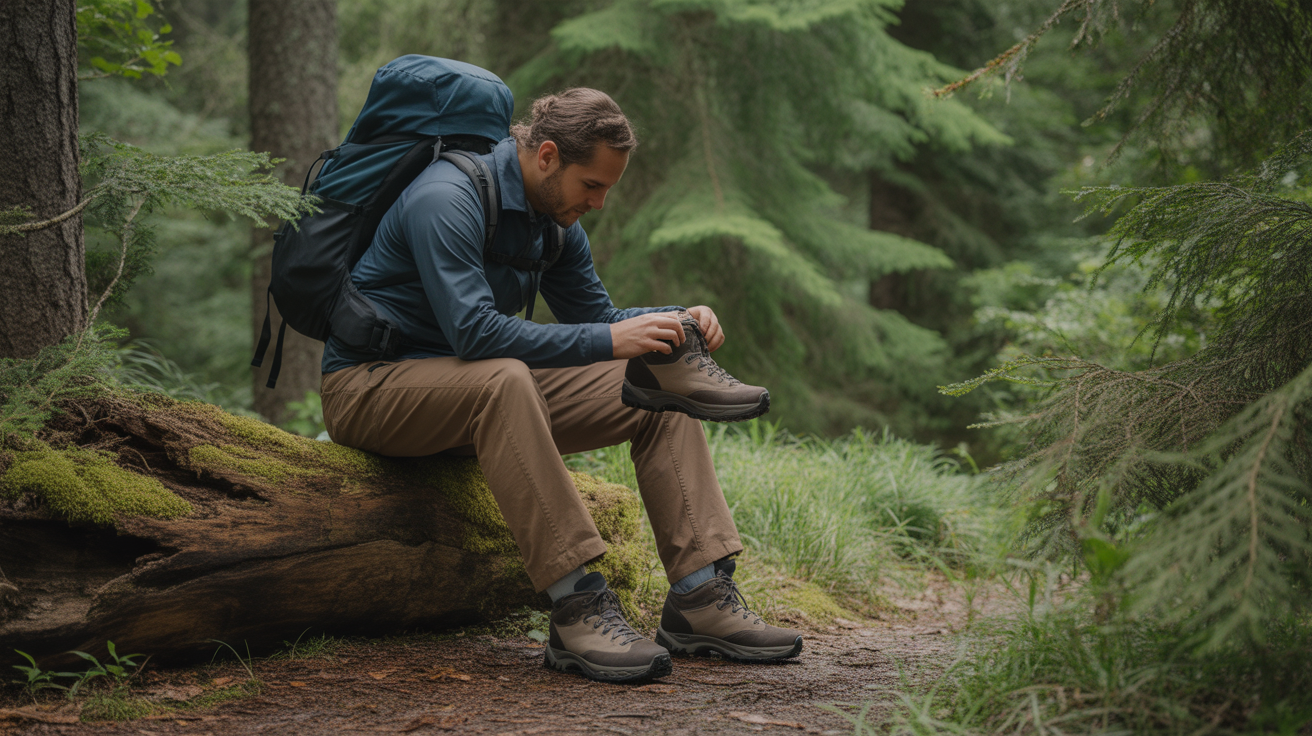
If you have been buying wide width hiking boots and still walking away with pinched toes, bruised toenails, or numb feet on the downhill, you are not imagining things. The distinction between wide toe box vs wide width hiking boots is real, it matters enormously, and the outdoor footwear industry does a poor job of explaining it. These two terms sound like they should mean the same thing, but they describe completely different measurements of your foot and your boot, and mixing them up is exactly why so many hikers end up frustrated.
This article breaks down what each term actually means, why standard wide sizing still leaves many hikers in pain, and how to figure out which type of fit you actually need before you spend another dollar on boots that do not work for you. Whether you have wide feet, wide forefoot, high arches, bunions, hammer toes, or simply need more room to move, understanding wide toe box vs wide width hiking boots will change the way you shop for footwear permanently.
What to Look For
What Wide Width Actually Measures
When a boot is labeled wide width, it is referring to the overall circumference of the boot measured at its widest point, which is typically the ball of the foot. Shoe manufacturers use letter codes for this: D is standard width for men, E or 2E is wide, and 4E is extra wide. For women, B or M is standard, D is wide, and 2E or wider is extra wide. A wide width boot simply has more volume and girth across the midsection of the foot. It is designed for people whose foot is broader overall from the inner arch side to the outer edge. What wide width does not automatically do is change the shape of the toe box at the front of the boot. That area can remain tapered, low, and narrow even in a boot that is technically sized wide. This is the source of most of the confusion around wide toe box vs wide width hiking boots.
What a Wide Toe Box Actually Means
The toe box is the very front section of the boot, the enclosed area where your toes sit. A wide toe box is deeper and more rounded at the front, giving your toes horizontal room to splay outward and vertical room to sit flat rather than being stacked or compressed. Human toes are not naturally pointy or tapered. They spread out when you walk, and especially when you are descending a steep trail with your body weight shifting forward. A boot with a wide toe box respects that natural shape. A standard toe box, even on a wide width boot, often narrows or tapers toward the tip, pushing your toes together regardless of how much extra girth the rest of the boot has. This is why the wide toe box vs wide width hiking boots question is not just semantic. It is the difference between a boot that fits where it matters and one that only fits through the midfoot.
Why You Can Have Both Problems or Only One
Feet are not simple shapes. Your foot has a width measurement, a volume measurement, a toe length measurement, and a toe spread measurement, and those four things are independent of each other. You might have a standard width foot overall but naturally wide-splaying toes that need a roomy toe box. You might have a genuinely wide foot through the midfoot but relatively normal toes that fit most standard toe boxes fine. Many people have both a wide midfoot and wide-splaying toes, which means they need a boot that addresses wide toe box vs wide width hiking boots on both counts. The tricky group is hikers whose overall foot length and midfoot width fall within standard ranges, but whose toes simply need more space. Those hikers often get misfitted into wide width boots when what they actually needed was a standard width boot with a more anatomically shaped toe box.
How to Tell Which Type You Actually Need
The simplest way to identify your actual fit problem is to trace your bare foot on a piece of paper and then place your current boot sole over the tracing. If your toes extend beyond the outline of the boot in width at the front, you need a wider toe box. If your foot traces outside the boot outline through the midfoot or ball of your foot, you need a wider width overall. If both are true, you need a boot designed for wide feet with a wide toe box. Pay attention to where your discomfort actually occurs. Pain or numbness at the very tips and sides of your toes, black toenails on downhills, or toes that feel jammed together points squarely to a toe box issue. Pressure or discomfort along the sides of your foot through the arch area, bursting out of the sides of the boot, or lace tension that feels extreme before you even feel secure points to a width issue. Many hiking boots for wide feet now address both measurements, but you have to know which category you are shopping in. If you are new to buying hiking boots, visiting a specialty outdoor retailer for your first fitting can help you identify your specific fit needs more accurately than trying to diagnose it alone.
How Brands Approach Wide Toe Box Design
Not all brands treat wide toe box design the same way. Some brands, particularly those influenced by minimalist and natural footwear movements, build a rounder, more foot-shaped toe box into their entire line. Other brands offer the same tapered last across all their widths and simply scale the volume up. According to REI’s hiking boot guide, the last, which is the 3D form the boot is built around, determines the shape of the toe box entirely. Two boots can have identical width measurements and completely different toe box shapes depending on the last used. This is why reading reviews matters as much as reading specs. Look specifically for mentions of toe room, toe splay, toe box height, or cramped toes in real hiker reviews rather than relying only on the width label printed on the box.
Socks, Insoles, and Other Factors That Affect Fit
Boot fit is not just about the boot itself. The hiking socks you wear change the effective fit of your boot, sometimes significantly. A thick cushioned hiking sock can reduce toe box space by several millimeters, turning a boot that felt fine at the store into one that pinches after two miles on trail. Always try on boots while wearing the same weight of sock you plan to hike in. Aftermarket hiking shoe insoles are another factor. A thicker insole raises your foot inside the boot, reducing the vertical clearance in the toe box and making it feel lower and more compressed even if the horizontal width has not changed. If you use custom orthotics or aftermarket insoles, bring them when you try on boots. Swap out the stock insole entirely and test the fit with your actual insole in place before deciding whether a boot works for you.
Frequently Asked Questions
Can I fix a narrow toe box by sizing up in my hiking boots?
Sizing up is a common workaround, but it creates new problems rather than solving the original one. When you go up a half size or full size to get more toe room, you typically gain length rather than width or toe box volume. Your heel now has extra space to lift and slide, which causes friction, blisters, and instability on uneven terrain. Your foot can also shift forward on downhills, driving your toes into the front of the boot even harder than before. A better approach is to look for boots specifically designed with a wider or more rounded toe box rather than simply a larger overall size. Some brands describe their toe box shape directly in product listings. Reading real hiker reviews and looking for phrases like good toe splay or roomy toe box is more reliable than relying on size charts alone. If blisters are already a problem from an ill-fitting boot, a solid hiking blister kit is worth keeping in your pack while you work out your fit.
Do wide toe box hiking boots work for people with bunions?
Wide toe box hiking boots are generally a much better match for hikers with bunions than standard width or standard toe box options. A bunion, which is a bony prominence at the base of the big toe, needs lateral room so it is not pressed against the inner wall of the boot during movement. A wide toe box gives that area more horizontal space and typically uses softer, less structured materials at the front of the boot, which reduces direct pressure on the bunion. Wide width boots can also help if the bunion adds significant overall width to your foot through the forefoot. The challenge is that not every boot labeled wide toe box addresses the specific area where a bunion sits, which is just behind the big toe joint rather than at the very tip. Looking for boots with a broad, low-taper toe box and flexible upper materials in that zone will give you the most practical relief. According to the National Park Service hiking footwear guidance, proper fit is one of the most important factors in preventing foot discomfort on trail.
What is the difference between a wide last and a wide toe box in hiking boots?
The last is the complete 3D mold that the entire boot is constructed around. A wide last means the entire mold is proportionally broader from heel to toe, adding width and volume throughout the foot bed. A wide toe box is a specific design feature of the front section of the last, where the shape is made more rounded and spacious at the toe area specifically, regardless of what the rest of the last dimensions look like. A boot can be built on a standard width last but still have a generously shaped toe box. A boot can also be built on a wide last and still have a tapered, relatively narrow toe box because the designer maintained a traditional silhouette at the front. This is exactly the core of the wide toe box vs wide width hiking boots distinction. When shopping, look for boots that describe both the width sizing and the toe box shape explicitly. Women looking for this combination may find useful options in our round-up of hiking boots for women with wide toe box designs.
How much toe room should you have in hiking boots?
The standard recommendation is approximately one thumb width of space between your longest toe and the front of the boot when you are standing upright. That measurement is for length. For width and toe box height, your toes should be able to lie flat without being pushed together or curled downward, and you should be able to wiggle all your toes independently without any toe pressing hard against the boot wall. The vertical clearance matters especially on downhill terrain, where your foot slides forward and your toes can jam against the front if there is insufficient depth in the toe box. Test this in the store by walking down a ramp or inclined surface and noting whether your toes jam forward. For trail use, the fit test should always include walking on an incline, not just standing or walking on flat ground. The toe box width and height requirements become even more important on longer hikes when feet naturally swell, which can increase your effective foot width by half a size or more over several hours.

The Bottom Line
Understanding wide toe box vs wide width hiking boots takes the guesswork out of a problem that has frustrated hikers for years. If your toes are cramped, numb, or blistered at the tips and sides, a wider toe box is likely the fix. If pressure runs along the sides of your midfoot and the boot feels like it is squeezing your entire foot, wider overall width is what you need. Many hikers need both, and the good news is that manufacturers are increasingly building boots that address both measurements together.
Before your next purchase, trace your foot, identify where the real discomfort is coming from, and bring your actual hiking socks and any insoles you use to the fitting. Do not rely on a width label alone. Read real hiker reviews specifically for mentions of toe room and toe box shape, and test the boot on an inclined surface before deciding. For hikers who need both wide width and a roomy toe box, exploring options listed under extra wide hiking boots is a practical starting point. Getting the fit right from the beginning means less pain, less second-guessing, and a lot more enjoyment of every mile you put in.
Disclosure: As an Amazon Associate, we earn from qualifying purchases. This does not affect our editorial recommendations.