
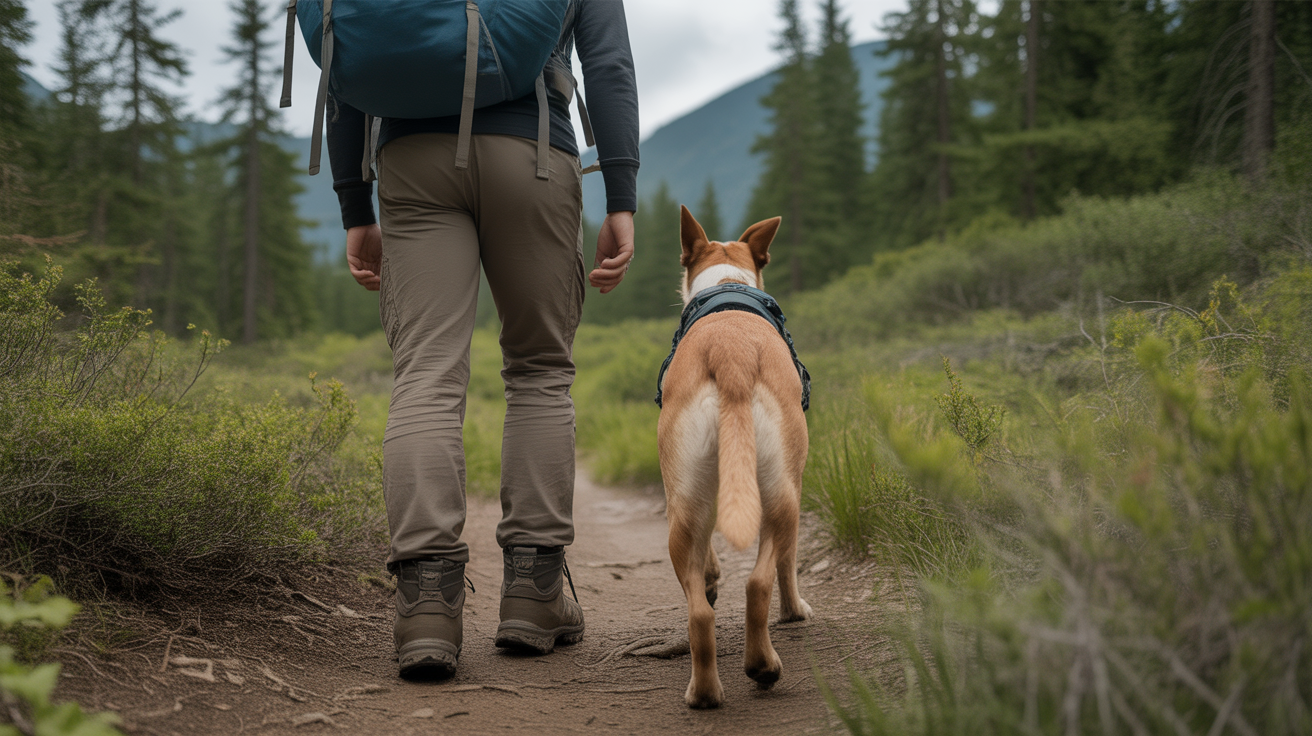
If your dog pulls on leash or needs a boost over logs and rocks, a standard walking harness will not cut it on the trail. Trail harnesses are built different – they need reinforced lift handles, escape-proof fits, and attachment points that give you control when your dog spots a squirrel halfway up a switchback.
This guide compares the best dog harnesses specifically designed for hiking trails, focusing on models with sturdy handles for lifting your dog over obstacles and front-clip options to discourage pulling. Every pick has been tested by hundreds or thousands of real hikers and their dogs, so you can choose with confidence before your next adventure.
What to Look For
Lift Handle Strength and Position
The handle is the most critical feature for trail use. A flimsy handle will fail when you need to hoist your dog over a fallen tree or up a steep rock face. Look for handles that are reinforced, padded, or made from double-stitched webbing. The handle should sit on the upper back, centered between the shoulder blades, which gives you the best leverage without putting pressure on your dog’s neck or spine. Some harnesses include gel-lined handles or soft neoprene grips that make extended lifting more comfortable for your hand. Test the handle position before you hit the trail – if it sits too far forward or back, you will struggle to lift your dog safely.
Front Clip for Pull Control
Dogs pull harder on trails than they do on sidewalks. The smells, wildlife, and excitement trigger instincts that turn even well-trained dogs into sled dogs. A front-clip attachment point redirects pulling force to the side, which naturally discourages your dog from lunging forward. This does not hurt your dog – it just makes pulling less effective, so most dogs stop trying after a few redirects. Back clips are fine for dogs that heel perfectly, but if your dog pulls at all, a front clip will save your shoulder and give you better control on narrow or rocky sections where you need your dog close.
Escape-Proof Fit and Adjustment Points
Trail harnesses need more adjustment points than everyday harnesses because they will be worn over uneven terrain for hours at a time. Look for at least four adjustment straps – two around the chest and two around the belly. This lets you dial in a snug fit that will not shift when your dog scrambles up rocks or squeezes under brush. Escape-proof designs typically include a belly strap that wraps completely around the ribcage, preventing your dog from backing out if they get spooked. Check the buckle quality too – plastic buckles are lighter but can crack in cold weather or break under sudden tension. Metal buckles add a bit of weight but hold up better on rough trails.
Material and Breathability
Hiking harnesses are worn for longer stretches than neighborhood walks, so material matters. Mesh panels or air-channel padding keep your dog cooler on summer hikes, while solid nylon or ripstop fabric holds up better against abrasion from rocks and branches. Reflective trim is useful for early morning or evening hikes, though it is not a substitute for visibility gear if you hike at night. Avoid harnesses with heavy padding unless your dog has mobility issues – extra foam traps heat and adds weight without much benefit on trails. Lightweight materials dry faster if your dog swims or crosses streams.
Leash Attachment Options
Most trail harnesses include both a front clip and a back clip, which gives you flexibility depending on the terrain. Use the front clip on crowded trails or steep sections where you need close control, then switch to the back clip on open stretches where your dog can explore more freely. Some harnesses also include a top loop near the handle for quick tethering at rest stops or trailheads. Dual-clip systems let you attach a leash to both the front and back simultaneously, which distributes pressure more evenly and gives you maximum control on technical terrain. Make sure all clips are metal – plastic clips can snap under sudden stress.
Sizing and Fit Verification
Most harnesses are sized by chest measurement, taken around the widest part of your dog’s ribcage just behind the front legs. Measure with a soft tape and add two fingers of space to account for fur and movement. If your dog falls between sizes, size up – you can always tighten adjustment straps, but a too-small harness will chafe and restrict breathing. Check the weight range listed in the product details, especially for growing puppies or muscular breeds that may not fit standard size charts. A proper fit allows you to slip two fingers between the harness and your dog’s body at every contact point, with no gaps large enough for a leg to slip through.
Our Top Picks
1. rabbitgoo Escape Proof Dog Harness with Lift Handle
Best for dogs that pull hard and need secure escape-proof design
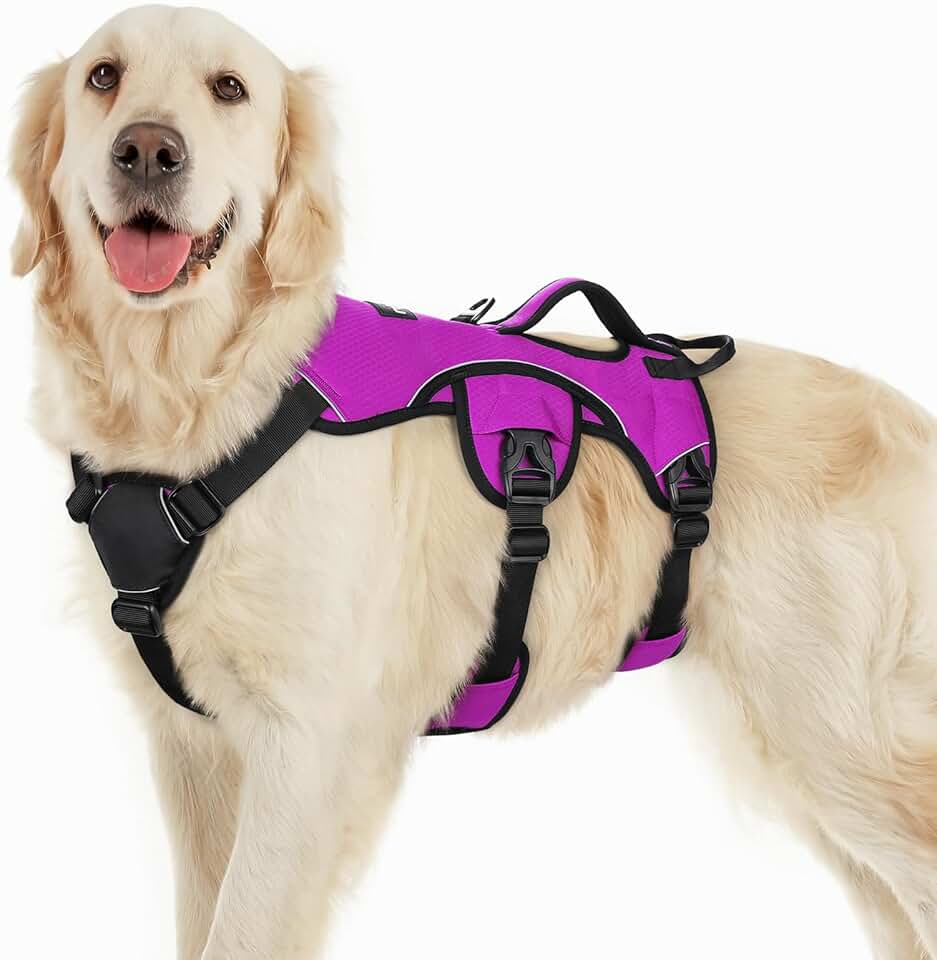
This harness solves two trail problems at once – pulling and escape attempts. The front clip redirects pulling force effectively, which makes a noticeable difference on steep climbs where your dog gets excited and wants to charge ahead. The lift handle is reinforced and positioned well for lifting over obstacles without putting strain on your dog’s back. What sets this apart is the full-body wraparound design with adjustable straps at the chest and belly, which prevents dogs from backing out even if they panic or try to squeeze through narrow gaps.
The soft padding covers all pressure points, so you can use this for all-day hikes without worrying about chafing. The material is thick enough to resist abrasion from rocks and brush, and the reflective straps are actually visible in low light. Nearly 6,000 reviews back up the reliability – this is a harness that holds up to regular trail use. Sizing runs true based on chest measurement, and the adjustment range is wide enough to accommodate dogs that gain or lose weight seasonally.
The main limitation is weight – it is heavier than minimalist designs, which matters if you are trying to keep your dog’s load light. The padding also takes longer to dry if your dog swims or crosses streams. But for dogs that pull or have a history of slipping out of harnesses, the security and control this provides outweigh the extra ounces. It works equally well for first-time trail dogs and experienced hikers who need bombproof gear.
See current pricing for the rabbitgoo Escape Proof Dog Harness on Amazon.
Pros
- Escape-proof wraparound design with full belly coverage
- Reinforced lift handle positioned for safe lifting
- Front clip effectively reduces pulling on trails
- Soft padding at all contact points prevents chafing
- Reflective straps provide visibility in low light
Cons
- Heavier than minimalist trail harnesses
- Padding takes longer to dry after water crossings
View rabbitgoo Escape Proof Dog Harness with Lift Handle on Amazon →
2. PHOEPET No Pull Dog Harness with Handle
Best budget option with proven reliability and massive customer base

With nearly 29,000 reviews and a 4.5-star rating, this harness has been tested by more trail hikers than almost any other option on the market. The front clip does exactly what it is designed to do – discourages pulling without choking or hurting your dog. The handle is sturdy enough for lifting over logs and helping your dog up steep sections, though it is not as padded as premium models. What you are getting here is a simple, effective trail harness that does not include features you do not need.
The three-buckle design with dual adjustment points makes it easy to get a secure fit, and the reflective trim is visible from multiple angles. The material is basic nylon, not fancy ripstop or mesh, but it holds up well to normal trail wear. At this price, you can replace it every season if needed without feeling like you wasted money. The metal D-rings are solid, and the buckles have held up in thousands of verified customer experiences.
The cons are mostly about what you are not getting – no escape-proof belly strap, no gel padding on the handle, no breathable mesh panels. If your dog is an escape artist or you hike in hot climates, you will want a more specialized design. But for most hikers with dogs that pull moderately and need a reliable lift handle, this delivers more value per dollar than anything else on this list. The sheer volume of customer feedback means you can trust it will work as advertised.
Read verified buyer reviews for the PHOEPET No Pull Dog Harness on Amazon.
Pros
- Nearly 29,000 reviews confirm reliability across diverse conditions
- Front clip effectively reduces pulling without discomfort
- Three-buckle design with dual adjustment for secure fit
- Reflective trim visible from multiple angles
- Metal D-rings and buckles hold up to regular use
Cons
- Handle lacks padding for extended lifting
- No escape-proof belly strap for determined dogs
3. OneTigris No Pull Tactical Dog Harness
Best for rugged terrain and dogs that need extra durability

This tactical-style harness is built for serious trails. The air mesh construction keeps your dog cooler than solid nylon designs, which matters on summer hikes or exposed ridge lines. The handle is reinforced and positioned for maximum lifting leverage, and the MOLLE webbing system lets you attach gear pouches or ID panels if you do overnight trips. The no-pull design includes a front D-ring, and the back attachment point is set low enough to prevent the harness from riding up when your dog pulls.
The military-grade construction shows in the details – double-stitched seams, heavy-duty buckles, and reinforced stress points where cheaper harnesses tend to fail. The vest-style coverage distributes pressure evenly across your dog’s chest and back, which is more comfortable on long hikes than narrow strap designs. Sizing is accurate based on chest measurement, and the adjustment range accommodates dogs with barrel chests or deep chests equally well.
The trade-off is bulk. This is not a lightweight harness, and the tactical styling may be overkill if you only hike groomed trails. The mesh panels help with breathability, but they also catch on thorny brush more than smooth nylon. If you hike technical terrain with scrambles, water crossings, and heavy brush, the extra durability is worth the weight. For casual trail walks, it is more harness than you need. But for hikers who push their dogs hard and need gear that will not quit, this delivers.
Check current stock for the OneTigris No Pull Tactical Dog Harness on Amazon.
Pros
- Air mesh construction improves breathability on hot trails
- Reinforced handle designed for heavy lifting over obstacles
- MOLLE webbing allows attachment of gear pouches
- Military-grade construction with double-stitched seams
- Vest-style coverage distributes pressure evenly
Cons
- Heavier and bulkier than minimalist designs
- Mesh panels can catch on thorny brush
4. Embark Adventure No-Pull Dog Harness
Best for all-day comfort with gel-lined handle

The gel-lined handle sets this harness apart for hikers who frequently lift their dogs over obstacles. The cushioning makes a real difference when you are hoisting a 60-pound dog over repeated boulder fields or deadfall. The military-grade nylon holds up to abrasion better than budget options, and the reflective trim is bright enough to spot from a distance. The front clip is positioned to redirect pulling effectively without the harness twisting or riding up.
With over 10,000 reviews and a 4.6-star rating, this harness has proven itself across different dog breeds and trail conditions. The adjustment system is straightforward, and the buckles are easy to operate even with cold or gloved hands. The fit is consistent with the size chart, and the straps stay adjusted once you set them.
The downsides are minor. The gel padding on the handle adds a bit of weight, and the harness takes up more pack space than ultra-minimalist designs. The nylon material is not as breathable as mesh, so it may not be the best choice for hot-climate hiking. But for moderate temperatures and trails that require frequent lifting assistance, the comfort features justify the slight bulk. If your hands get sore from lifting your dog with standard harnesses, the gel lining alone makes this worth considering.
Compare the Embark Adventure No-Pull Dog Harness specs and pricing on Amazon.
Pros
- Gel-lined handle reduces hand fatigue during repeated lifting
- Military-grade nylon resists abrasion on rocky trails
- Reflective trim bright enough for low-light visibility
- Front clip positioned to prevent harness twisting
- Over 10,000 reviews confirm consistent performance
Cons
- Gel padding adds weight compared to basic designs
- Nylon material less breathable than mesh options
5. ICEFANG Tactical Dog Harness
Best for maximum durability with metal buckle system

The dual metal buckle system is the defining feature here. While most harnesses use plastic clips, this one uses two metal buckles that will not break under sudden stress or crack in freezing temperatures. That makes it the most reliable option for winter hiking or trails where your dog might lunge unexpectedly at wildlife. The MOLLE webbing system lets you attach ID panels, patches, or small gear pouches, which is useful for overnight trips or working dogs.
The handle is reinforced and positioned correctly for lifting, and the front leash clip provides effective pull control. The working dog vest design distributes weight and pressure evenly, which matters on all-day hikes. With over 22,000 reviews and a 4.7-star rating, this has one of the highest customer satisfaction scores in this category. The construction quality is immediately obvious – thick webbing, bar-tack stitching at stress points, and heavy-duty D-rings.
The bulk and weight are the main drawbacks. This is a serious piece of gear designed for demanding use, not casual trail walks. It is overkill if you hike easy trails or only need a harness for occasional outings. The metal buckles take longer to adjust than quick-release plastic clips, though they hold more securely once set. If you need absolute confidence that your harness will not fail regardless of conditions, the ICEFANG delivers. For less demanding use, lighter options will serve you just as well.
See if the ICEFANG Tactical Dog Harness is right for your first hike on Amazon.
Pros
- Dual metal buckles will not break or crack in extreme conditions
- MOLLE webbing system allows customization with pouches and panels
- Reinforced handle designed for heavy lifting
- Working dog vest design distributes pressure evenly
- Over 22,000 reviews with 4.7-star rating confirm reliability
Cons
- Heavier and bulkier than standard trail harnesses
- Metal buckles slower to adjust than quick-release clips
How These Compare
If your dog is an escape artist or pulls extremely hard, the rabbitgoo Escape Proof harness offers the most secure fit with its full wraparound design and reinforced lift handle. The nearly 6,000 reviews confirm it works for dogs that have slipped out of other harnesses, and the front clip effectively redirects pulling on steep or crowded trails. For hikers on a tight budget who still need reliable pull control and a sturdy handle, the PHOEPET harness delivers proven performance at less than half the price of premium options. Its 29,000 reviews represent the largest real-world test base of any harness on this list.
If you hike rugged terrain with lots of scrambles and water crossings, the OneTigris tactical harness is built to handle abuse. The air mesh keeps your dog cooler than solid designs, and the MOLLE webbing lets you attach gear for overnight trips. The Embark Adventure harness with gel-lined handle is the best choice if you frequently lift your dog over obstacles – the cushioned grip reduces hand fatigue on long days. The ICEFANG tactical harness is the most bombproof option for extreme conditions or dogs that might lunge suddenly, thanks to its dual metal buckle system that will not fail regardless of temperature or stress.
For most hikers with dogs that pull moderately and need occasional lifting assistance, the rabbitgoo or Embark options provide the best balance of control, comfort, and durability. If budget is your main concern and your dog does not need escape-proof features, the PHOEPET harness will do everything you need at a fraction of the cost. If you need maximum durability for technical trails or harsh conditions, the ICEFANG or OneTigris tactical models justify their higher price with superior construction and customization options.
Frequently Asked Questions
How do I measure my dog for a hiking harness?
Measure around the widest part of your dog’s chest, just behind the front legs, using a soft measuring tape. Pull the tape snug but not tight – you should be able to slip two fingers underneath. This measurement corresponds to the size charts provided by most harness manufacturers. If your dog falls between sizes, choose the larger size, as you can tighten adjustment straps but cannot loosen a harness that is too small. Also check the weight range listed in the product specifications, especially for puppies or muscular breeds that may not fit standard proportions. A proper fit allows you to slip two fingers between the harness and your dog’s body at every contact point, with no gaps large enough for a leg to slip through.
What is the difference between a front clip and back clip harness?
A front clip attaches the leash to a D-ring on your dog’s chest, which redirects pulling force to the side and naturally discourages lunging forward. This does not hurt your dog – it just makes pulling less effective, so most dogs stop trying after a few corrections. A back clip attaches the leash to a D-ring between the shoulder blades, which allows more freedom of movement but provides less control if your dog pulls. For hiking, a front clip is better for steep terrain, crowded trails, or any situation where you need close control. Many trail harnesses include both attachment points, letting you switch based on the terrain – use the front clip on technical sections and the back clip on open stretches where your dog can explore.
Can I leave a hiking harness on my dog all day?
You can leave a properly fitted hiking harness on your dog during active hiking, but remove it during rest stops longer than 30 minutes and always take it off when your hike is done. Harnesses put pressure on the chest, shoulders, and ribcage, which is fine during movement but can cause discomfort if worn while lying down for extended periods. Also check for chafing or hot spots after long hikes, especially in areas where straps cross. If you notice redness or hair loss, adjust the fit or add padding to those contact points. Never leave a harness on an unsupervised dog, as it can catch on furniture, crate bars, or other objects and create a strangulation hazard.
How tight should a dog hiking harness be?
A hiking harness should be snug enough that it will not shift or slide when your dog moves, but loose enough that you can slip two fingers between the harness and your dog’s body at any contact point. If the harness is too loose, your dog can back out of it or the straps will rub and cause chafing. If it is too tight, it will restrict breathing and movement, especially on steep climbs where your dog needs full lung capacity. After putting the harness on, have your dog walk, sit, and lie down to make sure it does not bunch up or shift. Adjust all straps equally – tightening just one strap can create pressure points that will become painful on long hikes.
What features should I look for in a dog harness for rough terrain?
Look for a reinforced lift handle positioned on the upper back, front and back leash attachment points, at least four adjustment straps for a custom fit, and durable materials like ripstop nylon or heavy-duty webbing. The handle should be padded or reinforced so it will not fail when you lift your dog over obstacles. An escape-proof design with a full belly strap prevents your dog from backing out if they get spooked. Reflective trim improves visibility on early morning or evening hikes. Metal buckles and D-rings are more reliable than plastic, especially in cold weather or under sudden stress. Breathable mesh panels help keep your dog cool, but solid nylon resists abrasion better on rocky trails.
The Bottom Line
The best dog harness for hiking trails depends on your dog’s behavior and the terrain you tackle most often. If your dog pulls hard or has a history of slipping out of harnesses, the rabbitgoo Escape Proof model provides the most secure fit with its wraparound design and nearly 6,000 verified reviews. For hikers on a budget who still need reliable pull control and a sturdy lift handle, the PHOEPET harness delivers proven performance at under twenty dollars. If you hike technical terrain with scrambles and water crossings, the OneTigris tactical harness is built to handle abuse with air mesh breathability and MOLLE customization.
For hikers who frequently lift their dogs over obstacles, the Embark Adventure harness with gel-lined handle reduces hand fatigue on long days. And if you need bombproof construction that will not fail in extreme conditions, the ICEFANG tactical harness with dual metal buckles is the most durable option on this list. Measure your dog’s chest accurately, check the weight range, and choose a harness with at least four adjustment points so you can dial in a secure fit. A good trail harness makes hiking safer and more enjoyable for both you and your dog – it is worth investing in one that matches your specific needs before your next adventure.
Disclosure: As an Amazon Associate, we earn from qualifying purchases. This does not affect our editorial recommendations.