
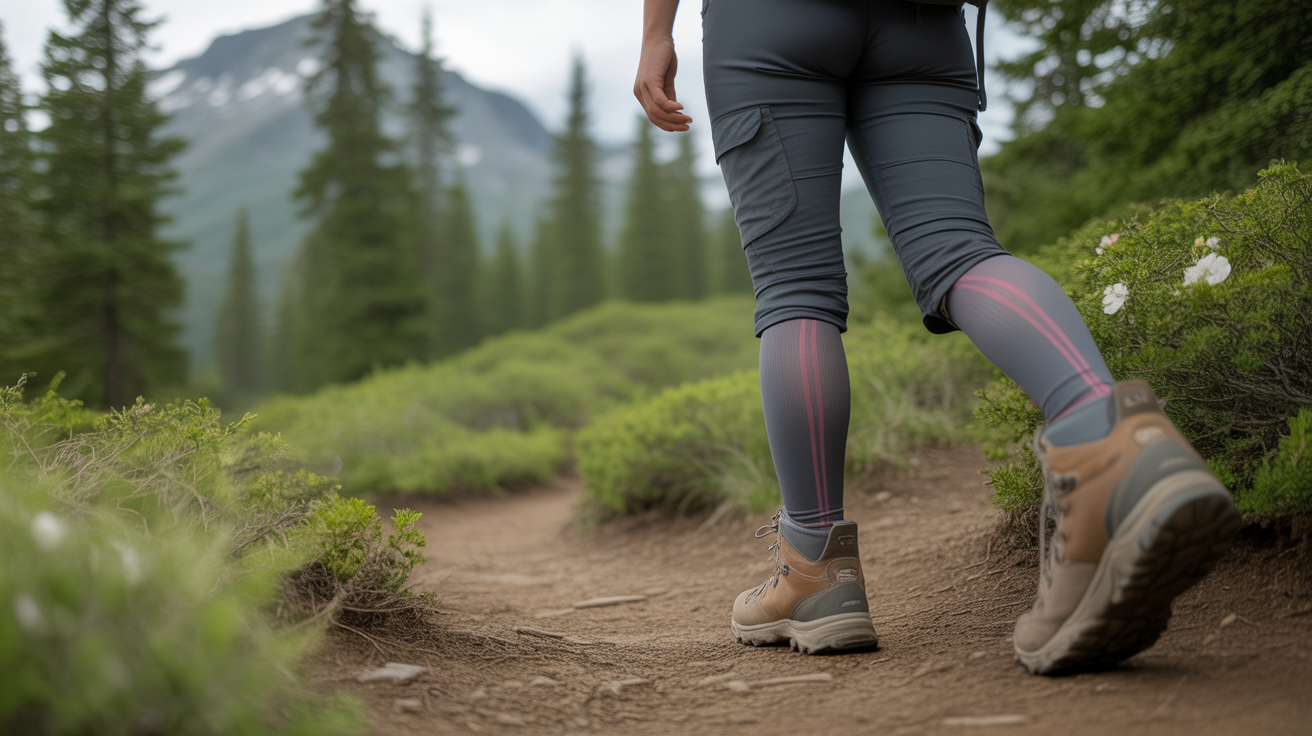
If you have noticed your calves aching on descents or your ankles swelling after a full day on the trail, you are not alone. Leg fatigue is one of those hiking challenges that sneaks up on you – not dramatic enough to stop you mid-trail, but persistent enough to make you wonder if there is a better way. Compression socks designed specifically for women are not just scaled-down versions of men’s socks. They are built around the reality that women typically have smaller ankle circumferences relative to calf size, and that generic compression often bunches, slides, or squeezes in all the wrong places.
This guide walks through five compression sock options that actually account for women’s leg proportions, explaining what compression levels mean, how fit should feel on your specific build, and which pairs work best for different hiking styles. Whether you are tackling steep elevation changes, logging long mileage, or just want your legs to feel less fatigued at the trailhead parking lot, the right pair makes a noticeable difference without requiring a degree in sports medicine to figure out.
What to Look For
Understanding Compression Levels and What They Mean on the Trail
Compression socks list numbers like 15-20 mmHg or 20-30 mmHg, which measure how much pressure the fabric applies to your legs. The higher the number, the firmer the squeeze. For hiking, most women do well with 15-20 mmHg, which provides noticeable support without feeling restrictive when you are moving uphill or navigating uneven terrain. This level is designed to reduce muscle movement during descents and provide structured pressure without cutting off blood flow. If you have specific circulation concerns or significant swelling, 20-30 mmHg offers more aggressive compression, but it can feel tight during long climbs when your legs are working hard. Start with the lower range unless you already know you need stronger support.
Women’s Fit Versus Unisex: Why Proportions Matter
The biggest difference between women’s compression socks and unisex options is not just size – it is the ratio of ankle-to-calf circumference. Women typically have narrower ankles relative to calf width compared to men, which means unisex socks often slip at the ankle or create uncomfortable pressure bands at the top of the calf. Women-specific designs taper more gradually and use different elastic placements to account for this. When you are evaluating fit, the sock should feel snug around your ankle without wrinkling or bunching, and the compression should distribute evenly up your calf without a tourniquet effect at the top. If you have to constantly pull the sock up during a hike, the fit is wrong for your leg shape.
Crew Length Versus Knee-High for Different Hiking Conditions
Compression socks come in different heights, and the right choice depends on what you are hiking through. Knee-high socks provide full calf coverage and work well for steep terrain, long descents, or cooler weather when you want the extra warmth. They also offer more protection if you are bushwhacking or hiking through brush. Crew-length socks end mid-calf and are lighter, less bulky, and better for hot weather or shorter day hikes where you do not need full leg coverage. Both styles deliver compression benefits, so base your choice on your typical trail conditions and personal comfort. Some women find knee-highs restrictive behind the knee during steep climbs, while others prefer the security of full coverage.
Moisture-Wicking and Cushioning for Multi-Hour Wear
Compression socks need to manage sweat just like regular hiking socks, especially since they fit tighter and trap more heat against your skin. Look for fabrics that include moisture-wicking materials like Coolmax, bamboo viscose, or merino wool blends. Synthetic blends dry faster, while natural fibers like merino offer better odor control on multi-day trips. Cushioning placement matters too – heel and toe padding prevents blisters during long mileage, while structured fabric at the arch keeps the sock from shifting inside your boot. If the sock lists anti-blister features, that usually means reinforced stitching at high-friction zones. The compression itself should not cause discomfort, but without adequate padding, pressure points can develop during extended wear.
Pack Quantity and Durability for Regular Trail Use
Many compression socks sell in multi-pair packs, which makes sense if you hike regularly and need clean pairs between laundry cycles. Three-pair packs offer a good rotation for weekend hikers, while five or six pairs work better if you are on the trail multiple times per week. Check the product details for durability indicators like reinforced toes, double-stitched seams, and fade-resistant dye. Compression fabric loses elasticity over time, so even high-quality socks eventually need replacing – usually after 30-50 washes depending on care. If you notice the sock feels looser or no longer provides the same snug fit, it is time for a new pair. Washing in cold water and air-drying extends lifespan significantly compared to hot machine drying, which breaks down elastic fibers faster.
Sizing Accuracy and Return Policies
Compression socks are more size-sensitive than regular socks, and getting the wrong size means they will not work as intended. Most brands provide sizing charts based on shoe size and calf circumference, so measure your calf at its widest point before ordering. If you are between sizes, some brands recommend sizing up for comfort, while others suggest sizing down for better compression – check the specific product guidance. Since fit is so critical, look for brands with flexible return policies in case the socks do not work for your leg shape. Reading reviews from other women about whether the socks run small, large, or true to size gives you better odds of getting it right the first time.
Our Top Picks
1. FITRELL 3 Pairs Compression Socks for Women and Men 20-30mmHg
Best for women wanting firm compression with OEKO-TEX certified fabric at an accessible price point

The FITRELL compression socks offer 20-30 mmHg graduated compression, which sits at the higher end of what most recreational hikers need but proves useful if you want firmer leg support on longer trail days. The three-pair pack provides enough rotation for regular weekend hiking without needing constant laundry cycles, and the OEKO-TEX Standard 100 certification confirms the fabric meets safety standards for skin contact – a reassuring detail if you have sensitive skin or sweat heavily during hikes. With nearly 38,000 reviews averaging 4.5 stars, this is one of the most-purchased compression socks on the market, which means you are getting a well-tested option with consistent quality control.
The graduated compression design means the sock applies more pressure at the ankle and gradually decreases toward the calf, which is the standard construction method for compression garments. Women specifically note in reviews that the sizing accommodates narrower ankles without bunching, though the 20-30 mmHg firmness takes some getting used to if you have never worn compression socks before. The fabric blend handles moisture reasonably well for day hikes, though it is not as quick-drying as some synthetic-heavy options. The knee-high length provides full calf coverage, which works well for steep descents or cooler weather hiking.
One trade-off with this firmer compression level is that the socks can feel restrictive during steep uphill climbs when your calves are already working hard. If you are hiking in hot weather or doing significant elevation gain, you might find 15-20 mmHg compression more comfortable for active use. The socks are also on the thicker side, which adds warmth but can make your boots feel slightly tighter – worth considering if you already wear your hiking boots with minimal extra room. Durability holds up well according to long-term users, with most reporting the elastic maintains compression through 30-plus washes when air-dried. See current pricing for the FITRELL 3 Pairs Compression Socks on Amazon.
Pros
- OEKO-TEX Standard 100 certified fabric meets safety standards for skin contact
- Three-pair pack provides rotation for regular hikers at under $15
- Nearly 38,000 reviews confirm consistent quality and sizing accuracy
- Graduated compression design with 20-30 mmHg for firm support
- Climate Pledge Friendly certification for reduced environmental impact
Cons
- Firmer 20-30 mmHg compression can feel restrictive during steep climbs
- Thicker fabric may make boots feel tighter than with thinner socks
- Less quick-drying than synthetic-heavy alternatives for hot weather hiking
View FITRELL 3 Pairs Compression Socks for Women and Men 20-30mmHg on Amazon →
2. Physix Gear Compression Socks 20-30 mmHg – Men & Women
Best for women who want proven performance with the highest review count in the compression sock category

Physix Gear has built a reputation in the compression sock market with over 94,000 reviews, making this one of the most-tested options available. The 20-30 mmHg compression level delivers firm support designed for extended wear during long trail days, particularly on descents where your calves absorb repeated impact. Women reviewers consistently mention that the sizing runs accurate to the chart and that the socks stay in place without sliding down during active movement – a common complaint with cheaper compression socks that lose elasticity quickly.
The fabric blend manages moisture adequately for day hiking, though it is not specifically marketed as a hiking sock, so it lacks some trail-specific features like reinforced toe boxes or heavy cushioning in high-friction zones. What it does offer is reliable graduated compression that functions as designed, with the tightest pressure at the ankle gradually decreasing up the calf. The knee-high design provides full calf coverage without bunching behind the knee, which some women find uncomfortable in other brands. The socks are thin enough to fit comfortably inside hiking boots without making them feel overly tight, which gives you more versatility if you are using them with different footwear.
The main consideration with Physix Gear is that you are paying slightly more than budget options for a brand name and extensive quality control based on that massive review database. The socks hold up reasonably well in standard trail conditions, though if you are scrambling over rocks or bushwhacking regularly, the thinner construction might show wear faster than hiking-specific socks. For trail use where you want reliable compression without excessive bulk, the track record here is hard to argue with. The firmer compression does mean a break-in period where your legs adjust to the pressure, so do not wear them for the first time on a long hike. Read verified buyer reviews for the Physix Gear Compression Socks on Amazon.
Pros
- Over 94,000 reviews provide extensive real-world feedback on fit and durability
- Accurate sizing with consistent quality control across production runs
- Thin profile fits comfortably inside hiking boots without adding bulk
- Stays in place during active movement without sliding down calves
- Graduated compression design delivers targeted support where needed
Cons
- Not hiking-specific so lacks reinforced toe protection for rugged trails
- Firmer 20-30 mmHg compression requires adjustment period for first-time users
- Slightly higher price than budget multi-packs without added trail features
View Physix Gear Compression Socks 20-30 mmHg – Men & Women on Amazon →
3. FNOVCO Women’s Hiking Walking Running Crew Socks 5 Pairs
Best for women wanting hiking-specific features with compression support in a budget-friendly five-pair pack

The FNOVCO hiking socks combine thick cushioning with compression design specifically for trail use, which makes them different from medical-grade compression socks adapted for hiking. The crew length ends mid-calf rather than knee-high, which reduces bulk and heat retention during warm-weather hiking while still providing compression support to the lower leg. The five-pair pack at under $12 gives you the best value per pair on this list, making them practical for hikers who need multiple pairs in rotation or who are hard on socks and replace them frequently.
The thick cushioning throughout the foot provides padding that reduces friction and absorbs impact on rocky or uneven trails. Women reviewers mention that the snug athletic fit keeps the sock stable inside the boot without shifting, which prevents the bunching that causes hot spots and blisters. The moisture-wicking fabric handles sweat reasonably well for day hikes, though the thicker material means they take longer to dry if you are washing them mid-trip. The athletic design appears built for active use rather than recovery wear, focusing on comfort during movement.
The trade-off with FNOVCO is fewer reviews compared to established compression brands – at 971 reviews you are getting substantial user feedback, but not the massive database of the top two picks. This means less long-term data on how the elastic holds up over dozens of washes. The compression level is not specified in mmHg, which makes it harder to compare directly to graduated compression socks – the support comes more from the snug athletic fit than medical-grade pressure. If you prioritize hiking-specific features like cushioning and durable construction over precise compression levels, this pack delivers strong value. The crew length also means less coverage for bushwhacking or cold weather hiking. Check current stock for the FNOVCO Women’s Hiking Walking Running Crew Socks on Amazon.
Pros
- Five-pair pack under $12 provides best value per sock for regular trail use
- Thick cushioning built specifically for hiking wear and impact absorption
- Crew length reduces bulk and heat compared to knee-high options
- Snug athletic fit keeps socks stable inside boots without shifting
- Moisture-wicking fabric handles sweat adequately for day hiking
Cons
- Only 971 reviews means less long-term feedback compared to established brands
- Compression level not specified in mmHg so difficult to compare pressure
- Thicker material takes longer to dry if washing during multi-day trips
View FNOVCO Women’s Hiking Walking Running Crew Socks 5 Pairs on Amazon →
4. BLUEENJOY Copper Compression Socks 6 Pairs
Best for women who want maximum pack quantity for extended hiking trips or frequent trail use
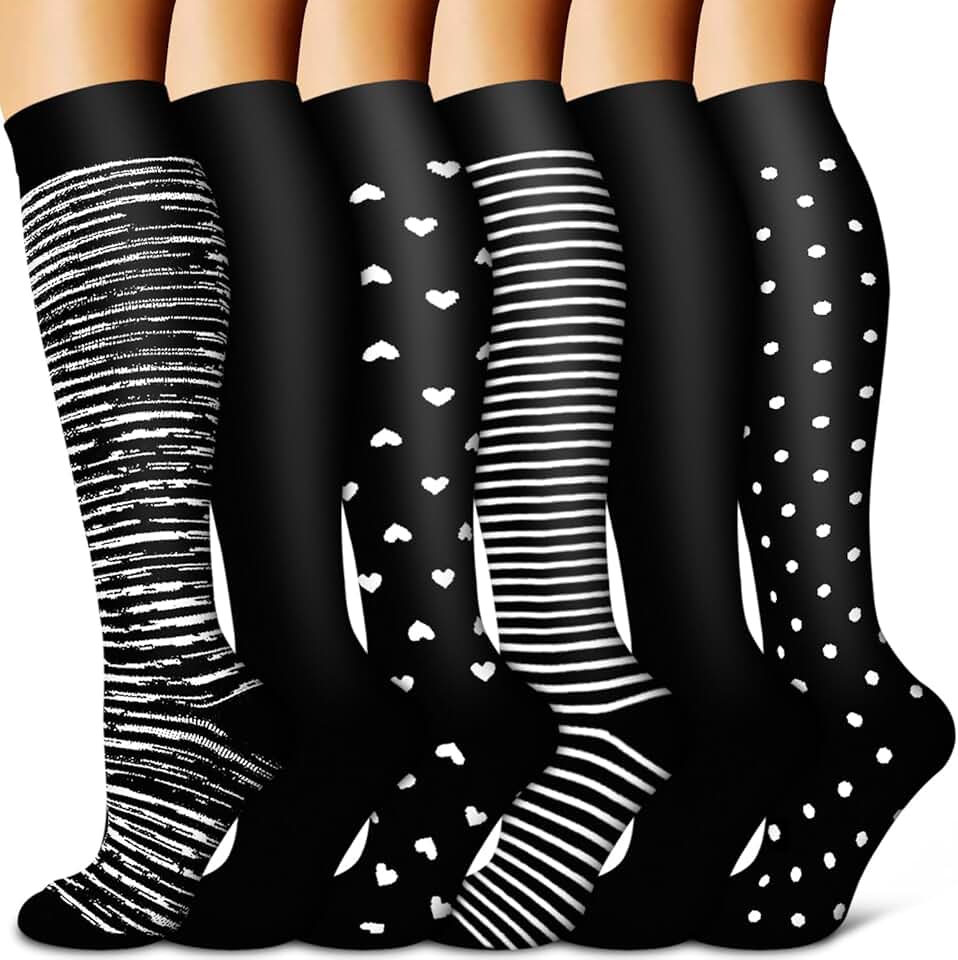
BLUEENJOY offers six pairs of compression socks for under $19, which gives you the most socks per dollar on this list. The fabric is designed to manage moisture across extended wear, which matters for hikers who need socks to stay dry and the compression to remain effective after repeated washing. With nearly 48,000 reviews averaging 4.5 stars, this is another heavily-purchased option with substantial user feedback confirming consistent sizing and quality.
The graduated compression design delivers structured pressure for leg support, though the specific mmHg level is not detailed in the product listing. Women reviewers note that the socks fit true to size and accommodate narrower ankles without bunching, which is critical for women-specific leg proportions. The knee-high length provides full calf coverage for cooler weather hiking or when you need protection from brush and insects on overgrown trails. The six-pair pack makes sense if you are hiking multiple times per week and want clean socks available without constant laundry, or if you are doing a longer backpacking trip where you need backup pairs.
The main limitation with BLUEENJOY is that the socks are thinner than hiking-specific options, which means less cushioning at the heel and toe. This makes them better suited for well-maintained trails with moderate terrain rather than rocky scrambles or off-trail hiking where foot protection matters more. The thinner profile does mean they fit more easily inside hiking boots without adding bulk, and they dry faster if you need to wash and reuse them on a multi-day trip. Durability feedback is mixed – some users report the elastic loosens after 20-30 washes, while others find them holding up longer. For the price per pair, they offer solid value if you accept that compression socks are eventually consumable items that need replacing. Compare the BLUEENJOY Copper Compression Socks specs and pricing on Amazon.
Pros
- Six-pair pack provides maximum rotation for frequent hikers at under $19
- Nearly 48,000 reviews confirm consistent sizing and fit accuracy
- Thinner profile fits easily inside hiking boots without adding bulk
- Fabric designed to manage moisture during extended wear
- Faster drying time than thicker compression socks for multi-day trips
Cons
- Less cushioning than hiking-specific socks for rocky or rugged terrain
- Compression level not specified in mmHg in product listing
- Mixed durability feedback with some elastic loosening after 20-30 washes
5. Juclise Womens Coolmax Bamboo Viscose Compression Running Crew Socks 3 Pairs
Best for women prioritizing moisture management and natural fiber blends for warm-weather hiking

Juclise combines Coolmax synthetic fibers with bamboo viscose, which creates a fabric blend that excels at moisture-wicking while offering the softer feel and odor resistance of natural materials. This makes the socks particularly effective for hot weather hiking where sweat management becomes critical for comfort and blister prevention. The crew length ends mid-calf, which reduces heat retention compared to knee-high options while still providing compression support to the lower leg and ankle. The OEKO-TEX Standard 100 certification confirms the fabric meets safety standards, which matters if you have sensitive skin or tend to develop irritation from synthetic materials.
The compression design includes structured fabric at the arch and construction designed for blister prevention with reinforced stitching at wear points. Women reviewers specifically mention that the moisture-wicking performance lives up to the marketing – the socks stay noticeably drier during long trail days compared to standard cotton-blend hiking socks. The bamboo viscose component provides properties that help manage foot temperature, which prevents the swampy feeling that develops in less breathable socks. The three-pair pack gives you enough rotation for regular weekend hiking without excessive bulk in your gear drawer.
At $24.99 for three pairs, Juclise sits at the higher end of the pricing spectrum on this list, which reflects the premium fabric blend and OEKO-TEX certification. The trade-off is fewer reviews than more established brands – at 949 reviews you are getting user feedback, but not the tens of thousands that provide more statistical confidence in long-term durability. The crew length also means less calf coverage for cold weather hiking or when you want protection from brush. If moisture management and natural fiber benefits are your priorities, particularly for warm-weather hiking, the fabric blend here delivers performance that justifies the higher per-pair cost. See if the Juclise Womens Coolmax Bamboo Viscose Compression Running Crew Socks are right for your first hike on Amazon.
Pros
- Coolmax and bamboo viscose blend excels at moisture-wicking for hot weather
- OEKO-TEX Standard 100 certification for skin-safe fabric composition
- Bamboo component provides temperature management and odor resistance
- Construction designed for blister prevention at high-friction zones
- Structured arch fabric keeps socks stable inside boots during active movement
Cons
- Higher price per pair at $24.99 for three-pair pack
- Only 949 reviews compared to established brands with tens of thousands of ratings
- Crew length provides less calf coverage than knee-high options for cold weather
View Juclise Womens Coolmax Bamboo Viscose Compression Running Crew Socks 3 Pairs on Amazon →
How These Compare
Choosing between these five options comes down to what matters most for your specific hiking style and leg needs. If you want proven performance with the most user feedback, Physix Gear delivers reliable 20-30 mmHg compression backed by over 94,000 reviews – you are getting a tested product that fits accurately and stays in place during active trail use. The slightly higher price reflects that extensive quality control and brand reputation. For hikers who want OEKO-TEX certified fabric with firm compression at a lower cost, FITRELL offers comparable 20-30 mmHg support in a three-pair pack for under $15, making it the most accessible option for trying firmer compression without significant investment.
If hiking-specific features matter more than medical-grade compression levels, FNOVCO provides thick cushioning and crew length for $11.53 in a five-pair pack – the best value if you prioritize trail durability and go through socks quickly. The compression comes from athletic fit rather than graduated pressure measured in mmHg, which works well for general leg support without the restrictive feel of firmer compression. For maximum pack quantity, BLUEENJOY gives you six pairs for under $19, which makes sense if you hike frequently and want clean socks always available. The thinner profile fits easily inside boots and dries faster, though you sacrifice some cushioning compared to hiking-specific options.
Juclise stands out for moisture management with its Coolmax and bamboo viscose blend, which performs noticeably better in hot weather compared to standard synthetic compression socks. The natural fiber component provides temperature management and odor resistance that extends comfort on long, sweaty trail days. At $24.99 for three pairs, you are paying more per sock, but the OEKO-TEX certification and superior wicking justify the cost if moisture control is your primary concern. The crew length across FNOVCO, BLUEENJOY, and Juclise reduces bulk and heat, while FITRELL and Physix Gear offer knee-high coverage for cold weather or brush protection – match the length to your typical trail conditions and climate.
Frequently Asked Questions
Should I wear compression socks while hiking or only after?
You can wear compression socks during the hike itself, and many women find this approach works well for their legs on long or steep trails. The compression provides structured support for your muscles during activity, which many users report helps with overall leg comfort. Wearing them during the hike is particularly popular on descents when your calves absorb repeated impact, or during hot weather when legs tend to swell. The key is choosing the right compression level – 15-20 mmHg works well for active hiking without feeling restrictive during climbs, while 20-30 mmHg provides firmer support but can feel tight when your legs are working hard uphill. Some hikers prefer wearing compression socks only after finishing the trail as part of their recovery routine, which many find helpful for how their legs feel the next day. If you are new to compression socks, try wearing them during a shorter hike first to see how your legs respond before committing to a full day in them. Make sure the fit is correct – if the socks cause discomfort, numbness, or restrict your movement, they are either too tight or not sized properly for your leg shape.
What level of compression do I need for hiking?
Most recreational hikers do well with 15-20 mmHg compression, which provides noticeable support without feeling overly restrictive during active movement. This level is designed to provide structured pressure that many hikers find comfortable for long trail days, and it allows enough flexibility for your muscles to work naturally during climbs. If you experience significant swelling or your legs feel extremely fatigued after hikes, 20-30 mmHg offers firmer compression that provides more aggressive support. The trade-off is that higher compression can feel tight during steep uphill sections when your calves are already working hard, and some women find it uncomfortable for all-day wear during active hiking. Start with 15-20 mmHg unless you have specific medical reasons or past experience that suggests you need stronger compression. The socks should feel snug but not painful – if you experience numbness, tingling, or discomfort that persists after a few minutes, the compression level is likely too high for your needs. Compression above 30 mmHg is considered medical-grade and typically requires consultation with a healthcare provider, so it is not recommended for general hiking use without specific guidance.
How tight should compression socks feel for hiking?
Compression socks should feel snug all around your foot and leg, with the most pressure at your ankle gradually decreasing as the sock goes up your calf. The fit should be firm enough that you notice the compression, but not so tight that it causes pain, numbness, or restricts your natural movement. When you put them on, you should need to work them up your leg gradually rather than pulling them on like regular socks – that resistance indicates the compression is actually there. Once on, the sock should stay in place without sliding down during hiking, and you should not see any bunching or wrinkling around your ankle or behind your knee. If the top band digs into your calf and leaves a deep indentation, the size is too small or the compression level is too high. Your toes should have full range of motion without feeling squeezed, and your foot should not feel numb or tingly after wearing the socks for 10-15 minutes. The break-in period matters – compression socks often feel tighter during the first few wears, and your legs adjust to the pressure after using them a few times. If discomfort persists beyond three or four wears, the fit is likely wrong for your leg proportions.
Can I wear compression socks with my regular hiking boots?
Yes, you can wear compression socks with hiking boots, but you need to account for the fact that compression socks are thicker and fit more snugly than regular hiking socks. This means your boots will feel tighter, particularly around the ankle and forefoot where the compression is strongest. If your hiking boots already fit snugly with standard socks, adding compression socks might make them feel uncomfortably tight, which can restrict circulation and cause numbness – the opposite of what you want from compression. Try the socks on with your hiking boots before hitting the trail to ensure you still have adequate toe room and the boots do not pinch anywhere. Some women find they need to loosen their laces slightly to accommodate the added thickness, while others prefer thinner compression socks specifically to avoid this issue. If your boots feel too tight with compression socks, you have a few options: choose a thinner compression sock profile, wear the compression socks only after hiking for recovery instead of during the hike, or consider whether your boots have enough volume for the added sock thickness. The compression should not fight against your boot fit – both should work together to support your feet and legs comfortably.
How do I wash compression socks to make them last longer?
Wash compression socks in cold water and air-dry them rather than using hot water and a machine dryer, which breaks down the elastic fibers that provide compression. The heat from dryers is particularly damaging to the spandex or elastane that creates the compression effect, and repeated high-heat drying significantly shortens the lifespan of the socks. Turn the socks inside out before washing to protect the outer fabric and reduce pilling, and use a gentle cycle if machine washing. Avoid fabric softener and bleach, which coat the fibers and reduce their ability to stretch and compress properly. If you are washing them by hand, use mild detergent and avoid wringing them out aggressively – gently squeeze excess water and lay them flat or hang them to dry. Most compression socks maintain their effectiveness for 30-50 washes with proper care, but you will notice when they start losing compression because they will feel looser and slide down more easily during wear. Once the elastic is worn out, the socks no longer provide the intended support, so it is time to replace them. Rotating between multiple pairs also extends their lifespan because it gives the elastic time to recover between wears rather than wearing the same pair repeatedly without rest.
The Bottom Line
The best hiking compression socks for women account for actual female leg proportions – narrower ankles relative to calf width, different muscle placement, and the reality that unisex options often bunch, slide, or squeeze in the wrong places. If you are noticing leg tiredness on descents or swelling after long trail days, compression socks built for women’s bodies make a noticeable difference without requiring complex decision-making. FITRELL delivers proven 20-30 mmHg compression with OEKO-TEX certification at under $15 for three pairs, making it the most accessible option for trying firmer compression. Physix Gear offers the most user feedback with over 94,000 reviews confirming fit accuracy and durability. FNOVCO provides hiking-specific cushioning in a budget-friendly five-pair pack for under $12. BLUEENJOY gives you maximum quantity with six pairs for frequent hikers, while Juclise excels at moisture management with Coolmax and bamboo viscose for hot weather hiking.
Start with 15-20 mmHg compression unless you already know you need firmer support, and match the sock length to your typical trail conditions – knee-high for cold weather or brush protection, crew length for reduced bulk and heat. The socks should feel snug without pain or numbness, stay in place during active movement, and fit inside your hiking boots without making them feel uncomfortably tight. Try them on a shorter hike first to confirm the fit works for your leg shape before committing to a full day in them. Proper care extends lifespan – wash in cold water and air-dry rather than machine drying, which breaks down the elastic. Once the socks start feeling looser or slide down more easily, the elastic is worn out and it is time for replacement. The right pair provides structured leg support and helps your legs feel noticeably better at the end of a long trail day.
Disclosure: As an Amazon Associate, we earn from qualifying purchases. This does not affect our editorial recommendations.