
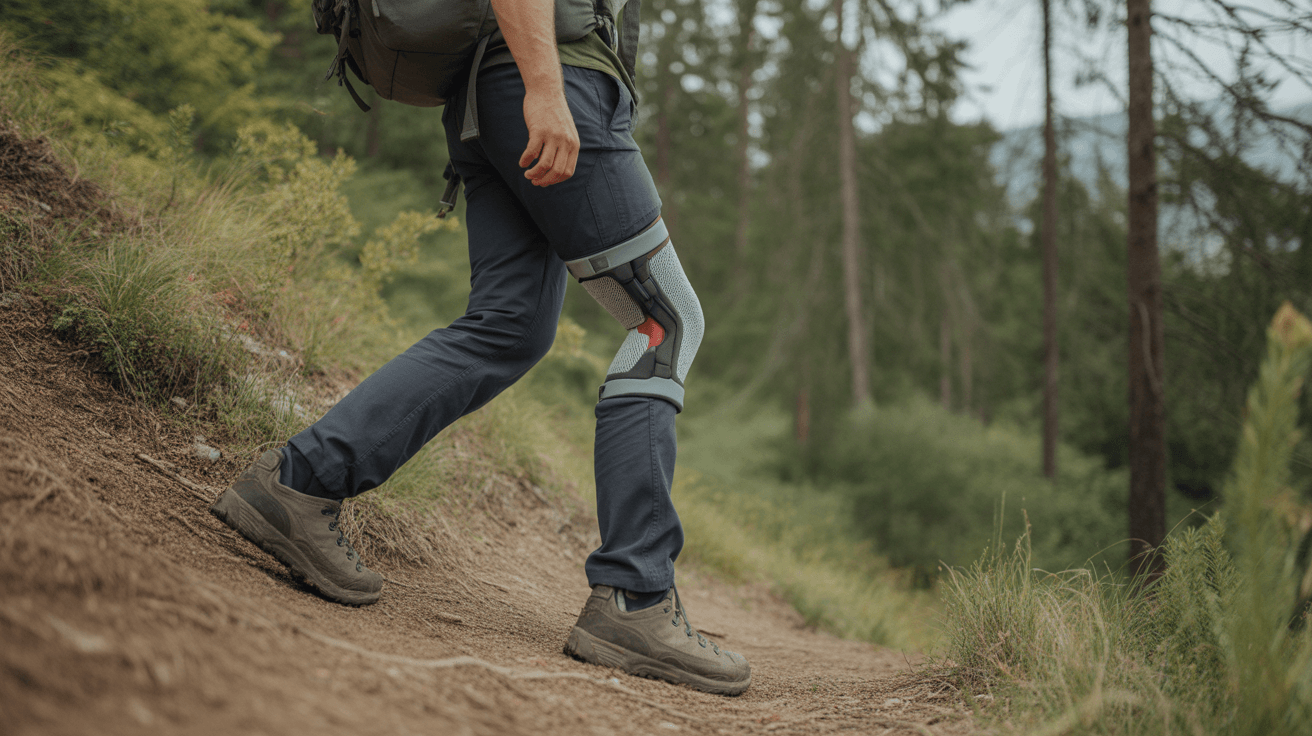
If you are new to hiking and feel nervous about knee pain on downhill sections, you are not alone. Many beginner hikers worry about knee strain, especially when descending rocky trails or steep paths. Maybe you have felt that twinge in your knee during your first few hikes, or perhaps you are concerned about an old injury acting up on the trail. The good news is that a supportive knee brace can provide additional structure and compression that many hikers find comfortable on longer trails.
This guide walks you through the best hiking knee braces for beginners – options that are easy to put on, comfortable to wear for hours, and designed with features that hikers prioritize without feeling bulky or restrictive. We have focused on braces that work well for new hikers who are still figuring out their gear and need straightforward solutions that do not require medical expertise to choose or use.
What to Look For
Types of Knee Braces for Hiking
When you start looking at knee braces, you will notice several different styles, and it helps to understand what each type does. Compression sleeves are tube-shaped supports that slide over your knee, providing gentle compression all around the joint. These work well for mild support and warmth, and they are the easiest to put on. Patella straps (also called patellar tendon straps) are single bands that wrap just below your kneecap to target the tendon area – these are simple and lightweight but offer more focused support than full sleeves. Wraparound braces with side stabilizers provide the most support, featuring adjustable straps and built-in rigid supports on the sides of your knee to limit side-to-side movement. For beginners, compression sleeves and patella straps are usually the best starting points because they are less intimidating and easier to adjust on the trail.
Support Level You Actually Need
Beginner hikers often assume they need maximum support, but that is not always true. If you are hiking moderate trails (think state park day hikes with some elevation change), a basic compression sleeve or patella strap is usually sufficient. These provide structure that many hikers find comfortable without restricting your movement. If you have a history of knee injuries, experience discomfort on downhill sections, or plan to tackle steeper terrain, a brace with side stabilizers offers more structure. The key is matching the support level to your actual needs – more support is not always better, as overly rigid braces can feel uncomfortable during long hikes and may limit the natural movement that helps build strength over time.
Fit and Sizing Basics
A knee brace only works if it fits correctly, and sizing can be confusing for first-time buyers. Most braces use your thigh or knee circumference to determine size – you will need a soft measuring tape to measure around your leg about 4-6 inches above your kneecap for most models. Do not guess or assume your clothing size translates to brace size. A brace that is too loose will slide down during your hike, which is both annoying and defeats the purpose of wearing one. A brace that is too tight will cut off circulation and feel uncomfortable within the first mile. Look for braces with adjustable straps, as these give you more room to fine-tune the fit. If you fall between sizes, most manufacturers recommend sizing up for compression sleeves and following their specific guidelines for wraparound models.
Comfort Features That Matter on Long Hikes
When you are hiking for several hours, small comfort details become important. Breathable materials (often described as moisture-wicking or mesh fabric) help prevent the sweaty, itchy feeling that happens when your knee brace traps heat. Non-slip silicone strips inside the top and bottom edges keep the brace from sliding down without feeling too tight. If you choose a wraparound brace, look for models with gel padding around the kneecap – this adds cushioning that many users find more comfortable than hard plastic. Lightweight construction matters too; a heavy brace will feel more tiring over miles, especially on uphill climbs where every ounce counts. Some braces are described as low-profile or thin, which means they fit more easily under hiking pants if you prefer not to advertise that you are wearing support.
When to Wear Your Knee Brace
You do not need to wear a knee brace on every single hike. Many beginners find they only need support on longer hikes (over 5 miles), hikes with significant elevation loss, or when carrying a heavier pack. Some hikers wear their brace only on the descent, putting it on at the summit before heading back down. This is completely fine and can actually help you avoid becoming overly dependent on the brace. If your knees feel fine without support on flat or gently rolling trails, save the brace for more challenging terrain. That said, if you have a previous injury or chronic knee issues, your doctor may recommend wearing support more consistently. Listen to your body – knee braces are tools to make hiking more comfortable, not mandatory equipment for every trail.
Maintenance and Care
Knee braces get sweaty and dirty on the trail, so plan to wash them regularly. Most fabric braces can be hand-washed with mild soap and air-dried – avoid putting them in the dryer, as heat can break down elastic materials and cause them to lose their compression. Braces with metal stays or hinges need a bit more care; make sure they are fully dry before storing to prevent rust. Keep your brace in a cool, dry place rather than leaving it crumpled in your hiking pack. With proper care, a quality knee brace should last at least a full hiking season (50+ hikes) before the elastic begins to wear out. Replace your brace if you notice it no longer stays in place or if the compression feels noticeably looser than when it was new.
Our Top Picks
1. Modvel Compression Knee Brace for Women & Men, 2-Pack
Best overall for beginners who want reliable compression at an affordable price

This two-pack compression sleeve offers exactly what most beginner hikers need: straightforward knee support without complicated adjustments or intimidating features. The compression is moderate – designed to make your knee feel more supported on downhill sections without feeling restrictive on climbs. Each sleeve slides on easily, and the non-slip silicone bands at the top and bottom are designed to stay in place during movement, which is often a problem with cheaper sleeves.
What makes this particularly good for beginners is the simplicity. There are no straps to figure out, no side stabilizers to position correctly, and no sizing confusion beyond measuring your knee circumference. You pull it on like a sock, and it works. The fabric is breathable enough that your knee does not feel swampy after a few miles, though on very hot days you will still notice some moisture buildup. At this price point for two sleeves, you get good value – you can keep one in your hiking pack and one at home, or use both knees if you need bilateral support.
The compression level is moderate, which means this works well for general knee fatigue, minor discomfort, and added support on longer hikes. If you have a significant knee injury or need maximum stability, you will want something with more structure. But for the beginner hiker who is building up mileage and wants basic support that feels comfortable for 6-8 hour hikes, this delivers without any learning curve. The over 77,000 reviews provide extensive real-world feedback from users at various experience levels.
See current pricing for the Modvel Compression Knee Brace on Amazon.
Pros
- Two braces included for the price, good value for beginners
- Simple pull-on design with no complicated straps or adjustments
- Non-slip silicone bands keep sleeves in place during hiking
- Breathable fabric suitable for multi-hour hikes
- Over 77,000 reviews provide reliable feedback from real users
Cons
- Moderate compression may not be enough for significant knee injuries
- Some moisture buildup on hot days despite breathable fabric
- No side stabilizers for additional structure if needed
View Modvel Compression Knee Brace for Women & Men on Amazon →
2. NEENCA Professional Knee Brace with Patella Gel Pad & Side Stabilizers
Best for beginners who need more support structure for downhill hiking

This knee brace steps up from basic compression sleeves by adding features that provide more targeted support – specifically useful if downhill sections make your knees feel unstable or uncomfortable. The side stabilizers are rigid supports sewn into the fabric on either side of your knee joint, limiting excessive side-to-side movement that can happen when you are tired or navigating uneven terrain. The gel pad sits over your kneecap and adds cushioning that many users report feeling more comfortable than braces without this feature.
For beginners, this brace is still relatively straightforward to use. It is a pull-on sleeve design (not a wraparound), so you do not need to figure out multiple strap positions. The side stabilizers are flexible enough that they do not feel rigid or restrictive when you bend your knee, but they provide enough structure that you notice the difference compared to a basic compression sleeve. This makes it a good middle-ground option – more support than a simple sleeve, but not as complicated as a hinged brace.
The breathable fabric helps with moisture management during longer hikes, and the brace stays in place reasonably well thanks to the compression fit and silicone grip strips. Sizing is important here; if you get the wrong size, the stabilizers will not align properly with your knee joint and the whole thing feels awkward. Take the time to measure carefully using the size chart provided. This brace works well for 4-6 hour day hikes with moderate elevation changes, providing support without feeling like you are wearing heavy equipment.
Read verified buyer reviews for the NEENCA Professional Knee Brace on Amazon.
Pros
- Side stabilizers provide extra structure for unstable knees
- Gel pad over kneecap reduces pressure and increases comfort
- Pull-on design easier than wraparound braces for beginners
- Breathable fabric with anti-slip silicone strips
- Over 66,000 reviews show consistent performance
Cons
- Requires accurate sizing for stabilizers to align correctly
- More expensive than basic compression sleeves
- Slightly bulkier than simple sleeves, may not fit under tight pants
View NEENCA Professional Knee Brace with Patella Gel Pad & Side Stabilizers on Amazon →
3. Bodyprox Patella Tendon Knee Strap 2 Pack
Best lightweight option for minor knee pain below the kneecap
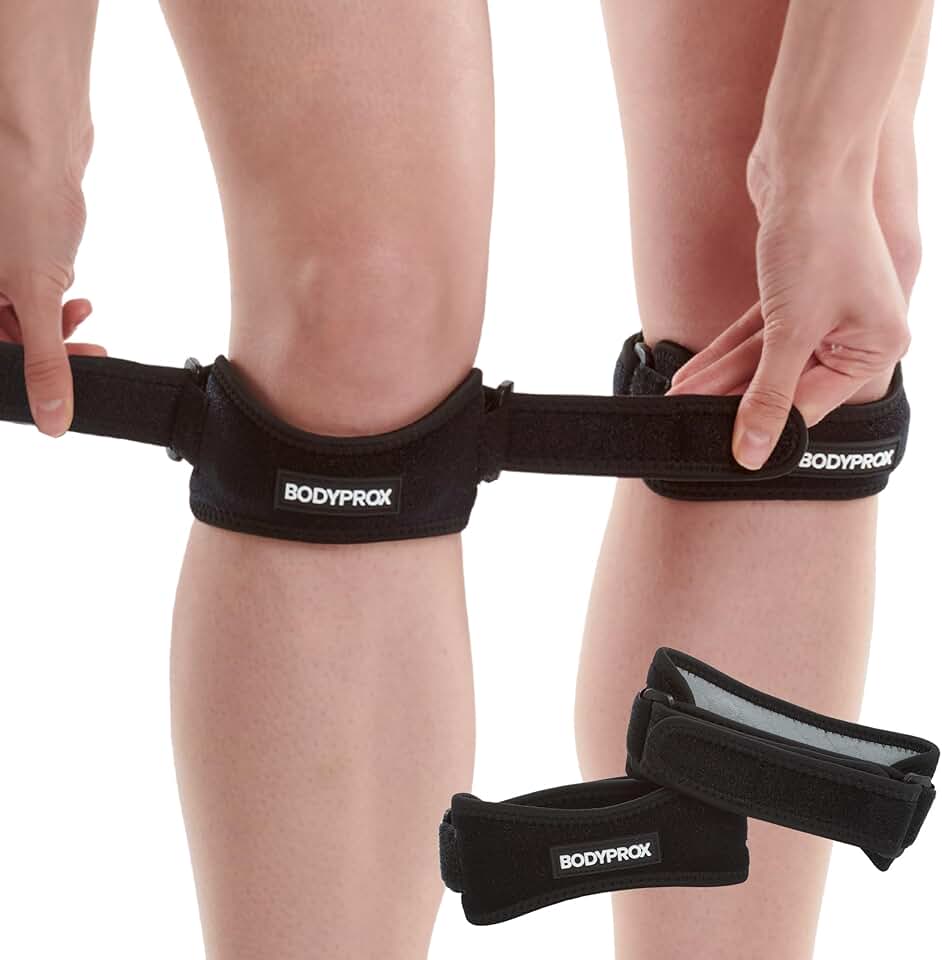
This patella strap takes a completely different approach than full knee sleeves – it is a single band that wraps around your leg just below your kneecap to support the patellar tendon area. If your knee discomfort is specifically located below the kneecap, this targeted support can be more effective than full compression. The strap is lightweight enough that you barely notice you are wearing it after the first few minutes, which is a big advantage on long hikes where extra weight or heat matters.
For beginners, the strap is simple to use: wrap it around your leg, secure the Velcro, and adjust the tightness. The learning curve is minimal. You can easily adjust it on the trail if it feels too loose or too tight, and you can even wear it under or over pants depending on your preference. At under fifteen dollars for two straps, this is the most affordable option in this guide and works well for hikers who want to try knee support without committing to a more expensive brace.
The trade-off is that this provides very targeted support – it helps with specific patellar tendon issues but does not stabilize the entire knee joint or provide compression to the whole area. If your knee discomfort is general or located on the sides or back of your knee, a full sleeve will serve you better. But if you experience discomfort specifically when hiking downhill and it feels like it is coming from just below your kneecap, this simple strap is designed for that exact concern. The two-pack means you can support both knees or have a backup.
Check current stock for the Bodyprox Patella Tendon Knee Strap on Amazon.
Pros
- Extremely lightweight and minimally bulky
- Targeted support for patellar tendon pain
- Easy to adjust on the trail without removing pants
- Affordable option to try knee support for under fifteen dollars
- Nearly 40,000 reviews provide extensive real-world feedback
Cons
- Only supports patellar tendon, not entire knee joint
- Does not provide compression or warmth to knee area
- May slip down during very steep descents if not adjusted snugly
4. CAMBIVO 2 Pack Knee Braces with Non-Slip Silicone
Best budget-friendly compression sleeve with anti-slip features

This two-pack compression sleeve delivers solid performance at a price point that makes it accessible for beginners who are not sure how much they will use knee support. The compression is similar to other sleeve-style braces on this list, providing a snug fit that makes your knee feel more supported without restricting movement. What stands out here is the non-slip silicone grip that runs around the top and bottom edges – this is more effective than many budget braces at preventing the annoying slide-down problem that happens during long hikes.
The fabric is breathable enough for day hikes in moderate temperatures, though like most compression sleeves, you will feel some warmth buildup on hot summer days. The sleeve is easy to pull on and does not require any adjustment once it is in place, which is exactly what beginners want. Sizing follows standard measurements (thigh circumference), and if you measure carefully, the fit is generally accurate. The two-pack gives you backup support or allows you to wear braces on both knees if needed.
This brace works well for general knee support during hiking – it is not specialized for any particular injury and does not have side stabilizers or gel pads, so it falls into the basic support category. For hikers who are just starting to feel knee fatigue on longer trails and want affordable support that will last a season or two, this is a smart choice. The over 45,000 reviews show consistent satisfaction, particularly for the price point. This is straightforward compression support without extra features, which for many beginners is exactly right.
Compare the CAMBIVO 2 Pack Knee Braces specs and pricing on Amazon.
Pros
- Very affordable two-pack under fifteen dollars
- Non-slip silicone pattern works well to prevent sliding
- Simple compression design with no complicated features
- Breathable fabric suitable for multi-hour hikes
- Over 45,000 reviews confirm reliable basic performance
Cons
- Basic compression only, no side stabilizers or extra support features
- Can feel warm in hot weather despite breathability
- Some users report sizing runs slightly small
View CAMBIVO 2 Pack Knee Braces with Non-Slip Silicone on Amazon →
How These Compare
Choosing between these four knee braces depends on your specific needs as a beginner hiker. If you want the simplest, most reliable option that covers the basics, the Modvel Compression Knee Brace offers the best balance of support, comfort, and value. The two-pack means you have backup support or can protect both knees, and the straightforward design removes any confusion about how to wear it correctly. This works well for most beginner hikers who are building up their mileage and experiencing general knee fatigue.
If your knees feel unstable on downhill sections or you have had previous knee issues, the NEENCA Professional Knee Brace with side stabilizers provides more structure without being overwhelming. The gel pad over your kneecap adds cushioning that you will appreciate on longer hikes, and the stabilizers help limit the side-to-side movement that can lead to discomfort. This is worth the slight price increase if you know you need more than basic compression.
For hikers whose discomfort is specifically below the kneecap and who prefer minimal bulk, the Bodyprox Patella Tendon Strap offers targeted relief in the lightest package. This is ideal if you have tried hiking without support and noticed discomfort in that one specific spot. The lightweight design means you can easily carry it in your pack and put it on only when needed, rather than wearing it for entire hikes.
Finally, if budget is your primary concern and you want to test whether knee support helps before investing more, the CAMBIVO 2 Pack Knee Braces delivers solid basic compression at the lowest price point. The non-slip silicone is a standout feature at this price, and the two-pack gives you flexibility. This is a smart starting point if you are genuinely unsure whether you will use knee support regularly enough to justify spending more on advanced features.
Frequently Asked Questions
Do knee braces actually help with knee pain during hiking?
Knee braces can provide support features that many hikers find beneficial during hiking, though they work differently for different types of knee discomfort. Compression sleeves provide a snug fit that many users report feeling more supported, particularly useful on longer hikes when your legs get tired and your form starts to deteriorate. Braces with side stabilizers physically limit movement in certain directions, which is why many hikers find them helpful during downhill sections. Patella straps focus on the tendon area below your kneecap, providing targeted compression to that specific region.
That said, knee braces are support tools, not medical treatments. If you have a previous knee injury or chronic pain, wearing a brace may make hiking more comfortable but does not fix underlying issues. You should still work on strengthening the muscles around your knee through exercises recommended by a physical therapist. For general knee fatigue or minor discomfort that appears after several miles of hiking, a brace can provide the structure and support that many hikers prioritize for more challenging terrain. Many hikers find they only need support on more demanding trails or when carrying heavier packs.
Should I wear a knee brace on both knees or just one?
This depends entirely on where you feel discomfort. If only one knee bothers you during or after hikes, wear support on just that knee. There is no benefit to wearing a brace on a knee that feels fine, and doing so can actually create an imbalance in how you walk. Some hikers find that protecting one knee causes them to unconsciously put more stress on the other knee, which then starts to hurt – in that case, wearing braces on both knees makes sense.
Many two-pack knee braces are marketed this way because bilateral knee discomfort is common, especially as we age or increase our hiking mileage. If you are just starting out and unsure, begin with support on whichever knee feels weaker or more uncomfortable. After a few hikes, you will know whether you need to add support to the other knee. Some hikers also rotate which knee gets support depending on the terrain – for example, wearing a brace on the downhill-side knee on trails with lots of switchbacks. Listen to your body rather than assuming you need to match what other hikers do.
How tight should a hiking knee brace feel?
A properly fitted knee brace should feel snug but not restrictive. You should be able to slide two fingers under the top edge without much resistance – if you cannot, it is too tight and will cut off circulation or feel uncomfortable within the first mile. On the other hand, if you can easily slide your whole hand under the brace, it is too loose and will slide down during your hike. The compression should feel supportive, like a firm handshake rather than a grip.
When you first put on a compression sleeve or brace, walk around your house for 10-15 minutes before heading to the trailhead. This helps you identify if anything feels too tight or if the brace shifts position during movement. Your knee should not feel numb, tingly, or like the circulation is being restricted. If you notice red marks or indentations after removing the brace, it was too tight. Most braces feel slightly more restrictive when you first put them on and then conform to your leg shape after a few minutes of movement. On the trail, you can make small adjustments to the tightness, but if you find yourself constantly adjusting, the size is probably wrong.
Can I wear a knee brace under my hiking pants?
Most compression sleeve-style knee braces fit easily under hiking pants, especially if you wear pants with a relaxed or athletic fit. Slim-fit or tight hiking pants may create visible bunching or feel uncomfortable with a brace underneath. Wraparound braces with side stabilizers or hinges are bulkier and more likely to show through pants or feel restrictive if worn underneath. Many hikers prefer wearing these over their pants for easier adjustment and better air circulation.
Patella straps are thin enough to wear under most pants without any issue. If discretion matters to you or you are hiking in cooler weather where you want an extra layer, knee sleeves work fine under pants. In hot weather, consider wearing the brace over pants or over shorts to allow better air circulation and prevent overheating. There is no performance difference between wearing a brace under or over your clothing – it is purely about comfort and personal preference. Try both ways at home before your hike to see what feels better for you.
How do I know which size knee brace to buy?
Getting the right size requires measuring your leg with a soft measuring tape. For most knee braces, you measure the circumference of your thigh about 4-6 inches above the center of your kneecap – the product description will specify the exact measurement location. Wrap the tape measure around your leg snugly but not tightly, and note the measurement in inches. Compare this to the size chart provided by the manufacturer, which varies by brand.
Do not guess based on your clothing size or shoe size – knee brace sizing does not correlate with these measurements. If you fall between two sizes, most manufacturers recommend sizing up for compression sleeves to avoid overly tight fit. For wraparound braces with adjustable straps, you have more flexibility and can sometimes make an in-between size work. Measure both legs if you plan to wear braces on both knees, as your legs may be slightly different sizes. Take measurements at the end of the day when your legs are at their largest from normal swelling. If you order online and the brace does not fit correctly, most retailers accept returns, so do not try to make an ill-fitting brace work.
The Bottom Line
Finding the right knee brace as a beginner hiker does not need to be complicated. Start by honestly assessing what kind of support you actually need – if you are experiencing general knee fatigue on longer hikes, a basic compression sleeve like the Modvel or CAMBIVO provides enough support without overwhelming you with features. If your knees feel unstable on downhill sections or you have a history of knee issues, the added structure of the NEENCA brace with side stabilizers will provide more comprehensive support on the trail. And if your discomfort is specifically below the kneecap, the lightweight Bodyprox patella strap offers targeted relief without the bulk of a full sleeve.
Remember that knee braces are tools to make hiking more enjoyable, not badges of weakness. Many experienced hikers use them on challenging terrain or longer distances. Start with whichever option matches your budget and needs, wear it on a few hikes, and pay attention to how your knees feel during and after. You will quickly learn whether you need more support, less support, or if you are using the right brace for your situation. The goal is to keep hiking comfortably so you can build up your experience and confidence on the trail without knee discomfort holding you back.
Disclosure: As an Amazon Associate, we earn from qualifying purchases. This does not affect our editorial recommendations.