
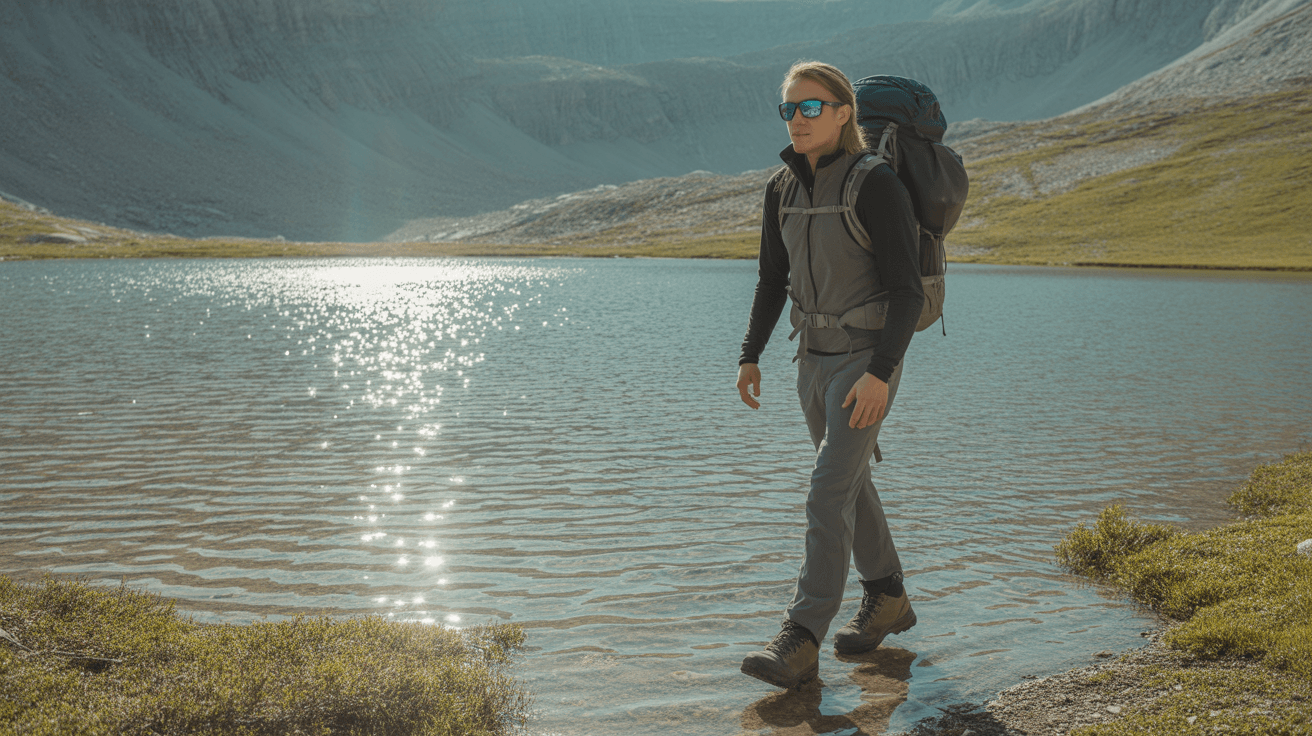
When sunlight bounces off a lake surface or a snowfield, the glare can turn a beautiful trail into a squint-fest. You need sunglasses that cut that reflected light without making everything look flat or obscuring what is around you on technical terrain. That is where polarized lenses come in – but not all polarized sunglasses work well for hiking, especially if you spend time near water or snow where glare is relentless.
The best polarized sunglasses for hiking balance glare reduction with color accuracy and a wide field of view. You want lenses that kill the harsh reflections without washing out trail markers, distorting rock color (important for route-finding), or blocking your peripheral vision when you are navigating uneven ground. This guide walks you through the top options tested by hikers who tackle everything from alpine lakes to snowshoe routes, with honest takes on what works and what does not.
What to Look For
Why Polarization Matters for Hiking
Polarized lenses block horizontally oriented light waves – the kind that bounce off flat surfaces like water, snow, and wet rocks. On a trail that follows a river or crosses a snowfield, this means you can actually see what is in the water or under the snow instead of just a white or silver glare wall. It reduces eye strain significantly over a full day outdoors and makes it easier to spot obstacles.
Not all hikers need polarization. If you mostly hike under tree cover or on desert trails with no water, standard UV-blocking sunglasses work fine. But if your routes include lakeside stretches, creek crossings, or high-elevation snow traverses, polarized lenses make a noticeable difference in comfort and safety.
Color Accuracy and Trail Navigation
Some polarized lenses – especially heavily tinted or mirrored ones – flatten color perception. That is fine for driving or casual wear, but it becomes a problem on technical terrain where you need to distinguish between stable rock and loose scree, or spot a faded trail blaze on a tree.
Look for lenses described as “neutral tint,” “natural color,” or “true color” in product listings. Brown and copper tints tend to enhance contrast without distorting natural hues. Gray tints reduce brightness evenly across the spectrum, which keeps colors accurate. Avoid heavily blue or purple mirrored lenses if color fidelity matters for your route-finding.
Peripheral Vision and Frame Design
Wrap-around frames and wide lenses give you better side coverage against glare and UV rays, but they can also create blind spots if the frame arms are too thick or positioned poorly. On technical trails where you are watching foot placement and scanning for obstacles, you need to see clearly in all directions without turning your head constantly.
Test the frame by looking side to side. The lens edges and frame arms should not block your peripheral view. Some sport-specific designs curve the lens to follow your face, which maximizes coverage without cutting off side vision. This is especially important if you hike in exposed terrain where a misstep has consequences.
Fit and Stability on the Trail
Sunglasses that slide down your nose when you sweat or tilt forward when you look down are not just annoying – they are a safety issue on uneven ground. Look for rubberized nose pads and temple grips that hold the frames in place without pinching. Some models use adjustable nose pieces, which is helpful if you have a low or high bridge.
The frames should sit snug but not tight. You should be able to shake your head side to side without the glasses moving. If you wear a hat, make sure the brim does not push the frames down or the arms do not interfere with the hat band.
Weight and All-Day Comfort
You will be wearing these for hours at a time, possibly in high heat or at altitude. Heavy frames create pressure points on your nose and ears, which becomes uncomfortable after the first mile. Most hiking-specific sunglasses weigh between 20 and 30 grams – light enough that you forget you are wearing them.
Materials matter here. TR90 frames (a flexible nylon composite) and polycarbonate lenses are both lightweight and durable. Metal frames look sleeker but tend to weigh more and can get hot in direct sun. If a product listing includes weight specs, compare them directly.
Durability for Trail Conditions
Your sunglasses will get stuffed in pockets, dropped on rocks, splashed with creek water, and coated in dust. Look for scratch-resistant lens coatings and frames that flex without snapping. Polycarbonate lenses are impact-resistant, which is important if you are hiking in areas with overhanging branches or if you tend to be hard on gear.
Some models come with hard cases; others include only soft pouches. A hard case is worth carrying if you are backpacking and your sunglasses will be bouncing around in a pack. If you day-hike and keep them on your face or clipped to your shirt, a pouch is usually enough.
Our Top Picks
1. goodr Polarized Sunglasses, Medium Sized (OG), UV400 Protection, No Slip, No Bounce
Best for hikers who want lightweight, no-slip frames that stay put on sweaty ascents

These are the sunglasses you grab when you know you will be moving fast and sweating hard. The no-slip frame coating grips without feeling sticky, and the no-bounce fit means they stay centered on your face even when you are scrambling over rocks or jogging downhill. At 30 dollars, they are priced right in the middle of the pack but punch above their weight in performance.
The polarized lenses cut glare effectively on water and snow without washing out colors. Reviewers consistently mention that trail markers and rock details stay visible, which is critical when you are navigating technical sections. The medium size fits most face shapes without pinching, and the UV400 protection covers the full spectrum of harmful rays.
These frames are built for activity. The lightweight construction means you can wear them all day without ear or nose fatigue, and the wraparound design gives solid peripheral coverage without thick arms blocking your side vision. They come in multiple color options, so you can pick a lens tint that matches your typical terrain – darker for high-altitude snow, lighter for forest trails.
The trade-off is durability. They are not as rugged as some of the heavier models, so if you are rough on gear or plan to stuff them in a pack pocket without a case, they might show wear faster. But for the price and performance, they are hard to beat for active hiking where fit and function matter more than long-term bombproofing.
See current pricing for the goodr Polarized Sunglasses on Amazon.
Pros
- No-slip coating keeps them secure during sweaty climbs
- Lightweight design comfortable for all-day wear
- Polarized lenses cut glare without distorting color
- Wide peripheral vision for technical terrain
- UV400 protection against full spectrum of harmful rays
Cons
- Not as durable as heavier-framed models
- No hard case included for pack storage
2. Tifosi Swank Sport Sunglasses – Ideal For Cycling, Golf, Hiking, Pickleball, Running
Best for hikers who prioritize natural color accuracy on varied terrain

The Tifosi Swank frames deliver clean, accurate color reproduction that makes a real difference when you are reading terrain. The polarized lenses block glare from water and snow while keeping greens, browns, and grays true to life – important for spotting trail markers, identifying plant types, or judging rock stability. This is one of the few sub-30-dollar options that does not sacrifice color fidelity for glare reduction.
The frame shape is classic and low-profile, which means good peripheral vision without the aggressive wraparound look of some sport models. They sit comfortably on most face shapes and stay put without special grips or coatings – just a well-balanced design that does not slide when you sweat. The lightweight build means you forget you are wearing them after the first mile.
These are marketed for multiple sports, and that versatility shows. They work just as well for a lakeside trail run as they do for a full-day ridge hike. The lenses are scratch-resistant, and the frames flex slightly under pressure instead of snapping, which is helpful if you tend to sit on your sunglasses or drop them on rocks.
The downside is limited adjustability. The nose pads are fixed, so if you have a very low or very high bridge, you might find the fit less secure than models with adjustable pads. They also come with a soft pouch only, so you will want a hard case if you are tossing them in a pack.
Read verified buyer reviews for the Tifosi Swank Sport Sunglasses on Amazon.
Pros
- Accurate color reproduction for terrain reading
- Lightweight and comfortable for long hikes
- Scratch-resistant lenses hold up to trail abuse
- Good peripheral vision without bulk
- Climate Pledge Friendly certified
Cons
- Fixed nose pads may not fit all bridge shapes
- Soft pouch only – no hard case for pack storage
View Tifosi Swank Sport Sunglasses – Ideal For Cycling on Amazon →
3. KastKing Hiwassee Polarized Sport Sunglasses, Wrap Sunglasses for Fishing Cycling and Running, UV Protection
Best for budget-conscious hikers who need wide coverage on exposed trails

The KastKing Hiwassee frames give you wraparound coverage at a price point that makes them easy to justify even if you are hard on gear. The wide lenses block glare from multiple angles – useful on high-elevation trails where light bounces off snow and rock in all directions. The polarized lenses handle water reflections well, which is key if your routes include lake loops or creek crossings.
The fit is secure without being tight. The wrap design curves around your face, which increases side coverage and reduces UV exposure from angles that flat lenses miss. The frame arms are slim enough that they do not interfere with hat brims or create blind spots in your peripheral vision. At under 24 dollars, they are one of the most affordable options that still delivers real polarization performance.
These are built to take a beating. The frames flex under stress instead of cracking, and the lenses resist scratches better than you would expect at this price. Multiple reviewers mention dropping them on rocks or sitting on them without damage, which is reassuring if you are not careful with gear.
The trade-off is weight. They are slightly heavier than some ultralight models, which you might notice on very long hikes. The nose pads are fixed rather than adjustable, so fit can vary depending on your face shape. They come with a soft case, but you will want to add a hard case if you are stuffing them in a pack.
Check current stock for the KastKing Hiwassee Polarized Sport Sunglasses on Amazon.
Pros
- Wide wraparound coverage for exposed terrain
- Durable frames withstand drops and rough handling
- Effective glare reduction on water and snow
- Budget-friendly without sacrificing performance
- Slim arms do not block peripheral vision
Cons
- Slightly heavier than ultralight models
- Fixed nose pads may not fit all face shapes
View KastKing Hiwassee Polarized Sport Sunglasses on Amazon →
4. DUCO Mens Sports Polarized Sunglasses UV Protection Sunglasses for Men 8177s
Best for hikers who need proven reliability across thousands of trail miles

With over 30,000 reviews and a solid 4.5-star rating, these frames have been tested by more hikers than almost any other model on this list. That kind of feedback volume is reassuring when you are trying to find sunglasses that actually work on the trail. The polarized lenses cut glare effectively without the color distortion that some cheaper options introduce, and the UV protection is rated for full-spectrum blocking.
The frame design balances coverage with comfort. They wrap slightly to reduce side glare but do not create the tunnel vision effect of some aggressive sport models. The lenses are large enough to protect your eyes from multiple angles without being so oversized that they slide around. The nose pads are adjustable, which helps dial in a secure fit for different bridge shapes.
These are built to last. The frames are impact-resistant and the lenses hold up to scratches better than most in this price range. Multiple long-term reviewers mention wearing them for years without significant wear, which is rare for sub-25-dollar sunglasses. They come in multiple lens tint options, so you can pick the one that matches your typical conditions.
The downside is weight. They are not the lightest option here, which you might notice on very long hikes or if you are sensitive to pressure on your nose and ears. The style is also more utilitarian than fashion-forward, so if you want sunglasses that double as everyday wear, these lean more toward function than form.
Compare the DUCO Mens Sports Polarized Sunglasses specs and pricing on Amazon.
Pros
- Over 30,000 reviews confirm reliable trail performance
- Adjustable nose pads fit multiple face shapes
- Durable frames and lenses handle years of use
- Effective glare reduction without color distortion
- Multiple lens tint options for different conditions
Cons
- Heavier than ultralight models
- Utilitarian style may not work for everyday wear
View DUCO Mens Sports Polarized Sunglasses UV Protection Sunglasses for Men 8177s on Amazon →
5. Suncloud Sentry Polarized Sunglasses – 100% UV Protection – Comfortable Fit, Trendy Design – for Men & Women
Best for hikers who want premium lens quality and a lifetime warranty

Suncloud is owned by Smith Optics, which means these frames come with optical-grade lenses at a fraction of the price you would pay for Smith-branded models. The polarized lenses are noticeably clearer and sharper than budget options, with better glare reduction and more accurate color rendering. If you have tried cheap polarized sunglasses and found them muddy or flat-looking, these are the step up that makes the difference obvious.
The fit is refined without being fussy. The frames sit balanced on your face with even weight distribution, so there are no hot spots on your nose or ears even after hours of wear. The lens coverage is generous without being oversized, and the frame arms are slim enough that they do not interfere with peripheral vision or hat brims. These feel like premium sunglasses, because they are – just priced below what you would expect.
Suncloud backs these with a lifetime warranty, which is rare at this price point. If the frames break or the lenses delaminate, they will replace them. That kind of confidence in the product is worth paying a bit more for, especially if you plan to keep these for years. The lenses are also replaceable if you scratch them, which extends the lifespan significantly.
The trade-off is cost. At 45 dollars, they are the most expensive option on this list. You are paying for better optical quality and the warranty, which is worth it if you value clarity and long-term durability. But if you are on a tight budget or rough on gear, one of the sub-30-dollar options might make more sense.
See if the Suncloud Sentry Polarized Sunglasses are right for your first hike on Amazon.
Pros
- Optical-grade lenses deliver sharp, clear vision
- Better glare reduction and color accuracy than budget models
- Lifetime warranty covers defects and breakage
- Comfortable fit for all-day wear
- Replaceable lenses extend product lifespan
Cons
- Most expensive option on this list
- May be overkill if you are rough on sunglasses
View Suncloud Sentry Polarized Sunglasses – 100% UV Protection – Comfortable Fit on Amazon →
How These Compare
If you hike fast and sweat heavily, the goodr OG frames are the clear choice. Their no-slip coating and lightweight build make them ideal for high-output days where you are moving quickly over varied terrain. They stay put without pinching, and the polarization is strong enough for water and snow glare without washing out color. At 30 dollars, they are priced fairly for the performance you get.
For hikers who prioritize color accuracy – especially if you are navigating by terrain features or spotting trail markers – the Tifosi Swank frames deliver the most natural color rendering in this group. The lenses block glare effectively while keeping greens, browns, and grays true to life, which makes a real difference when you are reading the landscape. They are also lightweight and comfortable, though the fixed nose pads may not fit every face shape.
If you are on a budget or hard on gear, the KastKing Hiwassee sunglasses give you wraparound coverage and solid glare reduction at under 24 dollars. They are slightly heavier than ultralight models, but the durability is impressive for the price. Multiple reviewers mention dropping them on rocks without damage, which is reassuring if you are not careful with gear. The wide lenses are especially useful on exposed trails where glare comes from multiple angles.
For proven reliability backed by thousands of reviews, the DUCO 8177s are hard to beat. With over 30,000 reviews and a 4.5-star rating, these frames have been tested across more trail miles than any other model here. The adjustable nose pads help dial in a secure fit, and the lenses hold up to years of use without significant wear. They are heavier than some options and more utilitarian in style, but the track record speaks for itself.
If you want premium lens quality and do not mind spending a bit more, the Suncloud Sentry frames are the upgrade that makes the difference obvious. The optical-grade lenses are sharper and clearer than budget models, with better glare reduction and more accurate color. The lifetime warranty and replaceable lenses mean these can last for years, which justifies the 45-dollar price tag if you value clarity and long-term durability.
Frequently Asked Questions
Do polarized sunglasses distort colors on hiking trails?
Some polarized lenses do flatten or shift colors, but it depends on the lens tint and quality. Heavily mirrored or blue-tinted lenses tend to wash out natural hues, which makes it harder to distinguish between rock types, spot trail markers, or read terrain accurately. Neutral gray or brown tints keep colors closer to natural while still blocking glare.
If color accuracy matters for your navigation or route-finding, look for lenses described as “true color” or “natural tint” in product listings. The Tifosi Swank and Suncloud Sentry models in this guide both prioritize accurate color rendering. Cheaper polarized lenses sometimes introduce a yellow or purple cast that makes everything look flat – this is where paying a bit more for optical-grade lenses makes a noticeable difference on the trail.
Can I wear polarized sunglasses in the snow?
Yes, and polarized lenses are especially useful in snow because they cut the intense glare that bounces off white surfaces. Snow reflects sunlight at angles that regular tinted lenses cannot block effectively, which leads to eye strain and reduced visibility. Polarization filters out that horizontal glare, making it easier to see texture, depth, and obstacles under the snow.
However, some hikers avoid polarized lenses in icy conditions because the polarization can make it harder to see black ice or shiny ice patches on the trail. If you are hiking in areas with mixed snow and ice, test your sunglasses on a reflective surface before relying on them for safety-critical decisions. For pure snow travel – like snowshoeing or spring hiking near alpine lakes – polarization is a major advantage.
Will polarized sunglasses work with prescription lenses?
Most polarized hiking sunglasses do not come with prescription options, but you have a few workarounds. The easiest is to look for models with removable lenses that can be replaced with prescription polarized lenses from an optical lab. Some brands offer prescription inserts that sit behind the main lens, though these add weight and can fog up.
Another option is to wear contact lenses with non-prescription polarized sunglasses, which gives you the widest selection of frames and the best fit. If you prefer glasses, look for polarized clip-ons that attach to your existing prescription frames – these work well for hiking but can shift or fall off on rough terrain. For the best fit and optical quality, consider getting a dedicated pair of prescription polarized sunglasses from an optician, though that will cost significantly more than the models in this guide.
How do I know if sunglasses are actually polarized?
The easiest test is to hold the sunglasses in front of a digital screen (like your phone or computer monitor) and rotate them 90 degrees. If the lenses are polarized, the screen will darken or turn almost black when the lenses are perpendicular to the screen’s light waves. If the screen stays visible at all angles, the lenses are not polarized – just tinted.
Another test is to look at a reflective surface like water or a car hood through the lenses. Polarized lenses will noticeably reduce or eliminate the glare when you tilt your head. If the glare stays the same regardless of angle, the lenses are not polarized. This matters because some cheap sunglasses are marketed as polarized but only have a dark tint, which reduces brightness but does not block reflected light.
Are wraparound sunglasses better for hiking?
Wraparound frames give you better side coverage against UV rays and glare, which is useful on exposed trails where light bounces off rocks, water, and snow from multiple angles. They also reduce wind and dust from hitting your eyes, which is helpful in open terrain or on windy ridges. The curved lens design follows the shape of your face, which maximizes protection without gaps.
The downside is that some wraparound models create blind spots if the frame arms are too thick or positioned poorly. On technical terrain where you need to see clearly in all directions, this can be a problem. Look for wraparound designs with slim arms and lenses that curve smoothly rather than sharply. The KastKing Hiwassee and DUCO 8177s models both offer wraparound coverage without blocking peripheral vision, which is the balance you want for hiking.
The Bottom Line
The best polarized sunglasses for hiking cut glare on water and snow without flattening colors or blocking your side vision. If you are moving fast and need frames that stay put when you sweat, the goodr OG sunglasses deliver no-slip performance at a fair price. For hikers who navigate by terrain features and need accurate color rendering, the Tifosi Swank frames keep natural hues true to life while blocking reflections. Budget hikers or those who are rough on gear will appreciate the KastKing Hiwassee frames, which offer wraparound coverage and surprising durability for under 24 dollars. The DUCO 8177s bring proven reliability backed by over 30,000 reviews, with adjustable nose pads that fit a wide range of face shapes. And if you want premium lens quality with a lifetime warranty, the Suncloud Sentry frames are the upgrade that makes the difference obvious on long trail days.
Match your choice to your typical conditions. If you hike near alpine lakes or snowfields where glare is constant, prioritize strong polarization and wide coverage. If you are on technical terrain where color accuracy matters for route-finding, choose lenses with neutral tints that keep greens and browns true to life. And if you are still building your gear collection, remember that fit matters more than features – sunglasses that slide or pinch will end up in your pack instead of on your face, which defeats the purpose entirely.
Disclosure: As an Amazon Associate, we earn from qualifying purchases. This does not affect our editorial recommendations.