
When you are planning a hike through tick country, the question is not whether to use insect repellent – it is which DEET concentration will actually protect you without unnecessary risk. DEET is the most extensively tested and effective tick repellent available, but the shelf full of options ranging from 7% to 98% DEET can feel overwhelming when you are trying to make the safest choice.
This guide cuts through the confusion with real product comparisons and science-backed concentration recommendations. You will learn exactly which best DEET insect repellent for hiking matches your trail conditions, how long each formula actually lasts, and how to apply it correctly to maximize protection while minimizing exposure. Whether you are hiking deer tick territory in the Northeast or lone star tick zones in the South, you will finish this article knowing precisely which product to pack.
What to Look For
Understanding DEET Concentrations and Protection Time
DEET concentration determines how long protection lasts, not how well it works. A 30% DEET formula repels ticks just as effectively as 98% DEET for the time it is active. The difference is duration: 30% DEET provides approximately 6-8 hours of protection, while 98% extends to 10-12 hours. For most day hikes under 8 hours, 30% DEET offers complete protection without the higher concentration exposure. Choose 98% or 100% formulas only for extended backcountry trips or dawn-to-dusk outdoor exposure when reapplication is impractical.
The sweet spot for most hikers is between 25% and 30% DEET. This range delivers reliable all-day protection for standard hikes while keeping your total DEET exposure lower than maximum-strength formulas. Products in this range also tend to feel less greasy and rinse off more easily after your hike. Concentrations below 20% require more frequent reapplication and may not provide adequate protection in high-risk tick areas during peak season.
Application Format Matters for Hiking
Pump sprays offer the most controlled application for hiking use. Unlike aerosol cans, pump bottles allow you to see exactly where the product goes, avoid overspray waste, and apply more precisely to exposed skin areas. Pump sprays also weigh less per ounce of actual repellent since you are not carrying pressurized gas. For multi-day trips, pump formats are refillable and generate less pack-out waste.
Aerosol sprays work faster for covering large body areas quickly and reach spots like your back more easily. They also feel less wet on application, which some hikers prefer. However, aerosols are banned on many airlines if you are traveling to trailheads, and the spray can drift onto gear, clothing, or other people. If you choose aerosol, spray outdoors with wind at your back and at least 6 inches from skin. Wipes work well for facial application and touch-ups but are too slow for full-body coverage before a hike.
Safe Application Protocol
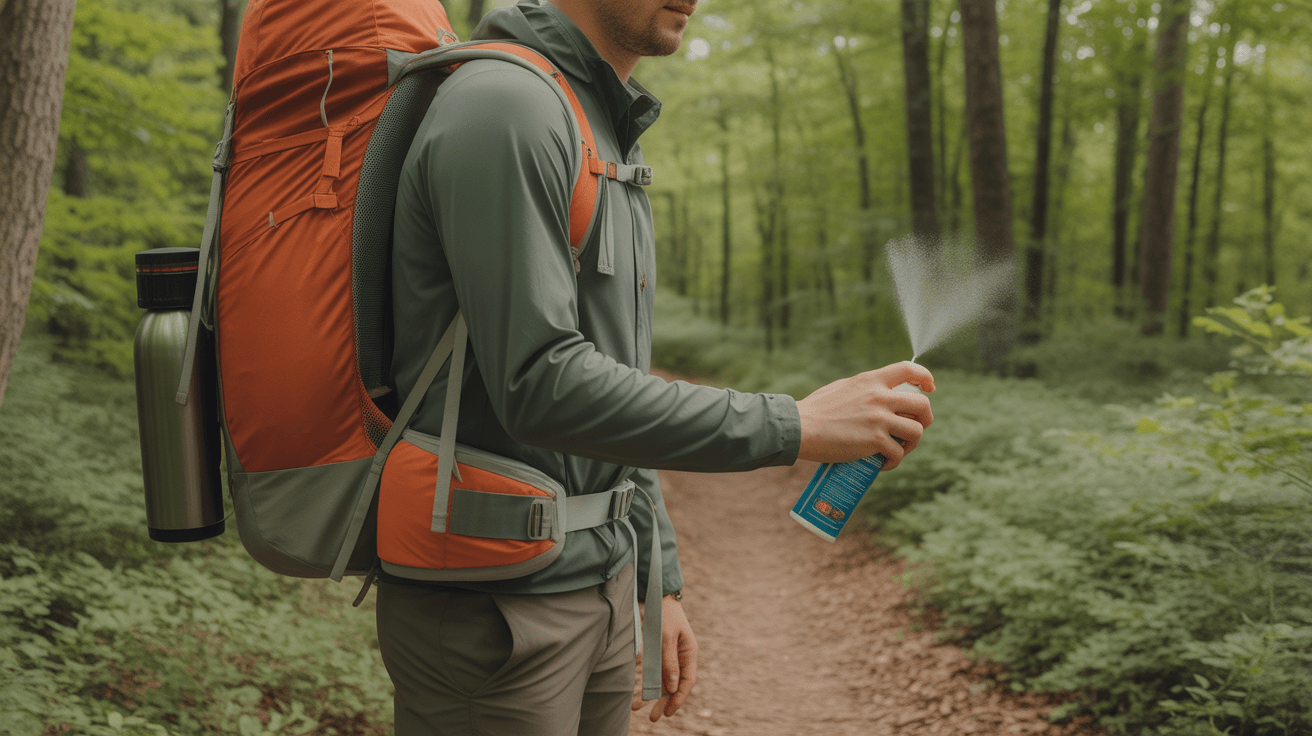
Apply DEET repellent after you reach the trailhead (the parking area where the hiking trail begins), not at home. DEET begins evaporating immediately on skin, so application 30 minutes before exposure wastes product and shortens protection time. Spray or rub onto all exposed skin areas – ankles, legs, arms, neck, and face – but avoid eyes, mouth, and any open cuts or irritated skin. For facial application, spray into your palm first, then rub onto face while avoiding eye and lip areas.
Use only the amount needed to create a thin, even layer. More product does not mean better protection – it just means more chemical exposure. One thorough application covering all exposed skin is more effective than multiple heavy coats. After your hike, wash treated skin with soap and water. DEET does not need to stay on your skin once you are back at the car, and removing it reduces your total daily exposure.
What Best DEET Insect Repellent for Hiking Does to Gear and Clothing
DEET dissolves certain plastics, synthetic fabrics, and gear finishes. It can damage watch crystals, eyeglass frames, synthetic jacket shells, and plastic buckles on packs. Apply repellent carefully to avoid contact with gear, or use a bandana barrier between treated skin and pack straps. Permethrin-treated clothing offers an alternative that protects without DEET skin contact – spray your hiking clothes with permethrin at home, let them dry completely, and the treatment lasts through multiple washes while repelling ticks on contact.
Natural fabrics like cotton tolerate DEET without damage, but synthetic technical fabrics may show discoloration or weakened fibers with repeated exposure. If DEET contacts your rain shell or pack, wipe it off immediately with a damp cloth. Some hikers dedicate specific clothing items as DEET-application clothes and avoid wearing technical gear during application to prevent accidental contact.
Combining DEET with Other Protection Strategies
The best DEET insect repellent for hiking works even better when combined with physical barriers. Tuck pants into socks, wear long sleeves when possible, and choose light-colored clothing so you can spot ticks easily during trail breaks. DEET protects exposed skin, but clothing creates the first defense line. Treated clothing plus DEET on exposed areas provides layered protection that is more effective than either method alone.
Check yourself for ticks every 2-3 hours during the hike, especially after walking through tall grass or brushy areas. Finding and removing ticks quickly is important because most tick species need time attached before transmitting disease organisms. Focus tick checks on warm, hidden areas: behind knees, waistband, armpits, hairline, and groin. A full-body check after your hike is essential in high-risk areas.
Our Top Picks
1. Repel 100 Insect Repellent, 4 Ounces
Best for all-day protection during extended hikes in high-risk tick areas

This 98% DEET formula represents the maximum concentration available and delivers 10-12 hours of continuous protection from a single application. The pump spray format applies easily without aerosol overspray, giving you control over exactly where the product goes. At 4 ounces, the bottle provides enough repellent for multiple full-body applications while remaining compact enough for pack storage.
The formula feels noticeably greasier than lower-concentration options due to the high DEET content. You will want to avoid contact with synthetic fabrics and gear during application – the product can damage plastic watch crystals, eyeglass frames, and rain shell finishes if applied carelessly. Most users report the consistency as thick and slow to absorb, which some hikers find unpleasant in warm weather but others appreciate because it means the product stays where you apply it rather than running.
With over 15,000 reviews, this is one of the most trusted maximum-strength formulas available. Hikers consistently report it works exactly as advertised in deer tick territory, lone star tick zones, and areas with aggressive biting flies. The pump mechanism remains functional even when the bottle is nearly empty, unlike some competitors where the last ounce becomes difficult to dispense. The fragrance is chemical and noticeable but fades somewhat after 20-30 minutes on skin.
This concentration is overkill for standard 3-5 hour day hikes where 30% DEET would provide complete protection. Reserve this formula for dawn-to-dusk outdoor exposure, multi-day backpacking trips, or situations where reapplication is impractical. The product works best when you need guaranteed all-day coverage from a single morning application.
Pros
- 10-12 hours protection from single application
- Pump spray allows controlled, precise application
- Compact 4-ounce size fits easily in day packs
- Over 15,000 verified customer reviews confirm effectiveness
Cons
- Greasy formula takes time to absorb into skin
- Can damage synthetic fabrics and plastic gear on contact
- Higher concentration than necessary for most day hikes
2. Ben’s Tick & Insect Repellent – Travel Size Bug Spray with 30% DEET
Best for hikers who want proven tick protection without maximum-strength DEET exposure

The 30% DEET concentration hits the optimal balance for day hiking in tick country – strong enough to provide 7 hours of reliable protection but lower total chemical exposure than 98% formulas. This four-pack of 1.25-ounce bottles delivers excellent value and allows you to keep individual bottles in your car, day pack, and home without the commitment of one large container.
The fragrance-free formula eliminates the strong chemical smell that characterizes many DEET products. Users consistently note this makes reapplication less unpleasant during lunch breaks or after stream crossings. The pump spray design works smoothly and consistently, though the small bottle size means the pump tube is short and may struggle to draw the last few applications when the bottle is nearly empty.
At $23.96 for four bottles, the per-ounce cost is higher than bulk options, but the travel sizes offer practical advantages. TSA-compliant bottles pass through airport security if you are flying to trailheads, and the compact format fits in hip belt pockets or jacket pockets for easy mid-hike access. The twist-lock pump mechanism prevents accidental discharge in your pack, which larger bottles without locks cannot guarantee.
This product specifically targets ticks and is formulated for areas where Lyme disease and other tick-borne illnesses are prevalent. The 30% DEET concentration provides complete protection against all North American tick species when applied correctly to exposed skin. Hikers in the Northeast, Upper Midwest, and Mid-Atlantic regions consistently rate this formula as effective in high-density deer tick populations during spring and summer peak seasons.
Pros
- 30% DEET provides 7 hours protection with lower exposure than maximum formulas
- Fragrance-free formula eliminates strong chemical odor
- Four-pack provides excellent value and multiple storage locations
- TSA-compliant travel size passes airport security
Cons
- Higher per-ounce cost than bulk packaging
- Small pump tube may not draw last applications from bottle
- Limited customer feedback compared to other options
View Ben’s Tick & Insect Repellent – Travel Size Bug Spray with 30% DEET on Amazon →
3. OFF! Deep Woods Insect Repellent Aerosol, Dry, 4 Oz (Pack of 2)
Best for quick, even application covering large body areas before hitting the trail

This aerosol formula delivers 25% DEET protection in a dry-finish spray that absorbs faster than pump formulas. The two-can pack provides 8 total ounces at a price point that makes it one of the most economical options per application. With over 40,000 reviews and consistent 4.6-star rating, this is among the most field-tested insect repellents available.
The aerosol format covers exposed skin quickly and reaches areas like your back and shoulders that are awkward with pump sprays. The dry formula feels significantly less greasy than liquid DEET products and absorbs within seconds rather than sitting wet on skin. Users hiking in hot, humid conditions particularly appreciate the non-sticky finish. The spray also distributes more evenly than pump applications, reducing missed spots that ticks can exploit.
At 25% DEET concentration, this formula provides 5-6 hours of protection – adequate for most day hikes but requiring reapplication for longer outings. The aerosol can adds weight compared to the actual repellent volume since you are carrying pressurized propellant, and empty cans must be packed out as trash. Airlines prohibit aerosols in checked and carry-on luggage, making this format impractical if you are flying to trailheads.
The OFF! Deep Woods line has demonstrated effectiveness against ticks in controlled testing. Hikers in blacklegged tick zones report this formula works reliably when applied thoroughly to all exposed areas. The 4-ounce can size is small enough for day pack side pockets but large enough to cover full-body applications for two moderate-length hikes before running out.
Pros
- Aerosol spray covers large areas quickly and evenly
- Dry formula absorbs fast without greasy residue
- Over 40,000 verified reviews confirm field effectiveness
- Two-can pack offers excellent value per ounce
Cons
- 5-6 hour protection requires reapplication on long hikes
- Aerosol format banned on airlines limits travel use
- Pressurized cans add weight versus pump bottles
4. Coleman 100 Max 100% DEET Insect Repellent Spray – 4 oz
Best for extreme tick exposure situations requiring absolute maximum protection

This 100% DEET formula represents the highest concentration legally available and provides 12+ hours of protection from a single application. The product is designed for extreme exposure situations – multi-day backpacking in heavily infested areas, work in tick-dense forestry settings, or travel to regions with high disease transmission rates. For standard recreational day hiking, this concentration exceeds what most people need.
The consistency is thick and oily due to the pure DEET formulation. You will feel the product on your skin throughout the day, and it requires thorough washing with soap to remove after your hike. The formula can damage synthetic materials aggressively – several reviewers report it stripped finish from backpack buckles and discolored nylon rain shells on contact. Apply carefully away from gear and use only on natural fabric clothing.
The 4-ounce spray bottle uses a trigger mechanism rather than a pump, which some users find easier to operate when hands are cold or wet. The spray pattern is coarser than aerosol but more controlled than standard pumps. At $12.22, this is one of the more expensive DEET options per ounce, but the extreme concentration means you need less product per application than lower-strength formulas.
Hikers who spend extended time in deer tick habitat during nymph season consistently rate this product as effective when nothing else is working. The 100% concentration creates a chemical barrier that ticks actively avoid rather than just repelling them on contact. This makes it valuable in situations where even a single tick bite carries significant disease risk and prevention is absolutely critical.
Pros
- 12+ hour protection from single application
- Maximum legal DEET concentration for extreme tick exposure
- Trigger spray mechanism works easily even with wet hands
- Proven effective in highest-risk tick areas
Cons
- Thick, oily consistency feels heavy on skin all day
- Aggressively damages synthetic fabrics and gear
- Higher price per ounce than lower-concentration options
View Coleman 100 Max 100% DEET Insect Repellent Spray – 4 oz on Amazon →
How These Compare
Choosing the best DEET insect repellent for hiking depends on your exposure time and risk tolerance. For most day hikes under 8 hours in tick country, the Ben’s 30% DEET formula provides the optimal balance – strong enough to repel all North American tick species but with lower total chemical exposure than maximum-strength options. The fragrance-free formula and travel-size packaging make it practical for regular use, and the 7-hour protection window covers typical dawn-start to afternoon-finish hikes with one morning application.
The Repel 100 and Coleman 100% formulas serve specialized needs. If you are backpacking for multiple days where morning reapplication is the only option, or working in extreme tick density areas, the 10-12 hour protection justifies the greasier feel and higher concentration. These products prevent the need to handle and reapply repellent mid-hike when your hands are dirty or when stopping is impractical. However, for weekend warriors doing 3-5 hour trail loops, the extra DEET exposure provides no additional protection benefit.
The OFF! Deep Woods aerosol occupies the middle ground at 25% DEET with dry-finish convenience. If you hate the greasy feel of liquid DEET or frequently hike in hot weather where sweat makes products run, the quick-drying aerosol format significantly improves comfort. The 5-6 hour protection requires reapplication on longer hikes, but most hikers carry the small can anyway for touch-ups around camp or lunch breaks. The massive review count provides confidence that this formula works consistently across diverse conditions and tick species.
Price comparison favors the Repel 100 at $7.48 for effective all-day protection from a single bottle that lasts multiple hikes. The Ben’s four-pack costs more upfront at $23.96 but distributes to multiple locations – car, pack, home – without buying separate bottles. The OFF! two-pack delivers the best value per protection hour if you are okay with reapplication, while the Coleman 100% costs the most per ounce but requires the smallest amount per use due to maximum concentration. Your budget matters less than matching concentration to actual exposure time – buying 98% DEET for 4-hour hikes wastes money and exposes you to unnecessary chemicals.
Frequently Asked Questions
How much DEET concentration do I actually need for tick protection?
For tick protection during day hikes, 25-30% DEET concentration provides complete protection for 5-8 hours with a single application. This range repels all North American tick species just as effectively as higher concentrations – the difference is only how long protection lasts, not how well it works. Studies show 30% DEET creates the same chemical barrier as 98% DEET for the duration it remains active on skin.
Concentrations below 20% require reapplication every 3-4 hours and may not provide adequate protection in high-risk areas during peak tick season. Choose 20% formulas only for short hikes under 3 hours or low-risk seasons. Concentrations above 50% are necessary only for dawn-to-dusk exposure or multi-day trips where reapplication is impractical. The extra chemical exposure from maximum-strength formulas provides no benefit for standard recreational hiking under 8 hours.
Can I apply DEET repellent to my clothing instead of skin?
DEET damages many synthetic fabrics and is less effective on clothing than on skin. The chemical can discolor, weaken, or dissolve nylon, polyester, spandex, and other technical hiking fabrics commonly used in outdoor clothing. DEET also evaporates faster from fabric than from skin, significantly reducing protection time. If you want clothing-based protection, use permethrin spray specifically designed for fabric treatment instead.
Permethrin bonds to fabric fibers and remains effective through multiple washes while killing ticks on contact rather than just repelling them. Spray permethrin on hiking pants, shirts, and socks at home, allow 2-4 hours drying time, and the treatment lasts 6 weeks or 6 washes. Combine permethrin-treated clothing with DEET on exposed skin areas like neck, hands, and ankles for layered protection that is more effective than either method alone. This combination also reduces total DEET exposure since you need less on skin when clothing provides the first barrier.
Is it safe to use DEET repellent every weekend during hiking season?
Regular DEET use during hiking season is widely used when you follow application guidelines and wash treated skin after exposure. DEET has been used in billions of applications worldwide since 1957. The key is using only the amount needed for thin, even coverage and washing skin with soap and water once you return from the trail.
Apply DEET only to exposed skin areas that ticks can reach – avoid over-application to areas covered by clothing or multiple coats on the same skin area. Children over 2 months can use DEET products up to 30% concentration, though parents should apply it for them rather than allowing self-application. Pregnant women should consult their healthcare provider about using DEET products when tick-borne disease risk is a concern. If you hike multiple consecutive days, wash DEET off completely each evening rather than allowing buildup across multiple applications.
How long does DEET repellent last once applied to skin?
DEET protection duration depends entirely on concentration, not application amount. A 25-30% DEET formula provides 5-8 hours of protection, 50% DEET lasts 8-10 hours, and 98-100% DEET extends to 10-12 hours. These times assume normal hiking conditions – heavy sweating, swimming, or rain significantly reduces duration and requires reapplication. Applying more product does not extend protection time; it just increases your chemical exposure without benefit.
Plan reapplication based on your expected time outdoors and concentration used. For a 6-hour hike, 30% DEET applied at the trailhead covers your entire outing. For a 10-hour backpacking day, either use 98% DEET in the morning or reapply 30% DEET at the 6-hour mark. Set a phone reminder or note your application time so you know when protection expires. Ticks often attach during the final hour of a hike when hikers are tired and less vigilant – maintaining active repellent coverage through your entire outdoor time is critical.
The Bottom Line
The best DEET insect repellent for hiking balances effective tick protection against your actual exposure time without unnecessary chemical concentration. For most weekend hikers tackling 4-8 hour trails in tick country, Ben’s 30% DEET delivers proven protection in a fragrance-free, travel-friendly format that you will actually use consistently. The four-pack splits easily between car, pack, and home storage, and the concentration provides complete protection without the greasy feel of maximum-strength formulas.
If you are planning multi-day backpacking trips or dawn-to-dusk exposure where reapplication is impractical, Repel 100 justifies the 98% concentration with 10-12 hour protection from a single morning application. The pump spray format and compact 4-ounce size pack efficiently, though you will need to tolerate the thicker consistency and wash thoroughly each evening. For hikers who hate the wet feel of liquid DEET, OFF! Deep Woods aerosol provides quick-drying convenience at 25% concentration – just pack extra for reapplication on longer hikes and remember aerosols cannot fly if you are traveling to trailheads.
Apply your chosen formula only at the trailhead to exposed skin areas, avoid contact with synthetic gear, and wash treated skin when you finish hiking. Combine DEET with permethrin-treated clothing, regular tick checks every 2-3 hours, and physical barriers like tucked pants for layered protection that is more effective than any single method. The right repellent used correctly will not make ticks disappear from the trail, but it will keep them off your skin where they can transmit disease.
Disclosure: As an Amazon Associate, we earn from qualifying purchases. This does not affect our editorial recommendations.