
What to Look For
Why True Wide Fit Matters
A boot labeled “relaxed fit” or “roomy toe box” is not the same as a wide-width boot. Wide-fit boots are constructed on a different last – the foot-shaped form manufacturers use to build the boot. This means the entire boot is proportionally wider, from heel to toe, not just stretched at certain points. When you wear a regular boot that is too narrow, your foot cannot function naturally. Your toes compress, pressure points develop along the sides of your feet, and your foot is forced into an unnatural position. Over miles of hiking, this creates hot spots, blisters, and genuine pain that can end your hike early. A true wide boot gives your foot the space to spread naturally with each step, allowing your foot to work the way it is designed to.Width Sizing Explained
Most hiking boots come in medium width (D for men, B for women) as standard. Wide width is marked as 2E or EE for men and D for women. Extra-wide is 4E or EEEE for men and 2E for women. Some brands use W or Wide instead of letter codes. When shopping, check the product listing carefully – if it does not explicitly state a width designation, it is almost certainly medium width regardless of marketing language about “comfort fit.” You want to see the actual width code in the size options. Boots that come in multiple widths are built on different lasts for each width, which means better fit across the entire boot.Break-In Period for Wide Boots
Even a properly fitted wide boot needs break-in time before you take it on a serious hike. Plan to wear your new boots around the house for a few hours, then on short walks around the neighborhood. Gradually increase the distance over two to three weeks before attempting a full-day hike. During break-in, the boot materials soften and conform to your specific foot shape, and you have time to identify any pressure points before you are miles from the trailhead (the parking area where hiking trails begin). If a boot causes pain during break-in that does not improve after a week of short wear sessions, it is not the right boot – return it and try a different model.Sock Pairing for Wide Feet
The socks you wear matter as much as the boots themselves. Avoid cotton socks entirely – they absorb moisture and bunch up, creating friction. Look for merino wool or synthetic hiking socks in a thickness that matches your boot fit. If your boots feel snug with thick socks, switch to a midweight sock. The sock should fill the space between your foot and boot without compressing your foot or causing the boot to feel tight. Your toes should have wiggle room even with socks on. Many hikers with wide feet find that a thinner, well-fitted sock works better than a thick cushioned sock that takes up width space.Waterproofing and Wide Boots
Waterproof membranes like Gore-Tex or proprietary waterproofing systems do not affect width, but they do affect how a boot breaks in. Waterproof boots tend to be slightly stiffer initially because the membrane adds a layer between the outer material and lining. This stiffness softens with wear. Non-waterproof boots break in faster and breathe better in dry climates, but your feet will get wet in any moisture. For most hiking situations – muddy trails, stream crossings, morning dew – waterproof boots are worth the trade-off. Just allow extra break-in time and do not expect the boot to feel flexible immediately out of the box.Lacing Techniques for Wide Feet
How you lace your boots affects fit as much as the boot width itself. For wide feet, skip the bottom eyelet on each side to reduce pressure across the forefoot. Use a heel-lock lacing technique at the top to prevent heel lift without over-tightening the midfoot. If you feel pressure on top of your foot, try skipping an eyelet in the problem area or using a different lacing pattern that bypasses that zone. Your laces should be snug enough to prevent foot movement inside the boot but never so tight that they create pressure points. Experiment with lacing tension on short walks before committing to a long hike.Our Top Picks
1. Timberland Men’s White Ledge Mid Waterproof Hiking Boots
Best overall wide-fit boot for varied terrain and all-day comfort
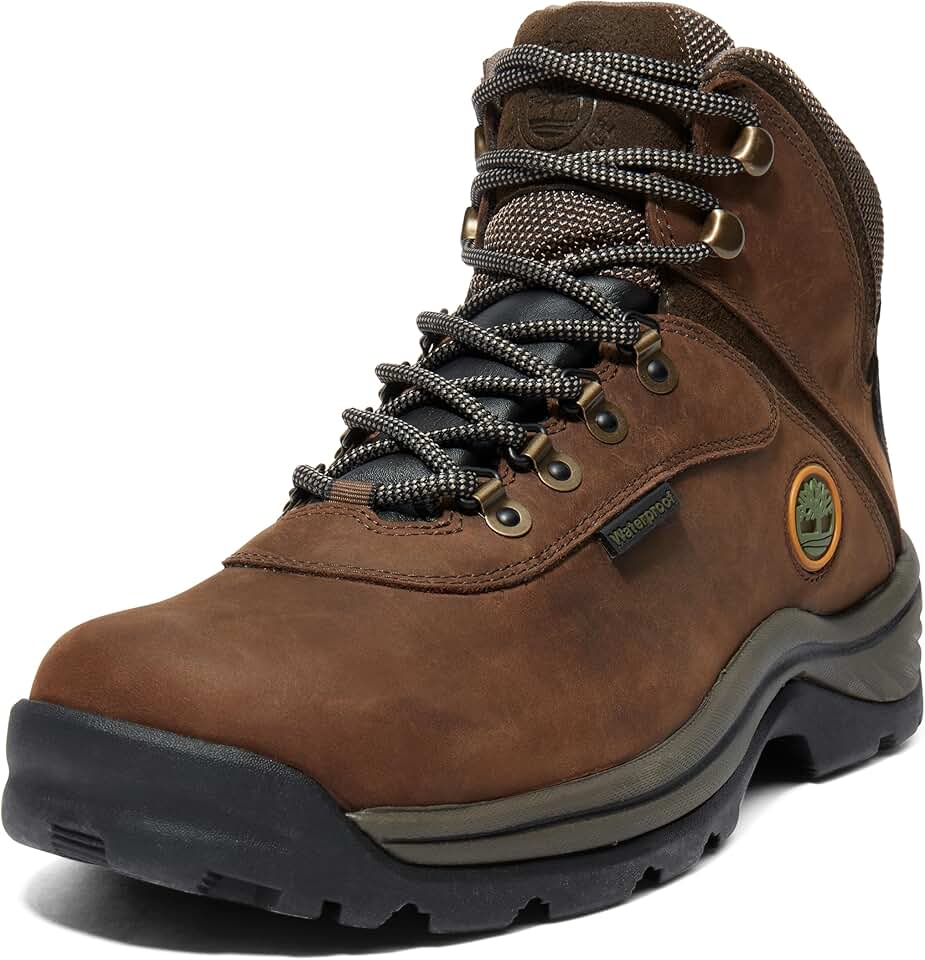
Price: $109.95Rating: 4.5 stars (67,581 reviews)Check Price on Amazon →
Pros
- True wide width construction on dedicated wide last
- Waterproof protection for wet conditions
- Over 67,000 customer reviews provide reliable fit feedback
- Mid-height ankle coverage without excessive weight
- Runs true to size in wide width
Cons
- Moderate break-in period required
- Not ideal for technical scrambling or aggressive terrain
- Traction is adequate but not exceptional on steep grades
View Timberland Men’s White Ledge Mid Waterproof Hiking Boots on Amazon →
2. Timberland Men’s Mt. Maddsen Hiking Waterproof Boots
Best budget-friendly wide option with anti-fatigue technology

Price: $94.05Rating: 4.6 stars (15,800 reviews)Check Price on Amazon →
Pros
- Under $100 with genuine wide width construction
- Anti-fatigue footbed technology for cushioned comfort
- Faster break-in period than leather boots
- Waterproof protection at budget price
- High customer rating at 4.6 stars
Cons
- Durability may not match premium models
- Not suitable for technical terrain or heavy loads
- Fewer total reviews compared to White Ledge model
View Timberland Men’s Mt. Maddsen Hiking Waterproof Boots on Amazon →
3. Timberland Men’s Flume Mid Waterproof Hiking Boot Leather Working Group
Best for hikers wanting climate-friendly materials in a wide fit

Price: $109.95Rating: 4.5 stars (10,579 reviews)Check Price on Amazon →
Pros
- Climate pledge friendly and Leather Working Group certified
- True wide width construction
- Waterproof protection for wet trail conditions
- Reliable 4.5-star rating across 10,000+ reviews
- Mid-height ankle coverage
Cons
- Same price as White Ledge with fewer total reviews
- Standard break-in period required
- Not built for technical or extreme terrain
View Timberland Men’s Flume Mid Waterproof Hiking Boot Leather Working Group on Amazon →
4. KEEN Men’s Targhee 4 Mid Height Waterproof Hiking Boots
Best premium wide option for aggressive terrain and long-term durability

Price: $134.96Rating: 4.4 stars (838 reviews)Check Price on Amazon →
Pros
- Premium durability for long-term use
- 25% discount brings price into reasonable range
- Waterproof for serious wet conditions
- Mid-height ankle coverage for rugged terrain
- Reinforced construction throughout
Cons
- Only 838 reviews means limited fit feedback
- Higher price point even with discount
- May be more boot than needed for casual day hiking
View KEEN Men’s Targhee 4 Mid Height Waterproof Hiking Boots on Amazon →
How These Compare
Choosing between these boots comes down to your budget, how often you hike, and what kind of terrain you tackle. If you are new to hiking or unsure how much you will use the boots, the Timberland Mt. Maddsen at $94.05 gives you genuine wide fit without a major financial commitment. It will handle most day hikes and light overnight trips, and you sacrifice some long-term durability, but for occasional hiking, that is a reasonable trade-off.For regular hikers who want a boot that will last multiple seasons, the Timberland White Ledge at $109.95 is the sweet spot. The massive review count means you know exactly what you are getting, and the wide fit is proven across thousands of different foot shapes. It costs slightly more than the Mt. Maddsen but delivers better durability and more consistent performance across varied terrain. If you hike once or twice a month through different seasons, this is probably your best overall choice.The Timberland Flume Mid, also at $109.95, is essentially the White Ledge with environmental certifications. If sustainable sourcing matters to you and you want to reduce your gear footprint without sacrificing fit or performance, this is the boot. The fit and function are nearly identical to the White Ledge, so the decision comes down to whether the climate pledge friendly and Leather Working Group certifications are worth potentially fewer customer reviews to reference.The KEEN Targhee 4 at $134.96 is the boot for serious hikers who put gear through heavy use. If you hike weekly, tackle rugged terrain, or do multi-day backpacking trips, the extra durability and construction quality justify the higher price. However, the significantly lower review count of 838 compared to the Timberland options means less feedback to confirm fit before you buy. Order from a retailer with easy returns if you choose this boot.All four boots require proper break-in before serious hiking. Do not buy a boot Friday and expect to hike ten miles Saturday. Plan for gradual wear, starting with short walks and building up to longer distances. Pay attention to pressure points during this period – if a spot still hurts after a week, that boot is not the right fit regardless of width designation. And remember that proper hiking socks make a huge difference. A quality merino wool or synthetic hiking sock in the right thickness will maximize the comfort of whichever boot you choose.Frequently Asked Questions
How do I know if I need wide-width hiking boots?
If regular boots feel tight across the ball of your foot, create pressure points on the sides of your feet, or cause your toes to overlap or compress, you need wide-width boots. Another sign is if you consistently size up to get width, leaving excess length in the heel. Measure your foot width at home by standing on paper, tracing your foot, and measuring the widest part across the ball. Compare that measurement to standard width charts – if you are at or above the wide threshold, order wide-width boots. Many hikers with wide feet try to make regular boots work by loosening laces or buying larger sizes, but this creates new problems like heel slippage and reduced support. A proper wide boot eliminates these issues by providing proportional width throughout the entire boot structure.Do wide hiking boots run true to size?
Most wide hiking boots run true to size in length when you order your normal shoe size in wide width. However, fit varies between brands, and not all wide boots are equally wide. Timberland wide boots tend to run consistent with their size charts. The key is ordering your normal length size but specifying wide width – do not size up in length to compensate for narrow width. When boots arrive, try them on with the hiking socks you plan to wear. Your toes should have about a thumb width of space in front when standing, and the boot should feel snug but not tight across the widest part of your foot. If you feel pressure points with proper-thickness socks, the boot is too narrow regardless of length.Can I use insoles in wide-width hiking boots?
Yes, you can use aftermarket insoles in wide-width boots, but choose insoles specifically designed for wide feet or the added volume will make the boot feel tight. Remove the factory insole first and replace it with your aftermarket insole rather than stacking them. Insoles designed for arch support or cushioning often add thickness that reduces width space, so test the fit carefully with your hiking socks before committing to a long hike. If you need custom orthotics for medical reasons, bring them when trying on boots and make sure the boot still fits properly with the orthotic in place. Some hikers find factory insoles in quality wide boots work fine and adding aftermarket insoles creates fit problems rather than solving them.How long does break-in take for wide hiking boots?
Most wide hiking boots need two to three weeks of gradual wear to fully conform to your foot. Start by wearing the boots around your house for an hour or two daily. After a few days, take short walks around the neighborhood, gradually increasing distance. By week two, you should be able to handle a few miles on easy trails. Synthetic boots or lighter hiking shoes adapt faster, sometimes within a week. Never take new boots on a long hike immediately – the materials need time to soften and adjust to your foot shape. If the boots still cause pain after three weeks of this gradual process, they are not the right fit and should be returned.Are waterproof wide boots worth it for hiking?
Waterproof wide boots are worth it for most hiking situations because wet feet lead to blisters, discomfort, and in cold conditions can contribute to dangerous heat loss. Morning dew, stream crossings, sudden rain, and muddy trails all soak through non-waterproof boots quickly. Waterproof membranes keep your feet dry without affecting width fit – the membrane sits between the outer and inner layers and does not compress your foot. The trade-off is slightly reduced breathability and a stiffer break-in period, but for hiking in any climate with occasional moisture, waterproof construction is the practical choice. If you hike exclusively in hot, dry climates and never encounter water, non-waterproof boots breathe better and break in faster, but that is a narrow use case.The Bottom Line
Finding hiking boots that actually fit wide feet without compromise changes everything about your time on the trail. Instead of managing pain and planning your hike around how long your feet can tolerate the boots, you can focus on the scenery, the challenge, and the reason you started hiking in the first place. The boots in this guide all offer genuine wide-width construction, not just marketing claims about roomy fit.If you are just starting out or hike occasionally, the Timberland Mt. Maddsen at $94.05 delivers real wide fit without breaking your budget. For regular hikers who want proven reliability, the Timberland White Ledge at $109.95 has the massive customer base and consistent performance to justify the slightly higher price. If environmental impact matters to you, the Timberland Flume Mid gives you the same fit with better material sourcing. And for serious hikers tackling rugged terrain frequently, the KEEN Targhee 4 at $134.96 brings durability and construction quality that will last through heavy use, though with less customer feedback to reference.Remember to allow proper break-in time regardless of which boot you choose, pair them with quality hiking socks, and do not force a fit that feels wrong during the break-in period. Your feet will tell you if a boot is working – listen to them. With the right wide-fit boot, hiking becomes what it should be: an adventure, not an endurance test for your feet.Disclosure: As an Amazon Associate, we earn from qualifying purchases. This does not affect our editorial recommendations.