

Finding the best rechargeable headlamp for hiking means you can finally stop buying batteries before every trip. If you are tired of digging through your gear bag for fresh AAs at midnight or watching your light fade halfway through a weekend, a USB-C rechargeable headlamp changes everything. You charge it once at home, pack it, and trust it to last through multiple nights on the trail without hunting for a wall outlet. This guide walks you through the models that actually deliver weekend-long runtime, charge fast when you do find power, and hold up to the realities of hiking – rain, sweat, cold hands, and long days that turn into longer nights.
What to Look For
Runtime That Actually Lasts a Weekend
Runtime is the most critical spec when you are choosing the best rechargeable headlamp for hiking. Most manufacturers list maximum runtime, but that number assumes you are using the lowest brightness setting in ideal conditions. Real hiking means you will cycle through multiple brightness levels – high beam when you are setting up camp in the dark, medium for cooking, low for reading in your tent. Look for headlamps that offer at least 30 hours of runtime on low and 4-6 hours on high. Models with multiple brightness levels let you conserve battery when you do not need full power. A weekend trip typically demands 6-10 hours of actual light use spread across two or three nights, so you want a headlamp that can handle that without needing a recharge until you get home.
USB-C Charging Speed and Compatibility
USB-C charging has become the standard because it is fast, reversible, and compatible with the cables you already carry for your phone and power bank. The best rechargeable headlamp for hiking charges fully in 2-3 hours, which means you can top it off during a lunch break if you have a portable power bank. Avoid headlamps that still use micro-USB – those cables are increasingly hard to find and charge more slowly. Check whether the headlamp includes a charging cable in the box or if you need to supply your own. Some models have built-in charging indicators that show battery status, which helps you plan when to recharge before the light dies completely.
Brightness Modes and Beam Distance
Lumen ratings tell you how much light the headlamp produces, but beam distance and beam type matter more for actual trail use. Beam distance refers to how far the light reaches down the trail, measured in meters or feet. A spot beam concentrates light into a narrow, focused stream that illuminates objects far away, while a flood beam spreads light wider for tasks right in front of you like cooking or reading a map. For hiking, you want both: a spot beam for seeing the trail ahead and a flood beam for close-up tasks. A 400-lumen headlamp with a focused beam reaches farther than a 1000-lumen model with a wide flood beam. Red light mode preserves your night vision and does not blind your hiking partners when you turn to talk to them. Some headlamps include a motion sensor that turns the light on when you wave your hand in front of it – helpful when your hands are full or covered in gloves.
Weight and Comfort for Long Days
You will wear your headlamp for hours, so weight and strap design matter. Lightweight headlamps (under 3 ounces) disappear on your forehead, while heavier models can cause headaches or slip down when you sweat. Look for adjustable straps that stay put without pinching. Some headlamps have a top strap that runs over your head for extra stability. If the battery is built into the headlamp housing (rather than mounted on the back strap), make sure the weight is balanced so it does not tip forward. Try adjusting the angle of the light – most tilt up and down so you can point the beam exactly where you need it.
Water Resistance and Durability
Hiking means exposure to rain, sweat, and humidity, so your headlamp needs at least an IPX4 water resistance rating. The IPX rating system measures water protection on a scale – IPX4 means splash-proof from any direction, which handles light rain and sweat. IPX5 protects against water jets, which means sustained rain will not damage the headlamp. IPX6 offers even stronger protection against heavy rain and spray. The housing should be durable enough to survive being dropped on rocks or jammed into a pack. Check whether the charging port has a protective cover – exposed USB-C ports can collect dirt and moisture. Some headlamps are impact-resistant up to several feet, which matters if you are scrambling over boulders or setting up camp in the dark.
Battery Backup and Emergency Options
Even the best rechargeable headlamp for hiking can run out of power at the wrong time. Some models accept standard AAA batteries as a backup, which gives you peace of mind if you forget to charge or your power bank dies. Others are rechargeable-only, which keeps weight down but leaves you without options if the battery drains. Consider your trip length and access to power – if you are car camping or doing weekend trips with vehicle access, rechargeable-only works fine. For longer backcountry trips, a headlamp that accepts disposable batteries as backup adds a safety margin.
Our Top Picks
1. Klein Tools 56048 Rechargeable LED Headlamp
Best for weekend hikers who need reliable brightness without carrying a power bank
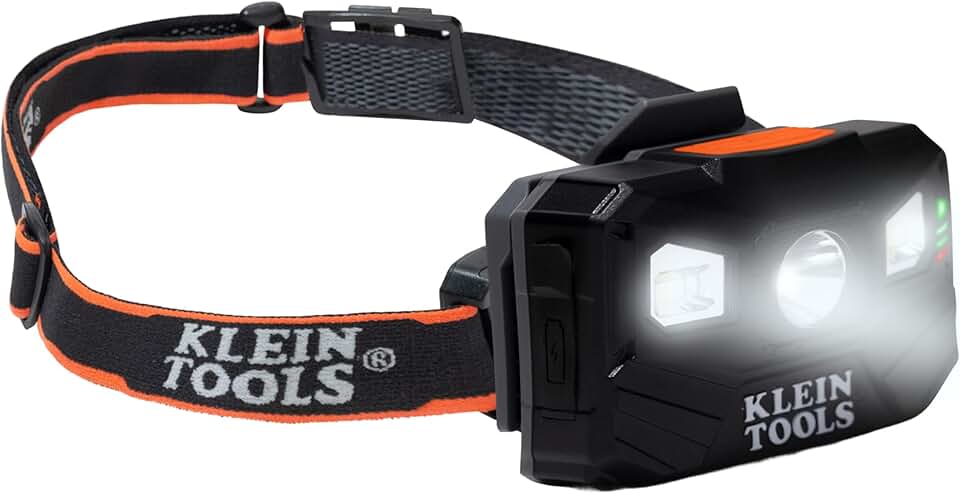
The Klein Tools 56048 delivers what most weekend hikers actually need: reliable light for trail navigation and camp tasks. The 400-lumen output provides enough brightness to see trail obstacles and wildlife without draining the battery quickly. The adjustable strap fits over hats and adjusts easily even with gloves on, which matters when you are setting up camp in cold weather.
The rechargeable design means you charge it at home before your trip and pack it without worrying about spare batteries. At just under $40, it sits in the sweet spot where you get dependable performance without paying for features you will not use. The 1,312 reviews suggest this model has proven itself with real users who need a headlamp that works trip after trip.
The light tilts to adjust the beam angle, letting you point it exactly where you need it without moving your entire head. The 400-lumen brightness gives you enough light to handle most hiking situations – navigating in the dark, finding gear in your pack, cooking dinner, or reading before bed. For hikers who prioritize straightforward operation over ultra-high lumens, this headlamp delivers consistent performance.
The rechargeable battery eliminates the ongoing cost and waste of disposable batteries. This is the headlamp you grab when you want something that works without overthinking gear choices. The Klein Tools brand is known for professional-grade tools, and that build quality shows in how this headlamp holds up to repeated use in outdoor conditions.
See current pricing for the Klein Tools 56048 Rechargeable LED Headlamp on Amazon.
Pros
- 400 lumens provides practical brightness for hiking and camp tasks
- Adjustable strap fits over hats and works with gloves
- Rechargeable design eliminates battery waste and ongoing costs
- Under $40 price point offers solid value
- 1,312 customer reviews show proven reliability
Cons
- Does not include backup battery option if charge runs out
- No red light mode for preserving night vision
View Klein Tools 56048 Rechargeable LED Headlamp on Amazon →
2. Coast XPH30R 1200 Lumen USB-C Rechargeable Headlamp
Best for hikers who need maximum brightness and USB-C fast charging on weekend trips

The Coast XPH30R brings 1200 lumens of brightness and genuine USB-C charging to hikers who want powerful light and modern convenience. The high output gives you serious reach when you are navigating technical terrain or searching for a tent site after dark. You can dial down the brightness to conserve battery during routine tasks, making this headlamp versatile for different situations.
The USB-C charging port means this headlamp charges with the same cable as your phone, and Coast includes dual power capability – it runs on the rechargeable battery or standard batteries if you need backup power. With 5,302 reviews and a 4.7-star rating, this model has proven reliability with users who actually take it outdoors. The dual power option means you are not stranded if the rechargeable battery dies unexpectedly.
The 1200-lumen maximum brightness handles situations where basic headlamps fall short. If you are hiking late and need to cover ground quickly, this brightness level lets you see trail markers and obstacles from a distance. The multiple brightness settings let you match the output to your actual needs – full power when safety demands it, lower settings when you are just moving around camp.
Coast builds this headlamp with a reputation for durability that shows in how it handles drops, moisture, and temperature swings. For hikers who want USB-C charging, high output, and backup battery compatibility, this headlamp covers the bases without compromise. The price is reasonable given the brightness level and build quality you get.
Read verified buyer reviews for the Coast XPH30R 1200 Lumen USB-C Rechargeable Headlamp on Amazon.
Pros
- 1200 lumens provides powerful brightness for technical terrain
- USB-C charging works with standard phone cables and power banks
- Dual power design accepts rechargeable or disposable batteries as backup
- 5,302 reviews confirm widespread user satisfaction
- Multiple brightness modes extend battery life
Cons
- Higher maximum brightness drains battery faster at full power
- Higher price than basic rechargeable headlamps
View Coast XPH30R 1200 Lumen USB-C Rechargeable Headlamp on Amazon →
3. Nitecore NU25 MCT UL 400 Lumen Ultralight Headlamp
Best ultralight option for backpackers counting ounces who still need weekend runtime
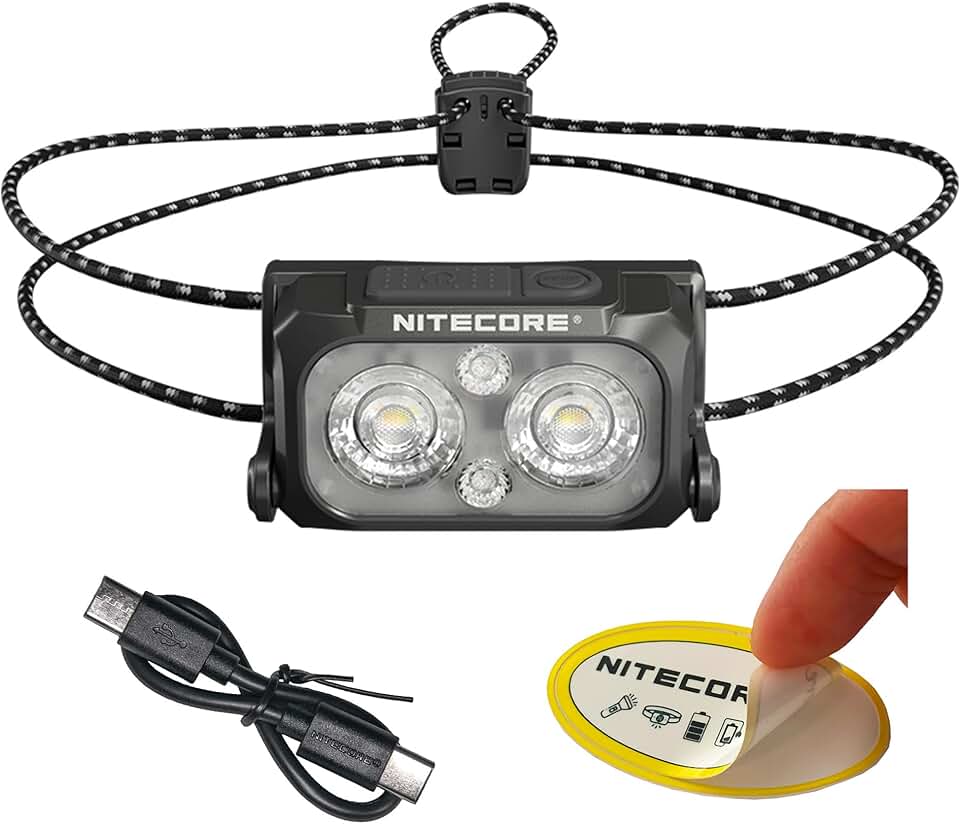
The Nitecore NU25 MCT UL weighs almost nothing, which makes it the go-to choice for hikers who obsess over pack weight but still need reliable light. The 400-lumen output matches what most hikers actually use on the trail, and the USB-C rechargeable design means you can top it off from any power bank. Nitecore designed this headlamp specifically for backpacking and trail running, where every ounce matters and failure is not an option.
The ultralight design achieves minimal weight without sacrificing essential features. The 1,149 reviews and 4.7-star rating show this model has earned trust with serious backpackers who log hundreds of miles per season. The compact form factor disappears into your pack and stays comfortable during hours of wear.
At 400 lumens maximum, this headlamp provides enough brightness for navigating trails, setting up camp, and reading in your tent. The red light mode preserves your night vision and does not disturb other hikers in camp. The battery life is optimized for efficiency – you get extended runtime on lower settings, which is how most people actually use headlamps after the initial setup period.
For backpackers doing multi-day trips where weight directly impacts comfort and speed, this headlamp removes ounces from your loadout without sacrificing essential features. The USB-C charging means you can share cables with your other electronics and recharge from the same power bank. The price sits below $40, making it accessible for hikers who want ultralight performance without premium pricing.
Check current stock for the Nitecore NU25 MCT UL 400 Lumen Ultralight Headlamp on Amazon.
Pros
- Ultralight design minimizes pack weight for long-distance hiking
- 400 lumens provides practical brightness for camping and trail running
- USB-C rechargeable with efficient battery life for weekend trips
- Red light mode preserves night vision in camp
- Under $37 price makes ultralight features accessible
Cons
- Ultralight construction may feel less substantial than heavier models
- Lower maximum brightness than high-powered alternatives
View Nitecore NU25 MCT UL 400 Lumen Ultralight Headlamp on Amazon →
4. Petzl Actik Core Headlamp
Best premium option with proven long-term reliability and backup battery compatibility

The Petzl Actik Core costs more than budget headlamps, but the 4,421 reviews and 4.7-star rating reflect a headlamp that performs reliably trip after trip. Petzl builds headlamps for professional guides and search-and-rescue teams, and that durability trickles down to this recreational model. The Core rechargeable battery provides weekend runtime, and the headlamp accepts standard AAA batteries as backup – a safety feature that matters when you are miles from the trailhead.
The brightness adjusts across multiple modes, and the red light setting preserves your night vision without bothering other campers. The headband is designed for comfort during extended wear and stays put without excessive pressure. The beam pattern is optimized for mixed use – a combination of flood and spot that works for both close-up tasks and distance vision.
The Actik Core is built to survive years of use rather than a single season. The housing is impact-resistant, and the charging port is protected from moisture and dirt. The headlamp prevents accidental activation in your pack, which saves battery and avoids the frustration of discovering your light drained itself during the drive to the trailhead.
At $72, this headlamp sits in premium territory, but the long-term reliability and backup battery option justify the cost for hikers who want a headlamp that lasts for years. Petzl has a reputation in the outdoor industry for building gear that works, and this headlamp reflects that commitment. The rechargeable Core battery eliminates battery waste, but the AAA compatibility means you have options if the battery dies unexpectedly or you forget to charge before a trip.
Compare the Petzl Actik Core Headlamp specs and pricing on Amazon.
Pros
- 4,421 reviews confirm long-term reliability across multiple seasons
- Rechargeable Core battery with AAA backup compatibility for emergencies
- Red light mode preserves night vision in camp settings
- Petzl brand reputation for professional-grade durability
- Protected charging port resists moisture and dirt
Cons
- $72 price point exceeds budget-friendly alternatives
- Heavier than ultralight models designed for ounce-counting backpackers
How These Compare
Choosing the best rechargeable headlamp for hiking depends on what matters most for your typical trips. The Klein Tools 56048 at $39.97 gives you the best value if you prioritize reliability without paying for features you will not use. It delivers dependable battery life and straightforward operation, which is exactly what most weekend hikers need. The 1,312 reviews confirm it works consistently for real users.
If you need maximum brightness and want USB-C fast charging, the Coast XPH30R at $47.58 bumps up to 1200 lumens and adds dual power capability. The high output handles technical terrain and late-night navigation better than lower-powered options, and the backup battery compatibility means you are not stranded if the rechargeable battery dies. With 5,302 reviews, this model has proven itself with thousands of hikers who need more power and versatility.
For backpackers counting every ounce, the Nitecore NU25 MCT UL at $36.95 strips away unnecessary weight while maintaining 400 lumens of usable brightness. The ultralight design and USB-C charging make it ideal for multi-day trips where pack weight directly impacts your comfort. The 1,149 reviews show this headlamp works for serious backpackers who demand reliability without bulk.
The Petzl Actik Core at $72 costs twice as much as budget options, but the 4,421 reviews and professional-grade durability justify the investment if you want a headlamp that lasts for years. The AAA backup battery compatibility adds a safety margin that rechargeable-only models cannot match, and Petzl’s reputation for building gear that survives hard use means this headlamp will likely outlast cheaper alternatives. If you hike frequently and want to buy once rather than replacing gear every season, the Actik Core delivers long-term value despite the higher upfront cost.
Frequently Asked Questions
How long do rechargeable headlamps last on a single charge?
Runtime depends on which brightness setting you use and how you cycle between modes. Most rechargeable headlamps provide 30-50 hours on the lowest setting, 8-12 hours on medium, and 4-6 hours on maximum brightness. For a typical weekend trip, expect to use your headlamp 3-4 hours per night across multiple brightness levels – high when setting up camp or navigating rough terrain, medium for cooking, and low for reading or moving around camp. This adds up to 6-10 hours of total use over a weekend, which means a fully charged headlamp with decent battery capacity should last from Friday evening through Sunday morning without needing a recharge. If you carry a portable power bank, you can top off the headlamp during lunch breaks or rest days. Models with USB-C charging typically recharge fully in 2-3 hours, while older micro-USB models can take 4-5 hours.
Can I use a rechargeable headlamp in the rain?
Yes, most rechargeable headlamps are water-resistant enough for rain, but you need to check the IPX rating to know what level of water exposure they can handle. An IPX4 rating means the headlamp is splash-proof and will survive light rain or sweat, but you should not submerge it or expose it to heavy downpours. IPX5 and IPX6 ratings offer more protection – these headlamps handle sustained rain and can be rinsed off under running water without damage. The USB-C charging port is usually the most vulnerable point, so look for models with protective covers over the charging port. If you are hiking in consistently wet conditions, choose a headlamp with at least an IPX5 rating and make sure the port cover is closed when you are not charging. After a wet hike, let the headlamp air dry before charging it to prevent moisture from causing issues with the battery or charging port.
Do I need a headlamp with red light mode for hiking?
Red light mode is useful but not essential for most day hikers and weekend campers. The main benefit of red light is that it preserves your night vision better than white light, which matters when you need to see the stars, watch for wildlife, or navigate without waiting for your eyes to readjust after turning off the headlamp. Red light also does not disturb other hikers in camp the way a bright white beam does when you turn to talk to someone. If you are hiking in groups, camping in crowded areas, or doing activities like stargazing or wildlife observation, red light mode becomes more valuable. For solo hikers or car campers who are not concerned about preserving night vision, white light alone works fine. Some headlamps also include a dim white setting that serves a similar purpose to red light without the color shift. If your headlamp has red light, you will probably find uses for it, but it is not a make-or-break feature unless you specifically need it for your type of hiking.
How many lumens do I need for hiking?
For most hiking situations, 200-400 lumens provides enough brightness for safe trail navigation and camp tasks. You do not need 1000+ lumens unless you are covering technical terrain at night, trail running at speed, or doing search-and-rescue work. Higher lumens drain the battery faster, so headlamps with very high maximum brightness often provide short runtime at full power. The more useful spec is whether the headlamp offers multiple brightness levels so you can adjust based on what you are doing – high beam when you need to see far ahead or search for a tent site, medium for moving around camp, and low for reading or close-up tasks. Beam distance and beam type matter as much as raw lumens. A 300-lumen headlamp with a focused spot beam can reach farther than a 600-lumen model with only a wide flood beam. For weekend hiking and camping, prioritize a headlamp that offers 300-500 lumens with adjustable brightness over one that claims 2000 lumens but only runs for an hour at maximum output.
Should I get a headlamp with motion sensor activation?
Motion sensor activation is a convenience feature that turns the headlamp on or off when you wave your hand in front of it, which helps when your hands are full or covered in gloves. Some hikers love this feature for situations like cooking where you frequently need to turn the light on and off without touching the headlamp or removing gloves. Others find motion sensors trigger accidentally when you turn your head quickly or reach near the headlamp, which drains the battery or blinds you at inconvenient moments. Most headlamps with motion sensors also have a manual button so you can disable the sensor if it becomes annoying. If you hike in cold weather where you wear gloves frequently, or if you often have your hands full with trekking poles or gear, motion sensors can be helpful. For hikers who prefer simple controls and do not want to deal with accidental activation, a standard button is less complicated and more reliable. Test the motion sensor feature if possible before committing to a headlamp that relies on it as the primary control method.
The Bottom Line
The best rechargeable headlamp for hiking depends on how you actually use it in the field. If you are doing weekend trips and want reliable light without overthinking gear, the Klein Tools 56048 at $39.97 delivers dependable performance and straightforward operation that works trip after trip. For hikers who need maximum brightness and fast USB-C charging, the Coast XPH30R at $47.58 provides 1200 lumens and dual power capability with backup battery compatibility. Backpackers counting ounces should look at the Nitecore NU25 MCT UL at $36.95, which strips away unnecessary weight while maintaining 400 lumens of usable brightness. If you want professional-grade reliability that lasts for years, the Petzl Actik Core at $72 justifies its premium price with 4,421 reviews and backup battery options that cheaper headlamps do not offer. Match your choice to your typical trips – car campers and weekend warriors prioritize runtime and ease of use, while long-distance backpackers need ultralight designs that still deliver reliable performance. All four of these headlamps eliminate the hassle of buying disposable batteries and provide USB-C charging that works with the power banks and cables you already carry. Charge your headlamp at home, pack it, and trust it to last through a full weekend on the trail.
Disclosure: As an Amazon Associate, we earn from qualifying purchases. This does not affect our editorial recommendations.