
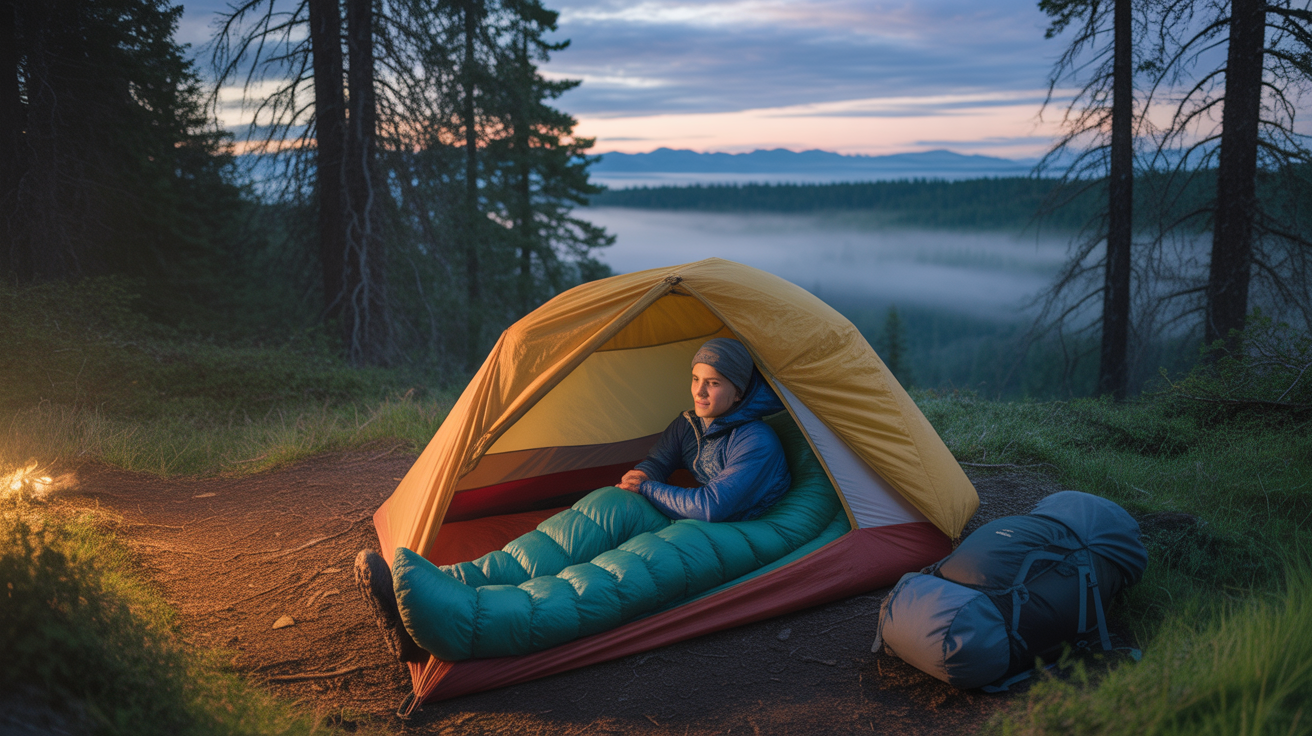
Choosing the best sleeping bag for backpacking can feel overwhelming when you are staring at temperature ratings, fill types, and weight specs that all blur together. You need a bag that keeps you warm without weighing down your pack, fits your budget, and works across the spring, summer, and fall trips you are planning.
This guide cuts through the confusion with honest comparisons of fill types, temperature rating systems explained in plain language, and five tested sleeping bags that balance warmth, weight, and value for backpackers who need reliable gear on the trail.
What to Look For
Understanding Temperature Ratings Honestly
Temperature ratings tell you the coldest temperature at which a sleeping bag is designed to keep you comfortable, but they are not a guarantee. A bag rated to 20°F means most people can sleep comfortably down to that temperature when wearing base layers and using an insulated sleeping pad. If you sleep cold, add 10-15 degrees to the rating as your personal comfort floor. If you sleep hot, you can push closer to the limit rating (the temperature where you can survive but not sleep comfortably). Three-season bags typically range from 15°F to 30°F ratings, covering spring through fall in most regions. Summer-only trips in warm climates allow for 30-40°F bags, while shoulder season backpackers in the mountains need 15-20°F bags. Match the rating to your coldest expected night, not the average.
Down Fill Versus Synthetic Fill for Different Climates
Down insulation compresses smaller, weighs less, and lasts longer than synthetic fill, making it the preferred choice for backpackers covering long distances or managing strict weight budgets. Duck down (550-650 fill power) offers solid warmth at lower prices, while goose down (700+ fill power) delivers maximum warmth per ounce. The tradeoff: down loses all insulating ability when wet and takes hours to dry. Synthetic fill (polyester insulation) maintains warmth when damp, dries quickly, and costs less upfront, but it packs larger and weighs more than equivalent down bags. Choose synthetic for humid climates, frequent rain exposure, or budget-conscious trips where pack size is less critical. Choose down for dry climates, weight-sensitive trips, and long-term investment value. Some bags use water-resistant down treatments (hydrophobic down) that resist moisture better than untreated down but still cannot match synthetic in truly wet conditions.
Weight and Packed Size Trade-Offs
Every ounce matters when you are carrying your shelter, food, and water for multiple days. Sleeping bags typically range from 1.5 pounds (ultralight down bags) to 4+ pounds (budget synthetic bags). A good three-season backpacking bag weighs 2-3 pounds. Packed size directly impacts how much room remains in your pack for other essentials. Down bags compress to the size of a small watermelon or smaller, while synthetic bags pack to volleyball size or larger. Look for bags that come with both a storage sack (loose storage at home to maintain loft) and a compression sack (tight packing on the trail). Avoid over-compressing synthetic fill repeatedly, as it loses loft faster than down under sustained compression.
Mummy Shape Versus Roomier Cuts
Mummy bags taper from shoulders to feet, eliminating dead air space and maximizing warmth-to-weight ratio. They are the standard for backpacking because they pack smallest and retain heat most efficiently. The narrow cut feels restrictive if you move around at night or sleep on your side. Semi-rectangular bags offer more shoulder and hip room but weigh more and pack larger. Most backpackers adapt to mummy bags after 2-3 nights. Check the shoulder girth and hip girth measurements if you are broad-shouldered or prefer side sleeping. Some bags offer regular and wide versions of the same model.
Hood, Draft Collar, and Zipper Features
A hood with a drawcord cinches around your head, preventing heat loss through the top of the bag where your body radiates the most warmth. Draft collars (insulated tubes around the neck and shoulders) seal the opening and block cold air from entering when you move. Full-length zippers allow ventilation on warm nights and make getting in and out easier. Half-zippers and zipper-less bags reduce weight but limit temperature regulation. Anti-snag zipper designs (curved or baffled zippers) prevent fabric from catching. Look for insulated zipper baffles that prevent cold spots along the zipper line.
Durability and Long-Term Value
Shell fabric (the outer layer) durability determines how well a bag withstands years of stuffing into a compression sack and rubbing against tent floors. Inspect stitching quality, baffle construction (the sewn compartments that hold insulation), and zipper robustness before buying. Down bags last 10-15 years with proper care (loose storage, occasional washing with down-specific detergent). Synthetic bags lose 10-20% of their loft after 50-100 nights of use and typically last 5-7 years. Consider cost per season of use, not just upfront price, when comparing options.
Our Top Picks
1. Kelty Cosmic 20 Down Mummy Sleeping Bag
Best for backpackers who prioritize weight savings and packability on three-season trips in dry climates

The Kelty Cosmic 20 delivers down insulation performance at a price point where most competitors offer only synthetic fill. Its 550 fill power duck down provides genuine warmth down to the 20°F comfort rating while packing considerably smaller than synthetic alternatives in this price range. The mummy cut tapers efficiently without feeling restrictive, and the contoured hood seals around your head to prevent heat loss. The draft collar along the shoulders blocks cold air from sneaking in when you shift position during the night. At this price point, you are getting down insulation quality that compresses well for multi-day trips where pack space matters. The full-length zipper allows temperature regulation on warmer nights, and the anti-snag design prevents fabric from catching during late-night bathroom trips. The included stuff sack handles trail compression, though you may want a separate storage sack for home storage to maintain loft over years of use. The 20°F rating holds true for average sleepers with a decent sleeping pad underneath. If you run cold, treat this as a 30°F bag and add a liner for colder nights. The trade-off for down at this price is that it loses insulating ability if it gets soaked, so pack it in a waterproof stuff sack or dry bag liner. Customer feedback highlights consistent warmth across spring and fall trips and appreciable weight savings compared to synthetic bags they replaced. See current pricing for the Kelty Cosmic 20 on Amazon.
Pros
- 550 fill power down insulation compresses smaller than synthetic options at this price
- 20°F comfort rating suitable for most three-season backpacking conditions
- Draft collar and contoured hood prevent heat loss effectively
- Full-length zipper with anti-snag design for temperature control
- Positive customer feedback on warmth consistency across multiple seasons
Cons
- Down loses all warmth when wet and takes hours to dry
- No storage sack included for home storage between trips
- 550 fill power requires more down weight than higher-fill alternatives
2. Kelty Cosmic Synthetic Fill 20 Degree Backpacking Sleeping Bag
Best for humid climate backpackers or budget-conscious beginners who need reliable warmth even in damp conditions

The Kelty Cosmic Synthetic 20 prioritizes moisture resistance and affordability over the absolute lightest pack weight. Its synthetic insulation maintains warmth even when damp from condensation or unexpected weather, a critical advantage over down in humid regions or during unpredictable spring conditions. The 20°F comfort rating matches the down version above, but the synthetic fill weighs more and packs to roughly volleyball size instead of compressing to watermelon size. If you backpack in the Southeast, Pacific Northwest coastal areas, or anywhere with high humidity and frequent rain, that trade-off makes sense. The compression straps on the included stuff sack help manage the bulk, though it still occupies more pack volume than down equivalents. The shell fabric withstands repeated stuffing and compression cycles without showing wear as quickly as ultralight fabrics on premium bags. The mummy taper and draft tube design provide efficient heat retention without unnecessary dead space. Customer reviews mention staying warm in wet tents and appreciating the quick-drying properties after damp nights, though the review count is lower than some other options in this guide. The synthetic fill does lose loft faster than down over multiple seasons, typically showing 10-20% reduction after 50-100 nights, but the lower upfront cost balances that shortened lifespan for many backpackers just getting started. Read verified buyer reviews for the Kelty Cosmic Synthetic 20 on Amazon.
Pros
- Synthetic fill maintains warmth when damp or wet
- Dries quickly compared to down insulation
- 20°F comfort rating suitable for three-season use
- Lower price than down alternatives at similar temperature ratings
- Compression straps and stuff sack included
Cons
- Packs larger than down bags at the same temperature rating
- Weighs more than equivalent down options
- Fewer customer reviews available than other options in this guide
View Kelty Cosmic Synthetic Fill 20 Degree Backpacking Sleeping Bag on Amazon →
3. VENTURE 4TH Backpacking Sleeping Bag
Best for first-time backpackers testing the activity before investing in premium gear

The VENTURE 4TH bag delivers functional warmth at an entry-level price that removes financial risk for beginners unsure how much they will backpack. The synthetic insulation handles moisture reasonably well and provides warmth across typical three-season conditions when paired with appropriate clothing layers. The available sizing options include XXL, double, and single sizes, accommodating different body types and allowing couples to zip two singles together if desired. The shell fabric uses water-resistant materials that shed light moisture, though you should still pack the bag in a waterproof liner during rainy trips. The stuff sack compresses the bag to manageable size, though not as small as higher-end options. At this price point, you are accepting trade-offs in packed size and long-term durability compared to bags costing twice as much. The wide customer review base (over 6,000 reviews) provides extensive real-world feedback showing consistent performance on weekend trips and shorter backpacking adventures. Users mention adequate warmth in 30-40°F conditions when wearing base layers. The temperature rating information in the product listing is less specific than premium bags, so treat this as a warm-weather three-season bag rather than a cold-weather option. The zipper quality and stitching durability match the budget price point, showing wear faster than premium alternatives but holding up fine for occasional use. This bag makes sense as a first purchase while you figure out your backpacking frequency and preferences before upgrading to a lighter or warmer option later. Check current stock for the VENTURE 4TH Backpacking Sleeping Bag on Amazon.
Pros
- Low price point removes financial barrier for beginners
- Over 6,300 customer reviews provide extensive real-world feedback
- Multiple size options including XXL accommodate different body types
- Synthetic fill maintains warmth in damp conditions
- Water-resistant shell sheds light moisture
Cons
- Packs larger than premium alternatives
- Temperature rating less specifically documented than premium bags
- Durability and materials reflect budget price point
4. Kelty Cosmic Synthetic Fill 0 Degree Backpacking Sleeping Bag
Best for backpackers extending into late fall or early spring when temperatures drop below freezing

The Kelty Cosmic Synthetic 0 provides cold-weather protection for backpackers who venture out when nights drop into the teens or lower. The 0°F comfort rating means you can sleep comfortably down to freezing and survive (though not sleep soundly) into the teens with proper layering and an insulated sleeping pad. The synthetic fill maintains warmth even if condensation accumulates inside your tent during cold nights, a real advantage over down in freezing conditions where moisture management becomes critical. The increased insulation adds weight and bulk compared to the 20°F version, packing to roughly basketball size, but that is the physics trade-off for genuine cold weather warmth. The compression straps help manage the size, and the included stuff sack handles trail use. The contoured hood cinches tightly around your face, leaving just your nose exposed on the coldest nights. The full-length zipper allows complete ventilation if temperatures climb unexpectedly, and the insulated baffle along the zipper prevents cold spots. This bag targets backpackers who specifically plan shoulder season trips or high-elevation adventures where freezing temperatures are expected, not casual three-season users. The synthetic fill loses loft gradually over multiple seasons of hard use, but at this price point, you are getting reliable cold-weather performance without the premium cost of 0-degree down alternatives. The lower review count compared to some other bags in this guide means less extensive real-world feedback, but available reviews show consistent performance in freezing conditions. Compare the Kelty Cosmic Synthetic 0 specs and pricing on Amazon.
Pros
- 0°F comfort rating handles freezing and near-freezing conditions
- Synthetic fill maintains warmth even with condensation present
- Draft collar and contoured hood prevent heat loss in cold weather
- Compression straps and stuff sack included
- Lower price than down bags rated for similar temperatures
Cons
- Packs larger than warmer-weather bags due to increased insulation
- Weighs more than 20°F or 30°F alternatives
- Fewer customer reviews available than other options in this guide
View Kelty Cosmic Synthetic Fill 0 Degree Backpacking Sleeping Bag on Amazon →
5. Teton 20F Degree Sleeping Bag
Best for backpackers who prioritize proven reliability and extensive customer feedback at a mid-range price

The Teton 20F sleeping bag sits in the middle ground between budget entry bags and premium lightweight options, offering solid three-season performance backed by thousands of customer reviews showing real-world use across diverse conditions. The 20°F comfort rating holds true for average sleepers when paired with a sleeping pad and appropriate base layers. The synthetic insulation maintains warmth in damp conditions and dries faster than down if moisture gets inside the bag. The mummy shape tapers efficiently without feeling overly restrictive, and the hood design includes a drawcord that cinches around your head to seal in warmth. The lightweight designation in the product name is relative to car camping bags, not compared to true ultralight backpacking gear, so expect this to weigh more than premium alternatives. The extensive review base (over 3,500 reviews) provides detailed feedback on durability, warmth consistency, and performance across spring through fall trips. Users mention reliable warmth in 25-35°F conditions and adequate performance down to 20°F with extra layers. The zipper operates smoothly and includes draft protection to prevent cold spots. The bag qualifies for Climate Pledge Friendly designation, indicating reduced environmental impact in manufacturing. The stuff sack compresses the bag to manageable size for weekend trips, though multi-day backpackers carrying all their gear may notice the bulk compared to pricier compressed alternatives. See if the Teton 20F Degree Sleeping Bag is right for your first hike on Amazon.
Pros
- Over 3,500 customer reviews provide extensive real-world feedback
- 20°F comfort rating suitable for three-season backpacking
- Synthetic fill maintains warmth when damp
- Mid-range price balances cost and performance
- Climate Pledge Friendly environmental designation
Cons
- Packs larger than premium lightweight bags
- Weighs more than down alternatives at similar temperature ratings
- Durability reflects mid-range price rather than premium construction
How These Compare
Choosing the best sleeping bag for backpacking from these five options depends on your specific climate conditions, budget constraints, and how much weight you are comfortable carrying. The Kelty Cosmic 20 Down leads the group for backpackers in dry climates who prioritize packability and weight savings, compressing considerably smaller than synthetic alternatives while delivering genuine 20°F warmth at a price where competitors typically offer only synthetic fill. If you backpack in humid regions or face frequent rain exposure, the Kelty Cosmic Synthetic 20 makes more sense despite the added weight and bulk, maintaining warmth even when damp and drying faster after wet conditions.
First-time backpackers testing the activity before committing to premium gear should consider the VENTURE 4TH bag at $54.95, accepting trade-offs in packed size and long-term durability in exchange for removing financial risk while you figure out your backpacking frequency. The extensive customer feedback (over 6,000 reviews) shows this bag handles warm three-season conditions adequately for occasional use. The Teton 20F at $69.99 occupies the middle ground, offering more proven reliability and better construction than budget bags while still costing half what premium options demand.
Backpackers extending into shoulder seasons when temperatures drop below freezing need the Kelty Cosmic Synthetic 0, which provides genuine cold-weather protection at $119.96. The 0°F rating means comfortable sleep down to freezing and survivable warmth into the teens with proper layering. This bag is overkill for typical spring-through-fall backpacking below treeline but essential for high-elevation adventures or late fall trips where freezing nights are expected.
Pack size matters more on multi-day trips where you are carrying days of food and a full camp setup. Down bags compress to watermelon size or smaller, while synthetic bags pack to volleyball size or larger at equivalent temperature ratings. Weight-conscious backpackers covering long distances benefit most from down insulation, while budget-focused or humidity-exposed backpackers accept the synthetic trade-offs. Match the temperature rating to your coldest expected night, not the average, and add 10-15 degrees if you sleep cold naturally.
Frequently Asked Questions
What temperature rating sleeping bag do I need for backpacking?
Match your sleeping bag temperature rating to the coldest night you expect on your trip, not the average temperature. Most three-season backpacking requires a bag rated between 15°F and 30°F. Spring and fall trips in the mountains need 15-20°F bags to handle freezing nights, while summer trips below treeline work fine with 30-40°F bags. The comfort rating indicates the temperature at which most people sleep comfortably wearing base layers with an insulated sleeping pad underneath. If you sleep cold naturally, add 10-15 degrees to the rating as your personal comfort floor. If you sleep hot, you can push closer to the lower limit rating (where you survive but do not sleep soundly). Always use a sleeping pad with adequate R-value underneath your bag, as the compressed insulation beneath your body provides almost no warmth against cold ground. Temperature ratings assume you are wearing dry clothing and using proper insulation beneath the bag.
Is down or synthetic fill better for backpacking sleeping bags?
Down insulation compresses smaller, weighs less, and lasts longer than synthetic fill, making it the preferred choice for most backpackers. High-quality goose down (700+ fill power) delivers maximum warmth per ounce and compresses to remarkably small sizes. The critical limitation: down loses all insulating ability when wet and takes many hours to dry. Synthetic fill maintains warmth even when damp, dries quickly, and costs less upfront, but it packs larger and weighs more than equivalent down bags. Choose synthetic for humid climates, frequent rain exposure, or budget-conscious trips where pack size is less critical. Choose down for dry climates, weight-sensitive trips, and long-term investment value. Some manufacturers treat down with water-resistant coatings (hydrophobic down) that resist moisture better than untreated down, but even treated down cannot match synthetic performance in truly wet conditions. Synthetic fill gradually loses loft over 50-100 nights of use, while properly cared for down bags maintain performance for 10-15 years.
How much should a backpacking sleeping bag weigh?
A good three-season backpacking sleeping bag weighs between 2 and 3 pounds for most temperature ratings. Ultralight down bags designed for experienced backpackers can weigh as little as 1.5 pounds, while budget synthetic bags often weigh 3.5 to 4+ pounds. Weight directly impacts your pack comfort over miles of trail, especially on multi-day trips where you are also carrying food, water, and shelter. Down insulation provides the best warmth-to-weight ratio, with 20°F down bags typically weighing 2 to 2.5 pounds. Equivalent synthetic bags weigh 3 to 4 pounds because synthetic insulation requires more material to achieve the same warmth. Beginners should target bags in the 2.5 to 3.5 pound range, which balances reasonable weight with affordable pricing. Every pound matters when your total pack weight determines your hiking comfort and distance capability. Weigh the empty bag yourself if possible, as manufacturer listed weights sometimes exclude stuff sacks or represent idealized compression rather than actual carried weight.
What is the best sleeping bag shape for backpacking?
Mummy bags are the standard shape for backpacking because they taper from shoulders to feet, eliminating dead air space and maximizing warmth-to-weight ratio. The narrow cut packs smallest and retains heat most efficiently by conforming closely to your body shape. This design feels restrictive if you move around frequently at night or prefer side sleeping, but most backpackers adapt within 2-3 nights. Semi-rectangular bags offer more shoulder and hip room for comfort but weigh more and pack larger, making them better suited for car camping than backpacking. Check shoulder girth and hip girth measurements in product specifications if you are broad-shouldered or prefer sleeping on your side, as some mummy bags offer regular and wide versions of the same temperature rating. The hood design matters as much as body shape, with contoured hoods that cinch around your head preventing significant heat loss through the top of the bag where your body radiates the most warmth. Zipper-less mummy bags reduce weight further but eliminate temperature regulation options on warm nights.
How do I pack a sleeping bag for backpacking?
Use a compression stuff sack on the trail to pack your sleeping bag as small as possible, maximizing remaining space in your backpack for food and other gear. Push the bag into the stuff sack starting from the foot end, working out air pockets as you go rather than folding it neatly. Random stuffing actually causes less stress on insulation than repeated folding along the same creases. Once stuffed, use the compression straps on the stuff sack to squeeze out remaining air and reduce volume further. Pack your sleeping bag near the bottom of your backpack in a waterproof liner or dry bag, as moisture ruins insulation (especially down) and few sleeping bags are truly waterproof. At home between trips, store your sleeping bag loosely in a large breathable storage sack or hung on a hanger in a closet. Never leave bags compressed in stuff sacks during storage, as prolonged compression permanently damages loft in both down and synthetic insulation. Wash sleeping bags only when necessary using specialized down or synthetic cleaners, following manufacturer instructions carefully, as improper washing damages insulation distribution and water-resistant coatings.
The Bottom Line
The best sleeping bag for backpacking balances warmth, weight, and packability for your specific conditions and experience level. First-time backpackers testing the activity can start with the VENTURE 4TH bag at $54.95, accepting some added bulk in exchange for removing financial risk while determining if backpacking becomes a regular activity. Weekend warriors making 3-4 trips per season in typical three-season conditions should invest in the Kelty Cosmic 20 Down at $107.48 if they backpack in dry climates, gaining significant weight savings and pack space that matter more as mileage increases.
Backpackers in humid regions or facing frequent rain exposure need the moisture resistance of the Kelty Cosmic Synthetic 20 at $87.96, which maintains warmth even when damp and dries faster than down after wet conditions. Those extending into shoulder seasons when temperatures drop below freezing require the cold-weather protection of the Kelty Cosmic Synthetic 0 at $119.96, which handles freezing nights comfortably with proper layering underneath. The Teton 20F at $69.99 serves backpackers seeking proven reliability backed by extensive customer feedback at a mid-range price.
Remember to match the temperature rating to your coldest expected night and add 10-15 degrees if you sleep cold naturally. Pair any sleeping bag with an insulated sleeping pad underneath, as the compressed insulation beneath your body provides almost no warmth against cold ground. Pack your bag in a waterproof liner inside your backpack, and store it loosely at home between trips to maintain loft over years of use.
Disclosure: As an Amazon Associate, we earn from qualifying purchases. This does not affect our editorial recommendations.