
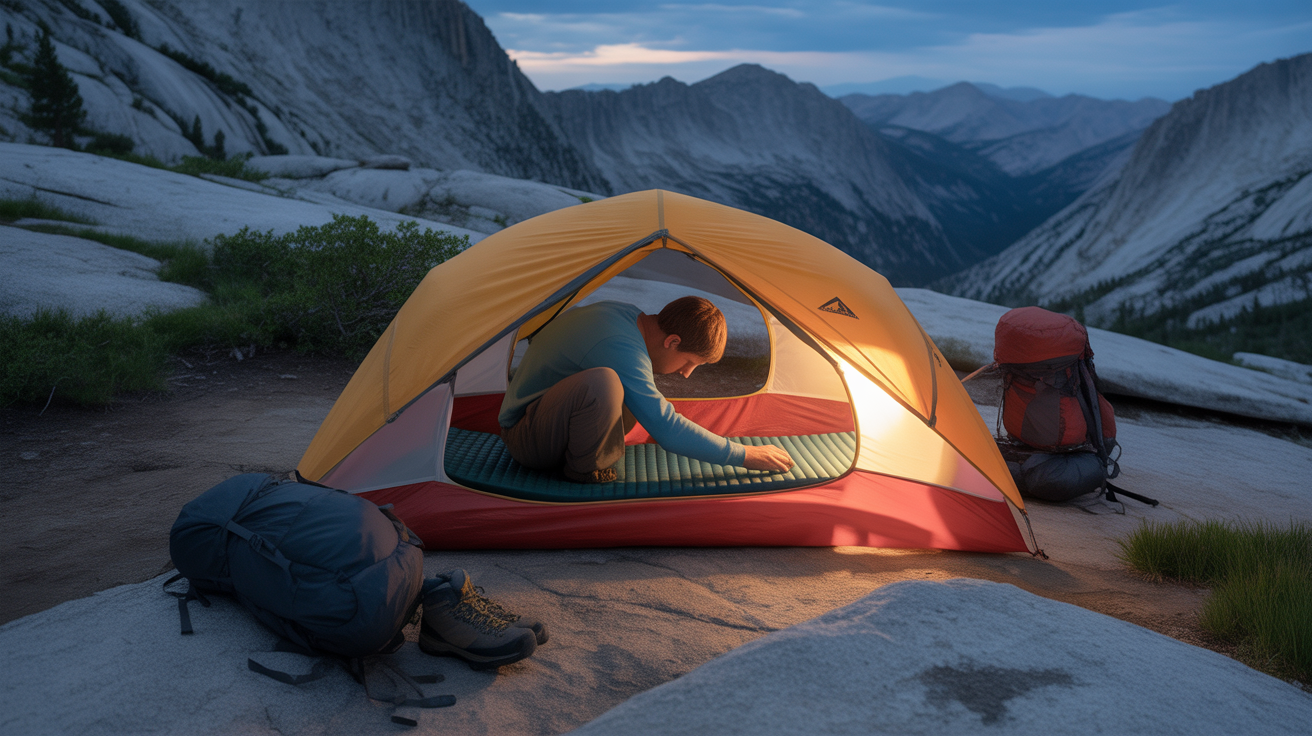
Waking up sore and stiff after a night on the trail is frustrating. You hike all day, set up camp exhausted, and then spend eight hours on hard ground that leaves your hips aching and your back tight. The problem is not your sleeping bag or your tent-it is the barrier between you and the ground.
The best sleeping pad for backpacking does three critical things: it insulates you from cold ground that saps body heat, it compresses small enough to fit in your pack without eating all your space, and it stays inflated through the night so you are not waking up on bare ground at 3 AM. This guide covers five pads that deliver on all three, tested by backpackers who have dealt with the same sore mornings you are trying to avoid.
What to Look For
R-Value and Insulation Matter More Than Thickness
R-value measures how well a sleeping pad insulates you from cold ground. The higher the number, the more warmth it provides. For three-season backpacking, look for an R-value of at least 3.0. If you camp in shoulder seasons or at elevation where temperatures drop below freezing, aim for 4.0 or higher. Winter camping demands 5.0 and up.
Thickness contributes to comfort, but it does not automatically mean better insulation. A 4-inch uninsulated air pad can feel cushy but still let cold seep through from below. Insulated pads use foam or reflective layers inside to trap heat. If you sleep cold or camp in variable conditions, prioritize R-value over thickness. A 2.5-inch insulated pad with an R-value of 4.5 will keep you warmer than a 4-inch air pad with an R-value of 2.0.
Pad Type: Foam, Self-Inflating, or Air
Foam pads are indestructible and require no inflation. You unroll them and sleep. They cannot pop or leak, which makes them reliable in rough terrain. The downside is bulk-they strap to the outside of your pack and do not compress much. Foam works well for ultralight hikers who want zero-maintenance gear and do not mind the extra external volume.
Self-inflating pads use open-cell foam inside an air bladder. Open the valve and the foam expands, drawing in air automatically. You can top off firmness with a few breaths. These pads pack smaller than solid foam but larger than pure air pads. They offer good insulation and moderate weight, making them a solid middle ground for backpackers who want some cushion without full air-pad commitment.
Air pads compress to the size of a water bottle when packed. They inflate by mouth or with an integrated pump, and they provide the most cushion per ounce. The tradeoff is puncture risk. A sharp stick or rock can end your night on the ground. Carry a patch kit and check your tent floor for debris before laying down your pad. Air pads excel when pack space and weight are tight.
Weight and Packed Size for Multiday Trips
Every ounce matters when you are carrying your home for multiple days. A sleeping pad that weighs 2 pounds feels fine on a weekend trip but becomes noticeable on a weeklong trek. Most backpacking-specific pads weigh between 12 and 24 ounces. If you are covering serious miles daily, aim for the lighter end. If you prioritize comfort over distance, the extra weight is worth it.
Packed size determines whether the pad fits inside your pack or has to strap outside. A pad that stuffs into a 10-inch cylinder tucks easily into your main compartment. A pad that rolls into an 18-inch log takes up external space and shifts your center of gravity. Check dimensions when packed, not just weight. A heavy but compact pad is often easier to manage than a light but bulky one.
Durability and Puncture Resistance
Air pads puncture. It happens. The question is how easily and how fixable. Pads made with 20-denier nylon tear faster than those using 30-denier or higher. Thicker fabric adds a few ounces but survives rocky campsites and root-covered ground better.
Some pads include internal baffles that limit air loss if one chamber fails. If you poke a hole in a fully connected air pad, the whole thing deflates. Baffled designs keep adjacent sections inflated, so you still have some cushion while you patch the leak. Check whether the pad comes with a repair kit. Most do, but verify before your first trip.
Inflation Method and Ease of Setup
Mouth inflation is standard for most air pads. It takes 10 to 15 breaths to fill a typical pad. The downside is moisture from your breath can accumulate inside, especially in cold weather, leading to mildew if not dried properly between trips.
Built-in foot pumps let you inflate without putting your mouth on the valve. You step on a section of the pad repeatedly, pushing air into the chambers. This keeps moisture out and saves your lungs after a long day. Foot pumps add a small amount of weight but speed up setup and prevent condensation buildup.
Self-inflating pads do most of the work for you. Open the valve, wait a few minutes, then add a couple of breaths to reach full firmness. They are slower than foot pumps but require less effort than mouth inflation.
Noise and Comfort While Shifting Position
Some air pads crinkle loudly when you move. If you shift positions frequently or camp with others, a noisy pad disrupts sleep. Foam pads are silent. Self-inflating pads make minimal noise. Air pads vary-some use quiet fabrics, others sound like a bag of chips every time you roll over. Check reviews for mentions of noise if this matters to you.
Comfort also depends on baffle design. Horizontal baffles create ridges that some sleepers notice. Vertical baffles reduce the ridge effect but can feel less stable on uneven ground. Side sleepers benefit from thicker pads, while back and stomach sleepers often do fine with less cushion. If you know you wake up from pressure points, prioritize thickness and R-value over weight savings.
Our Top Picks
1. Gear Doctors ApolloAir 5.2 R-Value Ultralight Insulated Inflatable Camping Sleeping Pad
Best for backpackers who need proven insulation and do not want to spend premium money for cold-weather capability

The ApolloAir delivers legitimate cold-weather insulation at less than half the price of high-end competitors. The insulation keeps you warm in conditions down to the mid-20s Fahrenheit, which covers most three-season backpacking and extends into shoulder season trips where frost is a real concern. The weight sits in the middle of the spectrum-not ultralight, but light enough that it does not drag you down on multiday trips.
The pad inflates with 10 to 12 breaths, which is standard for air pads in this category. The baffle design reduces the ridge effect you get with some competing models, so shifting position at night feels more natural. The fabric is durable and less prone to punctures from gravel or sharp twigs under your tent floor. Over 200 buyers in the past month alone suggests strong current demand, and the 2,808 total reviews provide enough feedback to trust the durability claims.
Packed size is compact-roughly the dimensions of a one-liter water bottle-which leaves room in your pack for other gear. The valve is straightforward: twist to inflate, twist to deflate, no complicated mechanisms that can fail in the field. Some users mention a faint crinkle noise when moving, but it is quieter than older air pad designs and not disruptive enough to wake tent partners.
The included stuff sack doubles as a pump sack if you want to avoid mouth inflation, though the instructions are minimal. A repair kit comes with the pad, which is essential for any air-based system. The pad does not come with an integrated pillow section, so if you want head support, you will need a separate camp pillow or stuff sack filled with clothes. For backpackers who want reliable insulation without paying flagship prices, this pad covers the essentials without cutting corners on the features that actually matter on trail.
See current pricing for the Gear Doctors ApolloAir on Amazon.
Pros
- Cold-weather insulation handles nights below freezing without supplemental padding
- Compact packed size fits easily inside most backpacking packs
- Durable fabric resists punctures better than thinner budget pads
- 2,808 reviews provide strong reliability data across different conditions
- Includes repair kit and stuff sack for field maintenance
Cons
- No integrated pillow section requires separate head support
- Slight crinkle noise when shifting position, though quieter than older designs
- Instructions for pump sack use are minimal
2. Therm-a-Rest Z Lite Sol Camping and Backpacking Sleeping Pad
Best for backpackers who want zero puncture risk and do not mind strapping a pad to the outside of their pack

The Z Lite Sol is the standard closed-cell foam pad that has been on trails for years. It folds accordion-style rather than rolling, which means you can unfold just the section you need for sitting during breaks without unpacking your entire sleep system. The reflective surface adds a small amount of warmth compared to plain foam, and the dimpled design traps dead air for insulation. The R-value is 2.0, which is adequate for summer backpacking but marginal once temperatures drop into the 40s. If you camp in cooler conditions, layer it under an air pad for combined insulation.
The major advantage is indestructibility. You cannot pop it. You cannot deflate it. It works the same on day one as it does after 100 nights. Backpackers who travel in rocky terrain or off-trail environments appreciate the reliability. The downside is bulk. Folded, it measures roughly 20 inches long and 5 inches thick, and it does not compress further. It straps to the outside of your pack, which shifts your center of gravity slightly and catches on branches in dense brush.
Comfort is firm-this is not a cushy mattress. Side sleepers often find it too hard for hip pressure points. Back and stomach sleepers tolerate it better, especially if they are used to minimalist setups. The pad is silent, which matters if you camp with others or wake easily from noise.
The 4,102 reviews include long-term users who have taken the same pad on dozens of trips without issues. It requires no maintenance beyond occasional cleaning. If you value gear that simply works without worry, the Z Lite Sol delivers. If you want more cushion or insulation, look at insulated air pads instead.
Read verified buyer reviews for the Therm-a-Rest Z Lite Sol on Amazon.
Pros
- Cannot puncture or deflate, reliable in any terrain or conditions
- Folds accordion-style for use as a seat pad during breaks without full unpacking
- Lightweight construction is competitive with many air pads
- 4,102 reviews confirm long-term durability across years of use
- Zero maintenance required, works the same every trip
Cons
- 2.0 R-value is marginal for anything below 50 degrees Fahrenheit
- Bulky when folded, requires external attachment to pack
- Firm comfort is too hard for many side sleepers
View Therm-a-Rest Z Lite Sol Camping and Backpacking Sleeping Pad on Amazon →
3. Sea to Summit Camp Self-Inflating Foam Sleeping Mat
Best for backpackers who want cushion and insulation with minimal inflation effort
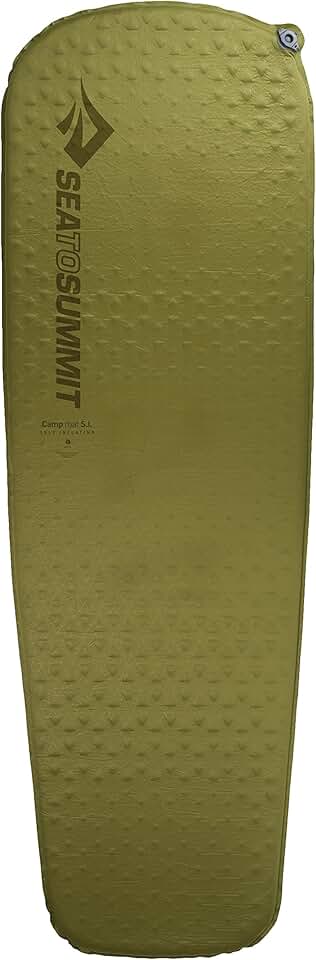
Self-inflating pads split the difference between foam and air. The Camp Mat uses open-cell foam inside an air bladder. Open the valve and the foam expands, drawing in air automatically over a few minutes. You add a couple of breaths to reach full firmness, but the pad does most of the work. This design combines the insulation of foam with the packability of an air system, though it compresses larger than pure air pads.
The tapered shape saves weight and pack space by narrowing at the feet while maintaining shoulder room. The thickness provides enough cushion for most sleepers without excessive bulk. Self-inflating foam pads in this category typically provide adequate insulation for three-season use.
The fabric is durable enough for regular use. The valve is a standard twist design with no complicated mechanisms. Deflation takes longer than pure air pads because you need to compress the foam manually while the air escapes. Roll it tightly and secure with the attached straps.
Packed size is larger than dedicated air pads-expect a roll that takes up more space than an air pad that stuffs into a water-bottle-sized sack, though it still fits inside most backpacking packs. The 642 reviews show consistent satisfaction with comfort and ease of setup. Buyers mention it works well for car camping and short backpacking trips where weight is less critical. If you want a pad that inflates itself and provides more cushion than foam, this is a proven option.
Check current stock for the Sea to Summit Camp Mat on Amazon.
Pros
- Self-inflates with minimal breath effort, easier than full air pads
- Foam core provides good cushion for most sleepers
- Tapered design saves weight without sacrificing shoulder room
- Durable fabric holds up to regular trail use
- 642 reviews confirm reliable performance for three-season backpacking
Cons
- Larger packed size compared to pure air pads
- Deflation and packing take longer due to foam compression
- Heavier than ultralight air options
View Sea to Summit Camp Self-Inflating Foam Sleeping Mat on Amazon →
4. TREKOLOGY UL80 Ultralight Sleeping Pad
Best for budget-conscious backpackers who need lightweight pack-down size for warm-weather trips

The UL80 is a straightforward air pad built for summer and early fall conditions. The fabric is thicker than many budget pads, which reduces puncture risk on rocky ground. The pad inflates with 10 to 15 breaths depending on how firm you want it. No pump system is included, so you are inflating by mouth. The packed size is compact-roughly 9 inches long and 4 inches in diameter-which fits easily inside a backpack without taking up main compartment space.
The insulation level works for warm nights above 55 degrees Fahrenheit but falls short once temperatures drop. If you backpack in cooler conditions, pair it with a foam pad underneath or choose an insulated option.
The construction is lightweight and competitive for a budget air pad. The horizontal baffle design creates slight ridges that some sleepers notice when moving, though most adjust after the first night. The valve is a simple twist-open system with no fancy features. It deflates quickly, and the included stuff sack doubles as a pump sack if you want to avoid mouth inflation, though this adds steps to setup.
The 6,499 reviews make this the most-reviewed pad in this category. Buyers consistently mention solid value for the price, with complaints focused on lack of insulation and occasional valve leaks after extended use. A repair kit is included. For warm-weather backpackers who want a reliable air pad without spending premium money, the UL80 covers the basics. If you camp below 50 degrees regularly, invest in something with higher insulation.
Compare the TREKOLOGY UL80 specs and pricing on Amazon.
Pros
- Thicker fabric resists punctures better than thinner budget options
- Compact packed size fits inside most backpacking packs
- Lightweight construction keeps total carried weight manageable
- 6,499 reviews provide extensive reliability data
- Under 40 dollars makes it accessible for new backpackers testing gear preferences
Cons
- Low insulation limits use to warm-weather conditions above 55 degrees
- No built-in pump requires mouth inflation or optional stuff sack method
- Horizontal baffles create ridges that some sleepers find noticeable
5. KLYMIT Static V Lightweight Inflatable Sleeping Pad
Best for backpackers who prioritize lightweight performance and body-mapping comfort on warm-weather trips

The Static V uses a V-chamber design that limits air movement and reduces the sloshing feeling some air pads produce. The chambers are arranged to cradle your body, with deeper sections under the torso and shallower areas under the legs. This body-mapping approach works well for back sleepers and provides better pressure distribution than flat-baffle designs. Side sleepers get adequate hip support, though the pad is not as thick as premium cushion-focused models.
The construction is slightly heavier than ultralight options but still manageable for multiday trips. The packed size is compact, stuffing into a sack roughly the size of a one-liter bottle. The fabric is notably thicker than most backpacking pads, which increases puncture resistance but also adds a small amount of noise when moving. It is not loud enough to disrupt sleep, but it is more audible than foam or self-inflating pads.
The insulation is minimal, which limits the Static V to summer use or warm environments where ground temperature stays above 60 degrees. If you camp in cooler conditions, this pad will not provide enough warmth. The valve is a push-pull design that inflates and deflates quickly with 10 to 12 breaths. No pump is included, so you are using mouth inflation unless you purchase an aftermarket pump sack.
The 4,360 reviews include long-term users who have taken the pad on dozens of trips. Complaints focus on the limited insulation and noise, while positive feedback highlights durability and comfort for the price. At under 50 dollars, the Static V is a solid entry-level air pad for warm-weather backpackers who want body-mapped comfort without premium cost.
See if the KLYMIT Static V is right for your first hike on Amazon.
Pros
- V-chamber design reduces air movement and provides body-mapped pressure distribution
- Thicker fabric is more puncture-resistant than budget pads
- Compact packed size fits inside most backpacks without external strapping
- 4,360 reviews confirm long-term reliability across varied conditions
- Under 50 dollars makes it accessible for backpackers testing air pad systems
Cons
- Minimal insulation restricts use to warm weather above 60 degrees
- Slightly noisier than foam or self-inflating pads when shifting
- No built-in pump requires mouth inflation
View KLYMIT Static V Lightweight Inflatable Sleeping Pad on Amazon →
How These Compare
Choosing the best sleeping pad for backpacking depends on the conditions you camp in and what you are willing to carry. If you need insulation for cold nights and do not want to spend premium money for cold-weather capability, the Gear Doctors ApolloAir delivers strong insulation performance at a mid-tier price. It handles shoulder season trips and elevation camping where temperatures drop below freezing, and the manageable weight does not slow you down on multiday treks. The packed size is compact, and the durable fabric resists punctures better than thinner budget options.
For backpackers who want zero maintenance and do not worry about punctures, the Therm-a-Rest Z Lite Sol is the indestructible choice. It folds instead of rolls, which makes it useful as a seat pad during breaks. The 2.0 R-value works for summer camping but needs layering once temperatures drop. It straps to the outside of your pack, so you sacrifice internal space for reliability. If you travel off-trail or in rocky terrain, the Z Lite Sol removes the risk of waking up on bare ground.
The Sea to Summit Camp Mat splits the difference between foam and air. It self-inflates, which saves effort after a long day, and the foam core provides cushion without excessive weight. The packed size is larger than pure air pads, but it fits inside most backpacking packs. This pad works best for three-season use where insulation and comfort matter more than ultralight minimalism.
Budget backpackers who camp in warm weather should consider the TREKOLOGY UL80 or KLYMIT Static V. The UL80 packs smaller and offers lightweight construction, while the Static V uses body-mapped chambers for better pressure distribution. Both have low insulation levels-suitable for temperatures above 55-60 degrees-which limits them to summer trips. The Static V uses thicker fabric and costs ten dollars more, but the added durability and comfort design justify the price for most users. If you only backpack when temperatures stay above 55 degrees and want a reliable air pad without premium cost, either option works.
For cold-weather trips, only the ApolloAir provides enough insulation to camp comfortably without layering pads. If you backpack year-round or at elevation, prioritize R-value over weight and packed size. For summer trips, the UL80 or Static V deliver enough cushion and pack-down size to keep your load manageable.
Frequently Asked Questions
What R-value do I need for three-season backpacking?
Three-season backpacking typically requires an R-value between 3.0 and 4.0. This range keeps you warm in spring, summer, and fall conditions where nighttime temperatures drop into the 30s and 40s Fahrenheit. If you camp at elevation where frost is common even in summer, aim for the higher end of that range. Winter camping or snow conditions demand R-values of 5.0 or higher. The R-value measures how well the pad insulates you from cold ground, which saps body heat faster than cold air. A sleeping bag rated to 20 degrees will not keep you warm on a pad with insufficient R-value because the ground conducts heat away from your back and legs continuously through the night.
How do I prevent my sleeping pad from deflating overnight?
Sleeping pads deflate overnight for three main reasons: valve failure, punctures, or temperature-related air contraction. Check that the valve is fully closed after inflation and inspect it for debris that can prevent a complete seal. Carry a repair kit and patch any small punctures immediately before they worsen. Air contracts when temperatures drop, so pads inflated in warm afternoon sun will feel softer by dawn. Add a few breaths before bed if you expect significant overnight temperature drop. Avoid over-inflating, which stresses seams and increases puncture risk on uneven ground. Check the tent floor for sharp rocks or sticks before laying down your pad, and use a ground sheet under the tent for added protection.
Can I use a camping sleeping pad for backpacking?
You can use a camping sleeping pad for backpacking, but most are too heavy and bulky for multiday trips. Car camping pads prioritize comfort over weight, often using thicker foam or larger air chambers that add pounds and packed volume. Backpacking pads are designed to compress small and weigh under 2 pounds, which matters when you are carrying everything on your back for miles. If you are doing a short overnight trip close to the trailhead, a camping pad works fine. For anything longer than a single night or requiring more than a few miles of hiking, invest in a backpacking-specific pad that balances insulation, weight, and packed size for trail use.
Do I need a pillow with my sleeping pad?
Most sleeping pads do not include integrated pillows, so you need separate head support for comfortable sleep. Some backpackers use a stuff sack filled with extra clothes, which adds no weight since you are already carrying the clothes. Inflatable camp pillows weigh 2 to 4 ounces and pack smaller than a tennis ball, making them worth the space if neck support matters to you. A few pads have built-in pillow sections at the top, but these are less common in lightweight backpacking models. Side sleepers and back sleepers benefit most from dedicated pillows, while stomach sleepers often skip them entirely. Test your sleep system at home before a trip to determine whether you need a pillow or can improvise with what you already carry.
How thick should a backpacking sleeping pad be?
Backpacking sleeping pads range from 1.5 to 4 inches thick. Side sleepers need at least 2.5 inches to prevent hip pressure points from hitting the ground through the pad. Back and stomach sleepers often do fine with 1.5 to 2 inches. Thickness contributes to comfort but not necessarily warmth-insulation depends on R-value, not pad height. Thicker pads provide more cushion but weigh more and pack larger. If you prioritize comfort over weight savings, a 3- to 4-inch pad gives you the most cushion. If you are covering long miles daily and need to minimize pack weight, a 2-inch pad with good R-value is sufficient for most sleepers.
The Bottom Line
The best sleeping pad for backpacking solves three problems: it insulates you from cold ground, it packs small enough to fit in your bag without dominating space, and it stays inflated through the night so you are not waking up on bare ground. If you camp in varied conditions and want a pad that handles shoulder season cold, the Gear Doctors ApolloAir delivers strong insulation at a reasonable price without excessive weight. For backpackers who want zero puncture risk and do not mind strapping a pad outside their pack, the Therm-a-Rest Z Lite Sol is indestructible and requires no maintenance.
If you camp primarily in warm weather and want lightweight performance, the TREKOLOGY UL80 and KLYMIT Static V both pack small and provide adequate cushion for summer trips. The Static V costs slightly more but uses thicker fabric and body-mapped chambers that improve durability and comfort. The Sea to Summit Camp Mat works for backpackers who want self-inflation ease and moderate insulation without going full ultralight. Match your pad choice to the coldest conditions you expect to camp in, and prioritize R-value over thickness if you sleep cold or camp at elevation.
Disclosure: As an Amazon Associate, we earn from qualifying purchases. This does not affect our editorial recommendations.