
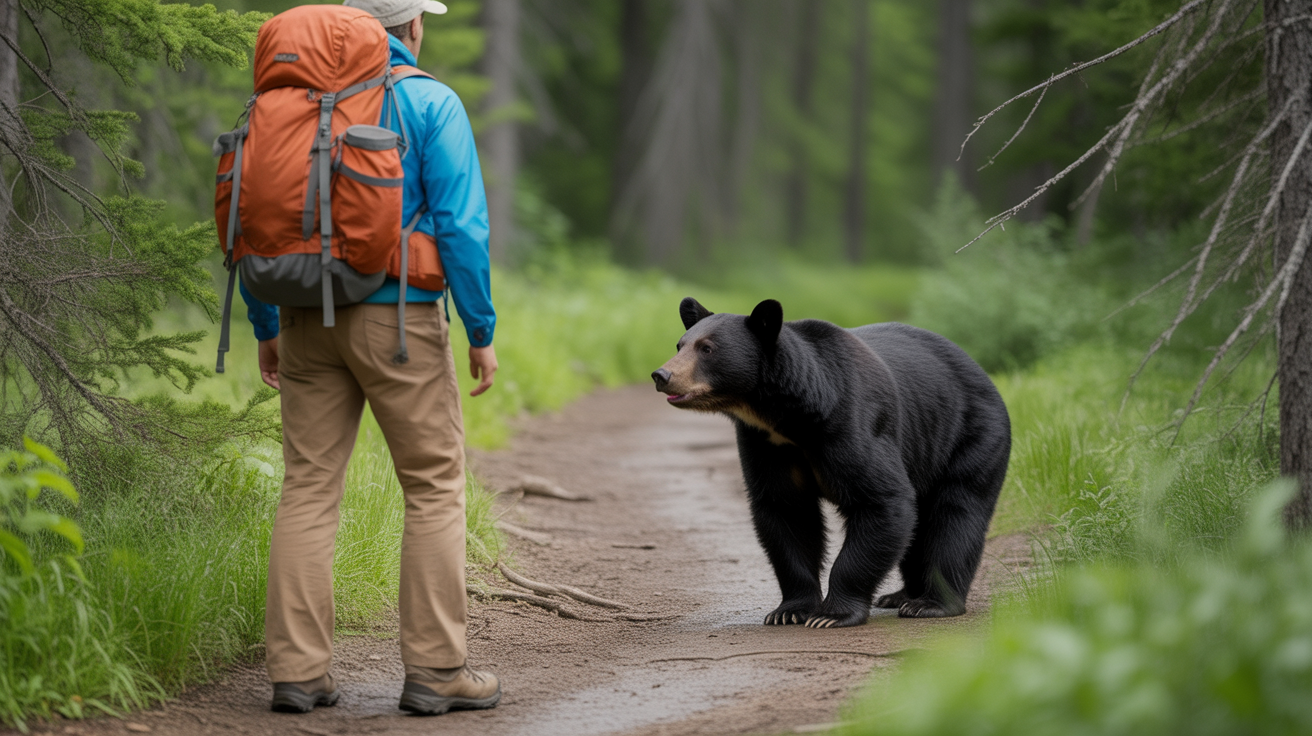
Seeing a bear on the trail is not a question of if, but when – especially if you are hiking in bear country. That first encounter can send your heart racing, even if the bear is hundreds of yards away. If you have never hiked where bears live, it is completely normal to feel anxious about what might happen and what you should do. The good news is that bear encounters almost always end peacefully when you know how to respond. This guide will give you exactly what to do if you encounter a bear while hiking, from the moment you spot one to the actions that keep both you and the bear safe.
You do not need to be an expert to handle a bear encounter well. You just need a clear plan, a calm mind, and an understanding of how bears actually behave. Whether you are planning your first trip into bear territory or just want to feel more prepared, this article will give you the confidence to hike safely and respond appropriately if you ever find yourself face-to-face with a bear.
What to Look For
Understanding Bear Behavior Before You Hike
Bears are not out to get you. They are large, powerful animals that want the same things you do: food, safety, and to be left alone. Most bear encounters happen because a bear is surprised, feels threatened, or is protecting cubs or a food source. Understanding this changes everything about how you respond.
There are three bear species you might encounter in North America: black bears, grizzly bears (also called brown bears), and polar bears. Most hikers will only encounter black bears, which are the most common and widespread. Black bears are generally less aggressive than grizzlies, but that does not mean you should relax around them. Grizzly bears are found in Alaska, western Canada, and parts of Montana, Wyoming, Idaho, and Washington. They are larger, more territorial, and more likely to respond aggressively if startled or if they have cubs nearby.
Bear behavior is predictable once you understand their motivation. A bear that stands on its hind legs is not being aggressive – it is trying to see and smell you better. A bear that makes huffing sounds, clacks its teeth, or swats the ground is telling you it is stressed and wants space. A bear that turns sideways or walks slowly away is not interested in confrontation. Learning these signals helps you assess the situation accurately and respond appropriately.
What to Do the Moment You See a Bear
The first few seconds of a bear encounter set the tone for everything that follows. Your immediate goal is to let the bear know you are human, not a threat, and not prey. Here is exactly what to do.
Stop moving immediately. Do not run. Running triggers a bear’s chase instinct, and bears can run up to 35 miles per hour – much faster than you. Stay calm and take a breath. If the bear has not noticed you yet, slowly back away while keeping your eyes on the bear. Do not turn your back.
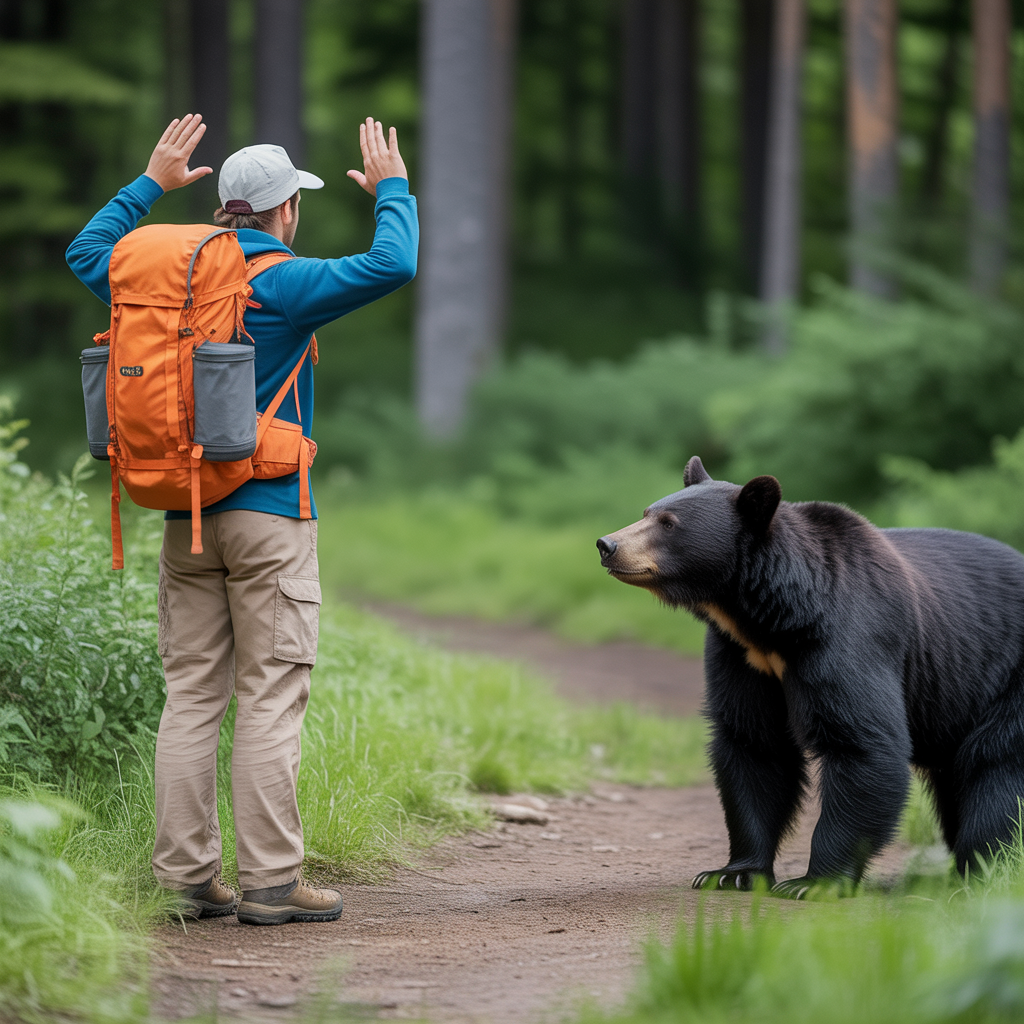
If the bear has seen you, make yourself known. Speak in a calm, firm voice. Say something like “Hey bear, I am leaving now.” Your voice tells the bear you are human, not prey. Raise your arms slowly to make yourself appear larger. If you are wearing a jacket, hold it open to increase your profile. Do not make sudden movements or loud noises that might startle the bear.
Do not make direct eye contact for long periods, as this can be perceived as a threat. Instead, watch the bear using your peripheral vision while keeping your head slightly turned. Begin to back away slowly at an angle, not directly away. This gives the bear space and shows you are not a threat. Keep talking in a calm voice as you move.
Identifying Black Bear vs Grizzly Bear Encounters
Knowing which type of bear you are dealing with changes how you respond if the encounter escalates. Black bears and grizzly bears look different and behave differently, and your response should match the species.
Black bears are smaller, with a straight face profile, tall ears, and no shoulder hump. Their claws are short and curved for climbing trees. Black bears come in many colors – black, brown, cinnamon, even blonde – so color is not a reliable identifier. If a black bear approaches you or acts aggressively, it is usually bluffing or testing whether you are a threat. In the rare case a black bear attacks, it is usually predatory, which means you must fight back.
Grizzly bears are larger and more muscular, with a dished face profile, small rounded ears, and a prominent shoulder hump. Their claws are long and light-colored. Grizzlies are more territorial and more likely to defend their space aggressively. If a grizzly charges, it is usually defensive, not predatory. In a defensive grizzly attack, your best response is to play dead.
Before you hike in bear country, research which species live in the area. This knowledge will guide your preparation and your response. If you are unsure which type of bear you are looking at during an encounter, assume it is a grizzly and respond accordingly.
When a Bear Approaches or Charges
Most bear charges are bluff charges. The bear runs toward you, then stops or veers off at the last moment. This is the bear’s way of saying “I am bigger than you, leave me alone.” A bluff charge is terrifying, but it is not an attack. Your response is critical.
Do not run. Stand your ground. Keep your arms raised and continue speaking in a firm, calm voice. If you have bear spray – which you should always carry in bear country – get it ready. Remove the safety clip and hold it with both hands, aimed slightly downward in front of you. Bear spray is effective at stopping charging bears within 10 to 15 feet. If the bear continues charging and gets within range, spray a cloud of bear spray directly at the bear’s face. Aim for the eyes and nose. A bear canister for backpacking is essential for overnight trips, but bear spray is your most important safety tool for active encounters.
If the bear stops after a bluff charge, continue backing away slowly. Do not turn and run even after the bear stops. Keep facing the bear and speaking calmly as you increase distance. If the bear charges again, repeat the process. Most encounters end after one or two bluff charges.
If a black bear makes contact, fight back aggressively. Use rocks, sticks, your fists, your trekking poles, anything you have. Aim for the bear’s face and nose. Yell and make as much noise as possible. Black bears that make contact are usually testing you as prey, and fighting back convinces them you are not worth the effort.
If a grizzly bear makes contact, play dead. Lie flat on your stomach with your hands clasped behind your neck to protect your head and neck. Spread your legs to make it harder for the bear to flip you over. Stay silent and still. Most grizzly attacks are defensive, and the bear will leave once it no longer perceives you as a threat. Remain motionless until you are certain the bear has left the area.
Preventing Bear Encounters in the First Place
The best bear encounter is the one that never happens. Prevention is your first line of defense, and it starts before you even step on the trail.
Make noise while you hike. Talk, sing, clap, or use a bear bell. Sound alerts bears to your presence and gives them time to move away before you get close. Bears do not want to see you any more than you want to see them. Noise is especially important in areas with thick vegetation, near running water, or when hiking into the wind – all situations where a bear might not hear or smell you approaching.
Hike in groups when possible. Bears are less likely to approach multiple people. Keep children close and within sight at all times. If you are hiking with a dog on a leash, keep your dog under control. An off-leash dog can provoke a bear and lead it back to you.
Be aware of bear signs on the trail. Fresh tracks, scat, torn-up logs, claw marks on trees, and partially eaten animal carcasses all indicate recent bear activity. If you see these signs, make extra noise, stay alert, and consider turning back if signs are very fresh or abundant.
Never approach a bear for photos or a closer look. Give bears at least 100 yards of space – more if you see cubs. If a bear is on or near the trail, wait until it moves away or take a wide detour if terrain allows. Never get between a mother bear and her cubs.
Store food properly. On day hikes, keep snacks and trash in your pack and away from your body. On overnight trips, use a bear canister or hang your food at least 100 yards from camp. Cook and eat away from your sleeping area. Never bring food, scented toiletries, or trash into your tent.
What to Carry and How to Prepare
Bear spray is the single most effective tool for stopping a charging bear. It is more effective than firearms and easier to use under stress. Carry it in a holster on your hip or chest strap – not buried in your pack – so you can access it in seconds. Practice removing the safety clip and aiming before your hike. Bear spray has an effective range of about 25 to 30 feet and lasts 6 to 9 seconds per canister. Check the expiration date before every trip.
Know how to use your bear spray before you need it. In a high-stress encounter, you will not have time to read instructions. Most manufacturers offer inert practice canisters so you can practice deploying spray without wasting the real thing.
Learn about the area you are hiking. Check with local rangers or park websites for recent bear activity. Some trails may be temporarily closed due to bear activity, especially in late summer and fall when bears are feeding heavily before hibernation.
Tell someone your hiking plan. Share your trailhead, route, and expected return time with a friend or family member. This is important for all hikes, but especially in remote bear country where rescue could take longer.
Wear your hiking boots and hiking pants that allow you to move quickly and confidently if you need to back away or change direction. Avoid headphones or anything that limits your ability to hear your surroundings. Stay present and aware.
Frequently Asked Questions
Should you play dead if you see a bear?
No, you should not play dead the moment you see a bear. Playing dead is only appropriate in one specific situation: when a grizzly bear makes physical contact with you during a defensive attack. If you simply see a bear, your first response should be to stop, stay calm, and slowly back away while speaking in a firm voice. Let the bear know you are human and not a threat. Most bear encounters end with the bear leaving the area once it realizes you are there. Playing dead too early can actually provoke curiosity or aggression in some situations. Only play dead if a grizzly bear physically attacks you, and then lie flat on your stomach with your hands protecting your neck. For black bears, never play dead – if a black bear attacks, fight back aggressively.
What to do if a bear chases you?
If a bear chases you, do not run. Stand your ground, even though every instinct tells you to flee. Most bear charges are bluff charges, where the bear runs toward you to test whether you are a threat, then stops or veers away at the last second. Running triggers a bear’s prey drive and guarantees a chase you cannot win. Instead, face the bear, raise your arms to appear larger, and speak in a calm, firm voice. Get your bear spray ready and aim it at the bear if it continues to approach. If the bear gets within 10 to 15 feet and is still charging, deploy your bear spray in a cloud toward the bear’s face. If a black bear makes contact, fight back with everything you have. If a grizzly makes contact, play dead by lying flat on your stomach with your hands protecting your neck.
Will a bear attack you if you stand still?
Standing still alone will not prevent a bear attack, but it is far safer than running. Bears attack for specific reasons: they feel threatened, they are protecting cubs or food, or in rare cases, they see you as prey. If you stand still and make yourself known by speaking calmly, you signal that you are human and not a threat. Most bears will leave once they identify you. However, standing still without also backing away slowly, speaking calmly, and monitoring the bear’s behavior is not enough. You need to actively communicate that you are not a threat and give the bear space to leave. If a bear continues to approach despite your calm behavior, prepare to use bear spray. Standing still and silent can sometimes make a bear more curious, so combine stillness with calm verbal communication and slow backward movement.
How do you scare a bear away?
The goal is not to scare a bear away aggressively, but to let the bear know you are human and give it space to leave on its own. Speak in a calm, firm voice and say things like “Hey bear, I am leaving now.” Raise your arms slowly to make yourself look larger. Back away at an angle while keeping your eyes on the bear. Do not yell, scream, or wave your arms wildly unless the bear is approaching despite your calm signals. Sudden loud noises can startle a bear and escalate the situation. If a bear continues to approach and you need to be more assertive, use a louder, firmer voice and make yourself as large as possible. If you are in a group, stand close together to appear larger. If the bear charges, deploy bear spray when it is within range. Prevention is the best strategy – make noise while hiking so bears hear you coming and leave the area before you arrive.
The Bottom Line
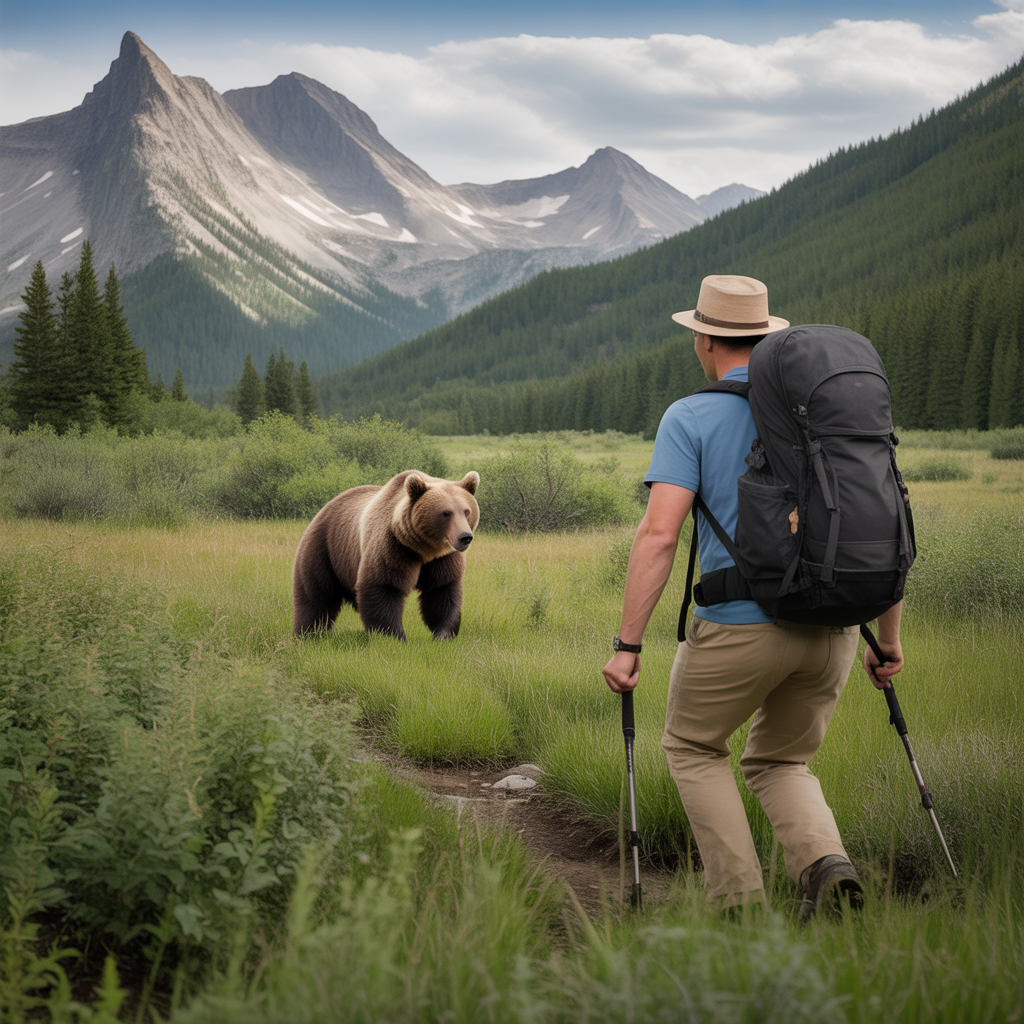
Bear encounters do not have to be dangerous if you know how to respond. The key is staying calm, understanding bear behavior, and following a clear action plan. If you encounter a bear, stop moving, identify yourself as human by speaking calmly, and back away slowly while giving the bear space. Carry bear spray and know how to use it. Understand the difference between black bears and grizzly bears, and respond accordingly if an encounter escalates. Most importantly, prevent encounters by making noise on the trail, staying aware of your surroundings, and respecting bear habitat.
If this is your first time hiking in bear country, take a moment to practice your response plan before you go. Visualize seeing a bear, stopping, speaking calmly, and backing away. Practice accessing your bear spray. The more familiar the actions feel, the more likely you are to execute them calmly under stress. Remember that thousands of people hike safely in bear country every day, and most never see a bear at all. With preparation and knowledge, you can be one of them – confident, safe, and ready to enjoy everything the trail has to offer.
Disclosure: As an Amazon Associate, we earn from qualifying purchases. This does not affect our editorial recommendations.