

You are three miles into a beautiful trail when your stomach starts to growl. You reach into your pack for an energy bar only to find a melted, crumbled mess stuck to the wrapper. Or worse, you try to chew something so dense and dry it takes half your water bottle to get it down. If you have ever bonked halfway through a hike because your snacks failed you, you are not alone.
The best energy bars for hiking need to deliver quick fuel without falling apart in your pack. They should hold up to summer heat, stay intact when squeezed between your water bottle and rain jacket, and actually taste good enough to eat when you are sweaty and tired. This guide walks you through the top options built for real trail conditions, so you can keep moving without stopping to scrape chocolate off your gear.
What to Look For
Ingredients That Fuel Without the Crash
The best energy bars for hiking balance carbohydrates, protein, and fat to keep you fueled without a sudden energy drop an hour later. Look for bars with whole food ingredients like oats, nuts, and dates rather than long lists of additives you cannot pronounce. Carbohydrates provide quick energy, protein helps with sustained stamina, and healthy fats keep you satisfied. Bars with 5 to 10 grams of protein work well for most day hikes, while longer treks may benefit from higher protein content. Avoid bars loaded with added sugars that spike your blood sugar and leave you crashing before you reach the summit.
Texture That Holds Up to Heat and Pressure
A bar that turns into soup in your pack is useless on the trail. The best energy bars for hiking maintain their shape in temperatures up to 90 degrees Fahrenheit without melting into a sticky mess. Wafer-based bars and those with firmer textures tend to hold up better than chocolate-coated options. Consider how the bar will fare when compressed under your gear. Soft, gooey bars may leak through wrappers, while overly hard bars can be difficult to chew when you are breathing hard. The ideal texture stays intact but does not require excessive chewing that slows you down.
Portability and Packaging
Your energy bar needs to fit easily into a hip belt pocket, jacket pocket, or the top of your pack for quick access. Bulky packaging or bars that require two hands to open are frustrating when you are trying to keep pace on the trail. Individual wrappers should be durable enough to prevent crumbling but easy to tear open with cold or sweaty hands. Avoid bars that come in boxes or multi-layer packaging that creates unnecessary waste and bulk. The best options are compact, sealed well, and wrapped in materials that do not tear easily when jostled against other gear.
Calories and Energy Density
Most day hikers need 150 to 250 calories per bar to maintain energy between meals. Longer or more strenuous hikes may call for bars in the 250 to 350 calorie range. Energy density matters because you do not want to carry extra weight for minimal fuel. Compare calories per ounce to find bars that deliver the most energy for the least pack space. A 200-calorie bar that weighs less than two ounces is more efficient than a 180-calorie bar weighing three ounces. Consider how many bars you will need for your typical hike length and choose accordingly.
Taste and Palatability on the Trail
Even the most nutritious bar is worthless if you cannot stomach eating it when you are hot, tired, and thirsty. The best energy bars for hiking taste good enough that you actually want to eat them mid-hike. Overly sweet bars can be cloying when you are dehydrated, while bland bars feel like a chore. Test bars on shorter hikes before committing to a full box. What tastes great at home may be unappealing when your mouth is dry and you are halfway up a steep incline. Look for flavors that are satisfying but not overwhelming.
Dietary Considerations and Allergens
Many hikers have dietary restrictions or preferences that narrow their options. Gluten-free, vegan, nut-free, and low-sugar bars are widely available but vary in quality. Read ingredient lists carefully if you have allergies, as cross-contamination warnings are common in bars made in shared facilities. Some bars are packed with fiber, which helps with sustained energy but can cause digestive discomfort if you are not used to it. Start with smaller portions or test new bars on easy hikes before relying on them for longer treks.
Our Top Picks
1. CLIF BAR – Energy Protein Bars – Variety Pack – 6 Flavors – Made with Organic Oats – Energy Bars – Non-GMO – (16 Pack)
Best for hikers who want variety and reliable energy without worrying about melting

CLIF BAR has been a trail staple for years, and this variety pack delivers exactly what most hikers need: dependable fuel that holds up under pressure. Made with organic oats and real ingredients, these bars provide a solid mix of carbohydrates for quick energy and protein to keep you going. The variety pack includes six different flavors, so you can avoid flavor fatigue on multi-day trips or simply find your favorite before buying in bulk. Each bar delivers around 250 calories, which is enough to bridge the gap between meals on moderate to strenuous hikes.
The texture is one of the main reasons these bars work so well on the trail. They are firm enough to stay intact when tossed in a pack but not so hard that they become difficult to chew when you are moving. Unlike chocolate-coated bars, CLIF BARs do not turn into a sticky mess in summer heat. They maintain their shape even when pressed against other gear, and the wrappers are durable without being impossible to tear open. The bars are slightly chewy, which some hikers prefer over wafer-style options that can be dry.
Flavor-wise, CLIF BARs strike a balance between satisfying and not overly sweet. The oat base provides a hearty, filling quality that feels more like real food than processed candy. The bars are sweet enough to be enjoyable but not so sugary that they leave you feeling thirsty or nauseous mid-hike. Some flavors are more popular than others, but the variety pack lets you sample multiple options without committing to a single flavor.
One downside is that CLIF BARs can be slightly dry, especially if you are already dehydrated. You will want to follow them with water, which is standard advice for most energy bars but particularly relevant here. The bars are also relatively large, which is great for calorie content but can feel like a commitment when you just need a quick snack. For shorter hikes, you might prefer breaking one in half and saving the rest for later. The ingredient list is clean and easy to read, with organic oats, dried fruit, and nuts forming the base. These bars are a solid choice for hikers who care about what they are eating.
See current pricing for the CLIF BAR Variety Pack on Amazon.
Pros
- Holds up well in heat without melting or getting sticky
- Made with organic oats and real ingredients
- Variety pack lets you try multiple flavors
- Around 250 calories per bar for sustained energy
- Firm texture stays intact in your pack
Cons
- Can be slightly dry and requires water
- Larger size may be too much for a quick snack
- Some flavors are more appealing than others
2. RXBAR Protein Bars, Protein Snack, Snack Bars, Variety Pack, 18.3oz Box (10 Count)
Best for hikers who want simple, real-food ingredients and higher protein

RXBAR takes a radically simple approach to energy bars, listing every ingredient right on the front of the wrapper. No filler, no mystery additives, just egg whites, dates, nuts, and natural flavors. This transparency appeals to hikers who want to know exactly what they are putting in their bodies. Each bar delivers 12 grams of protein, which is higher than most standard energy bars and helps with muscle recovery during and after longer hikes. The bars are made without dairy or soy, making them accessible to hikers with common dietary restrictions.
The texture is dense and chewy, almost like a thick fruit-and-nut roll. RXBAR holds up extremely well in heat because it does not rely on chocolate coatings or soft, gooey centers. The dates provide natural sweetness and act as a binding agent, keeping everything compact without added sugars. The bars stay firm even when compressed in a crowded pack, and the wrappers are sturdy without being difficult to open. This makes them ideal for hot-weather hikes where chocolate-based bars would fail.
Flavor-wise, RXBAR is more subtle than most commercial energy bars. The sweetness comes entirely from dates, so if you are used to candy-bar-level sweetness, these may taste mild at first. The nut and egg white base gives the bars a savory undertone that some hikers love and others find unusual. The variety pack includes three flavors, so you can rotate between them and avoid getting tired of a single taste. The bars are filling enough to serve as a substantial snack or even a light meal replacement on shorter hikes.
The main drawback is the dense, chewy texture. If you are dehydrated or have a dry mouth, these bars can be difficult to chew and swallow. You will definitely want water nearby. The bars are also quite filling, which is great for sustained energy but can feel heavy if you eat one too quickly. Some hikers find the egg white base creates a slightly chalky aftertaste, though this varies by flavor. The bars are smaller and more expensive per unit than some other options, but the higher protein content and cleaner ingredient list justify the cost for many hikers.
Read verified buyer reviews for the RXBAR Variety Pack on Amazon.
Pros
- Simple ingredient list with no fillers or additives
- 12 grams of protein per bar for sustained energy
- Holds up extremely well in heat without melting
- Free of dairy and soy
- Dense texture stays intact under pressure
Cons
- Dense and chewy texture can be hard to eat when dehydrated
- Mild sweetness may not appeal to everyone
- Smaller bars are more expensive per unit
3. Pure Protein Chocolate Peanut Butter Protein Bars – 20g Protein, 3g Sugar, 190 Calories (12 count)
Best for hikers who want high protein and low sugar without breaking the budget

Pure Protein bars deliver 20 grams of protein in a compact, affordable package. For hikers focused on muscle recovery or those doing strenuous multi-hour treks, this level of protein is hard to beat in a portable snack. The bars contain only 3 grams of sugar, making them a solid option for hikers watching their sugar intake. At 190 calories per bar, they provide enough energy for a mid-hike boost without feeling too heavy.
The texture is similar to a candy bar, with a soft, slightly chewy interior and a thin coating. This makes them easy to chew even when you are moving quickly, but it also means they are more vulnerable to heat than firmer bars. The coating can soften in warm temperatures, though it generally does not melt into a complete mess if you keep the bars toward the center of your pack. The wrappers are fairly durable and easy to tear open, even with gloves on.
Flavor-wise, the chocolate peanut butter combination is familiar and satisfying. The bars taste closer to a dessert than a health food product, which some hikers appreciate when they need motivation to eat mid-hike. The low sugar content means they are not overly sweet, and the peanut butter flavor provides a savory balance. The bars are filling and deliver quick energy without the sugar crash that comes from heavily sweetened options.
The main downside is the coating, which can get soft and sticky in high heat. If you are hiking in temperatures above 80 degrees Fahrenheit, store these bars carefully or choose a firmer option. Some hikers also find the texture a bit too soft, lacking the substance of oat-based or nut-based bars. The ingredient list is longer than whole-food bars like RXBAR, with added vitamins and some processed components. However, for the price and protein content, Pure Protein bars are hard to beat. They work best for hikers who prioritize protein and affordability over ultra-clean ingredients.
Check current stock for the Pure Protein Chocolate Peanut Butter bars on Amazon.
Pros
- 20 grams of protein for muscle recovery and sustained energy
- Only 3 grams of sugar per bar
- Affordable price per bar
- Easy to chew candy bar texture
- Familiar chocolate peanut butter flavor
Cons
- Coating can soften and get sticky in high heat
- Ingredient list includes more processed components
- Softer texture may not hold up as well as firmer bars
View Pure Protein Chocolate Peanut Butter Protein Bars – 20g Protein on Amazon →
4. Nature Valley Protein Bars Variety Pack, Gluten Free Chewy Granola Snack Bars, 10g Protein, 15 Count, 21.3 oz Box
Best for budget-conscious hikers who want gluten-free options with moderate protein
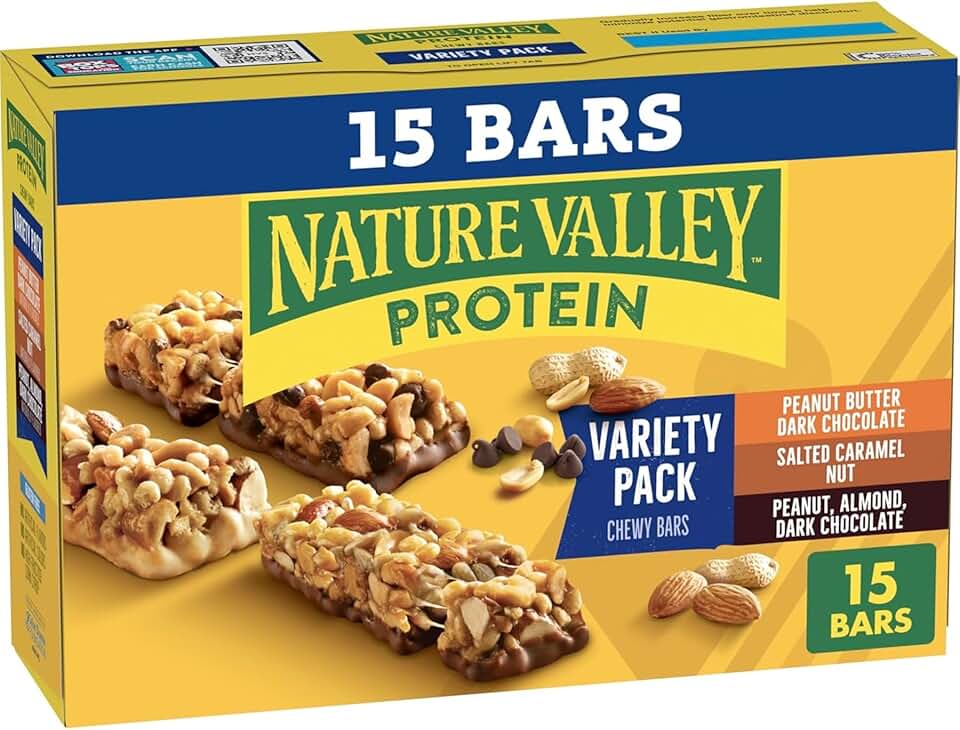
Nature Valley Protein Bars are a reliable, budget-friendly option for hikers who need gluten-free fuel without spending a fortune. Each bar contains 10 grams of protein, which is enough to sustain energy on moderate day hikes without being overwhelming. The variety pack includes three flavors, so you can rotate between them and avoid flavor fatigue. At around 50 cents per bar, these are one of the most affordable options that still deliver decent nutrition.
The texture is chewy and slightly sticky, with a granola base that holds together well. The bars are firm enough to stay intact in your pack but soft enough to chew easily. They do not melt like chocolate-coated bars, though the chewy texture can become slightly softer in heat. The wrappers are straightforward and easy to open, even with sweaty or cold hands. The bars are compact and fit easily into pockets or small compartments in your pack.
Flavor-wise, Nature Valley hits a middle ground between sweet and savory. The variety pack includes peanut butter dark chocolate, salted caramel nut, and peanut almond dark chocolate, all of which are satisfying without being overly sugary. The granola base provides a hearty, filling quality that feels more substantial than some softer bars. The dark chocolate adds a touch of sweetness without overwhelming the other flavors.
The main limitation is the moderate protein content. At 10 grams per bar, these work well for shorter hikes or as a supplemental snack, but they may not provide enough sustained energy for long, strenuous treks. The bars also contain more sugar than some higher-protein options, though not excessively so. Some hikers find the chewy texture a bit sticky, particularly if they eat the bar too quickly without water. The ingredient list is fairly clean for a mass-market bar, though not as minimal as whole-food options like RXBAR. Overall, these are a solid choice for hikers on a budget who want gluten-free bars that hold up on the trail.
Compare the Nature Valley Protein Bars specs and pricing on Amazon.
Pros
- Very affordable at around 50 cents per bar
- Gluten-free and easy to digest
- 10 grams of protein for moderate energy needs
- Variety pack includes three flavors
- Chewy texture holds up well without melting
Cons
- Moderate protein may not be enough for long hikes
- Slightly sticky texture can be hard to eat without water
- Contains more sugar than higher-protein options
5. Power Crunch Protein Energy Wafer Bars, Peanut Butter Fudge, 1.4 Ounce (12 Count)
Best for hikers who want a lighter, crispy texture that does not require much chewing

Power Crunch takes a different approach to energy bars with a wafer-style design that is light, crispy, and easy to eat on the move. Unlike dense, chewy bars that require significant effort to break down, these wafer bars dissolve quickly and do not leave you feeling overly full. Each bar contains 13 grams of protein and around 200 calories, making them a solid option for hikers who want sustained energy without the heaviness of traditional bars.
The wafer texture is the standout feature here. The bars are made of thin layers of wafer filled with a creamy peanut butter fudge center. This makes them easy to chew and swallow even when you are breathing hard or your mouth is dry. The bars are also less likely to stick to your teeth compared to chewy, sticky options. The crispy texture holds up surprisingly well in moderate heat, though the creamy filling can soften slightly in very hot conditions. The wrappers are sturdy and easy to open without tearing the bar inside.
Flavor-wise, the peanut butter fudge combination is sweet and satisfying without being cloying. The wafer layers add a subtle vanilla flavor that balances the richness of the filling. The bars taste more like a treat than a health food product, which can be motivating when you need to force yourself to eat mid-hike. The sweetness is noticeable but not overwhelming, and the bars do not leave a chalky aftertaste like some protein bars.
The main drawback is the delicate texture. While the bars hold up well under normal conditions, they can crumble if compressed too hard or dropped. Hikers who tend to stuff their packs tightly may find broken pieces at the bottom of their bag. The bars are also smaller and lighter than many other options, which is great for weight-conscious hikers but means you may need to eat two bars for a more substantial snack. The ingredient list includes some processed components, though the protein content and unique texture make these bars worth considering for hikers who struggle with denser options.
See if the Power Crunch Wafer Bars are right for your first hike on Amazon.
Pros
- Light, crispy wafer texture is easy to chew and digest
- 13 grams of protein per bar
- Does not stick to teeth or feel heavy
- Peanut butter fudge flavor is sweet and satisfying
- Compact and lightweight for easy packing
Cons
- Delicate texture can crumble if compressed too hard
- Creamy filling can soften in very hot conditions
- Smaller bars may require eating two for a full snack
How These Compare
Choosing the best energy bars for hiking depends on what matters most to you on the trail. If you want a proven, all-around option that holds up in heat and delivers solid energy, CLIF BAR Variety Pack is hard to beat. The organic oats and real ingredients provide dependable fuel, and the variety of flavors keeps things interesting on longer trips. The bars are firm enough to stay intact but not so hard that they become difficult to chew. They work well for moderate to strenuous hikes where you need around 250 calories to bridge the gap between meals.
For hikers who prioritize protein and clean ingredients, RXBAR Variety Pack offers a no-nonsense option with 12 grams of protein per bar. The simple ingredient list appeals to anyone who wants to avoid fillers and additives, and the dense, chewy texture holds up extremely well in heat. However, the bars can be difficult to chew when you are dehydrated, so keep water handy. These work best for hikers who value transparency and higher protein over softer textures.
If you are focused on maximizing protein while keeping costs low, Pure Protein Chocolate Peanut Butter bars deliver 20 grams of protein at an affordable price. The candy-bar-like texture makes them easy to eat, but the coating can soften in high heat. These are ideal for hikers doing strenuous workouts or multi-hour treks who need serious muscle recovery fuel. Just pack them carefully in hot weather.
Budget-conscious hikers who need gluten-free options will appreciate Nature Valley Protein Bars. At around 50 cents per bar, they are one of the most affordable options that still deliver 10 grams of protein. The chewy granola texture holds up well without melting, though the moderate protein content may not be enough for very long hikes. These work best as supplemental snacks or for shorter day hikes where you do not need maximum fuel.
Finally, if you struggle with dense, chewy bars and want something light and crispy, Power Crunch Wafer Bars offer a unique alternative. The wafer texture is easy to chew and digest, and the 13 grams of protein provide solid energy without feeling heavy. The bars are more delicate and can crumble if packed tightly, so handle them with care. These are a great choice for hikers who want a lighter snack that does not require much effort to eat mid-stride.
Frequently Asked Questions
What makes an energy bar good for hiking?
A good energy bar for hiking provides a balance of carbohydrates for quick energy, protein for sustained stamina, and healthy fats to keep you satisfied. The bar should hold up in heat without melting or crumbling, fit easily into your pack or pockets, and be easy to eat when you are moving. Look for bars with 150 to 300 calories depending on your hike length and intensity, and avoid options loaded with added sugars that cause energy crashes. Ingredients matter too. Bars made with whole foods like oats, nuts, and dried fruit tend to digest more easily and provide steadier energy than bars packed with artificial ingredients. Texture is critical because a bar that turns into mush in your pack or requires excessive chewing slows you down. The best bars stay intact under pressure, are easy to unwrap with sweaty or cold hands, and taste good enough that you actually want to eat them mid-hike.
How many energy bars should I bring on a hike?
For a moderate day hike of three to five hours, one to two energy bars is usually enough to supplement your main meals or snacks. Longer hikes of six hours or more may require three to four bars depending on your pace, terrain, and how much other food you are carrying. The goal is to have enough fuel to prevent bonking without overloading your pack with unnecessary weight. Consider your individual metabolism and how often you typically get hungry. Some hikers prefer eating smaller amounts more frequently, while others do well with fewer, larger snacks. If you are hiking in hot weather or at high altitude, you may need more fuel to compensate for increased exertion. It is better to pack one extra bar than to run out of energy halfway through your hike. You can always bring the extra bar home if you do not need it, but running out of fuel on the trail is miserable and potentially dangerous.
Do energy bars melt in hot weather?
Some energy bars melt or soften in hot weather, while others hold up well. Bars with chocolate coatings or soft, gooey centers are most vulnerable to heat and can turn into a sticky mess in temperatures above 80 degrees Fahrenheit. Firmer bars made with oats, nuts, and dates tend to maintain their shape even in summer conditions. Wafer-style bars also hold up better than softer options. To minimize melting, store your bars in the center of your pack away from direct sunlight, or wrap them in a small towel or extra clothing layer. Avoid leaving bars in your car or in external pockets where they are exposed to heat. If you are hiking in very hot conditions, choose bars specifically designed to resist melting, such as CLIF BAR, RXBAR, or Power Crunch wafers. These options maintain their texture and do not create a mess even when temperatures climb.
Are protein bars or energy bars better for hiking?
The best choice depends on your hiking goals and the length of your trek. Energy bars typically emphasize carbohydrates for quick fuel, making them ideal for shorter hikes or when you need an immediate energy boost. Protein bars contain higher protein levels, which help with sustained stamina and muscle recovery on longer or more strenuous hikes. For most day hikes, a bar with a balanced mix of carbohydrates and moderate protein works well. Look for bars with 5 to 15 grams of protein and enough carbohydrates to fuel your activity. If you are doing multi-hour treks or hiking with a heavy pack, higher protein bars can help prevent muscle fatigue and support recovery. Avoid bars that are extremely high in protein but low in carbohydrates, as you need carbs for immediate energy on the trail. The best approach is often to bring a mix of both types so you can adjust based on how you feel during the hike.
The Bottom Line
The best energy bars for hiking are the ones that actually make it to your mouth intact and give you the fuel to keep moving. If you are new to trail snacking, start with CLIF BAR Variety Pack for a reliable, all-around option that holds up in heat and delivers solid energy. The organic ingredients and variety of flavors make them easy to stick with on multiple hikes. For hikers who want cleaner ingredients and higher protein, RXBAR Variety Pack offers simple, real-food fuel with 12 grams of protein per bar. Just bring plenty of water to help with the dense texture.
If your main concern is maximizing protein on a budget, Pure Protein Chocolate Peanut Butter bars deliver 20 grams of protein at an affordable price. They work best for strenuous hikes or when you need serious muscle recovery fuel, though you will want to pack them carefully in hot weather. Budget-conscious hikers who need gluten-free options should consider Nature Valley Protein Bars, which offer decent nutrition at around 50 cents per bar. And if you struggle with dense, chewy bars, Power Crunch Wafer Bars provide a lighter, crispy alternative that is easy to eat on the move.
Test a few options on shorter hikes before committing to a full box. What works for someone else may not work for you, and finding your ideal trail fuel is part of the learning process. Pay attention to how your body responds, how the bars hold up in your pack, and whether you actually want to eat them when you are tired and sweaty. The right bar makes a noticeable difference in your energy levels and overall hiking experience.
Disclosure: As an Amazon Associate, we earn from qualifying purchases. This does not affect our editorial recommendations.