
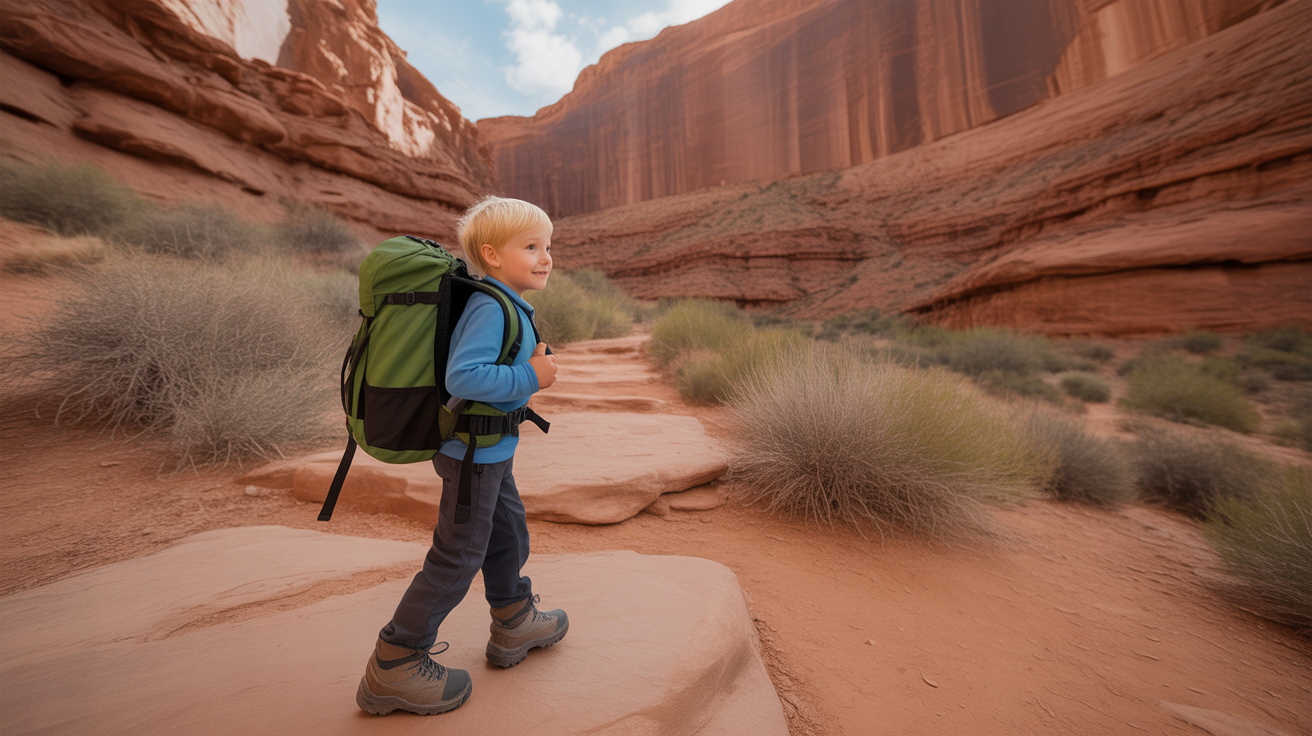
Finding the best hiking backpack for kids means more than just picking something small and colorful. Your child needs a pack that actually fits their torso length, distributes weight properly, and has enough capacity for their essentials without being overwhelming. Adult packs scaled down rarely work, and a pack that does not fit correctly can turn an exciting trail day into an uncomfortable experience with sore shoulders.
This guide walks you through youth-specific backpacks designed for growing bodies, with clear capacity recommendations by age and torso adjustment features that matter. Whether your child is ready for their first 3L daypack or a 38L overnight pack for multi-day trips, you will know exactly what to look for and which packs deliver real hiking performance.
What to Look For
Understanding Youth Backpack Capacity by Age
Capacity matters more than you might think when selecting the best hiking backpack for kids. A pack that is too large becomes a burden, while one that is too small cannot carry essentials safely. For toddlers and preschoolers aged 3 to 5, look for 3L to 10L packs that hold a light jacket, snacks, and a small water bottle. These packs are more about building independence than carrying serious weight.
Elementary-aged kids from 6 to 9 typically need 12L to 18L capacity. At this stage, they can carry their own lunch, extra layers, a first aid kit, and a full water bottle for half-day hikes. The jump to 18L to 30L works for kids aged 10 to 13 who are ready for full-day adventures and want to carry camera gear, field guides, or extra snacks for the group. Teenagers tackling overnight trips need 30L to 40L packs with proper load distribution and sleeping bag compartments.
Do not let your child carry more than 10 to 15 percent of their body weight. A 60-pound child should max out at 6 to 9 pounds of gear including the pack itself. Packing too much weight makes kids tire faster and can discourage them from wanting to hike again.
Torso Length and Adjustable Suspension Systems
Torso length (the measurement from the base of the neck to the top of the hip bones) determines fit more than height or age. An adjustable suspension system is the most important feature in a youth hiking pack because kids grow fast. Measure from the base of your child’s neck (the C7 vertebra, the prominent bone at the top of the spine) down to the top of their hip bones. This measurement, not their overall height, determines which pack size they need.
Most quality youth packs offer torso adjustment ranges of 11 to 15 inches or 13 to 17 inches. The shoulder straps should start just below the shoulders, the hip belt should rest on the hip bones (not the waist), and the load lifter straps should angle back toward the pack at 45 degrees. When these align correctly, weight transfers to the hips instead of hanging from the shoulders.
Adjustable systems let you extend the life of the pack through growth spurts. A pack that fits at age 8 can often adjust to work at age 11 with the same child, making the investment worthwhile. Without adjustment features, you will need to replace the pack every 18 to 24 months as your child grows.
Hip Belts and Load Transfer for Young Hikers
Hip belts are not decorative. They transfer weight from shoulders to hips, which is critical for any pack over 10L capacity. Young kids often lack the hip structure to support a loaded belt until around age 7 or 8, which is why smaller packs skip this feature entirely. Once your child reaches elementary age and carries more gear, a padded hip belt becomes essential.
The belt should wrap around the hip bones, not the waist or belly. When fastened and tightened, it should feel snug but not restrictive. Your child should be able to slip two fingers under the belt comfortably. Load lifter straps at the top of the shoulder straps pull the pack closer to the body and shift weight forward onto the hips.
Teach your child to fasten the hip belt first, then tighten the shoulder straps, and finally adjust the load lifters. This sequence ensures proper weight distribution. Many kids skip this process and end up carrying everything on their shoulders, which leads to fatigue and discomfort within the first mile.
Hydration System Compatibility and Water Access
Kids need easy access to water without stopping to dig through their pack. Hydration reservoir sleeves with hose ports are standard in quality youth packs sized 12L and up. A 1.5L reservoir typically fits children aged 7 to 12, while teens can use 2L or 3L reservoirs on longer hikes. The hose should route over either shoulder with a clip to keep it within reach.
Some packs skip the reservoir sleeve and rely on external water bottle pockets instead. Stretchy side pockets work well for younger kids who prefer the simplicity of a water bottle they can see and reach themselves. Look for pockets that hold the bottle securely while remaining accessible without removing the pack. Bottles that fall out and roll downhill are frustrating and potentially dangerous on steep terrain.
Whichever system you choose, make sure your child can access water independently while wearing the pack. Stopping every 20 minutes to dig out a bottle kills momentum and makes hydration feel like a chore rather than a habit.
Ventilation and Comfort Features for Active Kids
Kids generate heat quickly on the trail, and a pack that traps moisture against their back leads to discomfort and chafing. Back panels with air channels create space between the pack and your child’s back, allowing airflow while maintaining stability. Ventilation systems work best for packs over 18L where heat buildup matters most during longer hikes.
Shoulder straps need dense foam padding with breathable covers. Thin straps dig into shoulders under load, while overly thick padding adds unnecessary weight and bulk. The strap shape should curve to follow the shoulder naturally rather than cutting straight across. Sternum straps (the chest strap that connects the two shoulder straps) with adjustable height prevent straps from sliding off narrow shoulders during movement.
Look for packs with moisture-wicking materials on all body contact points. Nylon and polyester dry faster than canvas or cotton blends. Your child will sweat on every hike, so choosing materials that manage moisture makes the difference between a pleasant experience and a clammy, irritated one.
Organization and Accessibility for Independent Young Hikers
The best hiking backpack for kids balances simplicity with organization. A single large main compartment works for younger children who carry minimal gear. As kids age and carry more items, multiple pockets help them find things independently without adult assistance. Front stretch pockets hold jackets and snacks within easy reach. Internal zippered pockets secure small items like keys or a whistle.
Teach your child a consistent packing system from the start. Heaviest items go closest to the back and centered between the shoulder blades. Lighter items fill the top and outer pockets. This distribution keeps the pack stable and prevents the sensation of being pulled backward. Kids who pack randomly end up with unbalanced loads that shift and sway with every step.
External attachment points for trekking poles or a sleeping pad become useful as kids graduate to overnight trips. Compression straps cinch the load tight when the pack is not full, which prevents gear from shifting. A rain cover or waterproof pack liner protects contents during unexpected weather, which happens often when hiking with kids who want to explore every puddle and stream.
Our Top Picks
1. Osprey Ace 38L Kids Backpacking Backpack
Best for tweens and teens ready for overnight backpacking trips with proper load distribution

The Osprey Ace 38L stands out as the best hiking backpack for kids who are serious about overnight adventures. This is a real backpacking pack scaled appropriately for young bodies, not a simplified daypack with extra capacity added on. The adjustable torso length accommodates growing kids through multiple seasons, with a range that fits most children aged 10 to 14 depending on individual torso measurements rather than age alone.
The suspension system transfers weight to the hips effectively through a padded hip belt designed for younger frames. Load lifter straps and an adjustable sternum strap provide stability without the complexity that overwhelms less experienced hikers. The main compartment opens wide for easy packing and includes a sleeping bag compartment at the bottom with a zippered divider, which helps kids organize gear logically and access layers without unpacking everything.
Hydration reservoir compatibility with an internal sleeve and hose port keeps kids drinking water throughout the day. External attachment points for trekking poles and compression straps let the pack adapt to varying loads from day hikes to multi-day trips. The back panel design provides airflow that matters when kids are working hard on steep climbs.
The 38L capacity handles a sleeping bag, pad, extra clothing, food, and camp essentials for two to three night trips. For kids still growing into overnight hiking, this capacity prevents overpacking while providing room for everything they actually need. The pack itself weighs enough to feel substantial without adding unnecessary bulk that tires young hikers before they reach camp.
Color options tend toward outdoor-appropriate tones that do not show trail dirt immediately, and the build quality matches adult Osprey packs. This is an investment that lasts through growth spurts if you adjust the torso length as your child grows. While customer reviews are still building for this model with 42 reviews currently available, the feedback shows strong satisfaction from families using it for multi-day trips.
See current pricing for the Osprey Ace 38L Kids Backpacking Backpack on Amazon.
Pros
- Adjustable torso length grows with your child through multiple seasons
- Separate sleeping bag compartment with zippered divider for logical organization
- Hip belt and load lifters distribute weight properly to reduce shoulder fatigue
- Hydration reservoir sleeve with hose port for hands-free drinking
- 38L capacity handles overnight trips without encouraging overpacking
Cons
- Higher price point than casual daypacks
- 38L may be too large for kids under age 9 or shorter torso lengths
- Newer model with fewer customer reviews than more established options
2. Osprey Jet 18L Kids Hiking Backpack
Best for elementary-aged kids doing full-day hikes who need proper fit and hydration access
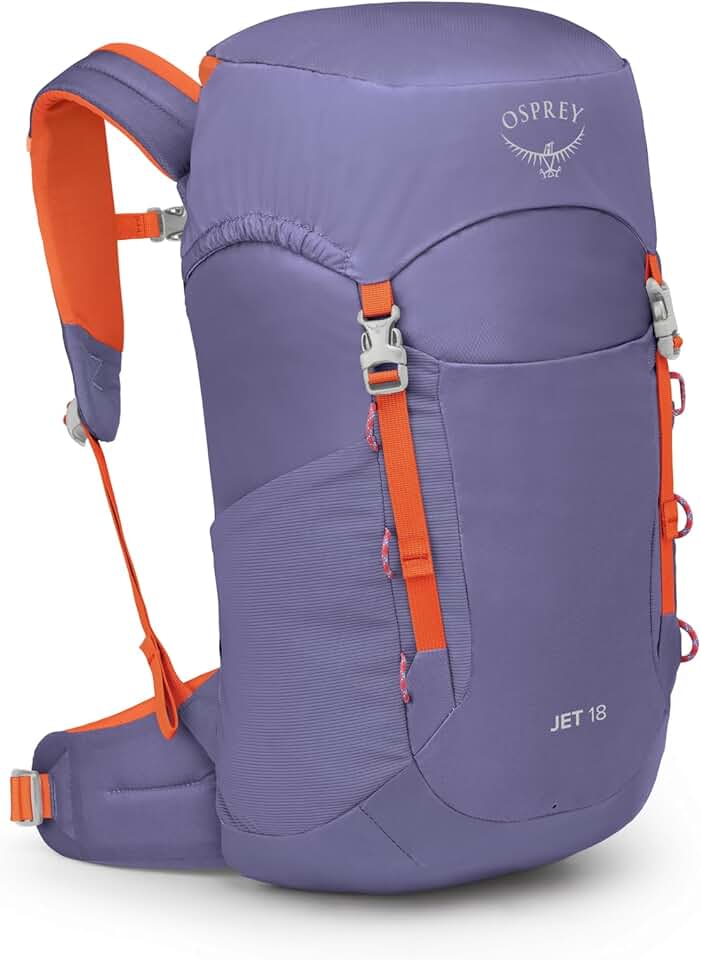
The Osprey Jet 18L hits the capacity sweet spot for kids aged 7 to 11 tackling day hikes that last four to six hours. This is the best hiking backpack for kids who have outgrown the smallest packs but do not need overnight capacity yet. The 18L volume holds lunch, extra layers, a first aid kit, water, and the random treasures kids collect on trails without feeling oversized on smaller frames.
The adjustable sternum strap keeps shoulder straps in place during active movement, and the padded hip belt transfers weight off shoulders. Kids notice the difference immediately when weight shifts off their shoulders onto their hips. The back panel allows airflow during hikes, which helps prevent the sweaty back feeling common with budget packs that trap heat.
Hydration reservoir compatibility with an internal sleeve and hose routing makes drinking water effortless. Kids are more likely to stay hydrated when they do not need to stop and dig through their pack every time they are thirsty. External stretch pockets hold water bottles as a backup or for kids who prefer seeing their water supply.
The main compartment opens wide enough for kids to pack and unpack independently. Internal organization includes a zippered pocket for small items that otherwise disappear into the main compartment. Compression straps cinch the load when the pack is not completely full, which keeps contents from shifting around.
Multiple color options let kids choose something they actually want to wear, which matters more than parents sometimes realize. A pack kids are excited about is a pack they will use. The build quality matches what you expect from Osprey, with reinforced stress points and durable fabrics that handle being dropped, dragged, and stuffed into car trunks repeatedly.
Read verified buyer reviews for the Osprey Jet 18L Kids Hiking Backpack on Amazon.
Pros
- 18L capacity ideal for elementary-aged kids on full-day hikes
- Hydration reservoir sleeve with hose routing for independent water access
- Padded hip belt transfers weight off shoulders to reduce fatigue
- Back panel ventilation helps manage heat during active hiking
- Wide-opening main compartment makes packing easier for kids
Cons
- No adjustable torso length limits lifespan as child grows
- Hip belt may be too large for very small frames under age 7
3. Osprey HydraJet 12L Kids Hiking Backpack with Hydraulics Reservoir
Best for younger elementary kids who need hydration access without the bulk of larger packs

The Osprey HydraJet 12L combines the essentials kids need with nothing extra that adds weight or complexity. This pack includes a 1.5L Hydraulics reservoir rather than requiring separate purchase, which makes it ready to hit the trail immediately. The 12L capacity works for kids aged 6 to 9 who are building endurance on half-day hikes and need to carry water, snacks, a light jacket, and maybe sunscreen.
The reservoir system teaches kids proper hydration habits early. The bite valve is easy to operate, and the hose stays accessible during hikes with a sternum strap attachment that keeps it from dangling or catching on branches. Kids who master the reservoir system tend to drink more consistently than those who rely on water bottles alone.
The pack features a simplified suspension without a hip belt, which is appropriate for the lighter loads 12L capacity implies. The shoulder straps are padded and shaped for smaller frames, with a sternum strap that adjusts vertically to accommodate different torso lengths. The back panel allows airflow without the weight of more complex ventilation systems.
External pockets provide quick access to snacks and small items. The main compartment is large enough for a fleece jacket and lunch without excessive empty space that lets contents shift around. Reflective details add visibility during early morning or late afternoon hikes when lighting is lower.
The pack works equally well for biking, which extends its usefulness beyond hiking alone. Kids who participate in multiple outdoor activities get more value from gear that transitions between sports. The included reservoir eliminates the immediate additional expense common with hydration-compatible packs that do not include the actual reservoir.
Check current stock for the Osprey HydraJet 12L Kids Hiking Backpack with Hydraulics Reservoir on Amazon.
Pros
- Includes 1.5L Hydraulics reservoir, no separate purchase needed
- 12L capacity appropriate for younger elementary kids building hiking endurance
- Hose attachment keeps hydration accessible without dangling
- Simplified suspension reduces weight while providing adequate support
- Works for multiple activities including hiking and biking
Cons
- No hip belt limits load distribution for heavier packing
- 12L capacity too small for full-day hikes or older kids
View Osprey HydraJet 12L Kids Hiking Backpack with Hydraulics Reservoir on Amazon →
4. Deuter Junior Childrens Backpack 18L
Best for parents prioritizing exceptional build quality and ergonomic design for growing hikers

The Deuter Junior 18L earns its reputation through thoughtful design details that make hiking more comfortable for kids. The back system creates ventilation channels that work well, helping manage heat buildup that plagues cheaper packs. Kids notice the difference immediately on warm days when other packs would leave them soaked.
The shoulder straps follow the natural curve of young shoulders instead of cutting straight across. This design reduces pressure points and prevents straps from sliding off during movement. The padded hip belt gives kids a place to rest their hands while hiking, which many young hikers appreciate for comfort and natural arm positioning.
The 18L capacity handles day hikes and overnight camping trips where gear hauling is minimal. A bottom compartment with internal divider helps kids organize sleeping gear separately from daytime essentials. External attachment points and compression straps adapt the pack to varying loads from light day hikes to fuller overnight configurations.
Deuter includes thoughtful touches like a key ring, a name tag holder, and reflective detailing. These details matter when kids are developing independence on the trail. The main compartment uses a U-shaped zipper that opens wide for easy packing rather than a narrow top-loading design that frustrates younger users.
The materials and construction quality exceed what you typically find at this price point. Parents report these packs lasting through multiple children and several years of regular use, making the initial investment worthwhile for families who hike frequently.
Compare the Deuter Junior Childrens Backpack 18L specs and pricing on Amazon.
Pros
- Ventilation system helps manage heat during active use
- Contoured shoulder straps reduce pressure points on young shoulders
- Hip belt designed for comfortable weight distribution
- Bottom compartment with divider helps organize sleeping gear separately
- Exceptional build quality with materials that last through heavy use
Cons
- No torso adjustment limits fit flexibility as child grows
- Limited availability compared to more common brands
5. Osprey Daylite Jr Kids Commuter Backpack
Best for younger kids starting trail adventures who need simple organization and proven durability
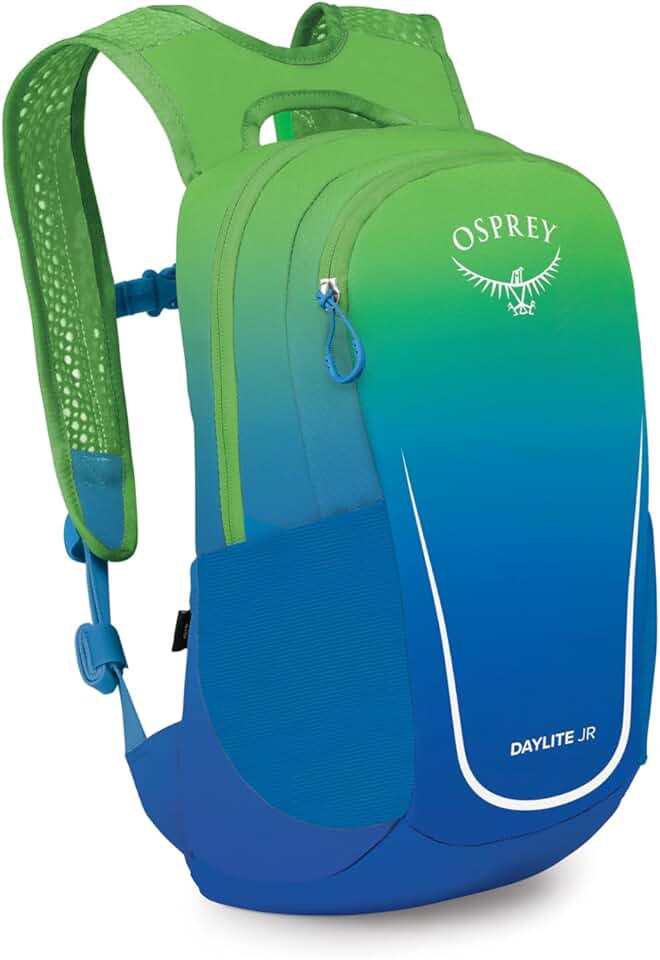
The Osprey Daylite Jr simplifies hiking for kids who are just beginning to build trail experience. This is the best hiking backpack for kids aged 5 to 8 who are ready for short hikes and want to carry their own gear but do not need the capacity or complexity of larger packs. The streamlined design eliminates features that overwhelm beginners while including everything necessary for building good hiking habits.
The main compartment provides enough space for a light jacket, lunch, and a water bottle without excess volume that encourages overpacking. A front zippered pocket keeps small items like sunscreen or a whistle accessible without digging through the main compartment. Mesh side pockets stretch to hold water bottles securely while remaining easy for small hands to access.
The shoulder straps are padded appropriately for the lighter loads this pack carries. A sternum strap keeps straps in position during active movement, which is crucial for kids who run, climb, and explore rather than walking steadily. The sternum strap adjusts vertically to accommodate different torso lengths, extending the useful life as kids grow.
Reflective details add visibility during early morning or late afternoon hikes. The simple organization makes packing and unpacking straightforward for kids learning to manage their own gear. This independence is part of the hiking education process and packs that are too complex delay that learning.
The Daylite Jr works equally well for school, park days, and weekend adventures, which increases how often kids actually use it. The more they wear the pack, the more comfortable they become with proper fit and weight distribution. Multiple color options let kids choose something they are excited to wear, which matters when building enthusiasm for outdoor time.
See if the Osprey Daylite Jr Kids Commuter Backpack is right for your first hike on Amazon.
Pros
- Simplified design appropriate for kids just starting trail adventures
- Enough capacity for essentials without encouraging overpacking
- Front pocket and mesh side pockets keep items organized and accessible
- Adjustable sternum strap accommodates growing torso lengths
- Works for multiple uses including school and day trips
Cons
- No hip belt limits load distribution on longer hikes
- Smaller capacity may be outgrown quickly as hiking ambitions increase
How These Compare
Choosing between these packs depends entirely on your child’s age, hiking experience, and the types of trails you plan to tackle together. The Osprey Ace 38L is the clear choice for tweens and teens ready for overnight backpacking, with proper load distribution and capacity that handles multi-day gear. If your child is serious about progressing beyond day hikes and wants to join you on overnight trips, the investment in the Ace pays off through years of use as they grow.
For full-day hikes with elementary-aged kids, the Osprey Jet 18L and Deuter Junior 18L both deliver excellent performance at similar capacity. The Jet emphasizes hydration system integration and simpler operation, while the Deuter prioritizes ventilation and thoughtful ergonomic details. If your child struggles with staying hydrated on the trail, the Jet makes drinking effortless. If comfort during warm weather matters most, the Deuter’s ventilation system provides superior airflow.
The Osprey HydraJet 12L works best for younger kids building endurance on shorter hikes where hydration access is important but capacity needs remain modest. The included reservoir eliminates additional expense and gets kids using proper hydration systems from the start. This pack bridges the gap between simple school backpacks and real hiking gear.
The Osprey Daylite Jr serves families just beginning hiking adventures with kids who need simple, reliable gear without overwhelming features. This is your entry point if your child has never carried their own pack or if you are unsure how much hiking enthusiasm will stick. The lower price makes it less risky if outdoor adventures do not become a regular activity, yet the quality ensures it performs well when you do hit the trail.
Consider your child’s growth rate when deciding. The Ace’s adjustable torso length extends its useful life significantly compared to fixed-size packs. If your child is growing rapidly, that adjustability justifies the higher initial cost. For kids who are growing more slowly or who are already near their adult height, a fixed-size pack like the Jet or Deuter Junior works well without the added expense of adjustment features.
Frequently Asked Questions
What size backpack does a child need for hiking?
Children aged 3 to 5 typically need 3L to 10L packs that carry light layers and snacks. Kids aged 6 to 9 do well with 12L to 18L capacity for half-day and full-day hikes with lunch, water, and extra clothing. Ages 10 to 13 usually require 18L to 30L for full-day adventures with camera gear or field guides. Teenagers ready for overnight trips need 30L to 40L packs with sleeping bag compartments and proper load distribution. The right size depends more on what your child needs to carry than their age alone. A small 10-year-old on a short morning hike needs less capacity than a larger 10-year-old on an all-day adventure. Match capacity to the actual gear your child will carry rather than buying the largest pack possible.
How do you measure a child for a hiking backpack?
Measure torso length from the base of the neck down to the top of the hip bones, not total height. Have your child tilt their head forward and feel for the prominent bone at the base of the neck, called the C7 vertebra. This is your starting point. Place your thumbs on the top of their hip bones and measure the distance between these two points. This measurement determines pack size more accurately than age or height. Most youth packs fit torso lengths between 11 and 17 inches depending on the model. When trying on a pack, check that shoulder straps start just below the shoulders, the hip belt rests on hip bones rather than the waist, and load lifter straps angle back at roughly 45 degrees. A proper fit distributes weight to the hips rather than hanging entirely from shoulders, which helps kids hike more comfortably on longer trails.
How much weight should a child carry in a hiking backpack?
Children should carry no more than 10 to 15 percent of their body weight including the pack itself. A 60-pound child should max out at 6 to 9 pounds total. A 90-pound child can handle 9 to 13 pounds comfortably. Exceeding these limits leads to fatigue and reduced enjoyment. Start conservatively and watch for signs of struggle like frequent rest requests, complaints about shoulder pain, or hunching forward under the load. Kids often want to carry more than they should because they are excited or want to help, but overloading them on early hikes damages enthusiasm for future adventures. Weigh the loaded pack before leaving home using a bathroom scale. Have your child wear the pack and step on the scale, then subtract their body weight. This simple check prevents accidental overloading.
Do kids need a hip belt on their hiking backpack?
Hip belts become important once pack capacity exceeds 10L and your child is old enough to have hip structure that supports load transfer, typically around age 7 or 8. Younger children with smaller packs carrying minimal weight do not need hip belts and often cannot use them effectively even when present. The belt should rest on hip bones, not the waist or belly, and transfer weight off the shoulders onto the hips. This distribution is critical for comfort and endurance on longer hikes. When fitted correctly, a hip belt reduces shoulder fatigue significantly and allows kids to hike longer distances. For packs 18L and larger, a padded hip belt is essential rather than optional. Teach your child to fasten the hip belt first, then adjust shoulder straps, and finally tighten load lifters. This sequence ensures proper weight distribution throughout the hike.
Should kids use a hydration bladder or water bottles for hiking?
Hydration bladders work better for most kids because they make drinking effortless without stopping to dig through the pack. Kids who can sip water continuously through a hose tend to stay better hydrated than those relying on water bottles alone. The convenience factor is significant when hiking with children who easily get distracted and forget to drink until they are already thirsty. Look for packs with reservoir sleeves, hose ports, and clips that keep the hose accessible. A 1.5L reservoir fits most kids aged 7 to 12, while teens can use 2L or larger. Water bottles work well for younger children who prefer seeing their water supply or who are not yet comfortable with bite valves. Some families use both systems, with a reservoir for the trail and a water bottle as backup or for camp. The best system is the one your child actually uses consistently.
The Bottom Line
Selecting the best hiking backpack for kids comes down to matching capacity, fit, and features to your child’s actual needs rather than wishful thinking about future adventures. Start with the activities you are doing now, not the ones you hope to do eventually. A child hiking 2-mile loops needs different gear than one tackling overnight trips. The Osprey Ace 38L is your choice if overnight backpacking is genuinely happening soon with a child whose torso measurements support the larger size. The Osprey Jet 18L and Deuter Junior 18L serve elementary-aged kids logging serious trail miles on day hikes. The Osprey HydraJet 12L works for younger kids building endurance on shorter outings where hydration access is important. The Osprey Daylite Jr fits families just beginning hiking adventures who need reliable gear without overwhelming complexity.
Measure torso length before buying anything. Bring your child to try on packs if possible, or order from retailers with generous return policies if shopping online. Adjust the pack properly every single time your child wears it, not just the first time. Teach the hip belt, shoulder strap, load lifter sequence until it becomes automatic. Weigh the loaded pack before leaving home and keep total weight under 10 to 15 percent of body weight. Check fit every few months as your child grows, and adjust straps as needed. A pack that fit perfectly in spring may need adjustment by fall.
The right pack makes hiking together more enjoyable for everyone. Kids who are comfortable on the trail want to go back. Kids who are uncomfortable, tired, and sore from gear that does not fit lose enthusiasm quickly. Invest in proper fit and appropriate capacity now, and you are investing in years of family adventures together on trails.
Disclosure: As an Amazon Associate, we earn from qualifying purchases. This does not affect our editorial recommendations.