
Choosing your first hiking daypack can feel overwhelming when you are standing in front of dozens of options, each promising to be perfect for the trail. You wonder if 20 liters is enough or if you need 30, whether you really need all those pockets, and what happens if the pack does not fit your back properly. These are not silly questions—they are exactly what every new hiker thinks about, and getting the right pack makes the difference between an enjoyable hike and an uncomfortable slog.
A 20-30 liter daypack is the sweet spot for most beginner hikers. It holds everything you need for a full day on the trail—water, snacks, extra layers, first aid—without being so large that you are tempted to overpack and wear yourself out. In this guide, we will walk through five excellent daypacks in this size range, explain what features actually matter when you are new to hiking, and help you understand how to find a pack that fits your body and your hiking goals.
What to Look For
Capacity: Understanding What 20-30 Liters Actually Means
When you see a pack listed as 20 or 30 liters, that number refers to the total volume of space inside. For context, a 20-liter pack is perfect for a 3-4 hour hike where you need water, snacks, a light jacket, and basic safety items. A 30-liter pack gives you room for a full day of hiking (6-8 hours) with lunch, multiple layers, a rain jacket, first aid kit, and even a lightweight camp stove if you want hot coffee at the summit. As a beginner, start by thinking about your typical hike length. If you are doing morning or afternoon outings close to home, 20-25 liters is plenty. If you plan longer day hikes or want the option to pack for changing weather, lean toward 28-30 liters. Remember that a larger pack does not mean you must fill it completely—it just gives you flexibility as you learn what you actually need on the trail.
Fit and Adjustability: Why Your Back Matters
A daypack that does not fit properly will make even a short hike miserable. The most important measurement is torso length—the distance from the base of your neck to the top of your hip bones—not your overall height. Many beginners assume pack fit is related to clothing size, but a tall person can have a short torso and vice versa. Look for packs with adjustable shoulder straps and a sternum strap (the strap that connects across your chest). The sternum strap keeps the shoulder straps from sliding off and helps distribute weight. Some packs also include a hip belt, even in this smaller size range. For packs under 25 liters, a hip belt is optional, but for 28-30 liter packs carrying heavier loads, a padded hip belt transfers weight from your shoulders to your hips, which are stronger and tire less quickly. When trying on a pack (or after it arrives), load it with 10-15 pounds of stuff and wear it around your house. The shoulder straps should sit comfortably on your shoulders without gaps, and the pack should sit high on your back, not sagging below your waistline.
Organization and Pocket Placement
How a pack organizes your gear affects how much you enjoy using it on the trail. At minimum, look for a main compartment, two side pockets for water bottles, and at least one external pocket for items you need quickly (like snacks, sunscreen, or a trail map). Side pockets should be accessible while wearing the pack—you should be able to reach back and grab a water bottle without taking the pack off. Some packs have a separate hydration reservoir sleeve, which is useful if you prefer drinking through a hose rather than stopping for water bottles. A front stash pocket (often elastic mesh or stretchy fabric) is great for stuffing a rain jacket or wet layers. Internal organization varies: some packs have multiple compartments, while others are one big bucket. Neither is wrong, but think about your style. If you like everything in its place, more pockets help. If you prefer simplicity and plan to use stuff sacks, a single large compartment works fine.
Ventilation and Back Panel Design
Your back will sweat on the trail—that is normal—but some pack designs minimize the swampy feeling better than others. Packs with a suspended mesh back panel create an air gap between the pack and your back, allowing air to circulate. This keeps you cooler and reduces the soaked-shirt feeling. The tradeoff is that suspended mesh panels add a bit of weight and cost. Packs with foam padding directly against your back are lighter and often less expensive, but you will feel warmer. For hot-weather hiking or if you tend to overheat easily, prioritize ventilation. For cooler climates or shorter hikes, a padded back panel is perfectly fine and often more comfortable for lighter loads.
Hydration Compatibility
Staying hydrated is non-negotiable on the trail, and your pack should make drinking easy. Most daypacks accommodate hydration in two ways: water bottle pockets on the sides or a sleeve inside for a hydration reservoir (also called a bladder). Water bottles are simple—you can see how much you have left, they are easy to refill, and there is nothing to clean or maintain. Hydration reservoirs let you drink through a hose without stopping or removing your pack, which some hikers prefer. The reservoir sits inside the pack in a dedicated sleeve, and the hose routes out through a port (usually near your shoulder). If you think you might want this option, make sure the pack has a hydration sleeve and hose port. You do not need to buy a reservoir immediately—you can always add one later—but having a pack that supports it gives you flexibility as you figure out your preferences.
Weight and Durability
Daypack weight typically ranges from 0.5 to 1.5 pounds for 20-30 liter models. Lighter is generally better because every ounce you carry on your back adds up over miles, but not at the expense of durability. Ultralight packs (under 1 pound) often use thinner fabrics that may not hold up to rough use, sharp rocks, or heavy loads. For beginners, a pack in the 1 to 1.2 pound range offers a good balance—light enough to not tire you out, tough enough to last through your learning phase. Look at the fabric denier number if listed: higher numbers (like 210D or 420D) mean thicker, more durable fabric. Lower numbers (70D-100D) are lighter but can tear more easily. Most quality daypacks use ripstop nylon or polyester, which resists tearing even if punctured. Check the zipper quality too—YKK zippers are the industry standard and rarely fail.
Our Top 5 Picks
1. ZOMAKE Ultra Lightweight Packable Backpack 30L
Best for budget-conscious beginners who want a versatile pack that can compress down for travel

The ZOMAKE 30L stands out as an exceptional value for hikers just starting out. With over 16,000 customer reviews averaging 4.6 stars, this pack has proven itself reliable across thousands of trails. At just under $22, it removes the financial barrier that stops many people from getting outside, and the 30-liter capacity gives you room to grow as you figure out what you actually need on the trail.
What makes this pack particularly beginner-friendly is its packable design. It folds down into its own pocket to about the size of a sandwich, which means you can keep it in your car for spontaneous hikes or pack it inside a larger travel bag for vacation hiking. The main compartment opens wide for easy packing, and there are enough pockets (two side mesh pockets, one front zip pocket, and two internal pockets) to keep your essentials organized without overwhelming you with too many choices.
The pack is made from water-resistant nylon that feels durable enough for regular trail use. For trail hiking and light outdoor use, it holds up well to the bumps and scrapes of learning on the trail. The shoulder straps are padded and comfortable for day hikes, and there is a sternum strap to keep everything stable when you are moving.
One thoughtful feature is the separation of wet and dry storage—there is a dedicated pocket you can use for damp clothes or a wet rain jacket, keeping moisture away from your dry gear. While the pack does not have a dedicated hydration sleeve or hip belt, the side pockets easily accommodate water bottles that you can reach while wearing the pack.
The ZOMAKE 30L is lightweight at just over a pound, so it will not tire you out before you even start hiking. It comes in multiple colors, letting you choose something that fits your style. For someone taking their first steps into hiking or someone who wants an affordable second pack for easy day hikes, this delivers everything you need without pretending to be more than it is.
See current pricing for the ZOMAKE Ultra Lightweight Packable Backpack 30L on Amazon.
Pros
- Extremely affordable at under $22 with free shipping
- Folds into its own pocket for easy storage and travel
- Over 16,500 customer reviews provide confidence in reliability
- Water-resistant nylon construction
- Lightweight and comfortable for all-day wear
Cons
- No hip belt for transferring weight on longer hikes
- No dedicated hydration reservoir sleeve
- Thin fabric may not withstand extremely rough use
View ZOMAKE Ultra Lightweight Packable Backpack 30L on Amazon →
2. Osprey Sportlite 20L Unisex Hiking Backpack
Best for hikers who want a quality brand with excellent ventilation and room to grow into more serious hiking
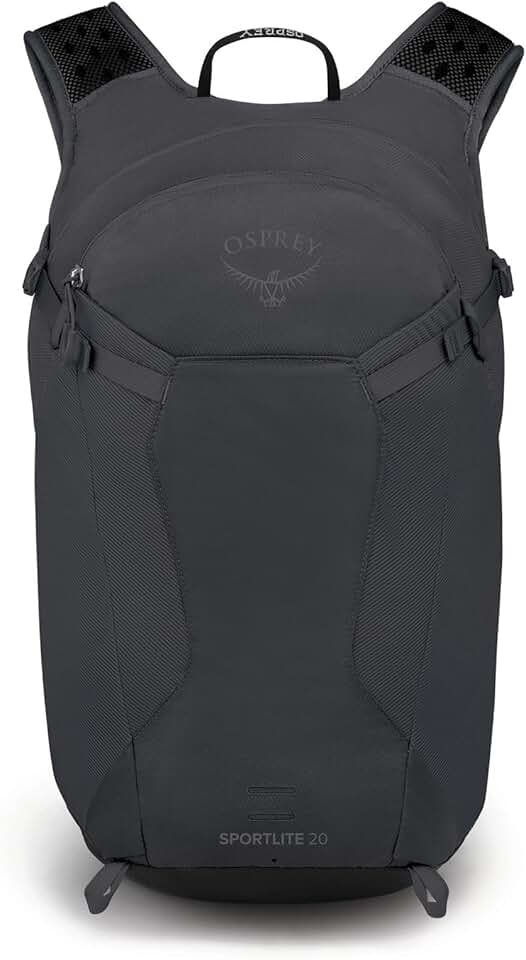
Osprey is one of the most respected names in hiking gear, and the Sportlite 20L shows why. This pack delivers the kind of thoughtful design that makes hiking more enjoyable. At $69.82, it costs more than budget options, but you are paying for features and build quality that will serve you well as you progress from beginner to confident hiker.
The standout feature is the ventilated back panel—a suspended mesh design that creates space between the pack and your back, allowing air to flow through. If you have ever finished a hike with a completely soaked back, you understand why this matters. The mesh system keeps you cooler and more comfortable, especially on warm days or uphill climbs.
At 20 liters, this is sized for half-day to full-day hikes where you are not carrying overnight gear. The capacity is perfect for water, snacks, extra layers, a first aid kit, and the ten essentials. There is a large main compartment with a top zippered access, dual side mesh pockets for water bottles, and a front vertical zip pocket for items you need quickly. Inside, you will find a hydration sleeve that accommodates up to a 2.5-liter reservoir, and the pack has a dedicated port for routing the drinking hose out to your shoulder strap.
The Sportlite includes useful features that beginners appreciate: attachment points for securing trekking poles when you are not using them, and multiple lash points for external gear. The pack also has reflective attachment points that work well if you add a bike light for visibility during early morning or evening hikes.
The overall build quality is noticeably higher than budget packs—stronger zippers, more durable fabric, reinforced stress points. Osprey also offers a comprehensive warranty covering defects, and their customer service is excellent if you ever have issues. The pack weighs just over a pound, so it is light enough not to burden you but substantial enough to handle regular use. This is the kind of pack you buy once and use for years, making it a smart investment if you are serious about hiking becoming a regular activity.
Read verified buyer reviews for the Osprey Sportlite 20L Unisex Hiking Backpack on Amazon.
Pros
- Excellent ventilated back panel keeps your back cooler
- Hydration reservoir compatible with dedicated sleeve and hose port
- High build quality with Osprey warranty support
- Lightweight at just over one pound
- Reflective attachment points for visibility accessories
Cons
- Higher price point than budget options
- 20L capacity may feel small if you tend to overpack
- Limited stock availability according to listing
View Osprey Sportlite 20L Unisex Hiking Backpack on Amazon →
3. SKYSPER Small Hiking Backpack 20L/30L
Best for beginners who want the flexibility to choose between 20L or 30L capacity at an affordable price

The SKYSPER hiking backpack gives you an important advantage: you can choose between a 20-liter and 30-liter version of the same pack design, so you can match the capacity to your typical hike length without having to learn a completely different pack system. With over 5,400 customer reviews and a 4.6-star rating, this pack has been tested by thousands of hikers and consistently delivers for the price. Currently on sale at $40.31 (down from $45.99), it sits in the middle ground between budget packs and premium brands.
The pack design is straightforward and functional. The main compartment has a wide opening that makes packing and finding items easy (you are not digging through a narrow top opening). There are side compression straps to cinch down the load when you are not carrying the pack at full capacity, which prevents your gear from shifting around while you hike. The shoulder straps are well-padded and include a sternum strap that keeps everything secure and stable on uneven terrain.
Side mesh pockets accommodate water bottles, and they are positioned so you can reach them without removing the pack. There is a front elastic pocket for quickly stuffing a rain jacket or hat when you warm up on the trail. The pack includes a hip belt that helps transfer some weight from your shoulders to your hips, which makes a noticeable difference on longer hikes when you are carrying more gear.
The back panel has padding for comfort but is not a ventilated design, so you will feel warmer against your back compared to mesh panels. For cooler weather or shorter hikes, this is not an issue. The pack is compatible with hydration reservoirs (there is an internal sleeve and hose port), giving you the option to use either water bottles or a hydration system.
One note about sizing: the product variations let you choose your preferred color and capacity, but make sure you select the size you want before ordering. The 20L version is ideal for 3-5 hour hikes, while the 30L handles full-day adventures with room for extra layers and more substantial food. Both versions use the same strap system and design, so whichever you choose, you are getting the same quality and features.
Check current stock for the SKYSPER Small Hiking Backpack 20L/30L on Amazon.
Pros
- Choice between 20L and 30L capacity in same design
- Over 5,400 customer reviews provide confidence
- Hip belt helps transfer weight from shoulders
- Wide-opening main compartment for easy packing
- Hydration reservoir compatible with sleeve and port
Cons
- Back panel is padded but not ventilated
- Currently marked as limited time deal so price may increase
- Not eligible for Prime shipping according to listing
4. 4Monster Hiking Daypack
Best for beginners who prioritize packability and want a lightweight option that folds down small
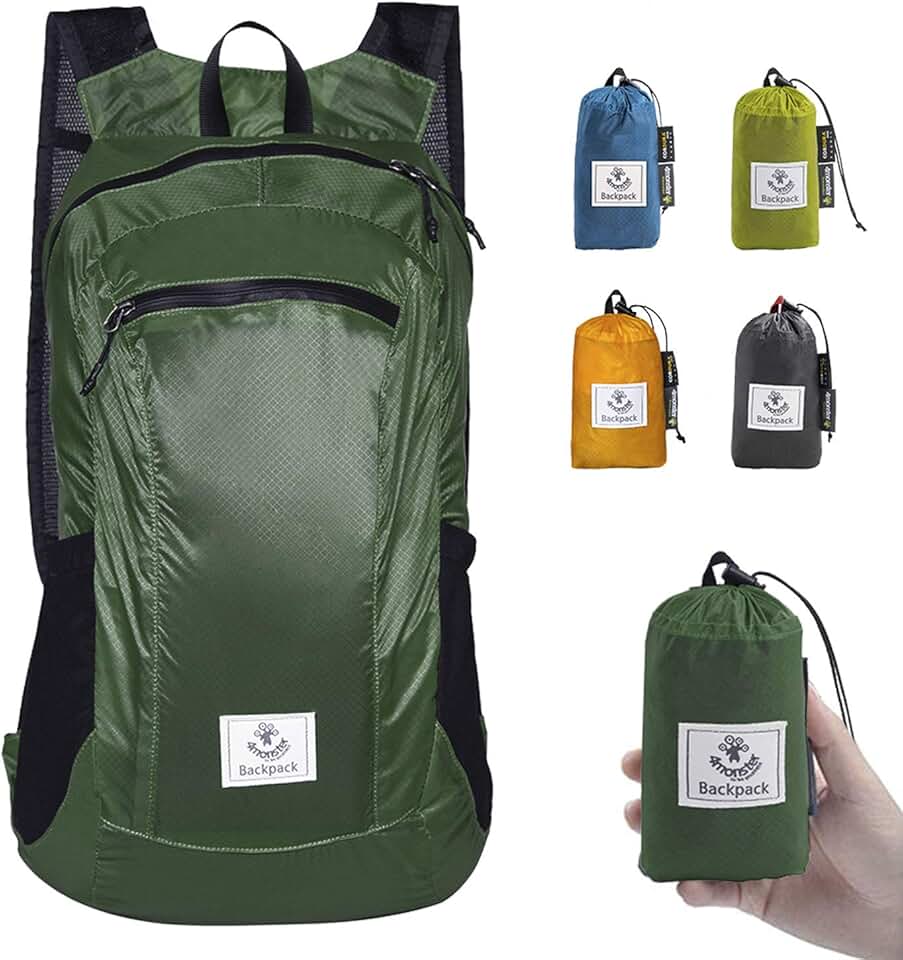
The 4Monster Hiking Daypack has quietly built an impressive following with nearly 8,000 customer reviews and a solid 4.5-star rating. Priced at $28.99, it offers a compelling middle ground—more features than the most basic packs, but without the premium price of brand-name options. This pack is designed around the concept of being lightweight and packable, making it ideal for hikers who want flexibility or who might travel to hiking destinations.
The pack folds down into its own pocket to approximately the size of a grapefruit, which makes it incredibly convenient for travel. You can pack it inside your luggage and pull it out for day hikes at your destination, or keep it in your car for impromptu trail adventures. When expanded, it provides enough space for a full day of hiking with water, food, layers, and safety gear.
The construction uses water-resistant material that will keep your gear dry in light rain or when you set the pack down on damp ground. The zippers are durable (important because zipper failure is the most common pack problem), and the stitching at stress points appears reinforced based on customer photos and reviews. The shoulder straps have decent padding for a pack in this weight class, and the sternum strap keeps everything stable when you are moving on uneven terrain.
Organization includes a main compartment with internal pockets for smaller items, two side mesh pockets for water bottles, and a front pocket for quick-access items. The pack is compatible with hydration reservoirs if you want to use a bladder system. The internal organization helps you keep smaller items from getting lost in the main compartment, which many beginners appreciate as they are learning what gear they need and where to store it.
The 4Monster lacks a hip belt, which is fine for lighter loads but means all the weight rides on your shoulders. If you are planning long hikes with heavier gear, you might feel this limitation. For typical day hikes with moderate loads, the shoulder and sternum straps distribute weight adequately.
Customer reviews consistently mention that this pack exceeds expectations for the price, with many reviewers comparing it favorably to more expensive options. The most common complaints relate to the lack of a hip belt and the back panel warming up on hot days—both reasonable tradeoffs for a packable, affordable daypack. If your priority is having a reliable, lightweight pack that does not take up space when you are not using it, and you are not planning extremely long or heavy-load hikes, the 4Monster delivers solid value.
Compare the 4Monster Hiking Daypack specs and pricing on Amazon.
Pros
- Nearly 8,000 customer reviews demonstrate proven reliability
- Folds into its own pocket for travel and storage
- Water-resistant material protects gear in light rain
- Affordable at under $30 with good build quality
- Internal pockets help organize smaller items
Cons
- No hip belt for weight distribution
- Back panel may feel warm in hot weather
- Exact capacity and weight specifications not detailed in listing
5. TILYMOL Hiking Travel Backpack 25L
Best for absolute beginners testing out hiking without significant financial commitment

The TILYMOL 25L represents the most affordable option in this roundup at just $17.99 (reduced from $22.99), making it accessible for anyone wanting to try hiking without investing heavily in gear before knowing if they will stick with it. Despite being a newer product on Amazon (evidenced by the lower review count of 106), it has already achieved an impressive 4.6-star rating and over 900 purchases in the past month, suggesting it resonates with budget-conscious hikers. As with any product with limited customer feedback, consider this a calculated entry point rather than a proven long-term investment.
At 25 liters, the capacity hits the sweet spot for day hikes—enough room for all your essentials plus extra layers and lunch, but not so large that you are tempted to overpack and exhaust yourself carrying unnecessary weight. The pack includes a hydration system compatibility feature, with a dedicated sleeve for a bladder and a port for routing the drinking hose. This is noteworthy at this price point, as many budget packs skip hydration features entirely.
The pack design includes multiple pockets for organization: a main compartment, side mesh pockets for water bottles, and a front pocket for items you need to access quickly. The shoulder straps have padding to prevent digging into your shoulders, and there is a sternum strap to keep the pack stable. The lightweight construction means it will not burden you as you are still building hiking stamina.
One honest limitation is the review count. While 106 reviews with a 4.6-star average is promising, it does not provide the same confidence level as packs with thousands of reviews. You are getting in relatively early on a product that appears to be performing well but does not have years of proven track record. For someone buying their very first hiking pack and wanting to minimize cost while determining if hiking is their thing, this is a reasonable calculated risk. The price is low enough that if you outgrow the pack or decide to upgrade after a season, you have not made a significant financial commitment.
See if the TILYMOL Hiking Travel Backpack 25L is right for your first hike on Amazon.
Pros
- Most affordable option at under $18
- Includes hydration system compatibility
- Sternum strap for stability
- 900 purchases in past month shows current popularity
- 25L capacity ideal for typical day hikes
Cons
- Limited customer feedback compared to other options
- Specifications not detailed in product listing
- Newer product without long-term durability data
How These Compare
When choosing among these five packs, start with your budget and frequency of hiking. If you are brand new to hiking and unsure if it will become a regular activity, the TILYMOL at $17.99 or ZOMAKE at $21.98 give you quality starting points without financial risk. Both will handle your first season of hikes reliably, and if you discover hiking is your passion, you can upgrade knowing exactly what features matter to you.
For hikers planning regular weekend adventures who want a pack that will grow with them, the Osprey Sportlite at $69.82 represents the best long-term value. The ventilation system alone is worth the premium on warm days, and the build quality means you are buying your last beginner pack. The SKYSPER at $40.31 splits the difference nicely—better features than budget packs, including a hip belt and wide-opening design, but half the price of premium brands.
Capacity matters too. The Osprey at 20 liters is perfect for minimalists who pack light and stick to shorter hikes. The ZOMAKE at 30 liters gives you the most space for longer days, more gear, or seasonal transitions when you need extra layers. The SKYSPER offers the unique advantage of letting you choose 20L or 30L in the same design, so you can match capacity to your typical hiking style.
If packability is your priority—perhaps because you travel frequently or have limited storage space—the ZOMAKE, 4Monster, and TILYMOL all fold down small enough to tuck into a larger bag or closet corner. The Osprey and SKYSPER are structured packs that do not compress as much but provide better support and organization for regular use.
Frequently Asked Questions
How do I know if I need 20 liters or 30 liters for day hiking?
Think about your typical hike duration and packing style. A 20-liter pack works well for half-day hikes (3-4 hours) where you need water, snacks, a light jacket, and basic safety items. This capacity is also fine for full-day summer hikes if you are a minimalist packer. A 30-liter pack better suits full-day hikes (6-8 hours), hikes in unpredictable weather where you need multiple layers, or situations where you are carrying extra gear like a camera, lunch, or shared group equipment. As a beginner, it is often better to start with slightly more capacity than you think you need—say 25-30 liters—so you have room for learning what you actually use. An overpacked 30-liter pack is uncomfortable, but an underpacked 30-liter pack with compression straps cinched down works perfectly fine. You cannot make a 20-liter pack bigger, but you can make a 30-liter pack smaller by not filling it completely and using the compression straps.
What should I look for in terms of fit when choosing a hiking daypack?
Fit is primarily about torso length, not your height or clothing size. Measure from the prominent bone at the base of your neck down to the top of your hip bones (put your hands on your hips and feel for the bone). This measurement determines what pack size you need. Most daypacks in the 20-30 liter range come in one size that adjusts to fit a range of torso lengths, but check the product specifications to confirm the adjustable range. When you try on a pack, load it with 10-15 pounds of gear first, because an empty pack fits differently than a loaded one. The shoulder straps should sit comfortably on your shoulders without gaps between the strap and your body. The pack should ride high on your back with the bottom of the pack sitting at your lower back, not down on your hips. The sternum strap (across your chest) should fasten comfortably without restricting breathing. If the pack has a hip belt, it should sit on your hip bones, not your waist, and should feel snug when fastened without the belt riding up or down when you move.
Do I really need a hydration bladder or are water bottles fine?
Both hydration bladders (reservoirs) and water bottles work perfectly well, and the choice comes down to personal preference rather than necessity. Water bottles are simpler, require no maintenance, let you see exactly how much water remains, are easy to refill at streams or trailheads, and can be shared with hiking partners. Hydration bladders allow you to drink without stopping or removing your pack, keep water weight closer to your back for better balance, and free up side pockets for other items. Many beginners start with water bottles because they are straightforward and you probably already own them. As you gain experience, you might try a bladder to see if you prefer it. Most packs in the 20-30 liter range accommodate both systems, so you do not need to commit to one approach when choosing your pack. A good starting approach is to use water bottles for your first several hikes while you are learning what you need, then consider adding a bladder later if you find yourself wanting hands-free hydration. The most important thing is carrying enough water—typically half to one liter per hour of hiking, more in hot weather.
How much should a hiking daypack weigh?
For daypacks in the 20-30 liter range, empty pack weight typically runs between 0.5 and 1.5 pounds. Ultralight packs under one pound minimize the burden on your back but often use thinner materials that may not last as long with regular use. Packs weighing 1 to 1.3 pounds offer a good balance of lightweight carry and durability for beginners who are still learning how to handle gear. Packs over 1.5 pounds start feeling noticeably heavier and usually include extra features like heavily padded straps, complex suspension systems, or external frames that may be more than a day hiker needs. As a beginner, aim for a pack around one pound—light enough not to tire you out before you start hiking, but substantial enough to handle the learning curve of being loaded, dropped occasionally, and used in varied conditions. Remember that the pack weight matters less than your total loaded weight, so focus more on not overpacking your gear than obsessing over whether your pack weighs 0.9 or 1.1 pounds.
Will a 20-30 liter pack work for overnight trips?
A 30-liter pack can work for minimalist overnight trips in warm weather with ultralight gear, but it requires careful planning and selective packing. You would need a small, lightweight sleeping bag, a compact sleeping pad, minimal shelter (like a tarp or bivy), and streamlined cooking gear. For most beginners, a 30-liter pack is too small for comfortable overnight trips because you also need to carry more food, a complete change of clothes, and additional safety items. A 20-liter pack is definitively too small for overnight trips except in very specialized ultralight scenarios. If you know you want to do occasional overnight trips, consider starting with a 30-liter daypack for day hikes and planning to purchase a separate 50-60 liter pack when you are ready for overnights. This two-pack approach is common among hikers—a smaller daypack for most hikes and a larger pack for when you need to carry overnight or winter gear. Trying to make one pack serve both purposes often means compromising on both, either hiking day trips with too much pack or struggling to fit overnight gear into too little space.
The Bottom Line
Finding the right hiking daypack in the 20-30 liter range does not require perfect knowledge or extensive experience—it requires honest thinking about your hiking plans and budget. If you are just starting out and want to minimize cost while testing whether hiking becomes a regular activity, the ZOMAKE 30L at $21.98 or TILYMOL 25L at $17.99 give you reliable performance without financial commitment. Both will handle your first season of trail exploration comfortably, and if hiking captures your heart, you will have learned exactly what features matter to you for an eventual upgrade.
For hikers who know they will be on the trail regularly and want a pack that will grow with their skills, the Osprey Sportlite 20L at $69.82 represents the best long-term investment. The ventilation system keeps you comfortable on warm days, the build quality ensures years of use, and the brand support means help if you ever need it. The SKYSPER at $40.31 offers an appealing middle ground with a hip belt, wide-opening design, and the unique ability to choose between 20L and 30L capacity in the same design.
Think about your typical hike length when choosing capacity. Shorter morning or afternoon hikes suit 20-25 liters perfectly, while full-day adventures or hikes in variable weather benefit from 28-30 liters. Remember that you can always pack less in a larger pack and use compression straps, but you cannot create more space in a smaller pack. Whatever you choose, load it with 10-15 pounds of gear and wear it around your house before your first hike to adjust the straps and ensure comfort. Your pack should feel like a helpful companion on the trail, not a burden, and any of these five options will serve that purpose well as you discover what makes hiking enjoyable for you.
Disclosure: As an Amazon Associate, we earn from qualifying purchases. This does not affect our editorial recommendations.