
If you have ever stopped mid-hike to shake pebbles out of your shoe for the third time, or returned home with mud caked around your ankles, you have encountered the exact problem hiking gaiters solve. These simple fabric sleeves wrap around your lower legs and shoe tops to keep dirt, rocks, snow, and moisture from sneaking into your footwear. For someone planning their first muddy spring trail or snowy winter walk, gaiters might sound like overkill — or you might not even know what they are yet. That confusion is completely normal. Most casual hikers do not own gaiters, and plenty of experienced hikers skip them on dry, well-maintained trails. But when conditions get messy, gaiters transform an uncomfortable slog into a much more pleasant experience. They are not essential gear for everyone, but they are incredibly useful when you need them. This guide will help you understand what gaiters actually do, whether you need them for the kind of hiking you are planning, and which beginner-friendly options offer real protection without complicated features or intimidating price tags.
What to Look For
What Gaiters Actually Do and When You Need Them
Hiking gaiters are fabric tubes that cover the gap between your shoe or boot top and your lower leg. They attach with a strap that runs under your shoe and fasten around your ankle or calf with a hook, zipper, or elastic closure. Their primary job is keeping debris out of your footwear. On trails with loose dirt, sand, or gravel, gaiters prevent small rocks and dust from working their way into your shoes through the laces or collar. In muddy or wet conditions, they shield your socks and lower pant legs from splatter. In snow, they create a seal that stops powder from spilling over your boot tops and melting inside.
For beginners wondering if gaiters are necessary: it depends entirely on where and when you hike. If you are sticking to paved nature trails or dry, packed dirt paths in summer, you probably do not need them. But if you are planning a hike after rain, through sandy terrain, in early spring snowmelt, or on trails with stream crossings, gaiters can make the difference between a comfortable outing and constant annoyance. They are particularly valuable if you hike in trail runners (low-cut running shoes designed for trails) rather than traditional hiking boots, since trail runners have more openings where debris can enter. Think of gaiters as optional insurance — not critical for every trip, but genuinely helpful when conditions turn messy.
Low-Cut Gaiters Versus Mid-Height Gaiters
Gaiters come in two main height categories, and choosing between them matters more than you might expect. Low-cut gaiters, sometimes called ankle gaiters or trail gaiters, typically extend just a few inches above your shoe top. They are lightweight, breathable, and designed specifically to keep small debris like sand, dirt, and pebbles out of trail runners or low hiking shoes. These are the simplest option for beginners hiking in mild conditions. They attach quickly, barely add any bulk, and cost less than taller models. If you are mainly concerned about annoying gravel on dusty trails, low gaiters are usually sufficient.
Mid-height gaiters extend several inches up your calf, usually to just below your knee. They offer more comprehensive protection against deeper snow, thick mud, wet grass, and brush. Mid-height models are better for spring hikes when snow is still present, winter walks, or trails that involve pushing through overgrown vegetation. They are slightly warmer and less breathable than low gaiters, but they provide significantly more coverage. For most beginners, low gaiters are the practical starting point unless you specifically know you will be hiking in snow or deep mud. You can always add mid-height gaiters later if your hiking evolves to include winter conditions.
How Gaiters Attach to Your Shoes
Understanding the attachment system is crucial because gaiters are only useful if they stay in place. Nearly all gaiters use a two-point attachment method. The bottom features a strap or cord that runs underneath your shoe, typically hooking to itself or secured with a buckle at your instep. This under-foot strap holds the gaiter down and prevents it from riding up your leg. The top closure varies: some gaiters use a drawstring around your calf, others have a hook-and-loop (Velcro-style) strap, and some use an elastic band with a toggle. A few models include a small hook at the front that clips to your shoelaces for extra stability.
For beginners, the simplest systems work best. Look for gaiters with a durable rubber or reinforced fabric strap that goes under your shoe — this will last longer than thin cord. The top closure should tighten easily and stay put without constant adjustment. Avoid overly complicated attachment systems with multiple buckles or fussy clips, especially if you are planning to put gaiters on and take them off frequently. Many beginners worry about the under-shoe strap wearing out quickly, and this can happen with very lightweight models. Choosing gaiters with replaceable or reinforced straps adds longevity, though it typically costs a bit more.
Material and Waterproofing Considerations
Not all gaiters are waterproof, and you might not need waterproof ones depending on your hiking plans. Many low-cut trail gaiters are made from breathable, quick-drying fabric like nylon or polyester with a water-resistant coating. These keep out dust and dirt but are not designed for prolonged exposure to water. They are lighter, cooler, and adequate for dry or damp conditions. If you are hiking in summer or early fall on trails that might be dusty or slightly muddy, water-resistant gaiters are usually sufficient and more comfortable.
Waterproof gaiters, often made with coated fabrics or waterproof-breathable membranes, are necessary if you will be hiking through snow, crossing streams, or walking in steady rain. They prevent water from soaking through the fabric and reaching your socks, but they are less breathable and can feel warmer on your legs. For beginners, start with the conditions you know you will face. If your first few hikes will be in dry or moderately wet conditions, prioritize breathability over full waterproofing. You can always upgrade to waterproof gaiters if you find yourself hiking in wetter environments later. There is no need to buy the most heavy-duty option if you are still figuring out what kind of hiking you enjoy.
Fit and Sizing for Comfort
Gaiters are typically sold in small, medium, and large sizes, and sizing is usually based on shoe size or calf circumference. Low gaiters are more forgiving with fit since they only cover your ankle area, but mid-height gaiters need to fit your calf properly to avoid sliding down or feeling too tight. If you are between sizes, low gaiters can usually accommodate the smaller size, while mid-height gaiters benefit from the larger size for comfort. Many models have adjustable straps or elastic that allows some flexibility in fit.
For beginners, the most important fit consideration is making sure the gaiter covers the entire opening of your shoe or boot. If there are gaps between the gaiter and your footwear, debris will still get in. The under-shoe strap should feel secure but not so tight that it digs into the sole of your shoe or feels uncomfortable when you walk. Some gaiters are labeled as unisex, while others are cut specifically for men or women, primarily differing in calf width. If you have muscular calves or wear wider hiking boots, check product details for adjustable closures or choose a size up to avoid discomfort.
Are Gaiters Worth It for Casual Hikers
The honest answer is that gaiters are not essential for most casual hiking, but they are extremely valuable in specific situations. If you hike a few times a year on well-maintained trails in good weather, you probably do not need to invest in gaiters right away. But if you are planning a hike you know will involve mud, sand, snow, or stream crossings, even an inexpensive pair of gaiters can dramatically improve your comfort. They are also worth considering if you prefer wearing trail runners instead of hiking boots, since trail runners offer less ankle coverage and let in debris more easily.
One practical approach for beginners is to try a single hike without gaiters first, and if you find yourself constantly stopping to empty your shoes, add gaiters to your gear for the next trip. They are relatively inexpensive compared to other hiking gear, lightweight enough to carry in your pack even if you do not end up using them, and genuinely solve a specific, annoying problem. Think of them as a comfort upgrade rather than a necessity — something that makes hiking more enjoyable when conditions call for it.
Our Top 5 Picks
1. Pike Trail Adjustable Leg Gaiters
Best overall for beginners who want reliable protection without complexity
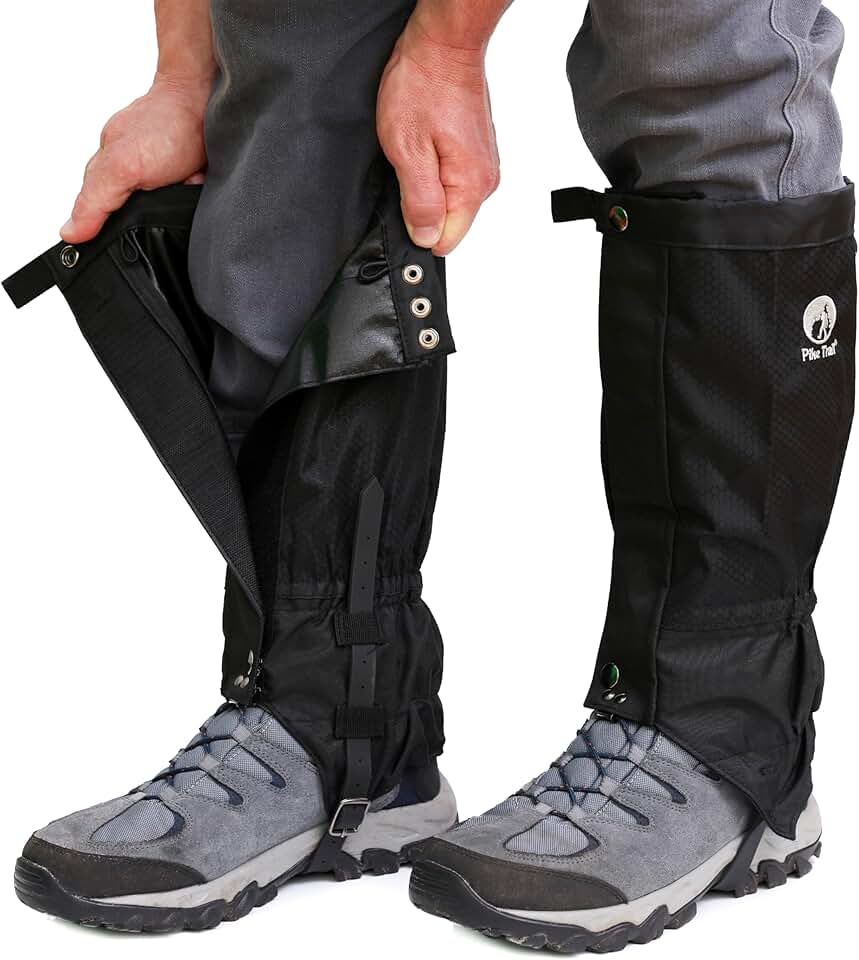
The Pike Trail gaiters are an excellent starting point for beginner hikers because they balance protection, ease of use, and durability without overwhelming you with features. These are mid-height gaiters that extend several inches up your calf, making them versatile enough for muddy trails, light snow, and wet grass. With over 3,600 reviews and a 4.4-star rating, they have been tested by thousands of real hikers in varied conditions, which gives you confidence that they actually work as advertised. The adjustable design accommodates different calf sizes and shoe types, and the attachment system is straightforward enough that you will not spend ten minutes trying to figure out how they work on your first try.
These gaiters feature a hook-and-loop closure system that secures around your calf and an under-boot strap that keeps the bottom in place. The materials are described as lightweight and suitable for hiking, trekking, hunting, and fishing, indicating they are built for diverse outdoor conditions without being overly specialized. One honest limitation to note is that while these gaiters are designed to resist water, mid-height gaiters in this price range typically offer water resistance rather than full submersion protection. They will handle splashing, rain, and snow effectively, but are not intended for deep water crossings.
The fit is adjustable, which is especially helpful for beginners who might be unsure about sizing or who plan to wear these gaiters over different types of footwear. The over-shoe instep strap is designed to be durable, though like all gaiters, this is the component most likely to wear over time with heavy use. For someone new to hiking gear, these gaiters provide enough protection for most beginner and intermediate hiking scenarios without requiring you to invest in more expensive, technical models. They work well with both hiking boots and trail runners, making them a flexible choice if you are still experimenting with footwear preferences.
See current pricing for the Pike Trail Adjustable Leg Gaiters on Amazon.
Pros
- Extensive real-world reviews from over 3,600 hikers provide reliable feedback
- Adjustable fit works with various calf sizes and shoe types
- Mid-height coverage protects against mud, snow, and wet conditions
- Straightforward attachment system that beginners can use confidently
- Versatile design suitable for multiple outdoor activities
Cons
- Water resistance may not hold up to prolonged submersion or very deep snow
- Under-boot strap will eventually wear with frequent use on rough terrain
- Mid-height design is warmer than low gaiters, which may be uncomfortable in hot weather
2. Unigear Leg Gaiters, 1000D Fabric Waterproof Boot Gaiters
Best budget-friendly option with solid durability for mud and snow

The Unigear gaiters offer impressive durability at a beginner-friendly price point, making them an excellent choice if you want protection without spending heavily on gear you are still learning to use. These mid-height gaiters are built with 1000D fabric, which is notably thicker and more resistant to abrasion than lighter models. This makes them particularly suitable if you anticipate hiking through brush, thorny vegetation, or rocky terrain where thinner gaiters might tear or wear quickly. With over 2,400 reviews and a 4.4-star rating, they have proven themselves to many hikers who needed reliable, no-nonsense protection.
These gaiters are described as waterproof and designed for hiking, walking, climbing, hunting, and skiing, indicating they are built for varied conditions including snow and mud. The 1000D fabric designation refers to the fabric density, which means these gaiters are more rugged than ultralight models but also slightly heavier. For beginners planning winter hikes or muddy spring trails, this trade-off is worthwhile because the extra durability means the gaiters will last longer even if you are still learning proper trail techniques. The attachment system includes an under-boot strap and a calf closure, similar to other mid-height models.
One consideration is that heavier fabric also means these gaiters are warmer and less packable than minimalist trail gaiters. If you are planning to carry them in your pack and only put them on when conditions turn messy, they take up more space than low-cut options. However, for hikers who know they will face mud, snow, or thick brush, the added durability justifies the slight bulk. At this price point, they represent strong value for beginners who want a durable first pair of gaiters without paying for premium brand names or advanced technical features.
Read verified buyer reviews for the Unigear Leg Gaiters on Amazon.
Pros
- 1000D fabric offers excellent durability and abrasion resistance for rough terrain
- Waterproof construction protects against rain, snow, and mud
- Strong value at this price point with over 2,400 positive reviews
- Suitable for multiple activities including hiking, hunting, and skiing
- Rugged enough to withstand brush and thorny vegetation
Cons
- Heavier and less breathable than lightweight trail gaiters
- Bulkier to pack if you plan to carry them and put them on mid-hike
- Added weight may feel noticeable for all-day wear in warm conditions
3. Frelaxy Leg Gaiters Ultra HIGH-Performance Hunting Gaiters
Best for beginners hiking in snow or planning winter trail walks

The Frelaxy high-performance gaiters are specifically designed for snow and cold-weather hiking, making them the right choice if your first hiking experiences will involve winter trails or snowy conditions. These mid-height gaiters feature an upgraded rubber foot strap, which is a meaningful improvement over standard fabric or cord straps that can wear out quickly. The rubber strap resists stretching and abrasion better than other materials, meaning these gaiters will maintain their fit and function longer, especially if you are hiking on icy or rocky surfaces where the strap gets more abuse.
With over 1,500 reviews and a 4.4-star rating, these gaiters have been tested by many hikers in actual winter conditions. The construction is designed to keep snow from melting into your boots and protects your lower legs from cold, wet conditions. They are described as adjustable and suitable for snow boot use, which means they are sized to fit over larger winter hiking boots or insulated footwear. This is important because some gaiters are cut too narrow to comfortably fit over bulky winter boots, but Frelaxy has designed these with that use case in mind.
One honest limitation is that construction optimized for cold conditions means less breathability, which can make these gaiters feel warm and slightly clammy if you are hiking in moderate temperatures or working up a sweat on steep climbs. They are optimized for cold conditions where breathability is less critical than keeping moisture out. The upgraded rubber foot strap is a real advantage, but it also means these gaiters are slightly more rigid than models with flexible cord straps. For winter hiking where you need serious protection, this is the right trade-off. If you are planning your first winter hike or know you will encounter snow, these gaiters provide the specific protection you need without requiring you to figure out advanced mountaineering gear.
Check current stock for the Frelaxy Leg Gaiters on Amazon.
Pros
- Upgraded rubber foot strap resists wear and maintains fit better than fabric straps
- Over 1,500 reviews confirm performance in real winter hiking conditions
- Adjustable design fits over bulky winter boots and insulated footwear
- Durable enough for hunting and extended cold-weather use
- Designed specifically for snow protection and winter trail conditions
Cons
- Less breathable than lighter gaiters, which can feel warm on moderate-temperature hikes
- Slightly heavier and more rigid than minimalist trail gaiters
- Overkill for dry summer hiking or mild trail conditions
View Frelaxy Leg Gaiters Ultra HIGH-Performance Hunting Gaiters on Amazon →
4. TRIWONDER Gaiters Low Gators Lightweight Waterproof Ankle Gaiters
Best ultra-budget option for casual hikers trying gaiters for the first time
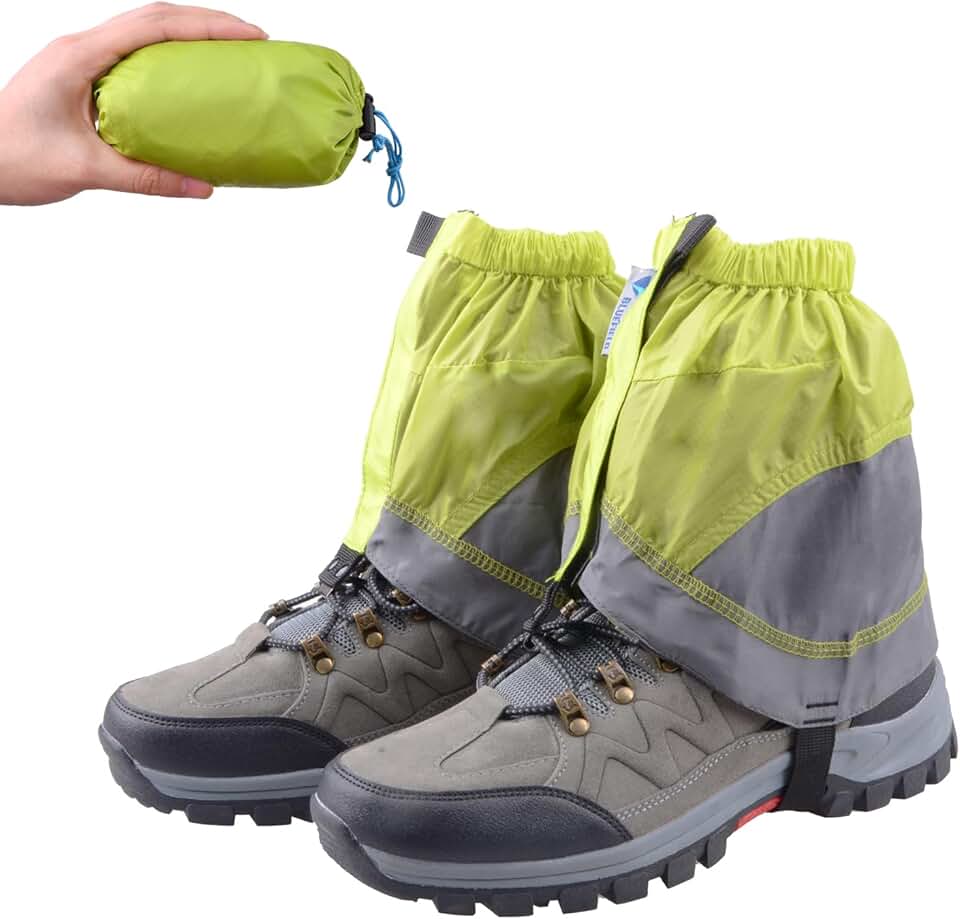
The TRIWONDER low gaiters are the most affordable option in this guide, making them ideal for beginners who want to try gaiters without committing to a larger investment. At under $12, these are low-cut ankle gaiters designed specifically to keep small debris like dirt, sand, and pebbles out of trail runners or low hiking shoes. They are lightweight and described as waterproof, though at this price point, waterproof likely means water-resistant rather than submersion-proof. For dry or moderately damp trails, they will perform adequately, keeping dust and light moisture away from your ankles and shoe tops.
With over 2,600 reviews, these gaiters have been purchased and tested by many hikers, though the 3.9-star rating suggests they have some limitations compared to more expensive models. The lower rating is typical for budget gear and often reflects issues like durability, fit consistency, or the under-shoe strap wearing out faster than premium options. However, for a beginner who is unsure whether they will actually use gaiters regularly, this is an acceptable trade-off. You can test the concept of gaiters on a few hikes without spending significantly, and if you find them useful, you can upgrade to a more durable pair later.
These low-cut gaiters are designed for hiking, walking, and backpacking, and their minimal coverage makes them cooler and more breathable than mid-height models. They work best on dry trails where you mainly need protection from dust and small rocks rather than deep mud or snow. The lightweight design also means they pack down small and add almost no weight to your pack, making them easy to carry just in case conditions turn dusty or sandy. The main limitation is that at this price point, materials and construction are basic, so you should not expect these gaiters to last through years of heavy use. They are a practical entry point for casual hikers who want to solve the annoying problem of debris in their shoes without investing heavily in gear.
Compare the TRIWONDER Gaiters specs and pricing on Amazon.
Pros
- Extremely affordable at under $12, making them accessible for first-time buyers
- Low-cut design is lightweight, breathable, and comfortable in warm weather
- Over 2,600 reviews provide extensive real-world feedback
- Packs down small and easy to carry in a backpack
- Adequate for dry trails and casual hiking where you need basic debris protection
Cons
- Lower 3.9-star rating indicates some durability and fit issues compared to premium options
- Basic materials mean these gaiters may wear out faster with frequent use
- Not suitable for snow, deep mud, or prolonged wet conditions
View TRIWONDER Gaiters Low Gators Lightweight Waterproof Ankle Gaiters on Amazon →
5. Azarxis Hiking Gaiters for Outdoor Hunting Walking Backpacking
Best mid-price option with extensive reviews for varied hiking conditions

The Azarxis gaiters occupy a sweet spot between budget and premium options, offering solid performance and durability at a reasonable price. With over 3,300 reviews and a 4.4-star rating, these are among the most-reviewed gaiters available, which gives you confidence that many hikers have tested them in diverse conditions and found them reliable. These are ankle and leg gaiters described as waterproof and suitable for outdoor activities including hunting, walking, and backpacking, indicating they are versatile enough for varied hiking scenarios from day trips to longer excursions.
The extensive review count is particularly valuable for beginners because it means you can read real feedback from hikers with different experience levels, body types, and trail conditions. This helps you understand how the gaiters actually perform rather than relying solely on marketing descriptions. At this price point, they likely use coated fabric that offers good water resistance for rain, snow, and muddy conditions. These gaiters are available in different configurations, which gives you some flexibility to choose the height and fit that works best for your hiking style. The variety of uses mentioned (hunting, walking, backpacking) indicates they are designed to stay comfortable during extended wear, which matters if you are planning longer hikes or multi-day trips.
One consideration is that the product specifications do not provide detailed information about materials or attachment mechanisms, so reading through customer reviews will help you understand specific details about fit and ease of use. However, the high review count and strong rating suggest most buyers have been satisfied with fit and functionality. For beginners who want a reliable, well-tested pair of gaiters at a mid-range price, the Azarxis gaiters represent a solid choice backed by thousands of real-world experiences.
See if the Azarxis Hiking Gaiters are right for your first hike on Amazon.
Pros
- Over 3,300 reviews provide extensive real-world feedback and reliability data
- Strong 4.4-star rating indicates consistent performance across varied conditions
- Mid-range price offers good value between budget and premium options
- Versatile enough for hiking, hunting, and backpacking activities
- Waterproof construction suitable for rain, snow, and muddy trails
Cons
- Product specifications lack detailed information about materials and attachment system
- May require reading customer reviews to understand sizing and fit
- Available in multiple variations which can make selection more complicated for beginners
View Azarxis Hiking Gaiters for Outdoor Hunting Walking Backpacking on Amazon →
How These Compare
Choosing between these gaiters comes down to your specific hiking plans and budget. If you are new to hiking and want a reliable, well-reviewed option that works for most conditions, the Pike Trail gaiters offer the best overall balance of protection, durability, and ease of use. Their mid-height coverage and extensive positive reviews make them a safe choice for beginners still figuring out what they need. For hikers on a tight budget who want to try gaiters without spending much, the TRIWONDER low gaiters provide basic debris protection at an extremely accessible price, though they sacrifice some durability and are best for dry conditions. If you know you will be hiking in snow or winter conditions, the Frelaxy high-performance gaiters with their upgraded rubber strap are specifically designed for cold-weather protection. The Unigear gaiters are ideal if you need rugged durability for brushy trails or rough terrain and want good value without paying premium prices. Finally, the Azarxis gaiters offer a mid-price option backed by thousands of reviews, making them a solid choice if you want flexibility and proven performance across varied conditions. Consider where you will hike most often, what conditions you will face, and how much you want to invest in gear you are still learning to use.
Frequently Asked Questions
Do I really need gaiters for casual day hiking?
For most casual day hikes on maintained trails in good weather, gaiters are not necessary. Many hikers complete hundreds of miles without ever using them. However, gaiters become genuinely useful in specific situations: trails with loose sand or gravel that constantly gets in your shoes, muddy spring trails, hikes through wet grass or brush, snow hiking, or stream crossings. If you are just starting out and hiking primarily on dry, well-maintained paths, you can skip gaiters for now and add them to your gear later if you encounter conditions where they would help. A practical approach is to try a hike or two without them first. If you find yourself constantly stopping to empty debris from your shoes, that is a clear sign gaiters would improve your experience. They are relatively inexpensive and solve a specific, annoying problem when you need them.
What is the difference between low and mid-height gaiters?
Low-cut gaiters extend just a few inches above your shoe top and are designed primarily to keep small debris like sand, dirt, and pebbles out of trail runners or low hiking shoes. They are lightweight, breathable, and ideal for warm-weather hiking on dusty or sandy trails. Mid-height gaiters extend several inches up your calf and provide more comprehensive protection against deeper snow, thick mud, wet grass, and brush. They are better for winter hiking, spring mud season, or trails with heavy vegetation. As a beginner, low gaiters are usually sufficient if you are hiking in dry or moderately damp conditions during warmer months. Choose mid-height gaiters if you specifically know you will encounter snow, deep mud, or wet brush, or if you plan to hike in winter. You can always start with low gaiters and add mid-height ones later if your hiking evolves to include more challenging conditions.
How do gaiters attach to my hiking shoes?
Gaiters use a two-point attachment system to stay in place. The bottom features a strap or cord that runs underneath your shoe, typically hooking to itself or secured with a buckle at your instep. This under-foot strap anchors the gaiter and prevents it from riding up your leg as you walk. The top closure wraps around your ankle or calf and secures with either a drawstring, hook-and-loop strap, elastic band with toggle, or sometimes a combination of these. Some gaiters also include a small hook at the front that clips to your shoelaces for extra stability. For beginners, simpler attachment systems work best. Look for gaiters with a durable rubber or reinforced strap that goes under your shoe, as this component experiences the most wear. The top closure should tighten easily and stay put without constant adjustment. Most gaiters take less than a minute to put on once you understand the system, and they stay secure throughout your hike without needing frequent readjustment.
Can I use the same gaiters for both hiking boots and trail runners?
Yes, most gaiters work with both hiking boots and trail runners, though fit may vary slightly. The key consideration is that the gaiter needs to cover the entire opening of your footwear without leaving gaps where debris can enter. Low-cut gaiters are specifically designed to work well with trail runners and low hiking shoes, while mid-height gaiters accommodate both boots and trail runners but provide more coverage up your leg. The under-shoe strap attachment works the same regardless of footwear type, running beneath the sole and hooking at your instep. If you wear trail runners, gaiters are particularly valuable because trail runners have lower ankle collars and more mesh ventilation, creating more entry points for debris. Just make sure the gaiter circumference at the bottom is sized appropriately for your footwear — some gaiters are adjustable, while others come in specific sizes. Most manufacturers design gaiters to be versatile across different shoe types, so unless you have unusually large or small footwear, standard-sized gaiters should work with whatever hiking shoes or boots you own.
Will waterproof gaiters make my legs too hot on summer hikes?
Fully waterproof gaiters are less breathable than water-resistant or non-waterproof models, which can make them feel warmer on hot summer hikes. Waterproof construction typically involves coated fabrics or waterproof-breathable membranes that block moisture from outside but also restrict airflow. This trade-off is worthwhile in cold, wet, or snowy conditions where keeping water out is the priority. However, for warm-weather hiking on dry or lightly damp trails, water-resistant gaiters made from breathable materials are more comfortable. Many low-cut trail gaiters use lightweight, quick-drying fabrics with water-resistant coatings that keep out dust and light moisture without the heat buildup of fully waterproof models. As a beginner, choose gaiters based on the conditions you will actually hike in most often. If you are primarily hiking in summer or on dry trails, prioritize breathability. If you are planning winter hikes or know you will face rain and snow, the extra warmth of waterproof gaiters is a necessary trade-off for keeping your feet and lower legs dry.
The Bottom Line
Choosing your first pair of hiking gaiters does not have to be complicated. For most beginners hiking in varied conditions, the Pike Trail gaiters offer reliable protection, straightforward attachment, and enough coverage to handle mud, rain, and light snow without overwhelming you with features. If you are on a tight budget and mainly need protection from dust and small rocks on dry trails, the TRIWONDER low gaiters provide an affordable way to test whether gaiters improve your hiking experience. For winter hiking or snowy trails, invest in the Frelaxy high-performance gaiters with their upgraded rubber strap designed specifically for cold conditions. The Unigear gaiters are your best choice if you anticipate brushy terrain or rough trails where durability matters more than light weight, while the Azarxis gaiters offer a middle-ground option backed by thousands of reviews for varied hiking scenarios. Remember that gaiters are optional gear for casual hiking on maintained trails in good weather. You do not need to buy them before your first few hikes unless you specifically know conditions will be muddy, sandy, or snowy. Start with the hiking you plan to do, choose gaiters that match those conditions, and add them to your pack as a simple solution to a specific problem. They will not transform your hiking experience on every trail, but when conditions turn messy, you will be genuinely glad you brought them.
Disclosure: As an Amazon Associate, we earn from qualifying purchases. This does not affect our editorial recommendations.