
If you are standing in front of your closet wondering whether your sneakers will cut it for that weekend trail you have been eyeing, you are not alone. Choosing hiking boots feels like a bigger commitment than it should—what if they are too heavy? What if they hurt your feet? What if you pick the wrong ones and end up miserable three miles in? Those questions are completely normal, and they are exactly why lightweight hiking boots have become so popular among new hikers. They offer the ankle support and trail protection you need without feeling like you are wearing concrete blocks.
This guide walks you through five excellent lightweight hiking boots designed specifically for women, with real details about weight, waterproofing, and what kinds of trails they handle best. You will learn what to look for before you buy, get honest takes on each boot’s strengths and limitations, and find the right match for your hiking goals—whether that is a two-hour nature walk or a full-day adventure with a small pack on your back. No confusing jargon, no unrealistic expectations, just practical advice to help you hit the trail with confidence.
What to Look For
What Makes a Hiking Boot Lightweight
Lightweight hiking boots typically weigh between 1 to 2 pounds per pair, compared to traditional boots that can weigh 3 pounds or more. This weight reduction comes from modern materials like synthetic uppers, EVA foam midsoles, and streamlined designs that eliminate bulk without sacrificing essential support. For beginners, lighter boots mean less fatigue on the trail, which translates to more enjoyment and fewer aches at the end of the day. However, lightweight does not mean flimsy—quality lightweight boots still provide ankle support, trail protection, and durability for day hikes and weekend trips.
Waterproofing and When You Need It
Waterproof boots feature membranes like Gore-Tex or proprietary waterproof linings that keep your feet dry in wet conditions—think stream crossings, dewy morning grass, or unexpected rain. The trade-off is that waterproof boots are less breathable, which can make your feet warmer on hot summer hikes. If you primarily hike in dry climates or during warm seasons, non-waterproof boots might actually be more comfortable. But if you live where trails are often muddy, or you hike year-round, waterproofing becomes essential. Many of the boots in this guide offer waterproof versions, giving you the choice based on your local conditions.
Ankle Support and Boot Height
Mid-height boots (the most common style for lightweight hikers) rise about 4 to 5 inches above your ankle, providing stability on uneven terrain without the restrictive feel of tall mountaineering boots. This extra height helps prevent ankle rolls when you step on loose rocks or tree roots, which is especially helpful when you are still building trail confidence. If you are hiking on well-maintained paths with minimal elevation change, low-top hiking shoes might work fine. But for variable terrain, creek crossings, or trails with loose gravel, mid-height boots give you that security blanket of support while you learn to read the trail ahead.
Break-In Period and Initial Comfort
One of the best things about modern lightweight boots is that most require minimal break-in time—sometimes none at all. Unlike stiff leather boots that need weeks of wear, lightweight boots with synthetic materials and flexible soles often feel comfortable right out of the box. That said, you should still test them at home first: wear them around the house for an hour, walk up and down stairs, and pay attention to any pressure points. Even the most comfortable boot needs a short adjustment period where your foot and the boot learn each other. Plan to wear new boots on a few short walks before committing to a long trail day.
Sizing and Fit Considerations for Women
Women’s hiking boots are designed with narrower heels, different arch placement, and shapes that accommodate the female foot structure—they are not just smaller versions of men’s boots. When trying boots on, wear the hiking socks you plan to use on the trail (medium-weight wool or synthetic socks are ideal). Your toes should have about a thumb’s width of space in front when standing, which prevents painful toe-jamming on downhill sections. The boot should feel snug around your midfoot and heel without any slipping, but not so tight that it restricts circulation. If you are between sizes, most hikers size up rather than down, especially if you have wider feet or plan to hike in cold weather with thicker socks.
Price and Value for Beginners
Quality lightweight hiking boots range from about $60 to $180, with most reliable options landing in the $80 to $120 range. As a beginner, you do not need to buy the most expensive boots on the market, but going too cheap (under $50) often means sacrificing durability, comfort, or waterproofing quality. Think of your boots as an investment in enjoyable hiking experiences: a well-made pair will last for years and make every hike more pleasant. Many of the boots featured in this guide offer excellent value, with proven track records and thousands of customer reviews confirming their reliability for new hikers.
Our Top 5 Picks
1. Merrell Women’s Moab 3 Mid Waterproof Hiking Boots
Best overall for beginner day hikers who want proven reliability and immediate comfort

The Merrell Moab 3 Mid Waterproof stands as one of the most popular hiking boots among new hikers for a simple reason: they work right out of the box. With over 3,300 customer reviews averaging 4.6 stars, these boots have earned their reputation through real-world trail use by thousands of women. The waterproof construction keeps your feet dry during stream crossings and muddy trail sections, while the mid-height design provides stability without feeling restrictive or heavy. At this price point, you are getting a product that balances quality and affordability exceptionally well.
What makes these boots particularly beginner-friendly is how quickly you can start hiking in them. Many reviewers note wearing them comfortably on their first hike without the blisters or hot spots that plague stiffer boots. The design prioritizes all-day comfort, making them ideal for your first few trail adventures when you are still building hiking stamina and learning what your feet need on varied terrain. The boots handle day hikes beautifully, whether you are walking on dirt paths, rocky trails, or slightly muddy conditions.
The Moab 3 excels on moderate trails with mixed terrain—exactly the kind of hiking most beginners gravitate toward. They provide enough structure and protection for 4 to 8-mile day hikes with a light daypack, though they would not be ideal for multi-day backpacking with a heavy load. These boots represent the sweet spot between performance and value, making them an excellent first purchase for women who want to explore hiking without overspending on gear they might not need yet.
See current pricing for the Merrell Women’s Moab 3 Mid Waterproof Hiking Boots on Amazon.
Pros
- Over 3,300 customer reviews confirm reliability and comfort
- Waterproof construction protects feet in wet trail conditions
- Ready to wear comfortably on your first hike
- Proven track record among beginner hikers
- Excellent value at under $80 for quality construction
Cons
- Not designed for heavy backpacking or overnight trips
- May run slightly narrow for women with wider feet
- Waterproofing reduces breathability on hot summer hikes
View Merrell Women’s Moab 3 Mid Waterproof Hiking Boots on Amazon →
2. Columbia Women’s Newton Ridge Plus Waterproof Hiking Boots
Best for budget-conscious hikers who need waterproof protection and want extensive customer feedback

With over 20,000 customer reviews, the Columbia Newton Ridge Plus Waterproof boots have been tested by more hikers than almost any other boot on the market—and they maintain a solid 4.6-star rating through all that scrutiny. This massive review database gives you confidence that other women have hiked in your exact conditions and can vouch for how these boots perform. The waterproof construction keeps feet dry across various wet conditions, from morning dew on grass to light rain showers and muddy trail sections that appear after storms.
These boots feature a mid-height design that provides stability on uneven terrain while remaining light enough for all-day wear. Columbia designed them specifically for day hiking and light trail use, making them appropriate for the 3 to 6-mile hikes that most beginners start with. The boots work well on maintained trails, forest paths, and moderate elevation changes—the typical weekend hiking scenarios where you are building confidence and discovering whether hiking becomes a regular hobby or an occasional activity.
At just over $96, these boots offer excellent value for waterproof protection and brand reliability. Columbia has a long-standing reputation in outdoor footwear, and this model demonstrates why they have earned that trust. The boots handle typical day-hiking demands without issue, though they would not be the right choice for technical terrain, scrambling, or carrying heavy overnight packs. For beginners who want reliable waterproof boots from a trusted brand without spending over $100, the Newton Ridge Plus delivers exactly what you need to start hiking comfortably and confidently on your local trails.
Read verified buyer reviews for the Columbia Women’s Newton Ridge Plus Waterproof Hiking Boots on Amazon.
Pros
- Over 20,000 customer reviews provide extensive real-world feedback
- Waterproof construction suitable for various wet trail conditions
- Trusted Columbia brand with established outdoor reputation
- Mid-height design balances support and lightweight comfort
- Under $100 price point for quality waterproof boots
Cons
- Not suitable for technical terrain or heavy backpacking
- Some reviewers note sizing runs slightly large
- Waterproof membrane reduces breathability in warm weather
View Columbia Women’s Newton Ridge Plus Waterproof Hiking Boots on Amazon →
3. NORTIV 8 Women’s Waterproof Hiking Boots Outdoor Trekking Camping Trail Hiking Boot Seeker
Best budget option for beginners testing whether hiking becomes a regular activity
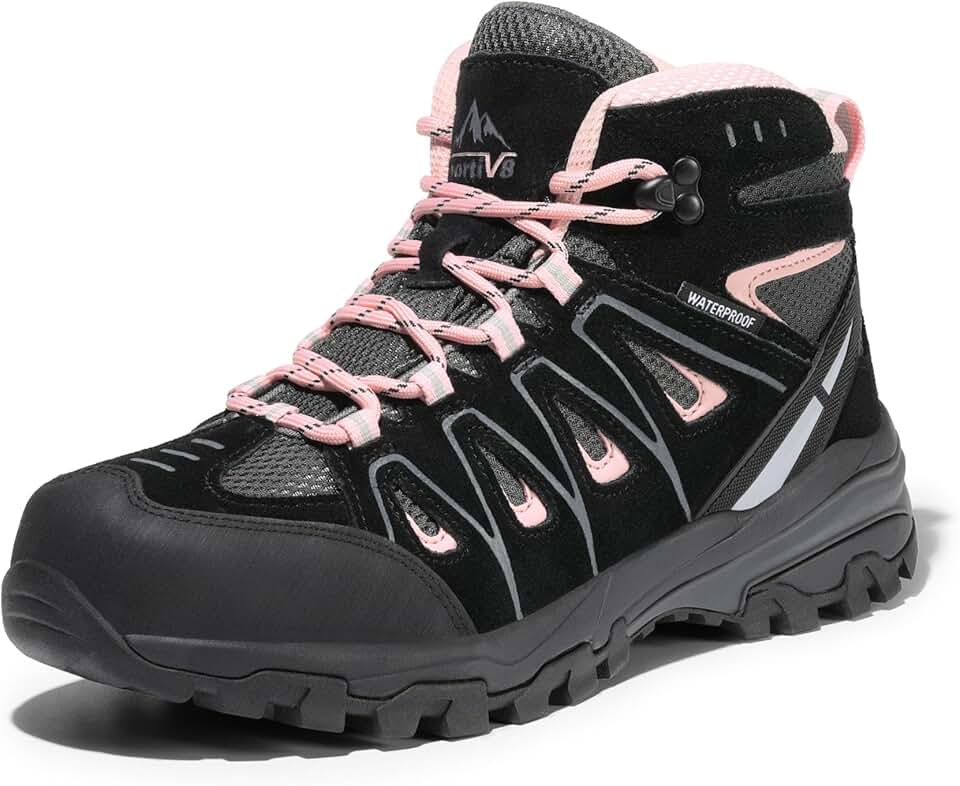
The NORTIV 8 Seeker boots occupy an interesting position in the hiking boot market: they offer waterproof protection and mid-height ankle coverage at less than half the price of premium brands, making them ideal for beginners who want to try hiking without a major financial commitment. With nearly 6,000 customer reviews averaging 4.5 stars, these boots have proven themselves reliable for casual day hiking and trail exploration. The waterproof construction handles typical wet conditions you encounter on trails—dewy grass, puddles, light rain—keeping your feet dry during those first hiking experiences.
These boots work best for shorter hikes on well-maintained trails, ideal for the 2 to 4-mile outings that help you build hiking fitness and discover your trail preferences. The construction gives beginning hikers confidence on uneven ground and basic trail obstacles like roots and small rocks, though they would not be appropriate for challenging terrain or long-distance hikes. The price point means you can invest in quality hiking socks and other gear with the money you save.
While these boots will not match the longevity or advanced features of premium brands, they serve an important purpose for new hikers: they let you explore whether hiking becomes a passion worth investing in better gear, or remains an occasional activity where budget-friendly options make more sense. If you are just starting out and unsure how often you will hike, these boots provide a low-risk entry point. Many hikers use them for their first season before upgrading to more expensive boots once they understand their specific needs and hiking style.
Check current stock for the NORTIV 8 Women’s Waterproof Hiking Boots on Amazon.
Pros
- Significantly lower price point under $47 for waterproof boots
- Nearly 6,000 customer reviews confirm reliability for casual hiking
- Waterproof construction at budget-friendly price
- Good entry-level option for testing hiking as a hobby
- Mid-height design provides basic ankle coverage
Cons
- Not designed for long-distance or technical hiking
- May not last as long as premium brand boots
- Limited advanced features compared to higher-priced options
4. Columbia Women’s Transverse Suede
Best for hikers wanting a lighter, more flexible boot for warmer conditions
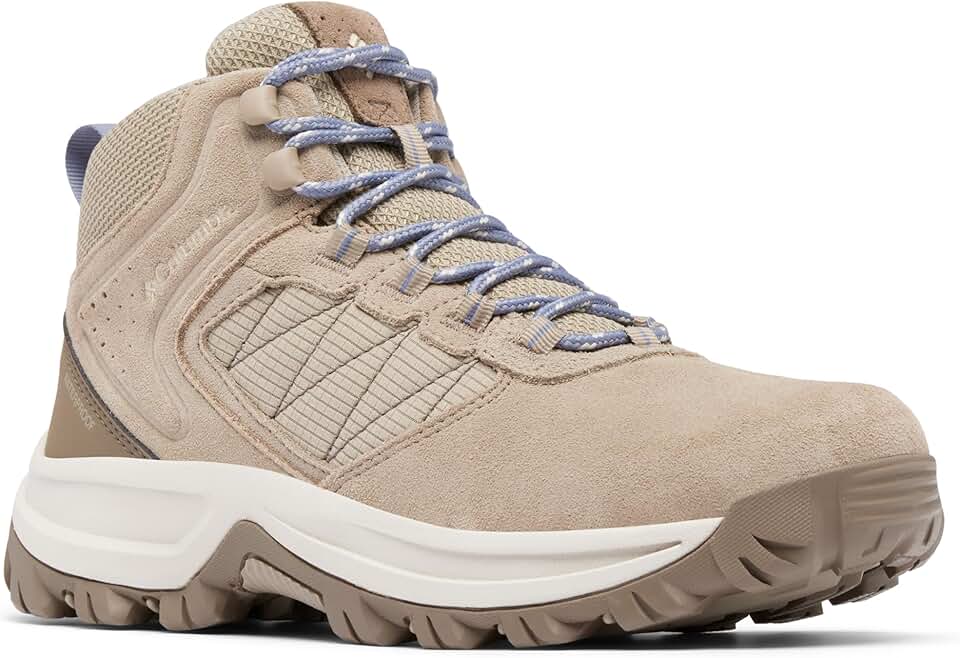
The Columbia Transverse Suede boots represent a slightly different approach to lightweight hiking footwear, offering a more flexible, nimble feel compared to traditional hiking boots. With over 1,300 customer reviews and a 4.6-star rating, these boots have earned trust among hikers who prefer a boot that moves more like a hiking shoe while still providing mid-height ankle coverage. The design works particularly well for day hikes on moderate terrain where you want protection and support without the heavier feel of more robust boots.
These boots excel in warmer hiking conditions where breathability matters as much as support. The suede upper material provides durability while allowing better air circulation than fully synthetic waterproof membranes, making them a strong choice for spring and summer adventures where ventilation helps prevent overheated feet. The mid-height cut still protects your ankles from trail debris and provides stability on uneven ground, but with a lighter construction that reduces fatigue on longer day hikes. This makes them particularly appealing for beginners who find traditional hiking boots feel too heavy or restricting.
The Transverse Suede suits hikers who primarily stick to established trails with moderate elevation changes—forest paths, nature preserve trails, and day-hike destinations with well-maintained surfaces. They handle these conditions beautifully while keeping your feet comfortable during 5 to 8-mile outings. At $85, they occupy a middle ground in pricing, offering Columbia quality and design without the premium price tag of their most advanced models. For beginners who hike mostly in fair weather and want a boot that does not feel like a boot, these provide an excellent balance of protection, comfort, and trail capability.
Compare the Columbia Women’s Transverse Suede specs and pricing on Amazon.
Pros
- Over 1,300 reviews confirm comfort and trail performance
- More flexible and nimble feel than traditional hiking boots
- Excellent for warm-weather hiking with better breathability
- Mid-height design maintains ankle protection
- Columbia quality at reasonable $85 price point
Cons
- Suede construction not ideal for consistently wet conditions
- May not provide enough structure for very rocky terrain
- Less suitable for stream crossings or heavy rain
5. Merrell Women’s Moab 3 Hiking Shoes
Best low-top alternative for experienced beginners ready for lighter footwear

The Merrell Moab 3 Hiking Shoes (note: these are low-top shoes, not mid-height boots) offer an interesting option for beginners who have completed a few hikes and want to try lighter footwear with less ankle coverage. With over 3,300 customer reviews maintaining a 4.6-star rating, these shoes share the proven Moab platform reliability but in a lighter, more nimble package. The low-top design sacrifices some ankle coverage in exchange for greater freedom of movement, reduced weight, and improved breathability—a trade-off that appeals to hikers transitioning from beginner to intermediate skill levels.
These shoes perform best on well-maintained trails with relatively predictable terrain where you feel confident in your footing and do not need extra ankle protection. They work beautifully for fast-paced day hikes, nature walks, and trail running-style hiking where you want to move quickly and efficiently. The lighter construction means less fatigue over longer distances, though you give up some protection against ankle rolls on loose or rocky terrain. This makes them more suitable for hikers who have developed trail awareness and feel comfortable reading terrain ahead.
The premium price of nearly $121 reflects Merrell’s highest quality materials and construction, making these shoes a worthwhile investment once you know hiking is a regular part of your routine rather than an occasional experiment. They are not the best choice for your very first hiking footwear purchase, but they become an excellent option once you have built some trail confidence and know the kinds of hikes you enjoy most. Many hikers own both mid-height boots for challenging trails and low-top shoes for easier hikes, using each where they perform best. If you find yourself gravitating toward faster-paced day hikes on established trails and want to reduce the weight on your feet, these shoes deliver the performance you need.
See if the Merrell Women’s Moab 3 Hiking Shoes are right for your first hike on Amazon.
Pros
- Over 3,300 reviews confirm Merrell Moab reliability
- Lighter and more nimble than mid-height boots
- Excellent breathability for warm-weather hiking
- Proven Moab platform in low-top design
- Ideal for well-maintained trails and fast-paced hiking
Cons
- Low-top design provides less ankle coverage than boots
- Higher price point at $120 reflects premium construction
- Not suitable for very rocky or unpredictable terrain
How These Compare
Choosing among these boots depends on your hiking goals, budget, and typical trail conditions. The Merrell Moab 3 Mid Waterproof (#1) offers the best all-around value for most beginning hikers, with proven reliability, immediate comfort, and waterproof protection at under $80. If you want even more customer feedback backing your purchase, the Columbia Newton Ridge Plus Waterproof (#2) has over 20,000 reviews and costs just slightly more, giving you confidence through extensive real-world testing. Budget-conscious hikers testing whether they enjoy hiking should consider the NORTIV 8 Seeker (#3) at under $47, which provides adequate performance for casual trail exploration without significant financial commitment.
For warmer climates or primarily dry-season hiking, the Columbia Transverse Suede (#4) delivers excellent breathability and flexibility at $85, with suede construction that prioritizes ventilation over waterproofing. Finally, the Merrell Moab 3 Hiking Shoes (#5) serve experienced beginners ready to transition to lighter, low-top footwear for faster-paced day hikes on established trails. Consider waterproofing needs, ankle coverage preferences, and how often you plan to hike when making your final decision. Most beginners find mid-height waterproof boots the safest starting point, then experiment with other styles as their hiking experience grows.
Frequently Asked Questions
Do I really need waterproof hiking boots as a beginner?
Waterproof boots are not absolutely essential, but they make hiking significantly more comfortable in common trail conditions. If you hike where trails are often dewy in the morning, cross small streams, or encounter muddy sections after rain, waterproof boots keep your feet dry and blister-free. Wet feet become cold feet, which can turn an enjoyable hike miserable quickly, especially for beginners still building their trail confidence. However, if you live in a consistently dry climate and hike primarily during warm, dry seasons, non-waterproof boots might actually be more comfortable because they breathe better and keep your feet cooler. Consider your local trail conditions and the seasons you plan to hike before deciding. Most beginners find waterproof boots worth the investment because they expand the conditions where you can hike comfortably, but it ultimately depends on your specific hiking environment and weather patterns.
How much should I spend on my first pair of hiking boots?
For your first pair of hiking boots, aim to spend between $60 and $120, which gets you reliable quality without overpaying for advanced features you might not need yet. Boots under $50 often sacrifice durability, comfort, or waterproofing quality, which can make your first hiking experiences unnecessarily uncomfortable and discourage you from continuing. On the other hand, boots over $150 typically include technical features designed for backpacking, mountaineering, or extreme conditions that most beginner day hikers will never encounter. The sweet spot for new hikers falls around $80 to $100, where you get proven designs from reputable brands with good customer reviews confirming real-world performance. Think of your boots as an investment in enjoying the outdoors—spending a bit more upfront often means years of comfortable hiking and fewer problems like blisters, sore feet, or boots that fall apart after a season. If budget is tight, look for previous-year models or sales on quality brands rather than buying the cheapest option available.
What is the difference between hiking boots and hiking shoes?
Hiking boots rise higher on your ankle (typically 4 to 5 inches above the ankle bone) providing extra support and stability on uneven terrain, while hiking shoes sit lower like athletic shoes and offer more flexibility and lighter weight. Boots excel on trails with loose rocks, roots, elevation changes, or when carrying a daypack, because the higher cut helps prevent ankle rolls and provides more protection from trail debris. Shoes work better on well-maintained paths, flatter terrain, or for hikers who have developed good trail awareness and confident footing. As a beginner, boots generally provide more security and confidence while you are learning to read terrain and work your way around obstacles, making them the safer choice for your first purchase. Many hikers eventually own both, using boots for challenging trails and shoes for easier hikes, but starting with mid-height boots gives you the most versatility across different trail types. The extra coverage also helps reduce fatigue and soreness as you build hiking-specific strength and stamina in your first season on the trails.
How do I know if hiking boots fit properly?
Properly fitting hiking boots should feel snug around your midfoot and heel without any sliding or gaps, while allowing about a thumb’s width of space between your longest toe and the boot’s end when standing. Always try boots on while wearing the hiking socks you plan to use on trails (medium-weight wool or synthetic socks work best), because thin everyday socks will give you an inaccurate fit. Walk around the store or your home for at least 10 minutes, going up and down stairs or inclines if possible to see how your foot moves inside the boot during different motions. Your heel should stay put without lifting when you walk, and you should not feel any pinching, rubbing, or pressure points anywhere. Pay special attention to the width—your foot should not feel squeezed, but it also should not slosh around loosely. If you are between sizes, most hikers size up rather than down, especially if you have wider feet or plan to hike in cold weather with thicker socks. Remember that hiking boots should feel comfortable immediately with minimal break-in; if they hurt in the store, they will hurt worse on the trail.
The Bottom Line
Finding the right lightweight hiking boots depends on your specific needs, budget, and hiking ambitions. If you are just starting out and want proven reliability with waterproof protection, the Merrell Moab 3 Mid Waterproof (#1) offers exceptional value at under $80 with over 3,300 positive reviews backing its performance. Hikers who value extensive customer feedback and want a slightly more established brand should consider the Columbia Newton Ridge Plus Waterproof (#2), which has been tested by over 20,000 women and maintains excellent ratings. For budget-conscious beginners testing whether hiking becomes a regular activity, the NORTIV 8 Seeker (#3) provides adequate performance at less than $47, making it a low-risk entry point.
If you primarily hike in warm, dry conditions and want a more flexible boot, the Columbia Transverse Suede (#4) delivers excellent breathability and nimble performance at $85. And for those ready to try lighter footwear after building some trail experience, the Merrell Moab 3 Hiking Shoes (#5) offer the proven Moab platform in a low-top design ideal for faster-paced day hikes. Remember to prioritize proper fit over brand names or features—even the best-reviewed boot performs poorly if it does not match your foot shape. Start with your first pair, get out on the trails, and let your actual hiking experiences guide future gear decisions. Every hiker’s ideal boot is different, and discovering yours is part of the adventure of learning to love the outdoors.
Disclosure: As an Amazon Associate, we earn from qualifying purchases. This does not affect our editorial recommendations.