

When you are moving fast on technical trails, the last thing you want is gear bouncing around your waist or shifting with every stride. The best waist pack for trail running disappears on your body while keeping your phone, nutrition, and essentials secure and accessible. You need something that holds just enough for short to mid-distance efforts without the bulk of a full hydration vest, but finding a pack that actually stays put on steep climbs and rocky descents can feel impossible.
We have tested waist packs across hundreds of trail miles to find options that work for real runners on real terrain. This guide breaks down what makes a trail running waist pack actually functional, then reviews the top options based on stability, capacity, accessibility, and comfort during high-output efforts.
What to Look For
Capacity and Organization
The best waist pack for trail running holds exactly what you need without extra bulk. For most short fast efforts, that means space for a phone, two to three gels or chews, a key, and maybe a credit card. Look for packs with multiple pockets or compartments so you can separate your phone from sticky gel wrappers. Single large pockets force everything to jumble together, making it harder to grab nutrition on the move without pulling out your phone first.
Most trail running waist packs range from about 0.5 to 1.5 liters of total capacity. Smaller is often better for maintaining a low profile and reducing bounce. If you plan to carry more than three hours of nutrition or need space for a lightweight shell, consider sizing up slightly. But resist the urge to overpack. Extra capacity encourages you to carry unnecessary weight, which defeats the purpose of choosing a waist pack over a vest.
Stability and Bounce Control
A waist pack is only useful if it stays in place during your entire run. The width of the belt matters more than you might think. Wider belts (three to four inches) distribute weight across more surface area and resist rotation around your hips. Narrow belts work for flat road running but tend to shift and bounce on uneven terrain or during climbs.
Look for adjustable closures that let you cinch the pack tight against your body. Buckle systems generally provide better adjustment than elastic alone, though some newer designs combine both for security and comfort. The pack should sit snug enough that it does not move when you jump or twist, but not so tight that it restricts breathing or creates pressure points. Test the fit by running in place and doing a few jumps before buying.
Accessibility During Movement
You should be able to grab nutrition from your waist pack without breaking stride or slowing down. Front-accessible pockets are essential for this. Packs that require you to reach around to your back or sides force you to slow down or stop entirely. Look for designs with pockets positioned at your hip bones or slightly forward, where your hands naturally fall while running.
Zipper quality matters more than you would expect. Cheap zippers snag, stick, or fail to stay closed during bouncy descents. Look for products with reviews specifically mentioning smooth zipper operation. Some runners prefer zipperless stretch pockets for nutrition, which allow you to stuff gels in and pull them out quickly, though these offer less security for valuables like phones and keys.
Comfort and Chafe Prevention
Even a small waist pack creates friction against your body over several miles. Look for packs with soft interior linings or brushed fabrics that contact your skin or clothing. Avoid designs with exposed seams or rough edges at contact points. If you run shirtless or in crop tops, pay extra attention to the materials that will sit directly against your skin.
Breathability helps reduce sweat buildup and the chafing that comes with it. Mesh backing or perforated panels allow air to circulate between the pack and your body. Some designs use moisture-wicking fabrics on the body-contact side to pull sweat away. For longer efforts or hot weather running, these features become critical for maintaining comfort.
Phone Fit and Protection
Your phone is likely the largest item you will carry, so phone pocket dimensions determine whether a pack will work for you. Most current smartphones range from 6 to 6.7 inches in screen size. Measure your phone with its case before buying. Some packs advertise fitting all phones but actually struggle with larger models or bulky protective cases.
Water resistance protects your phone from sweat and light rain. Look for water-resistant zippers or weather-resistant fabrics, especially if you run in variable conditions. No waist pack is fully waterproof, but better materials prevent sweat from soaking through and moisture from light precipitation from reaching your electronics.
Weight and Profile
The best waist pack for trail running weighs between two and six ounces empty. Anything heavier becomes noticeable during fast efforts. Check the listed weight before buying, and remember that minimal designs often perform better than feature-heavy options. You want the pack to disappear once you load it, not add extra mass you notice on every climb.
Profile matters as much as weight. A sleek, flat design sits closer to your body and reduces the feeling of carrying extra gear. Bulky packs with thick padding or excessive hardware create a bouncy, unstable feel even when properly adjusted. For technical trail running, simpler is almost always better.
Our Top Picks
1. FlipBelt Classic Running Belt
Best for runners who want a tubular design that eliminates bounce and provides multiple access points

The FlipBelt Classic solves the bounce problem with a fundamentally different approach than traditional waist packs. Rather than using a single pouch with a zipper, this design features a stretchy tubular belt with four openings that let you distribute weight evenly around your waist. You slide items into the openings, and the snug elastic fabric holds everything securely without zippers that can fail or snag.
The belt material is a blend that provides compression without feeling restrictive. It sits flat against your body and moves with you rather than bouncing independently. This design works especially well on technical terrain where traditional packs tend to shift. Multiple runners report that the FlipBelt stays put during steep climbs and fast descents where other belts rotate or slide.
Capacity is adequate for typical short trail runs. You can fit a large smartphone, three to four gels, keys, and a credit card without creating noticeable bulk. The lack of a dedicated phone pocket initially seems like a limitation, but the compression holds phones securely even during aggressive running. Some users slide their phone into a small plastic bag first to keep the screen clean and prevent sweat contact.
The tubular design means you cannot access items quite as quickly as with a front zippered pocket. You need to reach into one of the openings and feel around slightly, which takes an extra second or two. For nutrition you grab frequently, position gels near your preferred hand. Once you develop a system for where you place items, access becomes intuitive.
Durability has proven solid across thousands of user experiences. The fabric holds up to repeated washing without losing compression or developing holes. Climate Pledge Friendly certification indicates attention to environmental standards. Sizing runs specific, so measure your waist accurately and order accordingly. The belt should feel snug when empty and will stretch slightly to accommodate gear.
See current pricing for the FlipBelt Classic Running Belt on Amazon.
Pros
- Tubular design eliminates bounce on technical terrain
- Four openings allow even weight distribution around waist
- Sits flat against body without bulk
- Over 20,000 reviews provide extensive real-world feedback
- Climate Pledge Friendly certified
Cons
- Access requires reaching into openings rather than unzipping
- No dedicated phone compartment
- Sizing must be precise for proper compression
2. SPIbelt Running Belt Original
Best for runners who want a single expandable pocket that holds more than it appears to

The SPIbelt takes a minimalist approach with a single expandable pocket that stretches to hold surprisingly large items. The pocket opening measures about 3 inches but expands to fit phones up to 6.5 inches, plus nutrition and small essentials. This expansion works without creating excessive bulk because the pocket sits close to your body and the contents compress together.
The belt uses a buckle closure that allows precise adjustment. This matters more than elastic-only designs because you can dial in the exact tension needed to prevent bounce without creating uncomfortable pressure. The buckle feels secure and has not failed in any major user reports. Some runners appreciate that you can adjust tightness mid-run if needed, though most set it once and leave it.
The pocket zipper extends across the top, providing good access to contents. The opening is wide enough to see inside and grab what you need without dumping everything out. The zipper pulls are large enough to operate with gloves, though most trail runners will not need this feature except in shoulder seasons.
One limitation is capacity for runners who want to carry more than three gels. While the pocket expands, stuffing too much in creates a noticeable bulge and can affect stability. For typical short trail efforts with minimal gear, capacity works well. For longer runs requiring more nutrition, consider a vest instead.
The combination of the adjustable buckle and expandable pocket keeps contents secure even during technical descents according to user feedback. Climate Pledge Friendly certification indicates environmental consideration. The product comes in multiple colors if visibility or personal preference matters to you.
Read verified buyer reviews for the SPIbelt Running Belt Original on Amazon.
Pros
- Single expandable pocket holds large phones and multiple gels
- Buckle closure allows precise tension adjustment
- Wide zipper opening provides easy access while running
- Over 3,000 reviews confirm stability on trails
- Climate Pledge Friendly certified
Cons
- Single pocket means no organization between phone and sticky gels
- Capacity limited compared to multi-pocket designs
- Pocket bulges noticeably when overstuffed
3. Nathan Zipster Max Running Belt
Best for runners who want an extra-large zipper opening for quick access to all contents
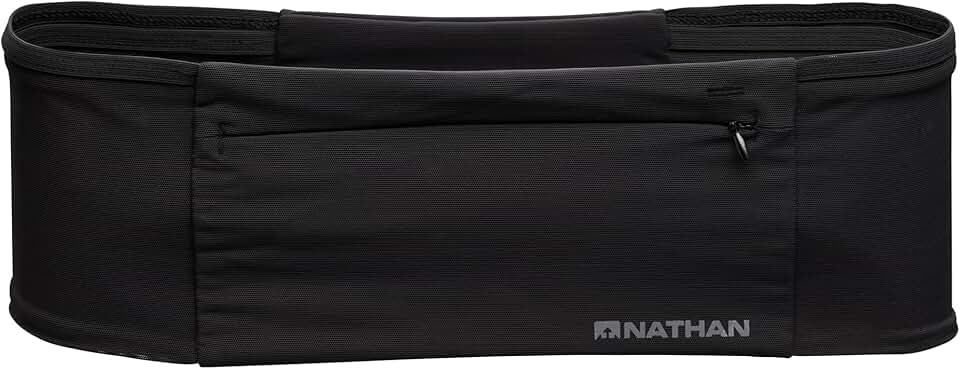
The Nathan Zipster Max differentiates itself with an oversized zipper that opens nearly the entire length of the pocket. This design allows you to see all contents at once and grab exactly what you need without fumbling. For runners who carry multiple types of nutrition or need to access items frequently, this feature reduces fumbling time compared to smaller zipper openings.
The pocket sits at your hip with a slight forward angle, positioning it naturally where your hand falls while running. This placement feels more intuitive than packs that sit directly at your back. The internal organization is minimal, but the large opening partially compensates by making everything visible.
The belt material uses a moisture-wicking fabric that reduces sweat buildup. This matters during longer efforts or hot weather when traditional pack materials can become saturated and uncomfortable. The fabric breathes better than many competitors, though it is not as compressive as tubular designs.
Capacity handles a large phone plus four to five gels comfortably. The pocket depth accommodates thicker phone cases without creating excessive bulk. Some runners fit a lightweight packable shell in addition to phone and nutrition, though this pushes capacity limits and may affect bounce control.
Note that this model has significantly fewer customer reviews than more established waist packs, with only 97 reviews compared to thousands for other options. Early users report solid construction and reliable performance through initial months of use, but long-term durability data remains limited. The product listing does not mention Climate Pledge Friendly certification. Consider whether you prioritize the oversized zipper feature over the proven track record of higher-review alternatives.
Check current stock for the Nathan Zipster Max Running Belt on Amazon.
Pros
- Extra-large zipper provides full visibility of all contents
- Forward hip placement matches natural hand position
- Moisture-wicking fabric reduces sweat buildup
- Fits large phones with thick cases
- Adequate capacity for short to medium trail runs
Cons
- Only 97 customer reviews limits long-term performance data
- Not Climate Pledge Friendly certified
- Less compressive than tubular designs
4. WATERFLY Running Belt Fanny Pack
Best for budget-conscious runners who want Climate Pledge Friendly certification and solid performance
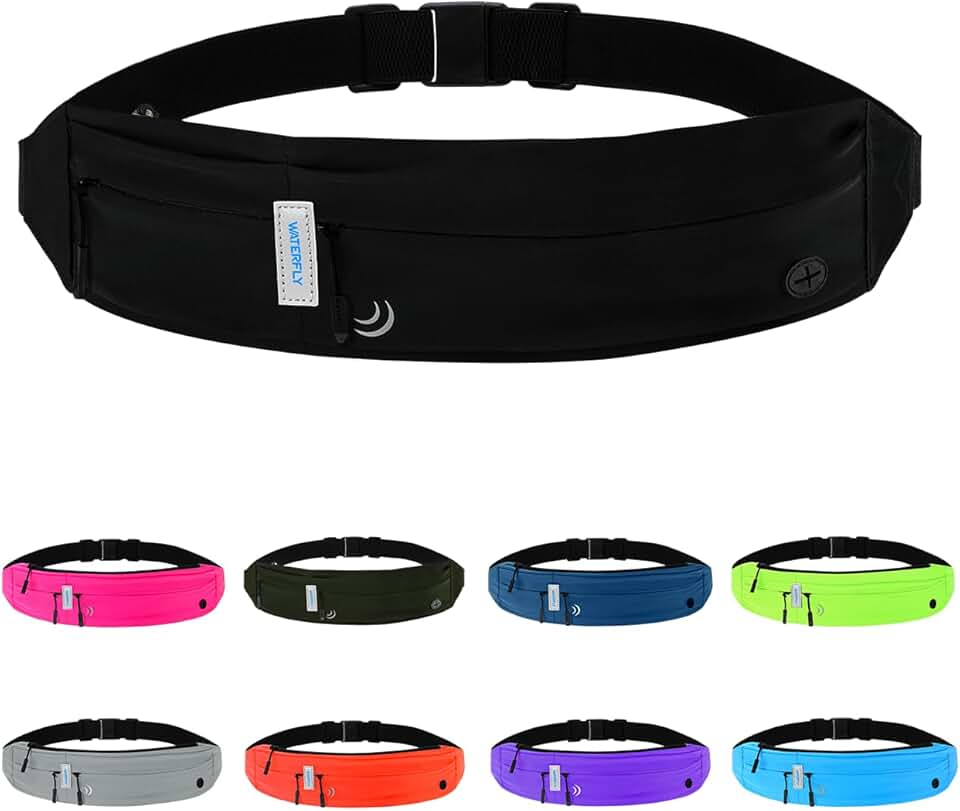
The WATERFLY Running Belt delivers practical functionality at a lower price point than premium options. The pack features a main zippered pocket for your phone plus a smaller secondary pocket for gels and keys. This separation prevents sticky gel wrappers from contacting your phone screen, a small detail that improves daily usability.
The belt width measures approximately three inches, providing reasonable stability without the bulk of wider designs. The adjustment system combines elastic stretch with a buckle closure, allowing you to achieve a snug fit that resists bounce. Multiple users specifically mention stability on downhill trail sections, indicating the design performs adequately on technical terrain.
The water-resistant coating on the fabric sheds light rain and prevents sweat from immediately soaking through. While not fully waterproof, this protection suffices for most trail conditions. The zipper quality appears adequate based on user feedback, with few reports of failures or snagging.
Capacity works for typical short trail runs. The main pocket fits phones up to 6.5 inches, and the secondary pocket holds three to four gels comfortably. Some runners report fitting a credit card and key in the smaller pocket alongside nutrition. For runs requiring more gear, capacity becomes limiting.
The Climate Pledge Friendly certification at this price point represents good value for environmentally conscious runners. With nearly 1,900 verified customer reviews, this model shows strong market acceptance and reliable performance data. The product offers multiple color options if visibility or aesthetic preference matters. At under $22, this represents one of the more affordable options that still delivers functional performance.
Compare the WATERFLY Running Belt Fanny Pack specs and pricing on Amazon.
Pros
- Dual pockets separate phone from nutrition
- Water-resistant fabric sheds light rain and sweat
- Climate Pledge Friendly certified at budget price
- Over 1,800 reviews confirm stability on trails
- Nearly 1,900 customer reviews provide reliable performance data
Cons
- Less premium materials than higher-priced options
- Capacity limited for longer efforts
- Belt width narrower than some competitors
How These Compare
Choosing the best waist pack for trail running depends on your specific priorities and the terrain you run most often. The FlipBelt Classic excels for runners who prioritize absolute stability and bounce control on technical terrain. Its tubular design distributes weight more evenly than traditional single-pocket packs, eliminating the rotation and shifting that plague many waist packs on steep climbs or rocky descents. If you run aggressive trails with frequent elevation changes, the FlipBelt provides the most secure carry. The trade-off is slightly slower access to contents since you reach into openings rather than unzipping a pocket.
The SPIbelt offers the best balance of quick access and expandable capacity in a traditional single-pocket design. If you want to grab nutrition quickly without breaking stride, the wide zipper opening makes this easier than the FlipBelt. The expandable pocket holds more than it appears to, making it suitable for runners who occasionally need extra capacity but still want a low profile most of the time. The buckle adjustment system provides better fit precision than elastic-only designs.
For runners who access their pack frequently during runs, the Nathan Zipster Max provides the largest zipper opening of these options. Being able to see all contents at once reduces fumbling time and makes it easier to grab the exact gel or item you need. The moisture-wicking fabric performs better in hot weather than standard materials. However, with only 97 customer reviews compared to thousands for other models, this option lacks the extensive long-term durability feedback that helps confirm reliability over multiple seasons of use.
The WATERFLY Running Belt delivers the best value for budget-conscious runners who still want functional performance and environmental certification. At under $22, it costs significantly less than premium options while still providing dual pockets for organization and adequate stability for most trail conditions. The water-resistant coating and Climate Pledge Friendly certification add value at this price point. Capacity and materials are not quite as refined as higher-priced options, but for runners who prioritize value, this represents a solid entry point.
For most trail runners doing short fast efforts, the FlipBelt Classic or SPIbelt will provide the best combination of stability, capacity, and proven durability. Runners new to waist packs might start with the WATERFLY to confirm the carry style works for them before investing in premium options. Technical trail runners doing steep or rocky terrain should prioritize the FlipBelt for its superior bounce control.
Frequently Asked Questions
How do I prevent a running waist pack from bouncing?
Proper fit is the single most important factor in preventing bounce. Wear the pack high on your natural waist, not down on your hips. It should sit snug enough that you cannot easily rotate it around your body, but not so tight that it restricts breathing. Wider belts distribute weight better and resist bounce more than narrow designs. Fill the pack evenly rather than loading one side heavier, which creates imbalance. Choose a pack with a secure closure system like a buckle rather than relying on elastic alone. Finally, do not overload capacity. Every extra ounce increases bounce, so carry only what you truly need for your specific run distance and conditions.
What should I carry in a waist pack for trail running?
For short trail runs under two hours, carry your phone, two to four energy gels or chews, a key, and a credit card or small amount of cash. Add a lightweight emergency whistle if you run remote trails alone. For runs approaching three hours, add one or two extra gels and consider a small packable emergency blanket. A small first aid kit with a few adhesive bandages can address blisters mid-run. If weather might change, a lightweight packable shell fits in most waist packs. Resist the urge to overpack. If you find yourself needing more than six gels or significant extra gear, a running vest provides better comfort and capacity than an overstuffed waist pack.
Can I use a regular fanny pack for trail running?
Regular fanny packs are not designed for the movement patterns and impact forces of trail running. Most lack the snug fit and bounce control needed for anything beyond walking. The materials are often heavier and bulkier than running-specific designs. Zippers on casual fanny packs frequently snag or fail under the stress of repetitive bouncing. The pocket positioning usually sits too low or too far back for easy access while running. Some cheaper running belts blur the line between casual and performance gear, but true trail running demands purpose-built equipment. A dedicated running waist pack costs only slightly more than a generic fanny pack but performs vastly better on actual trails.
How tight should a running belt be?
Your running belt should feel snug but not restrictive. When standing still, you should be able to fit one or two fingers between the belt and your body with slight resistance. During a test jump or run in place, the belt should not bounce or shift position. If it moves more than half an inch in any direction, tighten it further. However, if you feel pressure that makes breathing uncomfortable or if the belt creates visible indentation in your skin, loosen it slightly. The right tension prevents movement without causing discomfort. Remember that the belt may need adjustment once you load it with gear, as the added weight can cause slight settling. Test the fit loaded before heading out on your run.
Do running waist packs work for larger phones?
Most current running waist packs accommodate phones up to 6.7 inches in screen size, which covers nearly all current smartphone models. Check the product specifications for listed phone compatibility before buying. Phone dimensions with cases matter more than screen size alone. Bulky protective cases add thickness that can affect fit even when screen size technically fits. Measure your phone with its case along the longest dimension and compare to the pack pocket dimensions. Some packs list internal pocket measurements in inches. If your phone measures larger than the listed capacity, the pack will not work regardless of how much you try to force it. For unusually large phones or thick cases, consider removing the case during runs or choosing a pack with specifically oversized pockets.
The Bottom Line
The best waist pack for trail running depends on your specific terrain, distance, and gear priorities. For runners tackling steep technical trails with frequent elevation changes, the FlipBelt Classic provides the most secure, bounce-free carry through its tubular design. If you prioritize quick access to nutrition and want a traditional pocket design, the SPIbelt offers an expandable single pocket with excellent stability and over 3,000 user reviews confirming its performance. Runners on a budget should consider the WATERFLY Running Belt, which delivers functional dual-pocket organization and Climate Pledge Friendly certification at under $22.
For runners new to waist packs, start with shorter trail runs to dial in your preferred fit and gear load before committing to longer efforts. Position the pack high on your natural waist rather than down on your hips for better stability. Test different adjustment tensions to find the sweet spot between secure carry and comfortable breathing. Load your pack evenly and carry only what you truly need for your planned distance.
If you consistently find yourself needing more capacity than these waist packs provide, that signals it might be time to consider a running vest instead. Waist packs work best for short fast efforts where you want to minimize gear bulk. For runs exceeding three hours or terrain requiring significant extra layers and nutrition, a vest distributes weight more comfortably across your torso. Choose the right tool for your specific running style and distance, and your gear will disappear into the background where it belongs.
Disclosure: As an Amazon Associate, we earn from qualifying purchases. This does not affect our editorial recommendations.