
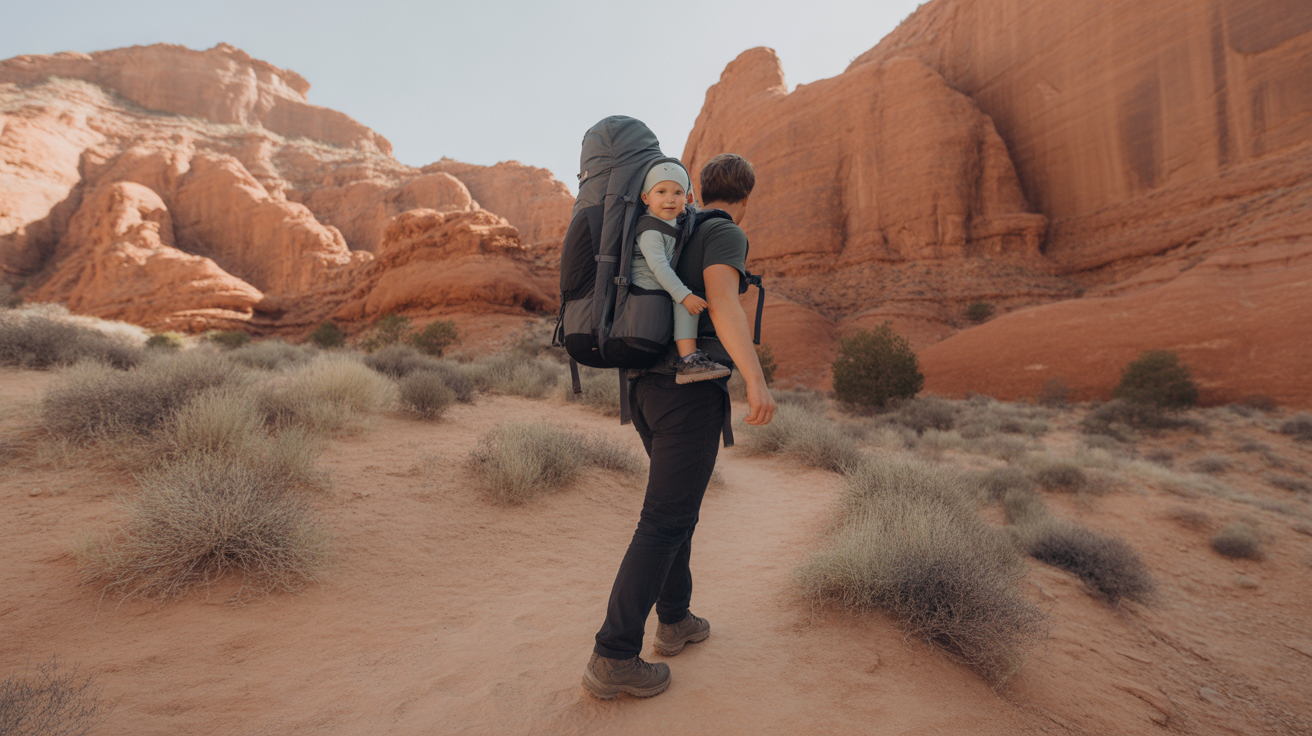
Bringing a toddler on trail means choosing between exhausting yourself with dead weight in your arms or investing in a proper hiking carrier that distributes the load correctly. If you have been putting off hikes because carrying your child gets uncomfortable after twenty minutes, you are not alone – and a framed carrier changes everything. The best toddler hiking carrier gives you adjustable torso lengths, padded hip belts, and enough storage for snacks and diapers without turning you into a pack mule.
This guide walks through five tested carriers that work for different hiking styles and budgets. You will learn the difference between framed and soft carriers, what weight limits actually mean on trail, and which features matter most when your toddler decides the hike is over but you still have two miles to go.
What to Look For
Framed Carriers vs Soft Carriers
Framed carriers use an aluminum or steel frame to transfer weight from your shoulders to your hips, which is where your body handles load best. The frame keeps the child seated upright and away from your back, creating airflow and preventing the sweaty-back problem that happens with soft carriers. Most framed carriers include a kickstand so you can set the pack down without tipping over, and they typically accommodate toddlers from about 6 months (when they can sit unassisted) up to 40 or 48 pounds depending on the model.
Soft carriers rely on padded straps and fabric panels without a rigid frame. They pack smaller and weigh less than framed options, but they press the child directly against your back and shift more weight to your shoulders. Soft carriers work well for short walks or running errands, but on actual trails longer than a mile or two, the lack of hip support becomes noticeable. For day hikes and longer outings, a framed carrier is the better choice for both parent comfort and child safety.
Weight Limits and What They Mean on Trail
Every carrier lists a maximum weight capacity, but that number represents the combined weight of your child plus any gear you load into the pack. A carrier rated for 48 pounds does not mean you can comfortably carry a 48-pound child with a full diaper bag and water bottles. Most manufacturers recommend stopping use when your child reaches about 40 pounds, even if the carrier technically supports more.
On trail, you will feel every pound. A 25-pound toddler feels manageable for the first mile, but by mile three, that same weight tests your endurance. Consider your typical hiking distance when choosing a carrier. If you usually hike 2-3 miles, most mid-range carriers work fine. For longer day hikes of 5-8 miles, invest in a carrier with excellent hip belt padding and load stabilization straps that keep the pack from swaying.
Adjustability for Multiple Carriers
If two parents will share carrying duties, adjustability becomes critical. Look for carriers with quick-adjust torso lengths that do not require tools or complicated strap rethreading. Hip belts should adjust across a wide range of waist sizes without leaving excess strap dangling. Some carriers include separate hip belt sizes you purchase based on your measurements, which provides a better fit but means you cannot easily share the carrier between two people with different body types.
The best adjustable systems use numbered settings or color-coded markers so you can return to your preferred fit quickly. Test the adjustments before buying if possible – some systems require two hands and several minutes to change, which is frustrating when you are trading off mid-hike.
Storage and Organization
A toddler carrier needs to hold more than just your child. Plan for diapers, wipes, snacks, water, sunscreen, a first aid kit, and extra layers for both of you. Most carriers include a main storage compartment below the child seat, side pockets for water bottles, and a smaller zippered pocket for valuables. Total storage typically ranges from 15 to 25 liters, which is enough for a half-day hike but not a full backpacking setup.
Some carriers include an insulated pocket for keeping snacks cool or bottles warm. External attachment points for carabiners or gear loops add versatility if you need to clip on extra items. Avoid overloading the storage – every extra pound you add makes the pack heavier and shifts the center of gravity, which affects how the carrier feels on your back.
Sunshade and Weather Protection
Most toddler carriers include a removable sunshade that attaches above the child seat. These shades provide UPF 50+ sun protection and often have adjustable angles so you can block sun from different directions as it moves across the sky. The shade should be easy to deploy and retract without stopping to remove the pack. Some models include a storage pocket built into the sunshade itself for quick-access items.
Few carriers come with rain covers, but many manufacturers sell them as separate accessories. If you hike in unpredictable weather, check whether a rain cover is available for your chosen model before buying. The rain cover should protect both the child and the gear storage areas without blocking airflow completely.
Safety Features That Matter
Every carrier should include a five-point harness system that keeps your toddler secured in the seat. The harness needs to adjust as your child grows without requiring permanent modifications to the carrier. Stirrups or foot loops keep your toddler from kicking you in the back and help them stay comfortable during the ride. A safety restraint or attachment point for the kickstand prevents the carrier from tipping backward when you set it down on uneven ground.
Reflective elements or bright colors help with visibility if you hike near roads or in low light conditions. Some carriers include a small rearview mirror that attaches to the shoulder strap so you can check on your child without removing the pack. This feature seems minor until you are mid-hike and wondering if your toddler has fallen asleep or is about to throw a snack at the back of your head.
Our Top Picks
1. Osprey Poco SLT Lightweight Child Carrier Backpack
Best for parents who want a lighter carrier without sacrificing comfort on day hikes up to 5 miles

The Osprey Poco SLT strips down the feature set to save weight without compromising the essentials. The aluminum frame keeps the structure rigid while the ventilated backpanel creates airflow between your back and the pack. The adjustable torso length accommodates different body types, and the padded hip belt transfers weight effectively even on longer hikes. The sunshade deploys quickly and adjusts to block sun from multiple angles. Storage capacity is smaller than the full Poco models at around 15 liters, but that is enough for snacks, diapers, water, and a light jacket.
The five-point harness adjusts easily and includes padded shoulder straps for your toddler. Foot stirrups keep little legs from kicking your back constantly. The kickstand is stable on flat ground but requires attention on uneven terrain to prevent tipping. Side pockets hold water bottles securely, and the main storage compartment has a zipper that is accessible while wearing the pack with some practice. The carrier uses sustainable manufacturing practices that reduce environmental impact during production.
This carrier works well for parents who hike regularly but do not need the extra storage and features of heavier models. The reduced empty weight means less fatigue on your shoulders and hips, especially during the last mile when every ounce matters. The trade-off is less padding in some areas and fewer organizational pockets. If you typically hike 2-5 miles with minimal gear, the SLT delivers excellent value without the bulk of heavier carriers.
Pros
- Lighter than most framed carriers without losing structural support
- Ventilated backpanel reduces sweaty-back issues
- Adjustable torso length works for multiple carriers
- Sunshade deploys and adjusts easily
- Sustainable manufacturing practices reduce environmental impact
Cons
- Smaller storage capacity than full-size models
- Less padding in hip belt compared to premium carriers
- Kickstand can tip on uneven ground
View Osprey Poco SLT Lightweight Child Carrier Backpack on Amazon →
2. Deuter Kid Comfort Child Carrier and Backpack
Best for parents who want maximum comfort and storage for all-day hikes with a toddler
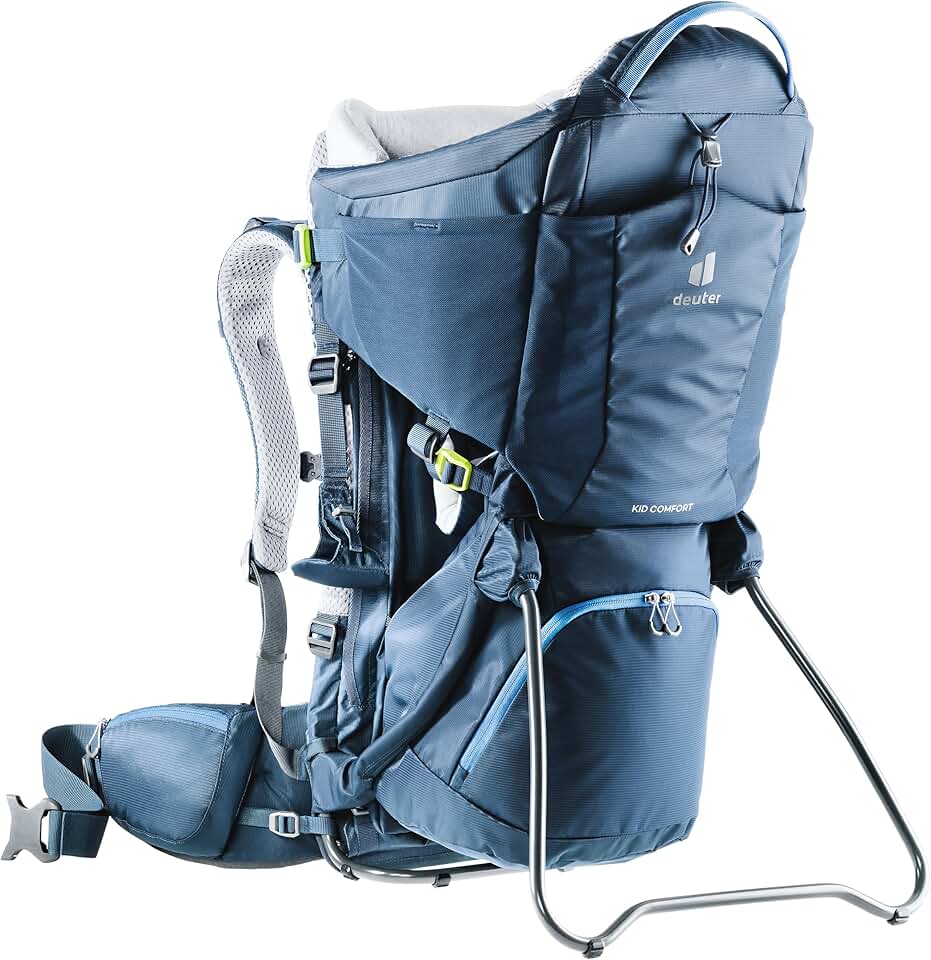
The Deuter Kid Comfort builds comfort into every contact point. The tensioned mesh back system uses suspended fabric to keep the pack away from your back, creating constant airflow even when you are working hard on steep sections. The padded hip belt is wider than most competitors and includes dual density foam that distributes weight without creating pressure points. The adjustable torso length uses a simple sliding system with clear measurement markers so multiple carriers can find their fit quickly.
Storage capacity is generous with a main compartment that holds a full day of supplies, side mesh pockets for water bottles, and a top zippered pocket for keys and phone. The sunshade is large enough to provide real protection and includes a small storage pocket built into the fabric. Your toddler gets a well-padded seat with adjustable foot stirrups and a five-point harness that is easy to adjust but secure enough that active kids cannot wiggle out. The chin pad on the frame protects your child when they lean forward or fall asleep.
The kickstand deploys reliably and holds steady on moderately uneven ground. Reflective elements on multiple sides improve visibility in low light. The pack is noticeably heavier than lightweight carriers when empty, which is the trade-off for the extra padding and features. Parents who regularly hike 5-8 miles or spend full days on trail will appreciate the additional comfort features. If you typically do shorter walks or very light day hikes, this might be more carrier than you need.
Pros
- Tensioned mesh back system provides excellent ventilation
- Wide padded hip belt distributes weight effectively
- Generous storage for all-day hiking
- Stable kickstand works on uneven terrain
- High review count indicates proven reliability
Cons
- Heavier than lightweight models when empty
- Premium price point
- Large size can feel bulky for shorter parents
View Deuter Kid Comfort Child Carrier and Backpack on Amazon →
3. ClevrPlus Cross Country Baby Backpack Carrier
Best budget option for parents who want a framed carrier without premium pricing

The ClevrPlus Cross Country delivers the essential framed carrier features at a price that does not require a second mortgage. The aluminum frame transfers weight to your hips effectively, and the padded shoulder straps and hip belt provide adequate comfort for hikes up to 3-4 miles. The adjustable torso length works for most adult heights, though very tall or very short parents might find the range limited. The five-point harness keeps your toddler secure, and the padded seat includes adjustable foot stirrups.
Storage includes a main compartment below the seat, side pockets for water bottles, and a small zippered pocket for essentials. The sunshade attaches easily and provides decent coverage, though the adjustment mechanism is not as refined as premium models. The kickstand deploys with a simple button press and holds steady on flat ground. The carrier includes a changing pad, which is a nice bonus feature not found in all budget models.
The materials feel less refined than premium carriers – zippers are functional but not as smooth, padding compresses more over time, and stitching is adequate rather than exceptional. For parents who hike occasionally or want to test whether they will actually use a carrier before investing in an expensive model, this represents solid value. The high review count indicates plenty of parents have successfully used this carrier for multiple seasons. Just understand that comfort and durability do not match carriers costing two or three times as much.
Pros
- Significantly lower price than premium carriers
- Includes changing pad as bonus feature
- High review count shows proven track record
- Adequate comfort for shorter hikes
- Compact storage when not in use
Cons
- Materials and construction quality below premium models
- Padding compresses faster than high-end carriers
- Torso adjustment range limited for very tall or short parents
View ClevrPlus Cross Country Baby Backpack Carrier on Amazon →
4. Kelty Journey PerfectFit Child Carrier Backpack
Best for parents who prioritize easy fit adjustments when sharing the carrier between two people

The Kelty Journey focuses on making adjustments fast and intuitive. The torso adjustment system uses clearly marked settings that let you change the fit in under 30 seconds without removing the pack. The hip belt adjusts across a wide range of waist sizes, and the padded shoulder straps include load lifter straps that fine-tune how the pack sits on your frame. This makes the Journey ideal for families where two parents with different body types will share carrying duties throughout a hike.
The five-point safety harness includes extra padding on the shoulder straps for your toddler, and the foot stirrups adjust to three different height positions as your child grows. Storage capacity falls in the middle range with enough room for a half-day hike but not quite as much as the largest carriers. The main compartment zips open wide for easy access, and large mesh side pockets hold water bottles securely. The sunshade provides good coverage and stores in a dedicated pocket when not in use.
The kickstand is stable and includes a secondary safety strap to prevent tipping. Reflective accents improve visibility in low light. The pack sits between lightweight and heavy models in terms of empty weight. Build quality is solid with reinforced stitching at stress points and durable fabric that handles regular use. Parents who value quick adjustability and good all-around performance without the highest price tag will find the Journey delivers on both counts.
Pros
- Fast and intuitive adjustment system
- Works well for sharing between parents of different sizes
- Extra padding on child harness straps
- Stable kickstand with safety strap
- Mid-range weight balances comfort and manageable load
Cons
- Storage capacity smaller than premium models
- Sunshade adjustment less refined than Osprey models
- Hip belt padding adequate but not exceptional
View Kelty Journey PerfectFit Child Carrier Backpack on Amazon →
5. WIPHA Hiking Backpack Carrier
Best for parents who want a lighter carrier with good ventilation at a mid-range price

The WIPHA carrier sits in the middle ground between budget and premium options. The aluminum frame provides solid structure while keeping the empty weight manageable. The breathable mesh backrest creates airflow to reduce heat buildup during warm weather hikes. The adjustable padded straps distribute weight across shoulders and hips, though the hip belt padding is thinner than premium models. The sunshade deploys easily and provides adequate coverage for most sun angles.
The five-point safety harness keeps your toddler secure with padded shoulder straps that prevent rubbing. Foot stirrups adjust to accommodate growing children. Storage includes a main compartment with decent capacity, side pockets for water bottles, and a front zippered pocket for quick-access items. The kickstand works on flat surfaces but requires care on uneven ground. The carrier stores compactly when not in use, which helps if you have limited closet space.
Build quality is acceptable for the price point – not as refined as Osprey or Deuter but better than the cheapest options. Stitching appears solid at stress points, and the materials feel durable enough for regular recreational use. With a smaller review base compared to established models, this represents a newer option in the market. Parents who hike occasionally and want something better than budget carriers without paying premium prices may find this offers reasonable value for moderate hiking distances.
Pros
- Mid-range pricing offers better value than premium carriers
- Breathable mesh backrest improves ventilation
- Compact storage when not in use
- Lighter than many framed carriers
- Adequate comfort for moderate hiking distances
Cons
- Hip belt padding thinner than premium models
- Smaller review base than established competitors
- Kickstand stability acceptable but not exceptional
How These Compare
The best toddler hiking carrier for your family depends on how often you hike, how far you typically go, and whether multiple people will share the carrier. If you hike regularly and cover 5-8 miles per outing, the Deuter Kid Comfort ($299.99) delivers the comfort and storage capacity to handle all-day adventures. The tensioned mesh back system and wide hip belt make a noticeable difference on longer trails, and the generous storage means you can bring everything you need without a separate daypack. The premium price reflects genuine quality improvements that matter when you are carrying 30+ pounds for multiple hours.
For parents who want solid performance without the premium cost, the Osprey Poco SLT ($280.00) strips away some features to save weight and money while keeping the essentials that make a carrier comfortable. The lighter empty weight reduces fatigue, and the ventilated backpanel prevents the sweaty-back problem that ruins the experience on warm days. Storage is smaller than the Deuter, but if you typically hike 2-5 miles and pack efficiently, the SLT has enough room. The 132 reviews with a 4.6-star average indicate consistent satisfaction among users.
If you will share the carrier between two parents with different body types, the Kelty Journey PerfectFit ($224.89) makes adjustment changes faster and easier than any other model. The clearly marked torso settings and wide-range hip belt mean you can swap carriers mid-hike without stopping for five minutes to fiddle with straps. The comfort level sits between lightweight and premium models, making it a strong all-around choice that handles most hiking scenarios well without excelling in any single category.
Budget-conscious parents should consider the ClevrPlus Cross Country ($119.95) if they want a framed carrier at half the cost of premium options. The 1,906 reviews prove plenty of families have used this carrier successfully for multiple seasons. Comfort and durability do not match expensive models, but for occasional hikers or parents who want to test whether they will actually use a carrier before investing heavily, this represents acceptable value. Just expect to replace it sooner if you hike frequently.
The WIPHA carrier ($172.99) offers a middle path for parents who want something better than budget models but cannot justify premium pricing. The breathable mesh and compact storage add convenience features, though the thinner hip belt padding becomes noticeable on longer hikes. This works well for families who hike 2-3 miles once or twice a month and want a carrier that will last a couple of seasons without breaking the bank.
Frequently Asked Questions
What age can a baby go in a hiking carrier?
Most hiking carriers accommodate babies starting around 6 months old, which is when most infants can sit up unassisted without support. This milestone indicates your baby has developed enough core strength and neck control to ride safely in an upright position. Some carriers include infant inserts or slings that claim to work for younger babies, but these convert the framed carrier into a soft carrier setup that loses most of the ergonomic benefits. Wait until your baby can sit independently before using a framed hiking carrier, and always check the specific age and weight minimums listed by the manufacturer. The lower weight limit typically ranges from 16 to 20 pounds, which most 6-month-olds meet or exceed.
How long can a toddler stay in a hiking carrier?
Plan on taking a break every 45-60 minutes to let your toddler out of the carrier. Even well-designed carriers restrict movement, and toddlers need opportunities to stretch, walk, and explore. These breaks also give you a chance to rest your back and hips, adjust any straps that have shifted, and check that your child remains comfortable. On longer hikes, you might let your toddler walk for 10-15 minutes between carrier sessions if the terrain is suitable. Watch for signs of discomfort like fussing, squirming, or trying to climb out, which usually indicate your child needs a break regardless of how much time has passed. Pack snacks and water for these stops to keep your toddler content during the break.
Do I need a special carrier for hiking with a toddler?
Yes, a framed hiking carrier is necessary for trail use beyond short walks. Standard soft baby carriers designed for everyday errands do not provide the hip support, weight distribution, or ventilation you need when hiking. A framed carrier uses an aluminum structure to transfer weight from your shoulders to your hips, where your body handles load more efficiently. The frame also creates space between your back and your child, allowing airflow that prevents overheating. Framed carriers include features specifically useful on trail: water bottle pockets, storage compartments for gear, sunshades, kickstands for rest stops, and five-point harnesses that keep active toddlers secure. If you plan to hike more than a mile or two, invest in a proper hiking carrier rather than trying to make a soft carrier work.
What is the weight limit for toddler hiking carriers?
Most toddler hiking carriers list maximum weight capacities between 40 and 48 pounds, but that number includes your child plus any gear you load into the pack. Manufacturers typically recommend stopping use when your child reaches about 40 pounds, even if the carrier technically supports more weight. Remember that the listed capacity represents structural limits, not comfort limits. Carrying a 40-pound child feels manageable for the first mile but becomes exhausting by mile three. Consider your typical hiking distance when evaluating weight limits. If you regularly hike 5+ miles, you will appreciate every pound you can save by choosing a lighter carrier or packing minimally. Most parents find that carriers work best when their child weighs between 20-35 pounds, which generally corresponds to ages 1-3 years.
The Bottom Line
The best toddler hiking carrier balances comfort, storage, and price based on how you actually hike. Parents who cover 5-8 miles regularly and need all-day comfort should invest in the Deuter Kid Comfort despite the premium price – the tensioned mesh back system and generous padding justify the cost when you are carrying weight for multiple hours. If you hike shorter distances of 2-5 miles and want to save weight without sacrificing essential features, the Osprey Poco SLT delivers excellent value with proven performance.
Families sharing the carrier between two parents with different body types will appreciate the Kelty Journey and its fast adjustment system that eliminates the frustration of strap changes mid-hike. Budget-conscious parents who hike occasionally can start with the ClevrPlus Cross Country to test whether they will actually use a carrier regularly before investing in expensive models. The WIPHA carrier splits the difference for families who want better quality than budget options but cannot justify premium pricing.
Regardless of which carrier you choose, focus on fit before your first hike. Adjust the torso length and hip belt at home, load the pack with weight approximating your child, and walk around your neighborhood for 20-30 minutes. This test reveals pressure points or adjustment issues before you are two miles up a trail. Bring your carrier on a short easy hike first to confirm the fit works under actual conditions, then gradually increase distance as you and your toddler adapt to the experience.
Disclosure: As an Amazon Associate, we earn from qualifying purchases. This does not affect our editorial recommendations.