
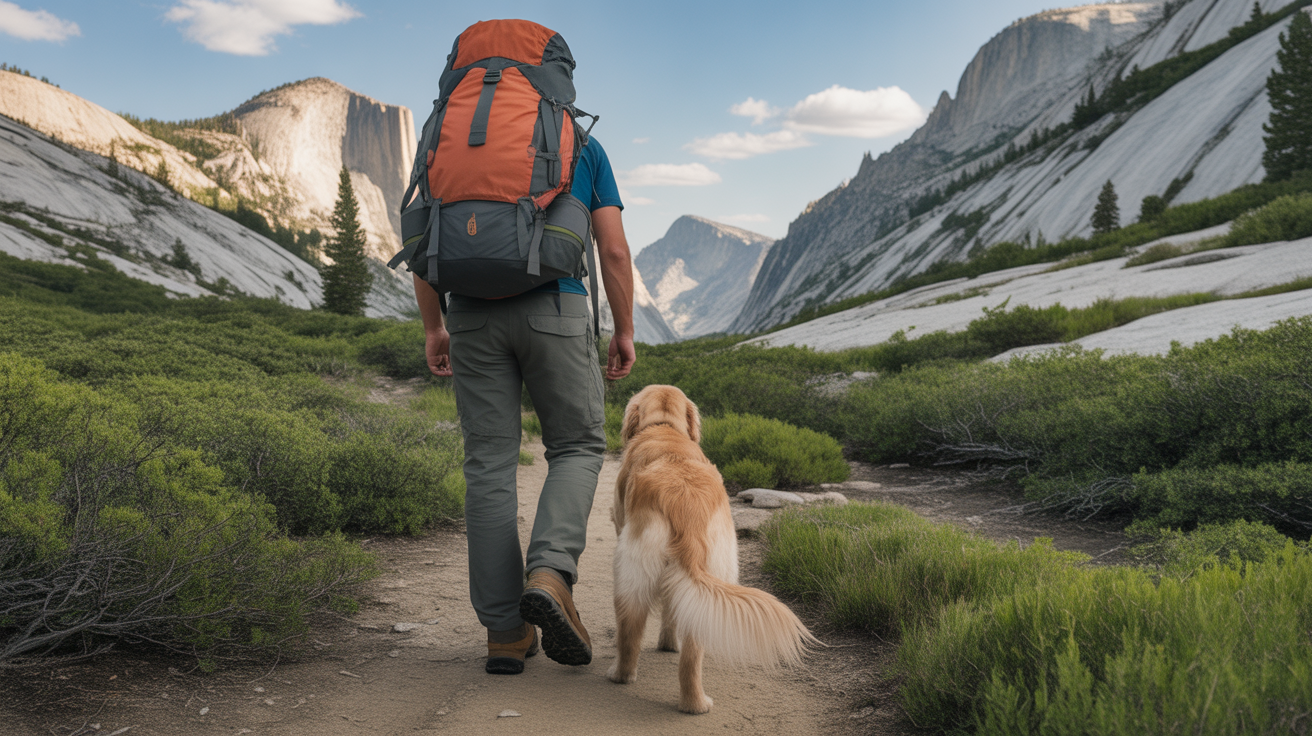
How to keep your dog safe on hot summer hikes is one of the most important questions any trail-loving dog owner can ask before heading out in the heat. Dogs are enthusiastic trail partners, but they cannot regulate their body temperature the way humans do, and on a hot summer day, that difference can become genuinely dangerous faster than most people expect.
The good news is that with the right preparation, the right timing, and a solid understanding of what warning signs to watch for, you and your dog can enjoy summer trails safely together. This guide covers everything from the earliest signs of overheating to the gear that helps keep your dog cool, hydrated, and comfortable every step of the way. Whether you are planning a short two-mile loop or a longer mountain day, the strategies here will help you head out with confidence.
What to Look For
Why Dogs Overheat Faster Than You Think
Understanding how dogs manage heat is the foundation of keeping them safe. Unlike humans, dogs do not sweat through their skin. They regulate temperature almost entirely through panting, which is far less efficient in hot, humid conditions. When the air temperature rises and humidity climbs, panting stops working as well, and a dog can move from slightly warm to dangerously overheated in a matter of minutes. Brachycephalic breeds (dogs with short, flat faces and compressed airways) such as bulldogs, pugs, and boxers are especially vulnerable because their shortened airways make efficient panting even harder. Older dogs, overweight dogs, and dogs with thick double coats all face elevated risk as well. Knowing your individual dog and how it responds to heat is the starting point for every hot-weather hike.
Warning Signs of Heat Exhaustion and Heat Stroke in Dogs
Recognizing the early signs of heat exhaustion is the most critical skill you can develop for summer hiking with dogs. The progression from discomfort to crisis can happen quickly, so knowing how to keep your dog safe on hot summer hikes means knowing exactly what to look for at each stage. Early warning signs include excessive, loud panting that does not slow down with rest, drooling more than usual, and a slightly glazed or unfocused expression. As the situation worsens, you may notice stumbling, weakness in the rear legs, vomiting, pale or sticky gums, and a body temperature that feels hot to the touch even on the belly and inner thighs. Heat stroke, the most severe stage, can cause collapse, seizures, and loss of consciousness. If you observe any signs beyond mild panting, stop hiking immediately, move your dog to shade, apply cool water to the paw pads, belly, and neck, and get to a veterinarian as quickly as possible. Do not use ice or ice water, which can cause blood vessels to constrict and actually slow the cooling process.
Timing, Trail Selection, and Pre-Hike Planning
The single most effective thing you can do for your dog in summer is choose when and where you hike. Start before 8 a.m. when trail surfaces are coolest, or wait until after 5 p.m. when the day has peaked. Avoid south-facing exposed ridges and sandy or rocky trails at midday, when ground temperatures can reach 60 degrees Fahrenheit above air temperature. A trail that feels warm on your boots in hiking shoes can be scalding on bare paws. Before you leave the trailhead, press the back of your hand to the trail surface for seven seconds. If it is too hot for your hand, it is too hot for your dog. Shaded forest trails, routes near water, and higher elevation paths with tree cover are better choices on warm days. Always check whether dogs are permitted on your chosen trail before you arrive, as many national parks and protected areas restrict or prohibit dogs entirely.
Hydration Strategies for Dogs on Summer Trails
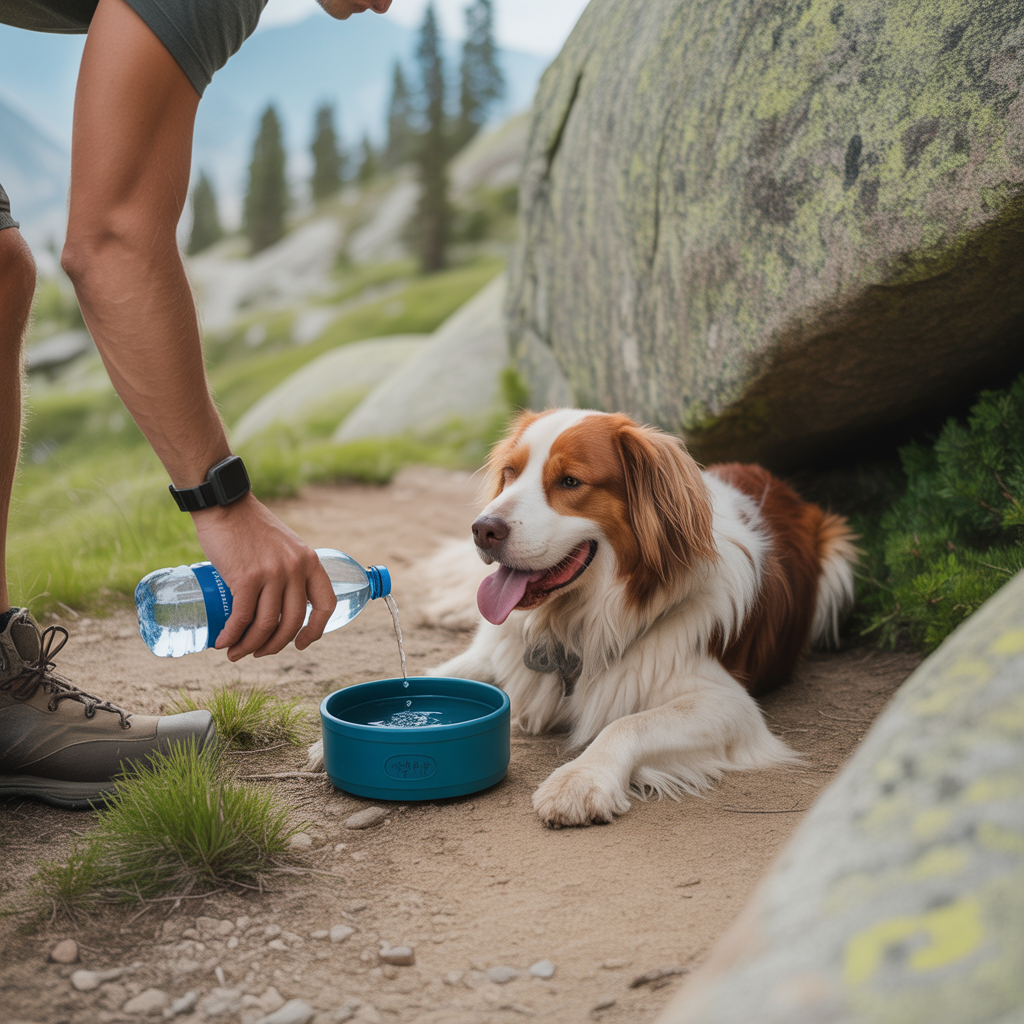
Dogs need significantly more water on hot hikes than on cool ones, and they depend entirely on you to provide it. A general guideline is one ounce of water per pound of body weight per day under normal conditions, with substantially more needed during exercise in heat. Plan to offer water every 15 to 20 minutes on the trail, not just when your dog asks for it. Many dogs will push through thirst the same way they push through fatigue, so proactive hydration is essential. A dog water bottle for hiking that combines a bottle and a built-in drinking trough makes this easy to manage on the move. A lightweight collapsible dog bowl is another simple option that packs flat in any pocket. If you are hiking near natural water sources, a portable water filter lets you safely use stream or lake water for your dog in a pinch, though always check local conditions for algae blooms or agricultural runoff before allowing your dog to drink from natural sources.
Cooling Gear That Actually Works on the Trail
Several pieces of gear are specifically designed to help dogs manage heat on summer hikes, and they are worth knowing about before you head out. A dog cooling vest works by holding water in a special fabric layer that releases heat as air moves across it, similar in principle to how human sweat cools the skin. These vests are particularly effective in low-humidity environments where evaporation is fast. A dog cooling bandana works on the same principle and is a lighter, lower-cost option for shorter outings. Paw protection matters too. Hot ground surfaces can blister a dog’s pads in minutes, and dog paw balm is designed to create a moisture barrier against heat and abrasive surfaces when applied before the hike. If your dog tolerates footwear, dog hiking boots provide more direct protection on extremely hot or sharp terrain.
What to Carry in Your Pack for Dog Safety
A prepared hiker carries gear for their dog the same way they carry gear for themselves. A dog first aid kit should be a non-negotiable item in your pack on any summer hike. Look for one that includes bandaging materials, antiseptic wipes, tweezers for splinter or thorn removal, and a digital thermometer so you can check your dog’s temperature if you suspect overheating. A healthy dog’s normal temperature is between 101 and 102.5 degrees Fahrenheit, which is notably higher than the human range of 97 to 99 degrees. Anything above 104 degrees in a dog is a veterinary emergency. Knowing how to keep your dog safe on hot summer hikes is not just about the hike itself. It is about being ready to respond when something goes wrong, and having the right tools in your pack means you will not be scrambling when every second counts.
Frequently Asked Questions
At what temperature is it too hot to hike with a dog?
Most veterinarians and canine experts suggest that air temperatures above 80 degrees Fahrenheit carry meaningful risk for dogs on moderate to strenuous trails, especially when combined with direct sun and high humidity. However, air temperature is only part of the picture. Ground temperature on exposed asphalt or rock in full sun can be 40 to 60 degrees hotter than the air, which means a trail that feels manageable to you can be burning your dog’s paw pads with every step. The seven-second hand test is a reliable field check: press the back of your hand flat against the trail surface. If you cannot hold it there comfortably for seven seconds, the ground is too hot for your dog to walk on safely. On hot days, prioritize shaded trails, early morning start times, and routes near water where your dog can wade and cool off. According to the American Veterinary Medical Association, even short periods of intense heat exposure can be dangerous for dogs, particularly those who are older, heavier, or brachycephalic breeds.
How do I cool down my dog quickly on a hike?
If your dog shows signs of overheating on the trail, act immediately and calmly. Move your dog off the trail into shade as quickly as possible. Apply cool water directly to the areas where blood vessels run close to the surface: the paw pads, the belly, the groin area, the armpits, and the back of the neck. Use cool water, not ice or ice water. Ice causes the surface blood vessels to constrict, which actually traps heat inside the body rather than releasing it. If there is a stream or shallow pool nearby, allow your dog to stand in it up to the belly but do not submerge the head. Offer small amounts of cool water to drink, but do not force it. Fan your dog as you wet them down to help the evaporative cooling process work faster. If symptoms do not begin to improve within five to ten minutes, or if your dog is stumbling, unresponsive, or collapsing, treat it as an emergency and get to a veterinarian as fast as possible. Carry a dog first aid kit that includes a digital thermometer so you can monitor temperature throughout the response.
Should I put sunscreen on my dog before a hike?
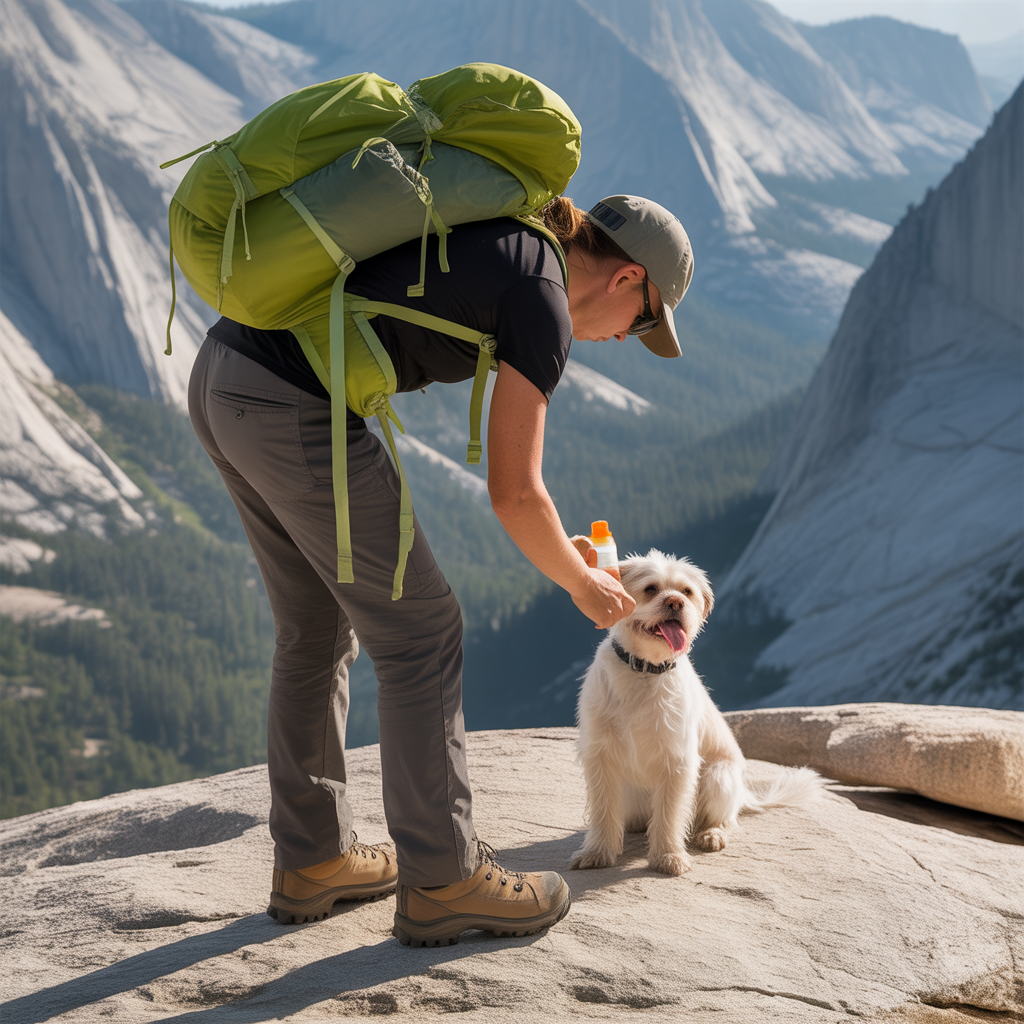
Yes, certain areas of your dog can sunburn, particularly dogs with light-colored coats, pink skin, or thin fur on the nose, ear tips, and belly. Human sunscreen is generally not safe for dogs because many formulations contain zinc oxide or para-aminobenzoic acid (PABA), both of which are toxic if ingested, and dogs will lick any product applied to their skin. Look for sunscreen products specifically formulated for dogs and labeled as pet-safe. These are available through veterinary suppliers and specialty pet retailers. The nose, the tips of the ears, and any area with sparse or light-colored fur are the highest-priority spots. On particularly exposed high-elevation or open-ridge hikes where UV exposure is elevated, reapplication after water crossings or swimming is a good practice. A dog sunscreen for hiking designed for outdoor use is the safest choice.
Can I bring my dog on trails in national parks?
Dog access in national parks is more restricted than most people realize, and it varies significantly from park to park and even trail to trail within the same park. As a general rule, most national park trails prohibit dogs on backcountry and maintained hiking trails. Dogs are typically allowed only on paved roads, in parking areas, in campgrounds, and on a small number of designated pet-friendly paths. The rules exist primarily to protect wildlife and other visitors. Before you plan any hike with your dog in a national park, check the specific rules for that park on the official National Park Service website. Many state parks, national forests, and Bureau of Land Management (BLM) lands have more permissive dog policies, often requiring only that dogs remain leashed. Regardless of where you hike, a well-fitted dog hiking harness and a reliable leash are standard equipment for any trail. You can verify current access rules for any federal land through the National Park Service pets resource page.
How much water should I bring for my dog on a summer hike?
A commonly cited baseline is approximately one ounce of water per pound of body weight per day for a resting dog. During active exercise in heat, that requirement increases substantially. A 50-pound dog on a two-hour summer hike in warm weather may need 16 to 24 ounces of water or more depending on the intensity and temperature. The safest approach is to carry more than you think you need and offer it proactively every 15 to 20 minutes rather than waiting for your dog to show signs of thirst. Many dogs will not self-regulate their water intake accurately during exciting activity, so it is your responsibility to make regular water breaks part of the hiking rhythm. A dedicated dog water bottle for hiking with an integrated drinking cup removes any friction from trail-side hydration stops. If you are also carrying your own water, a hydration pack with enough capacity for both you and your dog is worth considering on longer summer outings.
The Bottom Line
Knowing how to keep your dog safe on hot summer hikes comes down to preparation, awareness, and the willingness to turn around when conditions call for it. The trails will always be there on a cooler morning, but a dog in heat distress cannot wait. Start early, choose shaded routes, offer water constantly, and know the warning signs of overheating well enough to recognize them in the first minute, not the last.
If you hike frequently with your dog in summer, building a simple kit is worth the time: a dog cooling vest for warm exposed trails, a collapsible bowl and dedicated water bottle for regular hydration stops, paw balm for hot ground surfaces, and a dog first aid kit so you can respond to any situation confidently. Shorter, shadier, and wetter routes are almost always the better call in peak summer heat, and your dog will thank you for choosing them. Head out prepared, stay observant, and you and your dog will have a great trail season together.
Disclosure: As an Amazon Associate, we earn from qualifying purchases. This does not affect our editorial recommendations.