
How to store food safely in bear country is one of the most important things you will figure out before your first backcountry trip — and it is also one of the most misunderstood. A lot of first-time backpackers picture themselves hanging a bag from a tree branch like they saw in a movie, hoping for the best. The reality is both simpler and more nuanced than that, and getting it right is not just about protecting your food supply — it is about keeping bears wild and safe too.
This guide covers everything you need to know: which food storage method is right for your trip, how bear canisters actually work, when a hang system is appropriate and how to do it properly, and the camp habits that make the biggest difference. Whether you are heading into a national park with mandatory canister rules or dispersed wilderness with no requirements at all, the information here will help you make smart, confident decisions before you leave the trailhead.
What to Look For
Why Food Storage in Bear Country Matters More Than You Think
Bears are intelligent, opportunistic animals with an extraordinary sense of smell — estimated to be seven times stronger than a bloodhound. Once a bear associates a campsite or a trail corridor with food, it will return again and again. That behavior eventually leads to the bear being relocated or euthanized by wildlife managers. So when you store food correctly, you are not just protecting your dinner — you are protecting the bear. According to the National Park Service, improper food storage is one of the leading causes of bear-human conflict in parks across the country. Understanding how to store food safely in bear country is a genuine Leave No Trace skill, not just a bureaucratic rule.
Bear Canisters: The Most Reliable Option
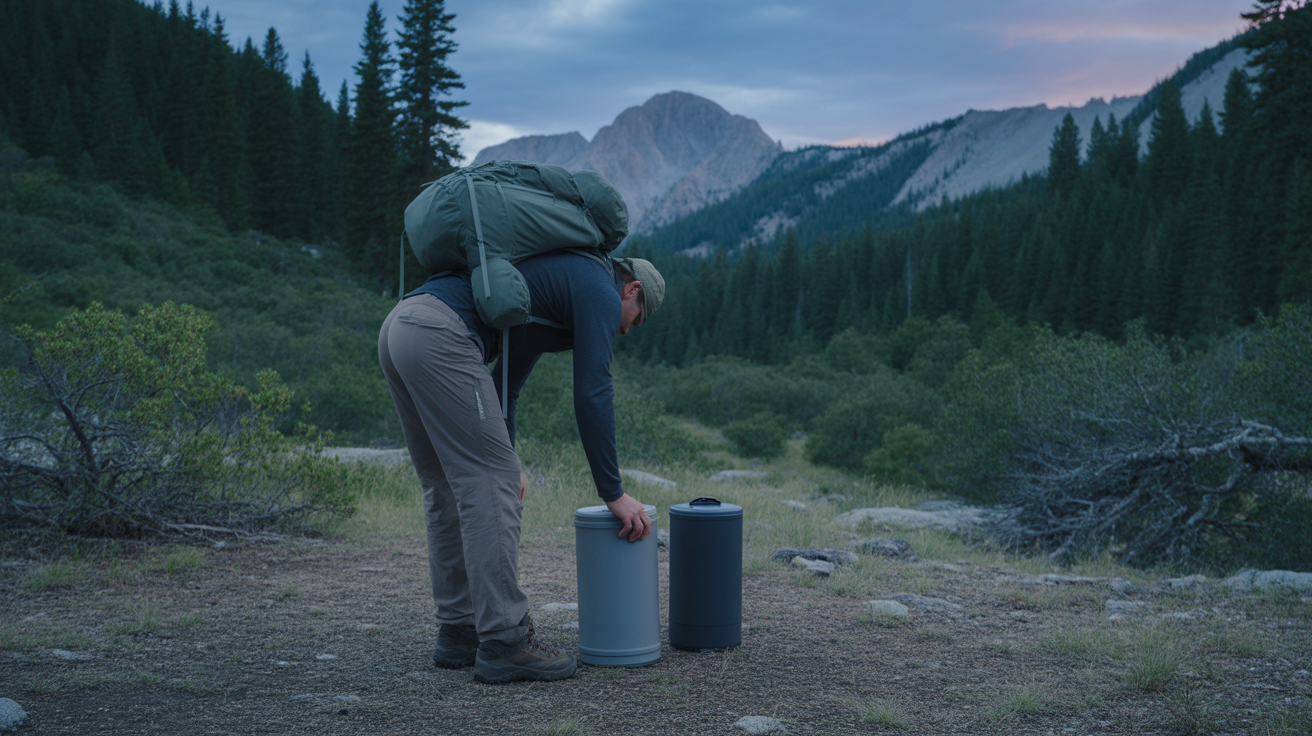
A bear canister for backpacking is a hard-sided, cylindrical container that bears physically cannot open. The lid requires a coin or screwdriver to pry off — mechanisms that bear paws simply cannot replicate. Canisters are required by regulation in many high-use areas including most of Yosemite, the John Muir Trail corridor, and large portions of the Adirondacks. Even where they are not required, they are widely considered the gold standard for a few reasons: they are foolproof, they require zero setup at camp, and they double as a camp seat.
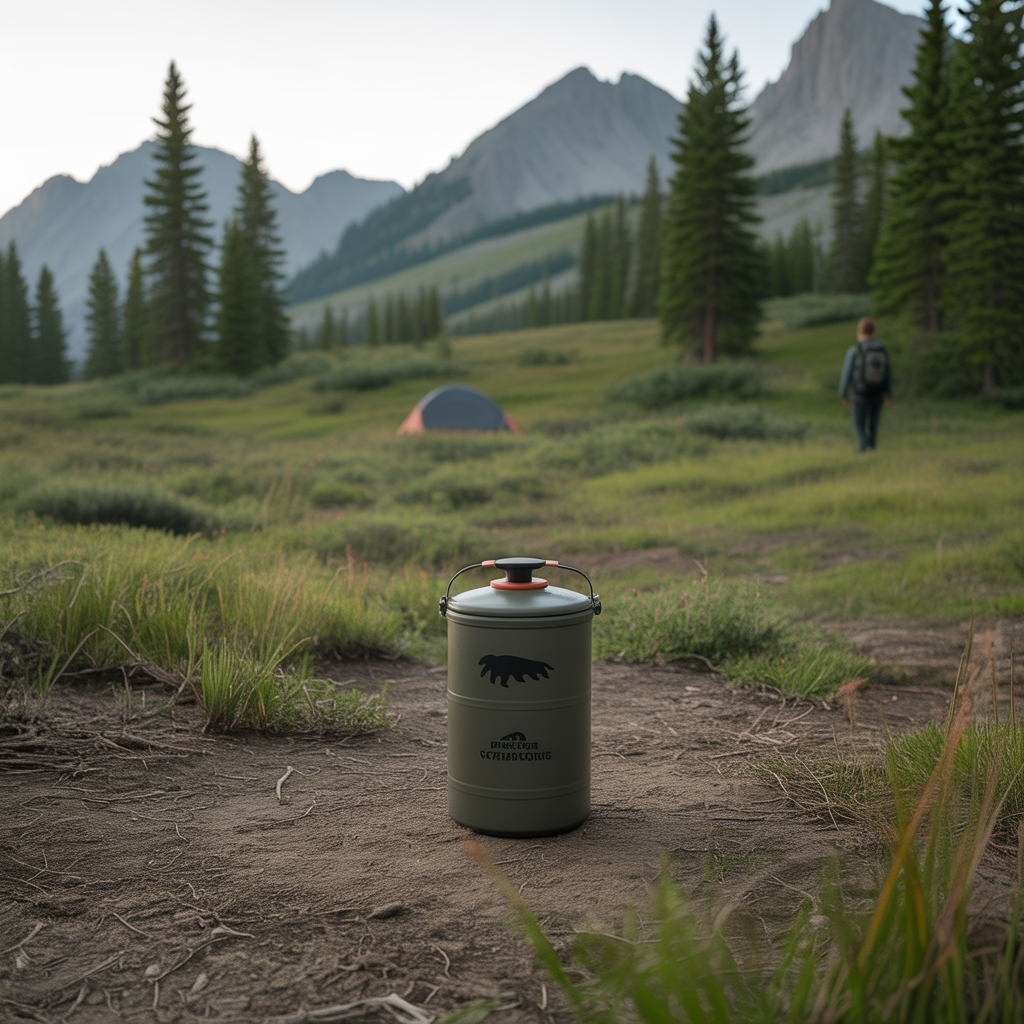
The main tradeoffs are weight and pack volume. A standard canister holds roughly 650 cubic inches of food — enough for about four to five days of meals for one person if you pack efficiently. They are bulky and sit awkwardly in a pack if not planned for. Most backpackers position the canister vertically in the center of their pack to keep weight close to their back. At camp, you place the canister on flat ground at least 200 feet from your tent, your cooking area, and your water source — not wedged against a log or near a cliff edge where a bear could knock it somewhere hard to retrieve.
Bear Hangs: When They Work and When They Do Not
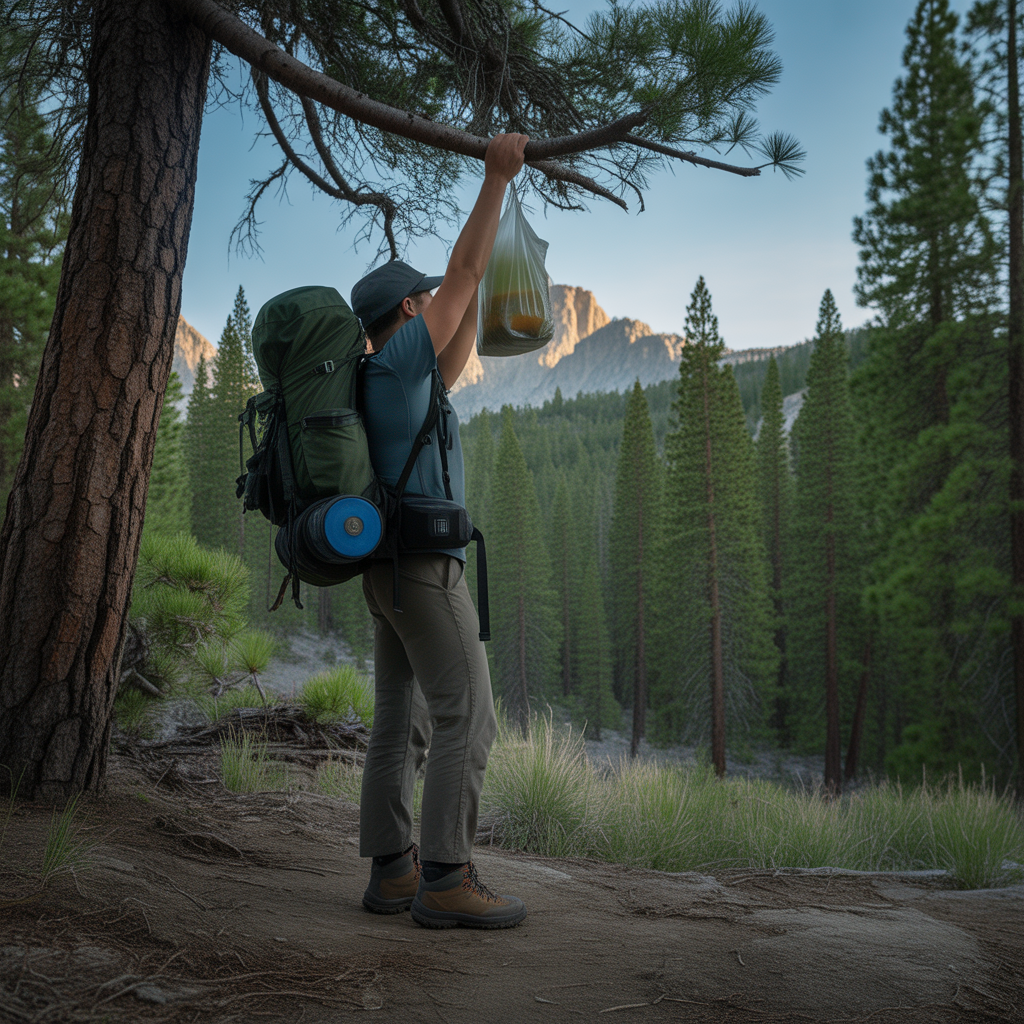
A proper bear hang — sometimes called a PCT hang or a counterbalance hang — suspends your food bag from a branch so that bears cannot reach it from the trunk or from above. The standard technique requires a branch that is at least 15 to 20 feet off the ground, with your bag hanging at least 10 feet below the branch and at least 4 feet from the trunk. Finding a branch that meets all of those criteria in real terrain is harder than it sounds, especially in desert environments, above treeline, or in heavily used areas where every suitable branch has already been picked clean.
A bear hang done correctly is effective. A bear hang done casually — tossed over a low branch, tied to the trunk, or left swinging six feet off the ground — is not. It gives hikers a false sense of security while providing an easy meal for any bear that wanders through. If you choose to hang, practice your rope technique at home before your trip. You will need at least 50 feet of lightweight cord and a stuff sack or rock to use as a throw weight.
Bear Boxes, Electric Fences, and Other Options
Many established campsites in national parks and popular wilderness areas provide bear boxes — large metal lockers bolted to the ground. These are free to use and are the easiest solution when available. Always check your destination before your trip to see if bear boxes are present at your campsite. If they are, use them — there is no reason to hang or carry a canister if a box is already there.
Some experienced backpackers also use Ursack bags, which are made from cut-resistant UHMWPE fabric and are approved in some (but not all) jurisdictions as an alternative to hard canisters. Ursacks are significantly lighter and more packable, but they do not prevent a determined bear from mauling and ruining the bag’s contents even if the bear cannot get inside. Always verify whether Ursacks are accepted by the specific land management agency overseeing your route.
Camp Hygiene: The Habits That Actually Keep Bears Away
Food storage is only part of the picture. Bears are drawn to any scent that resembles food — and that includes far more than your dinner. Cook and eat at least 200 feet from where you sleep. Store everything with a scent in your canister or hang: this means toiletries, lip balm, sunscreen, trash, empty food wrappers, and anything that touched food. Change out of the clothes you cooked in before sleeping. Never bring food into your tent under any circumstances, even snacks you think are sealed.
The triangle model is a useful mental framework: imagine a triangle with your tent at one point, your cooking and eating area at a second point, and your food storage location at a third point. Each side of that triangle should be at least 200 feet. This separation means that if a bear does find your food cache, it has no reason to wander toward where you are sleeping.
How to Store Food Safely in Bear Country: Practical Pre-Trip Checklist
Before you leave home, run through this checklist. First, research the specific regulations for your destination — canister requirements vary by park, wilderness area, and sometimes by season. Second, calculate how many days of food you need and test whether it fits in your canister before your trip. Third, practice your hang technique if that is your planned method. Fourth, pack all scented items together so they are easy to transfer to storage at camp. Fifth, carry a bear spray and know how to deploy it — food storage prevents encounters, but bear spray is your last line of defense if a bear approaches despite your best efforts. You can also review REI’s bear country basics guide for additional visual references on hang techniques and canister placement. Learning how to store food safely in bear country before you go is the single best thing you can do to ensure a smooth, safe trip.
Frequently Asked Questions
Do I really need a bear canister, or is a bear hang good enough?
It depends on where you are going. In many national parks and wilderness areas — including most of Yosemite and the John Muir Trail corridor — a hard-sided bear canister is required by law. Camping without one can result in a fine. In areas where canisters are not required, a properly executed bear hang can be effective, but the key word is properly. Most casual hangs done in the field do not meet the minimum standards — branch height, distance from trunk, and bag clearance — and they offer little real protection. A bear canister is foolproof, requires no setup, and removes all uncertainty. If you are heading into bear country for the first time, a canister is the safer and simpler choice. Always check the specific regulations for your destination before your trip, since requirements vary significantly by location and agency.
What foods should I store in a bear canister?
Everything with a scent — and that category is broader than most first-timers expect. Obviously all food goes in: meals, snacks, cooking oil, spices, and anything you plan to eat or drink. But you also need to store toiletries, including toothpaste, lip balm, sunscreen, deodorant, and hand lotion. Empty food packaging, trash, and used cooking utensils all carry food odors and need to go in the canister too. Bears have an extraordinarily powerful sense of smell and will investigate anything that smells remotely like food. Leaving a candy bar wrapper in your tent pocket or a squeeze of sunscreen on your sleeping bag can attract a bear just as effectively as leaving food out. The rule of thumb: if it has a scent and it is not part of your sleeping system, it goes in the canister.
How far from my tent should I store my food?
The widely accepted standard is at least 200 feet — roughly 70 adult paces — from your tent, your cooking area, and any water source. This distance is based on guidance from the National Park Service and Leave No Trace principles, and it forms the basis of the camp triangle model: tent, kitchen, and food storage each occupy a separate point of a triangle, with 200 feet between each point. Place your bear canister on flat, open ground where it is visible and where a bear cannot knock it down a slope or into water. Do not tuck it under a log or behind a rock — those spots make it harder for you to find in the morning and can trap the canister if a bear rolls it. Learning how to store food safely in bear country means thinking through your campsite layout before dark, not after you have already started cooking.
Can bears smell food through a bear canister?
Yes — bears can detect scent through a hard-sided bear canister. The canister does not eliminate odor entirely. What it does is prevent the bear from accessing the food despite being able to smell it. Bears have been observed investigating and pawing at canisters, but they cannot open a properly closed, approved canister. This is why placement still matters even when using a canister: set it on flat ground away from cliff edges or water, and place it at least 200 feet from your tent. Some backpackers put the canister inside a dry bag to add a minor additional odor barrier, though this is not required. The canister is a physical barrier, not a scent eliminator — understanding that distinction helps you use it correctly as part of a complete approach to how to store food safely in bear country.
What should I do if a bear enters my camp?
Stay calm, make yourself look large, and speak in a firm, assertive voice. Do not run — running can trigger a chase response. If the bear is focused on your food storage area and not approaching you, back away slowly and give the bear space. Bears that enter camps are usually food-motivated, not aggressive. If a bear approaches you directly and closes the distance despite your attempts to scare it off, deploy your bear spray when the animal is within 30 to 60 feet. Bear spray is a concentrated capsaicin aerosol that creates a cloud the bear must pass through — it is highly effective when used correctly. Report any bear encounter to the local ranger station or land management agency so they can monitor the animal and warn other hikers in the area.
The Bottom Line
Heading into bear country for the first time does not have to be stressful — it just requires preparation. If you are going to a national park or popular wilderness area, check the regulations before you book your permit and pick up a bear canister sized for the length of your trip. If you are heading somewhere with no canister requirement and you are confident in your rope skills, learn a proper hang technique and practice it before you hit the trail. In either case, build your camp triangle, store everything with a scent, cook and eat away from your tent, and never bring food inside your sleeping area. These habits are not complicated, but they work.
Knowing how to store food safely in bear country is ultimately about respect — for wildlife, for the ecosystems you are visiting, and for the hikers who will come after you. A fed bear is a bear that eventually loses its fear of humans, and that rarely ends well for the animal. Do your part, stay informed about the specific rules for your destination, and enjoy the backcountry with confidence. The wilderness is worth the extra planning it takes to visit it responsibly.
Disclosure: As an Amazon Associate, we earn from qualifying purchases. This does not affect our editorial recommendations.