
How to hike in mud without destroying your boots is one of those questions every hiker eventually asks – usually after pulling a once-solid pair of trail boots out of a bag and wondering what went wrong. Mud is one of the most common trail conditions in the world, and it is also one of the most quietly destructive things your footwear will ever encounter. It seeps into seams, breaks down adhesives, degrades waterproofing, and bakes into leather and fabric in ways that age your boots years in a single season.
The good news is that muddy trails do not have to mean ruined gear. With the right preparation, a few smart choices on the trail, and a solid post-hike routine, you can hike confidently through wet, messy conditions and come home with boots that still have life left in them. This guide walks you through exactly what to do before, during, and after a muddy hike so your footwear survives the season.
What to Look For
Understanding What Mud Actually Does to Your Boots
Mud is more than just dirt and water. It is an abrasive slurry that works its way into every gap it can find. When mud dries inside stitching and around the welt (the strip that connects the upper of the boot to the sole), it contracts and pulls at the bond. Over time this causes delamination, which is when the sole begins to separate from the upper. Mud also strips waterproof treatments from the outer fabric, leaving boots water-absorbent instead of water-resistant. Knowing this helps you understand why the cleaning steps matter so much. Leaving mud to dry on your boots is not just cosmetic neglect. It is structural damage happening in slow motion.
The Right Footwear Choice for Muddy Trails
Not all boots handle mud the same way. Full-grain leather boots are more naturally resistant to mud saturation than split-grain or fabric-heavy designs, but they require conditioning to stay supple. Synthetic uppers dry faster but can absorb more water through mesh panels. For consistently wet and muddy terrain, look for boots with a sealed or gusseted tongue, which is a continuous piece of fabric that prevents mud from entering through the lace gap. Aggressive lugs on the outsole (the deep tread pattern on the bottom of the boot) also help shed mud rather than packing it in. If you regularly hike trails rated for wet conditions, waterproof trail runners are worth considering as an alternative to traditional boots. They drain faster and dry more quickly, which reduces the time mud spends sitting against the material.
Mud Gaiters: The Single Best Investment for Muddy Hiking
If there is one piece of gear that makes the biggest difference on muddy trails, it is a gaiter. Gaiters are fabric sleeves that wrap around your lower leg and boot cuff, sealing the gap where mud, water, and debris enter. Low-profile hiking gaiters for mud are lightweight, packable, and attach directly to your boot lace. They do not add bulk or heat, and they can extend the life of your boots significantly by keeping mud out of the collar and tongue area. Even on trails that are only partially muddy, gaiters prevent the cumulative damage that comes from dozens of small mud splashes over the course of a hike.
Sock Choice Matters More Than You Think
When your feet are wet, every step creates friction. That friction is what causes blisters, and wet socks are also a fast track to cold feet and lost morale. A good pair of hiking compression socks made from wool or a wool-synthetic blend manages moisture far better than cotton, which becomes heavy and abrasive when wet. Wool retains some insulating ability even when damp, and it reduces friction against the boot lining. Bring a spare pair in a zip-lock bag for longer days. Changing into dry socks mid-hike is one of the simplest comfort upgrades you can make on a muddy trail.
Techniques for Hiking Through Mud Without Wrecking Your Boots
How you move through mud affects how much damage occurs. Here are the habits that make a real difference on trail.
Step on rocks, roots, and firm ground whenever available. Most trails have enough variation that you can route-find your way through muddy sections with minimal direct contact. Do not step around the edge of a muddy puddle if the edge is soft. The edge is often worse than the center, and widening the mud zone damages the trail and pulls more debris onto your boot.
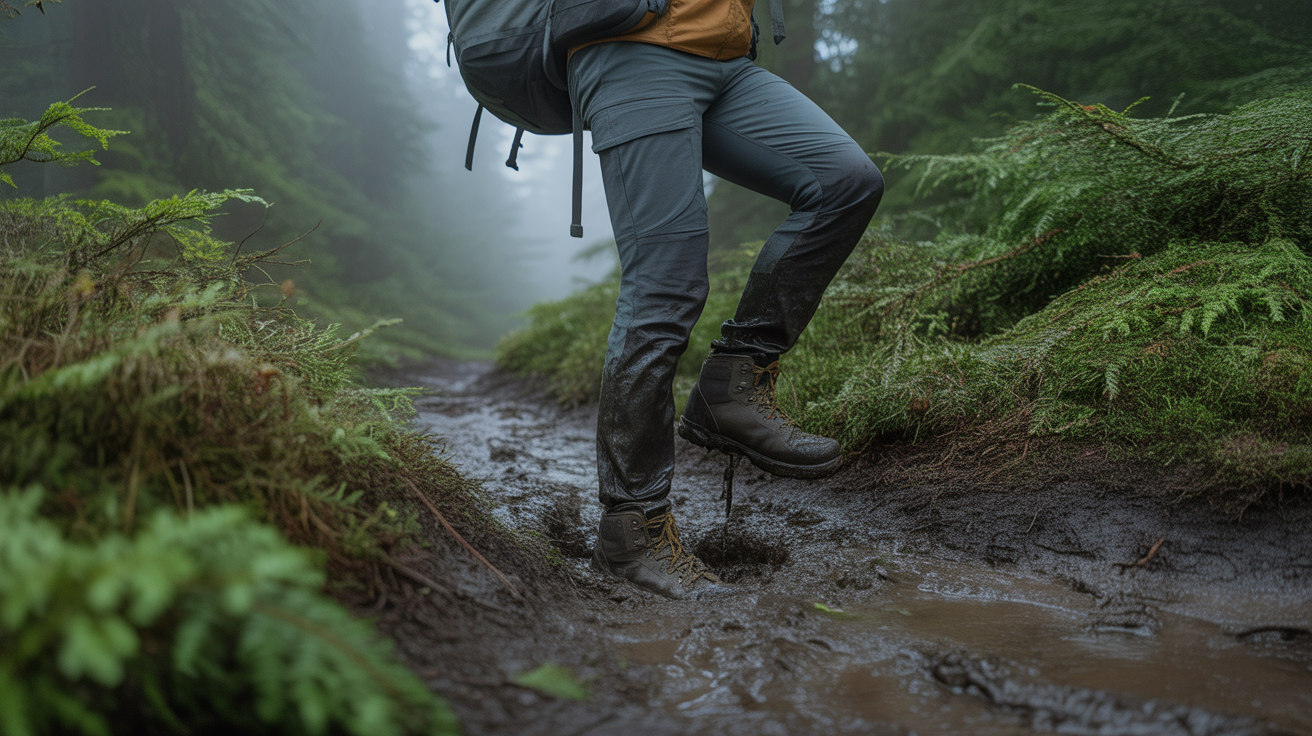
When you must walk through deep mud, lift your foot straight up rather than dragging it forward. Dragging increases lateral stress on the sole bond and scoops mud into the collar. Straight lifts keep the mud interaction cleaner and reduce the suction that can pull a boot right off your foot.
Use trekking poles for stability in slippery conditions. Poles give you two extra points of contact, which reduces the chance of a hard fall that could twist a boot sole or damage the ankle collar. Plant your poles slightly ahead and to the side when crossing muddy stretches.
According to Leave No Trace, hiking through the center of a muddy trail rather than around it protects surrounding vegetation and keeps the trail corridor from widening. It is the ecologically responsible choice, and it also tends to keep your boots cleaner than the churned-up edges.
How to Clean Boots After a Muddy Hike
This is where most hikers fall short. Tossing muddy boots in the garage and forgetting them is the fastest route to premature failure. Follow this process after every muddy outing.
Step one: Let mud dry partially if it is very thick. Wet mud smears and pushes deeper into seams. Wait thirty to sixty minutes until the surface mud is just beginning to harden, then knock boots together sole-to-sole to break off the bulk.
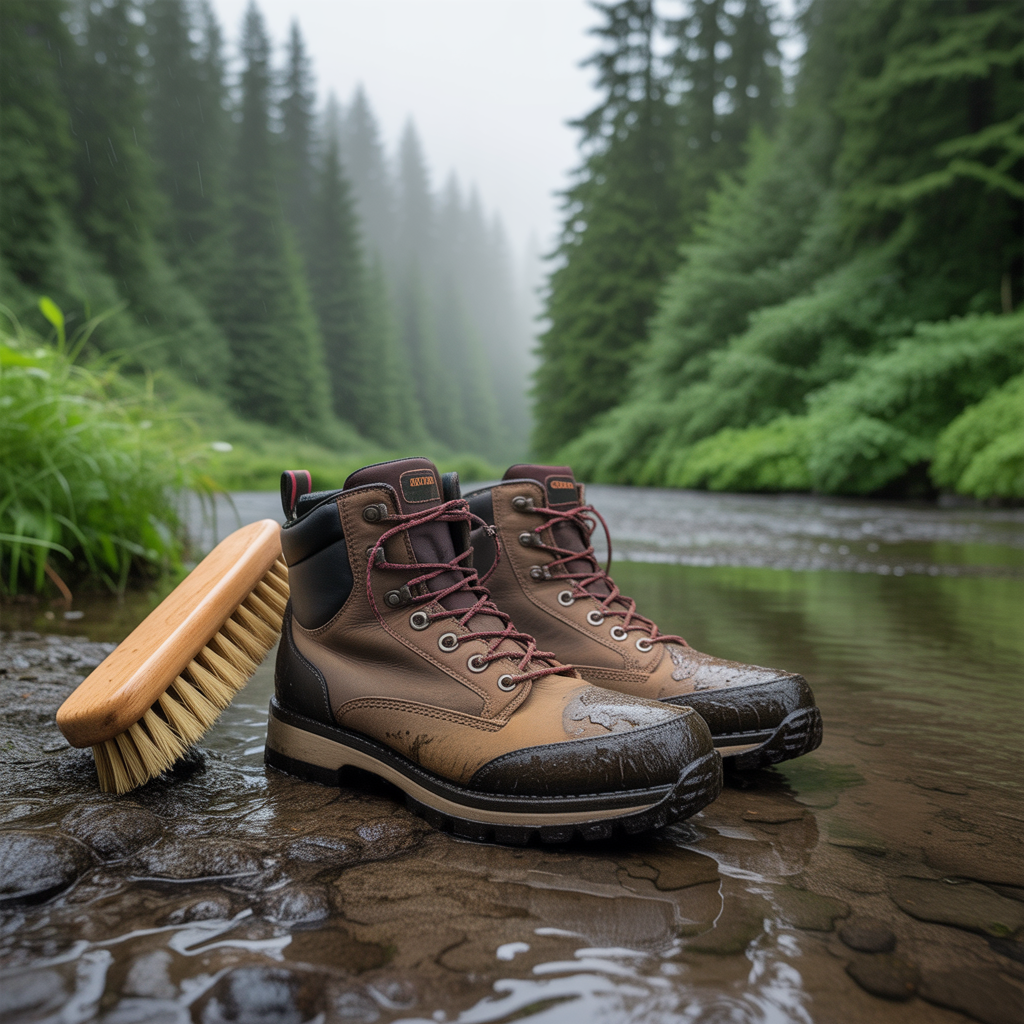
Step two: Use a stiff-bristled brush and cool water (never hot) to scrub the entire boot, including the welt, the sole lugs, and around the lace eyelets. Work from the top of the boot down. Hot water can loosen adhesives and damage waterproof membranes.
Step three: Rinse thoroughly. Soap residue attracts grime and degrades DWR (durable water repellent) coatings, so if you use any cleaning solution, rinse twice.
Step four: Stuff boots loosely with newspaper or a dry towel to help them hold their shape and absorb interior moisture. Do not use a heat source. Air dry at room temperature away from direct sunlight.
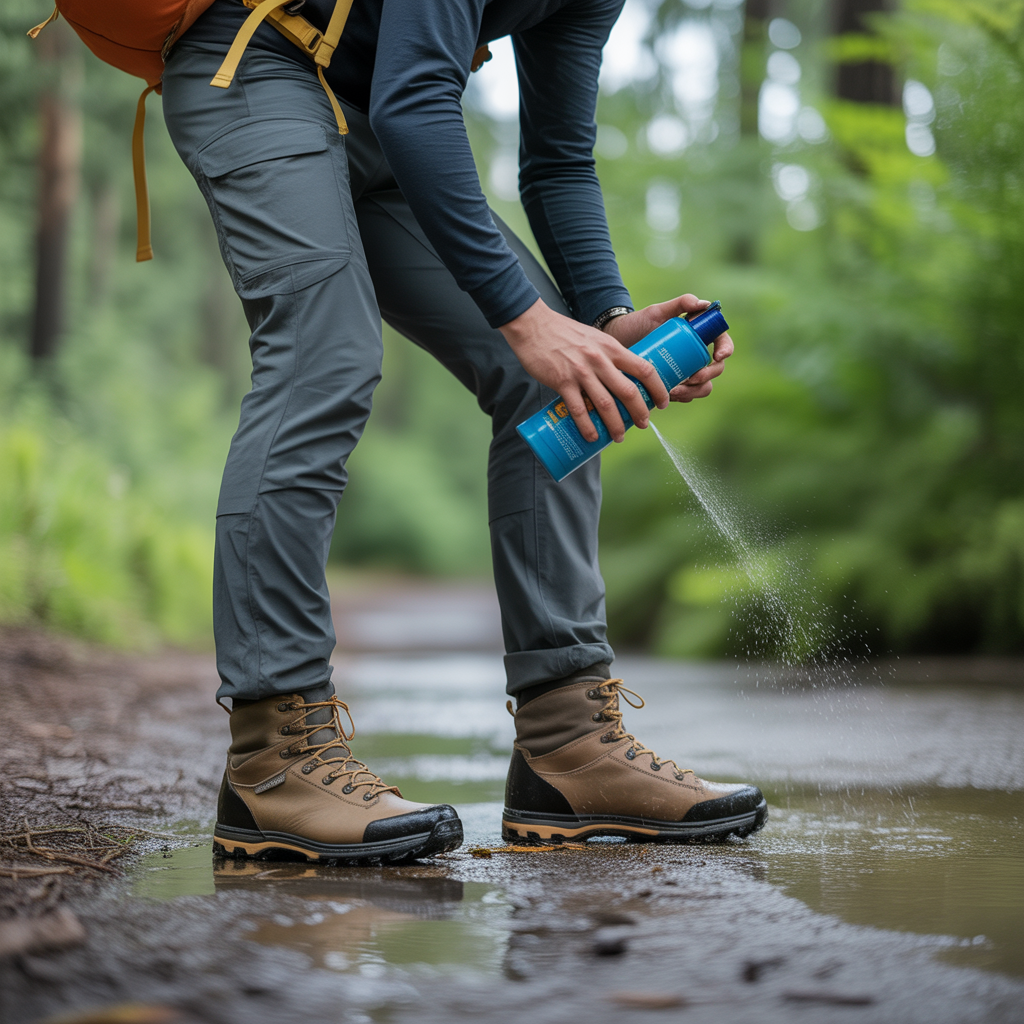
Step five: Once fully dry, reapply a waterproofing treatment appropriate to your boot material. Wax-based products work well on leather. Spray-on DWR treatments suit synthetic and fabric uppers. You can find detailed care guidance for specific boot materials at REI’s footwear care guide.
Step six: Store boots in a cool, dry place with moderate airflow. Avoid plastic bags or sealed containers, which trap moisture and encourage mildew.
Frequently Asked Questions
Should you waterproof your hiking boots before a muddy hike?
Yes, and you should do it well before the hike, not the morning of. Waterproofing treatments need time to cure into the boot material to be effective. Applying a DWR spray or wax-based treatment at least 24 hours before hitting a muddy trail gives the coating time to bond properly. Fresh waterproofing reduces how much mud and water the outer material absorbs, which means less weight on your feet, less structural stress on the boot, and easier cleaning afterward. Check your boot material before choosing a product. Leather boots respond best to wax or oil-based conditioners, while synthetic and fabric uppers work better with spray-on DWR treatments. Reapply after every five to ten muddy hikes, or whenever water stops beading on the surface of the boot. Understanding how to hike in mud without destroying your boots starts with prevention, and waterproofing is the first line of defense.
Can you put muddy hiking boots in the washing machine?
No, and this is one of the most common mistakes hikers make. Washing machines use heat, agitation, and detergents that are too harsh for boot construction. The tumbling action stresses the sole bond, the heat degrades adhesives and waterproof membranes, and standard detergents strip DWR coatings. Some fabric trail shoes can tolerate a gentle cold cycle without insoles, but structured hiking boots should never go in. Hand washing with a stiff brush, cool water, and at most a small amount of mild soap is the correct approach every time. The extra ten minutes it takes to hand clean your boots will add months or years to their lifespan. If you want to know how to hike in mud without destroying your boots, treating the cleaning process as seriously as the hike itself is non-negotiable. Remove insoles before cleaning and wash them separately by hand.
What type of socks are best for hiking in muddy conditions?
Wool or wool-blend socks are the best choice for muddy, wet conditions by a significant margin. Unlike cotton, which becomes heavy, cold, and abrasive when wet, wool retains warmth and manages moisture even when damp. A quality pair of merino wool hiking socks is designed with features hikers prioritize for all-day comfort in wet conditions. Look for socks with reinforced heel and toe zones and a snug fit that does not bunch or slide inside the boot. Thickness matters too. A medium-weight sock provides cushioning without creating a pressure fit that restricts circulation when the foot swells on a long hike. Always carry a spare pair in a waterproof bag. Changing into dry socks at the halfway point of a muddy hike is one of the most effective comfort strategies available to any hiker.
How do you dry hiking boots quickly after a muddy hike?
The safest and most effective method is air drying at room temperature. Remove the insoles and laces immediately after cleaning so air can circulate through the entire boot interior. Stuff the boot loosely with crumpled newspaper, which absorbs moisture efficiently, and replace the newspaper every few hours if boots are very wet. Do not place boots near a radiator, campfire, heat vent, or in direct sunlight. High heat degrades the adhesive that bonds the sole to the upper and can cause leather to crack and stiffen permanently. If you need to speed up drying without heat, a small battery-powered boot dryer that uses forced air at low temperature is a safe option. Most boots dry fully within 12 to 24 hours at room temperature with good airflow. Knowing how to hike in mud without destroying your boots includes drying them correctly every single time, not just when they look especially wet.
The Bottom Line
Knowing how to hike in mud without destroying your boots is ultimately about building three habits: preparing your footwear before you go out, moving thoughtfully on the trail, and cleaning properly when you get home. None of these steps require expensive equipment or a lot of time. They just require consistency.
If you hike muddy trails regularly, prioritize adding mud gaiters to your kit and switch to wool-blend socks for wet-weather days. These two changes alone will extend the life of your boots and make the trail significantly more comfortable. If you are on the trail less frequently but still encounter mud seasonally, focus your energy on the post-hike cleaning routine. That is where most boot damage actually happens, through neglect after the fact rather than anything that occurs on the trail itself.
For hikers who keep finding themselves on wet, unpredictable terrain, it is also worth reassessing whether your current footwear matches the conditions you are actually hiking in. The right boot for a dry summer trail is not always the right boot for a Pacific Northwest spring outing, and making that match correctly is part of how to hike in mud without destroying your boots season after season. Invest a little attention before and after each hike, and your boots will reward you with miles of reliable performance.
Disclosure: As an Amazon Associate, we earn from qualifying purchases. This does not affect our editorial recommendations.