
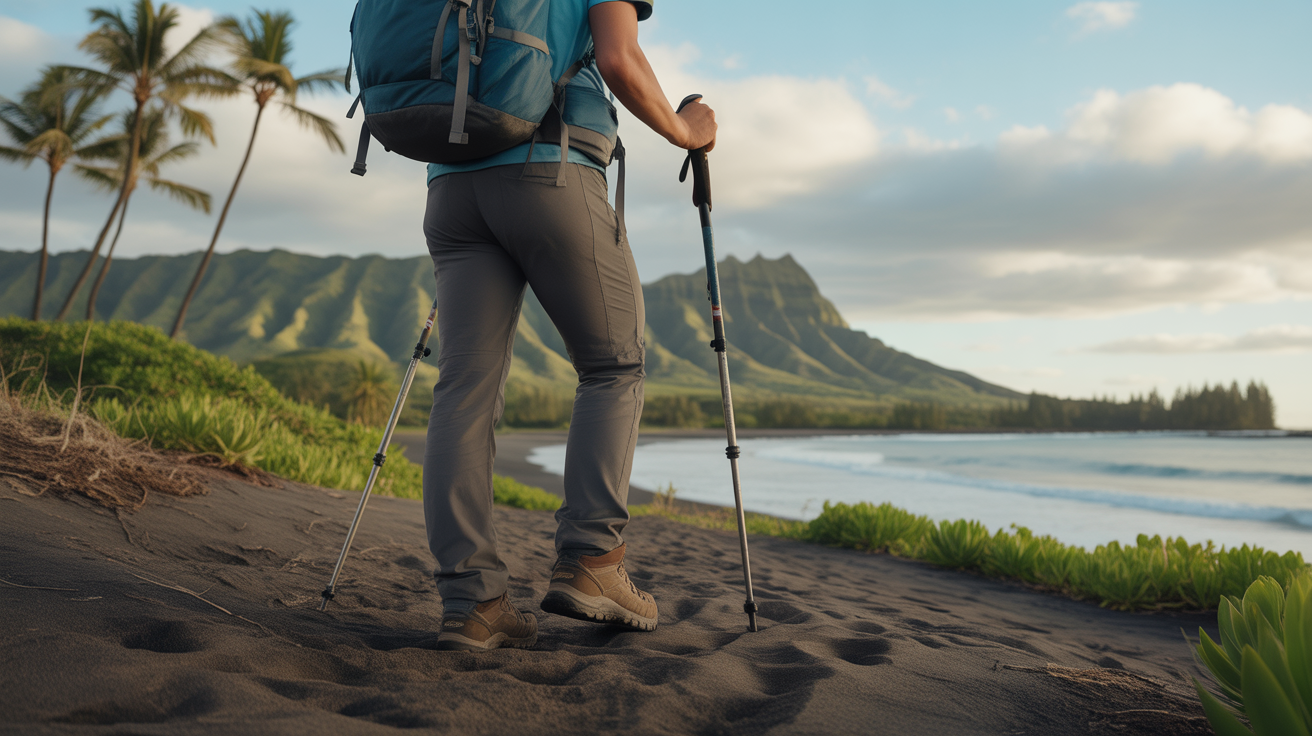
If you are asking how to choose hiking poles for bad knees, you are probably at a point where the trail has started to feel like a negotiation with your joints rather than a walk in the woods. That burning ache on the descent, the way your knees protest on rocky terrain, the quiet dread before a steep switchback (a zigzagging trail section that climbs or descends gradually) — it is real, and it is one of the most common reasons hikers either gear up smarter or stop hiking altogether. The good news is that poles are not just for mountaineers and thru-hikers. They are one of the most practical tools available to anyone who wants to stay on the trail longer and feel better while doing it.
This guide is built specifically for hikers dealing with chronic knee discomfort who want honest, practical information before investing in a pair. We will cover how poles actually function biomechanically, what features matter most for knee support, how to size and adjust them correctly, and what technique mistakes cancel out all the benefits. If you have been eyeing a set of hiking poles for bad knees but are not sure where to start, this is exactly where you need to begin.
What to Look For
Do Hiking Poles Actually Help Bad Knees
The short answer is yes — when used correctly. Multiple studies have found that trekking poles reduce the load your knee joints bear during downhill walking, which is precisely when most knee discomfort flares up. The poles essentially transfer some of the load from your lower body to your arms and shoulders, distributing the work more evenly across your whole body. This does not mean poles are a treatment or cure for any condition — they are a mechanical tool for load distribution, not a medical device. What they do is give your knees a fighting chance by reducing the repetitive pounding that accumulates over miles of trail. For hikers with arthritis, prior surgeries, or general chronic knee discomfort, that reduction in impact can be the difference between a two-hour hike and a twenty-minute hobble back to the car.
Pole Types and Why It Matters for Knee Support
Not all hiking poles are built the same way, and the type you choose has real consequences for how much knee relief you actually get. The two main categories are fixed-length poles and adjustable poles. Fixed poles are lighter and more rigid, but adjustable poles allow you to change the length depending on whether you are climbing uphill or descending — and that adjustment is critical for knee protection. When you shorten the poles slightly on uphills and lengthen them on downhills, you maintain proper arm angle and maximize the load transfer away from your knees. Collapsible or folding poles are compact and travel-friendly but can feel less stable under heavy downhill pressure. For someone prioritizing knee comfort over ultralight performance, a standard twist-lock or lever-lock adjustable pole tends to offer the best combination of stability and customization.
Key Features to Look For When Choosing Poles for Bad Knees
When thinking about how to choose hiking poles for bad knees, several specific features rise to the top. First, look for an anti-shock or shock-absorbing mechanism. These are built-in spring systems inside the pole shaft that absorb impact vibration before it reaches your wrist and travels up through your arm (the kinetic chain refers to how force moves through connected body parts). They add a small amount of weight but make a noticeable difference on hard or rocky surfaces. Second, pay close attention to the grip material. Cork grips absorb sweat and mold slightly to your hand shape over time, reducing the grip fatigue that leads to poor pole technique. Foam grips are softer and gentler on sensitive palms. Rubber grips are durable but can cause more friction in warm conditions. For sweaty hands on longer hikes, you may want to explore trekking pole grips for sweaty hands as a separate upgrade. Third, consider pole tip design. Carbide tips (extremely hard metal points) grip rock and hard-packed dirt well, while rubber tip covers are gentler on pavement and wooden bridges. Interchangeable trekking pole tips and baskets let you adapt to different surfaces without buying a new pair.
How to Size and Adjust Your Poles Correctly
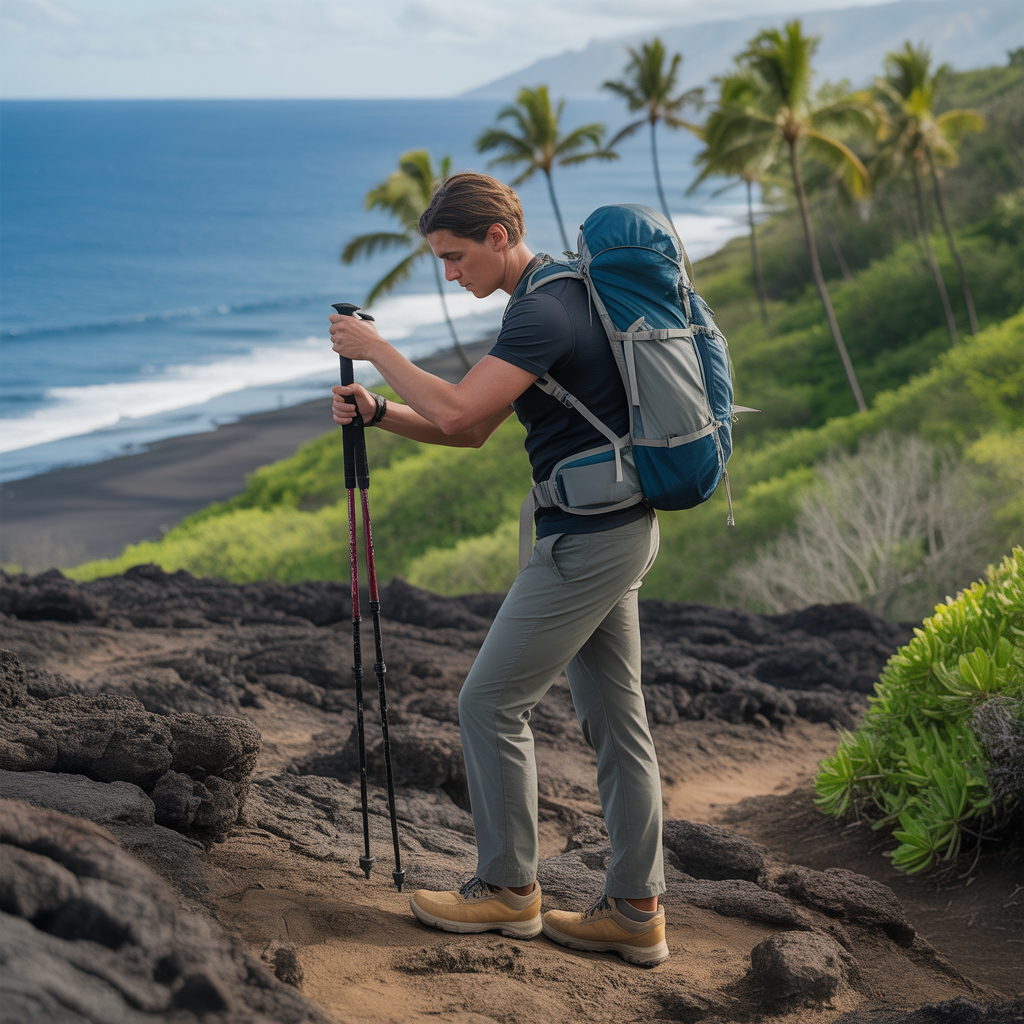
Improper pole length is the number one reason hikers feel no benefit — or actually feel worse — after buying poles. The standard starting rule is to hold the pole with the tip on the ground and adjust the length until your elbow is at a 90-degree angle. This works well on flat ground, but you need to adapt when the terrain changes. Going uphill, shorten your poles by about 5 to 10 centimeters so your arms can push effectively without overextending. Going downhill — the most important moment for your knees — lengthen your poles by the same amount so they can make ground contact earlier in your stride and begin absorbing force before your knee takes the full impact. This one adjustment makes a more meaningful difference to knee comfort than almost any pole feature. Practice it on a short section of trail before committing to a long descent.
Pole Technique That Actually Protects Your Knees
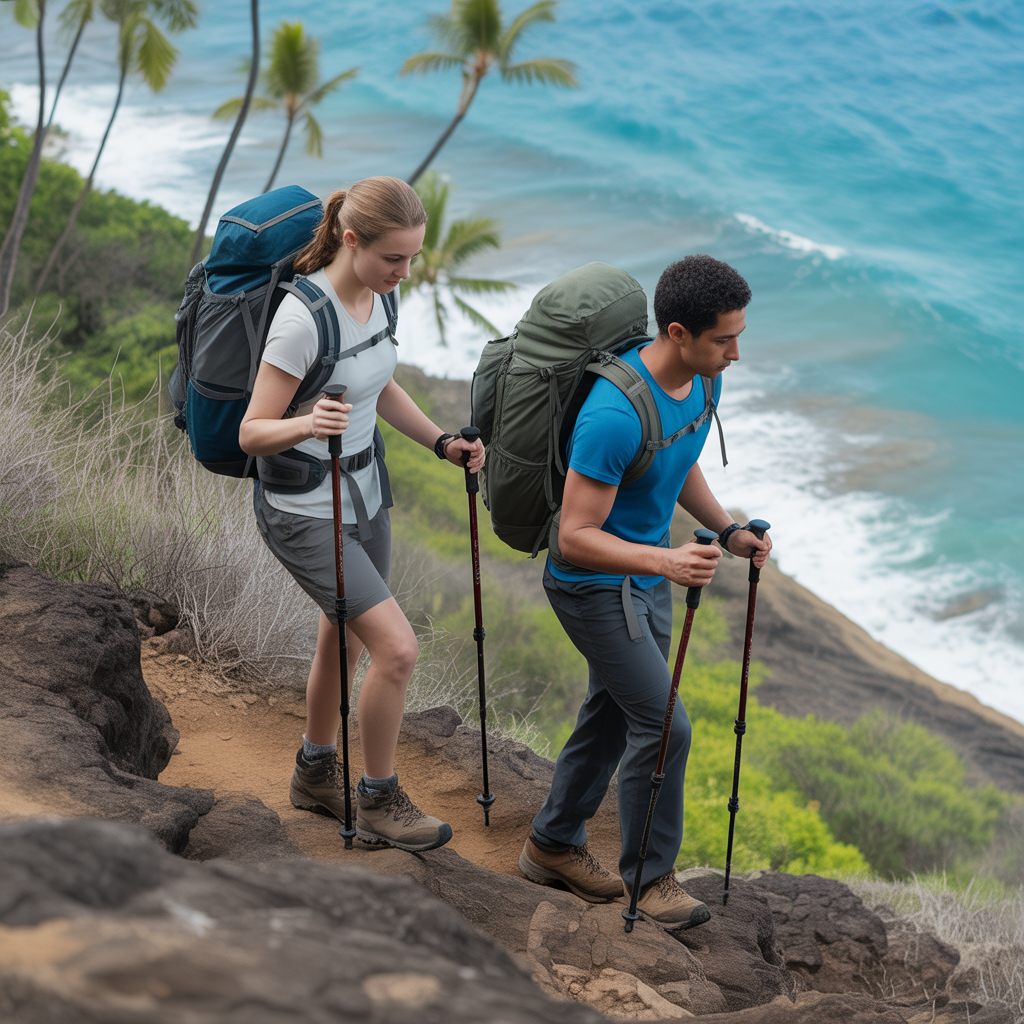
Buying the right poles and sizing them correctly still will not help if your technique is off. The most important principle is to plant the pole on the downhill side before your foot lands, not after. This is counterintuitive for new pole users who tend to swing their arms naturally and let the poles trail behind. When you plant ahead of your step, the pole absorbs a portion of the impact load before your knee joint takes it. Use the wrist strap correctly — thread your hand up through the bottom of the loop, then grip the handle with the strap sitting across the back of your wrist. This allows you to push down through the strap without gripping tightly, which reduces hand fatigue and keeps your technique relaxed. Avoid leaning heavily into the poles on flat terrain — you want them active on climbs and descents but relatively passive on level ground so your legs maintain strength.
Other Gear That Works Alongside Poles for Knee Comfort
Poles are most effective when paired with other smart choices. Footwear with genuine cushioning and support plays a significant role — a well-cushioned sole reduces ground-impact transmission before it ever reaches your knee. Quality hiking shoe insoles are often overlooked but can meaningfully improve the shock absorption your footwear delivers, particularly if your boots or trail shoes are past their prime. Hiking compression socks support circulation in the lower leg and can reduce the heavy, fatigued feeling that tends to worsen knee discomfort on longer days. Keeping your pack weight low also matters — every extra pound in a hiking daypack adds compressive force to your knees with every step, so pack only what you genuinely need. According to REI’s trekking pole guide, reducing pack weight and using poles together can substantially reduce cumulative joint load over a full day of hiking. For general best practices on trail stewardship and physical preparation, the National Park Service hiking basics resource is a reliable starting point for building sustainable trail habits.
Frequently Asked Questions
Are two hiking poles better than one for bad knees?
For knee pain specifically, two poles are almost always better than one. When you use a single pole, you are only redistributing load to one side of your body, which can create an imbalance and actually increase strain on the unsupported leg. Two poles allow for bilateral load distribution — meaning both arms share the work on every step, and your knees on both sides get consistent relief during descents. This matters most on long switchbacks or technical downhill terrain where your knees take sustained repeated impact. Using a single pole is generally fine for balance and light trail use, but if joint comfort is your primary goal, commit to a matched pair and use both consistently. The technique adjustment of planting both poles slightly ahead of your stride is also easier to learn and maintain when you have two poles working in sync.
What length should hiking poles be for downhill knee protection?
For downhill terrain, your poles should be lengthened by approximately 5 to 10 centimeters beyond your flat-ground setting. The standard flat-ground rule is to adjust the pole so your elbow sits at a 90-degree angle when the tip touches the ground beside you. When you add length for descents, the pole tip reaches the ground earlier in your stride — ahead of your foot placement — which is exactly what you need for knee protection. Planting the pole before your foot lands allows the pole to absorb a portion of the impact load before it transfers to your knee. If your poles are too short on a downhill, you will end up planting behind your foot, which provides balance but eliminates the joint-protective benefit entirely. Always re-adjust when you return to flat ground or begin climbing.
Should I use shock-absorbing poles if I have knee problems?
Shock-absorbing poles, which use a built-in spring mechanism in the shaft to dampen vibration, are generally a good investment for hikers with chronic knee issues. They reduce the jarring sensation that travels up the pole on hard surfaces like rock slabs and compacted gravel paths (firmly packed small stones or crushed rock). While the spring does not dramatically change the load your knee absorbs — the planting technique and pole length have a bigger influence on that — many users report finding them more comfortable on longer hiking days. The trade-off is a small increase in weight and slightly more complex maintenance. If you primarily hike on soft dirt trails, the benefit is less pronounced. On rocky terrain or pavement connectors, the difference becomes more apparent. Most hikers with knee sensitivity find them worth the minor weight penalty.
Can hiking poles replace knee braces on the trail?
Hiking poles and knee braces serve different functions and work best together rather than as replacements for each other. A knee brace provides direct contact support at the joint — it may limit range of motion, provide compression, or offer reinforcement around the kneecap or surrounding area depending on the design. Poles work upstream of the joint by redistributing load through the upper body before impact reaches the knee. For hikers with significant instability, prior surgery, or a diagnosed condition, a brace addresses the structural vulnerability that poles cannot. For general chronic knee discomfort, many hikers find poles alone sufficient on moderate terrain. If you are managing a specific medical condition, the decision about whether to use a brace should involve your physician or physical therapist — not a gear guide. Poles are a practical comfort and performance tool, not a substitute for medical support.
The Bottom Line
Knowing how to choose hiking poles for bad knees is genuinely one of the most practical things you can do to extend your time on the trail. The core principles are straightforward: choose adjustable poles with anti-shock capability, size them correctly for flat ground and then re-adjust for uphills and downhills, use proper planting technique on descents, and pair them with smart footwear and a manageable pack weight. None of this requires a significant investment or a steep learning curve — a few minutes of practice on your first outing is usually enough to feel the difference.
If you are just getting started and unsure which poles to look at first, browsing a curated list of hiking poles designed for bad knees can help you narrow down options that balance weight, adjustability, and grip comfort for your specific needs. For hikers who spend a lot of time on maintained paths or walking sticks feel more natural, exploring walking sticks for bad knees is also worth considering. Whatever direction you go, the most important step is getting out there — with the right tools, your knees might surprise you.
Disclosure: As an Amazon Associate, we earn from qualifying purchases. This does not affect our editorial recommendations.