
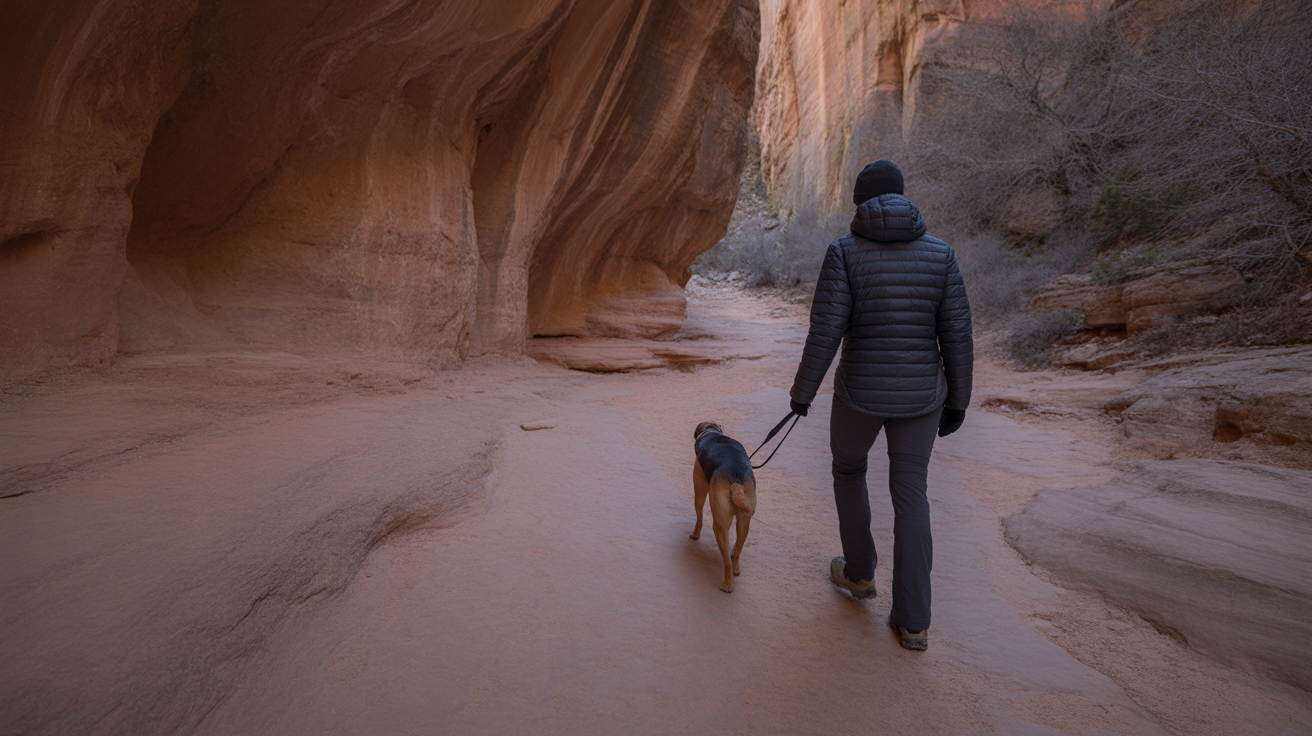
Knowing how to hike with a dog in cold weather is one of those things that sounds simple until you are out on the trail and your dog is shivering, lifting their paws off the frozen ground, or soaking wet from a creek crossing. Cold-weather hiking with a dog is genuinely enjoyable, but it requires a little more thought than a warm summer outing. The good news is that with the right preparation, your dog can be every bit as comfortable on a brisk November trail as they are on a July afternoon.
This guide covers everything you need to know before heading out in shoulder season (the transitional periods of late fall and early spring when temperatures fluctuate) or full winter conditions: how to read your dog for signs of cold stress, which gear actually helps versus what is overkill, how to protect their paws, how to manage wet and wind, and how to make smart decisions about when to turn around. Whether your dog is a cold-weather breed who loves the snow or a short-coated pup who chills fast, the advice here will help you plan a hike that is safe and fun for both of you.
What to Look For
Understanding How Dogs Handle Cold
Not all dogs feel cold the same way. Breed, coat type, body size, age, and health all play a role. A Siberian Husky can thrive in freezing temperatures that would leave a Greyhound shaking within minutes. As a general rule, small dogs, short-haired dogs, puppies, seniors, and dogs with health conditions feel cold faster and need more protection. Large, double-coated, or northern breeds often regulate temperature well in cold conditions but can still overheat if you layer them too heavily. The goal when you learn how to hike with a dog in cold weather is not to keep your dog maximally warm, but to keep them comfortably warm without causing them to overheat during active exertion.
Watch for these signals that your dog is too cold: shivering, slowing down or stopping, tucking their tail, picking up their paws repeatedly, seeking shelter behind rocks or trees, or whining without an obvious cause. If you see two or more of these signs at once, it is time to add a layer, get moving faster, or head back. Hypothermia in dogs is a real risk in wet and windy conditions even when the temperature is only in the 40s Fahrenheit.
Layering Your Dog Correctly for Cold Trails
Dog jackets and sweaters exist on a spectrum from decorative to genuinely functional. For trail use, you want something that covers the torso and belly (where most heat is lost), stays secure during movement, and dries quickly if it gets wet. A dog rain jacket is one of the most versatile pieces you can bring on a shoulder-season hike because it blocks wind and repels rain while still allowing movement. In dry cold, an insulated dog vest or fleece wrap works well for breeds that need the extra warmth.
Avoid layering so heavily that your dog is panting hard in the first mile. Dogs release heat primarily through panting and through their paw pads. If they cannot regulate temperature during a climb, they can overheat even in cold air. A removable layer is the smarter choice than a single heavy piece you cannot take off. As a concrete example, on a 35 degree Fahrenheit morning with light wind, a short-haired dog like a Beagle or Whippet will likely benefit from an insulated vest, while a thick-coated breed like a Bernese Mountain Dog or Malamute will typically do fine without any added layer.
Paw Protection on Cold and Icy Terrain
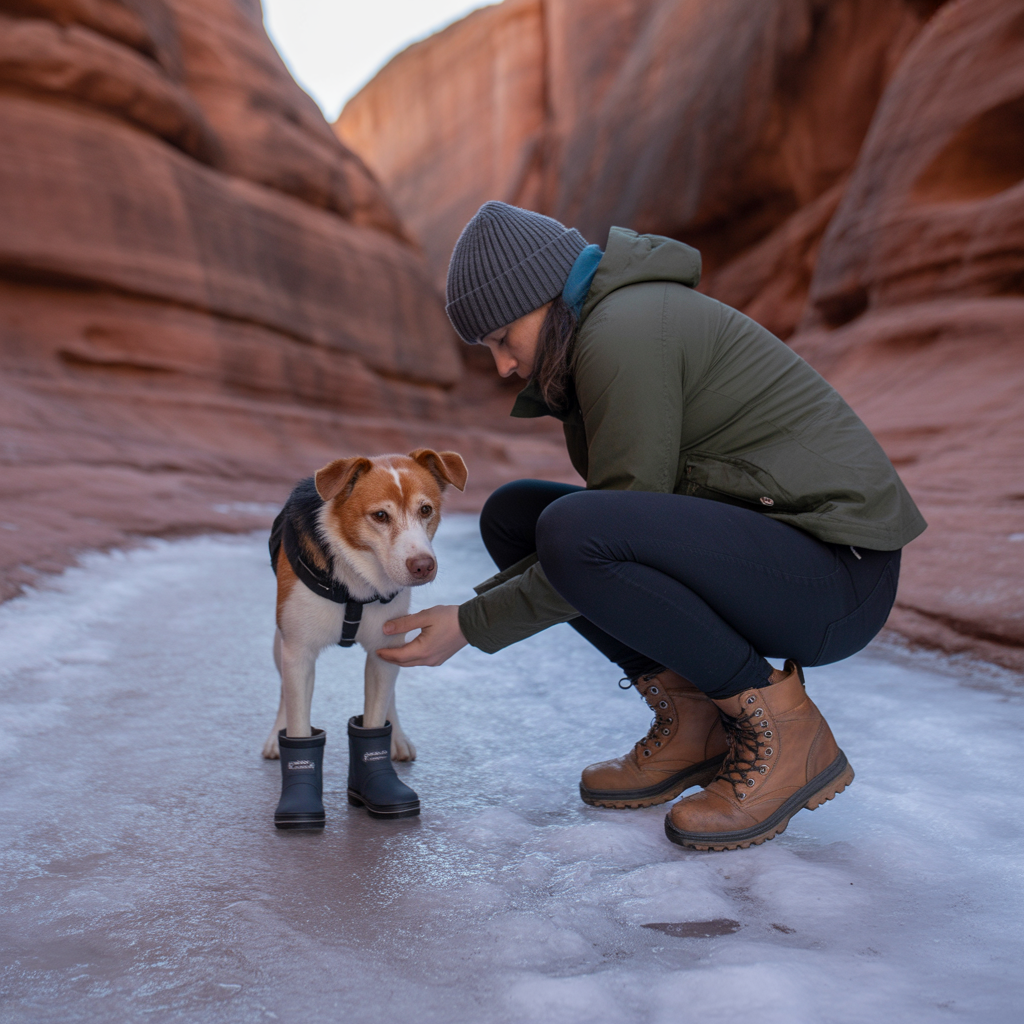
Paw care is one of the most overlooked parts of cold-weather dog hiking. Cold ground pulls heat from the paws quickly, and ice, road salt, and frozen gravel can all cause cracking, cuts, and irritation. The two most practical solutions are dog hiking boots and dog paw balm.
Boots offer the most protection but require a short acclimation period. Introduce them at home before the hike so your dog gets comfortable walking in them. Paw balm (applied before and after the hike) conditions the pads, reduces cracking, and creates a mild barrier against salt and ice. Even if your dog tolerates cold well, paw balm is a good habit on any trail where the ground is frozen, salted, or coated in ice melt chemicals.
If your dog repeatedly stops to lick their paws on the trail, that is a sign the pads are irritated or cold. Check between the toes for ice balls, which can form in dogs with longer fur between the pads. A quick trim of that fur before the hike prevents a lot of mid-trail discomfort.
Hydration and Nutrition in the Cold
Dogs still need plenty of water in cold weather, even though they may not seem as thirsty as they would in summer heat. Cold air is dry, and exercise still causes fluid loss. Carry enough water for both of you, and bring a collapsible dog bowl so your dog can drink easily at rest stops.
A dog water bottle designed with an attached trough makes offering water on the trail quick and easy without hunting for a flat surface. In very cold conditions, insulated bottles help keep the water from getting too cold to drink comfortably.
For longer hikes, bring extra snacks for your dog. Cold weather increases caloric burn because the body works harder to maintain core temperature. A small high-protein treat at rest stops helps sustain energy. This is especially important for smaller dogs who lose heat faster and deplete energy reserves more quickly.
Leash and Harness Choices for Cold-Weather Trails
A well-fitted dog hiking harness is more comfortable than a collar on cold trails because it distributes any leash tension across the chest rather than the neck. This matters more in cold weather because dogs sometimes pull harder when they are energetic in cool air, and repeated collar pressure in the cold can cause discomfort. A harness also gives you a handle to assist your dog over icy rocks or slippery creek crossings.
For the leash itself, a standard 4-6 foot leash works well in most trail conditions. If you are hiking on a busy trail or near cliff edges in icy conditions, keep your dog closer rather than on a long line. Check that any plastic hardware on the leash or harness has not become brittle in the cold before you head out. Metal clips hold up better in freezing temperatures than plastic quick-release buckles on some budget harnesses.
Safety Considerations Specific to Cold-Weather Hikes
According to the National Park Service, pet owners are responsible for their animal’s safety and the safety of other visitors on the trail. This becomes especially important in cold weather when trail conditions change fast. Ice forms on shaded sections even when sunny spots feel fine. Creek crossings that were easy in summer can be dangerously cold and fast-moving in winter. Know your dog’s swim ability before you get to a crossing, and do not assume they will manage it without your help.
Always tell someone your planned route and expected return time before a cold-weather hike with your dog. Bring a dog first aid kit that includes a space blanket sized for a dog, bandaging materials, and emergency contact numbers for the nearest veterinary clinic. How to hike with a dog in cold weather safely always comes back to preparation: the more you plan before the trailhead, the more you can enjoy the hike itself.
Frequently Asked Questions
At what temperature is it too cold to hike with a dog?
There is no single universal cutoff temperature because it depends heavily on your dog’s breed, size, coat, age, and overall health. As a practical guideline, most healthy adult dogs with medium to thick coats handle temperatures down to around 32 degrees Fahrenheit (0 Celsius) well with appropriate gear. For short-haired breeds, small dogs, puppies, and seniors, temperatures below 45 degrees Fahrenheit can become uncomfortable without added insulation. Wind chill (the combined effect of air temperature and wind speed, which makes the air feel colder than the actual temperature) and wet conditions make any temperature feel colder, so factor those in by checking weather forecasts that include wind speed and precipitation before your hike. Below 20 degrees Fahrenheit, most dogs need significant protection and shorter outings regardless of breed. The best approach is to watch your individual dog closely rather than relying only on a thermometer. Shivering, hesitation, paw lifting, and reluctance to move are all signs that the conditions have crossed a line for that specific dog on that specific day. When in doubt, keep the hike shorter and stay closer to the trailhead so you can turn back quickly if needed.
Do dogs need boots for hiking in snow and ice?
Dog boots are not required for every cold-weather hike, but they make a real difference in icy and salty conditions. The most important factor is what is on the ground, not the air temperature. Packed snow on a forested trail is generally fine for most dogs without boots. Ice, road salt or chemical ice melt, sharp frozen gravel, and long stretches of frozen ground are where boots earn their value. They insulate the paw pads from extreme cold, prevent ice balls from forming between the toes, and protect against chemical irritants. The challenge is getting your dog comfortable wearing them, which takes a short break-in period at home before the hike. If your dog refuses boots after patient introduction, quality dog paw balm applied before and after the hike is a good alternative that conditions the pads and provides a mild protective barrier. Check between your dog’s toes during rest stops and remove any ice that has accumulated in the fur.
How do I know if my dog is too cold on a hike?
Your dog will communicate discomfort through body language before the situation becomes dangerous, so it pays to know the signs. The earliest signal is often behavioral: your dog slows down, stops frequently, or seems reluctant to keep moving. Physical signs include shivering, a tucked tail, hunching the back, seeking shelter behind rocks or your legs, and repeatedly lifting one or more paws off the ground. Repeated paw licking mid-hike usually means the pads are cold, irritated, or have ice accumulating between the toes. If you notice any of these signs, stop and assess. Add a layer if you brought one, check the paws, get moving again to generate body heat, or decide to turn back early. Knowing how to hike with a dog in cold weather means reading your dog continuously throughout the outing, not just checking on them at the end. Cold stress can escalate quickly in wet or windy conditions, so early intervention is always the safer call.
Should I bring extra food for my dog on a cold-weather hike?
Yes, bringing extra food or high-calorie snacks for your dog on cold-weather hikes is a smart habit. Dogs burn more calories in cold conditions because their bodies work harder to maintain core body temperature. This extra metabolic effort can cause energy dips on longer hikes, especially in smaller dogs who have less body mass to draw from. A small high-protein snack at each rest stop helps sustain your dog’s energy and supports their ability to stay warm. This is separate from their regular daily food intake and does not need to be anything elaborate. Many dog owners bring pieces of their dog’s regular kibble, training treats, or small portions of high-protein jerky-style dog snacks. Just make sure whatever you bring does not freeze solid in your pack, which can happen faster than you expect on a cold day. Keep treats in an inside pocket close to your body to maintain their temperature.
The Bottom Line
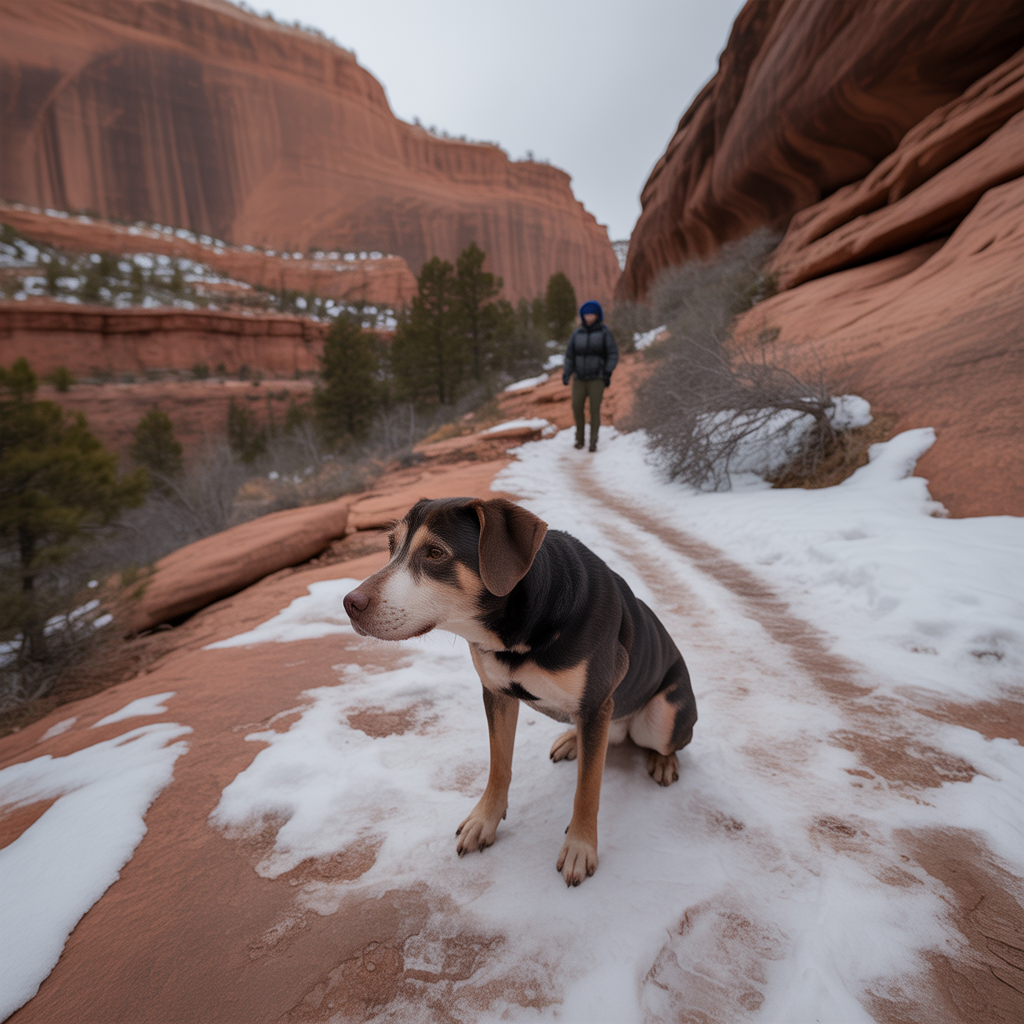
Learning how to hike with a dog in cold weather is mostly about observation and preparation. You do not need an elaborate setup to have a great cold-weather outing with your dog. You need to know your individual dog’s cold tolerance, bring the right gear for the conditions you will actually face, protect their paws, keep them hydrated, and watch their body language throughout the hike.
For short-haired or small dogs on shoulder-season hikes, a well-fitted dog jacket and paw balm go a long way. For icy or snowy terrain, dog boots add meaningful protection. A collapsible bowl and enough water for both of you are non-negotiable on any hike regardless of season. And a dog first aid kit belongs in your pack any time you head into the backcountry with your pet.
Start with shorter outings in mild cold before committing to a full winter trail. Let your dog acclimate gradually to cold-weather hiking just as you would with any new activity. Pay attention, stay flexible about turning back, and remember that a shorter hike that ends well is always better than pushing too far. With a bit of planning, cold-weather hiking with your dog can become one of the most rewarding ways to spend time outdoors together.
Disclosure: As an Amazon Associate, we earn from qualifying purchases. This does not affect our editorial recommendations.