
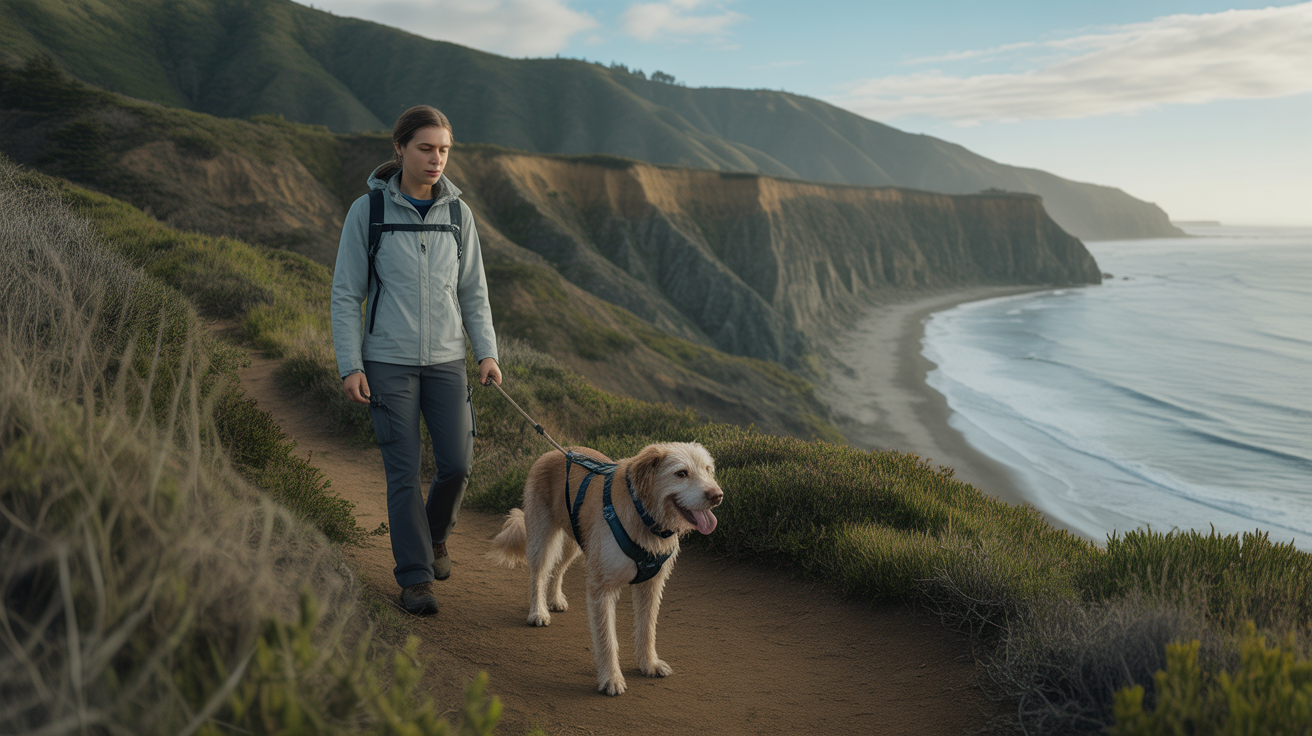
Knowing how to choose a dog harness for hiking can make the difference between a trail day you both love and one that leaves you frustrated, tangled, or chasing your dog through the brush. If your dog pulls like a freight train, slips out of every harness you have tried, or just seems uncomfortable no matter what you put on them, you are not alone – and the problem is almost always the harness type, not the dog.
The good news is that the right harness exists for every dog personality and body shape. Whether you are dealing with a chronic puller, a Houdini-level escape artist, a brachycephalic breed that needs extra throat clearance, or a long-legged working dog that needs full range of motion, this guide will walk you through every major harness style, explain how each one works, and help you match the right design to your specific dog. You will also want to pair the right harness with a solid dog leash for hiking to get the most out of your trail setup.
What to Look For
Why a Standard Collar or Basic Harness Falls Short on the Trail
A flat collar works fine for a stroll around the block, but the trail introduces a completely different set of variables – uneven terrain, wildlife distractions, other hikers, and your dog hitting the end of the leash at full speed on a rocky descent. Collars concentrate all that force on the neck and throat, which can cause real discomfort over long distances and makes control difficult when your dog is reactive or excited. Basic harnesses are better, but not all harnesses are built for the demands of off-pavement hiking. Understanding why your current setup is failing is the first step in figuring out how to choose a dog harness for hiking that actually works.
Front-Clip Harnesses: Best for Pullers
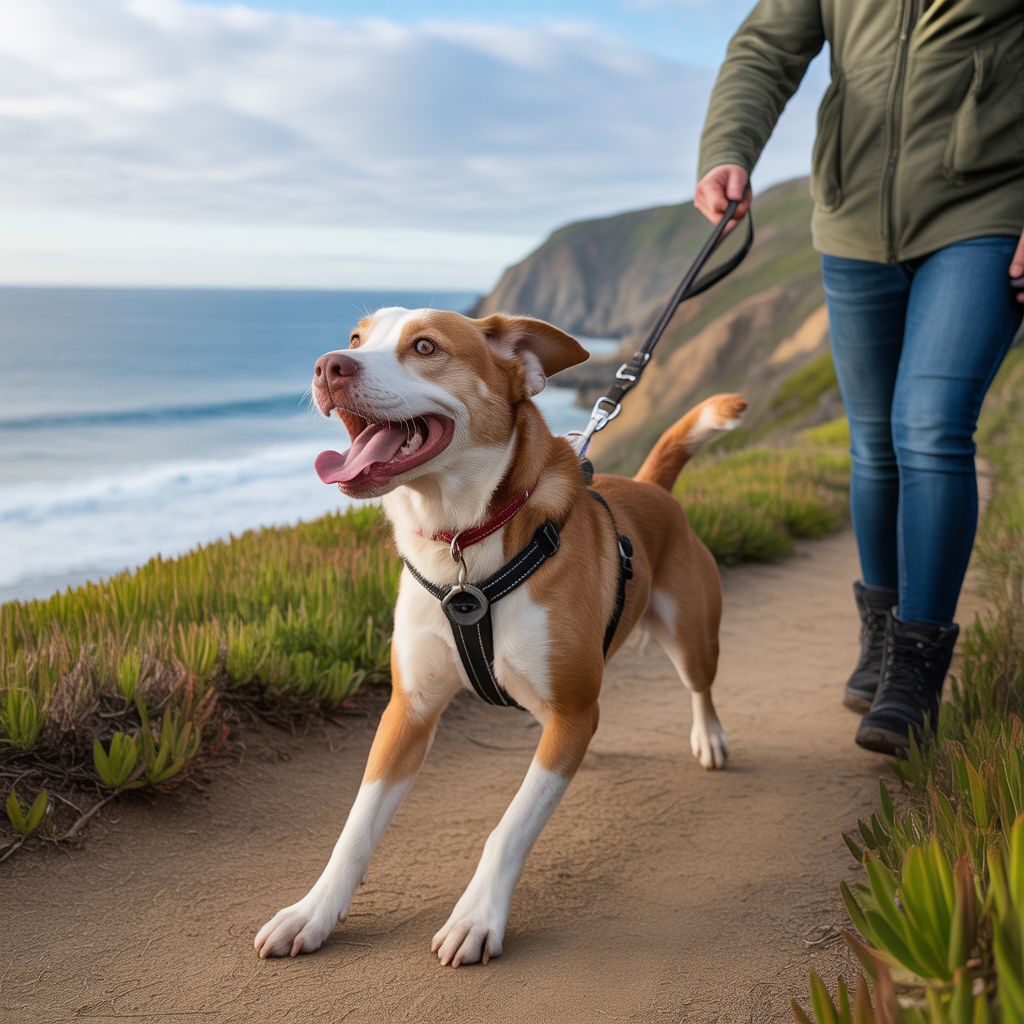
A front-clip harness has the leash attachment ring on the chest, at the sternum. When your dog pulls forward, the leash redirects them back toward you rather than letting them gain leverage by leaning into a back-clip point. This design is highly effective for dogs that strain against the leash constantly on trail and makes leash communication much more natural. The downside is that front-clip harnesses are not ideal for dogs that need to carry their own gear, and they can occasionally cause the leash to wrap around a leg during off-leash scrambling sections. If managing leash tension is your primary challenge, a front-clip style is almost always the right starting point when thinking about how to choose a dog harness for hiking.
Back-Clip Harnesses: Best for Well-Trained Dogs and Technical Terrain
Back-clip harnesses attach the leash at the top of the back, between the shoulder blades. They offer the least interference with your dog’s natural gait and work well on technical terrain where your dog needs to move freely over rocks, roots, and steep grades. They are also the standard base design for dog hiking vests with storage, which add saddle-bag style pockets so your dog can carry their own water, snacks, or waste bags. Back-clip harnesses are best for dogs that are already well-mannered on leash. If your dog surges forward constantly, a back-clip design actually encourages it by giving them something to lean into.
Dual-Clip and Multi-Point Harnesses: The Versatile Middle Ground
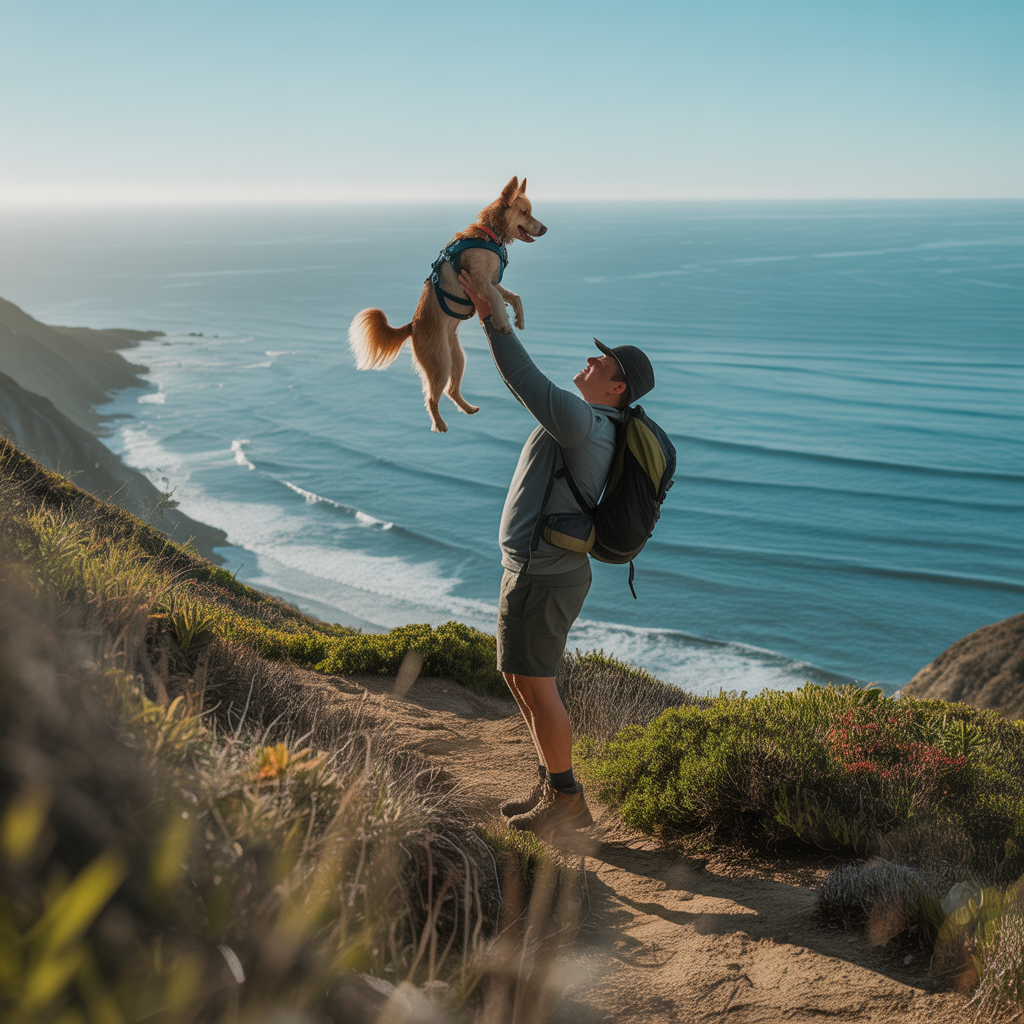
Dual-clip harnesses include both a front chest ring and a back top ring, giving you options depending on the situation. You can clip to the front on a busy trailhead where your dog needs more management, then switch to the back clip once you are moving steadily through a quieter section of trail. Some dual-clip designs also feature a top handle – a short grab loop stitched over the back – which is invaluable for helping your dog over a boulder, lifting them across a stream crossing, or pulling them back quickly when another dog appears around a blind corner. This handle is one of the most underrated features in trail harnesses and is worth seeking out specifically if you hike in rocky or technical terrain.
Escape-Proof and Step-In Harnesses: For Dogs That Back Out
If your dog has the ability to reverse out of a standard harness – a surprisingly common issue with sighthound builds (lean, narrow-chested breeds like greyhounds and whippets), narrow-headed breeds, and anxious dogs that panic and wriggle backward – you need a design that wraps around the body in a way that tightens or locks when pressure is applied. Escape-proof harnesses typically use a figure-eight or wrap-around construction that distributes the harness across the body rather than relying on two simple loops around the neck and chest. Step-in harnesses, where your dog steps their front paws into two loops before you clip the back, are a different design that some dogs tolerate better than over-the-head styles. For truly determined escape artists, look for harnesses with at least three adjustment points and a belly strap that sits behind the rib cage.
Body Type Matters: Matching Harness Fit to Your Dog
Fit is arguably more important than harness style. A perfectly chosen style that fits poorly will still cause chafing, restrict movement, or slip off. Here are the key body-type considerations to keep in mind when deciding how to choose a dog harness for hiking:
Deep-chested breeds like greyhounds, whippets, and some hunting dogs need harnesses with extra depth in the chest panel and adjustable sternum straps. Barrel-chested dogs like bulldogs and pugs need wide chest straps and enough throat clearance to avoid pressure on the trachea (the windpipe in your dog’s throat). Small dogs need lightweight designs that do not swamp their frame or sit too high on the neck. Large, powerful dogs need reinforced stitching and hardware rated for their pulling strength. The single most reliable fitting method is measuring your dog at three points: the neck circumference, the chest circumference at the widest point, and the girth behind the front legs. Always cross-reference those measurements with the manufacturer size chart rather than guessing by breed name.
For trail-specific harnesses, also check that the design does not restrict the shoulder blades during uphill movement. A harness that sits across the shoulder joint rather than below it will interfere with your dog’s stride over time and can cause soreness on long days. According to the AKC Canine Health Foundation, dogs should be conditioned gradually before taking on long hikes, and gear fit should be checked regularly as fitness levels change. Pairing the right harness with a good hands-free dog leash for hiking gives you even more control on technical sections while keeping your own balance intact. You can also find a detailed breakdown of harness hardware ratings and material durability at REI’s dog gear guide.
Frequently Asked Questions
What type of harness is best for a dog that pulls on the leash?
For a dog that pulls consistently on the trail, a front-clip harness is the most effective starting point. The leash attaches at the sternum rather than the back, so when your dog surges forward, the physics of the clip redirect their momentum sideways and back toward you instead of allowing them to lean into the pull. This does not require any special training – it works through body mechanics alone, which makes it immediately useful even if your dog has no formal leash training. Dual-clip harnesses are also a strong option because they give you a front attachment for high-distraction moments and a back attachment for calmer trail sections. Consistency matters too – even the best harness works better when paired with regular practice walking on a relaxed leash before you hit a busy trail environment.
How do I stop my dog from escaping their harness on a hike?
Dogs escape harnesses most often because the fit is wrong, not because the harness is low quality. The first step is remeasuring your dog at the chest, neck, and girth – many owners are working from outdated measurements, especially if their dog’s weight has changed. Look for harnesses with at least three independent adjustment points so you can dial in the fit at each part of the body separately. If your dog actively backs out under pressure or panic, switch to a design with a belly strap that sits behind the rib cage, which makes the backward-escape motion physically impossible. Figure-eight wrap designs and escape-proof harnesses specifically engineered for sighthound or narrow-headed breeds are worth considering if your dog has a head that is similar in size to their neck. Always do a two-finger test after fitting – you should be able to slide two fingers under each strap but no more. Learning how to choose a dog harness for hiking with escape prevention in mind will save you a lot of stress on exposed sections of trail.
Should I use a harness or collar for hiking with my dog?
For hiking, a harness is almost always the better choice over a collar. On the trail, your dog is likely to hit the end of the leash with more force than on a sidewalk – whether from a wildlife sighting, an exciting new smell, or just the energy of open space. A collar concentrates all of that impact force on a small area of the neck and throat, which can cause discomfort over a long day and is a real concern for breeds prone to tracheal issues. A harness distributes pressure across the chest and torso instead, which is both more comfortable and gives you much better directional control. The one exception is a dog that is fully trained to walk with a completely loose leash in all distracting environments – in that case, a collar is low-interference and practical. For most dogs on most trails, a well-fitted harness is the right call. Knowing how to choose a dog harness for hiking means understanding that control and comfort are both part of trail safety for your dog. A dog first aid kit for hiking is another item worth adding to your trail pack regardless of what leash system you use.
What features should a good hiking dog harness have?
A trail-ready dog harness should check several boxes that a basic walking harness does not. First, look for a top handle – a reinforced grab loop on the back that lets you lift or steady your dog over obstacles, across stream crossings, or away from a hazard quickly. Second, check that the chest and belly straps are made from padded or moisture-wicking material, since chafing is a real issue on multi-hour hikes. Third, look for reflective stitching or panels, which improve visibility on early morning starts, shaded canyon trails, or late afternoon finishes. Fourth, assess the hardware – metal buckles and D-rings hold up significantly better than plastic equivalents under the repeated stress of hiking. Fifth, if your dog will carry their own supplies, consider a design that integrates with or converts to a dog backpack for hiking. Finally, confirm the harness does not cross the shoulder blades, which restricts stride and causes soreness over long distances. These features together define what how to choose a dog harness for hiking looks like in practice.
The Bottom Line
Figuring out how to choose a dog harness for hiking comes down to two things working together: matching the harness style to your dog’s behavior and getting the fit precisely right for their body type. If your dog pulls, start with a front-clip design. If they escape, go for a figure-eight or escape-proof style with a belly strap. If they are well-trained and you want versatility on technical terrain, a dual-clip harness with a top handle covers almost every situation you will encounter on trail.
Whatever style you choose, measure your dog carefully, check the fit with the two-finger test at every strap, and do a short test walk before committing to a full day on the trail. A harness that looked great in the driveway can reveal fit issues fast once your dog is actually moving uphill. Also think ahead about what else your dog needs for a safe, comfortable day out – a dog water bottle for hiking is one of the most practical additions you can make alongside a new harness. Your dog deserves to enjoy the trail as much as you do, and the right harness is the foundation that makes that possible.
Disclosure: As an Amazon Associate, we earn from qualifying purchases. This does not affect our editorial recommendations.