
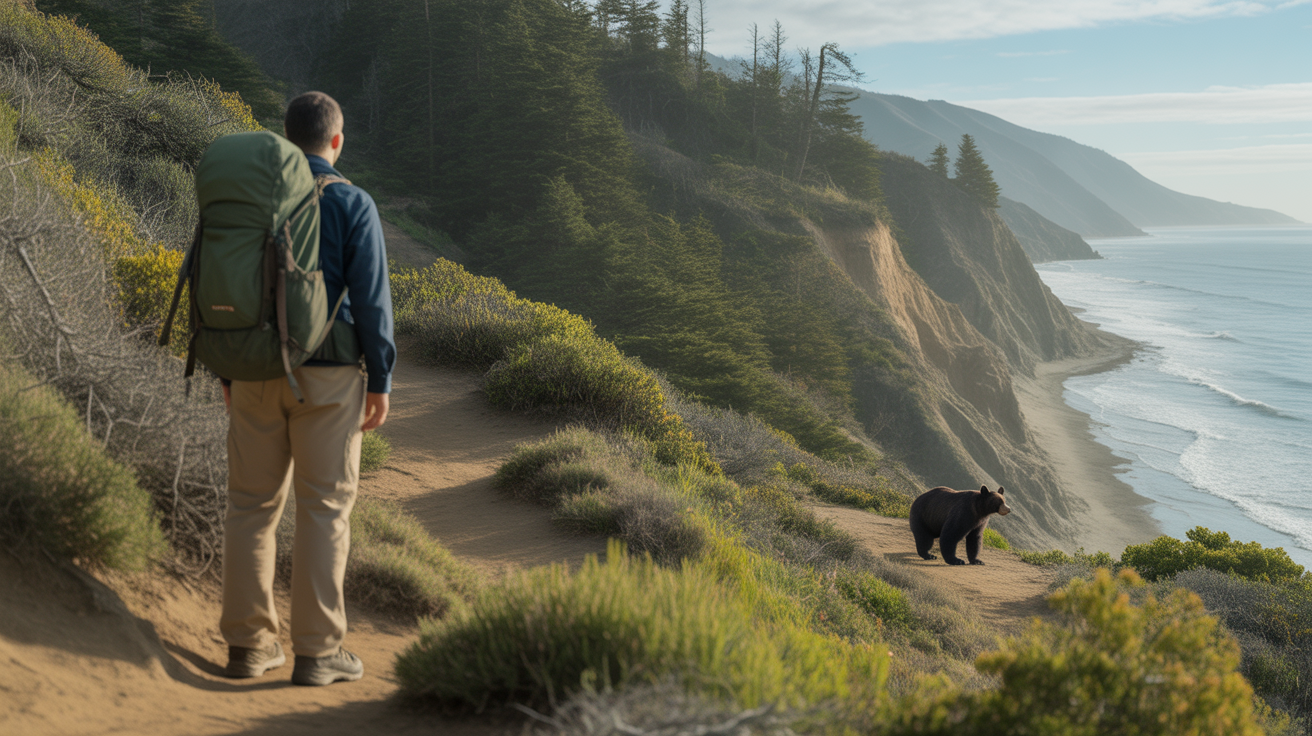
Knowing how to handle a bear encounter on the trail is one of those things that sounds simple until you are actually standing on a dirt path with a black bear thirty feet away and your brain goes completely blank. The basic advice – make noise, do not run, back away slowly – is everywhere. But most hikers who have read that advice still feel completely unprepared when a real encounter happens, because reading a bullet point list and knowing what to do in the moment are two very different things.
This guide goes deeper. It covers what is actually happening in the bear’s mind during each type of encounter, why certain responses work and others make things worse, and what you should be doing before you ever see a bear to reduce the chances of a surprise meeting. If you hike local trails on weekends, or if you are planning your first trip into bear country, this is the practical breakdown you need – not the watered-down version you have already memorized.
What to Look For
Understanding Bear Behavior Before You React
The single most important thing to understand about how to handle a bear encounter on the trail is that bear behavior is not random. Bears are almost always doing one of three things when they encounter a human: they are curious, they are startled, or they are protecting something (food, cubs, or personal space). Knowing which situation you are in changes everything about how you should respond. A curious bear that has caught your scent and is standing upright to get a better look is in a completely different mental state than a mother black bear who did not hear you coming and suddenly found you between her and her cubs. Treating both the same way is where hikers go wrong.
The Moment You See a Bear: Read the Body Language First
Stop moving. Do not scream. Do not turn and run. Your first job is to assess what the bear is doing before you do anything else. A bear that is facing away from you and moving slowly is not interested in you – stay calm, give it space, and let it move on. A bear that has spotted you and is swaying its head, clacking its teeth, or making a “woof” sound is stressed. That is a warning. Respect it. A bear standing fully upright on its hind legs is almost always just trying to see and smell you better – it is curious, not aggressive. Puffing up to look bigger, making deep guttural sounds, or doing short bluff charges (aggressive-looking but non-contact rushes intended to scare you away) are signs of a bear that feels cornered or threatened.
What to Actually Do During the Encounter
Speak in a calm, low, even voice. Say something like “Hey bear, I am right here” – not to communicate with the animal, but to reinforce that you are human and not prey. Avoid direct prolonged eye contact, which can be read as a challenge, but do not look away completely either. Keep your body angled slightly sideways rather than facing the bear head-on or turning your back. Begin moving slowly and diagonally away – not directly backward, which can cause you to trip, and never directly at the bear. If you are with other people, group together and move as a unit. Bears are far less likely to approach a group than a solo hiker.
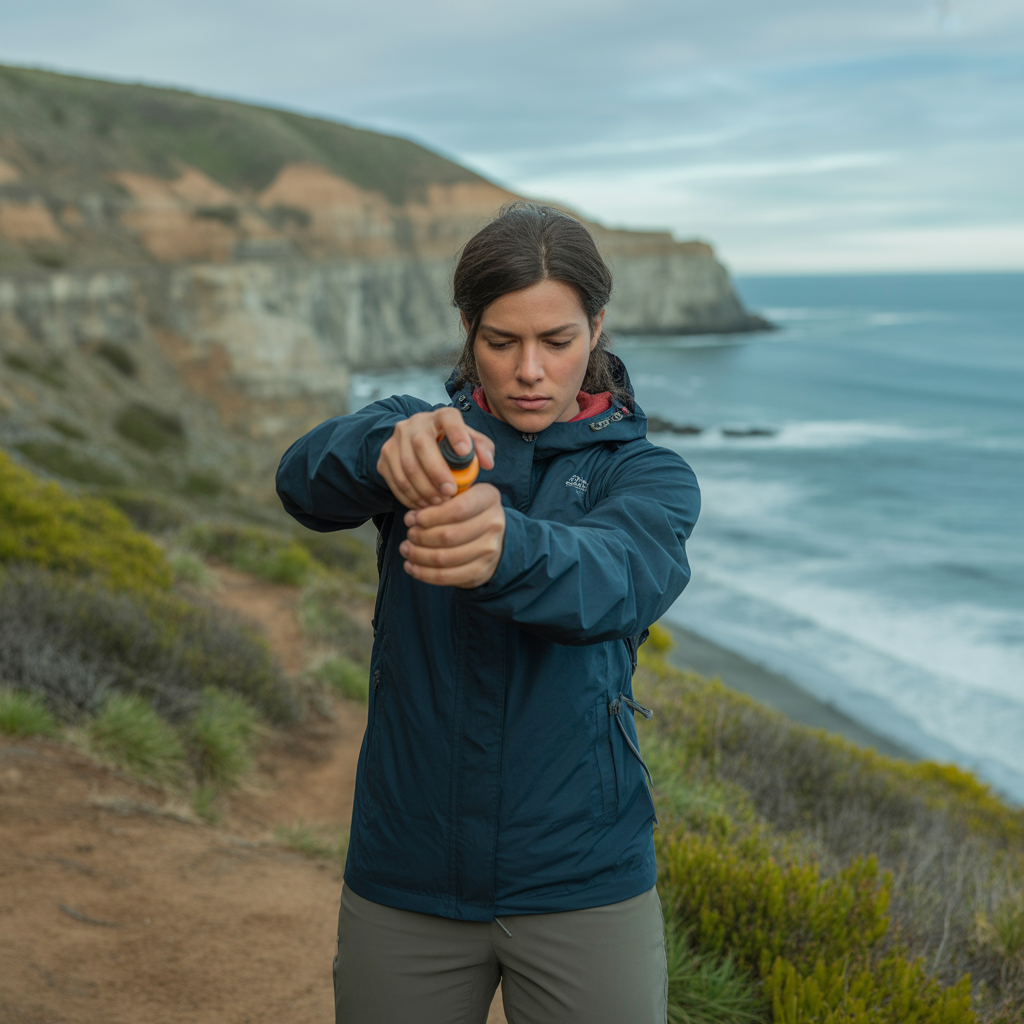
If you are carrying bear spray, this is the moment to have it in your hand with the safety off. Bear spray is not a repellent you apply before a hike – it is a short-range deterrent you deploy if a bear charges within about 30 to 60 feet. Practice unholstering it before your hike so you are not fumbling with it when it counts.
Black Bear vs. Grizzly Bear: The Response Is Different
This is the part most general advice skips, and it matters enormously. With a black bear, fighting back during a physical attack is the correct response. Black bears that make contact with humans are almost always predatory – they have decided you might be food. Punch, kick, use your trekking poles, use rocks, use anything. With a grizzly bear, if the attack appears to be defensive (the bear was surprised or is protecting cubs), playing dead – face down, hands laced behind your neck, legs spread to make it harder for the bear to flip you – is the recommended response. If a grizzly attack feels predatory (the bear tracked you, attacked at night, or will not stop after you play dead), fight back with everything you have. Knowing which species lives in the area you are hiking is not optional – it is essential preparation.
Before You Hit the Trail: Prevention Is the Real Strategy
Learning how to handle a bear encounter on the trail actually starts at home, not on the path. Make noise while you hike – talk, clap occasionally on blind corners, attach a small bell to your pack. Bears that hear you coming almost always move away before you ever see them. Store all food properly: use a bear canister on overnight trips and never leave food or scented items in your tent or pack overnight. On day hikes, avoid leaving snacks unsecured at rest stops. Do not cook near where you sleep on multi-day trips, and hang or canister your garbage the same way you handle your food.
According to the National Park Service, the vast majority of bear-related incidents in national parks involve food-conditioned bears (animals that have learned to associate humans with an easy meal). The best way to avoid a dangerous encounter is to never contribute to that conditioning in the first place.
The Emergency Whistle Question
You may have seen hikers carrying an emergency whistle and wondered if it helps with bears. The answer is nuanced. Loud, sudden noises can startle a bear at close range, but they can also escalate a tense situation if deployed poorly. Whistles are primarily signaling devices for human rescue – they are not a substitute for bear spray in an actual encounter. That said, blowing a whistle repeatedly at regular intervals while hiking through dense brush is a reasonable way to announce your presence and reduce the chance of a surprise meeting, which is where most dangerous encounters begin. Use it as a prevention tool, not a last resort defense.
Frequently Asked Questions
Should you play dead during a bear attack?
It depends entirely on the species and the type of attack – and getting this wrong matters. If a grizzly bear attacks you in a defensive context (it was surprised, it is protecting cubs, or it feels cornered), playing dead is the recommended response. Lie flat on your stomach, lace your hands behind your neck, and spread your legs slightly to make it harder for the bear to flip you over. Stay still and silent even if the bear is making contact, and do not get up until you are confident the bear has left the area. However, if the grizzly attack is predatory – meaning the bear sought you out, attacked at night, or continues attacking after you play dead – you should fight back with everything available to you. For black bears, the guidance is different: playing dead is not recommended in any black bear attack. Black bears that make physical contact are almost always acting predatorily, so fighting back is always the correct response. This is why knowing which species lives in your hiking region before you hit the trail is so important.
Does bear spray actually work?
Yes, and the research supports it strongly. Bear spray has been shown to be more effective than firearms in stopping aggressive bear behavior in multiple documented studies. It works by releasing a cloud of capsaicin (the compound that makes chili peppers hot) that causes temporary but intense irritation to the bear’s eyes, nose, and respiratory system, giving you time to back away. The key is knowing how to use it correctly. Bear spray is not a repellent – do not apply it to yourself or your gear before a hike. It is a short-range deterrent deployed when a bear is actively charging, typically within 30 to 60 feet. Hold the canister with both hands, aim slightly downward to create a cloud the bear runs through, and spray in short bursts. Keep it accessible – clipped to your hip belt (the padded strap around your waist that holds a backpack in place) or a pack strap – not buried at the bottom of your bag. Practice drawing and aiming it before you need it. A canister still in its holster when a bear charges is useless. For detailed guidance, the National Park Service bear spray page is an authoritative starting point.
What should you do if a bear follows you on the trail?
A bear that follows you after an initial encounter is a situation that deserves a more assertive response than passive backing away. First, stop retreating and stand your ground. Make yourself look as large as possible – stand tall, raise your arms, open your jacket if you are wearing one. Speak loudly and firmly. If you are with others, group tightly together and face the bear as a unit. Throw sticks or rocks near the bear (not directly at it unless it makes contact) to reinforce that you are not prey. If the bear continues to approach despite these signals, deploy your bear spray. A bear that persistently follows a human has likely become food-conditioned, meaning it associates people with an easy meal – this is a dangerous situation and one that should be reported to park rangers or wildlife authorities as soon as you safely reach a trailhead. Do not attempt to wait the bear out or circle back on the same trail without knowing where it has moved.
How far away should you be from a bear to be safe?
The general guidance from wildlife agencies is to maintain a minimum distance of 100 yards (about the length of a football field) from bears at all times – and 25 yards from other large wildlife. In practice on a narrow trail, this is not always possible when an encounter is sudden. The more useful mental model is this: if your presence is changing the bear’s behavior – causing it to stop eating, change direction, or look up repeatedly – you are too close and need to create more distance. In national parks, approaching within 100 yards of a bear is a federal violation regardless of intent. On general trails, use your judgment and binoculars if you want to observe from a safe distance. Never attempt to get closer for a photo, and never position yourself between a bear and its cubs, its food source, or its likely escape route.

The Bottom Line
Knowing how to handle a bear encounter on the trail is ultimately about preparation, not luck. The hikers who respond well in the moment are the ones who thought through the scenarios beforehand, practiced accessing their bear spray before they needed it, and understood the difference between black bear and grizzly behavior before stepping into bear country. Most bear encounters end without incident – because the bear was never looking for a confrontation in the first place.
If you are heading into an area with known bear activity, carry bear spray clipped to an accessible part of your pack or hip belt, store all food and scented items correctly using a bear canister on overnight trips, and make enough noise on the trail that most bears hear you long before you see them. Hike with others when possible – group size is one of the most reliable deterrents wildlife agencies consistently point to. Report any encounter that involves a bear following you, approaching a campsite, or showing no fear of humans to the nearest ranger station. Your report protects the next hiker on that trail. Stay curious about wildlife, stay respectful of their space, and you will likely spend most of your time in bear country without ever needing any of this advice.
Disclosure: As an Amazon Associate, we earn from qualifying purchases. This does not affect our editorial recommendations.