
What to wear hiking in the summer heat is one of the most important questions you can ask before heading out on a hot day – and it is also one of the most commonly ignored. Most people throw on a cotton t-shirt, grab a hiking water bottle, and figure they will be fine. Some will be. Others will spend the afternoon overheated, sunburned, and wondering why they feel worse the harder they push.
The good news is that dressing well for summer hiking is not complicated once you understand a few key principles. This guide breaks down every layer and item in a summer hiking clothing system – from your base layer to your hat – with practical advice for desert hikes, exposed ridgelines, and high-UV environments where the sun does not quit. Whether you are planning your first real summer trail or just tired of arriving at the trailhead (the parking area where a hiking trail begins) drenched before the first mile, you will leave this guide knowing exactly what to reach for.
What to Look For
Why Fabric Choice Changes Everything in the Heat
The single biggest mistake hikers make in summer is wearing cotton. Cotton absorbs sweat and holds it against your skin, which feels cool for about five minutes and then becomes a clammy, heat-trapping problem. On a hot exposed ridge, wet fabric pressed against your skin actually increases your risk of chafing, fatigue, and overheating. The fabrics that work in summer heat are synthetic moisture-wicking materials (polyester, nylon) and merino wool. Yes, merino wool – despite sounding warm, a lightweight merino wool base layer is genuinely one of the most effective summer hiking fabrics available. It wicks sweat away from your body, regulates temperature, and resists odor far better than synthetics. Synthetic fabrics dry faster and cost less. Both are dramatically better than cotton.
Tops: Lightweight, Long-Sleeved, and Sun-Rated
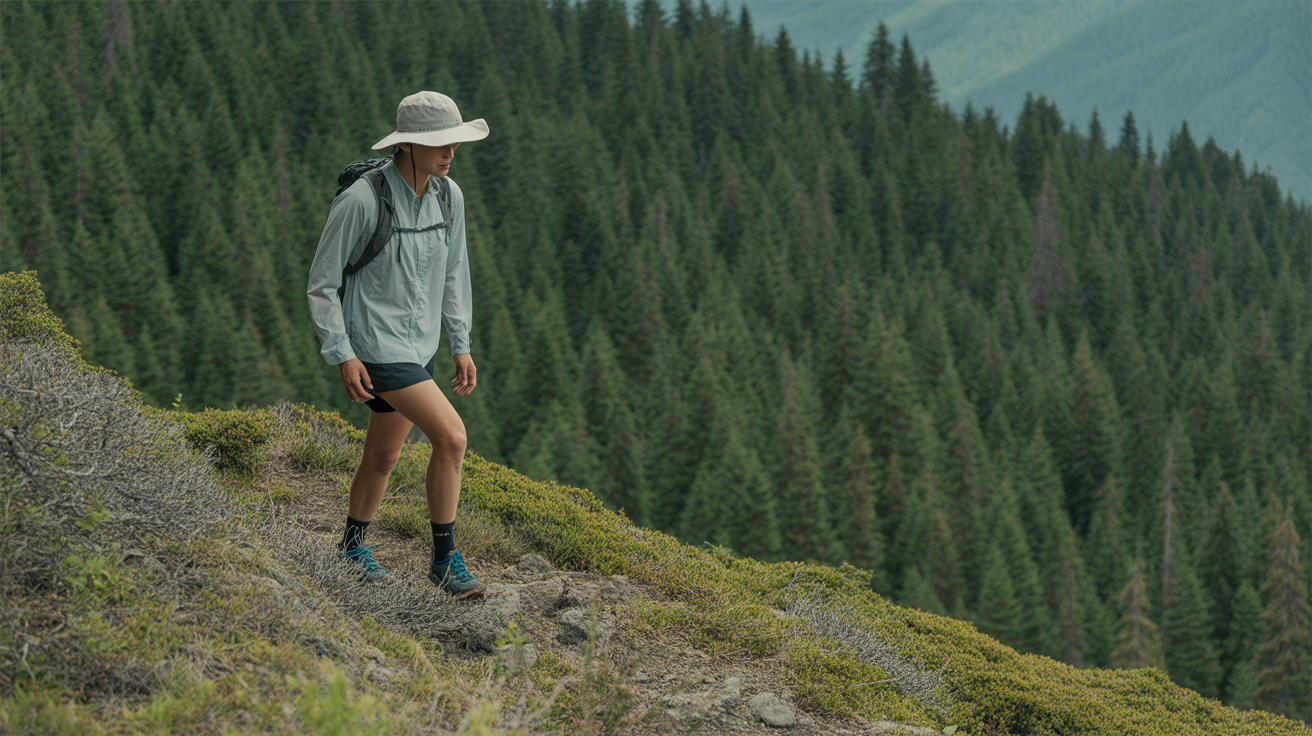
Knowing what to wear hiking in the summer heat starts at the top layer. A loose-fitting, long-sleeved shirt with a UPF rating (Ultraviolet Protection Factor) is almost always smarter than a short-sleeved shirt or tank top on a high-exposure hike. UPF 30 blocks about 97% of UV rays; UPF 50 blocks over 98%. That rating on your shirt does the work sunscreen cannot always keep up with on a six-hour desert hike. Look for shirts specifically labeled as sun-protective hiking shirts in polyester or nylon. They feel lighter than they look and breathe well when there is airflow. If the idea of a long sleeve in heat feels counterintuitive, that reaction is understandable – but long sleeves on a hot ridge hike consistently result in less sunburn, less dehydration from sun exposure, and less fatigue at the end of the day.
Bottoms: Pants, Shorts, and the Case for Convertibles
For summer desert and ridge hiking, lightweight hiking pants or convertible pants (pants that zip off into shorts) are the most versatile choice. Full-length pants protect your legs from sun, scrub, insects, and rock scrambles, while still allowing you to convert to shorts when you want airflow in a shaded valley. Nylon and polyester hiking pants dry fast and move freely. Denim and thick cotton are a hard no. If you run hot and prefer shorts, that is a reasonable choice on heavily shaded trails – just apply sunscreen to exposed legs and be aware of brush and UV exposure on open terrain. Women hiking in summer should also consider lightweight women’s hiking pants specifically cut for trail movement, and men will find purpose-built men’s hiking pants far more comfortable than repurposed athletic shorts on longer days.
Head and Neck: Your First Line of Sun Defense
A hiking hat for sun protection is non-negotiable on any summer hike with significant sun exposure. A wide-brimmed hat (3 inches or more) protects your face, ears, and the back of your neck – all areas that sunscreen misses or wears off of quickly. Baseball caps are better than nothing but leave your ears and neck exposed. Look for hats with a 360-degree brim or a legionnaire-style back flap if you are heading into full desert sun. Pair your hat with a neck gaiter or buff for exposed ridge hikes. A lightweight buff can protect the back of your neck, be pulled up over your nose and mouth in dusty conditions, and double as a sweatband. They weigh almost nothing and fold into a pocket.
Feet and Socks: Sweat Management From the Ground Up
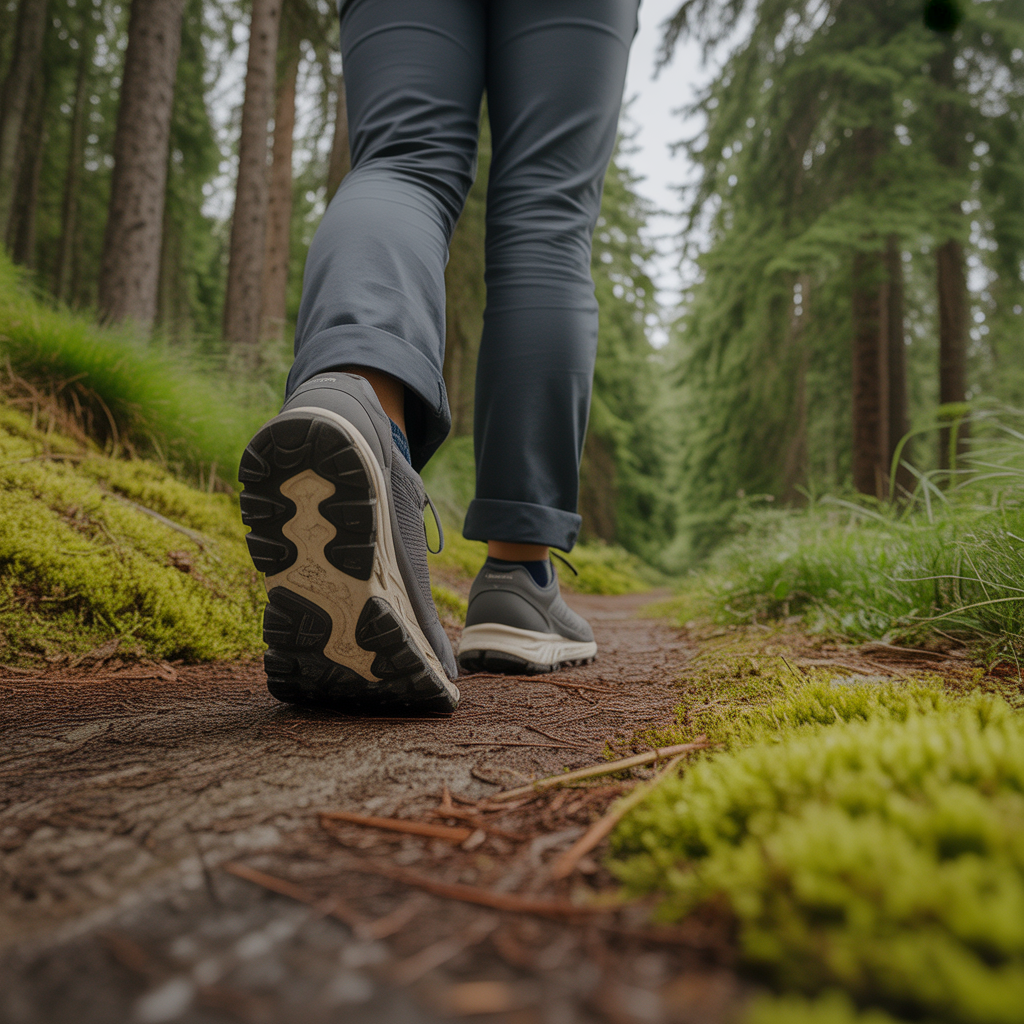
Your feet sweat heavily in summer heat, and that moisture leads directly to blisters and hotspots if your socks cannot manage it. Knowing what to wear hiking in the summer heat means paying attention below the ankle too. Avoid thick wool or cotton socks in summer; instead, choose thin to medium-weight moisture-wicking hiking socks in merino or synthetic blends. For footwear, trail runners are a popular summer choice because they breathe better than heavy leather boots and dry faster if you hit water. Trail running shoes used for hiking offer the grip and durability of a proper hiking shoe with the weight and ventilation of a running shoe – an excellent combination for warm-weather day hikes on established trails. Whatever footwear you choose, pair it with the right socks and make sure your shoes have room for your feet to swell slightly in the heat, which is completely normal on longer summer hikes.
Sunglasses, Sunscreen, and the Finishing Layers
According to the National Park Service, UV exposure increases significantly at higher elevations – approximately 10% for every 1,000 feet of elevation gain. That makes sun protection gear especially critical on ridge and summit hikes. Quality sunglasses for hiking should offer 100% UV400 protection and wrap around slightly to reduce glare from the sides. Apply a broad-spectrum SPF 30 or higher sunscreen to all exposed skin before the hike and carry it with you for reapplication. Do not forget your lips – SPF lip balm for hiking is a small item that prevents real discomfort on long sunny days. Round out your summer kit by thinking about electrolyte replacement in your water, light gloves if you hit exposed morning ridge starts, and always carry slightly more water than you think you need. Summer hiking is enormously rewarding – the right clothing system just keeps it that way.
Frequently Asked Questions
Should I wear long sleeves or short sleeves hiking in hot weather?
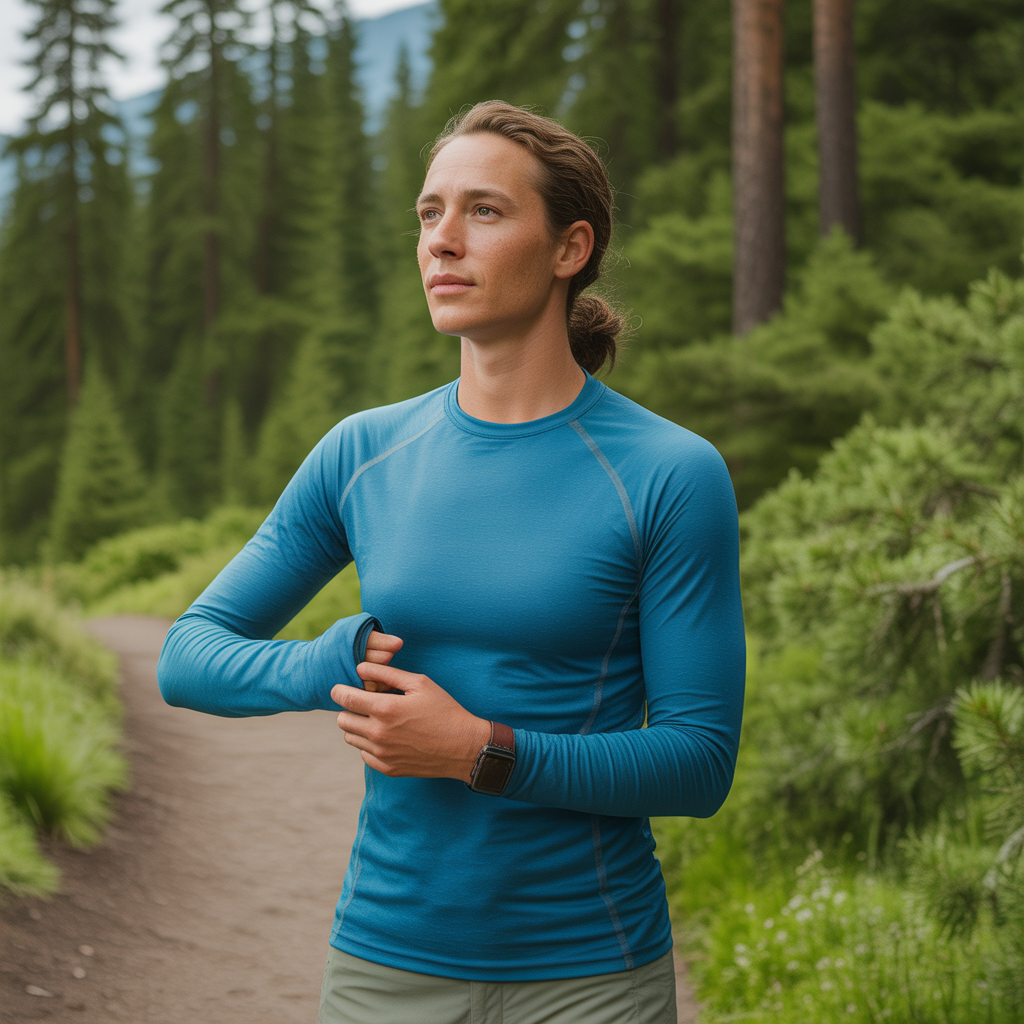
For most exposed summer hikes – desert trails, ridgelines, alpine approaches with minimal tree cover – long sleeves are the smarter choice. It feels counterintuitive, but a lightweight, UPF-rated long-sleeve shirt in polyester or nylon actually protects you from the sun better than sunscreen alone, which wears off with sweat. Long sleeves reduce your total UV exposure, lower the surface area you need to re-apply sunscreen to, and can reduce overall dehydration caused by intense sun hitting bare skin for hours. Short sleeves are fine on well-shaded trails or shorter hikes where sun exposure is limited. The key phrase is UPF-rated – a thin sun-protective shirt is not the same as hiking in a heavy long-sleeve cotton tee, which will make you miserable. When in doubt, go with a lightweight long sleeve and roll up the cuffs if you get too warm. You can always push them up; you cannot un-burn your forearms.
What color clothing is best for hiking in hot summer sun?
Light colors reflect more sunlight and heat, which helps keep you cooler on exposed hikes. White, light grey, pale blue, and tan are common choices for summer hiking shirts specifically because they absorb less solar radiation than dark colors. That said, the fabric type and UPF rating matter more than color alone. A dark-colored shirt with a UPF 50 rating will protect your skin from UV rays more effectively than a white shirt with no UPF rating, even though the white shirt may feel cooler to the touch. In practice, the best summer hiking clothing combines both: light colors AND a meaningful UPF rating. Avoid black and dark navy for full-sun desert and ridge hikes if you have the option. For hats specifically, a light-colored wide-brim hat is ideal because your head and scalp receive the most direct sun exposure of any part of your body on a hike.
What shoes should I wear hiking in summer heat?
Summer hiking footwear prioritizes breathability and quick-drying performance over insulation and waterproofing. Trail runners are a popular choice for warm-weather day hikes on established trails because they are significantly lighter than traditional hiking boots, allow heat to escape through mesh panels, and dry quickly if you cross water or your feet sweat heavily. Full leather or waterproof-membrane boots are great for wet or cold conditions but trap heat in summer, which accelerates foot fatigue and increases blister risk. Low-cut hiking shoes strike a middle ground – more structured than trail runners, better ventilation than waterproof boots. Whatever shoe you choose, pair it with thin moisture-wicking hiking socks, not cotton socks. Make sure the fit allows a small amount of space at the toe box, because feet swell in heat and a tight fit at the start of a hike becomes a painful fit by mile five.
How do I avoid chafing while hiking in the heat?
Chafing is one of the most common and uncomfortable problems on summer hikes, especially for first-time hikers who may not realize how much of an issue it becomes when you are sweating heavily for hours – and it is absolutely worth addressing upfront. The primary fix is moisture-wicking underwear designed specifically for physical activity – cotton underwear holds moisture and creates friction. Purpose-built hiking underwear in synthetic or merino blends stays drier and reduces the surface friction that causes chafing. Beyond fabric, using an anti-chafe balm or stick on high-friction areas – inner thighs, underarms, waistband lines – before you start hiking makes a significant difference on longer days. Reapply at natural rest points if you are covering serious mileage. Fit also matters: clothing that is too loose bunches and rubs, clothing that is too tight restricts movement and creates constant friction. Compression-fit shorts under hiking pants or shorts is a strategy many hikers use specifically to eliminate inner-thigh chafing on multi-hour summer hikes. If you experience chafing on your first few hikes, you are not alone – it is a normal part of figuring out what works for your body, and adjusting your clothing system fixes it quickly.
The Bottom Line
Understanding what to wear hiking in the summer heat comes down to one core principle: stop managing heat after it builds and start preventing it before it does. The right clothing system moves sweat away from your body, blocks UV before it reaches your skin, and keeps your temperature regulated without requiring you to constantly stop and recover. For a first big summer hike, prioritize a UPF-rated shirt, a wide-brim hat, moisture-wicking socks, and footwear that breathes. Those four items alone will make the experience dramatically better than hiking in cotton and a baseball cap. For desert or ridge hikes with extended sun exposure, add a neck gaiter, quality sunglasses, and consider long sleeves even when it feels like the wrong call. For hikers building out a full kit, every layer works together – knowing what to wear hiking in the summer heat is not about buying the most gear, it is about choosing the right materials and wearing them with intention. A cool, protected hiker covers more miles, enjoys the trail more, and comes home ready to go again.
Disclosure: As an Amazon Associate, we earn from qualifying purchases. This does not affect our editorial recommendations.